Daily insights for city builders, delivered every morning at 6 AM ET. I’m Brandon Donnelly — a Toronto-based real estate developer and founder of Globizen. I’ve been writing here since 2013.

Tag: prada

  • More retailers are buying real estate in New York

    Last week we spoke about how many businesses don’t want to own their own real estate, but that some do. We then spoke about Prada’s recent acquisition of 720 and 724 Fifth Avenue for $835 million. However, they’re not the only ones. According to New York’s The Real Deal (thank you John Bell for the article), last year saw the following transactions:

    • Swiss fashion house Akris bought a property from SL Green for $40.6 million
    • Japanese coffee retailer Geshary bought a property on Fifth Avenue from the Riese Organization for $38 million
    • And Dyson bought a building in Soho for $60 million

    Now, some, or a lot of this, is strategic. New York is New York, and global brands need to be there. Another part of this is that there was less competition last year. Fewer real estate companies wanted to buy retail and office buildings, and so end users seem to have stepped in at what they presumably saw as favourable prices.

    But it’s also not totally foreign for retailers to want to own their own real estate. Perhaps the most famous example is McDonald’s, which owns its own real estate and then leases it out to franchisees. Though as I alluded to last week, it’s important to know what business you’re ultimately in. And McDonald’s knows it’s in the real estate business.

  • Prada just bought a lot of real estate in New York

    We have spoken before about how hotel brands don’t typically own their real estate. But the same is also true of many other businesses. And one common reason for this is that it ties up a lot capital that could be otherwise deployed in the core business. If, for example, you’re in the business of producing exclusive handbags, it usually makes sense to spend your excess cash on making better handbags. And if you find that you’re actually making more money on real estate, then it could be a sign that you’re in the wrong business.

    There are, however, instances where owning your own real estate may make the most sense. Maybe you have an irreplaceable location that you want to secure for the long term. And so there’s real strategic value. Or maybe you keep having annoying legal fights with your landlord and you just want to get back to focusing on luxury handbags. There are other motivating factors to consider here, but these two seem to be behind Prada’s recent acquisition of 724 Fifth Avenue in New York.

    Prada has had a flagship 5-storey retail store at this location since 1997 (and most recently was paying US$22 million in rent). In December, they announced that they had acquired the entire 12-storey building for US$425 million. (That works out to be about $5,395 psf on the gross building area!) And then shortly after, they announced that they had acquired next door — a hard corner — for another US$410 million (total US$835 million).

    All of this makes the deal one of the largest in New York last year. But was it a good deal? I would need some more information to answer from a quantitative real estate perspective. But if I’m Prada, I know that I need to be on Fifth Avenue for the foreseeable future. And now I get access to a hard corner and I no longer have to deal with my landlord. These are clearly strategic things. Last year was also a pretty good time to be buying retail/office buildings with all cash, which is what Prada did.

  • France’s luxury goods empire

    The US has tech and France has luxury goods:

    The roots of French dominance lie in a luxury ecosystem that dates to the court of Louis XIV, and a culture of corporate raiding that began with Bernard Arnault. After gaining control of LVMH in 1989, he set out to build the first house of luxury brands through serial acquisitions. Rivals followed his lead. Increasingly, the global luxury industry is based on goods that are still made by small Italian firms but sold by big French conglomerates. Gucci, Bulgari, Fendi — all are Italian brands now under French owners.

    While US tech firms overshadow all rivals, the same can be said of French luxury. Among the top luxury firms, the French have annual sales three times higher than the Swiss, more than four times the Americans and Chinese and 12 times the Italians.

    One of the most interesting things that LVMH is doing, though, is a combination of tech and luxury goods. In 2021, they announced, along with founding partners Prada and Cartier, a new luxury goods blockchain called Aura.

    The idea behind Aura (an appropriate name, in my opinion) is to create a kind of digital passport that proves authenticity and ownership, and also allows for traceability. So if you want to sell one of your luxury items or you need to service it, now someone can easily see the chain of ownership and determine that it’s real.

    This to me is a perfect use case for the blockchain technology and, as of March of this year, the group was reporting 24 brands on board. At the same time, they also announced a new feature that allows brands to participate through public chains such as Ethereum or Solana.

    All of this is probably still very esoteric to most. But eventually the tech will recede into the background and most will probably just see it as, “I’m buying this expensive purse and along with it I get this digital passport thingy that lives on my phone. I don’t know or care how the tech works, but it makes me feel even more special.”

    However, a big question remains: What does all of this innovation do to industry concentration? (Which is one of the main points of the above article.) One promise of crypto is that it will be a decentralizing force in our economy. And while I believe this to be directionally true, I obviously understand that LVMH has an empire to maintain here.

    For those of us who deal in real estate, it is also interesting to think about this topic of brands and authenticity when it comes to property. And so we will talk about that later this week on the blog.

  • Pritzker Prize-winning architect Kazuyo Sejima designs Japanese commuter train

    In commemoration of the company’s 100th anniversary, Japanese rail operator, Seibu, recently unveiled a new commuter train designed by Pritzker Prize-winning architect Kazuyo Sejima. Sejima is a founding partner in the Tokyo-based firm SANAA, which has started branching out beyond buildings. She recently designed a neat and multi-functional bag for Prada.

    One of the key features of the “Laview” commuter train is its unusually large 1.35m x 1.58m windows. They’re designed to maximize views, as this particular route travels from the city and into the mountains. It’s a simple design move, but it’s one I have never seen before. The overall result is quite beautiful and it goes to show you just how much the Japanese value train travel.

    Images: Dezeen

  • Three nights only

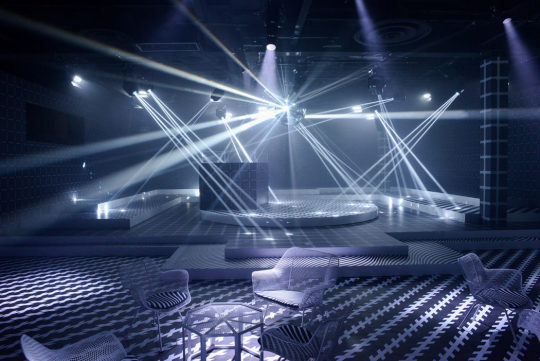
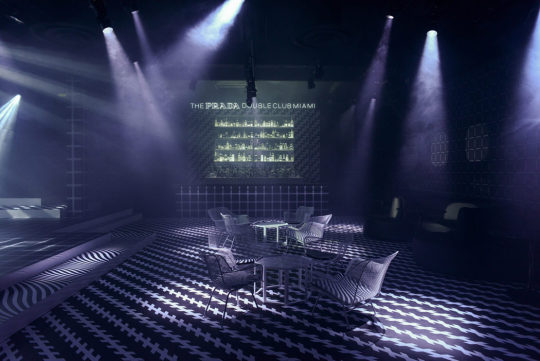
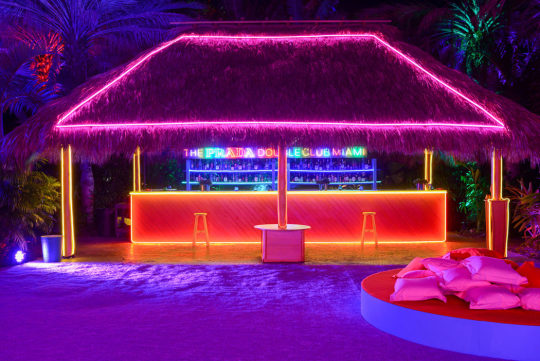
    For this year’s Art Basel Miami Beach, artist Carsten Höller collaborated with Fondazione Prada to create a 3-night-only pop-up club called, The Prada Double Club Miami.

    By time you read this post, the pop-up is likely to be over. But it is an interesting space nonetheless.

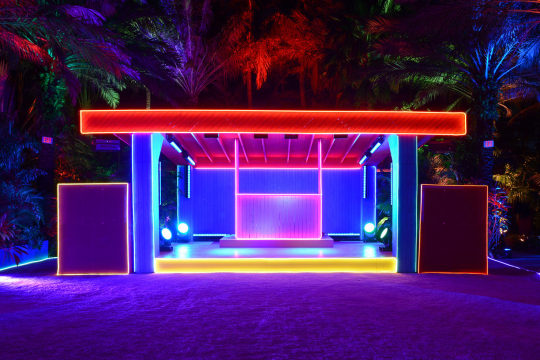
    The installation made use of an old 1920s film studio and was comprised of two distinct spaces – hence the double club reference. 

    The interior bar and dance floor were entirely monochromatic.

    Höller wanted all color to instead come from participants within the space. 

    The exterior bar, on the other hand, was “hyper-polychromatic.”

    Perhaps some of you might find inspiration here for your next condo sales office. That would be fun.

    Photography: Casey Kelbaugh, courtesy of Fondazione Prada and via The Spaces

  • “Liberate these objects from their containment”

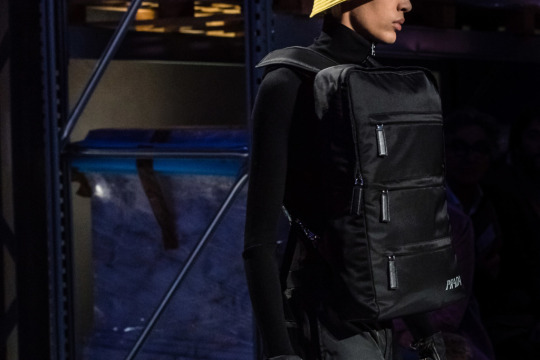
    Architect Rem Koolhaas recently unveiled a backpack that he designed for Prada’s autumn winter 2018 menswear collection

    It looks like this: 

    image

    It’s more of a frontpack. Actually, maybe the right name is chestpack.

    What stood out for me, though – perhaps more than its frontality – was the way that Rem Koolhaas described his reasoning behind the design.

    Here is an excerpt from Dezeen:

    “Today, waiting in line for a typical airport check of carry-on luggage, it is surprising to note how the shapeless container of the backpack, is inhabited by strict, orthogonal devices like the laptop, the charger, books, toilet bag, and how awkward it is to liberate these objects from their containment in the backpack,” he said.

    “This project proposes a reinterpretation of the backpack, more suitable to the contemporary urban citizen,” he continued. “The frontal position gives a more intimate sense of ownership – a better control of movement, avoiding the chain of oblivious collisions that the backpack inadvertently generates.”

    Leave it to an architect to talk about a backpack like the wearer is about to go to war.

    P.S. I’m a fan of Koolhaas. I just found this funny.

    Image: Prada