Daily insights for city builders, delivered every morning at 6 AM ET. I’m Brandon Donnelly — a Toronto-based real estate developer and founder of Globizen. I’ve been writing here since 2013.

Category: Fashion

  • The empty icon

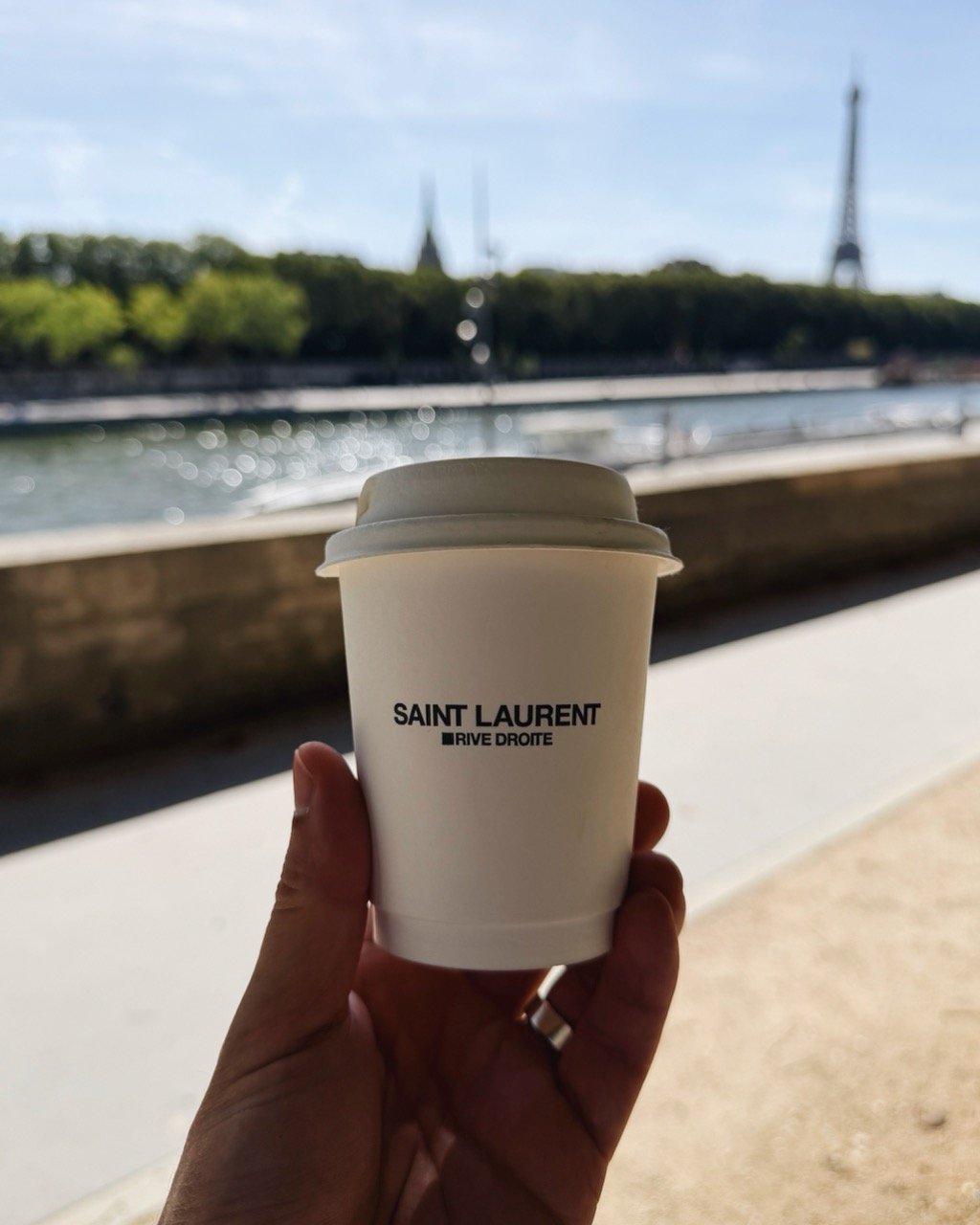
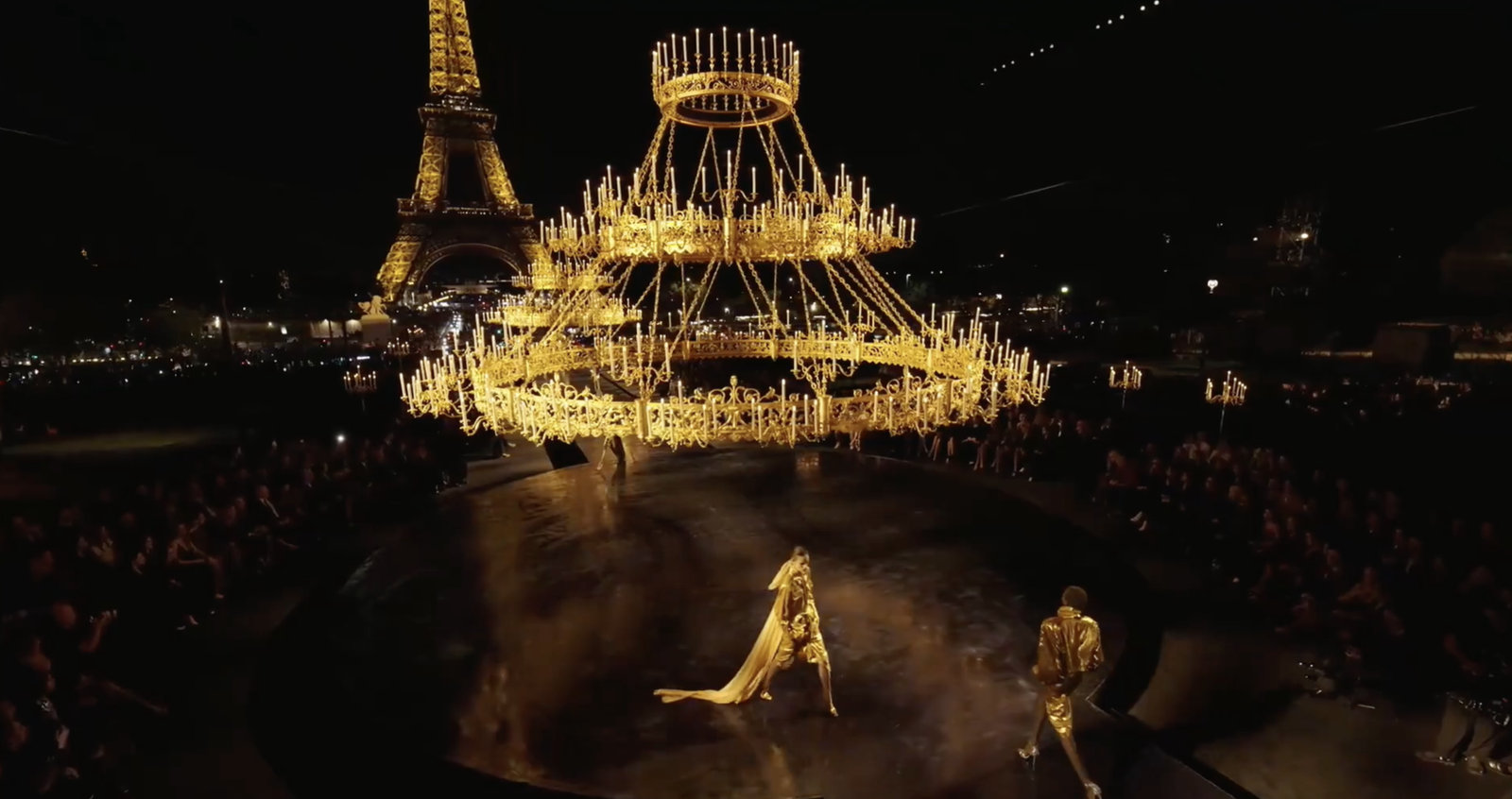
    This week at Paris Fashion Week, Saint Laurent’s creative director Anthony Vaccarello presented an open-air show in front of the Eiffel Tower that is widely rumoured to be his last show at the fashion house. (Too bad.) The set was opulent cinema. Everything was gilded — in an elegant way, not the gaudy Trump way — including the clothes themselves.

    The overall set was intended to pay homage to the historic ballroom of the Hôtel InterContinental, where Yves Saint Laurent himself used to famously present his collections. And suspended above the runway was an enormous gold chandelier that effectively created an “urban ceiling” for the space. Here’s the full show if this at all interests you.

    But this is not a post about fashion.

    One of the things that stood out to me was the obvious relationship between the glittering Eiffel Tower and the enormous gold chandelier. It’s a good example of how you don’t necessarily need walls to frame an urban space. The hanging chandelier was all that was needed to turn a public plaza into a private salon.

    At the same time, I was struck by how sexy and glamorous Paris always manages to make what is effectively a piece of raw industrial architecture. The Eiffel Tower was immediately popular with the general public at the 1889 Exposition Universelle because of its awe-inspiring stature, but elites derided it for its lack of Parisian taste. So how then did it become so synonymous with French high culture?

    One theory is that it’s because the tower is generally useless.

    In 1964, French theorist Roland Barthes wrote an essay where he argued that the Eiffel Tower became the ultimate global symbol precisely because it means basically nothing in itself, which is why it can be so easily imbued with other symbolic meaning. The Louvre is art. The Arc de Triomphe commemorates a military victory. And Notre-Dame is religion.

    The Eiffel Tower, by contrast, is empty. It’s more or less a hollow skeleton of iron. Barthes called this an “empty signifier.” In other words, it’s a blank canvas — one that has come to symbolize everything from 19th-century industrial progress to 21st-century luxury fashion. Its greatest strength may be its uselessness.

    It can be hard to predict when something might resonate in the way that the Eiffel Tower has. The so-called cultural elites certainly didn’t get it at the time. But cities desperately need these urban symbols, and what they come to mean ultimately depends on the urban context and positioning we choose to create. It’s malleable.

    Take, for instance, the CN Tower in Toronto. There is nothing inherent to its concrete form that prevents it from symbolizing high design or civic sophistication in the way the Eiffel Tower does. The difference is in the curation: at its base, we put an aquarium; Paris brings out gilded Saint Laurent.

    Saint Laurent’s show this week was equal parts marketing for the fashion house and for the city.
  • Raw meets refined

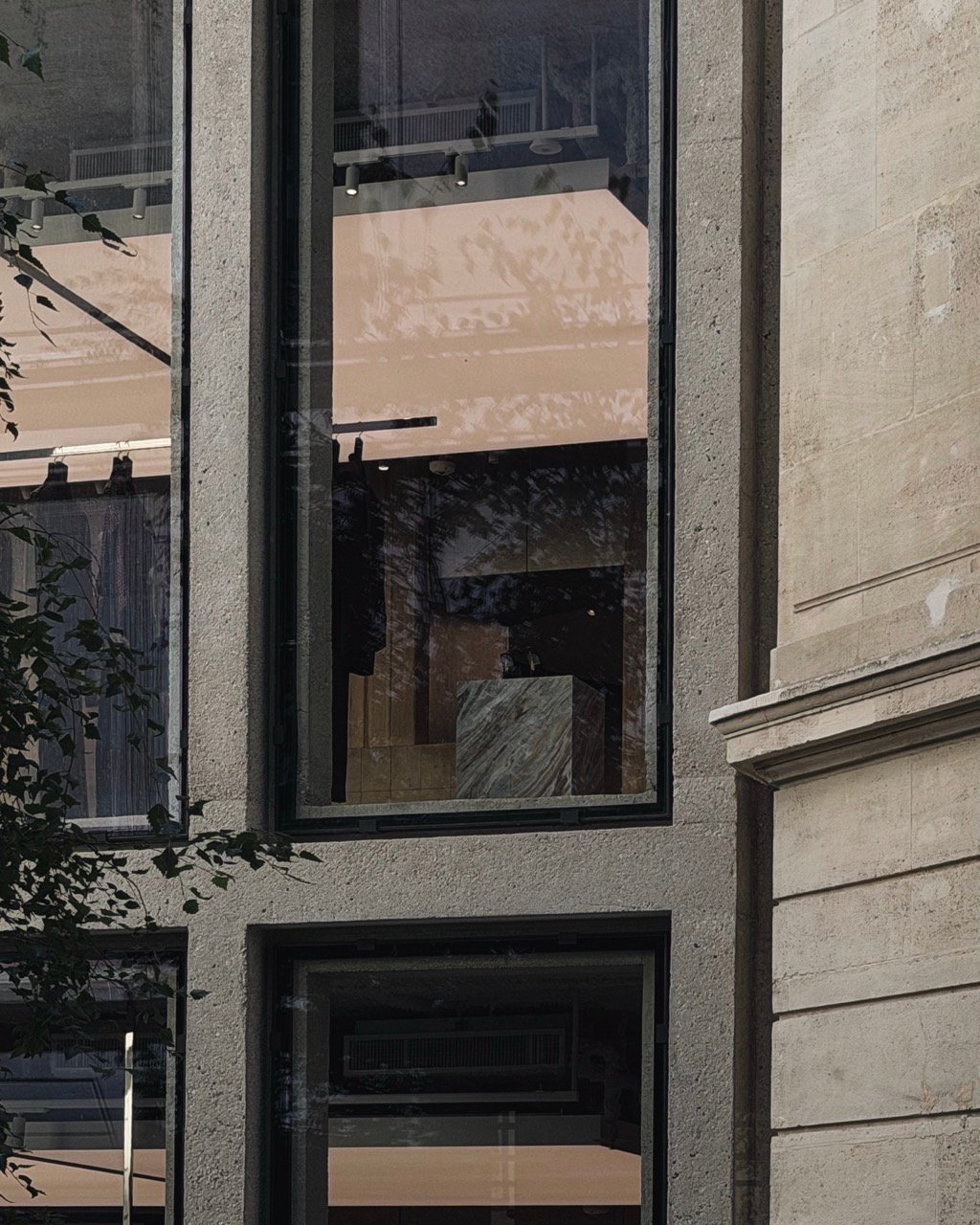
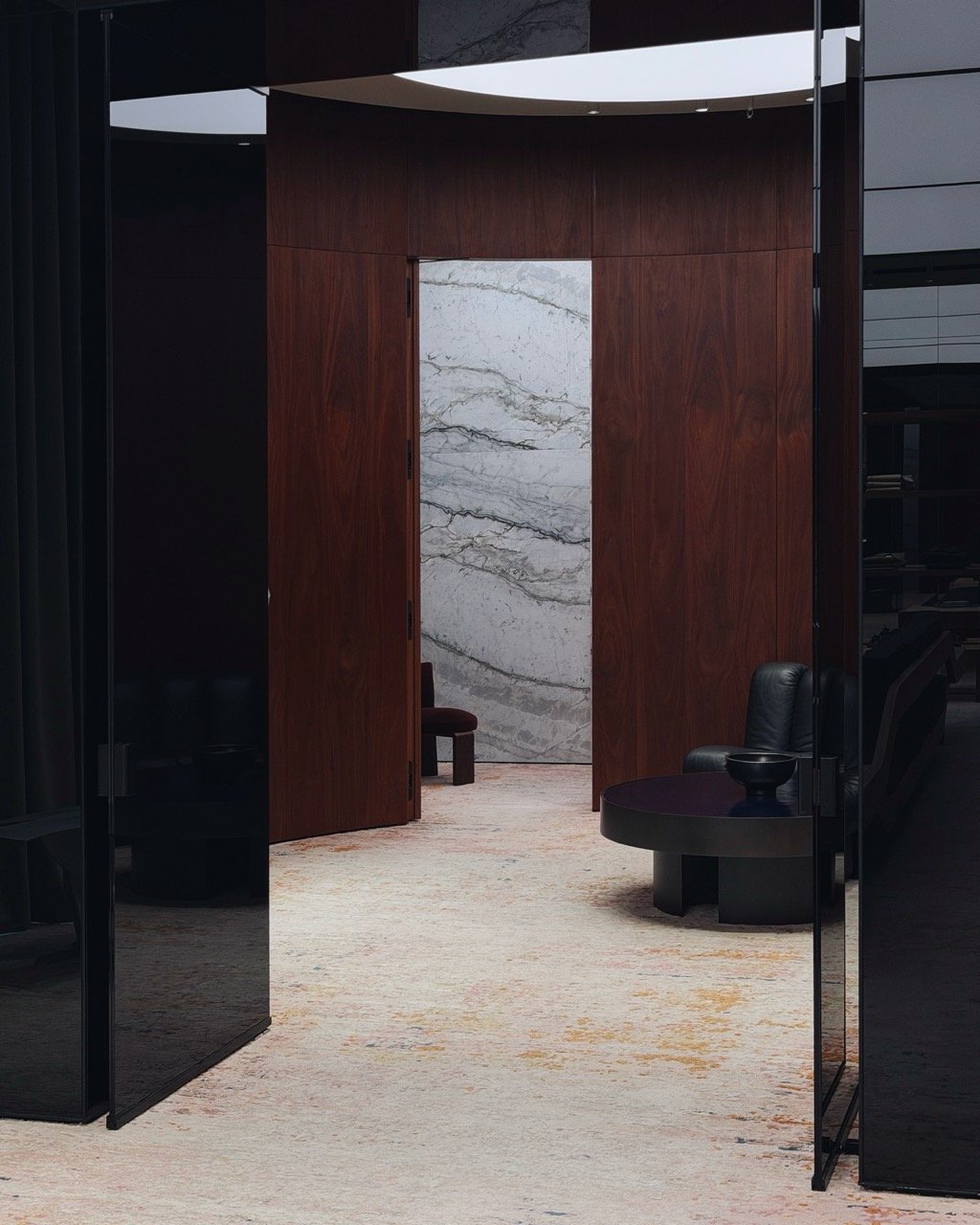
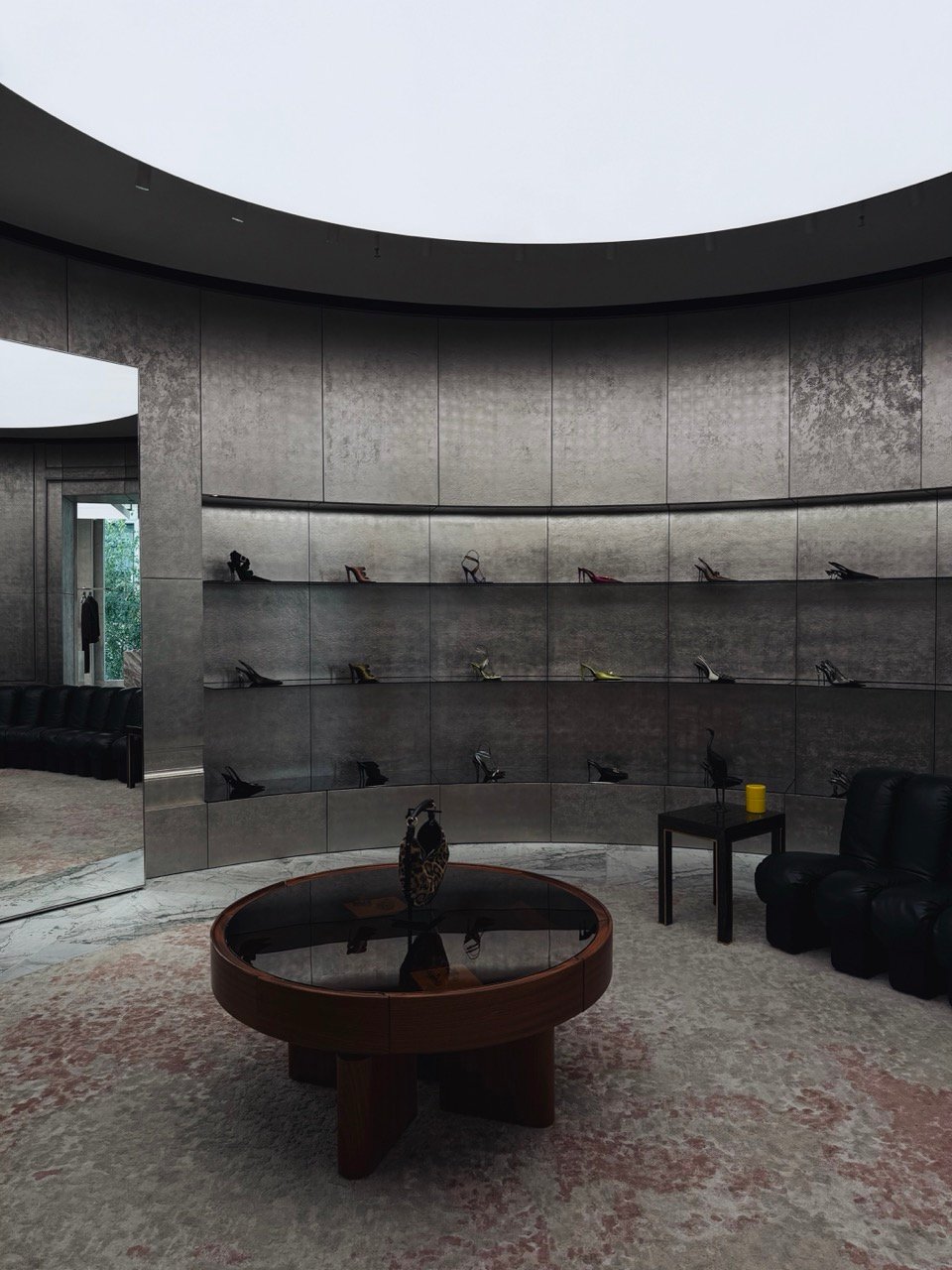
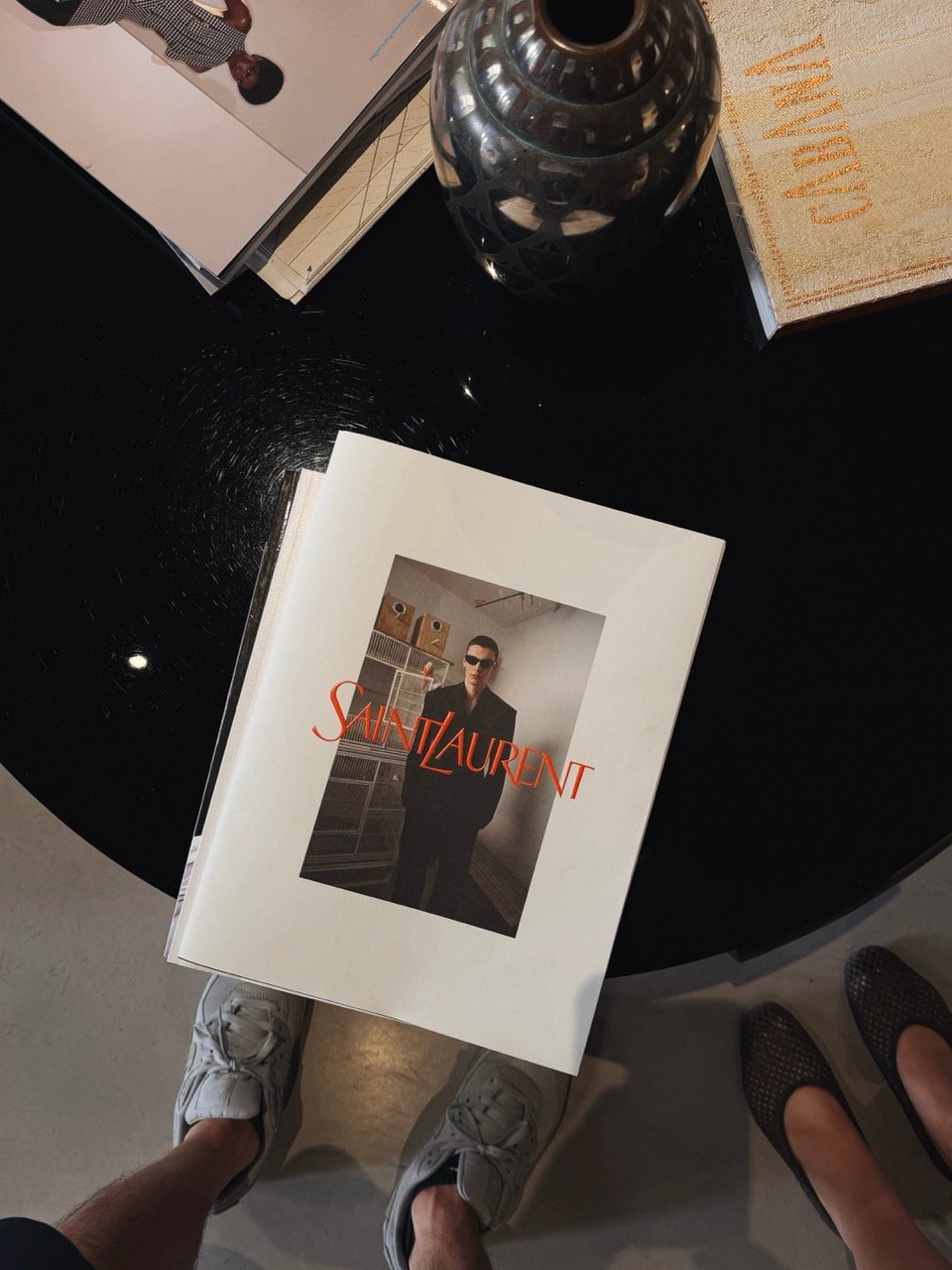
    I love how Saint Laurent’s creative director, Anthony Vaccarello, has taken a form of brutalism — corduroy-imprinted concrete and generally raw and exposed materials — and elevated it to high fashion. It’s a perfect example of “raw meets refined.” And you’ll find this approach in its stores all around the world, including in Toronto on Bloor Street. For me, it’s also a great microcosm of Paris. This is a city with a deep, rich history, but one that isn’t afraid to disrupt that history and look forward when it makes sense to do so.

  • This slash that

    Maison Kitsuné is a French-Japanese lifestyle brand that was founded in 2002 as both a record label and a fashion house. Apparently, the founders — Gildas Loaëc and Masaya Kuroki — started out by DJ’ing in order to promote their brand and clothes.

    In 2005, they released a full ready-to-wear collection and, according to Wikipedia, fashion has come to represent about 90% of the company’s revenue (2020 figure).

    In 2013, Kitsuné opened their first coffee shop in Tokyo. And since then, they have expanded around the world, opening cafes in Paris, Vancouver, Shanghai, and many other cities. As of today, I think they have 35 around the world.

    Their latest venture is something a bit new though. It’s called Desa Kitsuné, it’s located in Canggu, Bali, and it’s their first ever clothing shop/restaurant/club. It also comes with a pool and the idea is that you can do lots of different things here: shop, lounge during the day, and/or party at night.

    I always find it interesting when different ideas and approaches are combined. And that’s what Kitsuné continues to do. They also plan to do more of it. According to Monocle, the company wants to reach 100 cafes/restaurants around the world in the next 5 years.

    So keep an eye out for more foxes in your city.

  • The opposite of fast fashion

    I just discovered and purchased a pair of pants from this French brand called 1083. They specialize in jeans and everything they sell is, for the most part, made in France.

    The name 1083 refers to 1083 kilometers, which is the longest possible linear dimension within the “hexagon” of France (a hexagon is often used to describe the geographic boundaries of continental France).

    As an example, their shoes have a message on the insoles that says “this shoe was produced within 1083km of where you are right now.” I thought this was a cool brand story and so I wanted to share it with all of you today.

  • More retailers are buying real estate in New York

    Last week we spoke about how many businesses don’t want to own their own real estate, but that some do. We then spoke about Prada’s recent acquisition of 720 and 724 Fifth Avenue for $835 million. However, they’re not the only ones. According to New York’s The Real Deal (thank you John Bell for the article), last year saw the following transactions:

    • Swiss fashion house Akris bought a property from SL Green for $40.6 million
    • Japanese coffee retailer Geshary bought a property on Fifth Avenue from the Riese Organization for $38 million
    • And Dyson bought a building in Soho for $60 million

    Now, some, or a lot of this, is strategic. New York is New York, and global brands need to be there. Another part of this is that there was less competition last year. Fewer real estate companies wanted to buy retail and office buildings, and so end users seem to have stepped in at what they presumably saw as favourable prices.

    But it’s also not totally foreign for retailers to want to own their own real estate. Perhaps the most famous example is McDonald’s, which owns its own real estate and then leases it out to franchisees. Though as I alluded to last week, it’s important to know what business you’re ultimately in. And McDonald’s knows it’s in the real estate business.

  • Prada just bought a lot of real estate in New York

    We have spoken before about how hotel brands don’t typically own their real estate. But the same is also true of many other businesses. And one common reason for this is that it ties up a lot capital that could be otherwise deployed in the core business. If, for example, you’re in the business of producing exclusive handbags, it usually makes sense to spend your excess cash on making better handbags. And if you find that you’re actually making more money on real estate, then it could be a sign that you’re in the wrong business.

    There are, however, instances where owning your own real estate may make the most sense. Maybe you have an irreplaceable location that you want to secure for the long term. And so there’s real strategic value. Or maybe you keep having annoying legal fights with your landlord and you just want to get back to focusing on luxury handbags. There are other motivating factors to consider here, but these two seem to be behind Prada’s recent acquisition of 724 Fifth Avenue in New York.

    Prada has had a flagship 5-storey retail store at this location since 1997 (and most recently was paying US$22 million in rent). In December, they announced that they had acquired the entire 12-storey building for US$425 million. (That works out to be about $5,395 psf on the gross building area!) And then shortly after, they announced that they had acquired next door — a hard corner — for another US$410 million (total US$835 million).

    All of this makes the deal one of the largest in New York last year. But was it a good deal? I would need some more information to answer from a quantitative real estate perspective. But if I’m Prada, I know that I need to be on Fifth Avenue for the foreseeable future. And now I get access to a hard corner and I no longer have to deal with my landlord. These are clearly strategic things. Last year was also a pretty good time to be buying retail/office buildings with all cash, which is what Prada did.

  • What might happen in 2024

    Yesterday we looked in the rear-view mirror. Today we’re looking forward:

    • The market consensus right now is that this cycle of interest rate increases has come to an end, and that we should see rates start to come down next year. Having confidence that rates won’t go any higher in the near future is what markets need in order to start making more decisions. So this is, of course, positive. At the same time, I don’t think anyone should expect a return to ultra-low rates. Rates today are still low when viewed historically.
    • Lower rates are good for levered assets such as real estate, but I don’t think that our industry has fully felt and processed the impacts of higher rates. Unfortunately, I think that things will get worse (in 2024) before they get better (maybe toward the end of 2024 or perhaps in 2025). This is when a “risk-on” approach will return in commercial real estate. A year ago today, I thought 2023 would be the year for this, but as I said yesterday, I was overly optimistic in terms of my timing.
    • On the residential resale side, I think we will see greater optimism sooner, certainly for the most in-demand cities and areas. There is pent up demand waiting on the sidelines and, once we can get past the current bid-ask spreads and deadlock, I believe we’ll return to a more balanced market in 2024. To be clear, I’m not expecting bidding wars and the like. And because of our housing affordability crisis, I also think the Bank of Canada will be more resistant to lowering rates compared to other central banks. This will help the Canadian dollar.
    • If you’re a buyer of real estate, I generally believe that 2024 will turn out to be a pivotal year for you. Roughly speaking, you win acquisitions in one of two ways: either (1) you pay the most or (2) you believe in something that most other people in the market don’t. This second approach is harder to achieve in bull markets. But in slower markets, the door is open and history has taught us that it can be the foundation in which great fortunes are made.
    • As I mentioned yesterday, I agree with the prognostications that hard costs will soften further next year (perhaps even more than 5% on average). Obviously every market is different. But here in Toronto, I just don’t see us returning to the level of construction starts that we have seen over the last number of years.
    • Since 2021, I have used my hyper scientific Jimmy the Greek Reopening Index to keep tabs on office utilization and the overall return to office. And based on this, 2023 was a positive year. Initially, souvlaki consumption appeared dramatically lower on days like Monday. But I noticed discernible increases as the year went on. However, if you look at actual data, such as what we have from swipe cards, the great return to office seems to have stalled out at around 50%. I don’t think this will hold, though. I continue to believe that of the people who work in offices, most will spend > 50% of each week there. And we will see that in 2024.
    • 2023 was the year of AI. But Fred Wilson makes an excellent point, here. AI is 40+ years in the making. Last year only became the year of AI because a consumer-facing app — ChatGPT — was revealed that captured everyone’s attention. Crypto will eventually have this moment, but it will likely need to marinate a bit longer. Instead, I think 2024 will be the year of augmented reality (AR) and a further blurring of our offline and online worlds. Think digital art, fashion, and other collectibles (such as NFTs).
    • Right now, autonomous vehicles feel like they’re in the trough of disillusionment (within the hype cycle). There were moments last year where it felt like we were finally moving beyond this phase. But then some very suboptimal things happened. I think AVs are our reality in the next 5+ years, which means that for next year we likely want to be focused on the inputs: vision/LIDAR, battery tech, etc.
    • Zooming out, we should be thinking about the above two trends in the context of a broader shift toward greater automation. I think it will feel more insidious than immediate (certainly in 2024), but the longer-term impacts are going to be profound for our society. The so-called gig economy is likely to be impacted first. Eventually the overall economy will create new jobs, but we are still going to need to manage this transition toward more automation.
    • TikTok Shop is where to look for the future of shopping. I think the platform will continue to see strong adoption and ultimately prove to be a dominant e-commerce platform throughout 2024. Amazon, Meta, and others will see this, and try their best to catch up and copy it.
    • At the time of writing this post, the total crypto market capitalization is about $1.74 trillion. This is down from nearly $3 trillion at the peak of the market in 2021. The recent gains suggest that the so-called “crypto winter” might be over, and so combined with lower interest rates and more real-world use cases, I think that 2024 will be another strong year for crypto. Total crypto market cap at the end of the year will exceed its 2021 peak.

    And there you have it. My current thoughts for this upcoming year. I should note that I’m not an economist, analyst, or an expert on souvlaki demand for that matter. But I enjoy writing this post as an annual discipline. It forces me to think critically about the topics that interest me. And in the paraphrased words of Howard Lindzon, it gives me an archive that I can go back to and either cringe at or think to myself, “hey, I could have been a somebody!”

    And with that, a big thanks to everyone who has read this daily blog over the last year. This year marked its 10th anniversary. I wish you much success and happiness in 2024. Happy new year!

  • Climate-friendly apparel

    Bloomberg published an article today talking about “climate-friendly apparel startups.” One of the companies is a British one called Techniche International. Their main target market seems to be construction workers and supposedly their clothes can lower skin temperatures by as much as 8C.

    The way they work is through evaporative cooling. Workers start their day by soaking their “StayQool” suits. Once activated, the uniforms will then consistently remove heat from the body for up to 7 hours. (I am curious if it’s akin to putting on somebody else’s wet life jacket.)

    This is an obviously useful thing in a place like Qatar — the example that Bloomberg gives and where summer temperatures can hit 50C. But the overall trendline suggests this is going to be a growing market. Especially if the tech works really well, it doesn’t feel like you’re putting on a wet life jacket, and if there are demonstrable productivity improvements.

    According to Bloomberg, the company did £150,000 of revenue in 2014 and £7 million last year.

  • France’s luxury goods empire

    The US has tech and France has luxury goods:

    The roots of French dominance lie in a luxury ecosystem that dates to the court of Louis XIV, and a culture of corporate raiding that began with Bernard Arnault. After gaining control of LVMH in 1989, he set out to build the first house of luxury brands through serial acquisitions. Rivals followed his lead. Increasingly, the global luxury industry is based on goods that are still made by small Italian firms but sold by big French conglomerates. Gucci, Bulgari, Fendi — all are Italian brands now under French owners.

    While US tech firms overshadow all rivals, the same can be said of French luxury. Among the top luxury firms, the French have annual sales three times higher than the Swiss, more than four times the Americans and Chinese and 12 times the Italians.

    One of the most interesting things that LVMH is doing, though, is a combination of tech and luxury goods. In 2021, they announced, along with founding partners Prada and Cartier, a new luxury goods blockchain called Aura.

    The idea behind Aura (an appropriate name, in my opinion) is to create a kind of digital passport that proves authenticity and ownership, and also allows for traceability. So if you want to sell one of your luxury items or you need to service it, now someone can easily see the chain of ownership and determine that it’s real.

    This to me is a perfect use case for the blockchain technology and, as of March of this year, the group was reporting 24 brands on board. At the same time, they also announced a new feature that allows brands to participate through public chains such as Ethereum or Solana.

    All of this is probably still very esoteric to most. But eventually the tech will recede into the background and most will probably just see it as, “I’m buying this expensive purse and along with it I get this digital passport thingy that lives on my phone. I don’t know or care how the tech works, but it makes me feel even more special.”

    However, a big question remains: What does all of this innovation do to industry concentration? (Which is one of the main points of the above article.) One promise of crypto is that it will be a decentralizing force in our economy. And while I believe this to be directionally true, I obviously understand that LVMH has an empire to maintain here.

    For those of us who deal in real estate, it is also interesting to think about this topic of brands and authenticity when it comes to property. And so we will talk about that later this week on the blog.

  • Yes, I want a pair of these 3D-printed shoes

    3D printing, or additive manufacturing, is often referred to as the next industrial revolution. And we are certainly seeing it creep into the mainstream economy in meaningful ways. You can soon buy a 3D-printed home for under $99,000, and already you can buy a home in the world’s largest 3D-printed community. We also now make bridges using additive manufacturing, which in this case in Amsterdam, was prefabricated off site and craned in.

    Many of the architects we work with also use 3D-printed models to rapidly prototype, which I am guessing is disruptive to the whole unpaid architectural intern thing. But what has been missing, for me at least, is a comfortable pair of 3D-printed shoes from the future. Thankfully, Denmark-based RAINS (in collaboration with Zellerfeld) announced their first 3D-printed pair at Paris Fashion Week earlier in the year.

    And now they’re available for order:

    Maybe you like the look of these, or maybe you don’t. I would definitely wear them. But what’s interesting is that they’re 100% recyclable; they’re printed upon order (so no excess supply); and they’re made using a fully automated production process — meaning there’s little to no labor component and there’s no overseas factory. This sounds like something!

    I mean, presumably this completely changes where shoes want to be made. Previously you wanted an overseas factory where labor was cheapest. But if labor is no longer a meaningful input, do you now just want to produce these things closer to where your customers actually live and reduce shipping costs? From what I have read, Zellerfeld’s factory is in Hamburg and it currently takes something like 40 hours to print one pair of shoes.

    Decentralization was always one of the great promises of 3D printing. And to be honest, it’s not hard to imagine a world where you walk into a store, have your feet scanned for optimal sizing (already the company lets you do this online with your phone’s front camera), and then you get a new pair of shoes printed for you right on the spot. Maybe you even get to play with the design a little so that no two shoes are ever exactly the same.

    Of course, along with this, you’d also get an NFT version of your shoes indicating where you printed/minted them. This would be your decentralized blockchain record for your decentralized physical shoes. This sounds weird and consumers won’t necessarily think of it in this way, but it’ll be what’s happening behind the scenes. What consumers will care about is being able to flex their new shoes both offline and online.

    On that note, let’s get back to the basics here: Would you ever order/wear these shoes?