Daily insights for city builders, delivered every morning at 6 AM ET. I’m Brandon Donnelly — a Toronto-based real estate developer and founder of Globizen. I’ve been writing here since 2013.
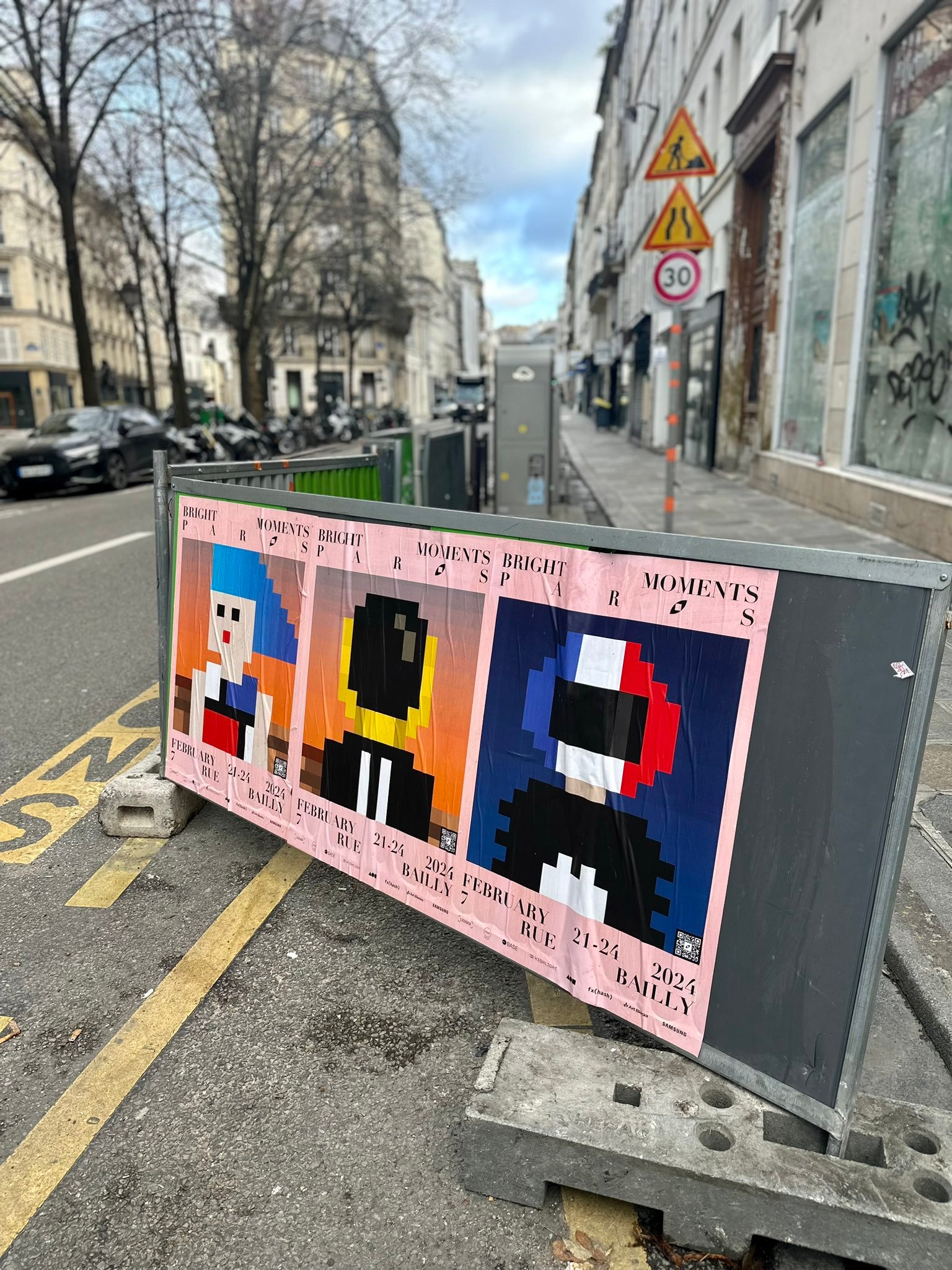
Crypto Citizens are a collection of 10,000 NFTs that were minted between 2021 and 2024, starting first in Venice, California and ending in Venice, Italy. Each of their 10 locations has a sub-collection of 1,000 pieces and I am the owner of CryptoParisian #112, because, well, Paris was the next best city for me after they egregiously skipped over Toronto.
This is one of the most ambitious projects in the NFT art community and, now that they’ve completed their world tour, they’ve just released a documentary called Venice to Venice. It is currently being screened in private venues around the world, but eventually there will be a world premiere at a film festival. This is when I presume they will land in Toronto!
If you’d like to watch the trailer and/or mint it, click here.
I just joined Warpcast. You can find my profile, here.
At first glance, Warpcast is going to look a lot like X. But instead of tweets, you cast. There are also various topic channels, similar to how Reddit works. But the most important difference is that Warpcast is a client for the Farcaster protocol, which is a social network built on Ethereum. This means that it is a decentralized social network.
You won’t see of any this if you decide to sign up. All of the esoteric crypto things are hidden in the background. But it’s there. And it ultimately means that, as a user, you get to own your online identity and whatever content and following you create. Meaning, you can take it with you if you decide you no longer want to use Warpcast and instead want to access the network through another client.
It also means that software developers now have a real incentive to build things on top of the protocol, because unlike with a centralized service like X, they can be confident that they won’t get the rug pulled out from underneath them. And herein lies the feature that will ultimately lead to an enormous amount of new ideas and innovation.
In real estate terms, you can think of developing on top of a centralized service like building within a theme park owned by a single company. The theme park might want you to build on their land, right now, but if at some point it no longer suits their business needs, they can always change the game on you.
On the other hand, building in a city on land you own outright is a lot like developing on top of a decentralized service. Sure, you need roads and municipal infrastructure to service your land (think of these like the above protocol), but you generally don’t need to worry that the city might wake up one day and remove all of this important infrastructure. It’s a given. And that’s a fundamental difference, even if the buildings might look the same in the end.
Venture capitalist Fred Wilson once explained it in this way, “don’t be a Google bitch, don’t be a Facebook bitch, and don’t be a Twitter bitch. Be your own bitch.” What he meant by this is that if you build on someone else’s land, then you’re opening yourself up to being their bitch. What you want to be is your own bitch. And similar to how our cities work, this is the potential of decentralized services.
As I write this post, I currently have 6 followers on Warpcast. If you’d like to be number 7, you can follow me here.
As per tradition around here, I like to bookend the new year with two posts: a post that revisits my random predictions for the year and a post that talks about what might happen in the year to follow. Today’s post is the former. So let’s see how I did:
I thought the interest rate hikes would come to an end in Q1-2023. But that didn’t happen until the summer. I also thought this would lead to a mild recession in Canada. Technically, we are not actually in one, but according to some, we kind of are.
I thought the real estate sector would start seeing some distress in the first half of the year, and that a new equilibrium would be found in the second half. This proved to be overly optimistic in terms of timing. A lot ended up being on pause for the entire year, and I now think that my forecast was at least a year too early. The sea change is still underway.
Given the overall slowdown in real estate, I felt that construction costs had to see some softening. This did, in fact, happen with some of the “earlier trades”, such as shoring and excavation, and we did see some specific trade pricing, such as concrete formwork, come down by as much as 30%. The smart cost consultants we work with now expect to see overall hard costs come down by a further 5-6% next year in Toronto. This makes sense given construction starts are way down.
With me expecting the interest rate increases to stop in Q1, I thought that pre-construction condominium sales would return in a meaningful way by the spring. While we did see some buoyancy around that time, it was short lived. Sales remained nearly shutoff for the entire year, but for maybe a handful of projects. The more successful projects tended to be outside of the Toronto core and at lower price points.
With respect to home prices in more tertiary/fringe markets, my sense then, as it is now, was that these prices would remain below the peaks for many years. In addition to the upward momentum created by low rates, my view was/is that some of this pricing was the result of a bet on urban decentralization. I don’t think that has played out as many expected it to, so that’s why I think it will be many years before the pricing we saw in early 2022 returns.
The momentum around “expanding housing options” in our low-rise neighborhoods is many years in the making. And a lot of progress was made in 2023. Here in Toronto, we adopted new multiplex policies that now allow fourplexes plus an accessory dwelling (so 5 homes in total) on an as-of-right basis. I continue to believe that this momentum is only going to grow. I also think we will see the arrival of more mixed-use opportunities.
I believed that, broadly speaking, urban transit ridership would remain below pre-pandemic levels for all of 2023. This proved to be the case for most US and Canadian cities. But things are improving. For Canada as a whole, it looks like we’ll see full recovery sometime in 2024 based on this trend line.
I thought 2023 was going to be the year I took my inaugural ride in an autonomous vehicle. Sadly, this didn’t happen. The sector as a whole also saw some setbacks. Hopefully I’ll get a chance next year.
I assumed that Apple would finally release its augmented reality device. And though they didn’t technically releaseVision Pro, they did announce it. So I guess that counts for something. I also thought that 2023 would be a big year for “phygital” goods. Maybe it was. Or maybe it was more of a building year. A lot of people are curious to see how Vision Pro does in 2024. It’s not set up for the mass market, just yet, but I think it will do exactly what it is supposed to once it’s out in the wild.
Finally, crypto. I know that a lot of you like to skip over these posts, but it is something that I feel strongly about. A year ago, though, I was pretty bearish on Solana. Boy was I wrong. Solana ended the year as the best performing major crypto asset — up 933% at the time of writing this. Oops! However, Ether is also +91%, and I continued to dollar-cost average in all throughout the year.
Next up: What will, or more accurately, what might happen in 2024.
As someone who collects NFT art, I now see a lot of AI-generated images. Usually I can tell when an image was generated by a computer, but sometimes it’s hard to tell and I’m sure eventually I won’t be able to tell. But if I’m being honest, today I find that I have a bias toward art that was created without any AI prompts. Maybe that changes in the future, or maybe it doesn’t.
Either way, the marginal cost of producing new content, such as images and videos, has now gone down to zero as a result of AI tools. (Here are some of my crappy creations.) That means that, if you aren’t already, you’re soon going to be faced with a deluge of things created in this way. This will almost certainly become the dominant form of content that we consume.
I don’t think that we need to be scared by this future, but I do agree with Ben Thompson and others that it’s going to make authenticity and human-content more valuable. In other words, we’re probably going to need to know what is digitally scarce and what is just another thing generated by AI. Thankfully we have a suitable technology for this: it’s called a blockchain.
I just learned about Blackbird’s technology platform and the restaurant loyalty program that they are currently building. On the surface, the way it works is that you walk into a restaurant and then tap your phone on one of their NFC-enabled chips (see above).
This then signals that you are/were there and so you earn loyalty points, kind of like a stamp on one of those cards in the food court. Except here, the idea is to create an endless and customizable array of wonderful customer experiences.
Maybe after 15 fifteen visits you’re now considered “fam” (decided by the restaurant), and so you get a designated table at the restaurant and your favorite dessert automatically sent to your home on your birthday. This is just one example.
At the same time, you also earn $FLY, which is the platform’s native crypto token (built on Base by Coinbase). And this to me is one of the most exciting aspects of the platform.
Because here is a crypto or web3 product that is seemingly really easy to use. In fact, nobody needs to know that it is doing things on a blockchain. Just tap your phone on the thingy. Earn stuff. And move on.
So I think it’s a really good example of where we’re headed in this space. The underlying technologies are going to recede into the background and all that we’ll see are useful products and services.
Let’s assume that you’re Mayor of your city and that, for whatever reason, you have no need to pander to voters. You’re a benevolent dictator. You can do whatever you think is best overall for the city and it will just happen. What would you do? This is more or less the question I asked on Twitter this morning, and I think it’s only fair that I answer my own question. So here is a non-exhaustive list of items that came to mind while thinking of Toronto:
Substantially increase the pay of public sector workers throughout the city and bonus them based on measurable outcomes. Forget things like time limits on development applications; instead align incentives. For example, if we’re trying to get more shovels in the ground on affordable housing, incentivize people based on building permits issued. I’ll never forget what Roger Martin told me while I was at Rotman. When he became Dean of the school, Rotman was a whatever business school that wasn’t faring all that competitively in the rankings. One of the problems he discovered was that the school’s professors were getting paid far less than those at Wharton, Harvard, Stanford, and so on. So if you were a star, why would you ever want to teach at Rotman? He immediately matched the salaries of those top-tier schools and then, not surprisingly, the top-tier talent arrived. You get what you pay for.
Immediately price roads and congestion, and direct, to the fullest extent possible, the funds toward transit and cycling infrastructure. At the same time, the planning and building of transit would be depoliticized. There would be a reccurring funding stream and a plan that we’re continually building out. Minimize protracted debates. Never stop building. There’s a lot of talk this mayor election about solving traffic congestion. I have yet to see a plan that will actually work. Accurately pricing congestion likely won’t be popular, but I can guarantee you that it will be highly effective.
Ensure that property taxes are sustainably covering the costs of operating the city and then, at a minimum, peg all future increases to CPI.
Make any new housing development less than 12 storeys as-of-right. That would mean, no rezoning process and no site plan approval; just straight to building permit.
Empower the private sector to build affordable housing through incentives and subsidies. Affordable housing isn’t feasible to build on its own, which is why nobody is doing it. Inclusionary zoning also won’t get us there. Make developers want to build it and they’ll do it.
Liberalize licensing and cut red tape to empower small entrepreneurs across the city in various industries. A perfect example in my mind is street food. Toronto is the most diverse city in the world with some of the best restaurants, and yet the only thing you can buy on the street is a stupid hot dog. If we empowered small entrepreneurs to setup shop on our streets, we would easily have the best street food scene in the world. And I am positive that there are countless other latent opportunities in this city that are being held back by dumb and archaic rules.
Focus on art, design, culture, and innovation as central pillars of Toronto’s brand. Miami is a good example of what this approach — along with favourable taxes and nice weather — can do for a city. I’ve said this before, but here’s just one example: Toronto is in many ways the birthplace of the cryptocurrency Ethereum. Why is nobody talking about this? Why are we not celebrating and leveraging this? It’s a missed opportunity. Broadly speaking though, I think just having and doing three things can be effective in promoting new ideas for these pillars: have reasonably affordable housing, be a city that young people want to live in, and remain open and tolerant to immigrants.
Stop thinking of the night-time economy as a nuisance and instead think of it as a powerful economic development tool. I recently responded to this “night economy survey” that the City of Toronto released and the obvious bias is that nighttime things are seen as a terrible nuisance. In other words, “tell us how do we make all of this less annoying for grouchy voters.” My response was to extend last call to 4am and to start thinking of it as an opportunity to draw in young people, tourists, and whoever else. This complements my previous point.
This is, again, a completely non-exhaustive list. But if I had to summarize the overall ambition, it would be to make Toronto a truly exceptional and remarkable city. We should never be happy with mediocrity.
Like everyone else, I have started playing around with Midjourney to create AI-generated images. Here are two that I created last night using the prompt: “A silver Land Rover Defender driving through a snowstorm in the mountains of Utah.”
Now, you can tell that these are AI-produced images, but it’s still wildly impressive that something like this can be easily generated in a matter of a few seconds. And that’s the thing about AI: it’s easier to get, especially compared to crypto. It’s immediately useful and it’s immediately clear what this can and will disrupt.
Levis, for example, just announced that it will start using AI-generated photography in lieu of actual fashion photoshoots. This is obviously suboptimal for photographers, models, makeup artists, and so on, but a hell of a lot easier for Levis. I would also imagine that the same thing will happen to real estate renderings and many other things beyond just imagery.
Ben Myers and Steven Cameron recently speculated on their podcast — Toronto Under Construction — that AI could be used for reviewing development applications. Imagine how much this would speed up reviews and the delivery of new housing! So there are very good reasons for why the hype cycle has moved over to AI from crypto and NFTs.
it is very important that crypto exists in a world of AI
However, I’d like to go on the record saying that my gut tells me that this will only make what crypto offers even more important. Permissionless public databases (as opposed to databases controlled by individuals/companies) and the ability to demonstrate authenticity/ownership, feel like two important things to me in a world where computers are constantly generating a flood of new content and nobody knows what is “real” anymore.
It’s certainly a lot less tangible than, “hey, check out this badass Defender driving through the snow.” But I feel strongly that these two innovations will end up working together.
As far as I know, there are now at least two mercury-like and bean-like public art sculptures in the US by Anish Kapoor. The first is, of course, in Chicago’s Millennium Park (pictured above). Commonly referred to as just “The Bean”, the sculpture was dedicated in 2006 and, since then, has gained international fame as a solid place to take a selfie.
But as of this year, there is now a second “mini-bean” in New York’s Tribeca neighborhood. Sitting literally underneath 56 Leonard (a residential tower designed by Herzog & de Meuron), this bean varietal was first announced in 2008, but has taken a few years to be completed. The building itself was completed about 5 five years ago.
It turns out though, that all beans are not made equal. Here’s some initial feedback from Bloomberg CityLab’s Kristin Capps:
New York’s half-bean feels half-baked: a disappointing imitation for the city and a franchise play by the artist. For New York to install the lesser version of a Chicago icon reeks of second-city status. And while the original sculpture is still a treasure, the second iteration feels like a monument from 20 years ago — because it is.
But it’s all perception. If Chicago’s bean had never been unveiled in 2006, and this was the first shiny urban selfie bean, then I’m sure we’d all be headed to Lower Manhattan with our phones. But instead, here we are talking about how it “reeks of second-city status” and how it is the “eyesore that no one asked for“.
It’s all very fascinating if you think about it. And it’s a perfect example of why blockchains are proving to be so valuable in the world of art. Because with art, provenance and authenticity are everything. You need to know where it came from, who made it, and that it’s scarce. And as we can see here, it can be the difference between loving a bean and hating a bean.
The central bank tightening and interest rate hikes that we saw last year will come to an end in the first quarter of 2023 as inflation gets under control. This will ultimately lead to a recession but my sense is that it will be more mild than severe. For this reason, I don’t think anyone should expect ultra-low rates to return in the short-term.
Much of the real estate sector went on pause in the second half of 2022. But ultimately this reset to a more balanced market is going to be necessarily painful for some. And I think we will see that pain play out in the first half of the year. This will obviously be bad for some, but it will create opportunities for others.
Construction costs tempered in the second half of 2022 and started to show some evidence of price softening. I think we will see more of this in 2023, which will be healthy for the market. Cost management over the last few years has been a meat grinder for the development industry.
Pre-construction condominium sales for well-located projects will return in a more fulsome way by the spring. This will be driven by buyers now having clarity around where interest rates will be hanging out in the short-term and, in the case of Canada’s largest cities, by record-high immigration levels.
For the tertiary/fringe housing markets that saw big run ups in pricing during the pandemic, I unfortunately think it will take many years for prices to fully rebound. The price increases we saw in these submarkets were of course a result of low rates, but it was also driven by a view on urban decentralization that in my view did not actually materialize.
The desire to add more housing to single-family neighborhoods will continue to pick up steam across North America. How exactly this plays out will be market specific, but in Toronto I expect to see new planning policies put in place, as well as supportive building code changes.
Public transit ridership will remain below pre-pandemic levels throughout 2023. This will continue to exacerbate public finances.
Autonomous taxis will grow rapidly this year. Companies, such as Cruise, will expand into a number of new US markets and, at some point during the year, I will take my very first ride in an autonomous vehicle.
2023 will be a big year for augmented reality and “phygital” goods. Last year I thought Apple would release a new product in this space. That didn’t happen, but it will this year. At the same time, we will see more companies releasing products that blur the lines between our online and offline worlds (hence “phygital”). This will include NFTs and other crypto-related things that will start to operate more seamlessly in the background of consumer-facing products/services.
I continue to be bullish on Ethereum and I think it will overtake Bitcoin in terms of market cap in the next 2-3 years. But I was very wrong about Solana last year. And now I am struggling with its value proposition. Today, layer 2 chains such as Polygon feel more likely to win out. Broadly speaking, I suspect 2023 will be a positive year for crypto, but not a record-setting one.
In summary, I think we are going to see more pain at the beginning of 2023, but that on the other side of it will be healthier and more balanced markets. This means that we can look forward to the end of the year feeling much better than it does right now. All of this said, please keep in mind that I’m often wrong and that nothing in this post should be construed as actual advice.
This morning, I came across an FT article talking about how mainland Chinese people are right now flocking to Macau to receive western mRNA vaccines. Apparently the Special Administrative Region has a single hospital offering the western varietals to “tourists”, and lots of people now want them and presumably think they are more efficacious than the Chinese alternatives. This is not surprising.
So what actually stood out to me was the photo that FT chose for the article. It’s of the half-scale Eiffel Tower replica that was built as part of a $2.5 billion casino resort in Macau known as The Parisian Macao (pictured above). There’s even a faux Louvre-like building behind it and a “Jardin” in front of it so you can get that axial view of the tower. Welcome to Paris!
Of course, this is not the sort of thing that excites me in the least. I understand why it is done and that there is clearly a market for it, but I don’t get it. It feels totally empty. Have we really run out of new ideas? So I decided to tweet something out to this effect and, in it, I included the fun fact that Macau is a former Portuguese colony and currently a Special Administrative Region of China, just like Hong Kong.
But it turns out that you can’t say this on Twitter. I don’t know why, but my tweet was immediately filtered out of my feed — twice. Instead what you can say is “Macau is a SAR of a country that starts with C and ends with A.” Apparently, this is acceptable Twitter language. Hmm. This has never happened to me before.
Thankfully, I have my own domain (which you are now reading from) where things are much freer. And collectively, we have things like the Ethereum Name Service, which is trying to create an even more censorship-resistant version of the internet. So today I decided that it was time to cancel my Twitter Blue account and put some more money into ENS tokens. This feels more like the future.