Daily insights for city builders, delivered every morning at 6 AM ET. I’m Brandon Donnelly — a Toronto-based real estate developer and founder of Globizen. I’ve been writing here since 2013.
The Project Bench team spent the last several weeks capturing photos and videos of Canada’s largest wine region — the Niagara Benchlands (link is to the official tourism website). And today I’m excited to share that we’ve launched our own new placemaking website called On the Bench.
The purpose of the site is to help celebrate the region. There’s also some very preliminary information about Project Bench. In our humble opinion, we don’t feel that the Benchlands region receives the attention that it clearly deserves. More people are familiar with Niagara-on-the-Lake and Niagara Falls, especially globally.
The Bench is a distinct area, with its own unique character and with more — and arguably better — wineries. This v1 website is the start of us working to demonstrate this. So if you’re a local business or community member that would like to collaborate with us on this overall initiative, we’d love to hear from you.
To join the Bench community and be first to learn more about Project Bench, email subscribe at the bottom of the page, and follow us on Instagram and X.
We spent the last few days in Scuol, Switzerland. Scuol is a small mountain town with under 5,000 people (2018 figure) near the eastern border of the country. The town first achieved notoriety in the 1860s because of the various naturally-occurring mineral waters that can be found in the area. They were / are thought to have healing properties, and so a spa tourism destination was created. Skiing and snowboarding were later added to the town’s repertoire.
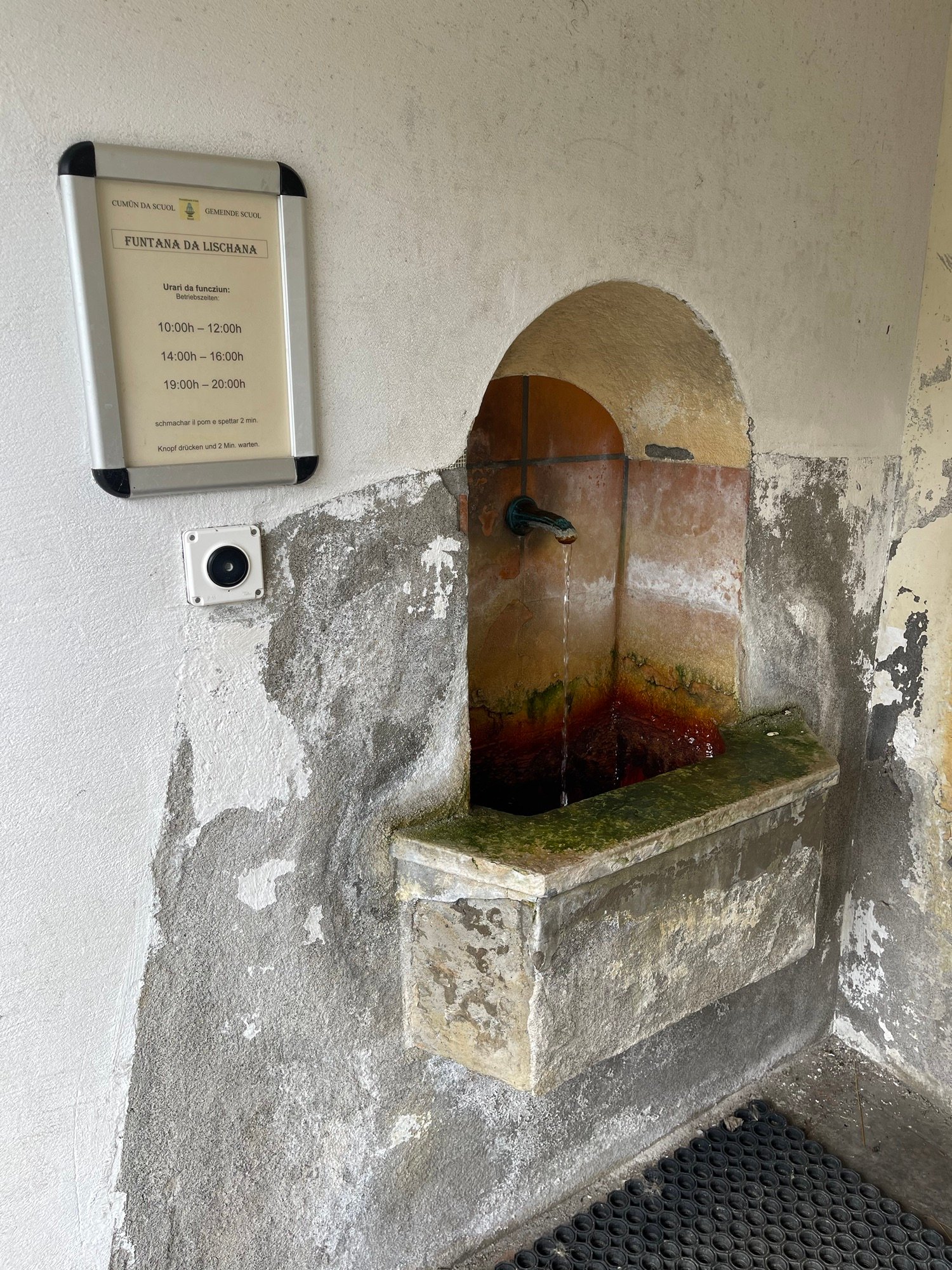
We tried the water from this fountain — the Lischana source:
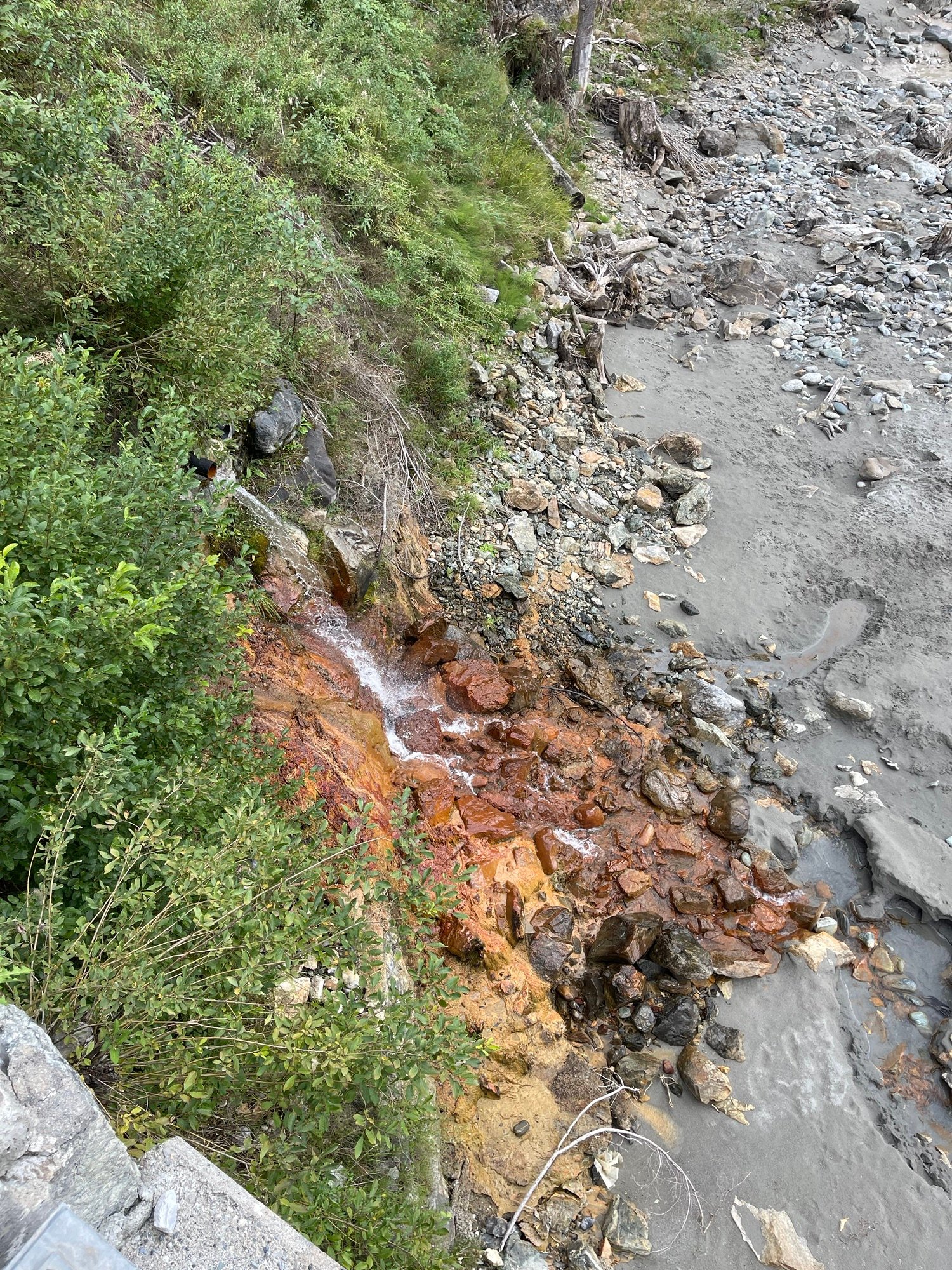
The best way I can describe the taste is to say, imagine water that has had pennies soaking in it for the last 100 years. That’s what it tastes like, which is not good. But it is rich in magnesium and other things, which is why people (especially athletes) seek it out. It comes out clear from the source but if you let it sit in a bottle it will naturally become carbonated and turn brown. That’s why the embankment above has the color that it does.
I had a handful of respectable sips. Hopefully that’s enough to make me strong. A big thank you to Klaus, Peter, and Jaimie for the invite to Scuol!
Our growing desire — and ability — to live, work, and/or play in other places is, in my opinion, a powerful macro trend. We spoke about that here, here, and here. And one of the things that has obviously empowered this trend is the growth of short-term rentals.
But right now, the winds are not in favor of this model.
In September 2023, nearly a year ago, New York City enacted one of the strictest short-term rental laws to date, requiring hosts to be physically present while a dwelling is being rented. Yeah, that eliminates the majority of use cases.
Then in June of this year, Barcelona mayor Jaume Collboni announced a complete ban of short-term rentals starting November 2028. This is expected to return some 10,000 apartments to the long-term housing market.
Regardless of whether it will be effective, it is obvious why this is being done: housing unaffordability and too many annoying tourists. (We are flying to Barcelona next week and will endeavor to not be annoying.)
But at the end of the day, this is not going to extinguish our underlying desire to live, work, and play around the world. So I think these restrictions will create new opportunities to service this demand. It also strengthens the bull case for the tried-and-true formula of purpose-built hotels.
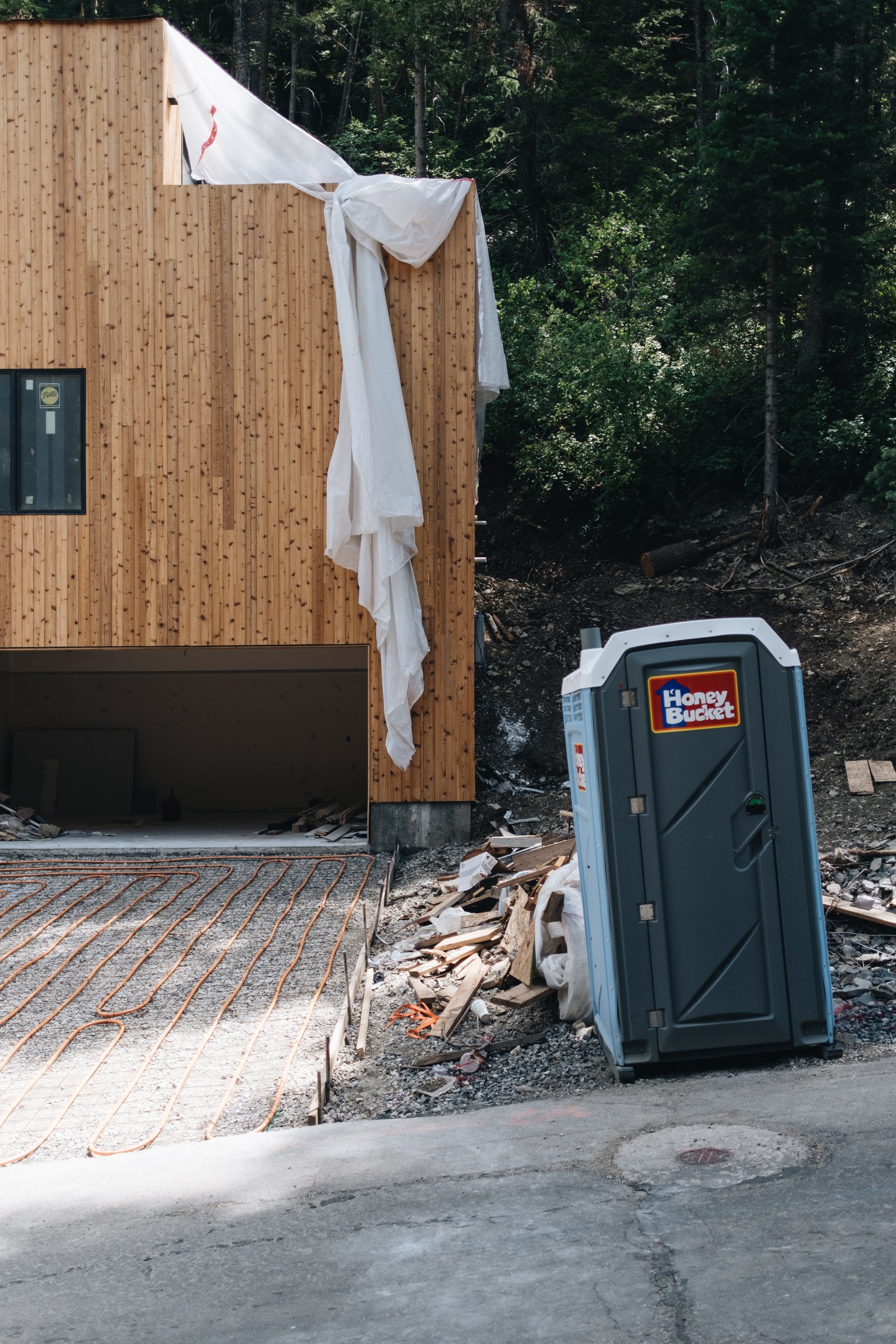
We are into the final push at Parkview Mountain House. The radiant tubes are in for the heated driveway and walkway (essential), and the concrete is scheduled to be poured later this week. The kitchen countertops were installed this morning, and the backsplash was templated, with install scheduled for this Wednesday. The finish carpenter is back this week, and then the painters will be coming next week. The appliances and hot tub are also on standby in their respective warehouses and will be delivered to site as soon as the team is ready. As always, things are frenetic. But we’re pushing to get occupancy this month. I’m also excited to announce that we just hired an excellent management company. We’re in the midst of that onboarding process, and we’re looking forward to starting bookings sometime this fall. If you haven’t yet added yourself to our list, drop your email over here. We’ll be offering a bunch of discounted bookings on a first-come, first-served basis to the people on this list.
Maison Kitsuné is a French-Japanese lifestyle brand that was founded in 2002 as both a record label and a fashion house. Apparently, the founders — Gildas Loaëc and Masaya Kuroki — started out by DJ’ing in order to promote their brand and clothes.
In 2005, they released a full ready-to-wear collection and, according to Wikipedia, fashion has come to represent about 90% of the company’s revenue (2020 figure).
In 2013, Kitsuné opened their first coffee shop in Tokyo. And since then, they have expanded around the world, opening cafes in Paris, Vancouver, Shanghai, and many other cities. As of today, I think they have 35 around the world.
Their latest venture is something a bit new though. It’s called Desa Kitsuné, it’s located in Canggu, Bali, and it’s their first ever clothing shop/restaurant/club. It also comes with a pool and the idea is that you can do lots of different things here: shop, lounge during the day, and/or party at night.
I always find it interesting when different ideas and approaches are combined. And that’s what Kitsuné continues to do. They also plan to do more of it. According to Monocle, the company wants to reach 100 cafes/restaurants around the world in the next 5 years.
Sometime before the Paris 2024 Olympics this summer, the International Olympic Committee (IOC) is expected to announce who will host the 2030 and 2034 Winter Games. Right now, the two frontrunners are thought to be the French Alps and Salt Lake City/Park City — I think respectively.
Obviously these are two fantastic winter locations. But one of the things that the local committees need to do before they can secure the games is show the IOC that they have enough hotel rooms on hand. More specifically, they need 24,000 rooms reserved for 33 nights. This covers 17 nights during the games, 14 nights before, and 2 nights after.
Most of these rooms, about 10,000 or so, will go to journalists.
I didn’t fully appreciate — or I just didn’t think about it — that this was something that needed to be done 6-10 years out. Because right now there is a human running around try to lock up these rooms in advance of the decision this summer.
According to the Salt Lake Tribune, they’re already at 85% of the requisite 24,000 rooms. Though some of these rooms have yet to be built and some of them reach into neighboring Wyoming, which apparently isn’t an atypical distance when it comes to meeting this accommodation requirement.
For obvious reasons, I’m rooting for Utah here. I really want them to get the Winter Games.
The building season is short in Park City. There was still snow on our site in May and there was snow again on our site by October. You can certainly build through the winter, but it’s not ideal. It slows you down, and so the team has been racing to get “closed in” before the real winter weather arrives. (Park City Mountain Resort opens for the season on November 17.)
Right now, it looks like we’ll be finished framing by early next week. We have our framing inspection scheduled with Summit County on Wednesday. Here’s a progress shot of level three from last week:
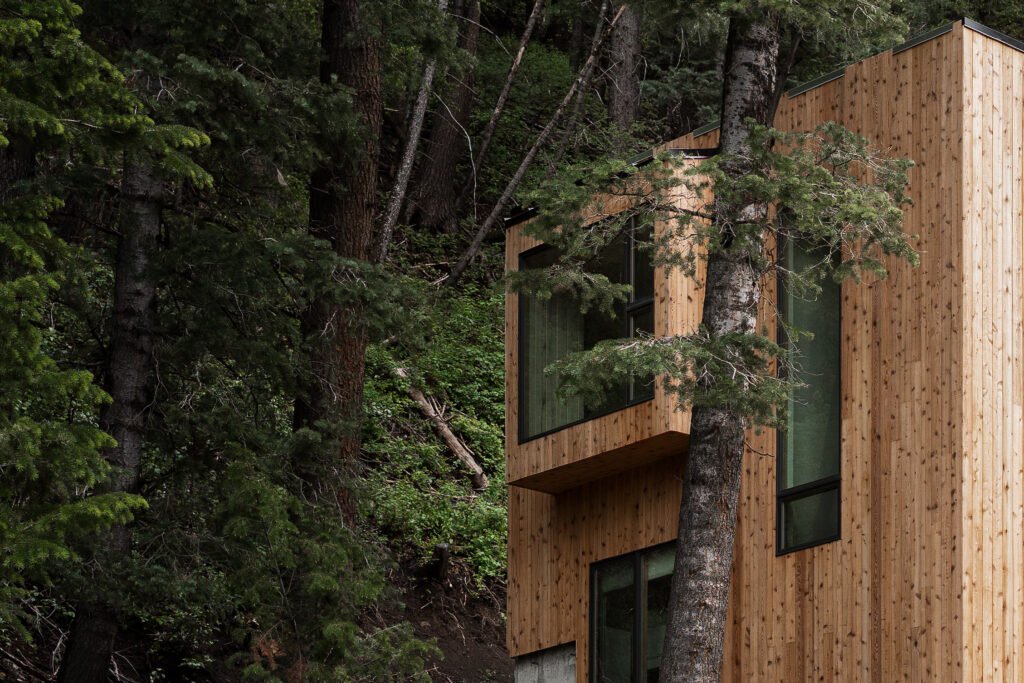
This is the top floor of the house, which will house the kitchen, dining area, living room, terrace (which is where the above photo was taken from), and two bay windows. The far one is going to serve as a seat in the living room, and the closer one (on the right) is going to be a workspace area. In both cases, they’re designed to orient you towards the trees and the mountain.
Overall, this was Mattaforma’s design strategy — to create a kind of introverted house. The windows facing the street are generally small and placed to frame very specific views of the landscape; whereas the windows facing the trees and mountain are generous. The intent was to always connect you with nature as you move throughout the house.
Sadly, PMH won’t be available for rent this winter. But if you’d like to get on the list for next summer and winter, click here.
I’m a big fan of Anthony Bourdain and I have seen a lot of his shows. However, up until last night, I was under the impression that he had never done an episode about Toronto. Turns out I was wrong. Yesterday I discovered that, back in 2012, he did one as part of his two-season show, The Layover.
As a born and raised Torontonian and as a fervent supporter of this city, I’m always a combination of excited and nervous before I watch a show like this. I’m excited because I love Toronto and I like seeing it showcased. But I’m nervous because, what if they don’t do a good job showing it off?
Maybe it’s hometown insecurity, or maybe it’s just my inner desire to want to properly sell Toronto to the rest of the world. Either way, my mixed feelings were not unfounded.
The episode opens with Bourdain coming into downtown from the airport and immediately saying, “It’s not a good looking town. They sort of got the worst of the architectural fads of the 20th century. It looks like every public school in America, every third-tier city library, Soviet chic, butt-ugly, glass box.”
Things get generally more positive after this initial impression, and eventually Bourdain does admit that the city has great food, nightlife, diversity, etc. But there is this interesting moment in the middle of the episode where a bunch of Torontonians are asked: What one thing would you say best describes Toronto?
What is our thing? There are, of course, the obvious answers. We are diverse. We have great ethnic foods. We have numerous sports teams. And people are generally nice. But these are a little too generic and boring for me. There are also truly unique features like our ravine network, but I wouldn’t call this our single most notable feature.
The right answer, in my view, is that Toronto is the economic and cultural capital of Canada. It used to be Montréal (which you all know I love deeply), but that’s no longer the case today. Broadly speaking, there’s only one global city in this country and, like it or not, it’s Toronto.
I think it’s important to recognize this ranking because economic opportunity is one of the principal reasons that people live in cities in the first place. And if we are to compete globally, we are going to need to be both confident about our place in the world and insanely ambitious about our goals.
So that’s my answer: Toronto has global city status. But clearly we need to be much better at recognizing and building on it.
This past week, New York City enacted a new short-term rental registration law that is not very friendly toward platforms like Airbnb and VRBO. Here are some of the new rules:
All hosts must register with the city
No more than 2 paying guests can stay in a short-term rental at one time, regardless of the size of the home (does this mean families are excluded?)
Hosts and visitors must leave all doors inside the dwelling unlocked (presumably this is to stop people from creating self-contained suites within a larger home)
And the host must be physically present while the dwelling is being rented
So in a way, this takes us back to the original use case of Airbnb: “Hey, I have extra space in my home. Would you like to rent this mostly clean air mattress in my living room and be my roommate for a bit?” Of course, this is not how most people like to Airbnb today. And so this is also a kind of ban on short-term rentals in New York City.
It’s certainly stricter than the regulations we have in Toronto. Here, it must be your principal residence. Meaning you’re only legally allowed to operate one short-term rental at a time. But you don’t need to be physically present while the home is being rented. If you want to earn some extra cash while you’re away in Rio de Janeiro for New Year’s Eve, you can do that.
However, the rules are still fairly strict. For instance, if you have a basement apartment or a laneway suite on your property, you are not technically permitted to short-term rent these dwellings, even if you live in the main portion of the home. It has to be your exact principal residence.
Presumably the intent behind this is to not remove any housing from the long-term rental market. And if it’s your principal residence, then yeah, there’s no net loss. Though this feels like an overreach to me. It’s the same property and a homeowner could very easily decide to not even do a long-term rental in these secondary suites.
But overall, I guess it’s still slightly more flexible than forcing hostel-like short-term rentals. Long live the hotel?
The County Manager has recommended approval of the deal and these are the terms:
– $55 million total purchase price (about $6,413 per acre)
– Structured through a $15 million three-year option to purchase, with a right to extend for another year for an additional $5 million (option fees to be applied toward the purchase price)
– During the option period, the County will have control of the property and pay $5,000 per month in rent
Another way to look at this deal is that Summit County needs to initially come up with $15 million of equity. This is because they are getting seller financing for the remaining $40 million. (Implied loan-to-value of about 73%.)
After 3 years, they will have to put in another $5 million, which lowers the implied LTV to about 64%. But in both cases, and assuming the $5k per month is all the County needs to pay, there’s effectively no interest on this 4-year “financing”. ($60k per year on $40-45 million.)
The purchase price is also only ~$6k per acre, which should tell you that this is not development land. Its value is what you see here:
And this is exactly what Summit County intends to do with the land: conserve it. As one of the last contiguous mountain ranches in the area that is privately owned, this sure seems like a win for the community. It’s a pretty good deal, too.