Daily insights for city builders, delivered every morning at 6 AM ET. I’m Brandon Donnelly — a Toronto-based real estate developer and founder of Globizen. I’ve been writing here since 2013.

Category: Hospitality

  • Footings and foundations in Park City

    We poured the concrete footings/foundations for Parkview Mountain House this week. Above is a photo of the pour. We’re about two weeks behind schedule because of delays related to site works and excavation. (We’re building into the side of a mountain.) But I’m hopeful we can make it up once we finish concrete work and move on to wood framing next month.

    For those of you who like details, here’s a section showing the footing and retaining wall on the back of the property facing the slope of the mountain:

    Our tallest retaining wall is going to be 15 feet high, which, as I understand it, is more or less the maximum we could have done here without getting into more elaborate structural solutions (such as tiebacks). So the team spent a lot of time solving a design puzzle that involved the height of this retaining wall, the maximum allowable zoning height for the site, and our choice of established grade.

    Onward. More concrete to come and then we move to wood. It’s a race to get “closed in” before the snow starts up again.

  • Can I take your order — from somewhere else?

    There is a Freshii at the bottom of our office building that is staffed by exactly one human. This human’s main job is to prepare food orders and then distribute those food orders to the humans waiting for lunch.

    If you’d like to place an order, well that is done through an iPad-like device on the counter and a video feed of someone that is seemingly located very far away from the bottom of our office building. You just tell the person on the screen what you’d like and they ring it through.

    And if you’d like to add a drink to your order, simply grab it yourself, hold it up to the iPad, and then boom. There’s very little room for chitchatting. This is an important lunch transaction.

    Virtual humans are not a new thing. Some, though not many, residential buildings use them in place of in-person concierges. I don’t know exactly how much money this saves, but I would imagine that it’s meaningful. You can now leverage one human across multiple buildings.

    So I think there’s no question that the world is heading in this direction. That is, less rather than more human interaction. But clearly this is all about utility. It’s about delivering you a healthy lunch bowl as quickly and efficiently as possible.

    If you’re instead looking to sit by yourself at a bar and learn something from the bartender, or you’re looking for a truly remarkable hospitality experience — well those are different things all together.

  • Vacation rentals in Park City

    We spent his morning meeting with prospective property managers for Parkview Mountain House. Here’s what we learned about the short-term rental market in Park City, Utah:

    • Property management fees generally range from 20-35% of revenue (these are turnkey solutions)
    • Airbnb is somewhere around 80% of the market here; though it does tend to skew toward slightly smaller rentals, whereas VRBO skews larger
    • Sundance Film Festival and New Year’s Eve are the two busiest times in Park City (demand greatly exceeds the available vacation rentals — 120%?)
    • Many Sundance guests tends to be people on expenses accounts: not price sensitive, but apparently very demanding
    • Winter is obviously peak demand because of snowboarding and skiing, but demand is still strong in the summer because of cycling, hiking, golfing, fishing, etc.
    • The two slowest times are spring (mud season) and fall
    • Many PMs will track booking lead times, which is the period of time between booking and check-in
    • This past winter season, demand was strong but average lead times were way down — meaning people were booking last minute and responding to snowstorms
    • During heavy snowfall seasons, like the one Utah had this past winter, you’ll likely need to budget for roof snow clearing (a few thousand for the season)
    • Heated driveways are a very good idea in the mountains
    • The most popular / most searched amenity is by far a hot tub; servicing one will run you about $125 per month

    I always find it fascinating to dig in and learn about a new industry and/or market. And that’s exactly what we did this morning.

  • Canadian complacency

    The founder and Editor-in-Chief of Monocle Magazine, Tyler Brûle, recently had a nice trip to Ottawa:

    If you’ve never been to Ottawa, don’t bother. Of all the G7 capitals, it’s one that hardly conjures up much in the way of attractive images. Don’t believe me? Try it. What comes to mind? What stands out? You see what I mean? No Big Ben, no Lincoln Memorial, no Eiffel Tower. Ottawa might have had an easier time when Germany was partitioned and Bonn was its capital but that credit ran out when Berlin was reinstated as Haúptstadt and the Brandenburg Gate roared back as a symbol for the Federal Republic’s capital.

    He and his mom also thoroughly enjoyed their hotel:

    We walked into the bar and the whole space seemed gripped by a similar force that plagued the front desk: no speed, movement or sense of urgency. A man-child showed us to the table and barely said a word. His colleagues at the bar were having their own discussion, disconnected from the patrons around them. I started to laugh. My mother urged me to stop. “It’s incredible that this is the best that our country can do for people coming to the capital, no?” I said.

    As an unabashedly proud Canadian, this is deeply upsetting. It is upsetting because a lack of movement, a lack of urgency, and an overall lack of engagement are truly terrible qualities to possess. But more importantly, it is upsetting because one could argue that Tyler’s Ottawa and hotel experiences were a microcosm of some broader national issues around Canadian complacency.

  • Niagara’s wine country is missing something

    Neat B and I were in the Niagara wine region over the weekend and I was reminded of a few things:

    • Winemakers in Niagara will tell you that southern Ontario isn’t the easiest of places to grow and make wine. But whatever, I think that Niagara is highly underrated. Niagara has some exceptional wineries that you really should explore if you aren’t familiar. Ontario is also the largest ice wine producer in the world, by a long shot. We produce something like 90% of the world’s supply. Ice wine can be a bit of an acquired taste — they’re sweet. But if you get a chance, try one from Stratus. They are supposedly the driest in the world.
    • I don’t know how the wine demographics have shifted in other regions, but we were told over the weekend that 10 years ago it was mostly gray hairs who were out at wineries buying wine. Today, there are tons of young people in their 20s, 30s, and 40s. And we certainly saw that over the weekend. This shift has winemakers now adjusting their wines. I couldn’t tell you what a younger wine palate wants, but apparently it’s something.
    • Lastly, there is a complete lack of cool and modern boutique hotels in the area. I would imagine that part of this is because the Niagara wine region is still emerging. But I think the other reason has to do with my previous point: younger people now want to go to wineries and the hospitality sector hasn’t yet caught up. This strikes me as a massive opportunity.
  • A few observations about Salt Lake City

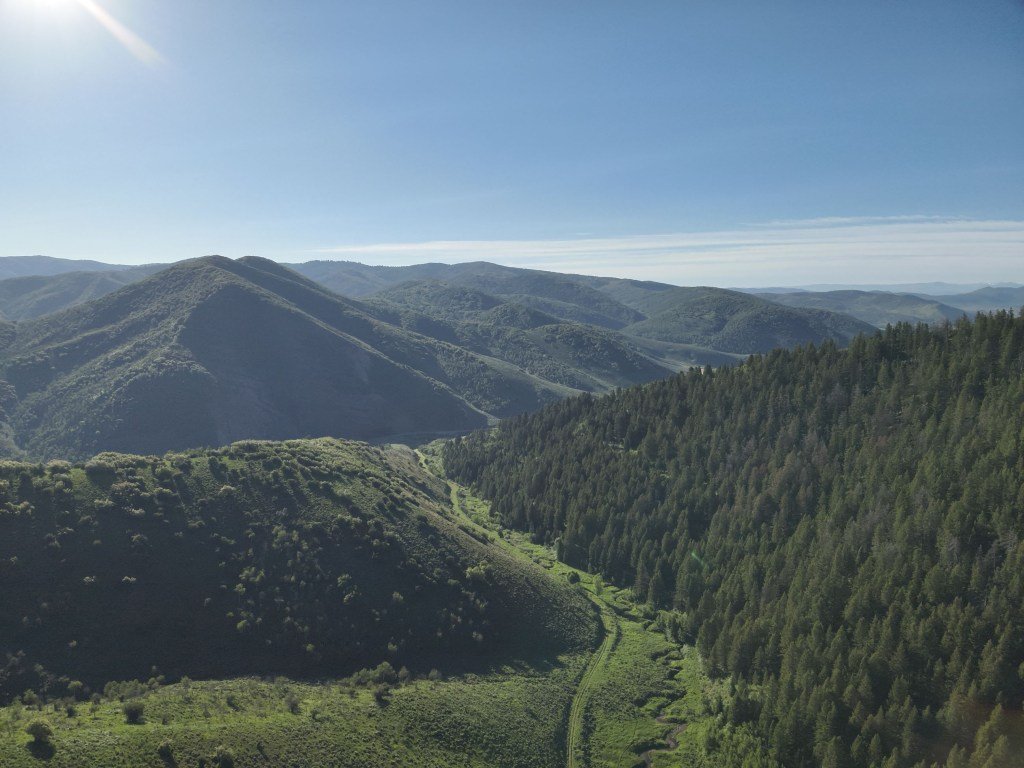
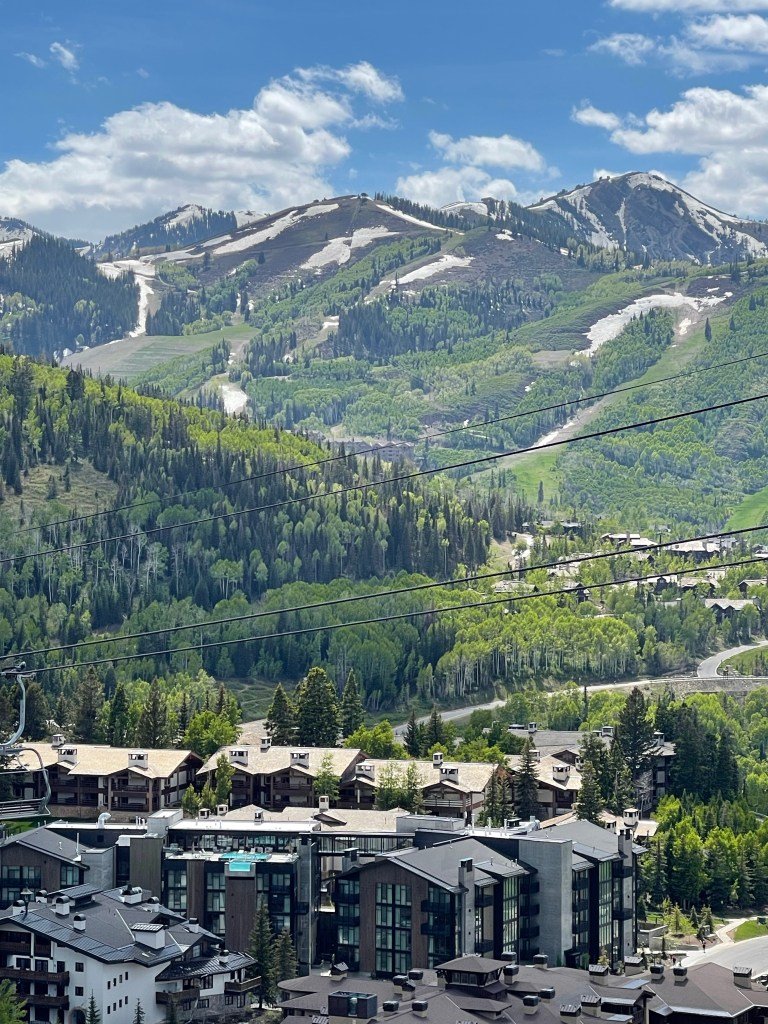
    Utah is beautiful. See here.

    People in SLC are really nice. Strangers greet you on the street. Motorists are also more polite and patient. I had no idea how to respond. I suspect it might have something to do with there being less traffic and, in turn, less frustration. But again, even if you ignore what happens on the road, people are nice.

    You will need a serious utility vehicle to navigate the topography of this region. Venturing into the surrounding canyons requires 4-wheel drive or chains during snowstorms. I was only there for a week and already I have visions of a classic Defender in my mind. Do they come in electric versions?

    The streets are too wide for proper enjoyment as a pedestrian. This is a challenging problem to fix, as I have mentioned before. That said — and this is going to be an unpopular opinion — the city felt void of any sort of real traffic. The distances travelled are great, but the highways actually flow freely. You also never really need to worry about parking.

    Electric scooters are popular in SLC. As is cycling — both for getting around and as a reason to wear tight-fitting bright clothes.

    SLC feels as if it is both under the radar and also rapidly emerging. My new favorite restaurant in SLC is a place called Post Office Place. We walked in without a reservation on a Friday night and they gladly took us. I couldn’t understand why the place wasn’t rammed. I mean, they have Marseille-style panisse on the menu!

    The Granary District is an area to watch. It is a former industrial area to the southwest of downtown. It is already home to breweries, food halls, and creative offices. But it needs some more time to properly fill in. We stayed at the Evo Hotel in Granary (highly recommend). The campus amenities include a rock climbing facility, an indoor skatepark, and plenty of places to work and Zoom.

    Most of the new infill housing appears to be mid-rise in scale and most of it is wood-frame construction on top of concrete.

    By my estimation (and by estimation I mean that I have a spreadsheet for this), the ski and snowboard communities surrounding SLC are some of the most accessible in North America. Land at SLC airport and you’re in the mountains in 20-30 minutes.

    Park City-Canyons is the most well-known ski destination. But if you’re a more aggressive skier — the kind that keeps your gloves together with duct tape and counts the number of ski days per season — you’ll want to head over to the Cottonwood canyons and places like Snowbird and Brighton.

    Snowbird remains one of my all-time favorite ski destinations for two reasons: the mountain itself and the brutalist architecture at the bottom of it. There’s none of that faux alpine crap over here — just exposed and unabashed concrete and wood. And who doesn’t love brutalism, right? (I haven’t been to Brighton yet but one of my local friends told me that it’s a great snowboarders mountain.)

    The Canyons Village at Park City is developing really nicely. As I understand it, it’s only about 30-40% built out at this stage. The Pendry Hotel just recently opened (announcement here) and I can tell you that the restaurants were generally busy every night of the week (summer experience). The project team did a wonderful job creating a place and a new anchor in the village.

    What did I miss in this list?

  • The fast-foodification of cities

    Greg Isenberg recently wrote about what he refers to as the fast-foodification of everything — including cities. His arguments are that (1) we have reached peak sameness (Toronto is largely indistinguishable from, say, Sydney) and (2) the best brands and companies going forward will be local, unique, and community-driven.

    I don’t know how to assess whether we have reached peak sameness, but I do know that, whatever we are experiencing right now, is at a minimum 100 years in the making. The International Style (of architecture), which emerged after WWI, is exactly what the name suggests. The intent was to fashion an approach to architecture that worked anywhere in the world. Location, climate, and context were all irrelevant.

    This approach has been widely criticized for the reasons you might expect and for the reasons that Isenberg outlines in his post. But sameness is not exclusively the result of European architects who wanted to eschew ornament and local flourishes. As the world continues to globalize and become “smaller”, there is an inevitability to this growing and continued sameness. Business wants economies of scale.

    But there is no question that, more than ever, people are craving unique and local experiences and places. And if you can create that in our globalized world, you are going to win.

  • Coolest boutique hotels in the world

    Today’s post is a question for all of you: What would you say are the coolest and most remarkable boutique hotels in the world right now?

    What is clear to me is that travel (and flexible work) will continue to be a growing market and that there is demand for a variety of different hospitality offerings.

    Sometimes people might want to stay in an Airbnb (which is usually a property owned by an individual or individuals).

    Sometimes people might want to stay in a branded and/or membership-based rental such as a Sonder or a Wander (which, in the case of Wander, is a collection of properties owned by the same company).

    And sometimes people might want to stay in a tried-and-true hotel.

    I think that all of these offerings serve different needs. And at the end of the day, I don’t believe that Airbnbs, or whatever permutation they take, will ever replace the best hotels. There are things you can get in a hotel that you can’t get elsewhere.

    So today I am hoping to crowdsource some of the best examples from all of you. Thanks in advance for any ideas you might send over.

  • Robotic furniture startup Ori partners with Marriott Hotels

    Space-saving transformational furniture isn’t necessarily a new thing. We’ve all seen a murphy bed. And people like Graham Hill (of LifeEdited) have been designing and building out small urban apartments that magically transform for what seems like a decade. Perhaps it’s even longer than that.

    But I wouldn’t say that robotic and transforming furniture has hit the mainstream yet. There is, however, an argument to be made that it’s kind of inevitable. As the price of construction and housing continues to increase, there will be a continued push to do more with less space.

    Enter companies like Ori, which offer robotic and tech-enabled furniture for both end-users, as well as developers. Ori is already in 57 buildings across the US and, at this year’s Consumer Electronics Show (CES), it was also announced that they have partnered with Marriott to start rolling out their furniture in the hotel space.

    This to me feels like a perfect use case.

  • The “hotelization” of housing

    When I was younger and looking for any excuse to travel (I’m not sure this has changed), there were periods of time where I “lived” for weeks and months in hotels and in spaces that today we would characterize as co-living. I always liked the idea of living in a hotel. It was carefree. There were amenities. And you got to meet people from all around the world.

    Well it turns out that these kinds of living arrangements aren’t just attractive to poor university students. We have seen a proliferation of different living and hospitality concepts over the years, and I don’t see this trend slowing down. A recent example, which I just learned about via Globetrender, is “the Other House”. Their first location, pictured, above, is scheduled to open this spring in London’s South Kensington.

    The founder refers to it as a “residents’ club”, and the idea is for it to sit somewhere between a hotel, a serviced apartment, and your typical long-term apartment rental. Each “Club Flat” will have a separate living area and bedroom, as well as a kitchenette for cooking. And guests will be able to stay for as long as they would like — anywhere from one night to more than a year.

    Why this is potentially innovative is that the company is looking to combine the best of a few different worlds here. For example, hotels are great because they offer flexibility, amenities, and a carefree lifestyle, but they’re often missing the sense of belonging/home that you get from more conventional longer-term housing.

    The Other House hopes to fix this through what you might call the “hotelization” of residential real estate. They’re investing in design and in creating the right experience, but they’re also doing things like offering storage facilities for their residents. The idea here is that if you need to travel somewhere else for a few weeks, there’s a place to store all of your personal belongings so that everything is waiting for you when you return “home.”

    Pricing is still TBD. But supposedly the average room rate is anticipated to be around £250 per night, with rates obviously coming down for longer stays. I am curious to see how this concept does in London. While it is not entirely novel, it is decidedly urban. It is an another example of design, location, and experience being privileged over raw square footage.

    They don’t have much up on their website just yet. But if you’d like to follow them on the socials, you can do that over here.

    Image: The Other House