Daily insights for city builders, delivered every morning at 6 AM ET. I’m Brandon Donnelly — a Toronto-based real estate developer and founder of Globizen. I’ve been writing here since 2013.
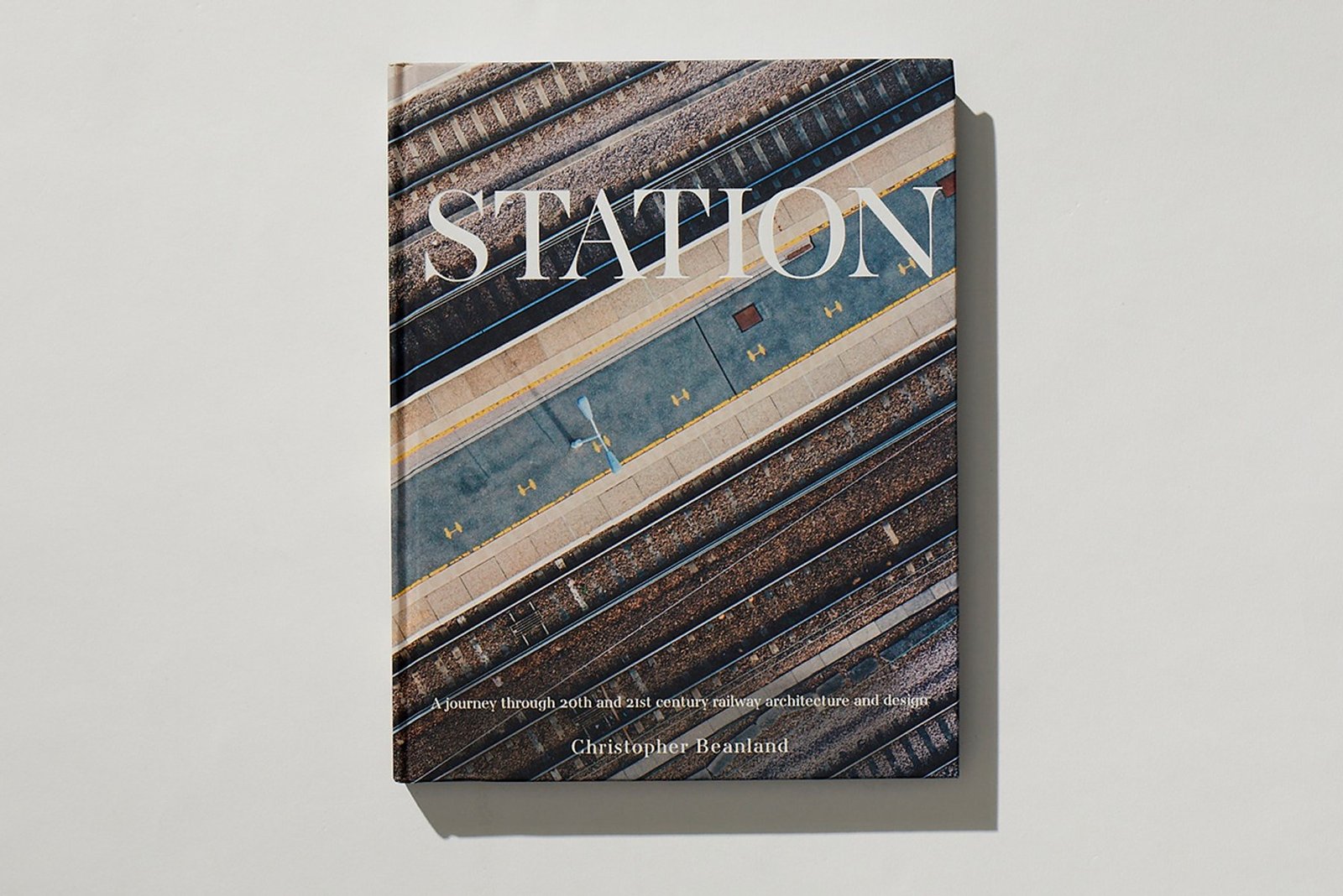
I would rather take a train to the office than drive. And given reasonable options, I would rather take a train than get on a plane. I like trains. So by default, it means that I’m interested in Christopher Beanland’s new book, Station. In it, he profiles some of the best railway architecture from the 20th and 21st centuries. Places like Union Station in Los Angeles, Hauptbanhof in Berlin, and Byappanahalli in Bengaluru. But as cool as these places are on their own, I think it’s important to keep in mind that trains exist as part of a network. And like all transport, they promote time-space convergence. This is part of what makes these spaces so interesting — they’re like a portal to somewhere else.
“If I’m an advocate for anything, it’s to move. As far as you can, as much as you can. Across the ocean, or simply across the river. The extent to which you can walk in someone else’s shoes or at least eat their food, it’s a plus for everybody. Open your mind, get up off the couch, move.”
–Anthony Bourdain
My general recipe for travel is as follows: I want to see cool architecture, I want to eat good food, and I want to get a local sense for the place. Meaning, I’d ideally like to hang out with locals and learn from them. What’s it really like, here?
Because of this, I’ve never been one to over schedule on trips. There will be things I absolutely want to see and do, but I always want to make sure that there’s time for the unknown.
I think you want to walk into places that you don’t have on your list, sit at the bar, and have a conversation with the person behind it. You will learn things, and maybe it’ll set you on a travel journey that you couldn’t have possibly planned back home.
That said, guides are still helpful for things like architecture and food. But I have never found general purpose guides — like the ones from Frommer’s — to be of any use. They have too much information that isn’t curated.
When I was in my early 20s, I used to use the Wallpaper* City Guides. They were small. I would mark them up as I went. And they gave me the list of must-see architecture. More recently, I’ve been relying on Monocle’s Travel Guides. They’re great too.
But I am now also a fan of Toronto-based ÅVONTUURA and the architecture guides that they produce. They are simple and beautiful pamphlets that give you a map of each city; a breakdown of contemporary, modern, and historic architecture; a recommended route through the city; and a full list of the important buildings, including their architects.
The founder of Avontuura, Karl van Es, was kind enough to send me their entire set, which as of this month includes new guides for Amsterdam, Berlin, Singapore, and Toronto. Thank you, Karl.
I’m now looking forward to trying one of these out on a future trip. I’m going to use it to decide what architecture I want to visit and, for the rest, I’ll just do what I normally like to do — wing it.
P.S. It took me multiple attempts of tossing these guides onto my kitchen counter in order to arrive at the above photo. I hope you like it.
If you’ve never been to Ottawa, don’t bother. Of all the G7 capitals, it’s one that hardly conjures up much in the way of attractive images. Don’t believe me? Try it. What comes to mind? What stands out? You see what I mean? No Big Ben, no Lincoln Memorial, no Eiffel Tower. Ottawa might have had an easier time when Germany was partitioned and Bonn was its capital but that credit ran out when Berlin was reinstated as Haúptstadt and the Brandenburg Gate roared back as a symbol for the Federal Republic’s capital.
He and his mom also thoroughly enjoyed their hotel:
We walked into the bar and the whole space seemed gripped by a similar force that plagued the front desk: no speed, movement or sense of urgency. A man-child showed us to the table and barely said a word. His colleagues at the bar were having their own discussion, disconnected from the patrons around them. I started to laugh. My mother urged me to stop. “It’s incredible that this is the best that our country can do for people coming to the capital, no?” I said.
As an unabashedly proud Canadian, this is deeply upsetting. It is upsetting because a lack of movement, a lack of urgency, and an overall lack of engagement are truly terrible qualities to possess. But more importantly, it is upsetting because one could argue that Tyler’s Ottawa and hotel experiences were a microcosm of some broader national issues around Canadian complacency.
This is one of my Christmas gifts. And it is, of course, exactly the sort of thing that gets me excited. Thank you Bianca. You clearly know me.
I am endlessly fascinated by cities. I keep a running list of places I want to explore (everywhere from São Paulo to Shanghai). And frankly, I consider it to be an important part of my job to think about how to make our cities better.
As I was flipping through the book this morning, I was reminded of something that I have been saying for years on this blog. Toronto could use a floating public pool like the Badeschiff (“bathing ship”) in Berlin:
Constructed from the hull of an old cargo vessel, the Badeschiff opened in 2004. The Spree itself is too polluted to swim in (or at least that was the case back in 2004), and so this has become an important swimming outlet for the city.
The real benefit of a floating pool is that you’re mostly in a big body of water, but now you can also heat it. In the winter, the Badeschiff is covered and turned into a spa/sauna. This would be particularly useful in a place like Toronto.
It’s easy to bring people to water in the summer. Apparently Summer-Badeschiff even has a bar and regular DJ sets (presumably all techno given this is Berlin).
The real challenge is in the winter. And if you’ve ever read an RFP involving a public space in Canada, you’ll know that this question invariably comes up: So, how do we, like, get people to come here when it’s 10 below?
Hot water, nice views, and a little food & drink. I promise that’s all you need.
Bright Moments describes themselves as “an NFT art collective on a mission to create environments where artists and collectors witness the birth of generative art together.”
What this means is that they are working to move the experience of NFT art away from individual computer screens toward physical events where the art can be consumed and also created (i.e. minted) in a group setting.
For a taste of what this actually means, check out their website and then hang out for a bit with their homepage video.
So far they have hosted an event in the following 5 cities: Venice Beach (okay, actually a neighborhood), New York, Berlin, London, and Mexico City. And at each stop on their tour of what will be 10 places, they have done an in-person minting of their official collection, called CryptoCitizens.
I haven’t been to one of them, but I can see how it would be a lot of fun and how it might change your perception of NFTs. So I am hoping that for one of their last 4 stops (the first stop was in the “Galaxy”), they’ll come to Toronto. Ethereum was pretty much created in this city, so I think it only makes sense for there to be Toronto CryptoCitizens.
If you too would like to see this happen, make sure you tweet at Bright Moments and tell them that they should come to the greatest city in the world.
This isn’t new. And it’s maybe a bit random. But we’re probably overdue for a break from housing debate. So here is an interesting art project by Hans Hemmert (who is part of the German collective Inges Idee).
Called Personal Absurdities (1997), the project consisted of parties in Berlin in which everyone was equalized to the same height — 2 meters to be exact. The was done through blue stryofoam platform shoes ranging from 5 to 43cm in height.
Of course, if you already happened to be 2m tall, then no platforms were needed. If you were over 2m tall, I’m not sure how that was handled, but presumably the bouncer stopped you at the front door.
All of this seems interesting to me because most of us probably don’t fully appreciate the extent in which height impacts social dynamics. There are countless studies suggesting that we tend to have a more positive reaction to people who are tall — and this is in everything from business to who we vote for.
In fact, this connection between height and leadership is so strong that studies have found that, when faced with a strong likeable leader, we often overstate their height in our minds. We think they’re taller than they actually are because of how strongly we associate height with the ability to lead.
So what happens when you strip away this dynamic and you equalize everyone’s height — even if just for one night of revelry? I would be curious to find out. So if any of you are planning a “same height party”, please feel free to invite me. Thanks.
In 2020, Berlin implemented a rent cap that applied city-wide to both new and existing rental housing contracts. The policy was later found to be unconstitutional and so as of April 2021 this is no longer in place. But for a brief period of time, and for better or for worse, Berlin had a blanket rent control policy. Berlin is, of course, not alone when it comes to rent caps. They are seen by some as a solution to rising home prices, gentrification, and displacement. But do they actually work?
This recent working paper argues that the answer is no. And that there are other better tools available. Yes, overall rents do tend to decline. But when you have a city-wide policy, it means that rents also decline for high-income households. And in this paper, the economists argue that this tends to benefit the rich more than the poor. Rent caps also tend to decrease overall housing supply, which, as we all know, is counterproductive when you’re trying to make something more affordable/accessible.
But perhaps the key argument is this one here: Rent controls create a misallocation of housing that can actually decrease overall welfare for lower-income households. The reason behind this is that homes stop getting allocated to those who value it and need it the most. Instead, you get people who may be overhoused or underhoused, but who remain firmly put because of what are below-market rents.
There are a number of ways in which this distortion might play out. But it could involve someone with a very large older apartment who now no longer needs a large apartment, but is staying put because of their favorable and irreplaceable rent structure. This in turn precludes someone who desperately needs a large apartment from finding a suitable place. And since overall supply has also decreased because of the controls, the problem is exacerbated.
It can all get a bit complicated, but if you’re interested in this topic, here is another technical research paper from Edward Glaeser and Erzo Luttmer that deals specifically with the misallocation of housing under rent controls.
Berlin is considering something pretty radical. A grass roots movement called Volksentscheid Berlin Autofrei, or the People’s Decision for Auto-Free Berlin, is trying to turn the entire core of the city into a car-free zone. (There would be some exceptions and so we should maybe call it primarily car free.)
The area in question is everything inside of the city’s circular S-Bahn train line (pictured above), which would make it the largest car-free zone or mostly car-free zone in the world. It’s larger than Manhattan and it’s about the size of London’s zones 1 and 2, to help give you a sense of the scale.
So far the group has collected about 50,000 supportive signatures and, according to Fast Company, the Senate of Berlin is set to make a decision on the proposal next month. I have no idea how much community and/or political momentum this actually has, but I love how bold of an idea this is.
Is it too bold?
Again, it is perhaps useful to flip the question and use Seth Godin’s status-quo-bias-checker model when thinking about this. If the center of Berlin was already car free and a community group had just come forward with a plan to now allow vehicles, how do you think you’d feel? I could see that being contentious.
Here is a short video by Dave Amos (of the YouTube channel City Beautiful) about the splitting of Berlin into two. What a fascinating urban case study. I just recently discovered his channel, but he seems to cover some interesting topics, all of which are related to cities and city planning. When Dave is not making YouTube videos, he is a professor of city and regional planning at Cal Poly. He also graduated with a Master of Architecture at some point before getting his Ph.D., so presumably he knows a few things about buildings and cities. I guess that also makes him an imposter architect, like me.
Well here is a clever idea by Berlin designer Tobias Trübenbacher. It is a wind-powered streetlight — one that also detects when people are nearby and emits an insect-friendly light spectrum. Lots of cities already rely (partially) on solar powered lights and signage. But that doesn’t always work if the street doesn’t get a lot of direct sunlight or if you happen to be in a darker city. So perhaps wind is the answer. I could imagine this working very well here in Toronto in the middle of the winter at the intersection of Bay and King. And if you remember my post from earlier in the week about a roadmap to net zero energy, it is pretty clear that both solar and wind electricity are going to need to become far more prominent in our cities.
If you can’t see the embedded video above, click here.