Daily insights for city builders, delivered every morning at 6 AM ET. I’m Brandon Donnelly — a Toronto-based real estate developer and founder of Globizen. I’ve been writing here since 2013.

Category: Art

  • Venice to Venice

    Crypto Citizens are a collection of 10,000 NFTs that were minted between 2021 and 2024, starting first in Venice, California and ending in Venice, Italy. Each of their 10 locations has a sub-collection of 1,000 pieces and I am the owner of CryptoParisian #112, because, well, Paris was the next best city for me after they egregiously skipped over Toronto.

    This is one of the most ambitious projects in the NFT art community and, now that they’ve completed their world tour, they’ve just released a documentary called Venice to Venice. It is currently being screened in private venues around the world, but eventually there will be a world premiere at a film festival. This is when I presume they will land in Toronto!

    If you’d like to watch the trailer and/or mint it, click here.

    Photo: Seth Goldstein

  • The Bentway Islands

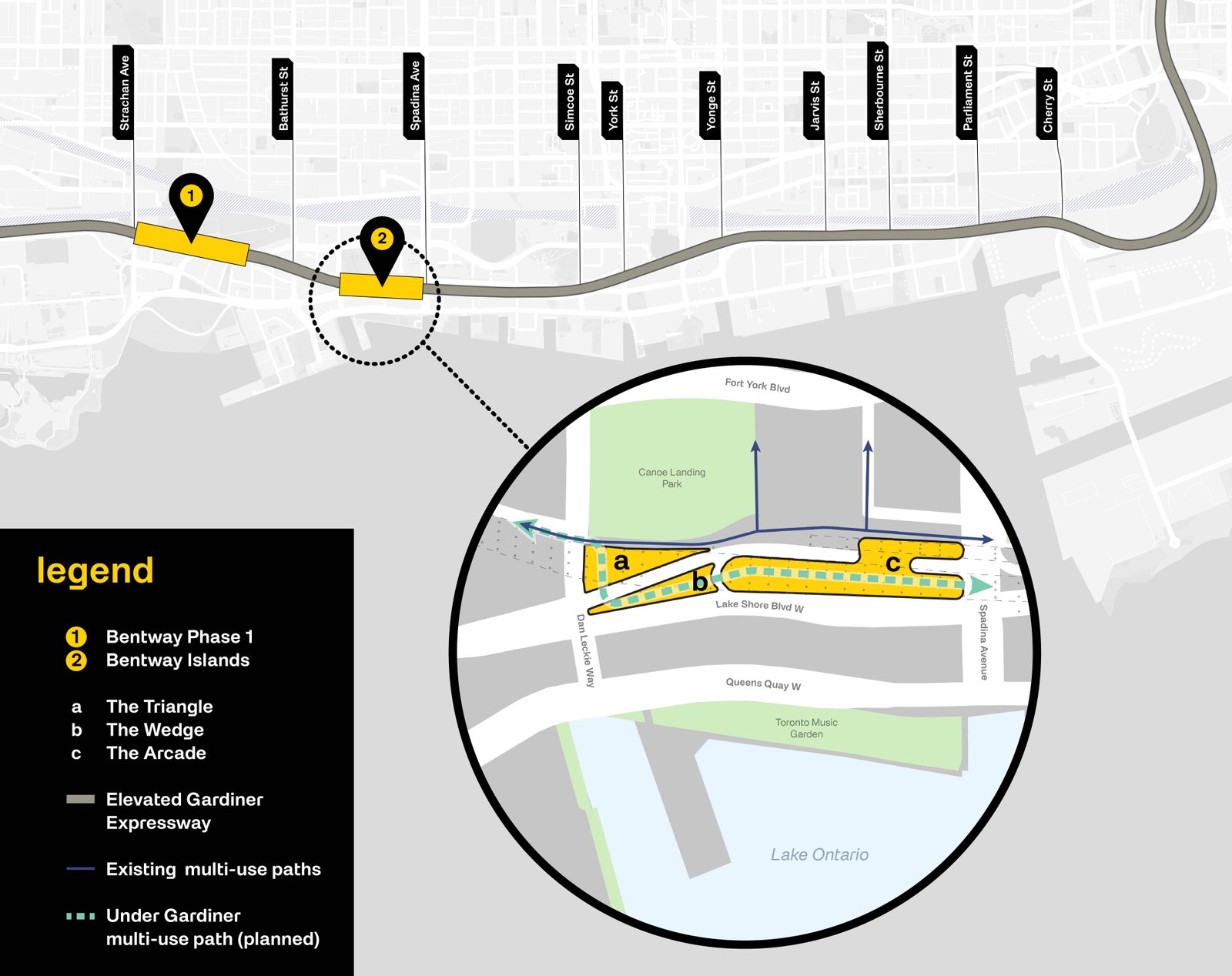
    As many of you know, Toronto has a highly successful public space underneath the Gardiner Expressway called The Bentway. I have ice skated in this space during the winter and I have listened to hard techno in this space during the summer. It has become a public space anchor in the city. Ilana Altman and the team are doing great work. And this week, they just announced that Field Operations (New York) and Brook McIlroy (Toronto) have been hired to design a major expansion. Called The Bentway Islands, this next phase consists of three “islands,” totalling 11,500 m2 (~125,000 ft2).

    Here’s a map:

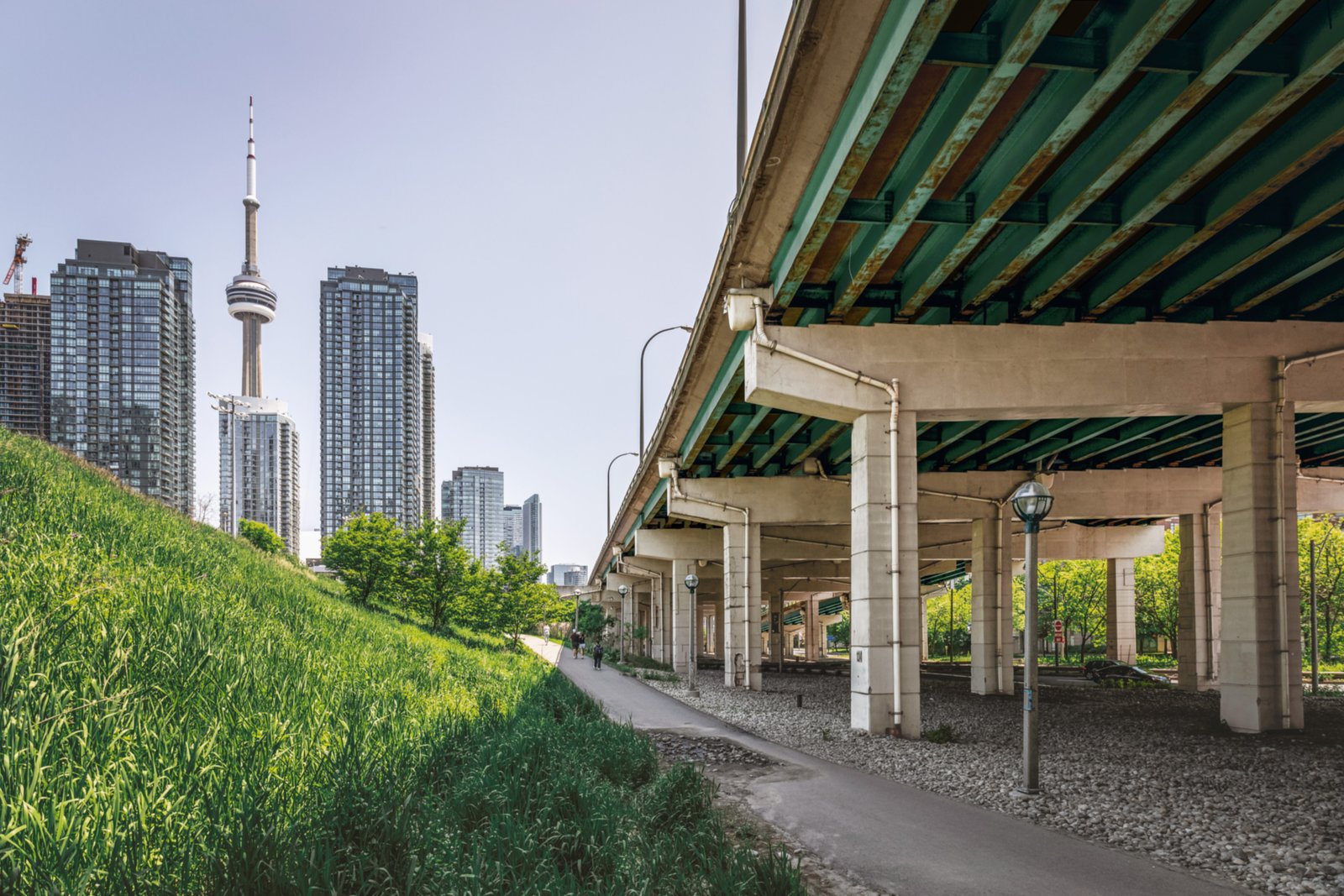
    And here’s what the spaces look like today:

    Both of these firms do fantastic work, and so I’m excited to see what they come up with. (Field Operations is the firm behind New York’s High Line.) But if I can offer two unsolicited (yet related) suggestions, they would be: 1) Let’s incorporate more commercial uses and 2) let’s aim for these three parcels to not actually feel like urban islands. Generally speaking, the spaces underneath highways aren’t the most desirable. They also tend to be surrounded by inhospitable urban environments. Stitching them in and creating continuity in the fabric of the city (existing example, here) is the best way to make the highway above more or less disappear.

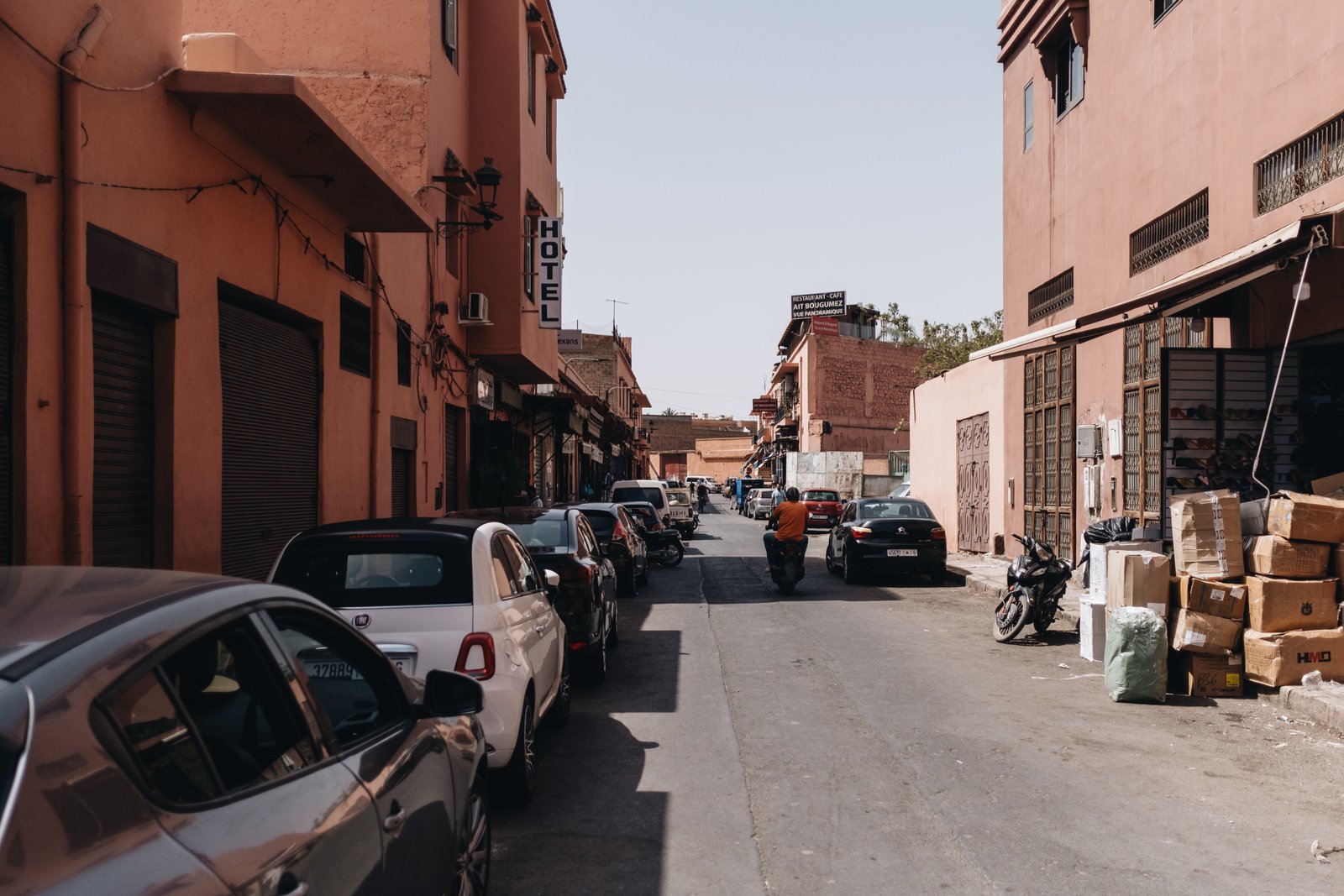
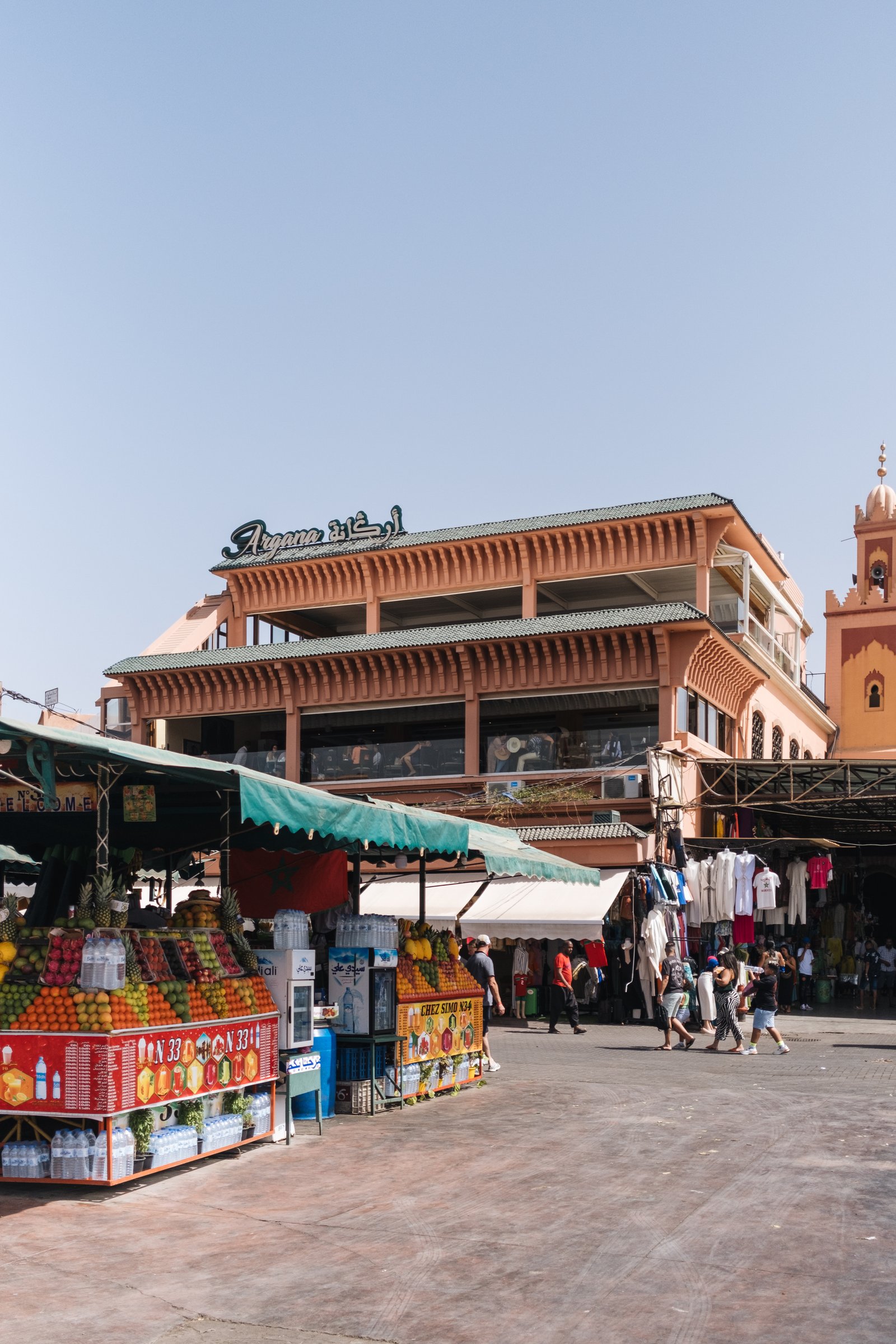
  • Streets of Marrakech

    Camera: Fujifilm X-T3 (23mm lens)

  • When does vandalism become art?

    “I think that street art is illegal and it has to stay illegal.” –Invader

    I was in an Uber on the Don Valley Parkway today and, for some reason, all of the graffiti on its sound barriers caught my attention in a way that it hasn’t before. Maybe it’s because I don’t travel enough by car or maybe the highway people haven’t yet done their spring cleaning. Either way, I caught myself thinking, “Hey, a lot of this looks pretty cool. Here are boring and utilitarian sound barriers that have been covered with colorful things.”

    Of course, street art is a tricky thing. Because, at the end of the day, it is, as French artist Invader says, illegal. It is an act of vandalism. And so there is a fine line between street art and criminal behaviour. When I leave my home in the morning and I discover that someone has spray painted nonsense on one of its exterior walls, it absolutely pisses me off. How about I come spray paint your home?

    But what if it wasn’t nonsense? What if Invader had decided to “invade” Toronto and I instead found a pixelated neon green Pac-Man outside of my lobby? It would still be illegal and it would still be vandalism, but I would frankly feel excited that Invader had decided to come and bestow my home with one of his art pieces. I would then proceed to take a picture and send it to all of my family and friends.

    Now, obviously it makes a difference when it’s a known artist. Context matters. But Invader had to start his illegal pursuits somewhere. And I find it interesting to think about the line where something is able to pass, in our minds, from being an illegal nuisance to a desirable art piece. I experienced moments of that along the Don Valley Parkway today.

  • Detroit’s cultural alley

    Art and culture are powerful tools for city building. Pictured here is a laneway in downtown Detroit that is known as “The Belt.” It is called this because of its location in the city’s former garment district, but today, it has been redefined as a cultural alley. In it, and deep within unmarked basements, you’ll find venues like Deluxx Fluxx, which call themselves a nightclub art house. (You’re going to want to click through to their website and get a feel for the place.)

    This alley isn’t brand new. It was conceptualized by the art gallery Library Street Collective a few years after it was founded in 2012. But I think it remains an excellent example of at least two things. One, Detroit is cool. It really has been going through a cultural renaissance. (You should also know that Detroit is the birthplace of techno.) And two, The Belt remains a perfect example of what is possible with our underutilized urban spaces.

    Virtually every city has alleys exactly like this one. But too few are doing something as cool with them.

    Image: The Belt & Deluxx Fluxx

  • CryptoParisian #112

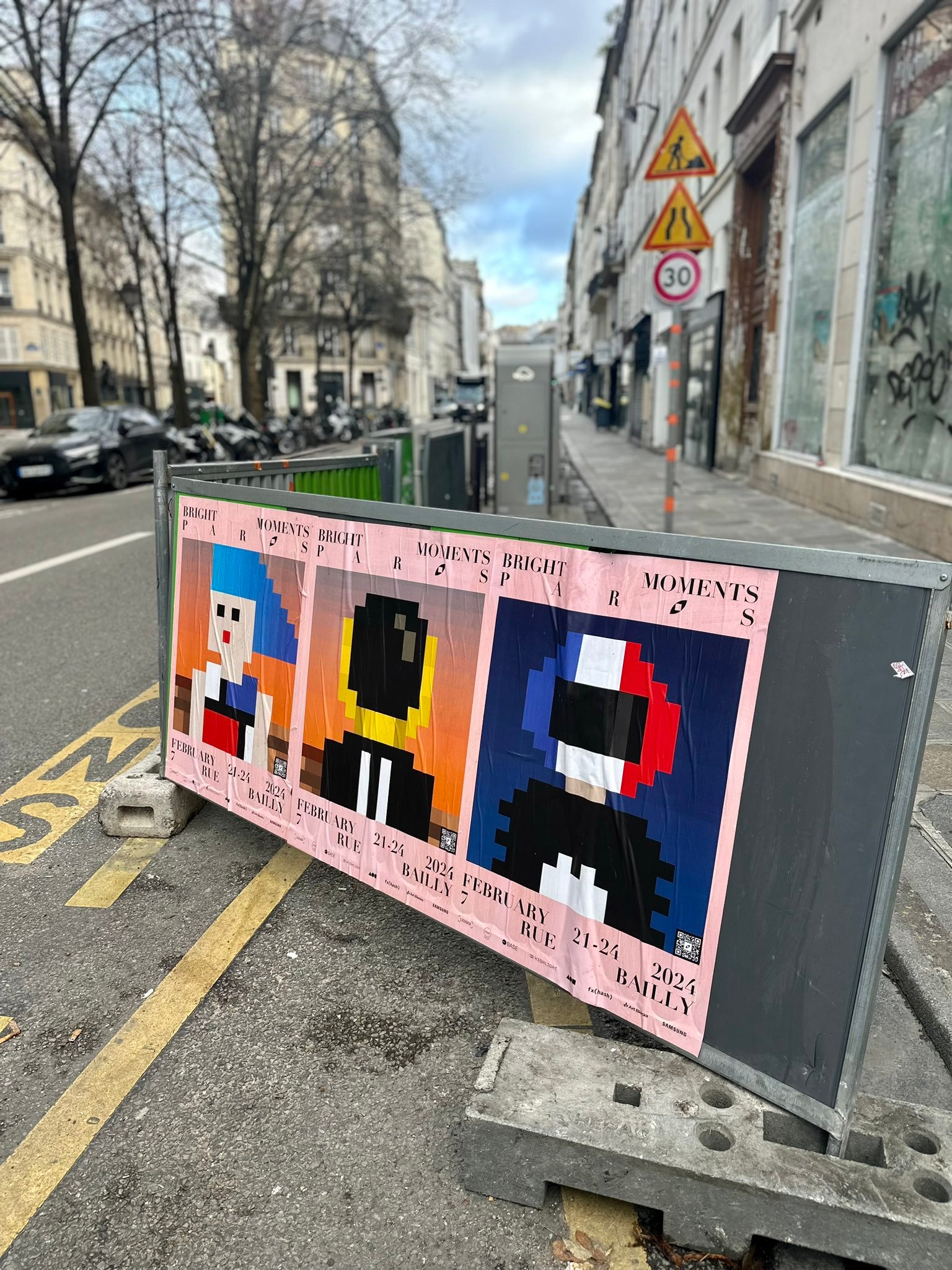
    I have written about Bright Moments before. They are a digital art company exploring the intersection of NFTs and real-world experiences. It started as a popup gallery in Venice Beach California, where artists could show new work and where collectors could buy IRL. They then created their own pixel art collection called CryptoVenetians. It included 1,000 different people-centered NFTs by artist QianQian. Since then, they have gone on to host events and create new CryptoCitizen collections in New York, Berlin, London, Mexico City, Tokyo, and Buenos Aires. And this week they were in Paris.

    (I don’t know why they skipped over Toronto!)

    Their end goal is to create a complete collection of 10,000 NFTs, most of which are tied to a specific city. (The only one that isn’t is their CryptoGalacticans collection.) What’s obviously great about this approach is that it’s a way to promote digital art and onboard new users into the crypto space. They are literally going around the world, throwing parties, and saying “look how cool and fun this whole crypto thing is.” At the same time, it also links the digital and the physical, which I believe is fundamental. We’re social beings and web3 will never change that.

    The other interesting thing about Bright Moments is that they are structured as a decentralized autonomous organization (or DOA). That’s like a company, except that governance is distributed to its tokenholders and it’s all managed on a blockchain. But it still operates as a company and it can raise money like one too. In 2021, Union Square Ventures invested 500 ETH into the DOA through a blockchain transaction that would naturally be public if you cared to look it up. Based on today’s spot price of about CA$4k per ETH, that was a CA$2 million investment.

    In the case of Bright Moments, its tokenholders are the people who own a CryptoCitizen. These are the people who get to vote on how the organization is run. They can also earn money if they do things like host a community dinner or organize a local meetup, with the idea being that, as an organization, you want to encourage this sort of bottom-up participation and innovation. I find it fascinating to watch this new governance and entity structure emerge, and it will only continue to evolve.

    I’ve been following Bright Moments more or less since they dropped the CryptoVenetians. I thought about jumping in then, but I figured I would wait to see if there would be a CryptoTorontonian. That would obviously be my number one choice. But once they announced their final list of cities, and Toronto wasn’t on it, I grumpily decided I would instead wait for a CryptoParisian. And since this week was Paris, it was time.

    I now hold CryptoParisian #112:

    I like that it has the Pont Neuf and that the human is wearing sunglasses.

    This means that I now have a small ownership stake in the Bright Moments DOA. So presumably I’ll soon have a say in important and serious matters! It also means that when they launch their final CryptoCitizen collection in Venice, Italy this spring (nice work going full circle here), there is a chance I might get airdropped a CryptoVenetian. It’s a random process, so whatever. I also know that it’s easy to look at this pixelated Parisian and think, “WTF, Brandon.” But something new is building here. And I’m sure that all of the folks who were in Paris this week can testify to that.

  • Solar power as art

    The past week has felt more like a London winter, than a Toronto one. It has been mild, rainy, and gray. So right now feels like an opportune time to write about this solar-powered light/art piece called Sunne. Created by Marjan van Aubel, the light has been designed to hang right in front of a window using two simple cables. There’s no need for an external power source, because it has an integrated battery that harvests sun during the day. The light then automatically turns on at sunset, and has the ability to simulate some pretty stunning sun experiences.

    Now, if you happen to live in a place with a roof that gets good sun exposure, I suppose you could just install a bunch of solar panels and use them to generate power for cool-looking things in your home. But if you don’t have the ability to do that — for instance, maybe you live in a multi-family building — then this feels like a clever and extremely beautiful way to harvest some amount of sun. I’m sure that, eventually, we’ll have building facades that can generate a meaningful amount of solar power, but until then, you’ve got devices like Sunne.

    P.S. For what it’s worth, I’ll take cold, snowy and sunny, over mild, rainy and gray, any day of the week.

    Image: Sunne

  • Pink glow

    Here’s a potentially hypothetical question.

    If you were in the market for a 3-bedroom penthouse, and its 1,100 sf wraparound terrace with skyline views just so happened to have an enormous neon-like sign above it, would you consider this to be a feature or a bug?

    The sign does turn off at 11PM, but before then, it creates this awesome/lovely pink glow on the terrace. My sense is that this will be fairly divisive. You’re either going to love it or you’re going to hate it. Which side are you on?

    Let me know in the comment section below.

  • Cul-de-sacs and Dutch auctions

    I am, of course, more grid than cul-de-sac, but here is an interesting NFT art project that is launching on December 12, 2023 at 1PM EST. It’s called Cul-de-Sacs:

    “Cul-de-Sacs” explores the banality of suburban sprawl through the anachronistic stylization of American folk art. The algorithm generates flattened representations of suburbia at range of scales, interspersed with the remnants of rural life.

    The starting price is 0.2 ETH and the resting price is 0.05 ETH. What this ultimately means is that these NFTs are being offered by way of a Dutch action.

    Dutch auctions are a price discovery mechanism. They start with a high asking price and then gradually lower it until a price is reached where the quantity demanded equals all of the available supply.

    In other words, it’s a way to determine what the market thinks a particular thing is worth. In this case, though, the resting price is 0.05 ETH. Meaning there’s a floor.

    If lots of people are willing to pay 0.2 ETH for this art, it could sell out right away and that will prove to be the market price.

    But if few people want to buy it, then the price will gradually fall to 0.05 ETH, and that is where it will hang out until all of the available supply is absorbed. If/when that happens.

    Another important feature of this auction process is that if you buy early, and the price subsequently drops, you get a refund equal to the difference between what you paid and the final achieved price (thought to be the market price).

    So there is zero incentive to wait for a possible price decline; everyone ends up paying the same price no matter what. You’re encouraged to bid aggressively.

    And because all of this is now happening on a blockchain and enshrined in code, you can be confident that this is exactly how the process will work and that you’ll get any refunds that you deserve.

  • You don’t want a version of Las Vegas’ Sphere

    Full disclosure: I’ve never really been to Las Vegas.

    I say “really” because I did pass through it as a kid. But I’ve never been during a time in my life when I could actually remember it and, to be honest, I’ve never had a huge desire. Though, I was interested in the work that Tony Hsieh was doing in downtown Vegas. And I have had people try to tempt me with the lure of good electronic music (and by good I mean not EDM).

    Then all of a sudden, Refik Anadol revealed this enormous sphere that shows happy faces. And now I really want to go to Vegas. So at some point, I will endeavor to do that. But the other thought that came to mind when I first learned about the sphere was “this seems to be working, which means other cities will likely copy it and want their own version of Vegas’ sphere.”

    This is, of course, an understandable desire. And today I learned that Los Angeles is working on a “tiny Las Vegas sphere replica” for Sunset Boulevard. Despite being “tiny”, I’m sure it’ll be pretty cool too. But in the end, who wants to be a replica? The aim should never be to recreate some version of what another city has already done (see “Two very different beans“).

    The aim should be to create something new and truly remarkable. And Las Vegas did exactly that with its sphere. So much so that, one day, I may actually visit the place.