Daily insights for city builders, delivered every morning at 6 AM ET. I’m Brandon Donnelly — a Toronto-based real estate developer and founder of Globizen. I’ve been writing here since 2013.
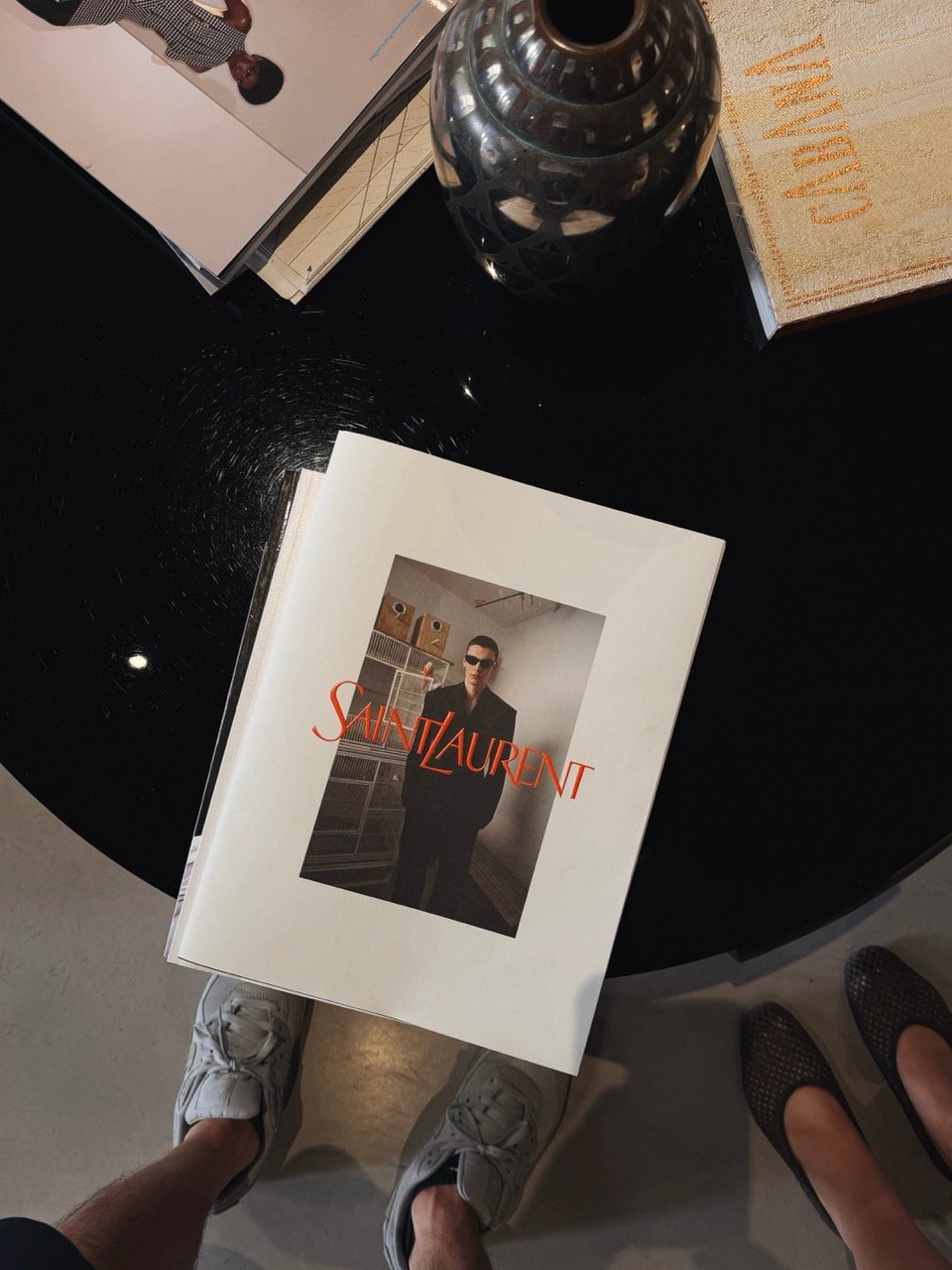
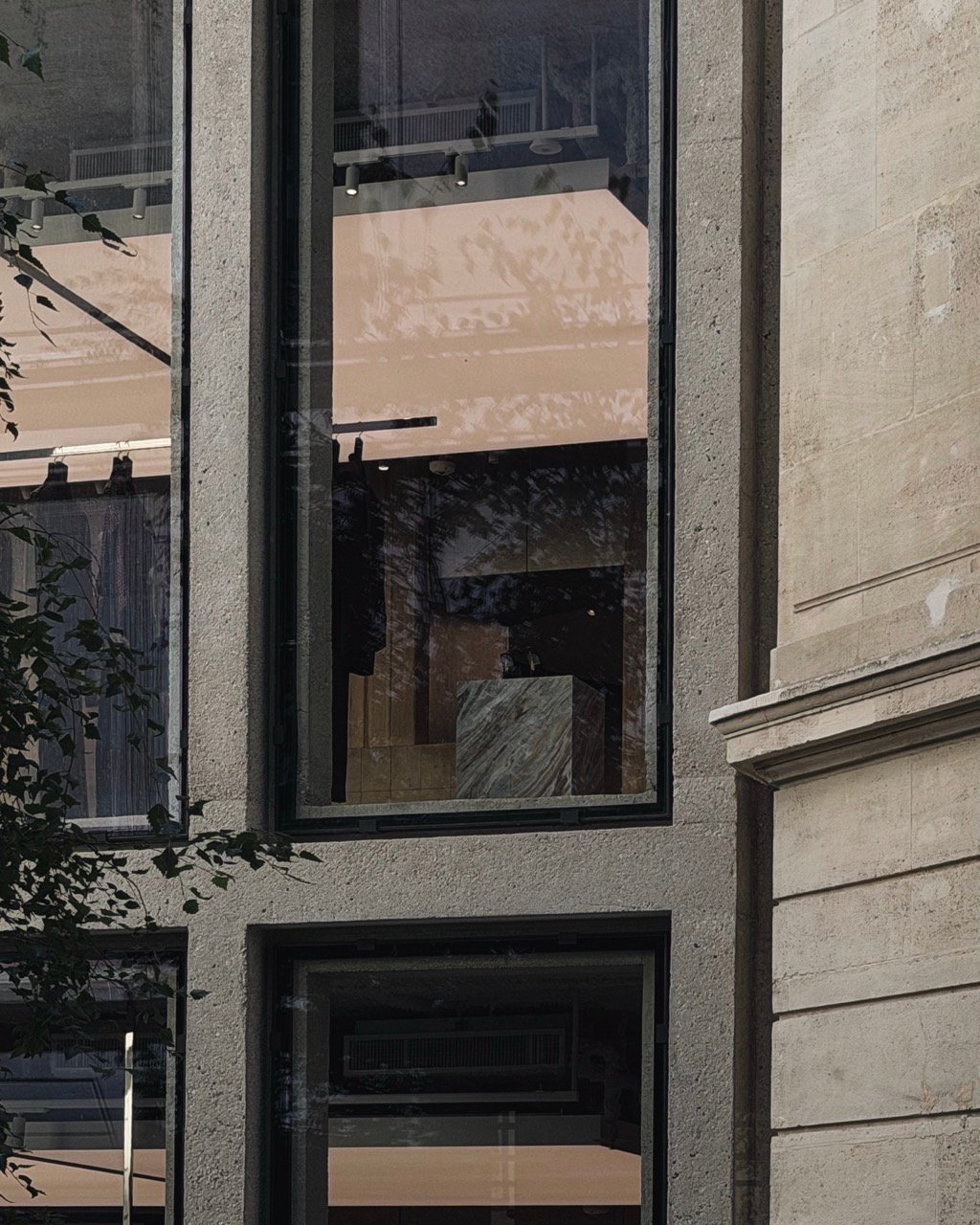
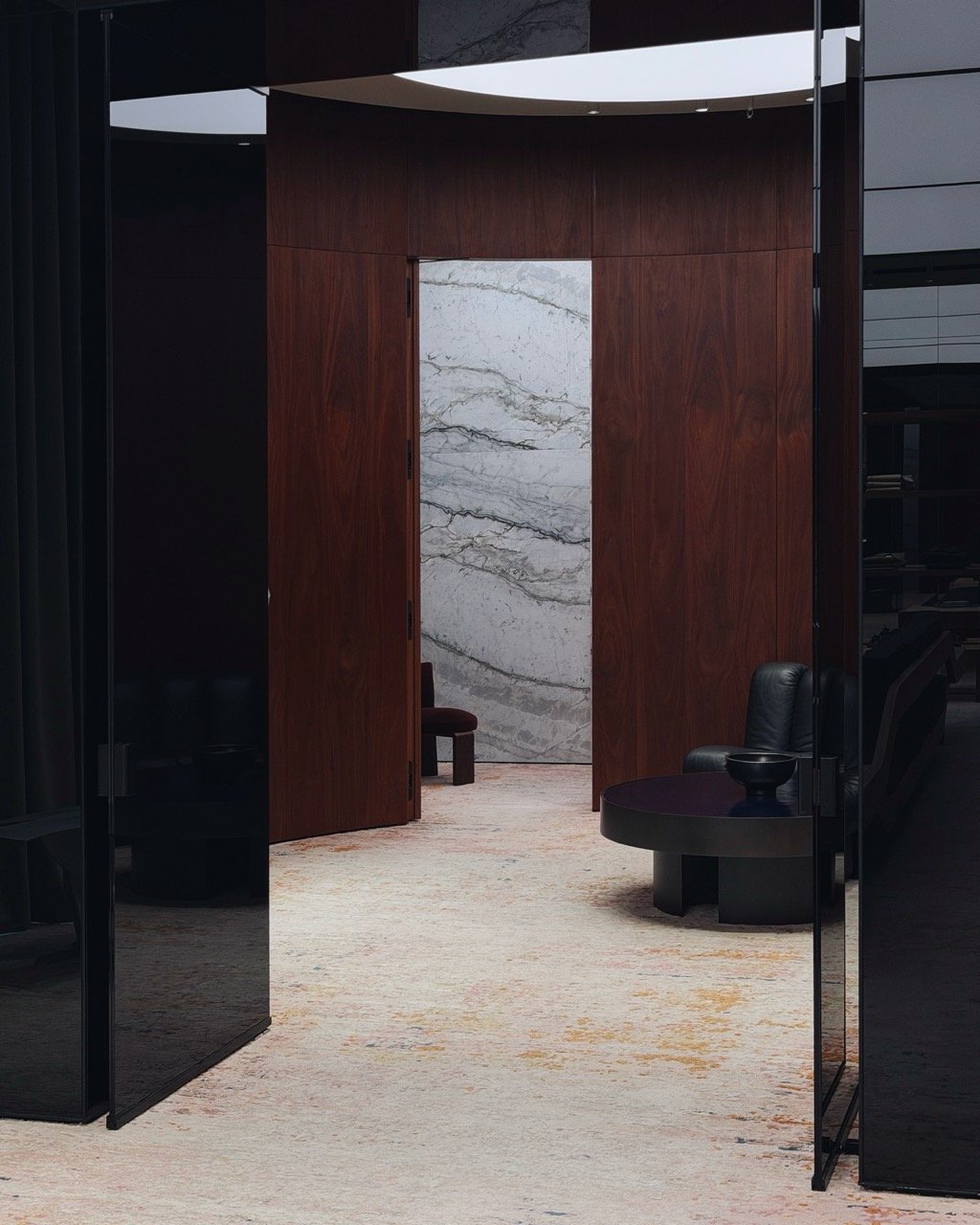
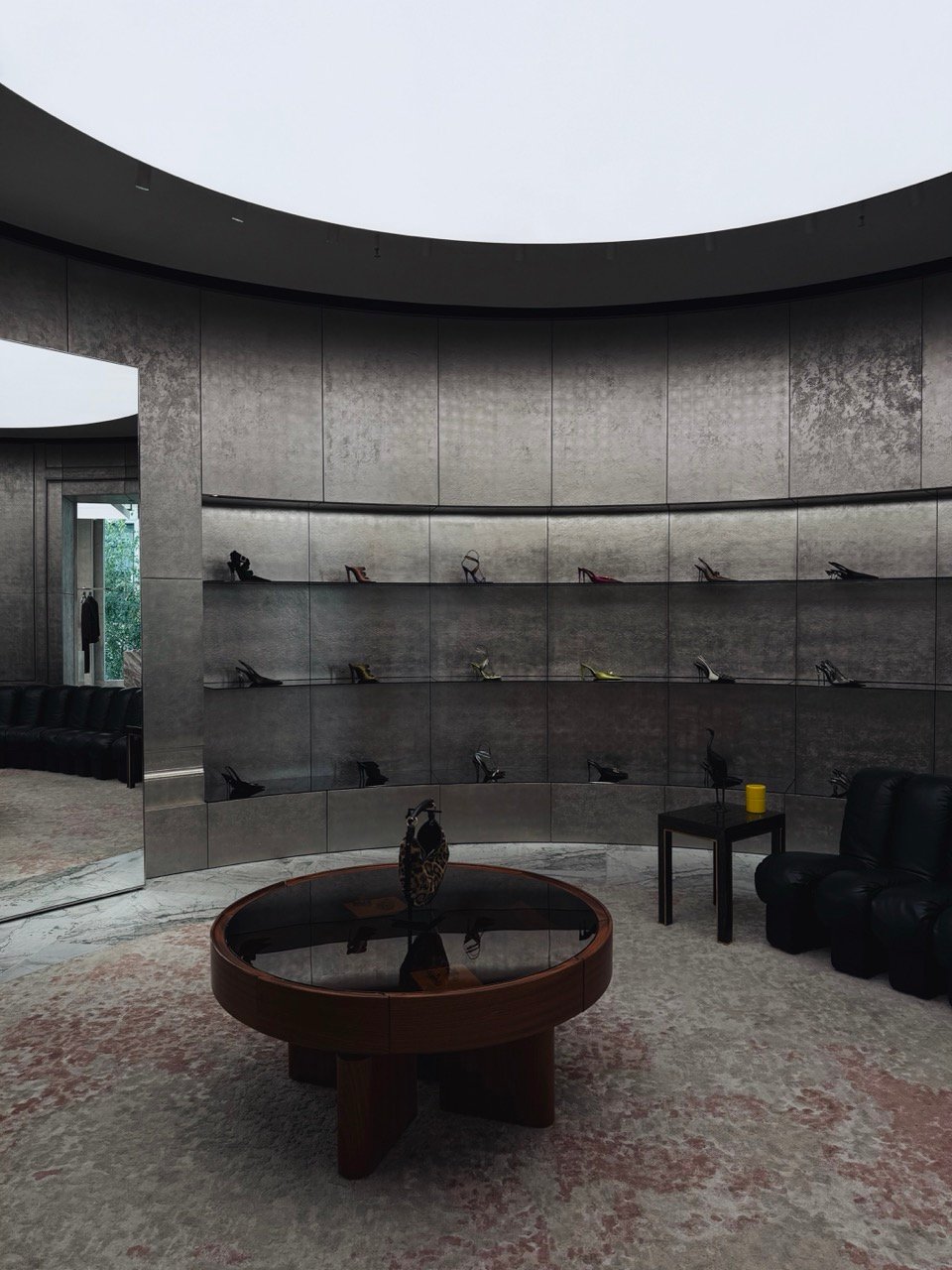
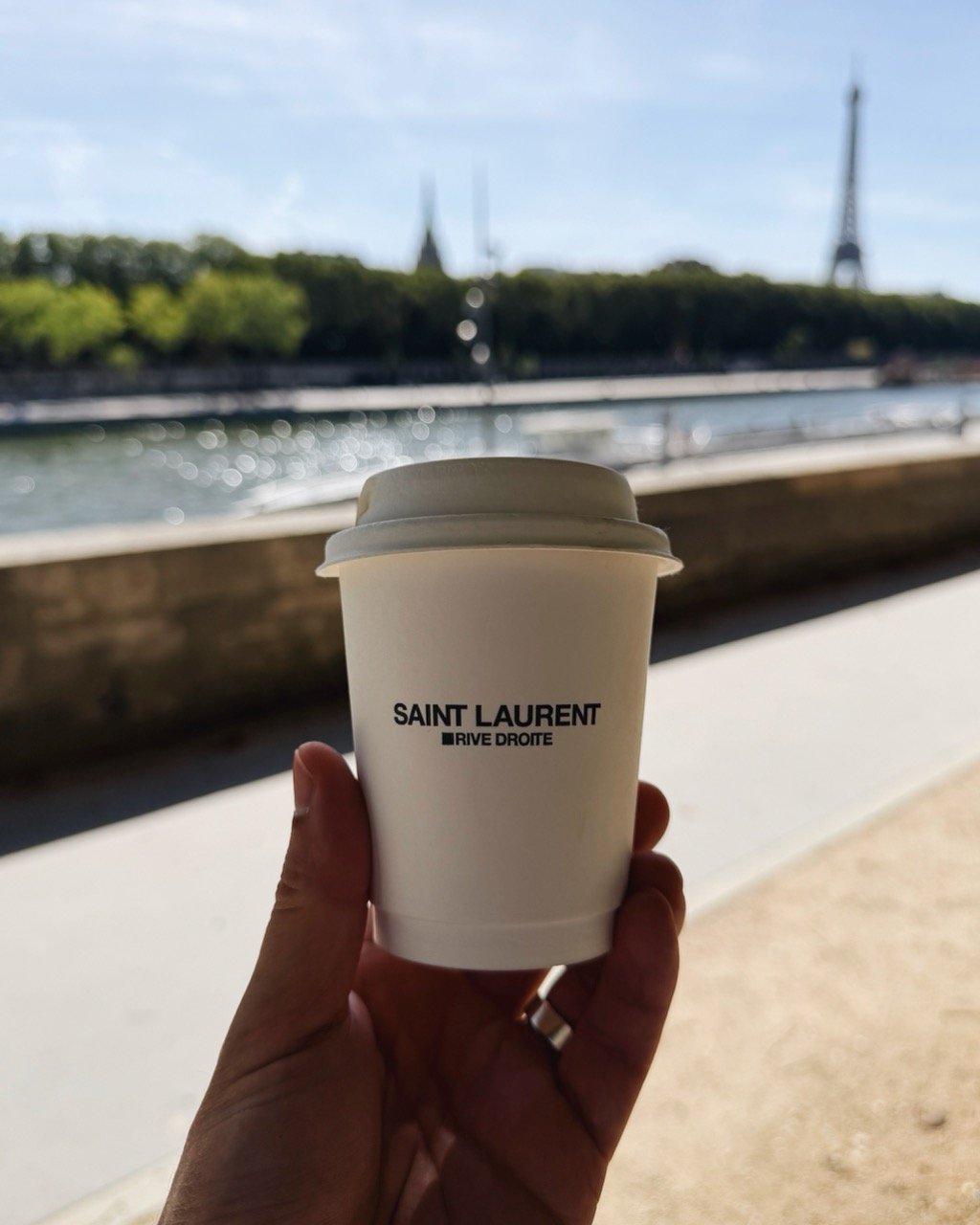
I love how Saint Laurent’s creative director, Anthony Vaccarello, has taken a form of brutalism — corduroy-imprinted concrete and generally raw and exposed materials — and elevated it to high fashion. It’s a perfect example of “raw meets refined.” And you’ll find this approach in its stores all around the world, including in Toronto on Bloor Street. For me, it’s also a great microcosm of Paris. This is a city with a deep, rich history, but one that isn’t afraid to disrupt that history and look forward when it makes sense to do so.
When I first saw this picture of Louis Vuitton’s flagship store in Manhattan I thought it was AI. That is where we are right now. When something looks wild, I just automatically assume it’s fake. But alas, it’s not fake. Louis Vuitton is renovating their flagship store at the corner of 57th Street and 5th Avenue and so, naturally, they decided to completely cover it with luggage facade wraps.
These wraps make the entire building look like six grey trunks stacked on top of each other and are a nod to a 19th century luggage design from the company. They even used real metal details throughout. Apparently the heaviest luggage handle weighs something like 5,000 pounds.
This is wild and remarkable in so many ways. The scale of it is remarkable. This is a 15 storey building concealed entirely by luggage trunks. It also speaks to the scale and dominance of New York as a city. Not every city can absorb a pile of giant luggage trunks and not bat an eye. But in New York, it’s just another noteworthy thing within its relentless urban grid.
I also can’t help but think of the work of architects Robert Venturi and Denise Scott Brown. In 1972, they published a book called Learning from Las Vegas. And in it, they defined two types of contrasting buildings: decorated sheds and ducks. Decorated sheds are, as the name suggests, nondescript buildings. Think big box stores. These buildings get their specificity from signage and other ornament because, without this, they’d just be nondescript sheds.
Duck buildings are, on the other hand, buildings that take on a symbolic form. In other words, their shape and construction tell you what they’re all about. The term duck comes from an actual building that looks like a duck, namely The Big Duck on Long Island. This is a building that was built in the 1930s to help promote the owner’s duck farming business and is now on the US National Register of Historic Places.
The Big Duck is and was an actual building, whereas Louis Vuitton’s trunks are just temporary construction wrap. So they’re not exactly the same thing. Still, the similarities are there. Both were erected to promote their respectiveness businesses. And both tell you, through their form, what’s meant to happen inside. So in this sense, Louis Vuitton has just created its own Big Duck.
The late fashion designer, Virgil Abloh, had a design rule for himself called the “3% approach.” Above is a slide from a presentation that he gave at Harvard back in 2013 where he listed it as item 3 of his “personal design language.” The idea behind this 3% rule is simple: you really only need to change something by 3% in order to create something new.
Case in point:
Given this, it should come as no surprise that Abloh had cited artist Marcel Duchamp as being a source of inspiration. (We’ve spoken about this before.) Duchamp is most famous for his “readymade” sculptures where he took existing objects — like urinals — and transformed them into art by signing them and curating them appropriately. This was obviously controversial, but it made Duchamp one of the most important artists of the 20th century.
Now, 3% seems like an oddly precise number. I don’t know how, for instance, you quantify the amount of change on the above shoe. Is it surface area? In any event, that’s beside the point. What’s most fascinating for me about this approach is that it suggests that small changes are enough to, not just create novelty, but actually establish authorship. Meaning, the shoe on the right is no longer a Converse shoe. It is now an “OFF-WHITE” shoe. They authored it.
Like the work of Duchamp, this was and is controversial. Lots of companies have sued Off-White for trademark infringement. We know, for example, where the above black stripes came from and we know that Off-White’s multi-directional arrow logo is borrowed from Glasgow Airport’s logo c.1960. But that’s clearly the point of readymade reworks. And it’s clearly enough for people to want to pay a lot more for the shoe on the right.
Fascinating.
Do you think that this 3% approach applies (or could apply) to other things outside of fashion, like architecture and buildings? I think so.
The first and only other time that I have visited Milan was over 20 years ago. I was 19 or so, and a close friend and I decided to take the train into Centrale without a place to stay and without a plan, other than to get into some trouble.
We ultimately succeeded at this ambitious plan. But I clearly didn’t see enough of the city, and I left thinking that it was a bit of a grimy and sleepy place. I was disappointed. I thought it would be fashion everywhere, and it wasn’t for me. And this impression has lingered with me ever since.
Boy have I been missing out.
I have fallen in love with Milan on this very short trip. It really is a capital of fashion and design. This is not a city of meandering tourists looking for the Pantheon (okay, there’s still some of that); it is a big city of business and culture. And if I had to compare and contrast it to other cities, I would say this.
Its built form is not nearly as manicured and as fussy as Paris’. In fact, in some ways, it’s a bit like Toronto. Its overall urbanism is messier, and you have to scratch beneath the surface and sneak into some courtyards before you really uncover its true beauty. But once you do, it’s magical.
At the same time, its street fashion strikes me as being slightly fussier. There is an effortlessness in Paris that doesn’t seem as pronounced in Milan (though it is still there). Here, there’s a little more flash and a little more, “I’m sexy and stylish, and I would like you to be aware of that.”
But this is not to say that you won’t see men and women in suits and stilettos riding a bicycle. It still feels effortless. It still feels natural. And when you’re here, you can’t help but feel like you’re probably not stylish enough for this capital of fashion and design.
“Luxury” is an overused term in the world of real estate. If you call everything luxury, then ultimately nothing is luxury, right? But let’s ignore this particular debate for right now. I was recently in a meeting where our interior design team — Mason Studio — made what I think is an important distinction between “classic luxury” and “modern luxury.”
Classic luxury is old school luxury. It is the kind of luxury that says, “you can’t come in here unless you look like this.” And I’m sure that all of you can think of brands that might speak to you in this way.
But I think this idea of luxury is quickly changing. Perhaps a good example of “modern luxury” is the recent collaboration between RTFKT — the web3 digital fashion company that Nike bought last year — and high-end luggage company RIMOWA.
This, to me, is a brilliant collaboration. It is a sign of what’s to come — an ongoing blurring of our physical and digital worlds — and it is a less fussy kind of luxury; maybe I’ll mint an exceptionally expensive piece of luggage, maybe I’ll mint a digital collectible, or maybe I’ll just hang out on Discord.
Now, one could argue that nothing has really changed and we’re just talking about different kinds of trappings. But that doesn’t feel exactly right. There is something about modern luxury that feels more inclusive to me. And I think that is why it is quickly becoming the dominant form of “luxury” — whatever that means.
The global luxury goods market is somewhere around US$300 billion if you exclude fancy cars. And in just 4 years, global luxury spending has flipped from over 60% of it being in Europe and the Americas, to now over 60% of it being in Asia — with over 40% of it being in mainland China alone. See above chart from the Financial Times.
But I think what really happened is that when global travel shutdown in 2020, Chinese buyers just started spending all of their luxury goods money at home instead of flying to Paris for the week. Because if you look at Chinese luxury goods spending in 2018, somewhere around 1/4 of it was done in mainland China, whereas today it’s close to 100%.
So the Chinese have been moving this market for quite sometime. But now that the consumption has moved entirely home, what does that mean for cities around the world? Hong Kong used to be one of the most important places for luxury consumption in Asia (no sales tax), but that has changed and it probably won’t return. This is for reasons that go far beyond luxury goods.
But I think we’ll see spending in Europe bounce back along with Asian travel. Because buying a luxury good is about much more than just the good itself. It’s about the experience. It’s about how it makes you feel when you buy it. And it’s about signalling to others who you are as an individual. This may sound vacuous, but we all do it, with or without expensive luxury goods.
There are also new opportunities emerging by way of NFTs. I am sure that some brands are already doing this, but if I were in charge, I would issue a unique NFT with each luxury goods purchase that records, among other things, where it was purchased. Is a bag purchased on the Champs-Élysées worth more if there is a record of it that is etched in stone permanently? Maybe.
I have remarked this before, but I’ll say it again anyways: sneakers are very popular in Paris. Everybody seems to be wearing cool and colorful sneakers, regardless of what the rest of their outfit happens to look like.
Full business suit? Why yes, you should be wearing cool sneakers.
But why is that?
Paris is a famously walkable city. At any given time, you’re on average just about 500m from the closest subway station. So my entirely unproven sneaker theory is this: shoes follow built form.
If you build a city around people walking everywhere, one will ultimately choose the most appropriate kind of footwear.
British designer Paul Smith was recently interviewed by Monocle on Design about his recent collaboration with BMW and Mini. If you like Mini cars, you’ll probably like the episode. But he also raises two interesting points about his business and about how he approaches design.
The first is that his business is a balancing act. In the front, he wants it to be pioneering, flashy, and self-indulgent. But in the back, he keeps the lights on by selling lots of navy blue suits and polo shirts. Both are important, because if you stop pioneering then you stop being relevant.
The second point he makes is about how he approaches design. Paul Smith’s London studio is famously cluttered. He likes to collect a lot of stuff. Some might call it hoarding. But for him, the space helps him think laterally and also remain “childlike.” (Where we work apparently matters.)
Children, as we know, are honest, curious, and free in a way that adults aren’t. They don’t have the same reference points and that can be very empowering. Forget the way that things are currently done and challenge yourself: “What if?” I like that a lot.
To listen to the Monocle on Design episode, click here.
Last month a digital-only version of a Gucci bag sold on gaming platform Roblox for about US$4,115. Again, digital-only. No physical bag that can be brought to brunch. At the time, this was about US$800 more than the real life version of the same Gucci bag. So why not go and buy that one instead?
I am sure that most of you are scratching your head at this and wondering: who the hell is valuing the digital more than the physical? Could it be that status and signaling — perhaps the real purposes of a designer bag — are even more important online in the world of Roblox than in real life? In this case, it wasn’t even an NFT and so presumably there aren’t any value claims around scarcity and authenticity. (Full disclosure: I don’t know how Roblox works.)
It’s important to keep in mind that meaningful innovation often starts out looking pretty silly to some/most. And to me, this feels like one of those times. What we are clearly seeing is a blurring between our digital and physical worlds. In fact, just today I was reading about a slew of digital-only clothing companies that sell, you know, contactless cyber fashion. One of those companies is Tribute (embedded post above).
The way it works is that you first buy a piece of digital clothing (which can sell out just like regular clothing). You then send them a picture of yourself and the company goes and renders that piece of digital clothing onto your photo. The result is what you see above, which to me looks fairly realistic (though at the same time fantastical, which I think is part of the point).
As out-there as this may seem, this strikes me as something that could become a very big deal. What is real on Instagram anyways? I can also see this being applied to other industries, including real estate. Maybe that is already happening.