Daily insights for city builders, delivered every morning at 6 AM ET. I’m Brandon Donnelly — a Toronto-based real estate developer and founder of Globizen. I’ve been writing here since 2013.
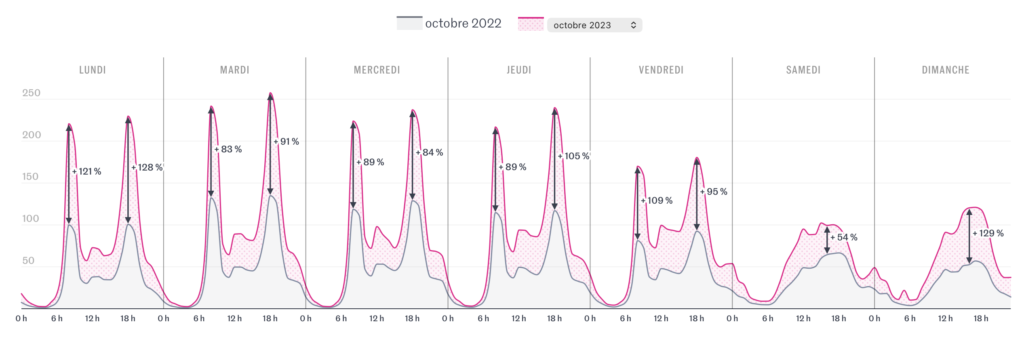
Okay, so this dataset isn’t the most recent, but it’s interesting nonetheless. At the end of 2023, Le Monde reported that Paris had seen a doubling of cycling traffic compared to the year before. For a typical week and based on 128 sensor locations across the city, this is what that increase looked like between October 2022 and 2023:
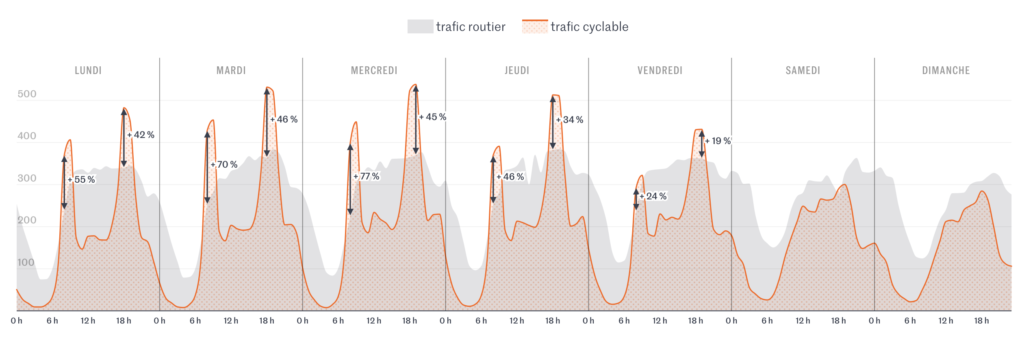
But the data gets even more interesting when you compare it to vehicular traffic. Here’s vehicular traffic vs. cycling traffic for three principal boulevards in the city, namely l’avenue de Flandre, le boulevard Voltaire and le boulevard Magenta:
These three boulevards were chosen because they all have bi-directional lanes for both cars and bikes, meaning they roughly privilege both forms of mobility equally. And what you are seeing in the above chart is that bike traffic exceeds car traffic by fairly large margins during peak weekday periods.
This is a mobility accomplishment that benefits both cyclists and drivers.
If you’re a cyclist in Toronto, you probably know that Shaw Street is a damn good street for biking. The city first redesigned the one-way street in 2013, adding a bike lane in each direction (one of which is a contra-flow bike lane). Then in 2020, they made it so that the one-way direction for cars alternated every few blocks. This stopped drivers from using it as a high-speed shortcut. The result was an immediate increase in cycling.
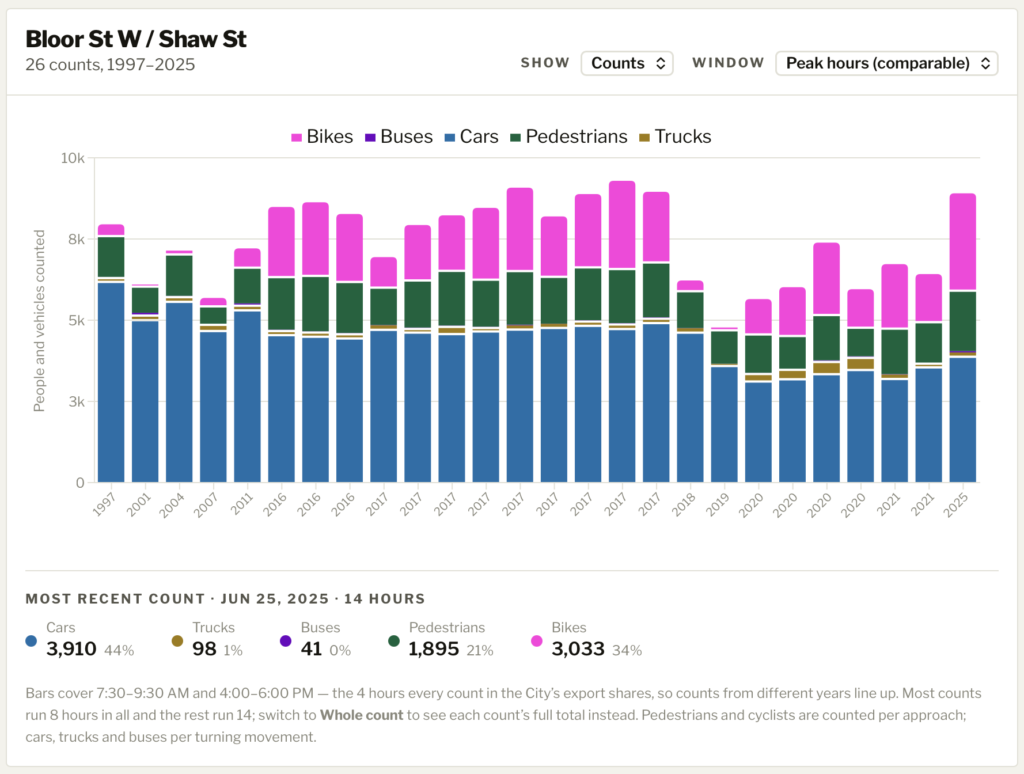
Here’s some data from Observing the City for the intersection of Bloor and Shaw:
As of June 2025, the modal split at this intersection during peak hours was 34% bikes, 21% pedestrians, 1% trucks, and 44% cars. At times, there has been a 310% increase in cycling trips since the redesign. It goes to show you that the right street design (or the wrong one) will induce demand. If you look at the intersection counts for the entire city, you’ll see just how profoundly built form impacts behaviour. Cycling is broadly an Old Toronto thing.
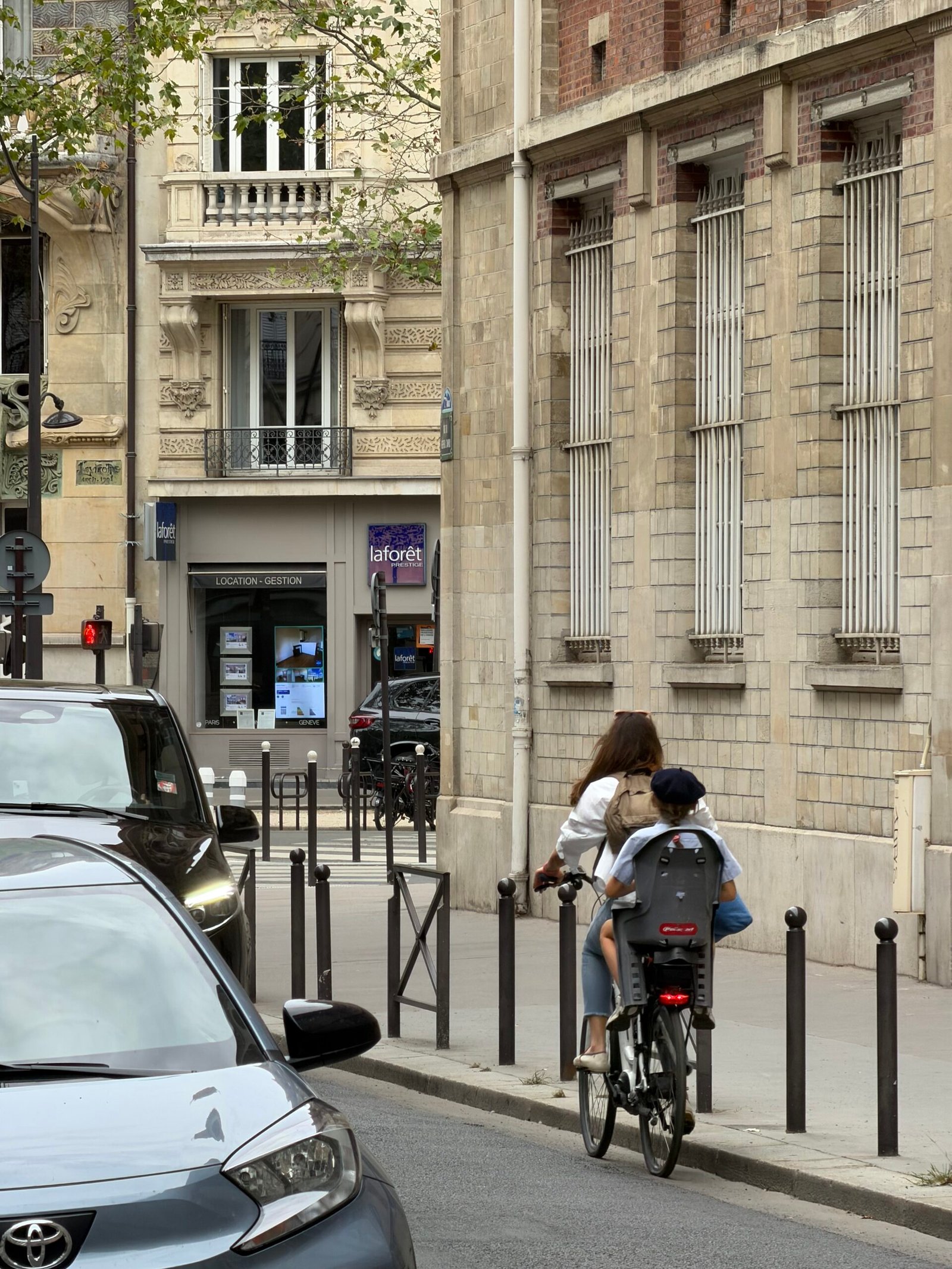
I snapped this photo while we were in Paris a few weeks ago. We were walking down the street in the 7th and I noticed this mother (I’m presuming) picking up her daughter from the library. The daughter (I’m also presuming) got on the back of the bike and then they took off down the street. She also happened to be wearing a beret, which only added to the whole experience.
When I posted this photo on Twitter, I got some of the comments I would expect. Some people called the mother (we’re all presuming) irresponsible for not wearing a helmet and for not forcing her passenger to wear one as well. Okay, maybe the child is of the age where one is technically required. But another way to look at it might be that it’s a testament to how safe they feel on the roads of Paris.
My implied point was that this could have been a minivan ride. The solution to traffic congestion is not optimizing around the car; it is getting people out of them. Paris proper has about 2 million people compared to Toronto’s 3 million. But the footprint of the former is about one-sixth the land area, making it, on average, about 4 times more dense. And yet, Paris feels counterintuitively less congested, and easier to get around.
The answer, and solution for all cities looking to get people moving, lies in its built form, its rail network, and what you see pictured above.
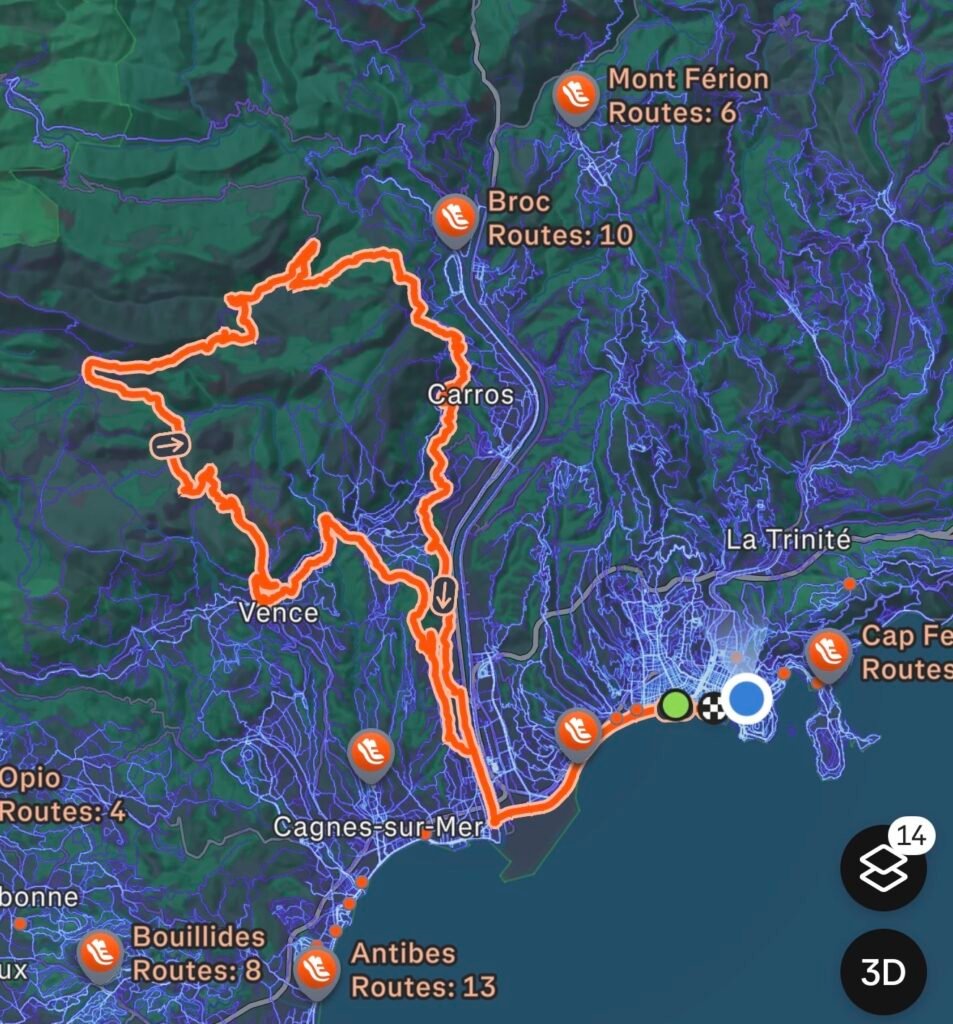
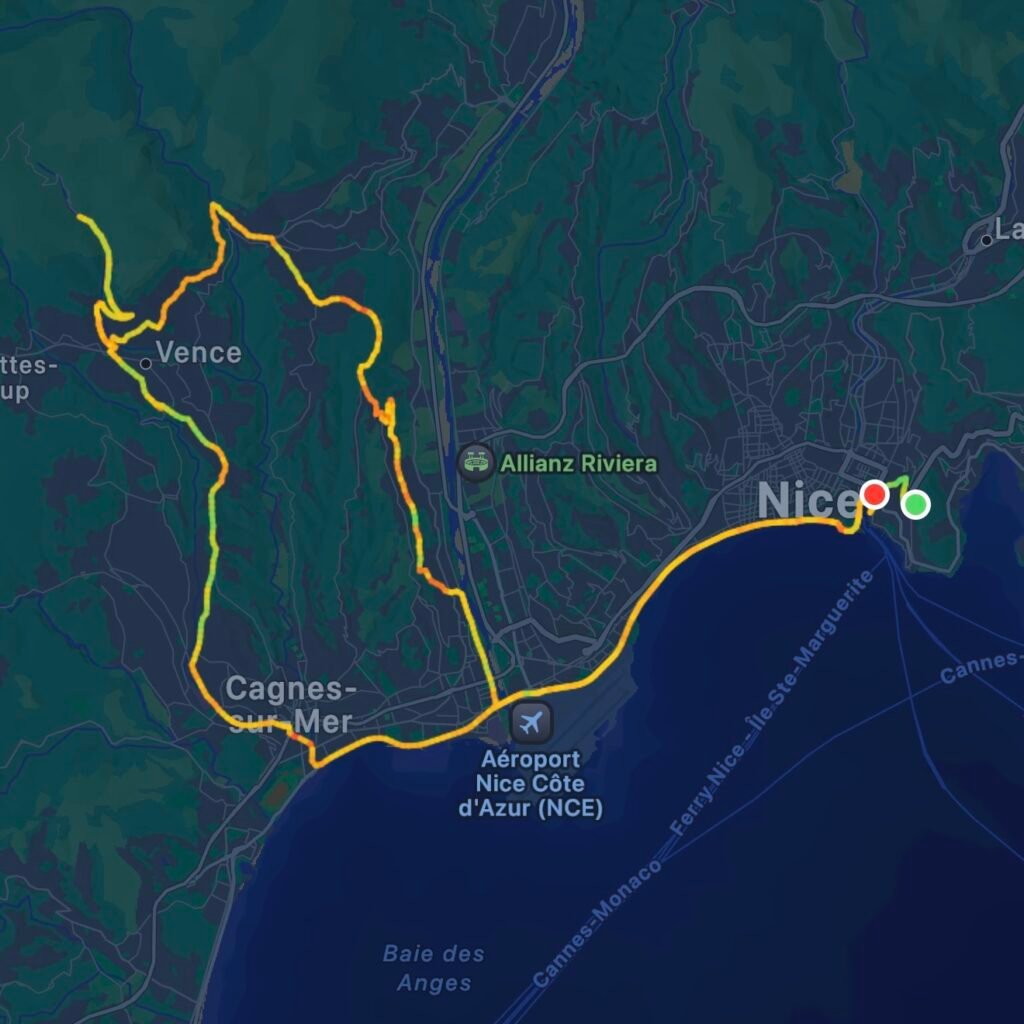
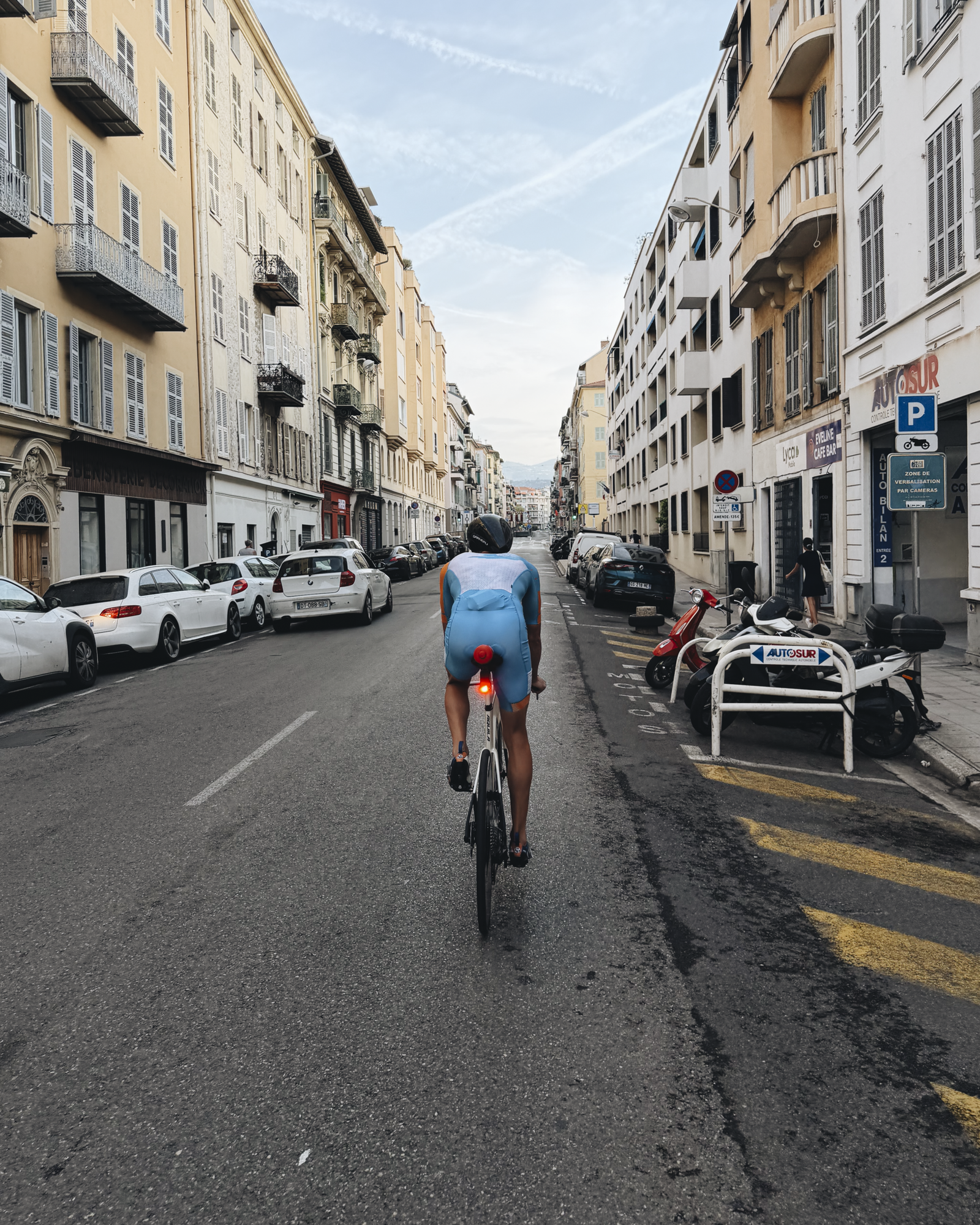
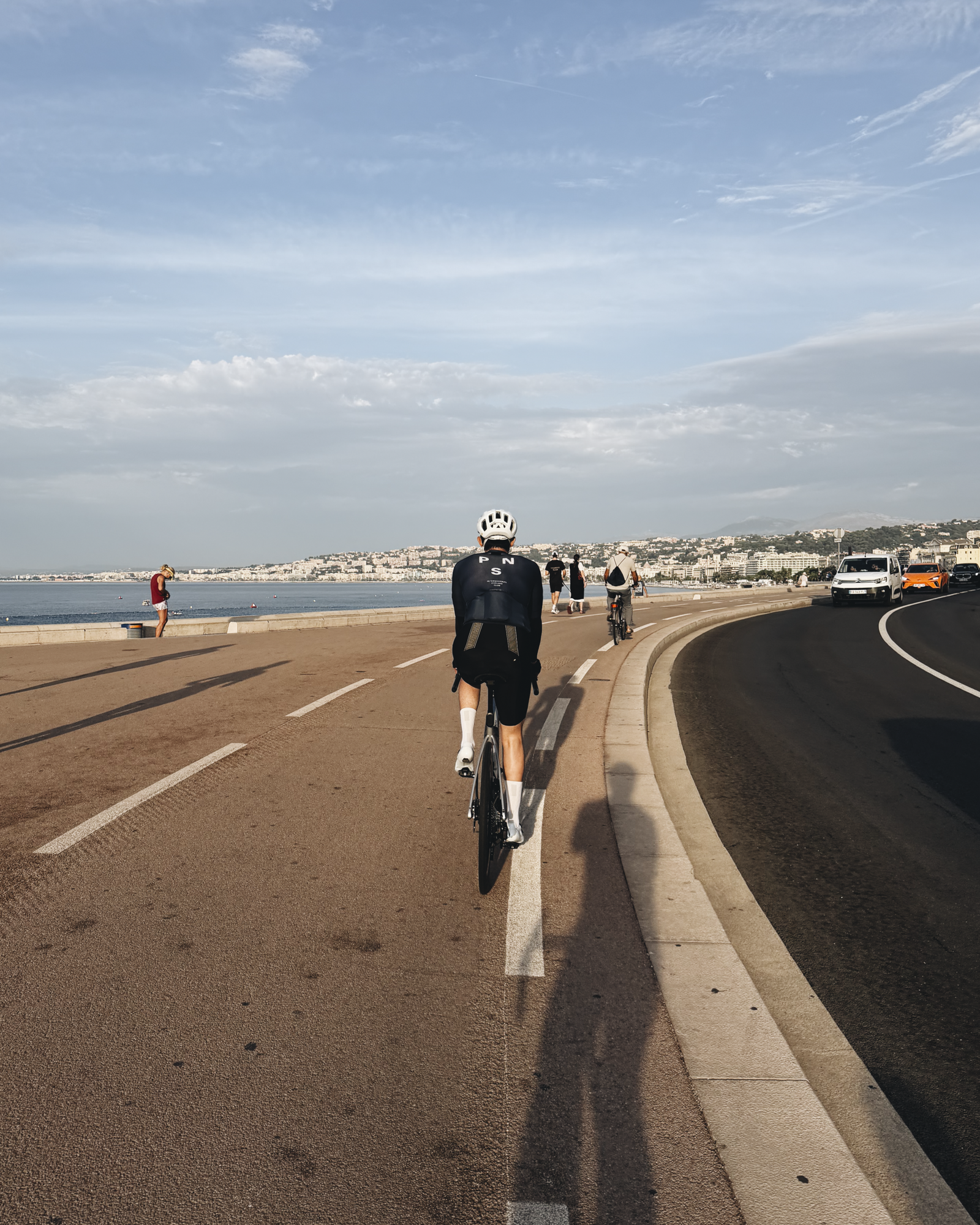
So, it turns out that if you want to do the 92-kilometre Ironman World Championship bike course in Nice, it’s a good idea to practice a little beforehand. At the very least, you probably want to get on your bike more than a handful of times. I tried it today and came up short.
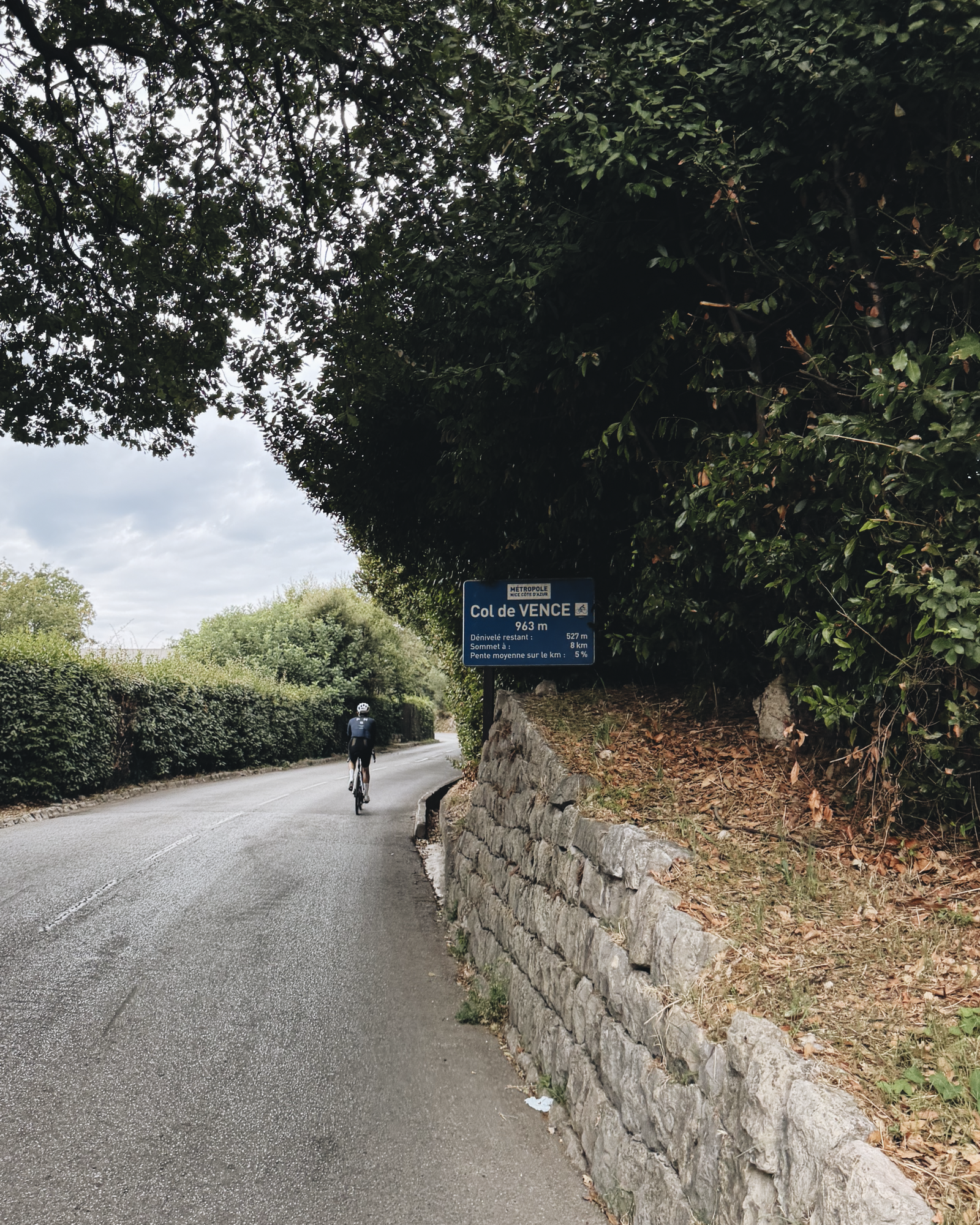
The circuit includes le col de Vence at its summit, which is a 9.7-kilometre stretch with a 963-metre peak elevation and an average pitch of 6.6%. I was within 6 kilometres of the top, but my quads completely seized up and I turned back towards Vence, then continued south back to the water.
I really wanted to get there and reward myself with a sugary crêpe, but my legs were saying otherwise. I’ll be back, col de Vence.
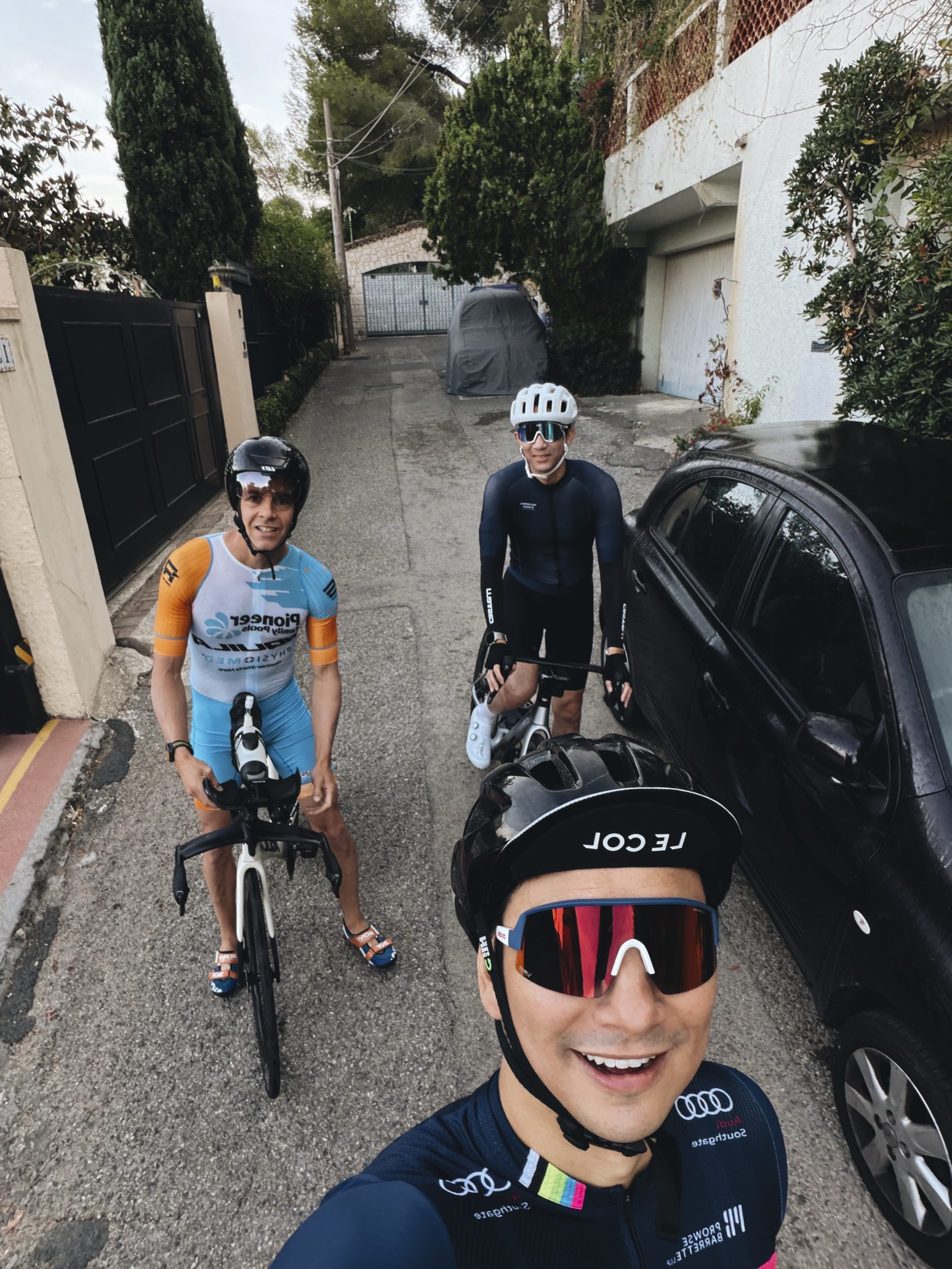
Shoutout to Guinness World Record holder Austin Kjorven, who will be representing Canada at the Ironman this weekend and has no problem climbing le col de Vence. He was also super patient as I attempted the climb. Follow him here.
Sometimes there’s an elevator down to the metro, but more often than not there isn’t.
Sometimes there’s AC, but oftentimes there isn’t.
Sometimes Vivienne is peacefully sleeping in her stroller or carrier, but sometimes she’s having a diaper blowout meltdown and screaming loud enough that passersby start giving concerned looks.
Traveling can be positively inconvenient at times. We’ve never traveled with so much paraphernalia before. We’ve never had to keep breast milk chilled on ice and think about bottle expiries while navigating busy metro trains with no room for our stroller.
But in my mind it’s like exercising. It’s work, especially with kids, but it changes you for the better. We also want Vivienne to grow up to be adaptable, resilient and patient in the face of hot, urine-soaked transit elevators and the like.
As Anthony Bourdain once said:
“Travel isn’t always pretty. It isn’t always comfortable. Sometimes it hurts, it even breaks your heart. But that’s okay. The journey changes you; it should change you. It leaves marks on your memory, on your consciousness, on your heart, and on your body. You take something with you. Hopefully, you leave something good behind.”
We finished our week in Paris, walking and taking transit everywhere. We didn’t step into a car once. We averaged just over 10k steps a day, which is significantly lower than what we would have done sans baby, but it’s still respectable.
Seeing the data on my watch and my surging step count reminded me how sedentary my life has gotten over the last two years while working from home (at least from a steps per day perspective).
It’s unacceptable and I need to make some life changes when I get back to Toronto. But for right now, it’s time to head south.
We arrived in Paris this morning and Vivienne’s first flight was a 10/10. She slept most of the way in our arms. The bassinet looked like some sort of elaborate torture device (see below), but she did also sleep in it for a bit. The problem is that they make you take her out whenever the seat belt sign is on, and so we ended up just keeping her in our arms to make sure she stayed asleep. So she slept well; we did not. Thankfully, Toronto to Paris is a super easy flight. It was around 6 hours today.
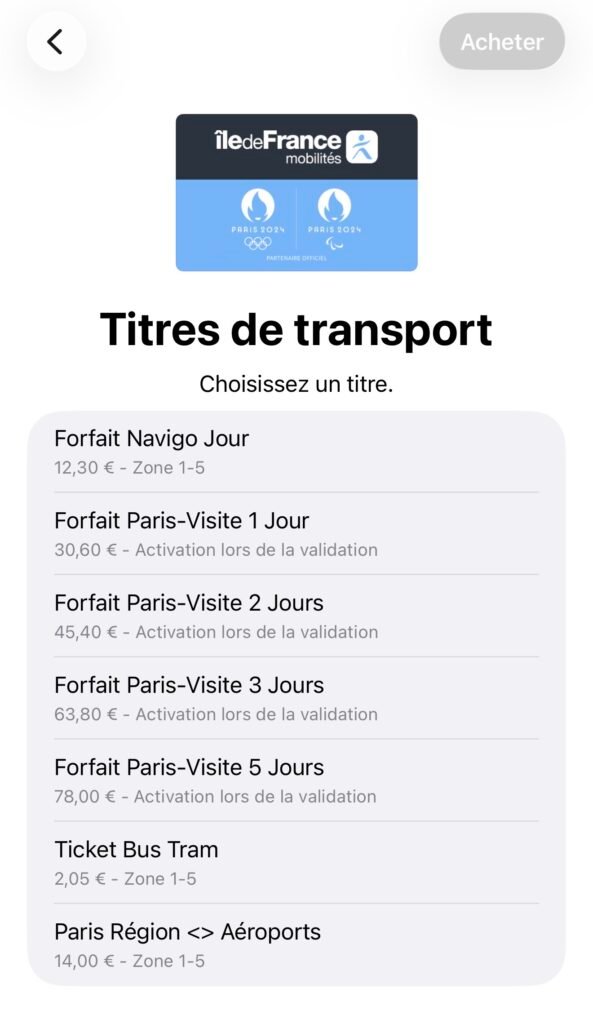
When we arrived at CDG, we stopped at Monop’ for some juices and a snack, and then went straight to the RER B train. Tip: Never fuss with the ticket kiosks. Open Apple Wallet. Add the Île-de-France travel card to it, and then choose the airport pass for €14. The express train took about 30 minutes to get to Gare du Nord. We then did one transfer and one stop on the RER E line, paused in the station to feed Vivienne and admire its vaulted ceilings, and then walked to our hotel. I think we were under an hour inclusive of the meal break.
I’ve said this many times before, but I very much enjoy the feeling of getting off a plane and not having to drive. In terms of our experience with a travel stroller, none of the trains we took had level boarding, so I would just grab the front of the stroller and we’d lift. But every station we were in had elevators. Not all of them were in order, but we could always find one to use. In some cases, we just managed on the escalators.
Full disclosure: We failed at our plan of only checking one 85L bag. We ended up checking one of our 36L carry-on rollers as well. We’ve never travelled with so much stuff before. But I will say that the Patagonia 30L MLC carry-on backpack is incredible. It miraculously fits a lot of stuff and it keeps everything organized and accessible. I don’t do bag reviews on this blog, but I almost want to now.
It turns out that travelling with a 3-month-old is harder than not travelling with a 3-month-old. It requires full-on logistics management, especially in a big, dense city like Paris where we’re accustomed to only walking, biking, and taking transit. Vivienne is already giving us a different appreciation for the city and we’re excited to let her do that. One of the things she suggested is a picnic in the park. That sounds great, and a perfect way to enjoy late-summer Paris.
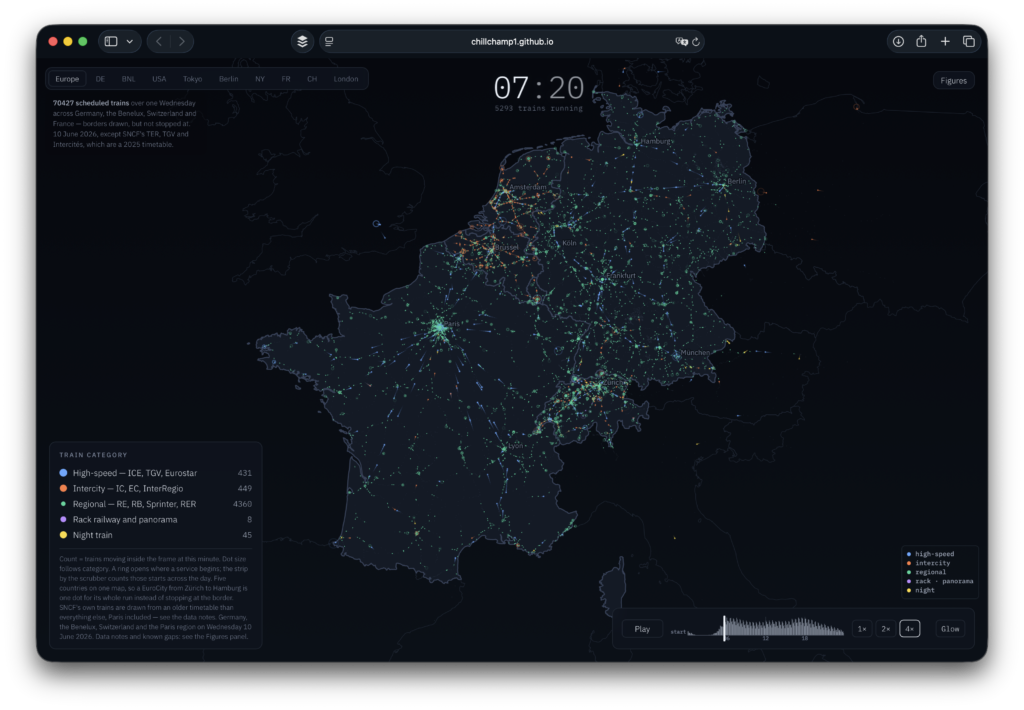
I just came across a fascinating visualization of rail in Europe. You can also visualize other places like the US, but as you know, there isn’t much to see there in the way of trains. What is shown in the above screenshot is Germany, the Benelux, Switzerland, and France. I paused the visualization at 7:20 AM and there were 5,293 trains running, with the vast majority of them (4,360) being regional rail.
Here’s what stood out:
France operates a monocentric hub-and-spoke network with Paris as the clear central hub. Trips almost always route through Paris, which reflects France’s historically centralized economy. In contrast, Germany operates a decentralized mesh network with more point-to-point travel and no single dominant city.
Regional rail is the workhorse. When I paused the visualization, over 82% of the trains in operation were regional rail. High-speed rail is sexy, but it clearly needs to be supported by a dense regional grid that brings people to and from major high-speed routes.
Smaller countries like Belgium, the Netherlands, and Switzerland have such a dense network of intercity rail that they almost read as continuous urban regions.
If you love trains, as I do, you’ll want to take a look.
In 2023, the City of Toronto announced a deal that would “upload” the Gardiner Expressway and Don Valley Parkway from the city to the province. This was a big deal because these highways were previously the city’s largest state-of-good-repair liabilities, and so, before this deal, the city was, you know, trying to figure out how to pay for them.
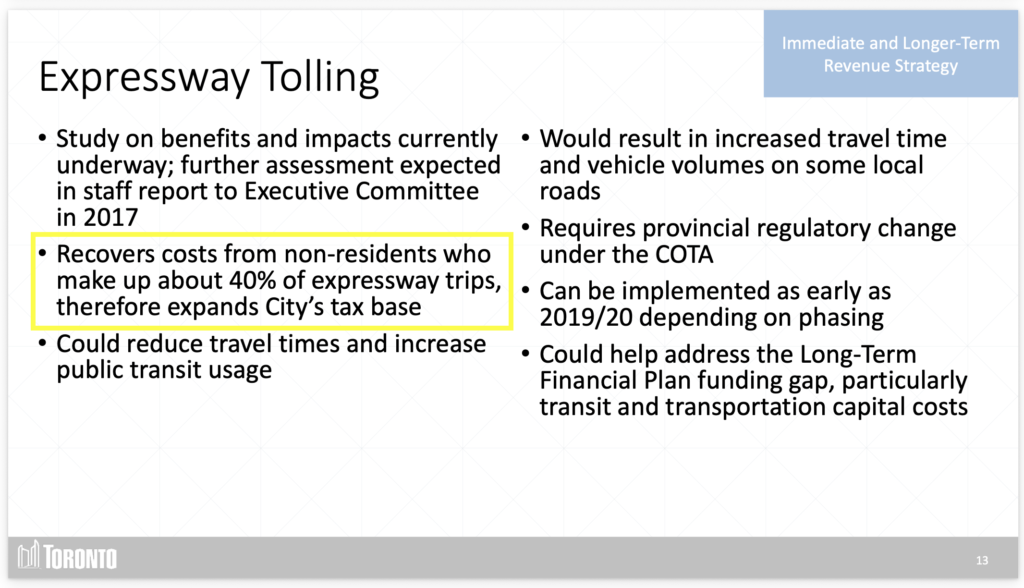
One option was road pricing (or expressway tolls). And in 2016, this became a real possibility with City Council overwhelmingly endorsing the plan, before it got rejected by the province. It will come as no surprise to regular readers that I was in support of it and writing about it at the time.
In 2016, Toronto estimated that 40% of all trips on these two expressways were by non-residents, and yet they were being funded by Toronto taxpayers. When I said this on Twitter, many of you got upset and argued that people coming in from the suburbs are a boon for the city. No doubt. But the reality is that this was an inequitable funding structure.
Let’s look at the 2022 Transportation Tomorrow Survey results, which I wrote about here.
The mode share for all trips to downtown Toronto (from within the city) was 75% non-car, with transit making up the largest share at 40.4%. And the mode share for home-based work trips to downtown Toronto (people who leave home in Toronto to go to work downtown and then come home) was about 80% non-car! In this case, transit made up nearly 50% of the trips.
The effective result is that the people who tended to drive the least to work were paying for the highways with their tax dollars, and the people driving into downtown were not. This is in no way intended to be an attack on the latter camp. The simple reality is that driving into downtown and buying a chicken souvlaki pita from Jimmy the Greek at lunch isn’t enough to offset the road usage costs.
The uploading of the highways to the province (which is still advancing but has already relieved Toronto of its financial obligations) is a more equitable solution. It shifts the cost burden to Ontario taxpayers, reflecting that people from all over the region use these highways and that Toronto is part of a broader economic agglomeration.
But this only solved the jurisdictional problem. We still have worsening congestion and an inefficient funding model. The problem with using broad-based taxation to obfuscate infrastructure costs is that direct usage then goes unpriced, and that leads to what is known as a “tragedy of the commons.”
We all tend to act in our own short-term self-interest, and the result is that road demand constantly outstrips the available supply. There’s zero marginal cost to actual usage, whether you drive 100 kilometres each day or bike to work. The most effective way to manage traffic congestion is to remove the hidden subsidy for driving and price the costs and negative externalities.
The other day I asked my dad how a function he attended went, and he responded by saying, “Traffic, BRUTAL. Traveling by car is an agonizing experience.” He’s not wrong, and I know most of us in Toronto like to complain about it. Traffic is one of the negative externalities of a big city.
But here’s the thing: we know how to solve this problem. You price congestion, as has been done in New York, London, Singapore, and many other cities, and then direct the revenue it generates to a mode of transport that isn’t as agonizing in a big city: rail travel.
I’ve written so much on this topic over the years that there’s very little I can add at this point. If you’d like to have a read, here are the search results for “congestion pricing.”
While the policy has proven successful elsewhere, political inertia and valid concerns over equity keep Toronto stuck. But until we charge for valuable road space, gridlock remains our default. New York City has also shown us that once people see the benefits, they quickly change their minds.
There was once a time when Uber was heavily investing in autonomous vehicles and rides. Then that stopped in an effort to become profitable. But now, out of necessity, it’s back. Uber recently announced that the company will invest “$10 billion of capital over the coming years to bring AVs to market at scale.”
Uber’s belief is that the self-driving car industry won’t be dominated by just one company. Instead, it will be a mixed ecosystem where some companies build their own cars and ride-hailing apps, and others plug into existing networks. And in this world, it is these networks — like Uber — that will become the most valuable piece of the puzzle.
Perhaps.
Whether they believe this or not, Uber basically has to say this because they are the platform aggregator. They do not build or operate any self-driving vehicles of their own — at least not anymore. These parts of their business were sold off.
Autonomous vehicles are a wicked technical challenge. The edge cases are extraordinarily difficult to solve. If only a select few companies solve them, and solve them well, then there’s an argument to be made that they will capture the majority of the market.
But if AV technology becomes commoditized and it ends up being all about the brand and who can aggregate demand the best, well then, Uber could very well be right. They already have global scale.
My view is that Waymo has such a commanding lead when it comes to AVs that they have the leverage in the short and medium term. There are also zero switching costs for ride-hailing customers. I’ll use whatever is better. So if I’m Uber, I’m worried about Waymo, which is presumably why they are starting to have differing opinions.