Daily insights for city builders, delivered every morning at 6 AM ET. I’m Brandon Donnelly — a Toronto-based real estate developer and founder of Globizen. I’ve been writing here since 2013.

Tag: wharton

  • Sam Zell dies at 81

    Sam Zell, the billionaire real estate investor, died this week at the age of 81. That seems young to me. Or maybe I’m just being overly optimistic about life expectancy. This is around the US average.

    Whatever the case, if you work in real estate, you likely know/knew of Sam. In my case, he spent a lot of time at Penn after he permanently endowed the real estate center (under both his name and his late business partner’s name).

    I used to go and listen to him speak at least twice a year, and I would hang off his every word as a young student of real estate. “So wait, how does this all work?”

    It was also at this time that he sold Equity Office to Blackstone for $39 billion (back in 2007, it was the largest private equity deal in history). Sam’s explanation for doing this deal was that Blackstone offered him more than what he thought the portfolio was worth, so he sold it. He took no credit for good market timing.

    If you’ve ever heard Sam speak, you know that he’s incredibly direct. Generally, he also didn’t seem to give a fuck, and was happy being the only person in a Hawaiian shirt among a sea of blue and black suits.

    In fact, he’s largely the reason that, as students, we used to all joke that the richer the speaker, the more funny and honest they would be. “Come on, let’s go to this one. She’s rich.” I guess this is just what happens when you no longer have anything to prove.

    But none of this is to say that he didn’t care. He cared a great deal about the school and about helping young students. And for that, I say: thank you Sam. Thank you for being generous with your time.

  • Implications of new housing supply

    There’s a lot of debate within urbanist circles about whether or not supply alone can solve or at least mitigate housing affordability concerns. Richard Florida and others will say that, while beneficial, increasing supply isn’t the be all end all. We need to be building affordable housing.

    Edward Glaeser, Joseph Gyourko, and others have, on the other hand, argued that middle-income housing is a supply problem and that low-income housing is quite simply a demand-side problem, which could be solved through things like a housing voucher program.

    In other words, the cost of housing isn’t necessarily the problem, it’s the low income levels. One of the benefits of supplementing people’s incomes is that it empowers mobility. People can then move to where there are jobs, as opposed to being tied to a specific neighborhood or city.

    But this debate is arguably just about the extent of the supply benefits. Intuitively, it makes sense to try and match new housing supply with demand and economic growth. But how far can that take us, particularly in high demand and high productivity cities?

    Glaeser (Harvard) and Gyourko (Penn) have a relatively recent paper out called, The Economic Implications of Housing Supply, which looks at, among other things, the “implicit tax” imposed on development as a result of land use restrictions and other supply constraints.

    Here are two excerpts:

    We will argue that the rise in housing wealth is concentrated in the major coastal markets that have high prices relative to minimum production costs, and it is concentrated among the richest members of the older cohorts—that is, on those who already owned homes several decades ago, before binding constraints on new housing construction were imposed.

    But in a democratic system where the rules for building and land use are largely determined by existing homeowners, development projects face a considerable disadvantage, especially since many of the potential beneficiaries of a new project do not have a place to live in the jurisdiction when possibilities for reducing regulation and expanding the supply of housing are debated.

    If you’re interested in this topic (and sufficiently nerdy), you can download a PDF copy of the paper here.

    Photo by chuttersnap on Unsplash

  • The blue (real estate) bible

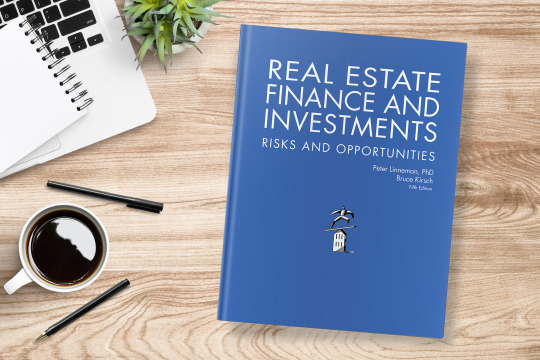
    Back when I was in grad school studying real estate, we used to refer to the below book as the “blue bible.” It is a comprehensive look at real estate finance and investments, and also development. But perhaps more importantly, it is written in a way that is clear, direct, and immensely practical to the actual world of real estate.

    image

    The reason I mention this today is because the fifth edition is out and my friend Bruce Kirsch is now an author, along with Peter Linneman. Thankfully the cover is still blue, otherwise I might be a little sad and this post wouldn’t make a lot of sense.

    Bruce has an MBA in Real Estate from Wharton (at Penn) and is the founder and CEO of Real Estate Financial Modeling, LLC, which I recommend to absolutely everyone who wants to get better at financial modeling and deal underwriting.

    I have a lot of people who reach out to me on a regular basis and want to ask me about getting into real estate, and in particular, development. I try my best to make time because I was once in their shoes. Usually that means an early morning coffee in Toronto’s PATH.

    My advice is fairly consistent. You have two options. Try and get your foot in the door at a shop or, if you’ve got the gall, go out and try and do it on your own. I have friends who have successfully done the latter with very little in the way of formal real estate training.

    Whatever your decision, knowledge of the industry will obviously serve you well. Oftentimes I’m meeting with design and/or planning professionals who bring a lot to the table, but usually lack the finance and investments knowledge. That’s when I remind them of my story: Don’t screw up the numbers.

    This is also when I suggest taking one of Bruce’s classes. I’ve taken a number of them. Because to learn how to model something in Excel you have to understand how it actually works and Bruce helps you do exactly that. Garbage in, garbage out. That’s how models work.

    But the other thing one should consider doing is picking up a copy of the blue bible. I have a copy sitting on my desk right now and will tell you that it’s a “must read”, whether you’re a designer and just want to learn more about the other side of the business, or you’re an experienced real estate professional.

    For more on the book, click here and then on Textbook at the top. Oh, and Bruce, congratulations on the new book!

  • How to achieve peak productivity

    image

    Lately I’ve been finding that I need to divide my time between multitasking and blocks of uninterrupted time. The multitasking phase is doing calls, responding to emails in 3 seconds, going from meeting to meeting, and so on. It’s a mode that many of us probably exist in virtually all of the time.

    But I can’t stay in this mode all of the time. I think of it as short attention span mode. There are times when I need blocks of uninterrupted time so that I can “go deep.” One example would be to review drawings. I really need to focus so that I can think of all of the externalities associated with the decisions being made.

    This is related to my post about managers and makers, but it’s also the focus of a recent book by Cal Newport called, Deep Work: The Secret to Achieving Peak Productivity. You can read more about the book here at Knowledge@Wharton, but I wanted to highlight two concepts. The first is this equation:

    High-Quality Work Produced = (Time Spent) x (Intensity of Focus).

    Obviously the argument here is that if you want to maximize your output, you need to increase the intensity of your focus. Minimize distractions. Ratchet up the intensity. There’s only so much time in the day.

    Newport gives the example of Adam Grant. He is a New York Times bestselling author and the youngest tenured professor at the Wharton School at the University of Pennsylvania. 

    He is so committed to intensity of focus that he batches all of this teaching into the fall semester, allowing him to truly focus on the students. He’s the highest rated teacher at Wharton. At the same time, this lets him focus on research and writing during the spring and summer semesters. He’s also known to regularly use auto-of-office responders when he’s in the office, but needs to focus.

    The second concept is that of “attention residue.” The idea here is that when we switch from some Task A to some other Task B, our attention doesn’t immediately snap over. A portion of our attention remains on the original task and distracts us from fully focusing. There’s residue.

    An example of this would be when you’re working on something and you see an email come in. As soon as you turn your attention to that notification, your attention gets divided. And even if you don’t immediately respond to that email, a portion of your attention now remains with that uncompleted task. It lingers in the mind.

    The above probably makes intuitive sense to a lot of you, but in many ways our work culture today does not encourage intensity of focus.

    Thanks for reading today. There’s lots of evidence to suggest that the best way to learn new things is to not simply read about it, but to share it with others. That’s one of the reasons I blog and hopefully you find that valuable.

  • Why creativity requires freedom

    Brazil colors by bruno Gueroult on 500px.com

    https://500px.com/embed.js

    In a knowledge and innovation economy, new ideas matter a great deal. But it seems to be a lot easier for existing companies to come up with sustaining, incremental innovations, than it is for them to come up with new, disruptive innovations. 

    New can be hard.

    That’s why I was interested in a recent New York Times article by Wharton professor Adam Grant called, How to Raise a Creative Child. Step One: Back Off.

    The article starts by arguing that many “child prodigies” rarely become adult creators who go on to the change the world:

    The gifted learn to play magnificent Mozart melodies, but rarely compose their own original scores. They focus their energy on consuming existing scientific knowledge, not producing new insights. They conform to codified rules, rather than inventing their own. Research suggests that the most creative children are the least likely to become the teacher’s pet, and in response, many learn to keep their original ideas to themselves. In the language of the critic William Deresiewicz, they become the excellent sheep.

    To become creators Adam argues that children need to be given the freedom and independence to develop their own sense of self:

    When psychologists compared America’s most creative architects with a group of highly skilled but unoriginal peers, there was something unique about the parents of the creative architects: “Emphasis was placed on the development of one’s own ethical code.”

    Yes, parents encouraged their children to pursue excellence and success — but they also encouraged them to find “joy in work.” Their children had freedom to sort out their own values and discover their own interests. And that set them up to flourish as creative adults.

    I firmly believe in this approach. But of course, this doesn’t just apply to children; though that is certainly an important takeaway. I also think that if you want the best work out of people in the workplace, you also need to: back off.

    Creativity needs freedom.

  • How we perceive commuting

    CHENNAI, INDIA-FEBRUARY 10: Street of Indian city 10, 2013 in Ch by sergemi on 500px.com

    https://500px.com/embed.js

    Wharton real estate professor, Mariaflavia Harari, recently published a paper that looks at the relationship between urban geometry (specifically compactness) and inner city commuting efficiency across 450 cities in India.

    Consistent with previous research done in this space, she finds that people generally prefer compact cities and that they are willing to pay a premium for it. It increases overall welfare. Here’s an excerpt from her paper:

    “My findings are broadly consistent with compact city shape being a consumption
    amenity. All else being equal, more compact cities grow faster. There is also evidence that
    consumers are paying a premium for living in more compact cities, in terms of lower wages and,
    possibly, higher housing rents.”

    So her recommendations for the Indian cities she analyzed was that they should relax land use restrictions to allow for more vertical / compact development and that they should focus on improving urban transport in order to offset some of the negatives externalities associated with sprawl. This is no different than the approach that many cities in the developing world are adopting or looking to adopt.

    One of things that really stood out for me in her paper though is the way people perceive commuting:

    “The loss associated with non-compact
    shape appears to be substantial: a one-standard deviation deterioration in city shape, corresponding
    to a 720 meter increase in the average within-city round-trip, entails a welfare loss
    equivalent to a 5% decrease in income. This is considerably larger than the direct monetary and
    opportunity cost associated to lengthier commutes. Less compact cities also appear to attract
    fewer low-income immigrants, as captured by the share of slum dwellers.”

    What this is saying is that we tend to overvalue the negatives of commuting, beyond the direct costs of gas, insurance, car payments, our time, and so on. We hate it so much that we also want to be compensated for the mental anguish. Here is that same idea said differently:

    The estimated welfare loss from longer commutes appears to be large, relative to the immediate
    time and monetary costs of commuting. This is consistent with the interpretation that
    commuting is perceived as a particularly burdensome activity. The behavioral literature has
    come to similar conclusions, albeit in the context of developed countries. Stutzer and Frey
    (2008) find a large and robust negative relation between commuting time and subjective wellbeing,
    using German data. They estimate that individuals commuting 23 minutes one way
    would have to earn 19 percent more per month, on average, in order to be fully compensated.

    So I guess I’m not the only one who thinks commuting and driving sucks.

  • Studying to become a real estate developer

    Earlier this week I received a message from an undergraduate architecture student interested in moving into real estate development after school. That was his 10 year plan. And he had clearly read my blog post, “Transitioning from architecture to development.”

    In his message, he asked me if there were any books I would recommend he read to improve his real estate and finance knowledge, and, if I could have a “redo”, if I would still do a M.Arch (Master of Architecture) or just go straight to the MBA?

    After responding to his message, I thought: “This would make a good blog post, as well as an opportunity to talk about the current state of real estate education in Canada.” So here goes.

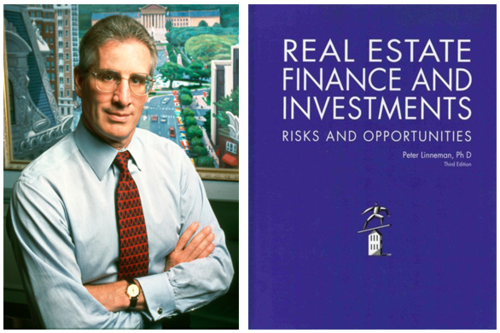
    If you’re looking for a good real estate book to get you started, I recommend checking out “Real Estate Finance and Investments: Risks and Opportunities" by Peter Linneman. It’s a much easier read and way more casual compared to most textbooks. When I was in grad school, people referred to this book as the "blue bible.” The cover on the previous edition was less purple and more blue. Unfortunately, he has also changed his glasses since the photo below.

    image

    To his second question, if I were to do it all over again, I wouldn’t change a thing about my education. I loved architecture school and combining it with business school classes and a real estate concentration was the best thing for me. I never wanted to be just a “numbers guy”, but I also never wanted to be a fanciful artist type who didn’t know how to build and manage a pro forma.

    Now, let’s talk about real estate education in Canada.

    I think we’re way behind. In the US, you can do a Master of Science in Real Estate Development, a Master of Real Estate Development, and all sorts of other real estate degrees. In Canada, you’re probably doing a MBA with a few elective real estate classes. Real estate is the largest asset class in the world. Does that not justify a dedicated degree?

    Part of the reason for this, I think, is because real estate development is still very much an entrepreneur’s business–though it has become more institutionalized in recent years. Because of this, people get into development from a variety of different professions. They just need that entrepreneurial hutzpah. And that’s all fine, but I still think that the profession, the economy and our cities would benefit from University trained developers.

    So if you’re reading this University of Toronto, I think–and I’ve thought this for awhile now–that The John H. Daniels Faculty of Architecture, Landscape and Design and The Rotman School of Management should get together and collectively form a real estate program. Who’s with me?