Daily insights for city builders, delivered every morning at 6 AM ET. I’m Brandon Donnelly — a Toronto-based real estate developer and founder of Globizen. I’ve been writing here since 2013.

Category: Real Estate

  • An unsold condo tax misdiagnoses the real estate market

    When developers build new, for-sale housing, they are incentivized to sell that housing. That’s the business. If developers are sitting on unsold inventory — there’s an estimated 4,000 newly-completed unsold condominiums in the Vancouver region — it’s typically indicative of market conditions; meaning developers are sitting on inventory because they have no other choice, not holding inventory because they’re trying to price gouge.

    Last week, BC Premier David Eby announced that, if re-elected, his government would impose a new 2% tax on recently completed condominiums if they sit empty for more than 1 year. This would be levied against the assessed value of the property and increase by 1% for each additional year. So, by year three, the tax would be 3%.

    This would be a punitive tax that seems to suggest developers are not already incentivized to sell their housing inventory. Eby positioned the tax as a way to encourage developers to further lower their prices and sell homes at price points that people are willing to pay. While it would certainly be a “stick” for developers, why punish home builders? That’s less than optimal for long-term housing supply.

    A valuable indicator of current market conditions can be found in Ontario’s new enhanced HST rebate. It represents a meaningful cost reduction on the price of new housing and all signs point to this rebate being passed through to purchasers at or close to 100% of the value. It’s a sign that developers are not looking to price gouge. They’re trying to balance competing objectives and ultimately move their inventory.

  • The final release at One Delisle

    We’ve just launched a new One Delisle Instagram account (@one_delisle) and, as part of it, a new video series. Here’s our most recent video, featuring Jeanne Gang of Studio Gang. We also filmed a new video this week that I think is going to be spectacular. Hint: It involves a drone, house music, and a beautiful summer-in-September sunset. So if you aren’t yet following One Delisle, you may want to do that now.

    This week, we also introduced The Reserve Residences, which is our final release for the project. This is a collection of only ten homes on the highest floors of the building. All of these suites feature generous 2–3 bedroom floor plans of up to 3,600 square feet. This is the final opportunity to own before occupancies begin in spring 2027. For more info or to book a site tour, email sales@onedelisle.com.

  • Micro-retail on the corner of rue de Mogador

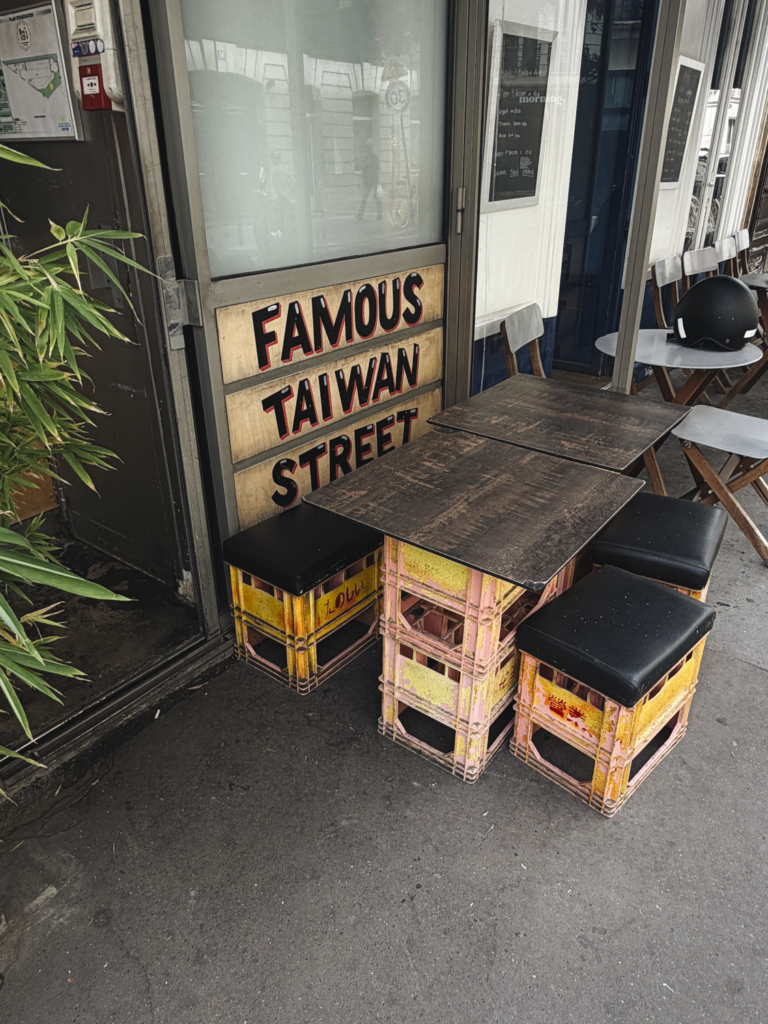
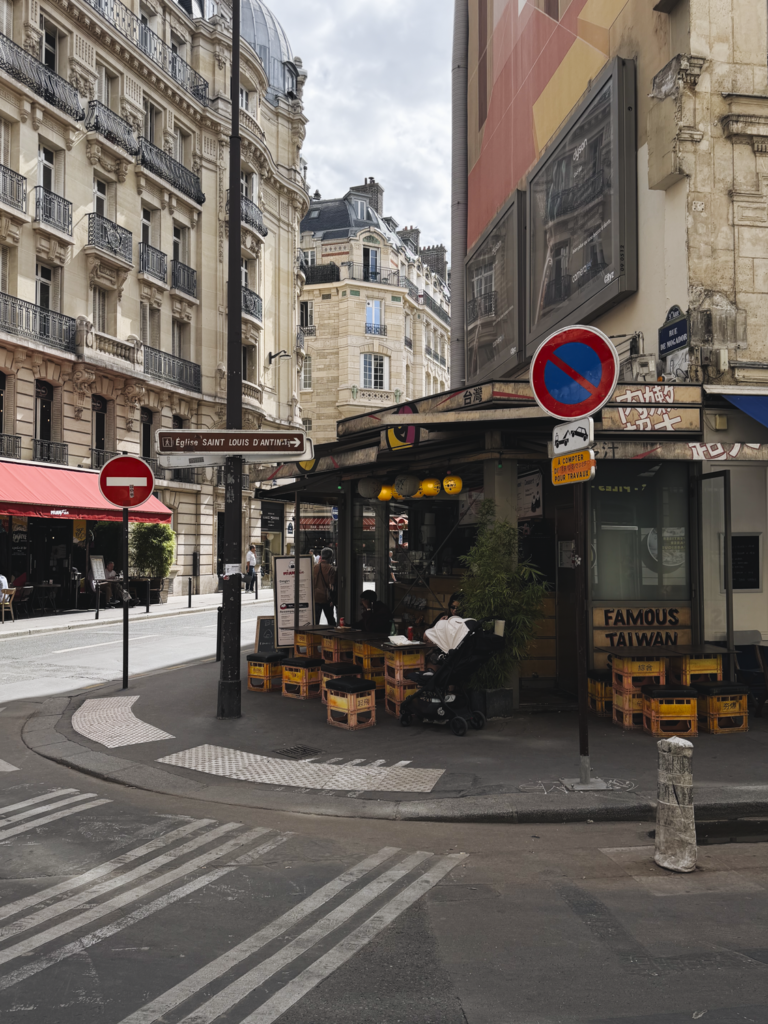
    This corner, the corner of rue de la Victoire and rue de Mogador in Paris, could have very easily been nothing. The side wall of the main building is, for whatever reason, blank. There’s a tall mural, two advertising billboards, and a remnant parcel of land that looks to be no deeper than about 3 metres at its absolute deepest.

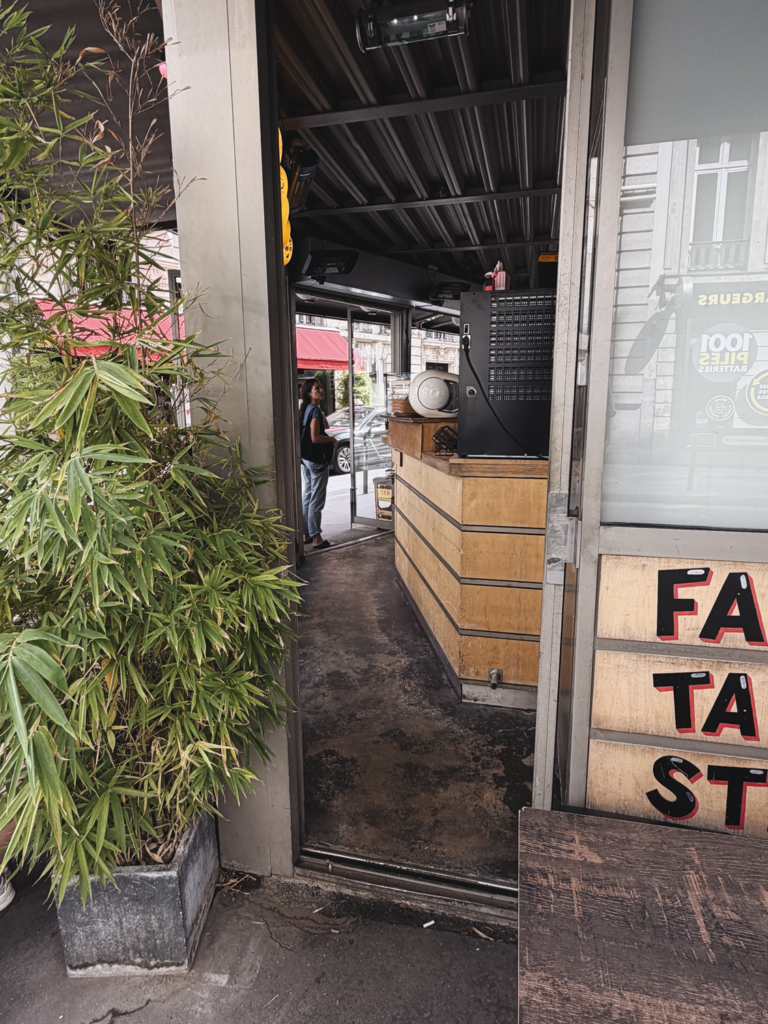
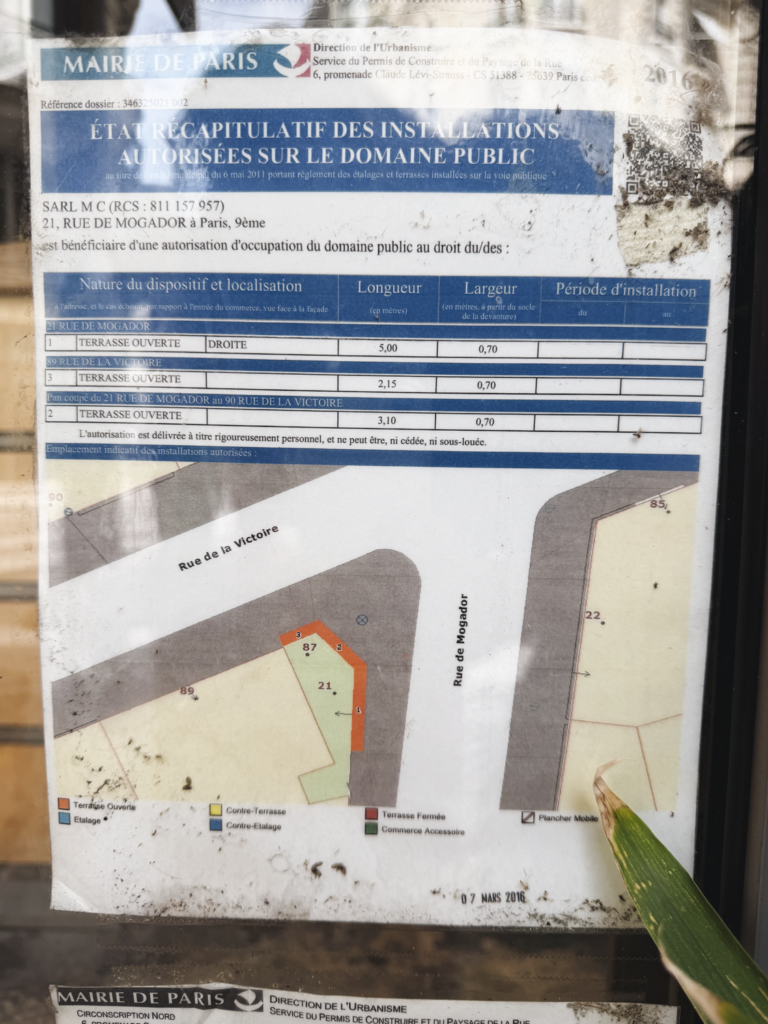
    But instead, you’ll find a Japanese street food restaurant called Mian Fan Onigiri (I’m not sure what the Taiwan sign is all about). The interior can’t be larger than 20 or so square metres, but it’s surrounded by a 0.7-metre-deep patio that wraps around the outside of the space and runs about 10 m in total along three faces (see city terrace permit document).

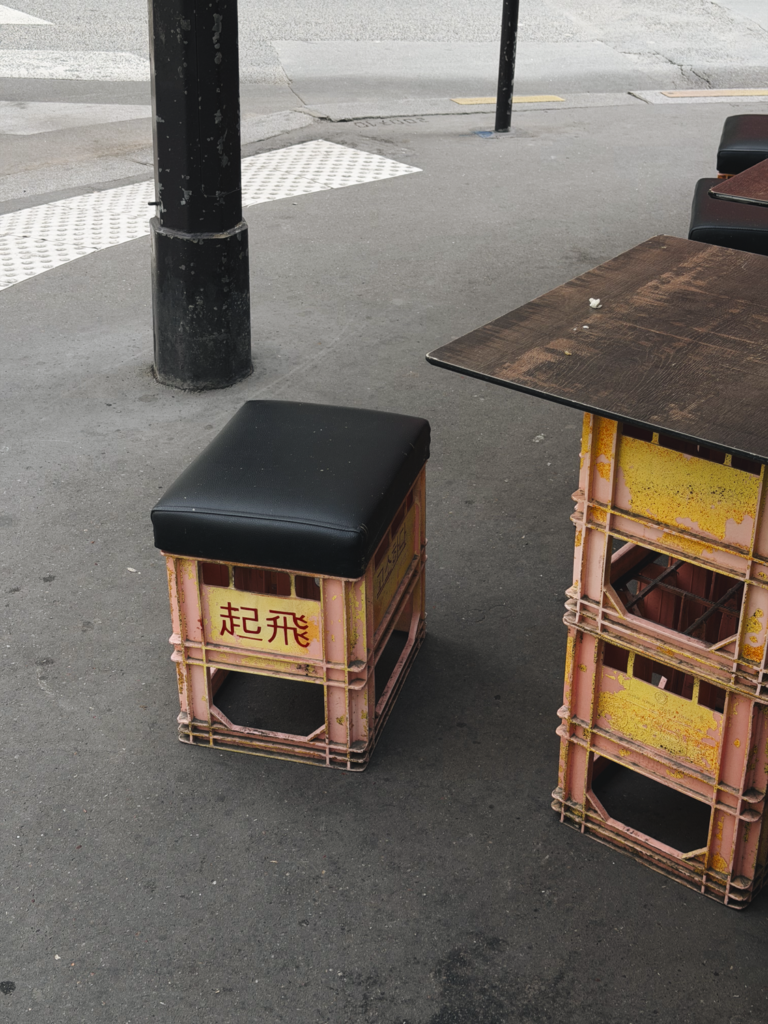
    It’s a simple and unfussy space. The patio consists of milk-crate furniture. But these kinds of small spaces punch well above their weight in what they contribute back to a city in terms of street animation and public life. Cities would do well to reduce the barriers to this scale of business and encourage more small entrepreneurs to hang a shingle.

    And until they do, we’ll never know how much of this urban spirit is being suppressed.

  • New acquisition for Globizen Flats: 571 Oakwood Avenue in Toronto

    This week, Globizen announced a new acquisition for our Flats division: 571 Oakwood Avenue in Toronto.

    This is an exciting moment for us because it marks the first project in our strategy of unlocking underutilized urban sites to create thoughtfully crafted, design-forward rental homes in walkable, transit-oriented communities across Toronto.

    The mission is simple:

    • Fill a Housing Need: We believe there’s a gap in the market for spacious, well-designed, family-oriented rental homes at accessible price points.
    • Support Toronto’s Urban Evolution: We believe that Toronto is at a unique turning point in its urban history, transitioning from a monocentric downtown surrounded by low-rise suburbs to a polycentric city that fundamentally rethinks its relationship to the car.
    • Invest in Renewable Energy: Canada needs more clean energy capacity. We see this as an opportunity to create a decentralized renewable energy asset alongside our communities.

    Globizen Flats is a response to these beliefs.

    Check out the full post in the Globizen Journal. You can also subscribe and follow Globizen Flats (@globizenflats) on Instagram.

    As an aside, I initially created the above toilet image as a joke. It’s a photo of the bathroom in the existing house on site. But my partners thought it was cool and that we should share it publicly, so here we are. I bet that toilet was the neatest thing when it was first installed.

  • Fast fashion is embracing luxury placemaking

    The future of physical retail continues to evolve.

    Recently, we spoke about LVMH’s approach of spending billions on some of the world’s most prime real estate. But the focus on human-centred destination experiences isn’t unique to the luxury segment. Case in point: Zara just opened a new flagship store in Shanghai designed by AIM Architecture (which appropriately stands for Authentic Immersive Matters).

    Located on a major commercial street, the store looks like this and can be generally described as follows:

    • Positioned on a prime open-air main street (versus an enclosed mall).
    • Large amphitheatre-style seating on the ground floor that connects the store to the street and encourages people to linger.
    • Beautiful interiors with not a lot of clothes on display — it has more of a gallery feel.

    It is a clear example of fast fashion adopting luxury placemaking and brand immersion. The point is not to bombard you with clothing options. The point is a human-centred space that gives you an opportunity to experience the Zara brand and then decide if its products might help you better define your sense of self. It’s a media channel, giving you something you can’t get online.

  • Why do cities build skyscrapers?

    Very generally speaking, cities build skyscrapers because of some mix of natural market forces and symbolic prestige. In cities like New York and Hong Kong, where land is extremely scarce and valuable, the only option is to go up. Tall buildings are essential. And in cities like Dubai, I think it’s fair to say that symbolic prestige has been the greater motivator, at least at the outset of the city’s modern reinvention as a global city. Tall, over-the-top buildings helped put the city on the map, even when tall, over-the-top buildings weren’t necessary from a direct economic standpoint.

    Another way to encourage tall buildings is to simply restrict everything else. Ontario’s Places to Grow Act of 2005 was well-intentioned. It was designed to encourage intensification, support transit investment, and curb urban sprawl. I believe that all of these things are desirable planning outcomes. But one of the ways that intensification was sold, politically, was that growth would only be directed to specific areas and that the preeminence of single-family housing in the region would not be in any way threatened.

    The result is what has been pejoratively referred to as “tall and sprawl,” meaning tall buildings surrounded by vast swaths of low-density housing. It’s a built-form contrast that feels unnatural precisely because it is a market distortion created by policy. In a pure market without zoning constraints, the likely built-form outcome would be a smoother density gradient down from major urban nodes and transit stations (where land values tend to be higher). Of course, the Toronto region is filled with countless counterexamples of this.

    Now, to be fair, good work is being done to address this missing layer of medium density, but we’re not there yet. And we’re still working through the supply of the last cycle. Rachelle Younglai recently published an article in The Globe and Mail called “Condo developers outside Toronto feeling the biggest strain from market’s downturn.” This is not surprising. Peripheral markets generally get hit the hardest during real estate downturns and take the longest to bounce back. But on top of this, there are suburban towers that probably didn’t need to get built. The economic imperative was tenuous but for the planning restrictions and the pre-construction condo market.

    My suggestion would be to upzone the areas surrounding these towers and remove as many development constraints as possible, especially around transit nodes. This may seem paradoxical given we’re currently talking about excess supply, but the glut is likely a product mismatch problem. Allowing the surrounding areas to fill in invites the market to build what is most in demand, smooth out the density gradient, build amenities, and create destinations that could then lift the value of the entire node.

    This is not an immediate solution, but it’s a path toward a more natural market outcome. Need a case study to point to? Look to Tokyo. Flexible permissions, mixed-use zones by default, and an orientation around rail have allowed Tokyo to organically evolve into one of the most livable global cities on the planet.

  • Why some of the world’s most valuable real estate is human-centred

    Yesterday we spoke about the growing divide between what I am calling machine-centred and human-centred real estate (feel free to suggest better titles in the comment section below). Machine-centred assets are introverted. By definition, they do not need to engage their environmental context. They are utilitarian spaces optimized for machine efficiency. Human-centred spaces, on the other hand, are extroverted spaces.

    A prime example of this is the approach taken by luxury conglomerate LVMH:

    • Trophy Real Estate: LVMH sees value in prime urban real estate in the world’s top global cities. In 2023, the company spent €2.45 billion on real estate in cities like Paris, London, and New York.
    • Mixed-Use Placemaking: Stores are no longer just stores. They are mixed-use places that blur the lines between retail, culture, food and beverage, hospitality, and whatever else strengthens the core brand.
    • High Street Bias: Between July 2024 and July 2025, JLL found that 59% of new luxury store openings across the US were in open-air, street-level locations. The three most active areas in the US were Madison Avenue, Fifth Avenue, and SoHo.

    A big part of this strategy is naturally about complete control. By owning standalone real estate assets in prime urban locations, brands can decide if they want to clad a 15-storey building in monogrammed Louis Vuitton trunks. But implicit in this desire is a recognition that the human experience is paramount when it comes to luxury. Emotional immersion, physical discovery, and a curated brand story are all part of the offering.

    Physical spaces also provide a platform for signaling identity and status, which is primarily why people buy luxury products in the first place. Machines can optimize for function, but human-centred spaces create the emotion that fuels some of the world’s most valuable real estate.

  • What are the actual employment effects of data centres?

    People used to get excited about data centre construction, and communities used to compete for them, frequently with incentives. They represented job creation and an investment in the new economy. But things feel quite different today.

    According to new research from Brookings, more than 100 local communities in the US have enacted moratoriums on data centres, and more than 300 state data centre bills were filed in the first six weeks of 2026 alone. Earlier this year, Sanders and AOC also introduced the AI Data Center Moratorium Act.

    The reasons for this are clear. Brookings reports that the PJM grid region in the US (which serves about 65 million people) saw its power supply costs increase from about $2.2 billion to $14.7 billion in a single year, and data centres are thought to account for nearly two-thirds of the increase.

    So, are the employment and economic gains worth it?

    The new research from Brookings shows that not all data centres are created equal. Hyperscale data centres (like those built by Google and Amazon) can quickly become the largest taxpayers in a county. They also appear to create higher employment benefits compared to colocation facilities (where a landlord builds a data centre and then leases it out to remote tenants).

    The largest employment effects were also seen when data centres cluster. This makes sense, and it’s the foundation of cities. When people and uses cluster together, they produce larger ecosystem effects. Conversely, standalone facilities were found to result in modest gains. A data centre is not a labour-intensive operation in and of itself.

    If you’d like to read the full Brookings brief, click here.


  • From square to circle at One Delisle

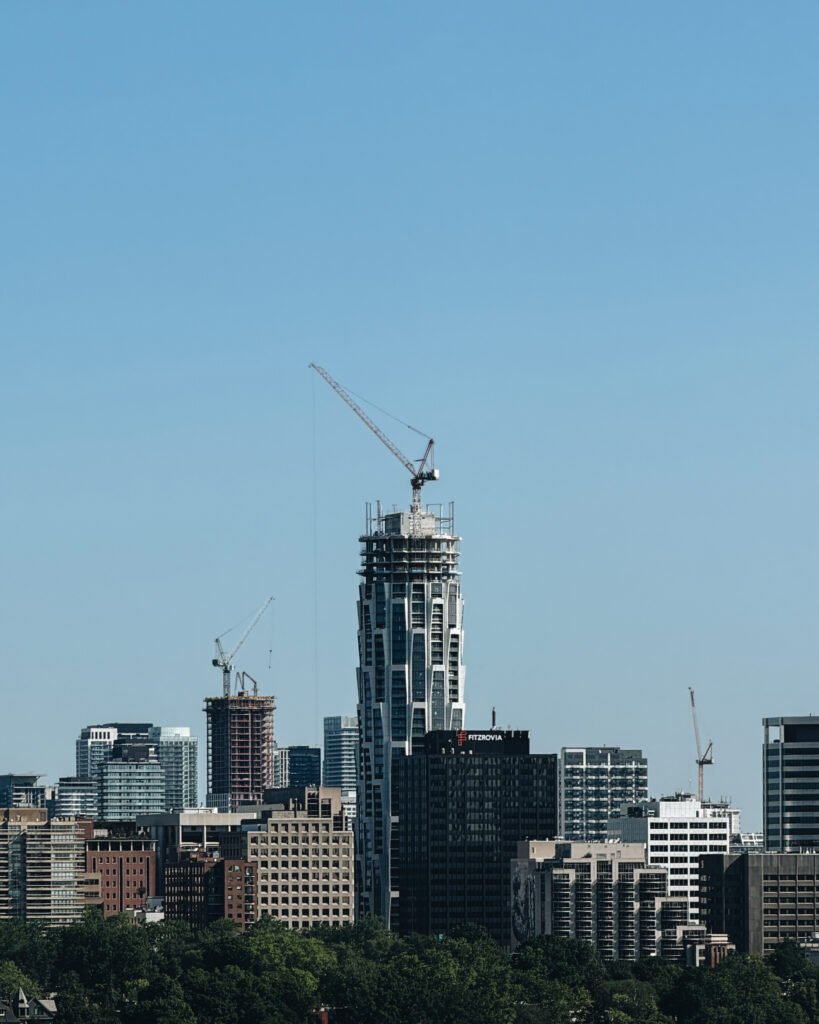
    One Delisle is really starting to make a mark on the Toronto skyline. So on a semi-regular basis, people now send me photos of the building or mention me on the socials. I love when people do that. Here’s a great photo from today from Dion on Twitter.

    One of the comments that I used to get was, “Yeah, I don’t know, Brandon, the floor plate is still looking pretty square.” And I would respond with, “Be patient.” For those of you who aren’t familiar with the design, the entire tower gradually transforms from a square floor plate to a 16-sided circular floor plate.

    Nobody makes this comment anymore.

    I also really like Dion’s photo because it shows the steel for the “crown” at the top of the building coming together. The height of the crown was something we fought for during rezoning. Studio Gang felt it was crucial for the proportions and slenderness ratio of the building. And we agreed.

    I can tell you that it had us measuring the exact height of nearby church windows to see if this crown would shadow them at certain times of the day and year. I’m sure glad we did that.

    Please keep the photos coming!

  • Customer-centricity reduces risk

    Real estate can be an abstract concept. If you’re a capital allocator, it might be a line item in one of your spreadsheets. Or, if you’re a developer primarily focused on zoning and entitlements, you might think in terms of gross floor area. How much density do I have, and what is it going to be worth?

    This is not to disparage any one component or participant within the development supply chain; it is simply to say that development is long and complicated, participants will naturally specialize, and everyone will have a lens through which they see things.

    But at the end of the day, these activities ultimately come back to fundamentals: the real estate needs to house people and things, and do something. Gross floor area has value on a spreadsheet because it can be turned into something. And it is ultimately that something that determines how much it is worth.

    If you’re a developer selling entitled land, your direct customer is the next developer, the one who will ultimately build out the site. Then, that developer’s customers are the people who will ultimately buy, rent, and occupy the space. And in some cases, those customers will also have their own customers, if, for instance, they choose to buy a space and then rent it out to somebody else.

    So there are layers to this. But regardless of where you might sit within the chain, I think it’s always helpful to focus on the customer, or customers. It’s harder to be wrong with your assumptions if you drill all the way down and consider the end use cases.


    Cover photo by Israel Andrade