Daily insights for city builders, delivered every morning at 6 AM ET. I’m Brandon Donnelly — a Toronto-based real estate developer and founder of Globizen. I’ve been writing here since 2013.

Tag: retail

  • Micro-retail on the corner of rue de Mogador

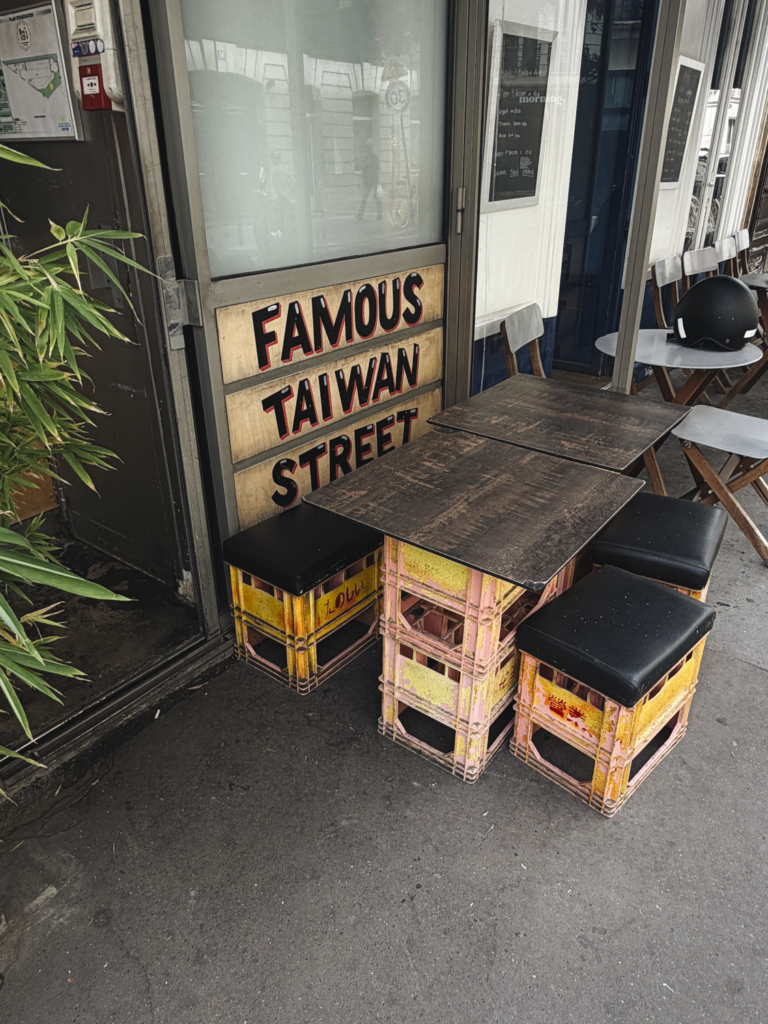
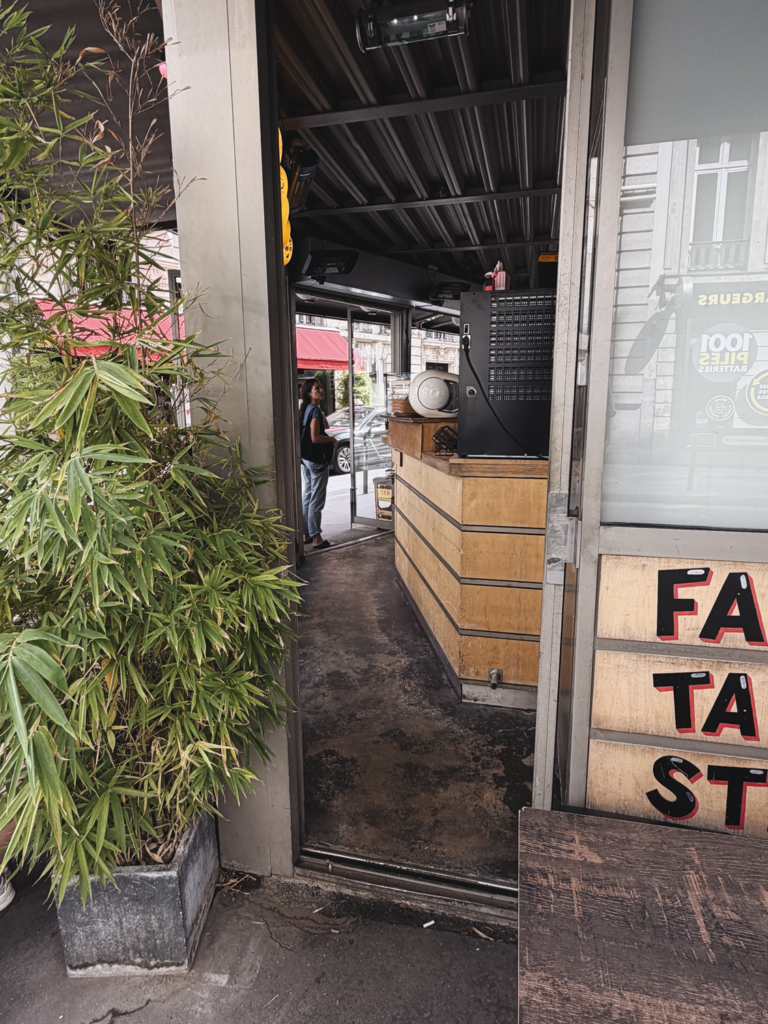
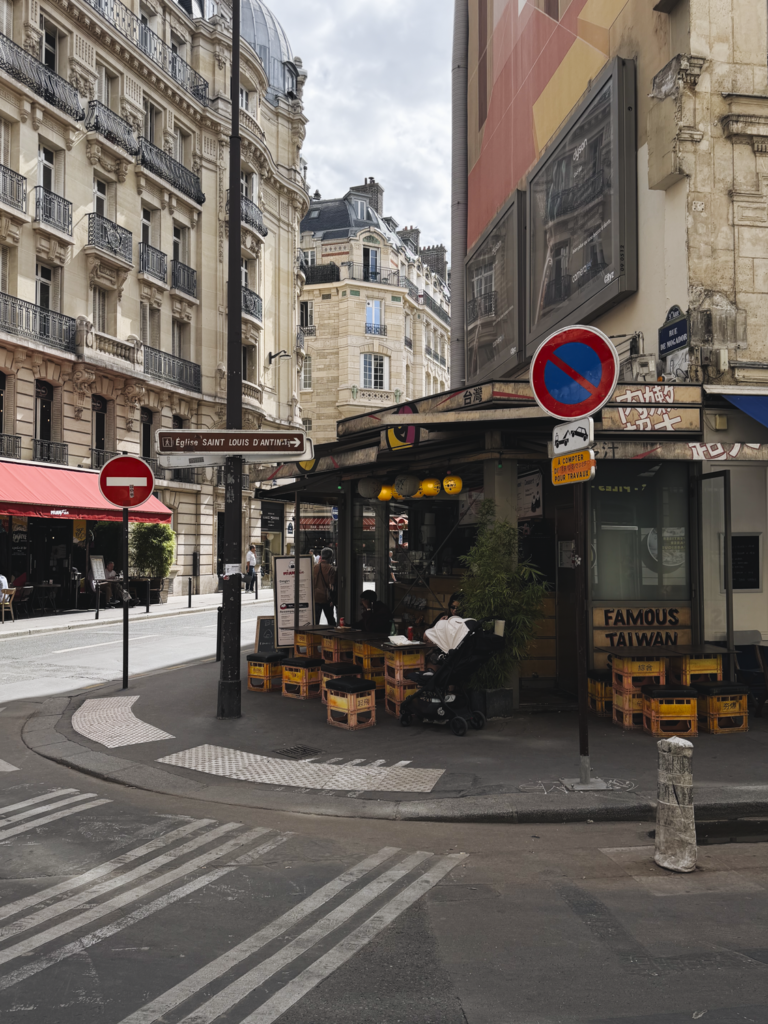
    This corner, the corner of rue de la Victoire and rue de Mogador in Paris, could have very easily been nothing. The side wall of the main building is, for whatever reason, blank. There’s a tall mural, two advertising billboards, and a remnant parcel of land that looks to be no deeper than about 3 metres at its absolute deepest.

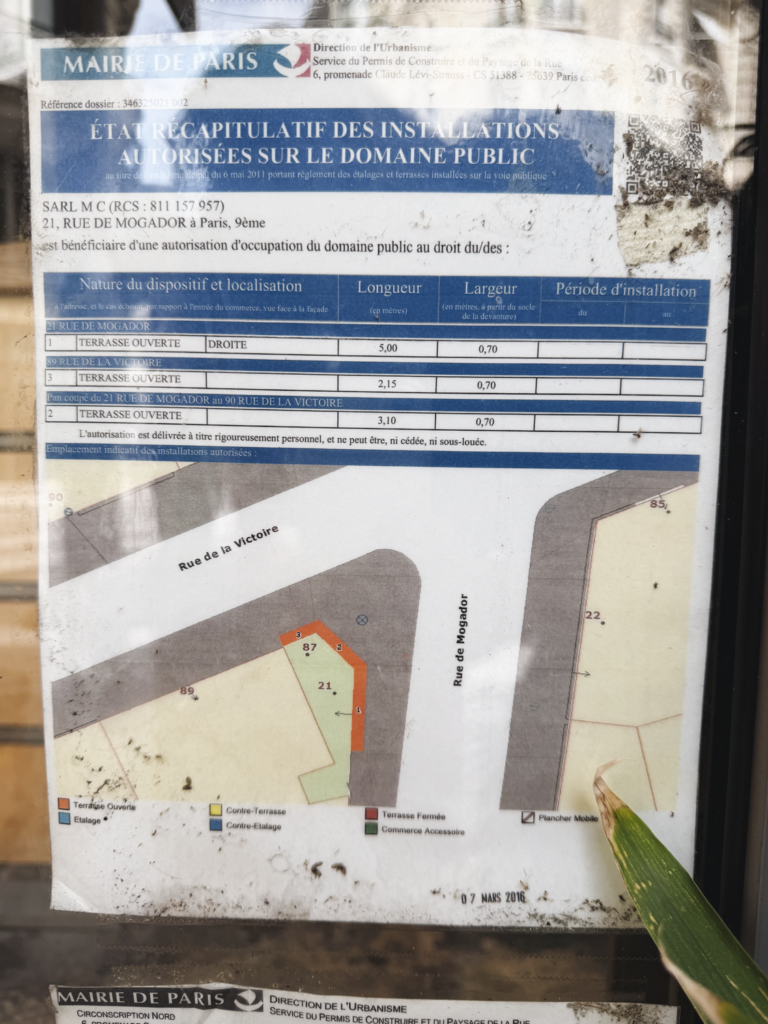
    But instead, you’ll find a Japanese street food restaurant called Mian Fan Onigiri (I’m not sure what the Taiwan sign is all about). The interior can’t be larger than 20 or so square metres, but it’s surrounded by a 0.7-metre-deep patio that wraps around the outside of the space and runs about 10 m in total along three faces (see city terrace permit document).

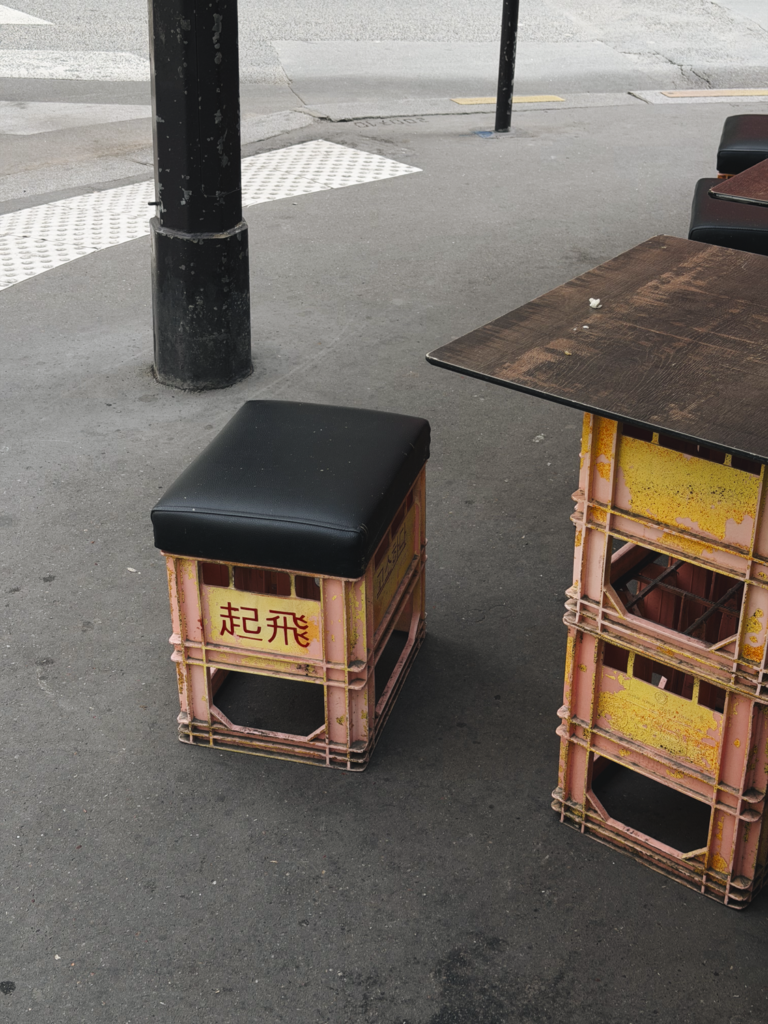
    It’s a simple and unfussy space. The patio consists of milk-crate furniture. But these kinds of small spaces punch well above their weight in what they contribute back to a city in terms of street animation and public life. Cities would do well to reduce the barriers to this scale of business and encourage more small entrepreneurs to hang a shingle.

    And until they do, we’ll never know how much of this urban spirit is being suppressed.
  • Fast fashion is embracing luxury placemaking

    The future of physical retail continues to evolve.

    Recently, we spoke about LVMH’s approach of spending billions on some of the world’s most prime real estate. But the focus on human-centred destination experiences isn’t unique to the luxury segment. Case in point: Zara just opened a new flagship store in Shanghai designed by AIM Architecture (which appropriately stands for Authentic Immersive Matters).

    Located on a major commercial street, the store looks like this and can be generally described as follows:

    • Positioned on a prime open-air main street (versus an enclosed mall).
    • Large amphitheatre-style seating on the ground floor that connects the store to the street and encourages people to linger.
    • Beautiful interiors with not a lot of clothes on display — it has more of a gallery feel.

    It is a clear example of fast fashion adopting luxury placemaking and brand immersion. The point is not to bombard you with clothing options. The point is a human-centred space that gives you an opportunity to experience the Zara brand and then decide if its products might help you better define your sense of self. It’s a media channel, giving you something you can’t get online.

  • Why some of the world’s most valuable real estate is human-centred

    Yesterday we spoke about the growing divide between what I am calling machine-centred and human-centred real estate (feel free to suggest better titles in the comment section below). Machine-centred assets are introverted. By definition, they do not need to engage their environmental context. They are utilitarian spaces optimized for machine efficiency. Human-centred spaces, on the other hand, are extroverted spaces.

    A prime example of this is the approach taken by luxury conglomerate LVMH:

    • Trophy Real Estate: LVMH sees value in prime urban real estate in the world’s top global cities. In 2023, the company spent €2.45 billion on real estate in cities like Paris, London, and New York.
    • Mixed-Use Placemaking: Stores are no longer just stores. They are mixed-use places that blur the lines between retail, culture, food and beverage, hospitality, and whatever else strengthens the core brand.
    • High Street Bias: Between July 2024 and July 2025, JLL found that 59% of new luxury store openings across the US were in open-air, street-level locations. The three most active areas in the US were Madison Avenue, Fifth Avenue, and SoHo.

    A big part of this strategy is naturally about complete control. By owning standalone real estate assets in prime urban locations, brands can decide if they want to clad a 15-storey building in monogrammed Louis Vuitton trunks. But implicit in this desire is a recognition that the human experience is paramount when it comes to luxury. Emotional immersion, physical discovery, and a curated brand story are all part of the offering.

    Physical spaces also provide a platform for signaling identity and status, which is primarily why people buy luxury products in the first place. Machines can optimize for function, but human-centred spaces create the emotion that fuels some of the world’s most valuable real estate.

  • More retailers are buying real estate in New York

    Last week we spoke about how many businesses don’t want to own their own real estate, but that some do. We then spoke about Prada’s recent acquisition of 720 and 724 Fifth Avenue for $835 million. However, they’re not the only ones. According to New York’s The Real Deal (thank you John Bell for the article), last year saw the following transactions:

    • Swiss fashion house Akris bought a property from SL Green for $40.6 million
    • Japanese coffee retailer Geshary bought a property on Fifth Avenue from the Riese Organization for $38 million
    • And Dyson bought a building in Soho for $60 million

    Now, some, or a lot of this, is strategic. New York is New York, and global brands need to be there. Another part of this is that there was less competition last year. Fewer real estate companies wanted to buy retail and office buildings, and so end users seem to have stepped in at what they presumably saw as favourable prices.

    But it’s also not totally foreign for retailers to want to own their own real estate. Perhaps the most famous example is McDonald’s, which owns its own real estate and then leases it out to franchisees. Though as I alluded to last week, it’s important to know what business you’re ultimately in. And McDonald’s knows it’s in the real estate business.

  • The laneway love continues

    The momentum around wanting mixed-use laneways in Toronto continues, or the algorithms just know what gets me going. Either way, I continue to be both impressed and surprised by the number of “hidden” laneway-based businesses that exist in this city and that keep surfacing online.

    Here are some further examples:

    I honestly think that someone should create a directory/mapping of these businesses. If anyone wants to do this or help do this, I own lanewaylove.com and I’ve been reserving it for projects just like this.

    I also think that this has the potential to become a hallmark of Toronto urbanism. It’s already somewhat endemic, it would seem. So imagine what will happen once we actually allow and encourage these uses to their fullest extent. Yes, once.

    If you know of any other laneway-based businesses, whether here in Toronto or in your city, please share them in the comment section below.

  • Vancouver proposes empty stores tax

    When you buy commercial real estate, you are buying a stream of future cash flows. Sometimes these cash flows are already in place and sometimes these cash flows are based on future expectations. Either way, as a general rule, it is better to have more rather than less rent.

    But there are some short-term exceptions to this rule. If there is a higher and better use for your property and you’re planning to redevelop it, you probably don’t want to encumber the asset with any leases. Certainly not with any long-term leases. So vacant is likely better.

    Another possible short-term scenario might be that the market has moved and you’re no longer able to command the same rents. But instead of adjusting your expectations, which would negatively and immediately impact the value of your asset, you decide to hold out in the hopes that the market will return.

    Yet another more dire scenario could be that the market has moved entirely and you’re no longer able to find tenants at any price. But this isn’t a choice and so I wouldn’t consider it an exception to our more-rent-is-better rule. This is a systemic kind of problem.

    I am going to assume that for Vancouver to propose an empty stores tax the belief is that scenario two, or some permutation of it, is what is playing out on retail streets. It’s not that the tenants aren’t out there (because of changes in the retail landscape), it’s that landlords are greedy and want too much money.

    But my view is that this proposal ignores (at least) two things.

    One, you can’t punish and tax your way to vibrant urban streets, particularly if something structural is going on in the market. If this were the case, the way to revive a declining post-industrial city would just be to tax any vacant buildings.

    And two, the fundamental value of commercial real estate is, again, determined by rents. So sooner or later the rule of more rent being better than less rent will take hold. Vacancies are not in anyone’s best interest.

  • Rebalancing retail sector taxation

    Back in 2006, online shopping in the UK represented about 3% of total retail sales. As of March 2020, right before the pandemic, this number had increased to about 22%. Online shopping then spiked during the pandemic, as we all know, but it has since normalized and the January 2022 figure was about 27.1%. But if you exclude grocery sales (because food is special), I believe the percentage of online sales is now in the range of 35-40% for the UK.

    What is clear is that there is a longstanding shift towards more online shopping. It has just become so easy. However, UK retailers, as well as many others I’m sure, have been arguing that part of the reason for this systemic shift is an unfair tax advantage.

    Physical retailers tend to be located in high-traffic areas and so they are naturally subjected to higher municipal taxes. Online retailers, on the other hand, get to locate their warehouses and distribution centers in lower cost locations and so aren’t taxed at the same kind of rates.

    Because of this perceived imbalance, the UK is now studying the pros and cons of implementing an online sales tax (OST) as a way “to help rebalance taxation of the retail sector.” Tax online so offline seems more attractive.

    But this is a tricky thing. Nobody wants to see our main streets and urban centers void of retail activity. That would be like walking through a financial district that had decided to bury all of its retail activity underground or something. But at the same time, does it make sense to shift taxes to what the market seems to like and want? Though I suppose it could be a lucrative tax since you generally want to target things with inelastic demand.

    What are your thoughts?

    More info on the OST consultation, here.

  • Brand-specific vs. property-specific signage

    Here is an example of retail signage on Lincoln Road in Miami Beach. The interior signage (behind the glass above the doors) is specific to the brand Osklen (which is a great sustainable fashion company from Brazil). And the exterior soffit signage is specific to the property in that the same design and typeface is used for all of the retail tenants.

    I think that this consistency creates a more elevated feel for the overall property, but the obvious downside is that the retailers don’t get to express their unique brands and identities in quite the same way. Still, I think the above approach is a pretty good compromise. What do you think?

  • Three steps to the future

    Each year, tech analyst Benedict Evans publishes a “big presentation” on the macro trends in the tech industry. This year’s presentation is now out (link here) and it’s called “Three Steps to the Future.” Not surprisingly, crypto, web3 and the metaverse feature prominently in his exploration of what tech might look like by 2030 (obligatory market cap chart shown above). But there’s also a lot about ecommerce, logistics, TV/content, and a number of other topics and industries. The back half is filled with some great charts and I think that many of you will find it interesting.

  • From mail-order catalogues and e-commerce to brick-and-mortar retailing

    It was recently announced that Amazon plans to start opening large brick-and-mortar retail stores that are akin to department stores. They won’t be quite as big. Supposedly they will be around 30,000 square feet. But this is still a meaningful commitment to physical retailing. The first stores of this type are expected to be in California and Ohio.

    On the one hand, this move probably appears counterintuitive. I mean, Amazon is a machine built around e-commerce (though it does already have other physical stores). But on the other hand, you could argue that they are simply following a retailing playbook that was developed over a century ago by companies like Montgomery Ward and Sears.

    Both of these companies disrupted traditional retailing in the late 19th century through mail-order catalogues. Why pay for physical space when you can just mail people catalogues? (Your margin is my opportunity, right?)

    But as we know, eventually these mail-order catalogue businesses turned into brick-and-mortar stores, and they then thrived this way for many years. If you consider e-commerce to just be the 21st century equivalent of the mail-order catalogue, then perhaps this next move by Amazon was always destined to happen.