Daily insights for city builders, delivered every morning at 6 AM ET. I’m Brandon Donnelly — a Toronto-based real estate developer and founder of Globizen. I’ve been writing here since 2013.

Search results for: “night mayor”

  • The first North American night mayor

    With Mirik Milan (Night Mayor of Amsterdam) speaking at the upcoming NXT City Symposium here in Toronto, I figured it was time to revisit the topic of night mayors. If you’re new to this topic and/or the blog, you can get yourself up to speed here (scroll down).

    Firstly, this idea is clearly spreading and it just crossed the pond. Last month on August 24, 2017, New York City Council voted to create the “Office of Nightlife.” It’s a small start. The office will have an annual budget of $300,000. But that’s okay.

    As far as I know, NYC is now the first major North American city with government humans focused on leveraging the benefits of the nightlife industry.

    For the record, my post “Why Toronto needs a night mayor” was published in March 2016. It was obvious that the idea was already spreading throughout Europe and I was hoping that this city (Toronto) take notice and decide to lead within North America. New York City decided to do that instead.

    Secondly, CityLab published an article today called how to be a good night mayor. It is about what NYC can learn from the European cities who are already experimenting with this kind of office. Perhaps my favorite is the recommendation to “reflect your own city’s DNA.”

    Of course, having a night mayor is one thing. Making it highly effective is another. In that regard, it is still early days for North American night mayors, and night mayors in general. Who will truly lead?

    Photo by Alina Grubnyak on Unsplash

  • Why Toronto needs a night mayor

    Recently I wrote about the first Night Mayor Summit being held in Amsterdam. As part of this, I spoke about Amsterdam’s first night mayor – Mirik Milan.

    Since then (but obviously not because of my post), the idea has seemingly taken off. Below are a couple of excerpts from a recent Guardian article.

    This pragmatic and classically Dutch notion is now being copied across Europe: Toulouse, Zurich, Paris as well as several other Dutch cities have night mayors too.

    This week the mayor of London, Boris Johnson, announced plans for a “Night-Time Commission”, a six-month assessment of how to protect and manage the city’s £66bn night-time economy which is likely to recommend the creation of a “night-time champion” role. 

    Berlin is considering it too, and in April, Amsterdam will host the first global Night Mayors’ Summit.

    Why is this happening? Simple:

    “Late-night people are typically young, educated, creative, entrepreneurial – people you want in your city, and who work in the creative industries and startups you also want. If places like Berlin have flourished, it’s not just because of low rents. It’s because they’re nightlife capitals.”

    So if you’re reading this, Mayor John Tory, now is probably your last chance to make Toronto a North American leader in this regard. 

    It’s great that we are trying to push the Toronto – Waterloo region as a global startup hub, but so is every other major city and region in the world. A focus on startups is so commonplace in today’s economic development strategies, that at this point it almost feels meaningless. What are we going to do to stand out in this competition for the world’s best talent?

    If everyone believes something to be true – such as, there’s value in having a robust startup ecosystem – then it’s no longer innovative. It’s just the way things are. To take it to the next level, we’re going to have to do things that will probably feel uncomfortable at first – particularly for old establishment Toronto.

    I’m not saying that having a night mayor is going to be the silver bullet for our startup ecosystem. There’s no such thing. But I am saying that it should be one component of our larger strategy. 

    Because already there’s a growing number of European cities who have come to this one simple realization: people are drawn to kickass places.

    If you agree with this post, I would encourage you to leave a comment below and also tweet the Mayor of Toronto.

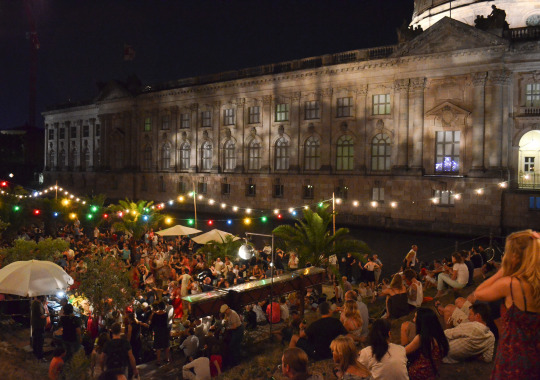
    Image: Berlin nightlife by Tom Stromer

  • Amsterdam is about to host the first Night Mayor Summit

    Canal Reflections by Peter Elliston on 500px.com

    https://500px.com/embed.js

    What is a night mayor, you might ask?

    Well, just as the name suggests, a night mayor is the chief executive officer of a city’s nighttime activity. And in 2014, Amsterdam became the first city ever to have one.

    Why is this important, you might ask?

    Well, for most cities the night is a blindspot. It’s viewed as something that needs to be carefully controlled as opposed to something that is celebrated and leveraged. Amsterdam saw this opportunity and, in my opinion, is now at the forefront of rethinking the night.

    Here’s an example of the kind of changes that this has meant for the city (via CityLab):

    “Until recently, Amsterdam enforced what by continental European standards is a fairly strict curfew: nightclubs had to close by 4 a.m. on weekdays and 5 a.m. on weekends. The city often had problems with noise and disorder at the exact moment when all the clubs closed, filling narrow inner city streets with rowdy people.

    To solve this problem, the night mayor suggested not less, but more time for people to go clubbing. He has helped push through the granting of 10 24-hour licenses for nightclubs. Crucially, all of them were located not in the dense city center but in thinly populated districts around Amsterdam’s outer ring road. The result was a marked reduction in street noise.”

    Some of you are probably feeling skeptical as you read this. Especially since 4AM and 5AM hardly seem strict when compared to other cities (Toronto’s last call is at 2AM). 

    But I would not underestimate the importance of what Amsterdam is doing. We are living in an era of the 24-hour global city and it’s about time that governments woke up to that. I’m sorry Toronto, but 2AM is an absolute joke.

    The night can be your competitive advantage in attracting human capital. As the CityLab article cited above suggests, a big part of what transformed Berlin into a capital of cool was its nightlife. 

    I wholeheartedly believe that and I have no doubt that the night will start to become a greater focus in city building.

    If you’d like to learn more about the Night Mayor Summit, click here.

  • The biggest developer in Paris today is the mayor

    March 9, 2025 · View original


    The other night, I went down a Parisian real estate rabbit hole on Twitter. And one of the things that kept coming up was this half joke: The biggest developer in Paris today is the mayor. The reason for this is that the city is targeting 40% of all homes to be public housing by 2035 (of which 30% will be social housing and 10% will be moderately affordable).

    Supposedly this is to stem the steady outflow of people from the capital as a result of housing being too expensive. But it means that a lot of new public housing will need to be created. As of January 1, 2021, the official estimate was 260,563 “logements sociaux” in the capital, which translates into 22.4% of all principal residences.

    To hit this 40% goal, the city is going to need to create somewhere around 140,000 new public housing dwellings between now and 2035. So how does it plan to do this? By being a developer, of course. A big part of the strategy seems to be to convert existing buildings (d’adapter l’existant). And to execute on this, the city is leveraging something known as “le droit de préemption.”

    The way it works is like a right of first refusal clause (ROFR), except that it’s not something that was contractually negotiated between market participants, it’s just the law. What it means is that if a property owner goes to sell their building and they receive an offer, the city has an automatic ROFR and can choose to buy the building at whatever that third party was willing to pay.

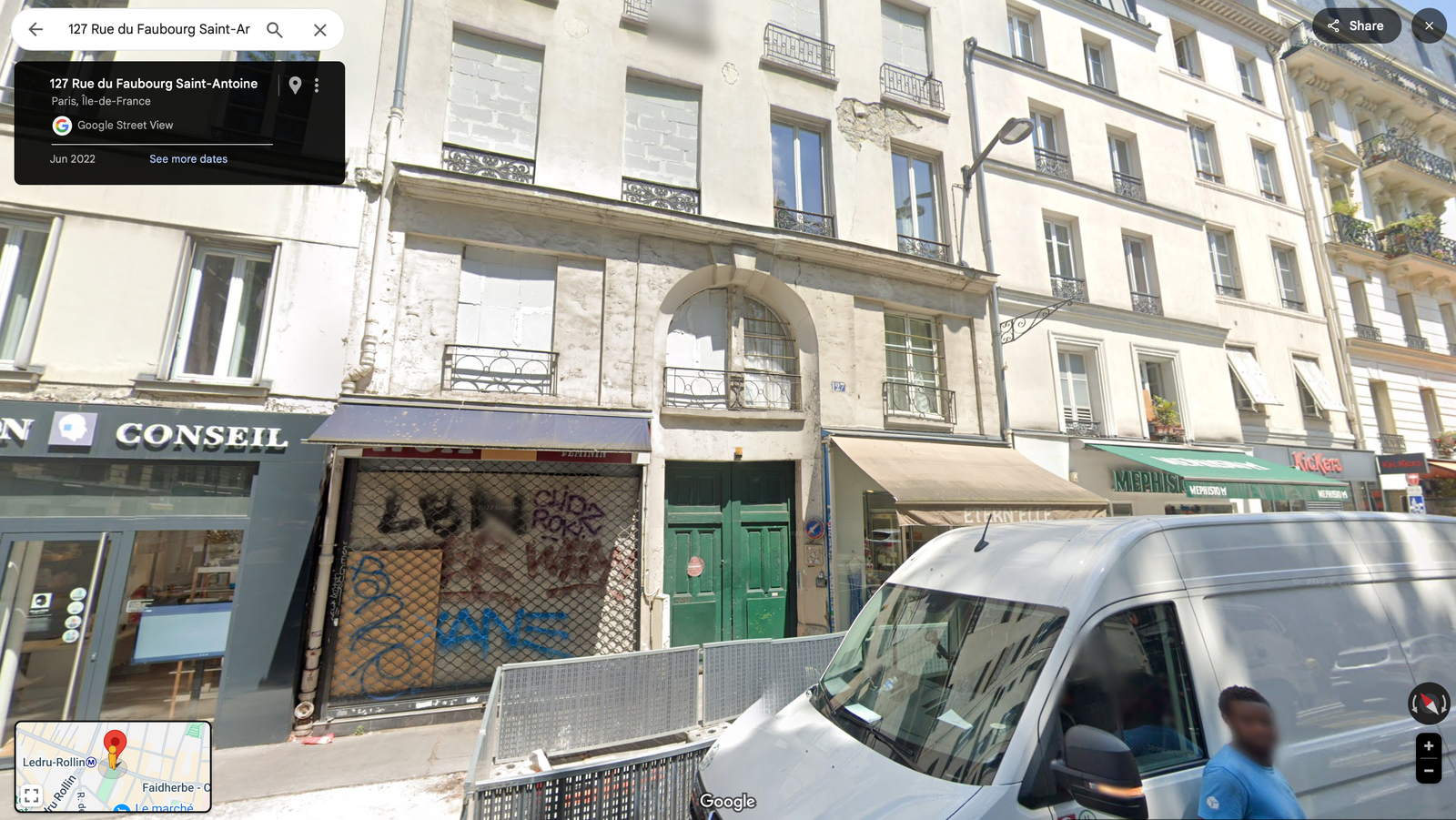
    Over the last two years, the city has elected to do this 84 times and has spent over €1.1 billion, according to Business Immo. And since the beginning of this year, they’ve done it 9 times, spending about €67 million on the following properties:

    For those of you who are visual learners like me, here’s the first property on the list:
    It’s certainly ambitious.

    But, for the most part, it does not create a lot of net new housing, even though the city is also aiming to buy office buildings, parking garages, and other non-residential buildings. APUR previously estimated that for every 1 unit of new public housing, 0.6 existing units are being demolished. So the most accurate way to think about this initiative is that it represents the socialization of Paris’ housing stock into public hands.

    This runs in contrast to what we’ve been talking about recently with cities like Minneapolis and Austin, who have instead added a lot of new market-rate housing in order to temper rents and increase affordability. Paris is reducing its stock of market-rate housing.

    At the same time, the city also enacted new policy prohibiting homes that consume more than 450 kWh/m2 from being rented. This is intended to force landlords to renovate, but it will certainly have a further impact on supply, at least in the short term.

    It’s also worth noting that all of this is happening at a time when Paris’ housing market is in broad decline (less transactions, higher days on market, lower prices, and so on). Like Toronto, it started around the middle of 2022. And it’s something that Paris hadn’t seen since the 2008 financial crisis.

    Chart by CoStar via Business Immo; cover photo by Salomé Watel on Unsplash

  • What would you do if you were Mayor?

    Let’s assume that you’re Mayor of your city and that, for whatever reason, you have no need to pander to voters. You’re a benevolent dictator. You can do whatever you think is best overall for the city and it will just happen. What would you do? This is more or less the question I asked on Twitter this morning, and I think it’s only fair that I answer my own question. So here is a non-exhaustive list of items that came to mind while thinking of Toronto:

    • Substantially increase the pay of public sector workers throughout the city and bonus them based on measurable outcomes. Forget things like time limits on development applications; instead align incentives. For example, if we’re trying to get more shovels in the ground on affordable housing, incentivize people based on building permits issued. I’ll never forget what Roger Martin told me while I was at Rotman. When he became Dean of the school, Rotman was a whatever business school that wasn’t faring all that competitively in the rankings. One of the problems he discovered was that the school’s professors were getting paid far less than those at Wharton, Harvard, Stanford, and so on. So if you were a star, why would you ever want to teach at Rotman? He immediately matched the salaries of those top-tier schools and then, not surprisingly, the top-tier talent arrived. You get what you pay for.
    • Immediately price roads and congestion, and direct, to the fullest extent possible, the funds toward transit and cycling infrastructure. At the same time, the planning and building of transit would be depoliticized. There would be a reccurring funding stream and a plan that we’re continually building out. Minimize protracted debates. Never stop building. There’s a lot of talk this mayor election about solving traffic congestion. I have yet to see a plan that will actually work. Accurately pricing congestion likely won’t be popular, but I can guarantee you that it will be highly effective.
    • Ensure that property taxes are sustainably covering the costs of operating the city and then, at a minimum, peg all future increases to CPI.
    • Make any new housing development less than 12 storeys as-of-right. That would mean, no rezoning process and no site plan approval; just straight to building permit.
    • Empower the private sector to build affordable housing through incentives and subsidies. Affordable housing isn’t feasible to build on its own, which is why nobody is doing it. Inclusionary zoning also won’t get us there. Make developers want to build it and they’ll do it.
    • Liberalize licensing and cut red tape to empower small entrepreneurs across the city in various industries. A perfect example in my mind is street food. Toronto is the most diverse city in the world with some of the best restaurants, and yet the only thing you can buy on the street is a stupid hot dog. If we empowered small entrepreneurs to setup shop on our streets, we would easily have the best street food scene in the world. And I am positive that there are countless other latent opportunities in this city that are being held back by dumb and archaic rules.
    • Make dramatic improvements to our public realm with an eye toward becoming the most beautiful and livable city in the world. Finally pedestrianize Kensington Market, remove the elevated Gardiner Expressway, make it so that we can swim in the Lake, build beautiful public washrooms all across the city that are actually open and aren’t gross, and the list goes on. And yes, “beauty” should be requirement so that we don’t end up with shit like this.
    • Focus on art, design, culture, and innovation as central pillars of Toronto’s brand. Miami is a good example of what this approach — along with favourable taxes and nice weather — can do for a city. I’ve said this before, but here’s just one example: Toronto is in many ways the birthplace of the cryptocurrency Ethereum. Why is nobody talking about this? Why are we not celebrating and leveraging this? It’s a missed opportunity. Broadly speaking though, I think just having and doing three things can be effective in promoting new ideas for these pillars: have reasonably affordable housing, be a city that young people want to live in, and remain open and tolerant to immigrants.
    • Stop thinking of the night-time economy as a nuisance and instead think of it as a powerful economic development tool. I recently responded to this “night economy survey” that the City of Toronto released and the obvious bias is that nighttime things are seen as a terrible nuisance. In other words, “tell us how do we make all of this less annoying for grouchy voters.” My response was to extend last call to 4am and to start thinking of it as an opportunity to draw in young people, tourists, and whoever else. This complements my previous point.

    This is, again, a completely non-exhaustive list. But if I had to summarize the overall ambition, it would be to make Toronto a truly exceptional and remarkable city. We should never be happy with mediocrity.

    What else would you do? Leave a comment below.

    Photo by Aditya Chinchure on Unsplash

  • Interview with the mayor of Amsterdam, Femke Halsema

    Back in 2014, Amsterdam became the first city to have what is called a “night mayor.” The role of a night mayor is what the name suggests. They are intended to be the chief executive officer of a city’s nighttime economy. And so it was and it continues to be recognition that the night can be an important economic development tool.

    This seemed to work out well for Amsterdam, which is why many other cities quickly followed suit with their own night mayor elections. During this time, a number of us here in Toronto also started advocating for our own nighttime CEO. (FYI, here is a link to the current night mayor of Amsterdam.)

    But fast forward to today and the tone seems to have changed in Amsterdam. The city’s daytime mayor, Femke Halsema, is now actively concerned about over-tourism and, in particular, the way that some tourists behave when they check-in to Amsterdam.

    Here’s an excerpt from a recent interview that she did with Bloomberg:

    We have to tackle two problems. The first problem is what I’d call the London problem: Our city is becoming too expensive. That is also part of being an international city and having many expats living here. But it has consequences for the middle classes. It’s very difficult to find a house in Amsterdam except for the highest incomes, so our middle class — teachers, police officers, people working in health care — are leaving the city. We’re very alert about it. For a city to survive in the long run you need social stability and people from middle or lower classes to also feel at home.

    Our second problem is the Venice problem: The people who live here become estranged especially in the city center, because it’s no longer part of their city. We have to find a new balance, in being a home for people from Amsterdam and at the same time welcoming international visitors and tourists.

    More specifically, the Venice problem seems to be a problem of behavior:

    It’s not a form of tourism we welcome or don’t welcome — it’s a form of behavior. What we do not welcome is people who come here on a vacation from morals. They express a form of behavior they would not express at home. People coming here to lose their morals is a problem for us.

    It is for this reason that the city is hoping to relocate its red light district to outside of the city center. The intention is not to get rid of it, or for the city to turn its back on its long history of tolerance, but it does want to move it somewhere else in the hopes that Amsterdam will become more associated with culture than hedonism.

    But does moving it actually change any behaviors? If one were to develop a purpose-built “erotic center” from the ground up, is it even possible to make it more integrated with the broader city (minimize the Venice problem) and, to use the mayor’s words, make it more chic than what currently exists?

    These are all exceedingly tough city building questions that can’t really be untangled from questions of morality.

    For the full Bloomberg interview with mayor Halsema, click here.

    Photo by Azhar J on Unsplash

  • New York City’s $35 billion nightlife economy

    image

    The Mayor’s Office of Media and Entertainment in New York City recently commissioned this report on the city’s nightlife economy. The study was completed by Econsult Solutions, the North Highland Company, and Urbane Development. (Full disclosure: I was a teaching assistant for the President of Econsult while at Penn.)

    Here’s what they found:

    The total economic impact of this industry is the sum of its direct, indirect, and induced economic impacts, as well as the ancillary spending impacts that are adjacent to nightlife activity. In 2016 (the most recent year where standardized datasets were available), the nightlife industry supported 299,000 jobs with $13.1 billion in employee compensation and $35.1 billion in economic output. This economic impact also yielded $697 million in tax revenue for New York City.

    They also found that, between 2011 and 2016, the nightlife industry has outpaced the city’s overall economy. Nightlife establishments grew by a 2% annual growth rate. Jobs in the nightlife industry grew by a 5% annual growth rate. And nightlife wages have been rising by 8% annually – about double the average for the city.

    I am a firm believer in the value of the nighttime economy. So I’m happy to see more people paying attention to it as of late. For the full report, click here.

    Photo by Markus Spiske on Unsplash

  • Job Opportunity: London Night Czar

    The City of London is looking for a “Night Czar” to help shape and grow the city as a 24-hour destination. Here’s a snippet from the job posting:

    “The Night Czar will champion the value of London’s night time culture whilst developing and diversifying London’s night time economy.

    Working with the Mayor, the Night Time Commission, local authorities, businesses, the Metropolitan Police Service, Transport For London and other agencies, the Night Czar will create a vision for London as 24-hour city and a roadmap showing how the vision will be realised. The Night Czar will have proven leadership ability, public profile and convening power, plus a thorough understanding of the night time economy and the ability to work in a political environment.”

    I think 2016 will turn out to be the year of the “night mayor.” This trend is really picking up momentum in Europe, as more and more cities look to capitalize on their night time economies.

    The job will pay £35,000 per year for 2.5 days of work per week. The closing date for the application is Monday, September 12, 2016. If you’d like to apply, you can do that here.

    I’ve been writing about this trend all year. Hopefully a decision maker in Toronto is reading this.

  • Amsterdam wants fewer drunk and annoying people

    Back in 2014, Amsterdam became the first city to have what is referred to as a “night mayor.” And at the time, including here on this blog, this was generally viewed as a pretty progressive thing to do. It recognized that there is an important nighttime economy and that, with the right leadership, it be harnessed for broader economic development purposes. As a result, many cities followed suit and appointed their own night mayors. (Toronto did not, despite my repeated posts.)

    But fast forward to today and things feel different. Night mayors aren’t talked about as much in city building circles. And Amsterdam is actually trying to limit overall tourism growth. It is working to relocate its Red Light District to outside of the city center and it hopes to reduce the amount of people who come to the city just to misbehave. To be clear, it still wants tourists; it just wants more people who do things like go to museums:

    The Netherlands’ capital plans to launch a deterrence campaign later this month aimed at tourists who go wild during their visits. In addition to new ads, the city has proposed rules in its infamous Red Light District, such as a ban on smoking marijuana in the street, earlier weekend closing times for bars, clubs and sex-work establishments and reduced alcohol sales. 

    Amsterdam’s liberal rules for drugs and prostitution have long attracted travelers looking to let loose, but officials say they are taking it too far and harming the quality of life for residents. 

    This is an interesting situation because usually the problem is, “how do we get more tourists to come and visit our city? Should we maybe build a casino or a Ferris wheel or something else equally as big?” Instead, the problem here is, “we have way too many drunk and annoying tourists. How do we swap them for more cultured visitors?” Of course, one solution is to just tell people that they are annoying and that they should stop coming. And that’s generally what the ad campaigns plan to do.

    An alternative approach might be to celebrate all of the other things that one can do in Amsterdam.

  • 2017 year in review

    I just finished going through my list of 2017 goals. I didn’t accomplish everything I wanted to, but I did manage to check off a number of professional and personal goals.

    Some of the remaining goals have been pushed to 2018. But there are also items that I have since realized aren’t worth pursuing and so I have dropped them from the list.

    All that said, it was a great year. Here is a rapid-fire summary of 2017 told through posts from this blog.

    Thanks for reading. Onward my friends.