Daily insights for city builders, delivered every morning at 6 AM ET. I’m Brandon Donnelly — a Toronto-based real estate developer and founder of Globizen. I’ve been writing here since 2013.

Search results for: “night mayor”

  • Fall event roundup

    image

    It’s still sunny and beautiful outside, so I don’t mean to be the one who prematurely calls fall. But I would like to get 3 Toronto events on your radar for the coming two months. 

    Full disclosure: These are all events that I support and/or my company supports in some way. 

    If you’re not based in Toronto and you don’t plan to be here this fall, you can stop reading right now and check back tomorrow. I promise to will try to be less Toronto-centric.

    1. EDIT: Expo for Design, Innovation and Technology, September 28 – October 8

    This is a 10-day immersive experience that will showcase how the intersection of design, technology and innovation can change the world. Think exhibits by Bruce Mau and Carlo Ratti; talks by David Suzuki and Scott Dadich (former editor-in-chief of WIRED and creator of the Netflix series The Art of Design); and projects spanning 3D-printed prosthetics to indigenous housing solutions. 70 speakers. 40 workshops. And over 150,000 sf of exhibits. Too much to write about here, but all topics and themes we frequently explore on this blog. Ticketing information here.

    2. NXT City Public Space Symposium, October 13 – 14

    This is a two day symposium about public space on a global stage. Talks. Public space tours. Round table sessions. And an epic after-party. Some of the speakers include Jeff Risom (Partner at Gehl Architects); Enrique Norten (Founder of TEN Arquitectos in Mexico City – and one of my grad school professors); and Mirik Milan (Amsterdam’s Night Mayor and someone who has gotten quite a bit of airtime on this blog). If you click here to grab your tickets, you’ll get 15% off. If for whatever reason that doesn’t work, use the code BDONN15.

    3. lost&gone: Romeo & Juliet, October 19 – 21 and October 27 – 28

    This is, I think, Toronto’s first truly immersive theater experience. For those of you who aren’t familiar, immersive theater is about turning the audience into participants of the production. It eliminates the “fourth wall” that traditionally divides audience and performers. I’ve heard great things about similar productions elsewhere in the world. The venue is a secret, so the show starts today with you having to try and figure out where it is in the core of Toronto. When you buy your tickets, you’ll also have to let them know if you’re a guest of the Capulets (Juliet’s family) or a guest of the Montagues (Romeo’s family). 

    Enjoy 🙂

    Photo by Brxxto on Unsplash

  • 10 city building predictions for 2016

    Dawn by Adrian Popan on 500px.com

    https://500px.com/embed.js

    Few things are better than waking up in the mountains and seeing a notification on your phone that 9″ of fresh snow have fallen overnight, bringing the 48 hour snowfall total to 16″.

    This is what people in mountain towns live for. They ski in the morning and then head to work in the afternoon. I heard a number of people on the mountain today saying that they, “want to be in the office after lunch.” It’s a lifestyle thing.

    On that note, today I’d like to focus on 10 city building predictions for 2016. I’ve been assembling this list over the past few weeks and now that I have had my fill of Utah powder for the day, I’m dedicating the rest of the afternoon to writing.

    These are never easy to put together. But here are my thoughts:

    1. We will see increased migration to secondary cities – outside of the alpha global cities – which offer a higher quality of life, more affordable housing, and the ability to live a particular lifestyle. This includes cities like Austin (creative startup hub) and Denver (outdoor recreation).
    2. As more and more cities wake up to the importance of lifestyle in attracting top talent, I think we will see a lot of cities follow the lead of Amsterdam and create “night mayors” or some other equivalent. These cities will begin to see nightlife as a competitive urban advantage.
    3. Global cities will start experimenting with different land use and property tax reform strategies to try and deal with rising income inequality and eroding housing affordability.
    4. We will see a barbell of residential unit sizes. We’ll see more well-designed small units as a way to try and promote housing affordability and we’ll see larger urban infill units for families and baby boomers who want to live/remain in walkable urban communities.
    5. In line with above, I think we will see a further rethinking of urban spaces. Flexible spaces, unique program mixes, and a continued blurring of public/private spaces. One example of this is the trend towards small private spaces surrounded by generous public/communal spaces.
    6. The Toronto and Vancouver real estate markets will continue to chug along because of low interest rates, a weak Canadian dollar, and increased foreign investment. That said, I think we will see more restraint when it comes to over-the-top luxury product.
    7. We will finally see a disruptive technology product that starts to get people in the real estate industry thinking that change is on the way. This will not be a product that ports an offline experience online; it will a new way of thinking about the industry.
    8. This will be the year that cities stop fighting Uber (and other similar marketplaces). Cities (and lobbyists) will finally accept that this is a new reality and then work to figure out the best way to create policy around it. Edmonton, Alberta has already become the first Canadian city to regulate Uber.
    9. Road pricing will get the attention it deserves in North America. Things will start out slow, but we will finally get ourselves on a path which recognizes that we can’t build our way out of traffic congestion in most major cities.
    10. I will publish a book on becoming a real estate developer.

    Many city building trends and shifts seem to happen in a global way. But I think it’s worth noting that a lot of these predictions were likely written with my North American lens on, and in some cases my Toronto lens on.

    It’s not easy sitting down and thinking about what will happen in the future. But it’s a worthwhile exercise. It forces you to take a stance and then, when the future does come, you can see how well you did. I saw Fred Wilson do this on his blog and I thought it was a great idea.

    Now I would love to hear what you think about my predictions and what yours are for this year. Please let us know in the comment section below.

  • Paris votes to pedestrianize an additional 500 streets

    March 25, 2025 · View original


    This past Sunday, Paris voted in favor of greening and pedestrianizing an additional 500 streets in the capital (5-8 per neighborhood). This will add to the 300 or so streets that have already received this treatment since Mayor Hidalgo started her second term in 2020. And as a result of this expansion, it is estimated that about 10,000 on-street parking spaces will be removed, which represents about 10% of the city’s total inventory.

    Exciting. But who voted for this? Of the Parisians who voted, 66% voted in favor of the initiative. And it carried in 14 of 17 arrondissements (with the 1st, 2nd, 3rd, and 4th counted as one). But similar to prior referendums, voter turnout was extremely low: only 4.06% of eligible voters showed up (approximately 56,500 people). And this is after the voting age was lowered to 16 years old for the first time.

    For context, when Paris voted on whether electric scooters should be banned, 7.46% of voters showed up. So while low, this situation is not entirely unique. Though it does, once again, raise the question of whether the outcome of this referendum truly reflects public opinion. My outsider view is that it probably does. Because I take the apathy to mean some level of support, or at the very least, an absence of strong aversion.

    Think, for example, about who shows up at community meetings for new development projects. The vast majority of people in attendance have concerns they would like to air. It’s very rare for someone to show up and say, “I didn’t have much going on tonight so I decided to come by and see everyone. I have no real concerns. Project looks cool. Carry on as you were.”

    If you agree with this logic, well then it suggests that many/most Parisians do generally support more pedestrianized streets, even if it means the removal of parking. That’s an accomplishment in my books.

    Cover photo by Maximilian Bungart on Unsplash

  • Project Bench rezoning approved

    December 3, 2024 · View original


    Today I have two things to share.

    One, I’m not very good at following proper protocols during council meetings. You know, where you’re supposed to direct communication via the chair person and say things like, “Through you, Mr./Madam Chair.” I will work on improving this.

    Two, I’m thrilled to report that, last evening, the proposed zoning and Official Plan amendments for Project Bench were approved by the Town of Lincoln Councillors in an 8-1 vote. This is following the positive planning staff report that I wrote about last month. Once again, this is an important milestone for the project and we’re excited for the next steps.

    At the same time, we recognize that change can be difficult. And this development represents change for the community. Three people from the community spoke last night in opposition of the project.

    I spoke to one of them after the meeting and he was very respectful and said, “congratulations.” But he also went on to say, “I hope that you and the team will continue to work with the community as you have been doing.” My response was, “absolutely we will.”

    Onward.


    Update: Just to be clearer on the planning process details, last night was the Town of Lincoln’s Committee of the Whole meeting. The Committee of the Whole has three areas of focus: community services & infrastructure, general business & finance, and planning & economic development. All Town of Lincoln Councillors, including the mayor, voted on the project at this meeting. The next step is for the Committee’s recommendation to go to Council for final approval, and this meeting is scheduled for December 16, 2024. Following this, a formal Notice of Decision will be issued.

  • Stockholm’s congestion charge reduced car traffic by 20%

    Stockholm has a congestion charge that is used to reduce traffic volumes in the center of the city. Toronto does not. We looked at it, actually fairly recently, but then we lost our nerve.

    Stockholm’s congestion charge was first implemented on a trial basis starting in January 2006. Trials and pilots have become a common way to actually create positive change. Otherwise the status quo bias may simply be too strong.

    When Stockholm started the trial back in 2006, public support was very low. Maybe 30%. But as soon as it was implemented, car trips dropped overnight by 20%. Once people saw the benefits, support grew – hitting around 70% by 2011.

    Here is a brief Street Films video with Stockholm’s Director of Transport, Jonas Eliasson, talking about their experience with congestion pricing. If you can’t see the video below, click here.

    [vimeo 244771087 w=640 h=360]

  • BARED: Howard Cohen, Context Development

    image

    Howard Cohen was initially trained as an architect. But throughout his schooling he gradually became more interested in urban design and city planning. So after graduating in the late 1960’s from the University of Manitoba with a degree in architecture, he took a job within the planning department at the City of Winnipeg. There he helped to author the “Downtown Winnipeg Plan” and quickly earned the reputation as one of the most creative people in the department.

    But after about a year and a half on the job, he decided that he wanted a change in scenery and so he quit and took off to Europe with his wife. Upon returning, with no money to his name, he managed to strum up two potential job opportunities; both of which were, thankfully, not in Winnipeg. One was an architecture job in New York City and the other was a planning position for a neighborhood on the east side of downtown Toronto known as Trefann Court.

    Since planning had become more interesting to him than architecture, Howard decided to fly to Toronto for the job interview. He vividly remembers staying at the Sutton Place Hotel – which is today being converted to condos – and walking down Bay Street to City Hall for his interview. He also remembers being so nervous that he had to smoke a joint prior to, in order to calm his nerves. The interview was with the chief planner, deputy chief planner, and with local residents from the area. They offered him the job on the spot.

    He accepted the position in 1970 and stayed at the City of Toronto until 1978. Howard was contemporaneous to figures such as John Sewell – the former mayor of Toronto who was also heavily involved in Trefann Court. Howard features prominently in John’s book: “How We Changed Toronto – The inside story of twelve creative, tumultuous years in civic life, 1969-1980.”

    Interestingly enough, during his time at the City, some of the land use policies that Howard was championing were actually quite contentious within the development community. For instance, Howard believed that Toronto’s downtown residential neighborhoods – neighborhoods such as Cabbagetown – should be preserved, and not razed and turned into replicas of St. James Town. This is an outcome that I am sure most of us today now appreciate.

    However, this is not to say that he was anti-development. Howard also firmly believed that high-density residential should be encouraged throughout the core of the city. We take this for granted now, but he remembers being called a zealot at an Ontario Municipal Board hearing because of his belief that people may actually want to live at the corner of Bay Street and Dundas Street. This was supposed to be a place for working and shopping, but definitely not living.

    Towards the end of his tenure at the City, Howard had become for all intents and purposes the chief planner of Toronto. He was the guy. However, without the actual title he was starting to get restless and decided to look elsewhere for opportunities.

    In 1972, the federal government formed a new Crown corporation known as the Harbourfront Corporation. This was after having expropriated over 100 acres of derelict industrial land along Toronto’s waterfront. The mandate was to revitalize the central waterfront, but after failing for 5 years to make anything meaningful happen, responsibility was ultimately turned over to local leadership.

    Shortly thereafter, Howard left the City and became the first head of Harbourfront Corporation. As coincidence would have it, he was offered the position on the same day that David Crombie – who was mayor at the time – called him to formally offer him the role of chief planner. However, Howard felt that there were more exciting challenges at Harbourfront and so that’s where he went.

    One of his first tasks at Harbourfront was to write the business plan that would set the course for the corporation and allow it to become self-sustaining. The model became about leveraging the value of the corporation’s land to not only create a thriving mixed-use community, but to also create a set of cultural institutions along the waterfront.

    The legacy of Howard’s work can be found in the Power Plant Contemporary Art Gallery, the Harbourfront Centre outdoor skating rink, the Queen’s Quay streetcar, as well as a number of other initiatives ranging from cultural programs to development projects. Some of his development deals included the affordable housing built at Bathurst Quay, the Admiral Hotel, and the Queen’s Quay Terminal developed by Olympia & York – a pioneering mixed-use development that to this day serves as one of the most important anchors on Toronto’s waterfront. It was also through these development projects that Howard would increasingly get into the mindset of a developer – something that would obviously serve him well later on.

    Despite being a financial success, Harbourfront Corporation was ultimately disbanded, partly due to controversy over some of the high-rise towers being developed along the waterfront. At this point, Howard was 44 years old and had spent his entire working career in the public sector. With the experience he had gained at the City and at Harbourfront Corporation, he decided that it was time to move over to the private sector and make some money. He went to work for a developer.

    Howard landed at Murray Goldman’s development company – the Goldman Group – and would spend 4 years there as President. He didn’t necessarily have all the finance and marketing chops, but he did have a lot of other relevant experience. Perhaps his best known project of this era is the Castle Hill townhouse complex at the foot of Casa Loma.

    After stepping down from the Goldman Group in the early 90’s, Howard then turned to consulting. This was a period of time when many in the industry were licking their wounds, but Howard managed to amass a diverse set of clients, including Innis College at the University of Toronto and the nascent Design Exchange. Initially hired as a consultant in 1992, Howard would later get asked to head up in the Design Exchange in 1994. He would spend 2 years in this role and raise over $7 million in donor money during one of the worst recessions in recent history.

    As his consulting business chugged along, Howard would later reconnect with an architect by the name of Lloyd Alter. Lloyd had done some work for the Goldman Group when Howard was there and they decided to join forces and create a larger consulting business known as Cohen & Alter. Business was good for the two of them. They were busy.

    They hadn’t really planned on getting into the development business, but then one day an agent came knocking with a small piece of land on Niagara Street. It was located in today’s King West neighborhood. Barbara Hall was mayor at the time and the city was starting to talk about new policies to open up “The Kings” to revitalization. “The Kings” being the two shoulders of downtown Toronto: King Street West and King Street East.

    Toronto was still in a recession at the time and nobody wanted the site. It was also fairly non-consensus to think that people would want to live in these gritty old parts of downtown. Only zealots believed this to be true. So the agent told Howard and Lloyd that they could option the site for $1 – basically tie it up for free.

    This was the birth of 20 Niagara.

    Since the recession had also left architects without work, they managed to get Peter Clewes (today of architectsAlliance) to defer his fees on the project. The deal was that when the project got off the ground, everyone would get paid. It was the ultimate in bootstrapping.

    Around this same time, Howard and Lloyd met Tom Schwartz, who would become a kind of mentor and advisor to the aspiring developers. Tom, who today is the President and CEO of CAPREIT, was already a successful developer through the founding of Intraurban Projects in 1976.

    Tom introduced Howard and Lloyd to a company called Equivest, which was owned by Gerry Schwartz (of Onex fame) and Stephen Gross. Equivest would become the financial backer for their fledgling project and set the stage for a go-forward funding model.

    Howard and Lloyd would also turn to a guy named Brad Lamb to sell the project. Brad had just started his own brokerage after working under Harry Stinson – a real estate broker turned developer who is perhaps best known for his cheesy late night infomercials. Brad had two employees at the time and would go on to personally sell 20 Niagara Street.

    20 Niagara launched in 1996.

    The project contained 30 condo units and was about 40,000 square feet. It took a year to sell the first 20 units – at some absurdly low price – and ultimately didn’t make any money for both Howard and Lloyd. Howard would spend the next two projects paying back the hangovers from 20 Niagara. It did, however, give birth to Context Development.

    Howard and Lloyd ended up parting ways after 20 Niagara, but the partnership of Howard Cohen, Stephen Gross, and Peter Clewes would go on to build some of the most design-forward and contextually sensitive projects in the city. The core philosophical beliefs were that housing of every varietal belongs downtown and that modern architecture has a place in the mass market. Again these principles may seem obvious today, but they weren’t as obvious in the late 90’s.

    Context Development would later develop adaptive reuse projects such as the Kensington Market Lofts and the Tip Top Lofts, award winning projects such as the Mozo, and wildly innovative projects such as the District Lofts (pictured above). This 14-storey “twin tower” condominium used Le Corbusier’s “skip-stop” system to create two-storey through units. Context would also go on to develop two buildings that I have personally called home – one of which I am sitting in right now as I write this post.

    For me, the story of Context has always had a particular resonance. As a trained architect who then entered the development business, Howard’s story showed me that I too could leave the world of architecture and do something positive for cities. He was a significant inspiration for me early on in my career when I was figuring out which path I wanted to take.

    Every developer brings their own background and sensibilities to their projects. And in the case of Howard’s projects, I know that Toronto is a better city because of it. Thank you, Howard.

    Image: District Lofts via Context

    ———————————————————

    This is the third post in my blog series called BARED (Becoming A Real Estate Developer). If you’d like to be featured in this series, send me an email or tweet me. The links are at the top of this page. Also, email subscribe to this blog to stay in the loop.


  • Monocle’s Top 25 Liveable Cities — 2016 Edition

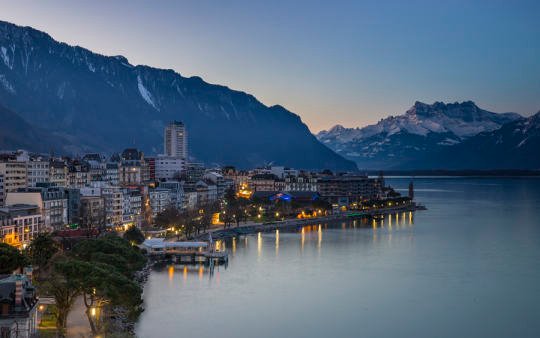
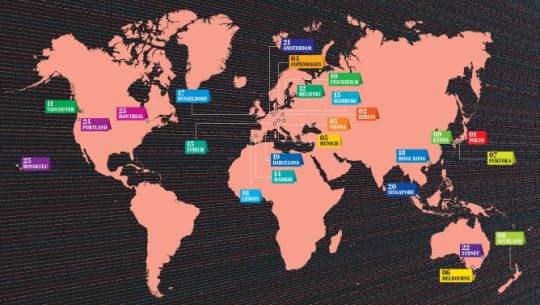
    Monocle’s annual survey of the top 25 most liveable cities in the world was just released. It’s now in its 10th year. I found it in my inbox this morning and it was a good reminder that it was about time I renewed my subscription. I’ve been a regular reader of Monocle since 2007, but I let my membership lapse last year.

    Of course, any sort of list like this is going to be subjective. It all depends on the methodology you use. Still, their annual survey is an interesting way to see what each city is up to and where the tides are going. This year Monocle put extra weighting on each city’s nightlife. If you’re not a subscriber, here’s a short video you can watch. It will give you a rundown of all the cities. (I was happy to see Montréal creep onto the list. Incredible city.)

    This focus on the night is something that I’ve been writing about a lot both on this blog and elsewhere. It’s an idea that’s picking up momentum around the world as an economic development strategy. But for whatever reason, uptake seems to be slower here in North America.

    I like how architect Anna Dietzsch puts it in this video. She says that Rio may have the beaches, but Sao Paulo (where she’s based) has the night. That’s exactly how cities should be thinking about this opportunity. It used to be that cities thrived almost entirely because of location, waterways, transport, and other natural features (example: Buffalo). But increasingly, it’s becoming about things like nightlife.

    Vancouver may have the mountains, but Toronto has…

    Image: Monocle

  • Is Toronto a world-class city?

    image

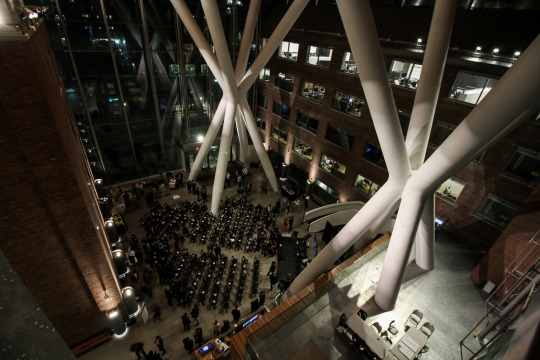
    Earlier this week I was on a panel discussion called Building Toronto Tomorrow. One of the questions was about whether or not Toronto is world-class city. It elicited a good discussion, so I thought I would talk about that today on the blog.

    Shamez Virani, President of CentreCourt Developments, responded by saying that he thinks Toronto is the greatest city in the world and that he wishes more people would just accept how incredible this city is. I agreed with him.

    I also responded by saying that I hate this question. I think it reeks of insecurity and I think it’s a bit of a red herring. It distracts from more direct and meaningful questions – questions such as our livability and our position as a global city.

    Because the reality is that Toronto is one of the most livable cities in the world and, in my view, we are the only true global city in Canada. We are an important node in the global economy for the flow of goods, people (we’re particularly good at this), capital, and now information. There’s a lot to be proud of.

    But that’s not to say that we’re perfect. Everyone knows we need better transit. And to name a few others (non-exhaustive list), I also think we need to:

    • Get a move on road pricing.
    • Loosen up our archaic alcohol laws and start using nightlife as a competitive advantage for attracting talent.
    • Acknowledge through our governance structures that cities are what drive today’s information economy.
    • Stop thinking about the Canadian/Toronto value proposition as being about cost savings. That is, buy this from us because our currency is weaker than yours. This is anti-innovation and there are much better ways to create sustainable value. (Innovation is still a weak spot.)
    • Focus on developing an information economy that leverages the unique talent and knowledge base of Toronto. For example, I think we’re in a great position for real estate + tech innovation.
    • Do everything we can to encourage big tech IPOs in this city. They are critical to developing the ecosystem.

    There’s a saying in Silicon Valley that you “make what you measure.” It means that whatever you decide to focus your attention on, is invariably what you end up making – regardless of whether or not you happen to be focusing on the right metric.

    In the context of Toronto, I think we’d be better served if we focused on and quantified our position in the global economy, as opposed to chasing some idea of “world-class.” The latter will grow as the former grows.

    I also think that this needs to be balanced against our livability. Sometimes there’s a tension. But there are cities – the best example is perhaps Tokyo – who have managed to pair a high quality of life with one of the strongest positions in the global economy.

    Is there anything else you think we should be doing? We can talk about it in the comments below.

    Image: Building T.O Toronto (BuzzBuzzHome Event)

  • Not zoned for dancing

    Yesterday, when I was reading up on Toronto’s “TOcore” initiative, I came across a report from 2014 called Not Zoned For Dancing: A Comprehensive Review of Entertainment in Downtown Toronto

    It was prepared by five graduate planning students at the University of Toronto: Anna Wynveen, Brenton Nader, Carolyn Rowan, Chris Hilbrecht, and Kyle Miller. 

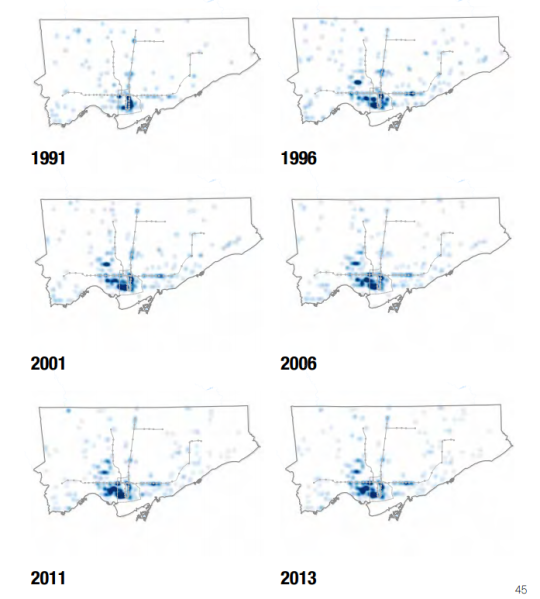
    The entire report is fascinating, but here’s one diagram that stood out to me:

    image

    It shows the migration of bars, clubs, and lounges westward, away from the downtown core, from 1991-2013.

    This migration doesn’t surprise me at all. I saw it happening and I understand the market forces at play here. There’s also the simple fact that nightlife is often viewed as a nuisance.

    But it’s worth calling this out. 

    Because I don’t think enough city builders appreciate the value of nightlife. It can and has served as a valuable catalyst for urban regeneration and I believe that it should form part of any city’s economic development strategy.

    A lot of cities are focused on things like bike lanes, public spaces, and on becoming the next Silicon Valley. And don’t get me wrong, those are all important things (though we could debate the Silicon Valley part). 

    But let’s not forget about nightlife.

  • Why pessimism sounds so smart

    Tom Gardner and Morgan Housel (The Motley Fool) recently published a LinkedIn article called, Why Does Pessimism Sound So Smart? (Especially When Things Are So Good.)

    Here is the gist of it:

    If you say the world has been getting better you may get away with being called naïve and insensitive. If you say the world is going to go on getting better, you are considered embarrassingly mad. If, on the other hand, you say catastrophe is imminent, you may expect a McArthur genius award or even the Nobel Peace Prize.

    Part of the reason for this is that we, as humans, respond more strongly to losses:

    There’s clearly more at stake with pessimism. Daniel Kahneman won the Nobel Prize for showing that people respond more strongly to loss than gain. It’s an evolutionary shield: “Organisms that treat threats as more urgent than opportunities have a better chance to survive and reproduce,” Kahneman once wrote.

    The behavioural economic theory being referred to above is called Prospect Theory. I wrote about this back in the fall of 2013 and made the argument that Prospect Theory might explain why NIMBYISM is so common in city building. 

    Change to our communities is perceived as risky. And in the face of these uncertain situations, we tend to place more emphasis on the potential losses (traffic, congestion, shadowing, and so on) rather than the potential gains (increased vibrancy, improved streetscape, creation of more housing, and so on). It’s human nature.

    Having said all this, I show up here every day and try to make this blog a positive place on the internet. Sure, I make suggestions about things I think we should do, but I generally focus on them as opportunities. Hopefully that comes through, because I’m a big fan of optimism.