Daily insights for city builders, delivered every morning at 6 AM ET. I’m Brandon Donnelly — a Toronto-based real estate developer and founder of Globizen. I’ve been writing here since 2013.

Category: Uncategorized

  • Competition and redistribution

    March 28, 2026 · View original


    I recently joked that, because of AI, everyone now sends you a 50-page PDF for review. Of course, what we all do next is just ask AI to summarize it and help prepare a response. So, the net effect is AI talking to AI.

    We’re all becoming a kind of intermediary because the volume of information is simply too great for any human to reasonably process. In many ways, this can feel overwhelming. It also makes me feel like it’s becoming harder to maintain a long attention span.

    But this appears to be where the world is heading. Eventually, we are going to have what is known as Artificial General Intelligence (AGI), and that is going to have a profound impact on our lives.

    Venture capitalist Albert Wenger has been spending a lot of time thinking about what an AGI-level economy might look like, and he recently published a post where he modeled some of the possible scenarios.

    I will give you the spoiler here: His intuition is that we’re going to need to create an economy that combines competition and redistribution (also referred to as a Negative Income Tax, which provides people with a basic income).

    Because without competition, productivity gains will be captured as rent, rather than resulting in lower prices. And without redistribution, we are likely to see an untenable increase in inequality.

    If you’re interested in this topic, I would encourage you to check out his post.


    Cover photo by Alex Knight on Unsplash

  • A new opportunity for congestion pricing

    March 27, 2026 · View original


    We’ve been talking about the merits of congestion pricing for as long as I’ve been writing this blog. But it remains politically unpopular, despite the overwhelming evidence that it consistently does what it’s supposed to do: it reduces congestion, shortens commute times, improves air quality, and raises money for alternative modes of transport, among other things.

    The status quo bias is strong, but right now we have an opportunity. Self-driving cars are in the midst of shifting the mobility landscape, and there’s a growing belief that (1) roads are going to need to be more accurately priced to deal with the surge in demand, and (2) this is a moment in time that grants us the opportunity to do it. Here’s a recent tweet by Chris Spoke of Toronto Standard that makes this point and that I agree with.

    The basic idea behind point number two is that many voters don’t like the idea of a congestion charge for themselves, but will probably mind a charge on robot cars a lot less — both because they are robot cars and because there are relatively few of them on the road today. However, at some point, robot cars will form the majority of vehicles on the road, so now would be a good time to establish new practices.

    What do you think?


    Cover photo by Minku Kang on Unsplash

  • The development charge cliff

    March 26, 2026 · View original


    One of the reasons why we are seeing more multiplexes in Toronto (smaller infill buildings with less than seven homes) is that the city has waived development charges and parkland dedication fees on this scale of new housing.

    This has helped enormously; without these changes, we’d be seeing far fewer of these housing projects being built.

    But here’s the odd thing about this exemption: if you build even one more home in the same building, the project is now subject to development charges on all of the homes (minus any credits you might receive for existing homes on the site).

    Adding a seventh unit shouldn’t suddenly trigger hundreds of thousands of dollars in fees for the first six. This makes zero sense:

    – It creates a disincentive to build incrementally more homes on sites that can accommodate them. – It creates a bias toward multiplexes (also known as “houseplexes”) and away from apartments. The housing type shouldn’t matter. We’re talking about homes. – It perpetuates the “missing middle” problem. Build small or build big enough to shoulder the additional costs and regulatory burden.

    If we’re waiving DCs on sixplexes, why not at least waive them for the first six homes on every site? Better yet, waive them on even more homes. This is just one specific example of the hurdles I was talking about yesterday.

    Note: My understanding is that the City of Toronto is currently looking to remove this DC cliff and implement a universal first-six-free rule.


    Cover photo by Jason Ng on Unsplash

  • Toward more fine-grained development

    March 25, 2026 · View original


    Yesterday we spoke about the merits of fine-grained urbanism and why the direct and obvious way to achieve this is to just, you know, encourage more small-scale development. So today, let’s talk about some of the specific things that would likely need to happen in order to unlock all of the small and under-utilized sites that today are not being developed at scale.

    I’m going to speak from a Toronto perspective and talk specifically about small-scale “apartments,” which in today’s planning environment are generally buildings with seven or more dwelling units. Under this threshold, we have new terminology like “houseplex.” But I’m sure that much of what I raise will translate to other cities and building types.

    Here’s my working list (I’ve also added a few items from this Twitter discussion):

    – As-of-right zoning permissions (the key, though, is that what’s as-of-right needs to be economically viable) – No side-yard and front-yard setbacks – No site plan control approval (currently required for projects with 10 or more homes) – No/lower development charges – No parkland dedication fees – No required parking – No required amenity spaces (the city is the amenity) – Curbside garbage collection (as opposed to internalized collection facilities) – Reasonable servicing connection costs (I’m specifically looking at you Toronto Hydro) – No Record of Site Condition, or a streamlined process (Ministry of the Environment, Conservation and Parks approval) – Single egress stair – Flexible elevator sizing – No rental replacement – Predictable financing terms from agencies like CMHC

    There’s a lot on this list. But there isn’t just one thing standing in the way of more fine-grained development. If you think I missed anything (or you just disagree with my line of thinking), feel free to leave a comment below.

    What Toronto has demonstrated with its efforts to expand housing options in its neighbourhoods is that, when it makes economic sense to do so, people will actually build small. Today, the market is building single-unit laneway houses, and increasingly, it is building things like fourplexes and sixplexes.

    So, what’s standing in the way of more 10-, 20-, and 30-unit projects? It’s the barriers and hurdles we have erected.


    Cover photo by Jason Ng on Unsplash

  • Toward greater coarseness

    March 24, 2026 · View original


    One of the benefits of older cities and neighbourhoods is that their scale and rhythm of development often allow for walkability and a wide variety of experiences in a short period of time (here’s a related post). The typical characteristics include small lot sizes, diverse ownership, short city blocks, a mix of uses, and visual variety. And in planning speak, this is typically referred to as fine-grained urbanism.

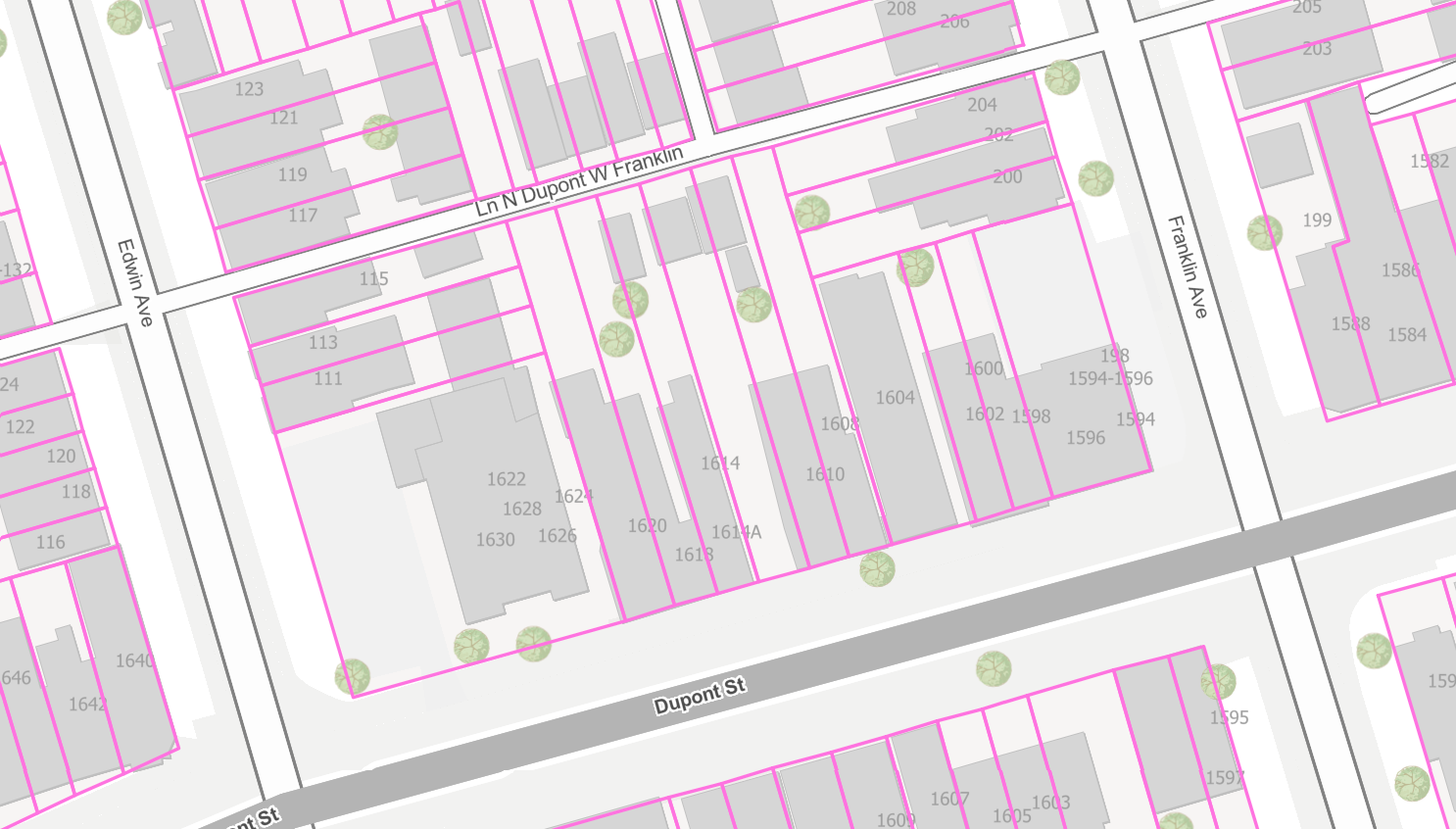
    Here’s a random block example from Toronto that I’m choosing simply because I had a wonderful sourdough sandwich on this street over the weekend:

    The longest lots in the middle of this block are over 45 metres deep and under 5 metres wide. The result is some very long and narrow buildings, but at the same time, a lot of storefront variety when you’re walking along Dupont Street. It has the bones for a great retail street. The only problem is that, for the most part, we don’t build our cities like this anymore. We do the opposite. We build bigger, which is conversely referred to as coarse-grained urbanism.

    But since we know that fine-grained urbanism makes for better street experiences, it is common to try to impose it on new developments. Cities will say, “Hey, I know that you have a big, wide, shallow retail space on the ground floor of your building, but can you chop it up into smaller, fine-grained spaces such that they all become totally unleasable?” (I half kid. See here for some context.)

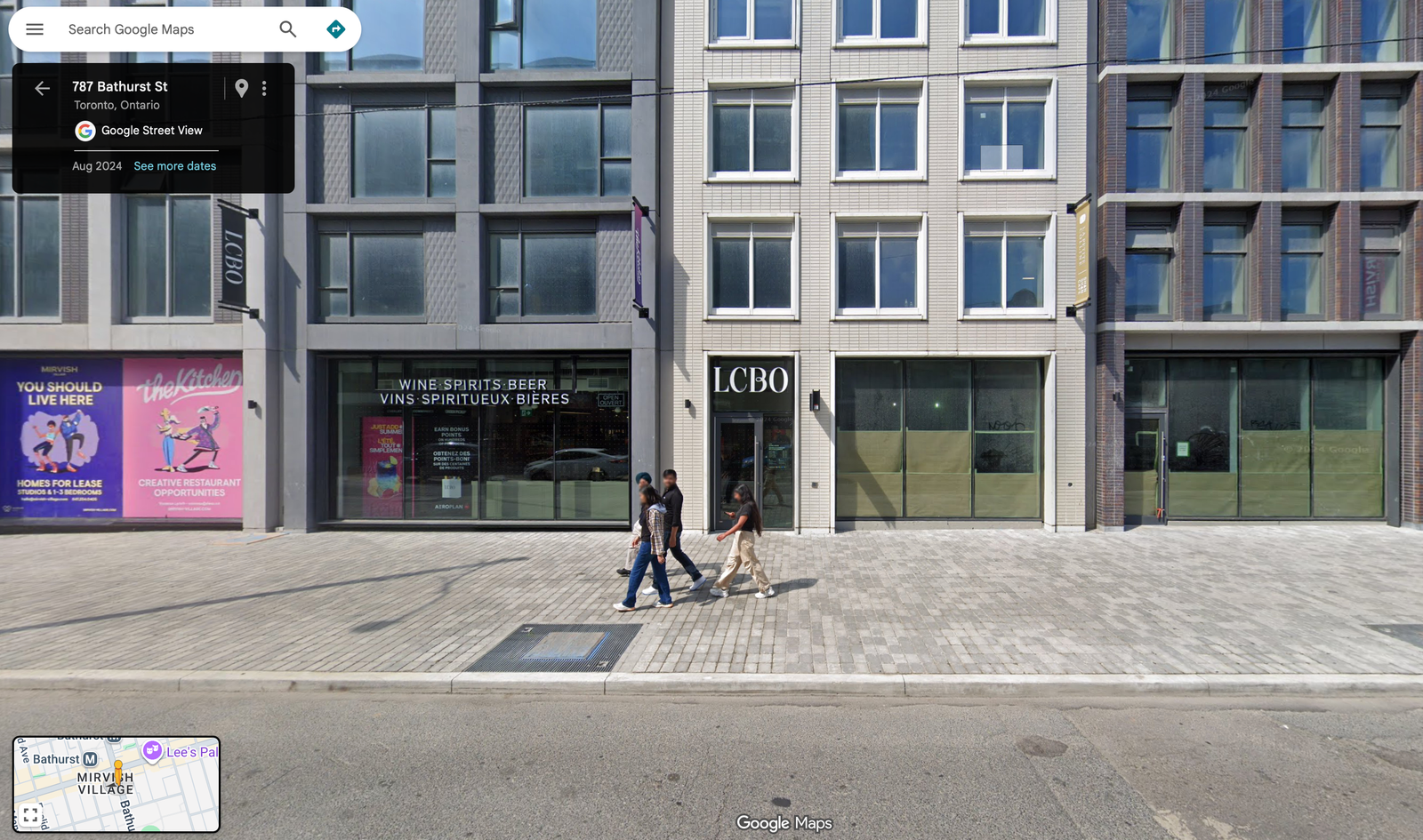
    The result:

    To be clear, I am in no way picking on this development. As a rule, I don’t do that sort of thing on this blog. Development is hard. I also like it. I just think it’s perhaps the clearest example of what all urban-minded planners and developers are trying in earnest to do, and that is to create coarse-grained urbanism masquerading as fine-grained urbanism. The architectural rhythm of the storefronts matches the existing context, but the scale of the retailers may not.

    And that’s okay. This is the reality of the world today, and modern retailers want what they want. I’m also a believer in the power of free markets. But to this same end, I want to point out something that is exceedingly obvious: the best way to create fine-grained urbanism is to simply encourage small-scale development!

    Every hurdle we erect only increases the incentive for developers to build bigger and coarser. It becomes the only way to underwrite profitable projects. The solution is to lower the barriers to development and, in turn, make small more feasible. Because if we do that, we already know it’ll make our cities better. I think we’ll also find that the market will respond with a different category of tenants and entrepreneurs.

    Tomorrow, we’ll talk about the specific ways in which Toronto and other cities could execute on this better.


    Cover photo by Finn on Unsplash

  • The Coffee opens at Junction House

    March 23, 2026 · View original


    This past weekend, the Brazilian-Japanese coffee house, The Coffee, soft-opened at the base of Junction House (right at the corner of Dundas St W and Watkinson Ave). And it was busy! I’ve been eagerly awaiting this opening since it was first announced last year.

    But not for any direct economic reasons — unless, of course, it reminds you that you should buy a new home at Junction House! As I mentioned before, we (the developers) no longer own this retail space. This is not our tenant.

    I’m mostly excited as a proud resident of the Junction, and because I think it’s a perfect fit for the building and the neighourhood. So, I would encourage you to check it out at 2720 Dundas St W. Starting today, any coffee meetings I take in the Junction will be held here.

  • Why Canada’s shrinking population is actually part of the plan

    March 22, 2026 · View original


    This week, Statistics Canada reported that, for the first time in over 70 years, the country’s population declined. Current estimates indicate a decline of around 102,000 people last year, leaving a total of 41,472,081 people in the country as of January 1, 2026.

    Opinions on this are mixed. On the one hand, a declining population can help improve things like housing affordability and increase GDP per capita (total wealth becomes divided by fewer people). It can also help improve productivity by forcing a country to innovate in lieu of relying on physical labor.

    But at the same time, there are consequences to a declining population. It can result in economic stagnation and it can topple the equilibrium of pension plans. Not enough young people paying into the system. Fewer savers. Fewer spenders. Fewer innovators.

    It can also reduce the soft and hard powers of a country. According to the IMF: “…some historians attribute France’s 1871 defeat in the Franco-Prussian War to the low fertility and slow rate of population growth that stemmed from early and widespread use of contraception among married couples in France.”

    My own simplistic view is that growth is good. We want Canadians having babies and we want the absolute best and brightest and most ambitious from around the world clamouring to come here to innovate, start companies, and grow the total economy.

    The good news is this continues to be our plan.

    The leading factor in Canada’s current population decline is fewer non-permanent residents. That is, temporary foreign workers, a great number of whom are/were international students. As many of you know, this policy is in response to a demographic shock that the country experienced between 2022 and 2024 that, among other things, lowered productivity levels.

    Going forward, the federal plan is as follows:

    – Dramatically reduce the number of temporary residents (international students and low-skill temporary workers). Again, this specific policy is largely responsible for the current population correction. – Stabilize permanent immigration to 380,000 people per year from 2026 to 2028 (under 1% of the population). – Admit most permanent immigrants under the “economic” classification. The target is 64% of all permanent residents by 2027. This is a class of applicants who are scored based on age (younger is better), education (smarter is better), language proficiency, and relevant work experience, with the goal of having them immediately contribute to the Canadian economy. – Target 12% Francophone permanent resident admissions outside of Quebec by 2029. (As a self-proclaimed Francophile/Quebecophile and proponent of bilingualism, I laud this effort.)

    What all of this should mean is that by the end of 2026, we are expected to “burn off” the wave of temporary residents leaving the country and, by 2027, we should return to steady and manageable population growth. This is one of the reasons why I believe that 2026-2027 will be a turning point for many of our housing markets, and hopefully the start of our next economic cycle.


    Cover by Robbie Palmer on Unsplash

    Chart from the Globe and Mail

  • How immigration actually boosts local economies for everyone

    March 21, 2026 · View original


    The Brookings Institution recently published something called Metro Monitor 2026. It’s an interactive dashboard that provides decision-makers with data on how the largest metro areas in the US performed between 2014 and 2024. You can check it out here.

    As part of this analysis, they looked at the relationship between immigration and regional economic performance. More specifically, they examined how regional economies with growing immigrant populations have performed over the last decade, and how that growth has been shared across immigrant and native-born households.

    To answer these questions, they looked at the change in the foreign-born share of the working-age population in the 196 largest metro areas, and then compared it to a variety of different economic markers. And what they found, not surprisingly, was that more immigrants tend to be better than fewer immigrants:

    > Metro areas with larger increases in the foreign-born share of their working-age population saw stronger growth in gross metropolitan product (GMP) and employment between 2014 and 2024, as well as in key prosperity metrics such as productivity and wage growth.

    It increased employment rates for both native-born and foreign-born workers:

    > Between 2014 and 2024, employment rates in metro areas with the largest increases in their foreign-born workforce share were nearly 3 percentage points higher for both native-born and foreign-born workers than in metro areas with the smallest foreign-born workforce share increases. Put simply, metro areas with larger increases in the foreign-born share of their workforce tended to deliver stronger employment outcomes for both immigrant and native-born workers.

    And it also increased median earnings, again for both native-born and foreign-born workers:

    > We find a similar pattern when examining changes in regional median earnings. Metropolitan economies with larger increases in the foreign-born share of their working-age population consistently recorded higher median earnings for both native-born and foreign-born workers.

    Once again, we’re reminded that, when managed properly, immigration isn’t a zero-sum game. There is a common narrative that foreign-born workers depress wages and/or take opportunities away from native-born citizens. But the data suggests that the opposite is true.

    Next up (or soon up): Let’s talk about Canada’s now-declining population.


    Cover photo by Clay Banks on Unsplash

  • The fragility of the Dubai model

    March 20, 2026 · View original


    My friend Alex Feldman just shared this New York Times opinion piece with me. Along with it, he said, “Thought you’d appreciate this.” And he was right, because he knows me. He and I have a long history of geeking out about cities, hosteling around Europe together, and booking irresponsible flights at odd times in odd locations.

    The article is by Richard Florida, and it’s called “Dubai Was Not Built For War.” It follows one of the themes that we recently spoke about, here. People come to cities in search of opportunity. Cities are labour markets. But Dubai is perhaps an extreme example of this. You could say it’s a city designed almost exclusively for opportunists. From Florida:

    > Nearly nine in 10 Dubai residents are nonnationals — by far the highest percentage of any major city in the world. Across the Emirates as a whole, about 10 million of 11.4 million residents are foreign nationals. Many are from Britain or the United States, but many more are guest workers who do the service jobs on which the city depends and typically come from South Asia, Southeast Asia and the wider Middle East. Even a traffic violation can trigger deportation. Citizenship is based almost entirely on descent; it’s been intentionally made very difficult for even long-term foreign residents or their children to become Emirati, even after decades of living and working there. The system is designed to rely on migrants while keeping them permanently temporary. That makes it extremely hard to be rooted, to belong, to be attached.

    The result is a new urban model (“Dubai-ification”) compared to how we used to think about cities:

    > This new kind of city is a sharp break with the past. For most of human history, people lived and worked in the same place, and cities grew up around that basic fact. They transform, rebuild after fires and disasters and become richer and sometimes poorer, but they draw their resilience from their rootedness, the fact that people feel they belong there. To say “I am a New Yorker” or a Londoner or “I am from Pittsburgh” or Detroit or Rome or Barcelona — that is not just a map. It conveys a deep sense of history, belonging and meaning, a personal identity, not just a transaction. Those identities are messy and unequal, but they are substantial. They are one of the primary ways people answer the basic questions of who they are and where they belong. And they are part of what brings people back to hang on and rebuild, no matter what.

    At the time of writing this post, Polymarket shows a less than 50% chance of a ceasefire with Iran by the end of May, and a 71% chance of one by the end of December. That’s not 100%. So, we’ll see. Maybe it becomes even more protracted. Hopefully not. Regardless, the question everyone is asking is: How many of the “permanently temporary” will actually stick around if they no longer feel safe?

    My view is not many.


    Cover photo by Christoph Schulz on Unsplash

  • The Red Queen hypothesis

    March 19, 2026 · View original


    Entrepreneurship is a critical component of city-building. You want people taking risks, starting new companies, and creating jobs to grow the overall economy. And to accomplish this, you roughly need a bunch of smart people, access to money, and a culture that accepts failure and risk-taking. Then, maybe, you might get some successful startups.

    The key word, however, is maybe.

    Here’s an interesting essay by Jerry Neumann — a retired venture investor — called “We Have Learned Nothing.” In it, he argues that there is no science of entrepreneurship:

    > Of course, no science of entrepreneurship can be a science in the sense most people think of the term. There are no fixed and universal recipes, no ultimate truth. This may be unsatisfying to the aspiring founder, but any science that guaranteed success would bring us right back to the perpetual money machine. The best we can hope for is a science that makes startups meaningfully more likely to succeed and that is honest about the limits of its own prescriptions. And then, when those prescriptions harden into orthodoxy, we try something different. A true science of entrepreneurship embraces the Red Queen dynamic so completely that it rejects any attempt to permanently systematize it.

    The “Red Queen hypothesis” is an evolutionary biology concept that states that one has to constantly adapt and evolve just to survive and maintain a position, never mind make any progress. It follows that as soon as you stop innovating as a company, you don’t just stay where you are; you fall behind. And that’s because the entire landscape is constantly shifting around you. Neumann argues that this is a better mental model for startups and that it’s a fool’s errand to try to permanently codify what it takes to create a successful one.

    I’m going to take this even further and say that the same is true for cities. It’s not enough to just follow “best practices” and copy what has been successful in other places. There is no set formula for urban leadership. Cities are rewarded most for being different, and for doing that different thing first. This is particularly true in a world of increasing global sameness. Creating a replica of the London Eye or New York’s High Line will not magically turn you into a comparable global city. It is a recipe for mediocrity.


    Cover photo by Laine Cooper on Unsplash