
Canada must become a global superpower
The silver lining to the US starting a trade war with Canada and regularly threatening annexation is that it has forced this country out of complacency. Indeed, I'm hard pressed to remember a time, at least in my lifetime, when patriotism and nationalism has united so much of Canada. According to a recent survey by Angus Reid, the percentage of Canadians expressing a "deep emotional attachment" to the country jumped from 49% in December 2024 to 59% in February 2025. And as further evidence of...

The bank robbery capital of the world
Between 1985 and 1995, Los Angeles' retail bank branches were robbed some 17,106 times. In 1992, which was the the city's worst year for robberies, the number was 2,641. This roughly translated into about one bank robbery every 45 minutes of each banking day. All of this, according to this CrimeReads piece by Peter Houlahan, gave Los Angeles the dubious title of "The Bank Robbery Capital of the World" during this time period. So what caused this? Well according to Peter it was facil...
The story behind those pixelated video game mosaics in Paris
If you've ever been to Paris, you've probably noticed the small pixelated art pieces that are scattered all around the city on buildings and various other hard surfaces. Or maybe you haven't seen or noticed them in Paris, but you've seen similarly pixelated mosaics in one of the other 79 cities around the world where they can be found. Or maybe you have no idea what I'm talking about right now. Huh? Here's an example from Bolivia (click here if you can't see...

Subscribe to Brandon Donnelly
Daily insights for city builders. Published since 2013 by Toronto-based real estate developer Brandon Donnelly.

It is worth reiterating that one of the main reasons the majority of people live in cities is because they would like to make money and improve their economic status. There are, of course, other reasons too, but making money is an enduring attractor. In Alain Bertaud's book, Order Without Design: How Markets Shape Cities, he famously argued that cities are, first and foremost, labour markets.
Because of this, the success of cities depends on their ability to harness talent and turn it into economic progress. New York City, for example, is the city it is today because it was the largest port of entry for immigrants. And because transportation costs were high at the time, people arrived in New York and stayed in New York to work and create businesses.
The same thing is generally true today in the San Francisco Bay Area. It is estimated that roughly 50% of all tech startups and 59 of the top 100 highest-valued unicorns have a foreign-born founder. (I'd love to know what percentage are Canadian graduates of the University of Waterloo.) These are immigrants looking for money and economic opportunity, and the local ecosystem is providing the right preconditions.
But if the preconditions for success disappear, people will start to both leave and not come in the first place. So, it's also worth reiterating that the fortunes of cities have always risen and fallen over a long enough time horizon. Here's a great excerpt from a recent Bloomberg article by Richard Frost and Mary Hui, talking about what "war-rattled Dubai can learn from Hong Kong's expat exodus."

It is worth reiterating that one of the main reasons the majority of people live in cities is because they would like to make money and improve their economic status. There are, of course, other reasons too, but making money is an enduring attractor. In Alain Bertaud's book, Order Without Design: How Markets Shape Cities, he famously argued that cities are, first and foremost, labour markets.
Because of this, the success of cities depends on their ability to harness talent and turn it into economic progress. New York City, for example, is the city it is today because it was the largest port of entry for immigrants. And because transportation costs were high at the time, people arrived in New York and stayed in New York to work and create businesses.
The same thing is generally true today in the San Francisco Bay Area. It is estimated that roughly 50% of all tech startups and 59 of the top 100 highest-valued unicorns have a foreign-born founder. (I'd love to know what percentage are Canadian graduates of the University of Waterloo.) These are immigrants looking for money and economic opportunity, and the local ecosystem is providing the right preconditions.
But if the preconditions for success disappear, people will start to both leave and not come in the first place. So, it's also worth reiterating that the fortunes of cities have always risen and fallen over a long enough time horizon. Here's a great excerpt from a recent Bloomberg article by Richard Frost and Mary Hui, talking about what "war-rattled Dubai can learn from Hong Kong's expat exodus."

Canada must become a global superpower
The silver lining to the US starting a trade war with Canada and regularly threatening annexation is that it has forced this country out of complacency. Indeed, I'm hard pressed to remember a time, at least in my lifetime, when patriotism and nationalism has united so much of Canada. According to a recent survey by Angus Reid, the percentage of Canadians expressing a "deep emotional attachment" to the country jumped from 49% in December 2024 to 59% in February 2025. And as further evidence of...

The bank robbery capital of the world
Between 1985 and 1995, Los Angeles' retail bank branches were robbed some 17,106 times. In 1992, which was the the city's worst year for robberies, the number was 2,641. This roughly translated into about one bank robbery every 45 minutes of each banking day. All of this, according to this CrimeReads piece by Peter Houlahan, gave Los Angeles the dubious title of "The Bank Robbery Capital of the World" during this time period. So what caused this? Well according to Peter it was facil...
The story behind those pixelated video game mosaics in Paris
If you've ever been to Paris, you've probably noticed the small pixelated art pieces that are scattered all around the city on buildings and various other hard surfaces. Or maybe you haven't seen or noticed them in Paris, but you've seen similarly pixelated mosaics in one of the other 79 cities around the world where they can be found. Or maybe you have no idea what I'm talking about right now. Huh? Here's an example from Bolivia (click here if you can't see...
Financial centers rise and fall with the tides of geopolitics. From the mid-1500s, the tiny Portuguese enclave of Macau served as the primary intermediary for trade between Europe, Japan and China. In the mid-1800s, it was displaced by Hong Kong, which Britain secured by defeating the Qing dynasty. Hong Kong, in turn, was overtaken by Shanghai in the 1920s, when its more glamorous though still Western-run rival became the wealthiest city in East Asia. Both were occupied by Japanese forces during World War II, and their expatriate elite were interned in camps.
Shanghai never regained its prewar status. After their 1949 victory in China’s civil war, the Communists seized foreign-owned assets, bringing an end to the dominance of one of Asia’s most prominent business dynasties — the Baghdadi-Jewish Sassoon family, known as the “Rothschilds of the East.” The exodus of wealthy Shanghainese to Hong Kong helped lay the foundations for the city’s modern-day revival as Asia’s leading financial hub.
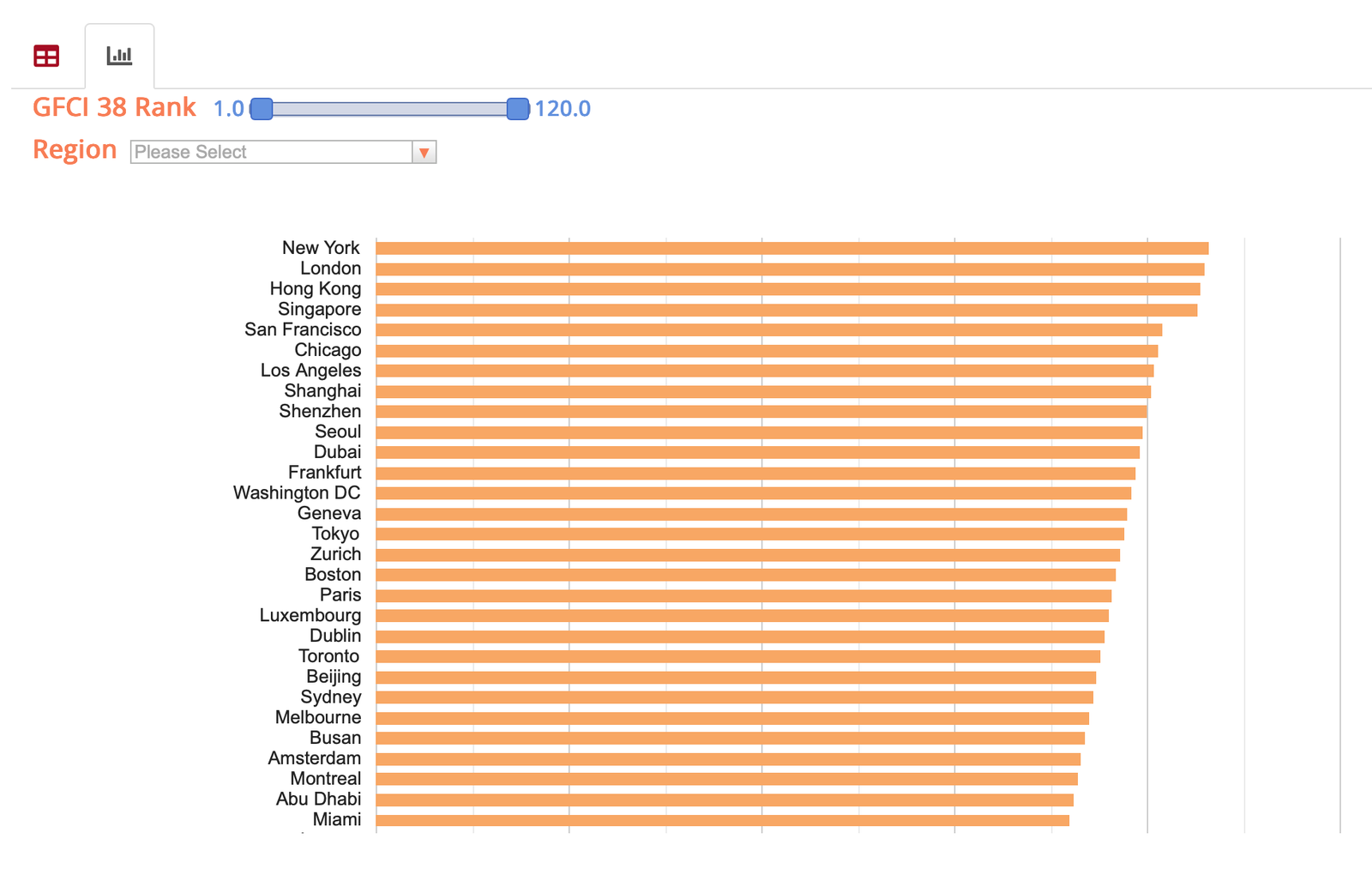
But between the protests of the 2010s, the 2020 national security law, and the draconian pandemic lockdowns, in recent years, it did feel like Hong Kong might be at risk of losing at least some of its status as a global financial hub. According to the latest Global Financial Centres Index, Hong Kong is still ranked third, behind New York and London, respectively. But Singapore is nipping at its heels in fourth position.
Today, some are arguing that the current turmoil in the Middle East has broken the promise of Dubai as a stable, global financial capital where influencers roam freely on the beach. People are, not surprisingly, leaving in the immediate term, but will it be lasting? I think it's too early to be calling the fall of Dubai, but there's no question that this is a meaningful exogenous shock. Its real estate index fell 30% in two weeks.
History shows us that there are no guarantees. Preeminence exists until something happens, and then it doesn't. If this war becomes protracted, it will be a major problem for Dubai. Capital and talent want openness, stability, opportunity, and a favourable business environment (keep taxes reasonable and get out of the way). After all, it's arguably the main reason why people come to cities in the first place.
Cover photo by Sepehr Moradian on Unsplash
Chart via the Global Financial Centres Index
Financial centers rise and fall with the tides of geopolitics. From the mid-1500s, the tiny Portuguese enclave of Macau served as the primary intermediary for trade between Europe, Japan and China. In the mid-1800s, it was displaced by Hong Kong, which Britain secured by defeating the Qing dynasty. Hong Kong, in turn, was overtaken by Shanghai in the 1920s, when its more glamorous though still Western-run rival became the wealthiest city in East Asia. Both were occupied by Japanese forces during World War II, and their expatriate elite were interned in camps.
Shanghai never regained its prewar status. After their 1949 victory in China’s civil war, the Communists seized foreign-owned assets, bringing an end to the dominance of one of Asia’s most prominent business dynasties — the Baghdadi-Jewish Sassoon family, known as the “Rothschilds of the East.” The exodus of wealthy Shanghainese to Hong Kong helped lay the foundations for the city’s modern-day revival as Asia’s leading financial hub.
But between the protests of the 2010s, the 2020 national security law, and the draconian pandemic lockdowns, in recent years, it did feel like Hong Kong might be at risk of losing at least some of its status as a global financial hub. According to the latest Global Financial Centres Index, Hong Kong is still ranked third, behind New York and London, respectively. But Singapore is nipping at its heels in fourth position.

Today, some are arguing that the current turmoil in the Middle East has broken the promise of Dubai as a stable, global financial capital where influencers roam freely on the beach. People are, not surprisingly, leaving in the immediate term, but will it be lasting? I think it's too early to be calling the fall of Dubai, but there's no question that this is a meaningful exogenous shock. Its real estate index fell 30% in two weeks.
History shows us that there are no guarantees. Preeminence exists until something happens, and then it doesn't. If this war becomes protracted, it will be a major problem for Dubai. Capital and talent want openness, stability, opportunity, and a favourable business environment (keep taxes reasonable and get out of the way). After all, it's arguably the main reason why people come to cities in the first place.
Cover photo by Sepehr Moradian on Unsplash
Chart via the Global Financial Centres Index
>4.2K subscribers
>4.2K subscribers
Share Dialog
Share Dialog
No activity yet