Daily insights for city builders, delivered every morning at 6 AM ET. I’m Brandon Donnelly — a Toronto-based real estate developer and founder of Globizen. I’ve been writing here since 2013.

Category: Uncategorized

  • Who is really helping the self-driving cars?

    April 7, 2026 · View original


    One of the least understood aspects of self-driving cars is the extent and capacity to which they rely on remote assistance operators (RAOs).

    When a self-driving car finds itself confused in an uncertain or tricky situation (like when one rolled into an active shootout), there are typically two safety valves. The first is a manual override, where someone like a first responder might jump into the front seat and take control of the steering wheel. And the second is assistance from a remote operator.

    If the car gets confused, a human can tell it, “Hey, you, follow this path.” But how often is remote assistance being called upon? And who is actually responding on the other end? Apparently, the answer is, “I don’t know.”

    According to a recent report from Senator Ed Markey, every major AV company refuses to disclose how often they rely on an RAO. And in the case of Waymo, they rely on overseas operators in places like the Philippines.

    This has led to new proposed legislation that would, among other things, limit the number of vehicles that a single RAO can oversee, mandate that the RAO be located in the US, and require the humans to hold a local driver’s license. You know, so they’re sure to know the rules of the road.

    There’s a lot to figure out, and it seems a bit messy. But that’s what it takes. As one would expect, this is par for the course when you’re trying to rewrite urban mobility.


    Cover photo by Leo_Visions on Unsplash

  • Is Berlin still sexy?

    April 6, 2026 · View original


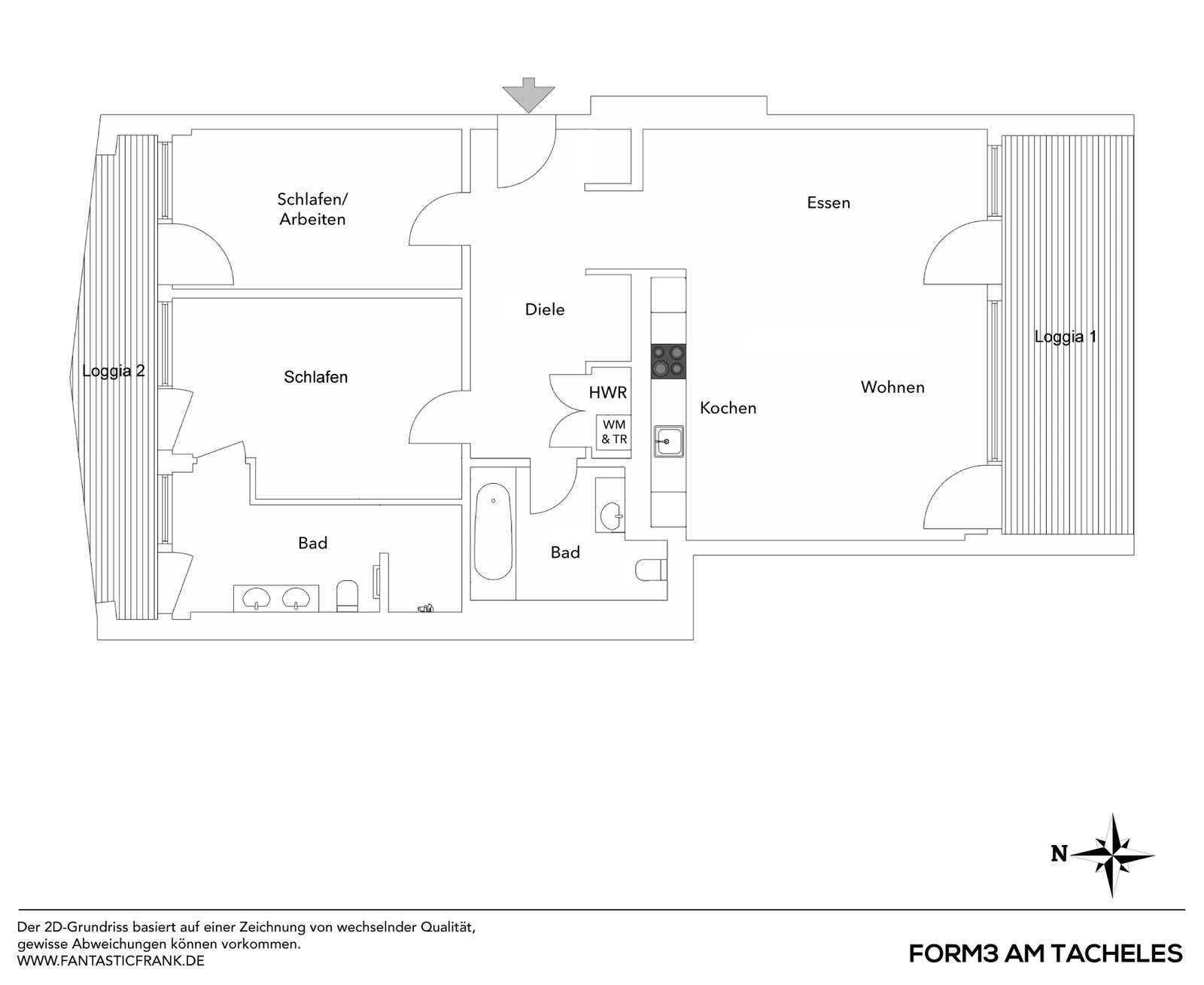
    I recently came across this for-sale listing from Fantastic Frank for a 3-room apartment in Berlin’s new Am Tacheles district. Naturally, I thought to myself, “Hey, this is a beautiful apartment — now let me go all the way back to the beginning of the 20th century and better understand the history of the development site.”

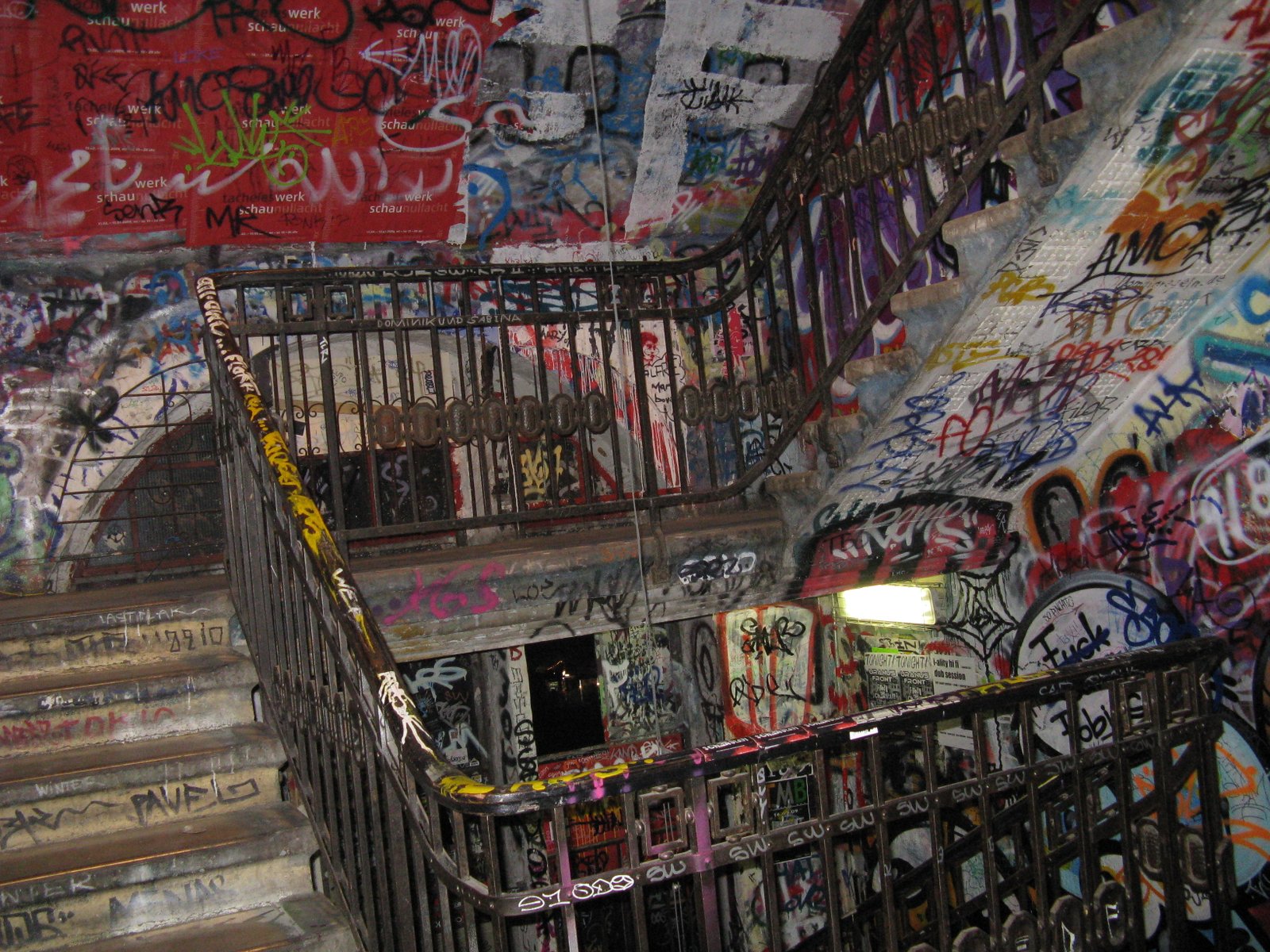
    Am Tacheles has been called the most controversial real estate project in Berlin’s modern history. Previously developed in 1908 as a high-end shopping arcade intended to rival the great galleries of Paris, the Friedrichstraßenpassage, as it was known, was an ambitious undertaking located in the city’s historic Jewish quarter.

    But only about six months after opening, the project went bankrupt. The existing building then went on to live numerous lives, ranging from an AEG showroom to a building used to house French war prisoners, before ultimately being co-opted by artists in 1990 as a way to save it from demolition.

    It was at this point that it was given the name Tacheles, which is a Yiddish word meaning “to speak straight.” Supposedly, this was a reference to the area’s history as a thriving Jewish quarter and a message about political honesty (it is located in the former East Berlin, where that wasn’t a thing).

    For the next two decades, the site became a global symbol of Berlin’s “poor but sexy” identity. The ownership vacuum created by the fall of the Berlin Wall meant that nobody really knew who owned what. This was a disaster for clear property rights and capital investment, but fortuitous for squatters who needed cheap (okay, free) space to experiment with art and techno music.

    In my view, this was ultimately a net positive for the city. It created an urban vitality that nobody could have predicted, demonstrating the potential of people and cities when allowed to experiment and take risks.

    But then, basically, two things happened: (1) people eventually figured out who owned what, and (2) the development potential of the site became increasingly valuable. This is the quintessential urban cycle. First, the artists and creatives come in to take advantage of cheap space. They then make the area cool. And then developers like me come in to monetize it, completing the cycle.

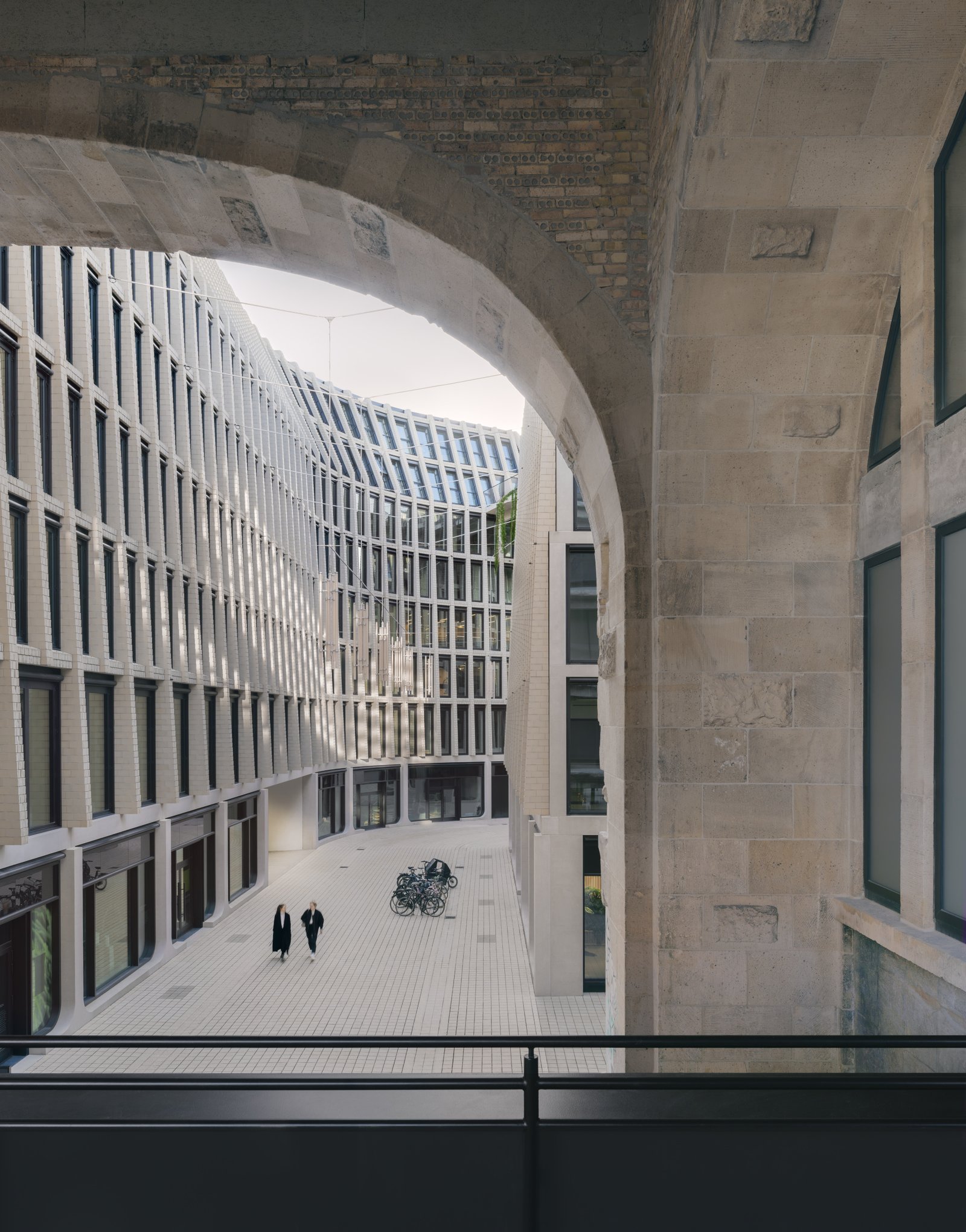
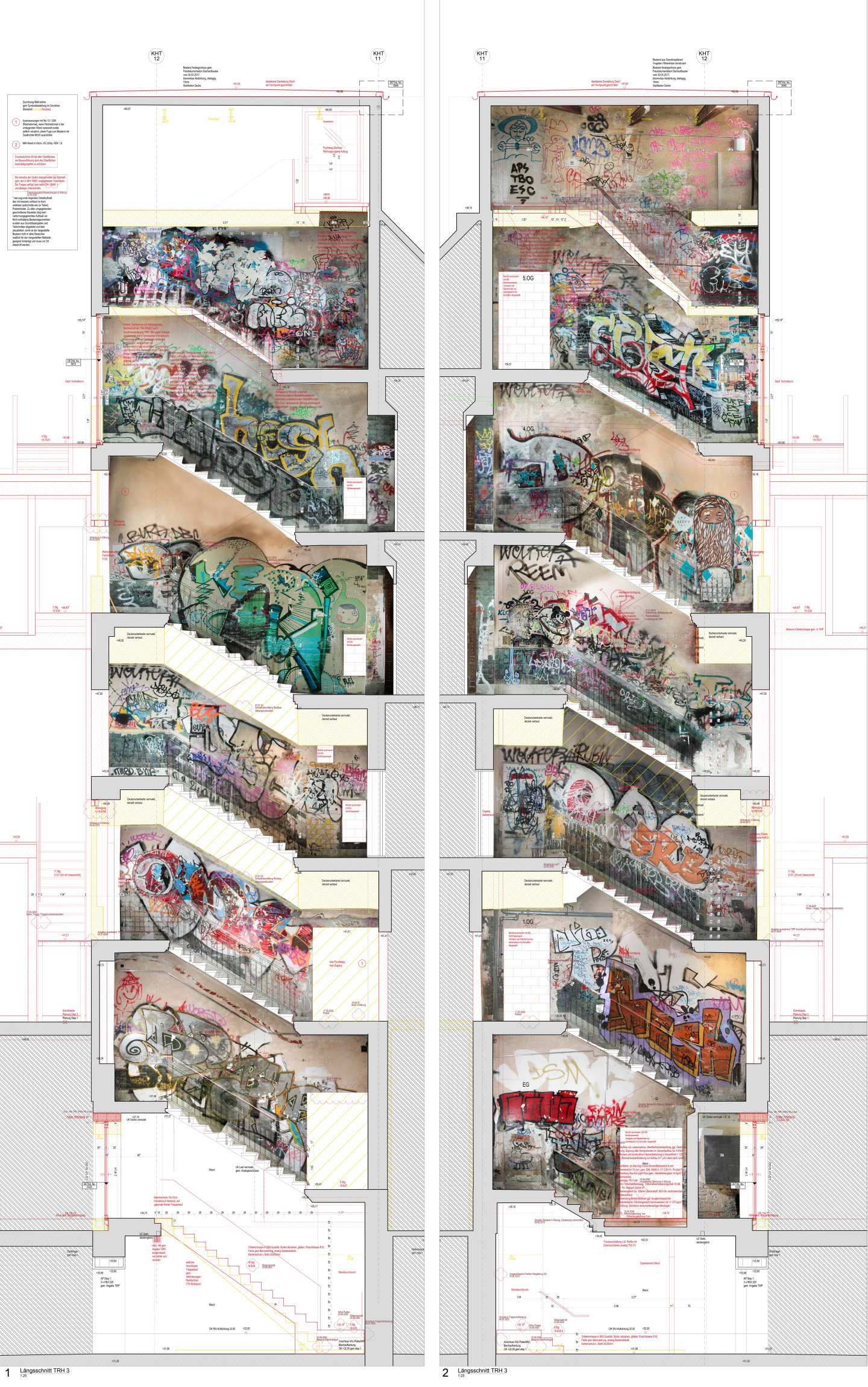
    Fast forward to today, and Am Tacheles (they kept the name) is a new master-planned community designed by Swiss architects Herzog & de Meuron and one of the most desirable (and thus expensive) areas in Berlin. It’s also quite a bit tidier there these days, though they did preserve some of the graffiti.

    Returning to our 3-room apartment listing, the asking price is €1,825,000 + €90,000 (for what I believe is a parking space). At 113 sqm, this works out to ~€16,947 per sqm or about C$2,529 per sqft (for comparison to Toronto prices). As I understand it, this is well above the average new construction home prices in the area and city.

    What is clear is that Berlin is no longer poor. It’s global-city rich. But is it still sexy?


    Cover photo and floor from Fantastic Frank

    Historic Tacheles photo via Wikipedia

    Am Tacheless photo and stairwell section from H&dM

  • Berlin industrial live-work towers on the market for €1,700,000

    April 5, 2026 · View original


    One of my developer friends — who I would say has similar design tastes to my own — once said to me, “If I like it [the design], I often assume that the general public won’t.” What he was getting at is that architects and designers often appreciate buildings and spaces for different reasons.

    For us (if I can say this without the OAA sending me another legal letter), it is often about things like the intellectual rigour behind the work, the “honesty” of the materials, and the greater social and historic context, rather than just “this has nice curb appeal.”

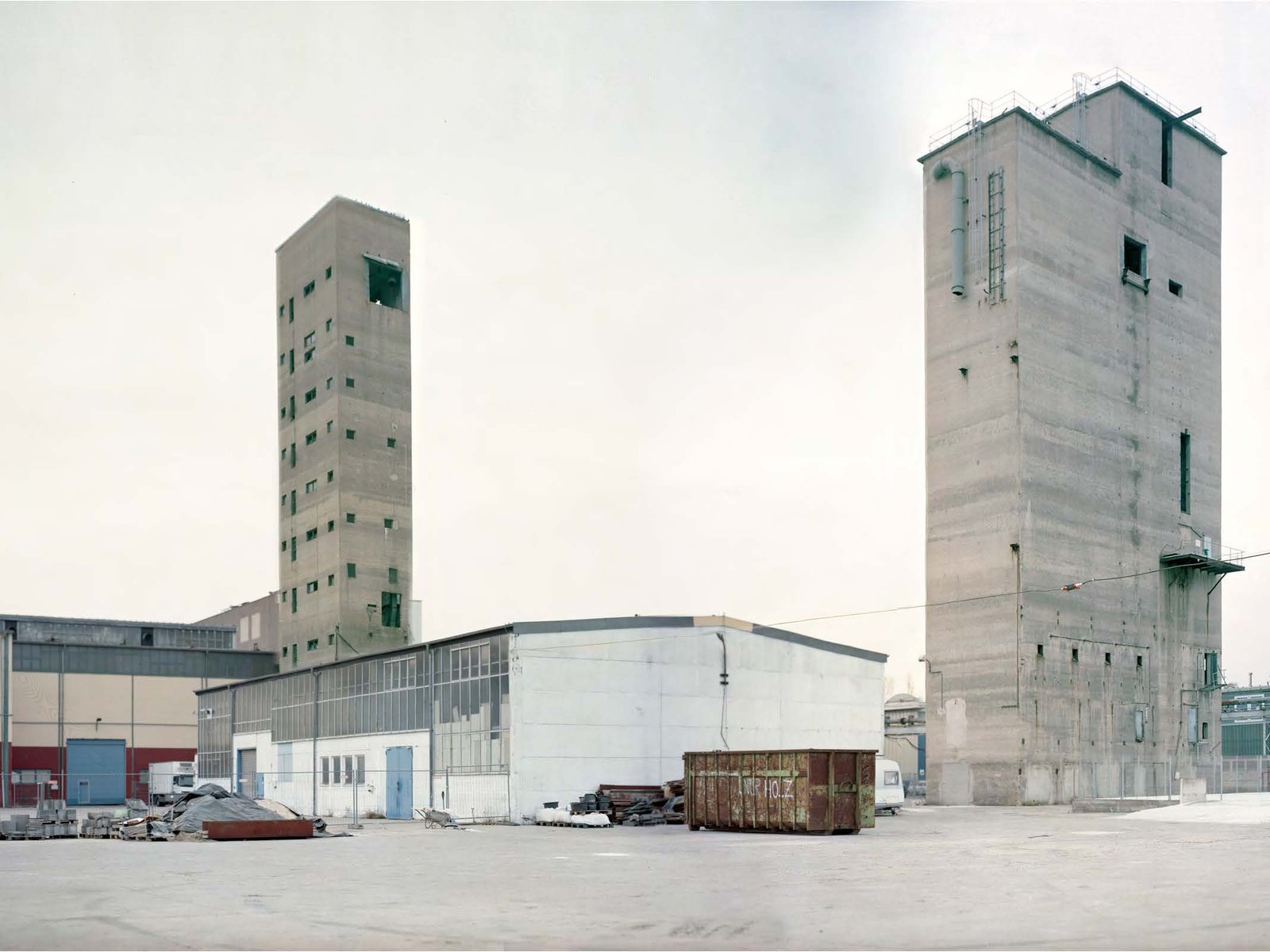
    So with that, I’m now going to go out on a limb and suggest that these converted industrial towers in former East Berlin fall into the category of “probably not for everyone.” Built in the 1950s by the German Democratic Republic (GDR) to process graphite, and later abandoned after the fall of the Berlin Wall, the property was eventually privatized in the 1990s to raise money for the state.

    Then, between 2018 and 2021, architecture practice b+ — which has made a name for itself transforming old Brutalist buildings into super cool live-work spaces — reworked the interiors to create a workshop for itself.

    The two industrial towers are 37.2 and 42.6 metres tall. And since their volumes reminded architect Arno Brandlhuber of the towers of San Gimignano, that became the project’s name. The site area is 960 sqm, the usable floor area is around 300 sqm, and the entire property is for sale for €1,700,000. There’s also future development potential!

    I personally love the project. If Globizen were to have an office in Berlin, I’d want it to be here. But hey, what do you think?


    Photos by Future Documentation

  • The radical transformation of Greater Paris

    April 4, 2026 · View original


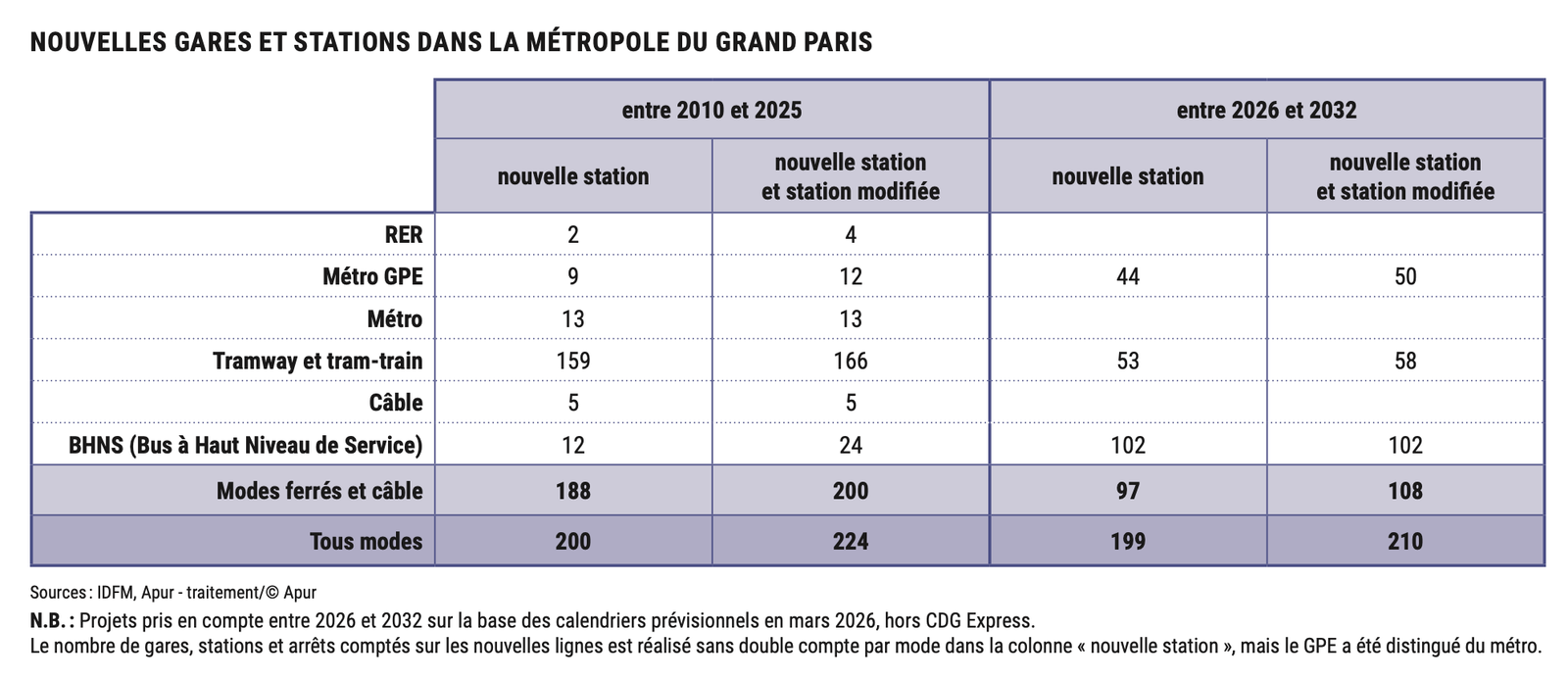
    Between 2010 and 2025, the Métropole du Grand Paris added nearly 160 kilometres of new or extended transit lines and opened 200 new transit stations across the region. These numbers include all modes of transport, including RER, metro, tram, cable cars, and BRT. On top of this, a further 199 new stations are scheduled to open between 2026 and 2032 (a shorter time period), meaning there’s an argument to be made that Paris is getting better and faster at delivering transit.

    Imagine that.

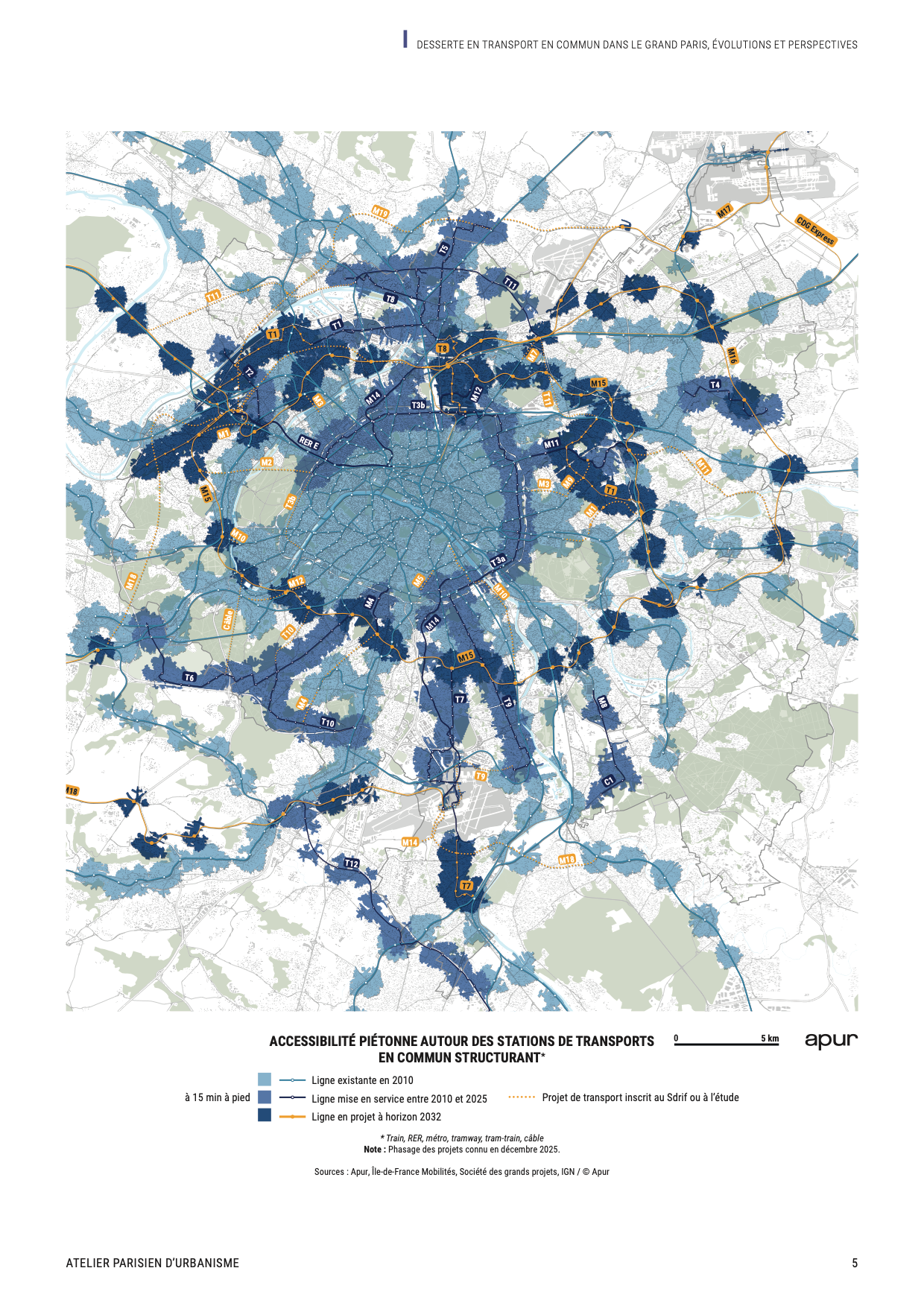
    This, as we have talked about before, is a remarkable achievement and one that is reshaping the Métropole — particularly outside of Paris proper. Take a look. Here’s a recent study and map from Apur that shows how these completed and upcoming lines have impacted, and are expected to impact, transit access in the region:

    The coloured areas represent access to transit within a 15-minute walk (assuming you’re able to walk at a reasonable 4 km/hr). The lightest blue areas are lines/catchment areas that existed in 2010. The medium blue represents lines/areas that came online between 2010 and 2025. And the darkest blue represents lines/areas that are scheduled to come online between 2026 and 2032.

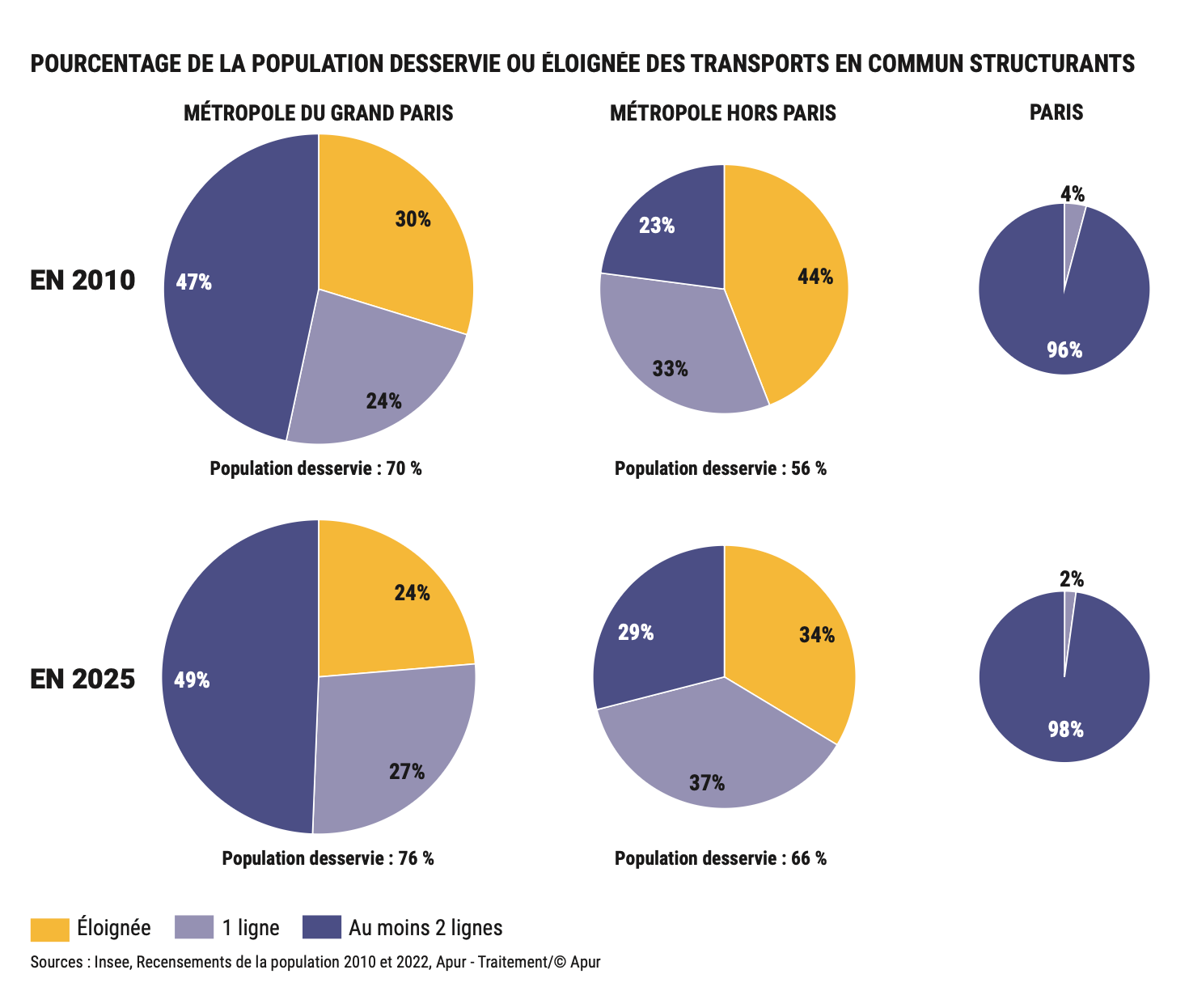
    If you’re familiar with Paris, you’ll be able to tell that the majority of the recent transit expansion has happened outside of the boundaries of Paris. This is important because prior to 2010, all of Paris was already well-served by transit (seriously, 100% of the population was/is within walking distance of at least one transit line).

    However, this is not the case in the rest of the Métropole. In 2010, about 56% of the population (outside of Paris proper) had access to at least one line, with 23% having access to two. As of 2025, this number has increased to 66%. And by 2032, with the opening of the lines currently underway, it is expected that 80% of the population within the entire Métropole will be transit-connected.

    It’s hard to overstate the importance of these changes. The Paris region has long been criticized for the divide that exists between its historic centre and its surrounding suburbs and cities. Historically, this has been a socio-economic divide, and a built form divide. But this divide is now being erased. New infrastructure is stitching the region together, tightening its geography, and encouraging the development of new economic centres.

    Forget the Paris you know. The growth and change are now happening along its edges. Welcome to the new Greater Paris Metropolis.

    P.S. To commemorate the 10th anniversary of the Métropole du Grand Paris (created on January 1, 2016), Apur recently published a book called Atlas de la Métropole du Grand Paris. I haven’t been able to find a site that will ship to Toronto, but if you’re in Paris, you can order or pick one up at the following bookstores.


    Cover photo by Ally Griffin on Unsplash

    Maps and charts from Apur

  • Development happens on the margin

    April 3, 2026 · View original


    Every single real estate development project I have worked on has generally gone something like this:

    – Design the project. – Budget the project. – Realize: “Oh shit, this is way too expensive and will never work.” – Cut out some of the parking (a loss leader on most projects). – Look for value engineering and other creative opportunities. – Repeat the cycle until the project works (hopefully).

    This is so typical that if I went through this process and everything just magically worked, I would be immediately suspicious. This can’t be. We must be overlooking something! The expectation is that the project isn’t going to work until we, as developers, figure out a way to make it work.

    This is what we mean around here when we say that “development happens on the margin.” Projects are sensitive to even slight changes in market conditions. If rents soften, costs go up, and/or interest rates move in the wrong direction, that could be the end.

    Current market conditions have only heightened this dynamic. More than ever, developers need to be both creative problem-solvers and disciplined managers because there’s very little elasticity on the revenue side to help cover up any mistakes (if the revenue side even exists at all!).

    Development is hard. But working through challenges is a big part of what makes it so rewarding. On that happy note, enjoy the long weekend, everyone.


    Cover photo by Shivendu Shukla on Unsplash

  • Thinking out loud about tokenized real estate

    April 2, 2026 · View original


    One of my predictions for this year was that we would see the mainstream adoption of tokenized real-world assets. More specifically, I said that we’d see some noteworthy office building or apartment building get tokenized on the Ethereum blockchain.

    Maybe. I’m not sure that we’ll see a singular event this year or that we’ll be able to call it “mainstream” just yet. According to this recent article by Chris Lehman, co-founder of a tokenized REIT called Groma, it’s still early days.

    Real estate is the world’s largest asset class, with an estimated global value of around $400 trillion. But only about $500 million of it has been tokenized, which is a relatively small amount, though it’s not nothing. So, what is it going to take for us to say it’s “mainstream”?

    Some of the obvious benefits of tokenization are that it makes transactions cheap and efficient, and it allows for composability, meaning the various smart contracts on a blockchain can then be combined and interconnected with other protocols and applications to unlock additional use cases.

    Lehman gives the specific example of being able to split yield and appreciation for tokenized real estate. My mind always goes to codifying the financial terms of something like a Limited Partnership Agreement such that all of the cash flows get automatically distributed as per the agreed-upon deal.

    Importantly, though, and this is mentioned in the article, the fractionalization of real assets is unlikely to be the killer feature of tokenization. Notwithstanding that it does bring some additional benefits, we’ve already figured out how to “democratize” the ownership of large and expensive real estate assets through REITs and other vehicles.

    Instead, Lehman argues that “improving real estate’s utility as collateral is likely to be the most significant improvement tokenization can offer.”

    I don’t have a strong opinion on what will serve as the primary adoption catalyst, but I have little doubt in my mind that this is where the ownership of real estate (and other assets) is heading. If any of you are working in this space, and especially if you’re based in Toronto or elsewhere in Canada, I’d love to connect with you for a coffee.


    Cover photo by 瓜田 月下 on Unsplash

  • The historic drop in US international migration

    April 1, 2026 · View original


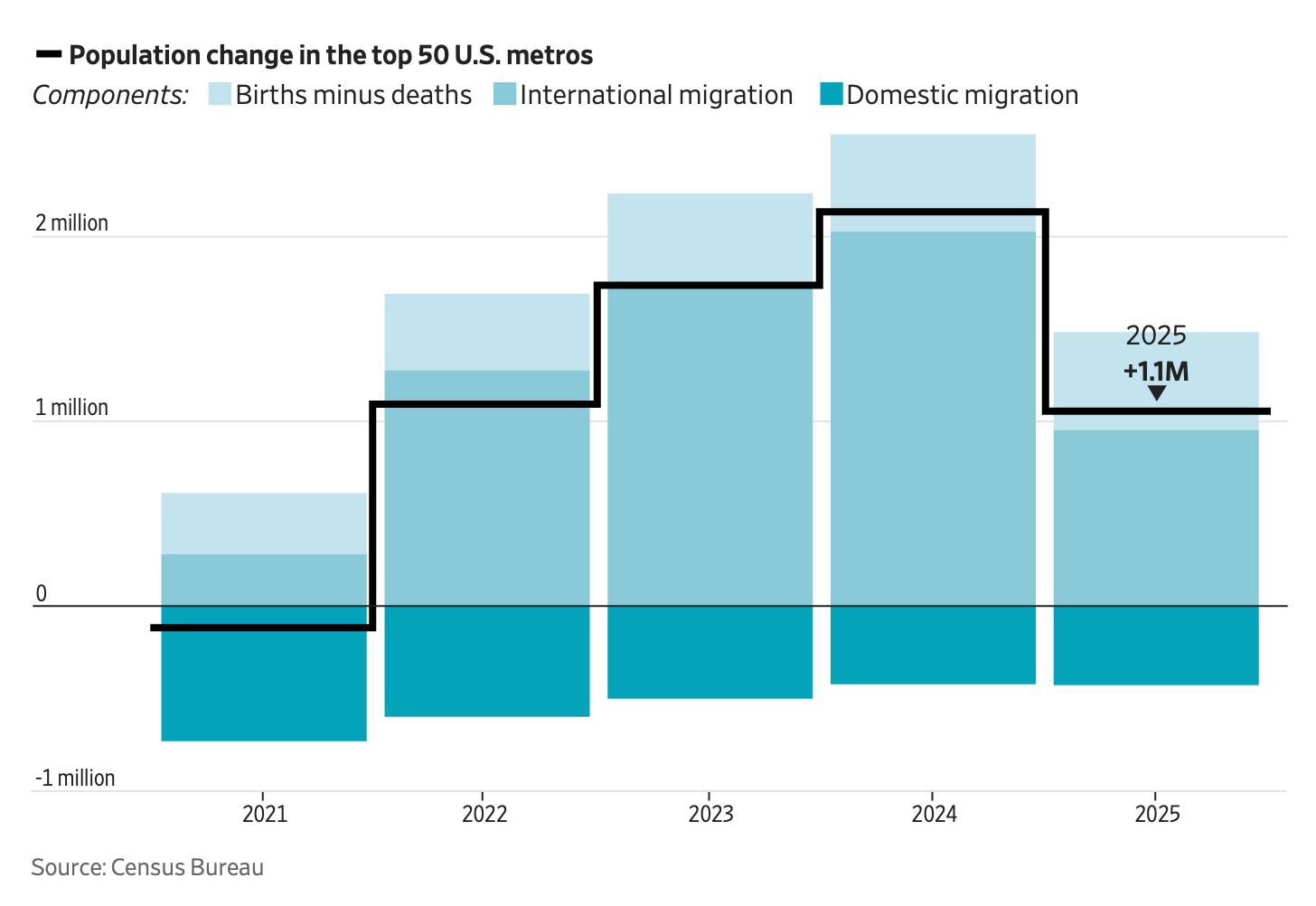
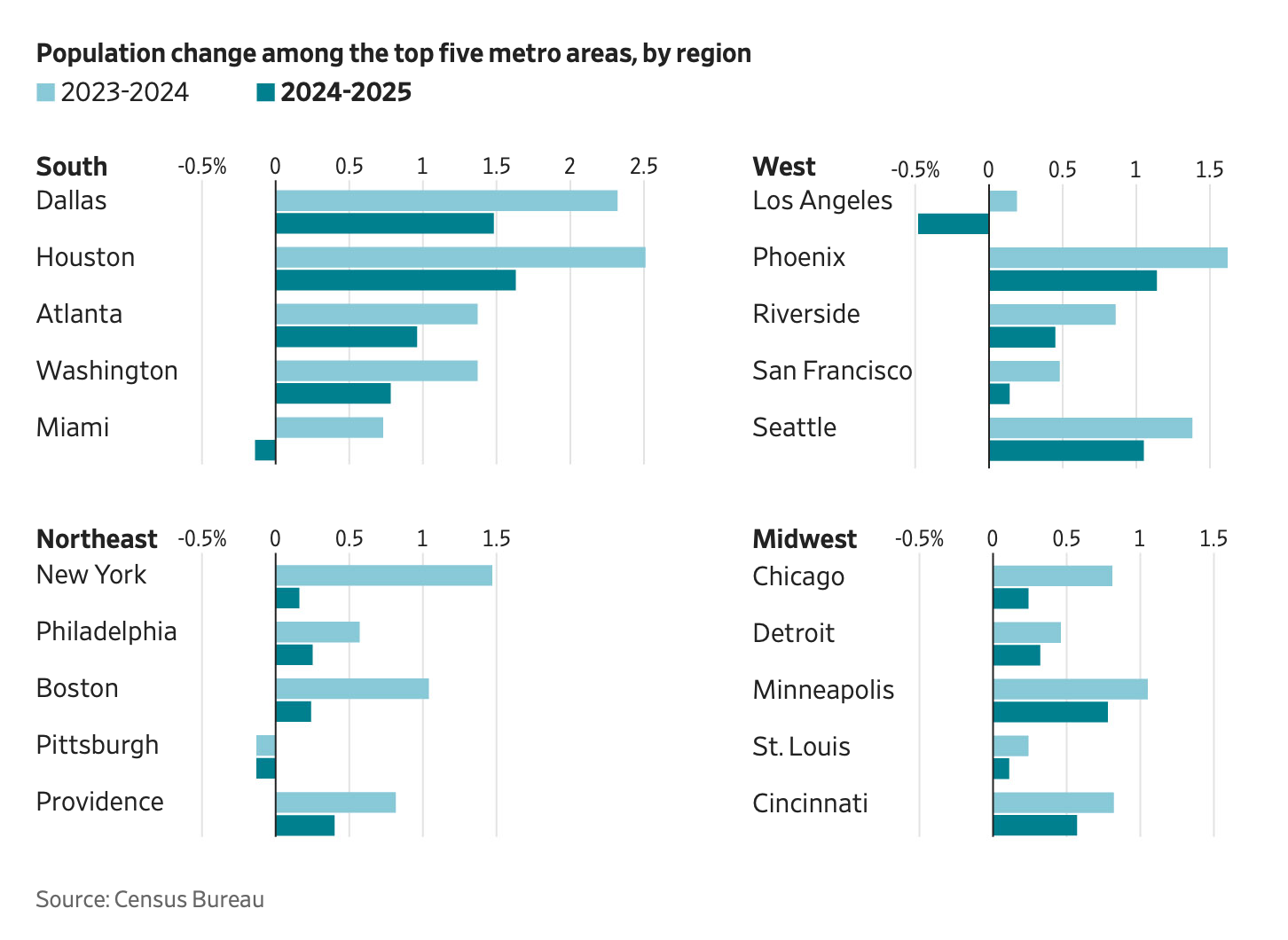
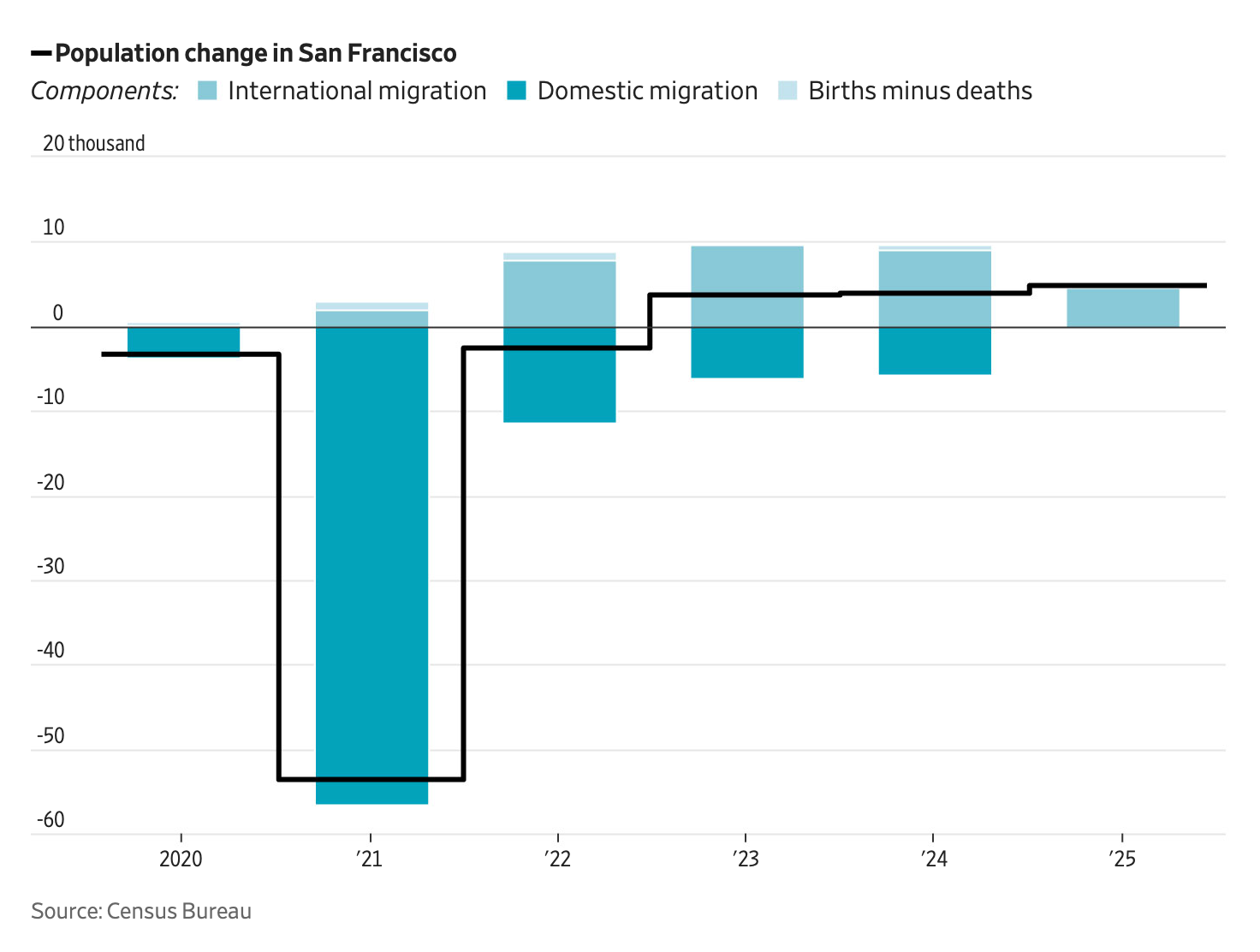
    The WSJ recently published a pair of articles (here and here) talking about where the US is growing and shrinking — through charts. The three components of this are domestic migration, international migration, and births minus deaths.

    One of the key themes for the year ending in June 2025 is that the country is seeing significantly less international migration. According to the WSJ, more people moved out of the US than moved in last year for the first time since the Great Depression.

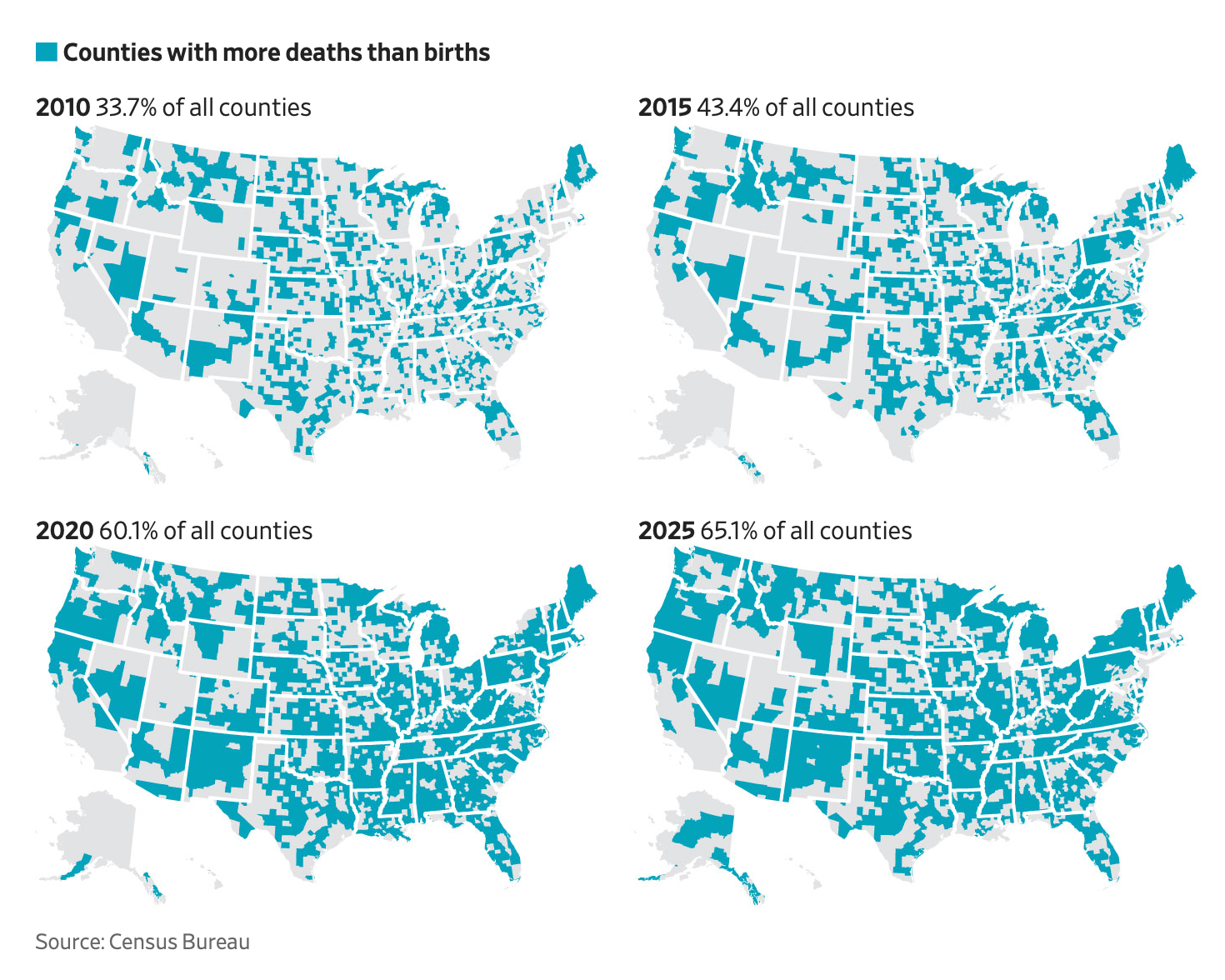
    International migration is critical because around 65% of all counties in the US are now experiencing more deaths than births, meaning the fertility rate is declining. This is an increase from around 34% of all counties as recently as 2010.

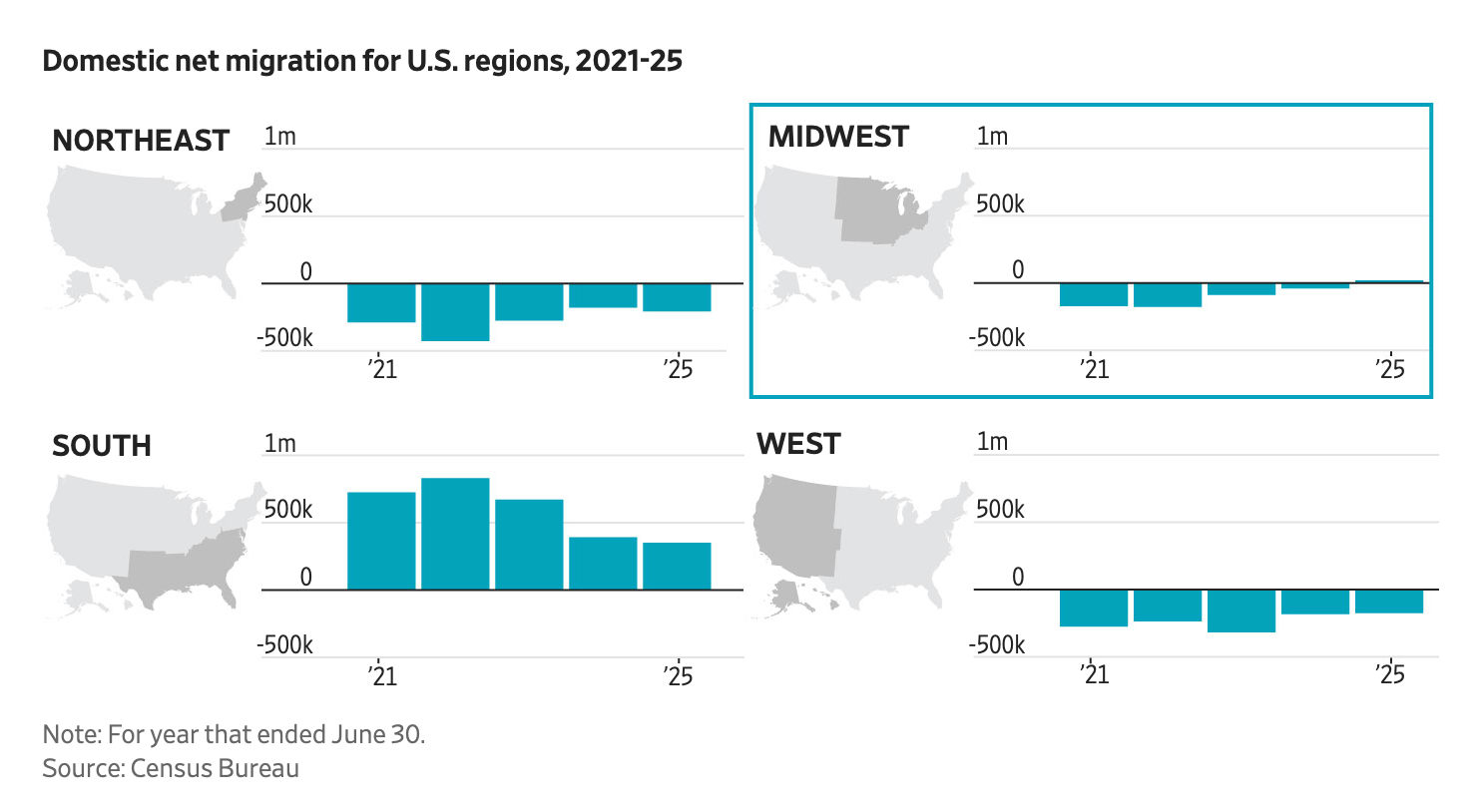
    On the domestic front, one interesting finding is that, for the first time in many years, the Midwest added more domestic migrants than it lost. As expected, the growth region for domestic migration remains the South, though it has slowed.

    Also interesting is the extent to which San Francisco has rebounded. During the depths of the pandemic, things appeared dire for the city. Nobody was more untethered than tech workers, and the feeling was that they’d never return. Nope. The city has grown for the last three years.

    The decline in international migrants is not unique to the US. The same thing is true in Canada. But we (Canada) remain in the business of attracting the smartest and most ambitious people from around the world. I have no clue what’s going on in the US these days — it changes hour by hour — but maybe they’d like to remain in this business as well.


    Cover photo by Austin Neill on Unsplash

    Charts from The Wall Street Journal

  • The hidden cost of regulatory fat

    March 31, 2026 · View original


    In the olden days here in Toronto, approved development land used to sell for a premium compared to unapproved land. This was true because approved land meant you could start construction much sooner. And since time has value, this was worth something.

    Today, this is far less valuable to developers (if at all) because, in most cases, the market does not support new construction. So, the land may be approved, but what does one do with it?

    Rather than speed, I would say that the most valuable feature right now is the ability to be patient. Developers need to be able to stay solvent long enough for the market to return. But this does not mean that there isn’t a cost to permitting, approvals, and lengthy pre-construction periods.

    Here is a recent paper (that I discovered via Thesis Driven) by economists Evan Soltas (Princeton) and Jonathan Gruber (MIT) that asks: “How Costly Is Permitting in Housing Development?” What they discovered in the Los Angeles market is the following:

    – Developers have been willing to pay roughly 50% more for pre-approved development land (averaging about $48 per square foot). – The permitting process in Los Angeles accounts for about 40% of the time required to develop and construct a new housing project. – Approximately one-third of the gap between home prices and construction costs can be explained by permitting costs and delays.

    This last point is an interesting one to focus on because it tells you how much regulatory fat there is in the system. In a perfectly free and efficient market, the market price of a home should, in theory, be roughly equal to the cost of the land, construction costs, and the developer’s margin.

    When you have a massive gap between the cost of the physical materials and labour required to build the home and the price of the home, it means that there are other costs being shouldered. The paper refers to some of these as “pure wait” (time) and “capitalized hassle” (dealing with bullshit).

    This is an important way to think about the efficiency of housing markets, because minimizing the gap is a clear way to make housing more affordable.


    Cover photo by Josh Miller on Unsplash

  • On the future of cities

    March 30, 2026 · View original


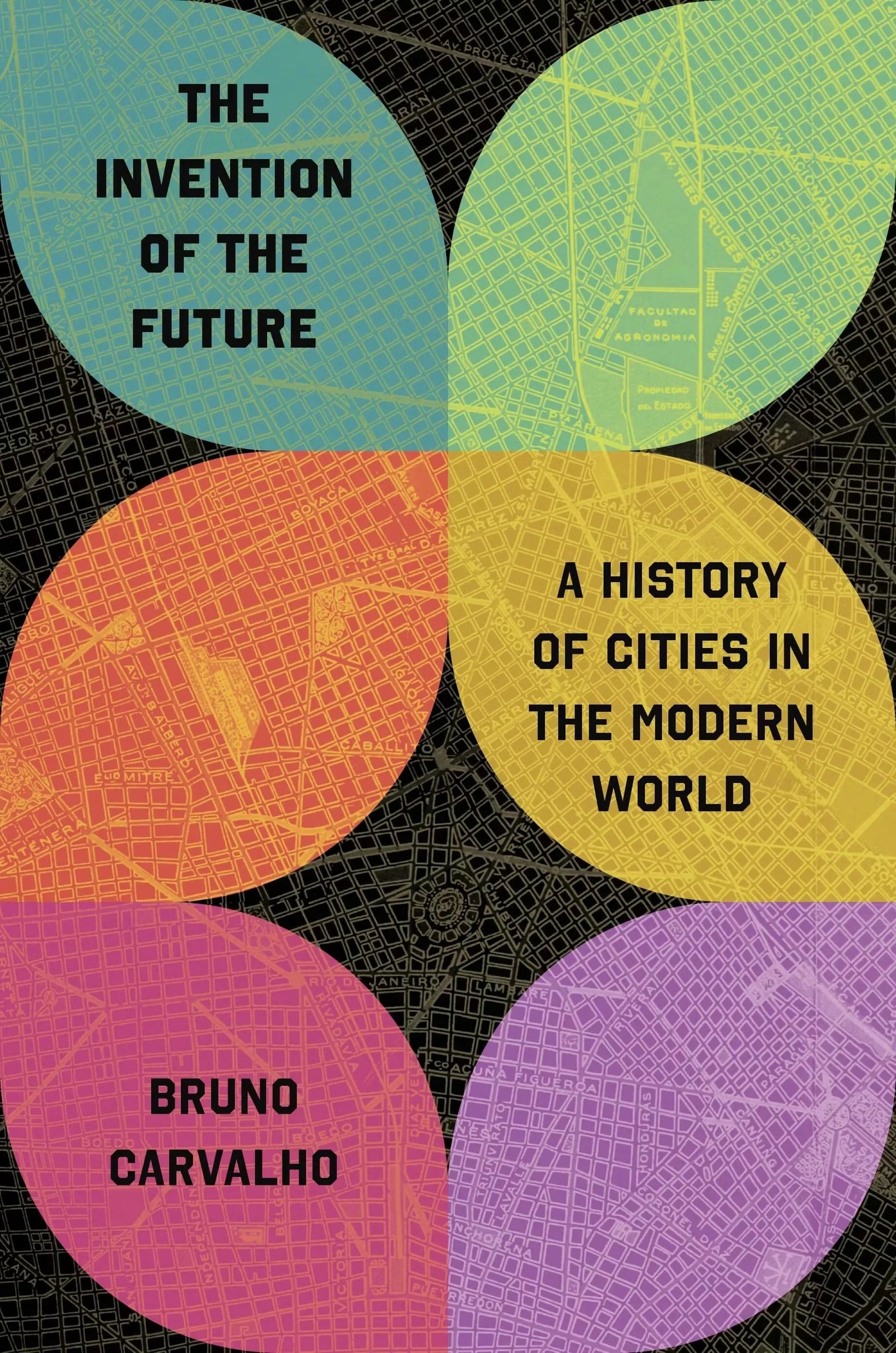
    Bruno Carvalho has just published a new book that is right in the wheelhouse of this blog. It’s called The Invention of the Future: A History of Cities in the Modern World.

    The book starts in the mid-18th century with cities like Lisbon, Paris, and London. However, more than being just a history of cities, it is (from what I’ve read) the story of how city builders throughout history have tried to predict and create the future, only to often get it wrong.

    In the words of Carvalho (via CityLab): “The constant of urbanization is change, so we have to always imagine our solutions as being contingent.”

    The same is, of course, true today. For example, building tunnels for Tesla cars may seem like a clever and futuristic solution to urban traffic congestion, except that it’s hard to imagine it actually working (also via CityLab):

    > “One of the values of history is to give us a sharper sense of what’s new in the present. Many people imagine solutions that to them represent the great rupture, but that’s not always the case. The tunnels are a good example; they bring together the problems of cars having very low carrying capacity and subways being very hard to build. That doesn’t strike me as a very futuristic approach to mobility, but rather one that just hasn’t learned enough about the past.”

    I now have Carvalho’s book on my reading list, and I thought I would share it here in case some of you would like to do the same.


    Cover photo by Michiel Annaert on Unsplash

  • Sidewalks as a bug

    March 29, 2026 · View original


    I’m a big fan of walking. I like it for the health benefits, the freedom to explore, and the simple luxury of being able to walk to things. In fact, it’s an important housing prerequisite for me: can I walk to stuff?

    But as we often talk about on this blog, the ability to do this depends largely on the prevailing land use patterns, the overall built environment, and, to a great extent, when a neighborhood was built.

    It is commonly argued that the “best” neighborhoods were all built before the widespread use of the car, and there’s a lot of truth to this. (This makes me wonder if self-driving cars will eventually create a similar “pre and post” divide in our built environment.)

    However, not everyone sees it this way. I just read an article about how residents in the suburbs of Minneapolis-St. Paul are vehemently opposed to the construction of sidewalks in areas where there are currently none.

    Perhaps I haven’t been paying enough attention to the suburban sidewalk wars, but this is the first time I’ve seen this level of opposition. Some people view sidewalks as a feature, and some people view them as a bug. Clearly, there are residents in the Twin Cities who view them as the latter.

    Why? Because they interrupt large front lawns:

    > “I chose my home with the nice big lawn out front,” Edina resident Melissa Cohen told the mayor and City Council at a Dec. 8 hearing about proposed sidewalks for streets in Prospect Knolls. “We are in a quiet neighborhood. This does not require a sidewalk.”

    And for some people, they’re unsightly:

    > In 2007, a Golden Valley resident named Charles Upham told the Star Tribune “sidewalk is a four-letter word. U-G-L-Y.”

    You could call it a kind of rural ideology, where sidewalks symbolize the opposite: the city. I suppose there are also practical considerations, like the fact that snow removal on sidewalks often becomes the homeowner’s responsibility.

    But it appears to me that a large part of this opposition stems from wanting to maintain some semblance of pastoral exclusivity, even if we’re talking about higher-density suburbs and the opposition is masquerading as an environmental preservationist movement.

    On the flip side, there are practical benefits to sidewalks. They give you a safe place to walk. So, what I wonder is to what extent are the people opposing these sidewalks also anti-walkers? Or is it that the traffic flows in these neighborhoods are so low that people simply feel comfortable walking on the street, like here?

    Not surprisingly, there’s lots of data to support that people who live in neighborhoods with sidewalks are significantly more likely to walk and be active. If you want people to walk more, build sidewalks. If you want people to ride bikes more, build bicycle lanes. And if you want people to drive more, build roads and highways.

    This is how this behavioral stuff works. We’re not completely independent actors; we’re products of our environment.


    Cover photo from The Minnesota Star Tribune