
This is a longstanding joke / criticism among nerds:

Namely, it is the fact that the charging port for Apple’s Magic Mouse is on its bottom, meaning, when it’s being charged, you can’t use it. This would be annoying if you ignored the low battery warnings and let it die in the middle of working on something critically important. And so lots of people think it’s a ridiculous design. But is it? Here’s an excerpt from a recent post by John Gruber of Daring Fireball:
Yes, with the charging port on the mouse’s belly, you cannot use it while it charges. There are obvious downsides to that. But those positing the Magic Mouse as absurd act as though Apple doesn’t know this. Of course Apple knows this. Apple obviously just sees this as a trade-off worth making. Apple wants the mouse to be visually symmetric, and they want the top surface to slope all the way down to the desk or table top it rests upon. You can’t achieve that with an exposed port.
This is an argument that feels right. Apple is not the kind of company that makes arbitrary design decisions. And the deliberate decision they have made is that a more perfect design is more important than solving for the few instances where a user was negligent and forgot to charge their mouse. Gruber goes on to say, the “charging port placement is an opinionated design, not an absurd design.”
But this then raises another question: Is opinionated design the right approach?
For well over a century, one of the maxims of good design has been that form should follow function. In other words, the shape and design of an object should relate to its intended use. And so, in this instance, if “function” involves using the mouse while it’s being charged then maybe, by this criteria, it isn’t a good design. Then again, it is a wireless mouse. Maybe Apple doesn’t want you to use it while it’s charging.
Let’s consider another design object that you touch with your hand: Walter Gropius’ famous door handle.
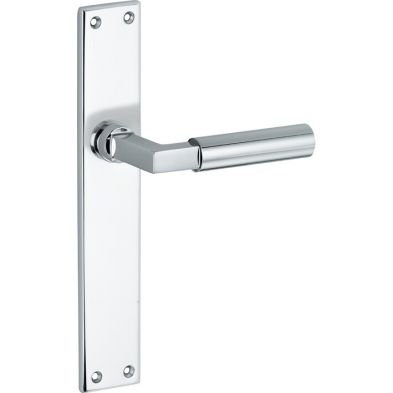
Originally designed in 1922, the simple design consisted of a square bar and a cylinder. And its job was to communicate to you that, in order to use it, you should grab the cylindrical part, and not anywhere else. So on this level, the design was responding to its intended use, to our hands. Grab here. But is this truly an example of form following function? It’s debatable.
Architect and professor Witold Rybczynski, who I would say generally isn’t a fan of modernism, has argued that it’s not. His critique of the overall Bauhaus movement — of which Gropius was the founder — was that it was actually a design school dedicated to “form follows predetermined aesthetics rather than form follows function.”
In some ways, he’s right. You can tell when something came out of the Bauhaus, just as you can tell when something is from Apple. There’s a particular aesthetic and stubbornness to maintaining it. That’s why the Magic Mouse can’t be charged while in use and why Apple, equally famously, clung to the simplicity of a single-button mouse. Two just didn’t look as nice.
But I see this as an honorable quality. Having an opinion is better than not having one. And there are lots of objects out there without one.
3 responses to “Opinionated design”
Excellent observation on design and function and the nuance of aesthetics and what matters is the consideration of good design because so much in real estate development is surprisingly without such consideration in the name of making money.
Some objects are better when they don’t express an opinion. Toasters and toothbrushes, to name but two examples. That said, I typically vote for the We Must Suffer For Beauty party. Waterman Edson fountain pens, to name but one example.
Kudos to Brandon for also making me forget about the election tonight, if only for a few minutes!
Thank you for giving me an opportunity to vent my frustration.
Apple made the design worse. The 1st gen of the apple mouse ran on AA batteries. Mouse dies, swap batteries. It was easy and not much of an inconvenience.
The 2nd gen has an internal, non-swappable battery, so not only when it dies, you have to wait to use it, but the battery after a couple years starts degrading and it has to be charged every few weeks instead of every few months.
I love apple in general, but they have made some boneheaded decisions in the past that make they products objectively worse in the name of aesthetics.
They get a lot of things right but some things completely wrong.
Now I have to dish out another $100 for a mouse, because they didn’t think of the user.