Daily insights for city builders, delivered every morning at 6 AM ET. I’m Brandon Donnelly — a Toronto-based real estate developer and founder of Globizen. I’ve been writing here since 2013.

Tag: bauhaus

  • Opinionated design

    This is a longstanding joke / criticism among nerds:

    Namely, it is the fact that the charging port for Apple’s Magic Mouse is on its bottom, meaning, when it’s being charged, you can’t use it. This would be annoying if you ignored the low battery warnings and let it die in the middle of working on something critically important. And so lots of people think it’s a ridiculous design. But is it? Here’s an excerpt from a recent post by John Gruber of Daring Fireball:

    Yes, with the charging port on the mouse’s belly, you cannot use it while it charges. There are obvious downsides to that. But those positing the Magic Mouse as absurd act as though Apple doesn’t know this. Of course Apple knows this. Apple obviously just sees this as a trade-off worth making. Apple wants the mouse to be visually symmetric, and they want the top surface to slope all the way down to the desk or table top it rests upon. You can’t achieve that with an exposed port.

    This is an argument that feels right. Apple is not the kind of company that makes arbitrary design decisions. And the deliberate decision they have made is that a more perfect design is more important than solving for the few instances where a user was negligent and forgot to charge their mouse. Gruber goes on to say, the “charging port placement is an opinionated design, not an absurd design.”

    But this then raises another question: Is opinionated design the right approach?

    For well over a century, one of the maxims of good design has been that form should follow function. In other words, the shape and design of an object should relate to its intended use. And so, in this instance, if “function” involves using the mouse while it’s being charged then maybe, by this criteria, it isn’t a good design. Then again, it is a wireless mouse. Maybe Apple doesn’t want you to use it while it’s charging.

    Let’s consider another design object that you touch with your hand: Walter Gropius’ famous door handle.
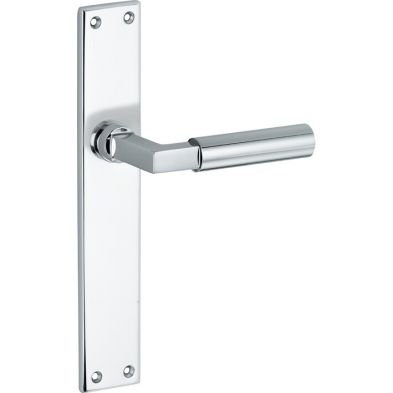
    Originally designed in 1922, the simple design consisted of a square bar and a cylinder. And its job was to communicate to you that, in order to use it, you should grab the cylindrical part, and not anywhere else. So on this level, the design was responding to its intended use, to our hands. Grab here. But is this truly an example of form following function? It’s debatable.

    Architect and professor Witold Rybczynski, who I would say generally isn’t a fan of modernism, has argued that it’s not. His critique of the overall Bauhaus movement — of which Gropius was the founder — was that it was actually a design school dedicated to “form follows predetermined aesthetics rather than form follows function.”

    In some ways, he’s right. You can tell when something came out of the Bauhaus, just as you can tell when something is from Apple. There’s a particular aesthetic and stubbornness to maintaining it. That’s why the Magic Mouse can’t be charged while in use and why Apple, equally famously, clung to the simplicity of a single-button mouse. Two just didn’t look as nice.

    But I see this as an honorable quality. Having an opinion is better than not having one. And there are lots of objects out there without one.

  • Don’t touch that door handle

    Door handles are a funny thing these days. They are one of if not our most common point of contact with the built environment, and yet in the best of times they go largely unnoticed. And in today’s world they have flipped to become a source of anxiety. Do I really need to touch this door handle or can I maybe use my foot or elbow? Some have responded by wearing gloves. But sometimes door handles offer up clues — such as a worn finish — as to where they are most commonly touched. But then one is faced with yet another difficult dilemma: do you handle the pristine part or remain committed to the worn out part since everybody else is probably thinking what you’re thinking and searching for the unadulterated section of the handle? Who knew that opening a simple door could elicit such complexity.

    But we shouldn’t be too critical of the mighty door handle. Edwin Heathcote recently published this short history of door handles and it’s a good reminder of the design intent that has gone into them over the years and how they also came to embody our broader views about architecture. One of my favorites, of course, is the original Bauhaus door handle designed by Walter Gropius and Adolf Meyer c. 1922. (Pictured above, it’s currently housed on the fifth floor of the MoMA in New York.) Its lever starts out square and machine-like, but then transforms into a cylinder, exactly where you’re supposed to grip it with your hand. It is ultra minimal, but it tells you exactly what to do. It also helps us with our dilemma. Worn or not worn, the cylinder is obviously where it should be handled.

    Image: MoMA

  • Form follows what?

    Late 19th century and early 20th century architecture and industrial design is known for the axiom, “form follows function.” I think of the German Bauhaus School when I hear this, but supposedly it can be attributed to American architect Louis Sullivan. Either way, it was meant to represent a functionalist approach to architecture and design, which was, as is often the case, a reaction to what had come before it.

    It was Modernist architects eschewing decorative elements or what was referred to at the time as “ornament.” If it didn’t serve a functional purpose, it was to be removed. Nothing was to be superfluous. And similarly, if the function of something didn’t change, there was no need to change its form.

    Of course, if it was truly all about function, one could argue that there should have been a great deal of variation in the resulting forms. But instead, the designs that emerged out of schools, such as the Bauhaus, are some of the most recognizable in the world. That is true even to this day.

    Which is why I think this is a great line from Witold Rybczynski (taken from a recent post about the book iBauhaus): “It is also a quintessentially Bauhaus example of form follows predetermined aesthetics rather than form follows function.” Ouch. The difference here is that Witold obviously isn’t a fan of the Bauhaus or of Modernism, whereas this period of time is what inspired me the most as a student of architecture.

    Photo by Marina Reich on Unsplash

  • Sidewalk Labs, Amazon HQ2, and the Milanese Leonardo

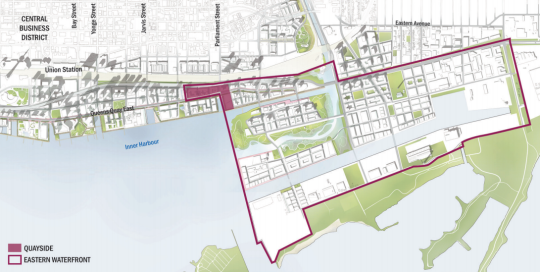
    Earlier this week the WSJ announced that Sidewalk Labs (Alphabet Inc.’s urban innovation organization) is close to a deal with Waterfront Toronto to develop a new 12-acre section of the eastern waterfront. Sidewalk Labs would be their innovation and funding partner. It’s not final yet and it’s still subject to board approval, but the sentiment is that it should go.

    There aren’t a lot of details about the project – other than the fact that it will be fairly big, up to 3 million square feet – but the overall intent is digital city building. It’s about imagining what a city could be if you built it today “from the internet up.” More info about Sidewalk Labs, here.

    I thought of this project as I read Seth Godin’s daily blog post this morning in bed. Here are two snippets from that post:

    When a new technology arrives, it’s often the nerds and the neophiliacs who embrace it. People who see themselves as busy and important often dismiss the new medium or tool as a bit of a gimmick and then “go back to work.”

    There’s never a guarantee that the next technology is going to be the one that moves to the center of the conversation. But it’s certain that a new technology will. It always has.

    Openness matters.

    I’m anxious to learn more details about the project, but this is obviously very exciting. It also creates momentum and strengthens the case for Amazon HQ2 in Toronto. The above 12-acre Quayside area is only the tip of the iceberg. There’s the rest of the eastern waterfront and also East Harbour.

    image

    Some people have been critical of this city’s push for Amazon HQ2. Anthony Lacavera, chairman of Globalive Capital, called this “the biggest Trojan Horse of all time.” His view is that Amazon would simply use HQ2 Toronto as a mechanism for cheaper labor (USD > CAD) and to siphon the best and brightest down to the US.

    Now, I agree that it would be more impactful to create the next Amazon then to simply lure in its second headquarters. Big entrepreneurial successes are what fuel the darwinian evolution of startup hubs. The founders, early employees and investors make boatloads of money and then they start reinvesting that back into the ecosystem by, among other things, backing the next generation of entrepreneurs.

    But does this necessarily mean that an Amazon HQ2 would be detrimental to Toronto by acting as a conduit to the US? Will it discourage entrepreneurship? Should we eschew all US firms out of fear that this may in fact happen? I don’t think so.

    There’s tremendous value in concentrating smart people in one place – ideas build on ideas. And I don’t think technology has been able to disrupt that, at least not yet. One example of this is a theory that Paul Graham calls the Milanese Leonardo:

    You can see how powerful cities are from something I wrote about earlier: the case of the Milanese Leonardo. Practically every fifteenth century Italian painter you’ve heard of was from Florence, even though Milan was just as big. People in Florence weren’t genetically different, so you have to assume there was someone born in Milan with as much natural ability as Leonardo. What happened to him?

    And his reasoning is as follows:

    Nothing is more powerful than a community of talented people working on related problems. Genes count for little by comparison: being a genetic Leonardo was not enough to compensate for having been born near Milan instead of Florence. Today we move around more, but great work still comes disproportionately from a few hotspots: the Bauhaus, the Manhattan Project, the New Yorker, Lockheed’s Skunk Works, Xerox Parc.

    Xerox Parc (Palo Alto Research Company) is a great example of the kind of positive externalities that can happen as a result of smart people being in close proximity to each other while they wrestle with similar problems. It has been well documented that it was Steve Jobs’ visit to Xerox Parc that inspired many of Apple’s early innovations.

    So my view: let’s increase Toronto’s urban metabolism and make it the Florence of 1450.

    Ed Clark – who is leading the charge for HQ2 in Toronto – has been clear that large taxpayer subsidies are not on the table for Amazon. That would not be fair to the existing companies in this city. If that is what it is going to take, then we are not going to win. We will win based on our city, our human capital, and our openness to the rest of the world. That feels right.

    Welcome Sidewalk Labs. Welcome Amazon. This city is open for business and to new ideas. 

    Image: Waterfront Toronto

  • For Sale: Breuer House II

    image

    Breuer House II is currently on the market in New Canaan, Connecticut for $5.85 million. The house has 4 bedrooms, 4 full bathrooms, and 2 half bathrooms. It is 4,777 square feet and sits on 3.11 acres of land.

    Originally built in 1951, the house was designed by the Hungarian-born, Bauhaus-trained, and Harvard-teaching modernist architect, Marcel Breuer. It served as their family home until 1975, after which time it was sold and almost demolished. Thankfully it was instead purchased, restored, and expanded (by another Harvard architect).

    Marcel Breuer was a member of what is known as the Harvard Five. They were a group of five architects who either taught at or went to the Harvard Graduate School of Design and who had moved out to New Canaan to build experimental modern homes starting in the 1940s. Homes like Philip Johnson’s Glass House.

    Seeing the Breuer House II listed for sale this morning reminded me of how cool it must have been at the time for a bunch of radical architects to move out to a sleepy New England town and start building modernist boxes. I’m sure it pissed off more than a few people.

    Does anyone know of anything similar to this happening today? 🙂

    Image from Modern Homes Survey