Daily insights for city builders, delivered every morning at 6 AM ET. I’m Brandon Donnelly — a Toronto-based real estate developer and founder of Globizen. I’ve been writing here since 2013.

Month: July 2025

  • The tallest mass timber residential structure in Toronto

    July 11, 2025 · View original


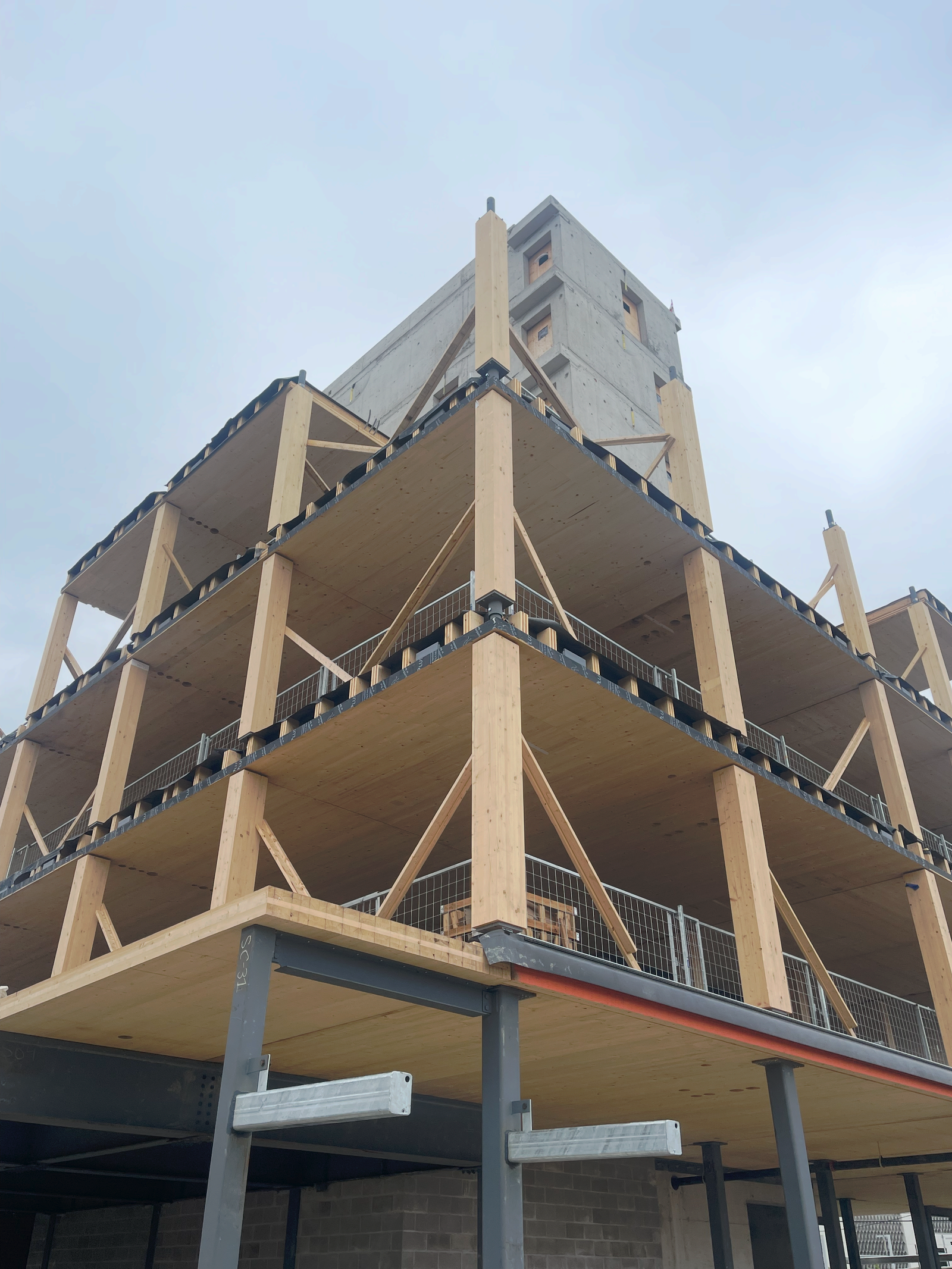
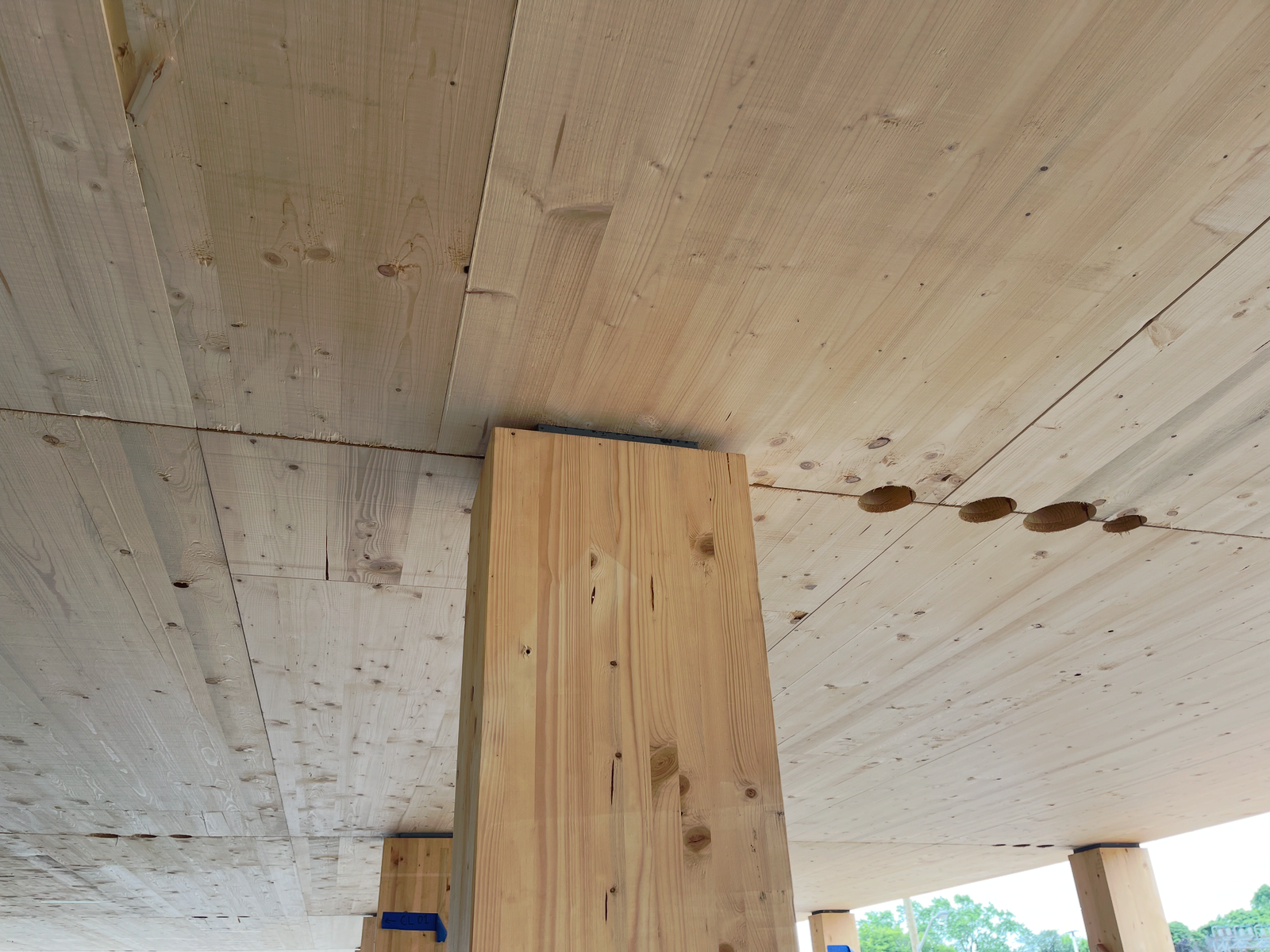
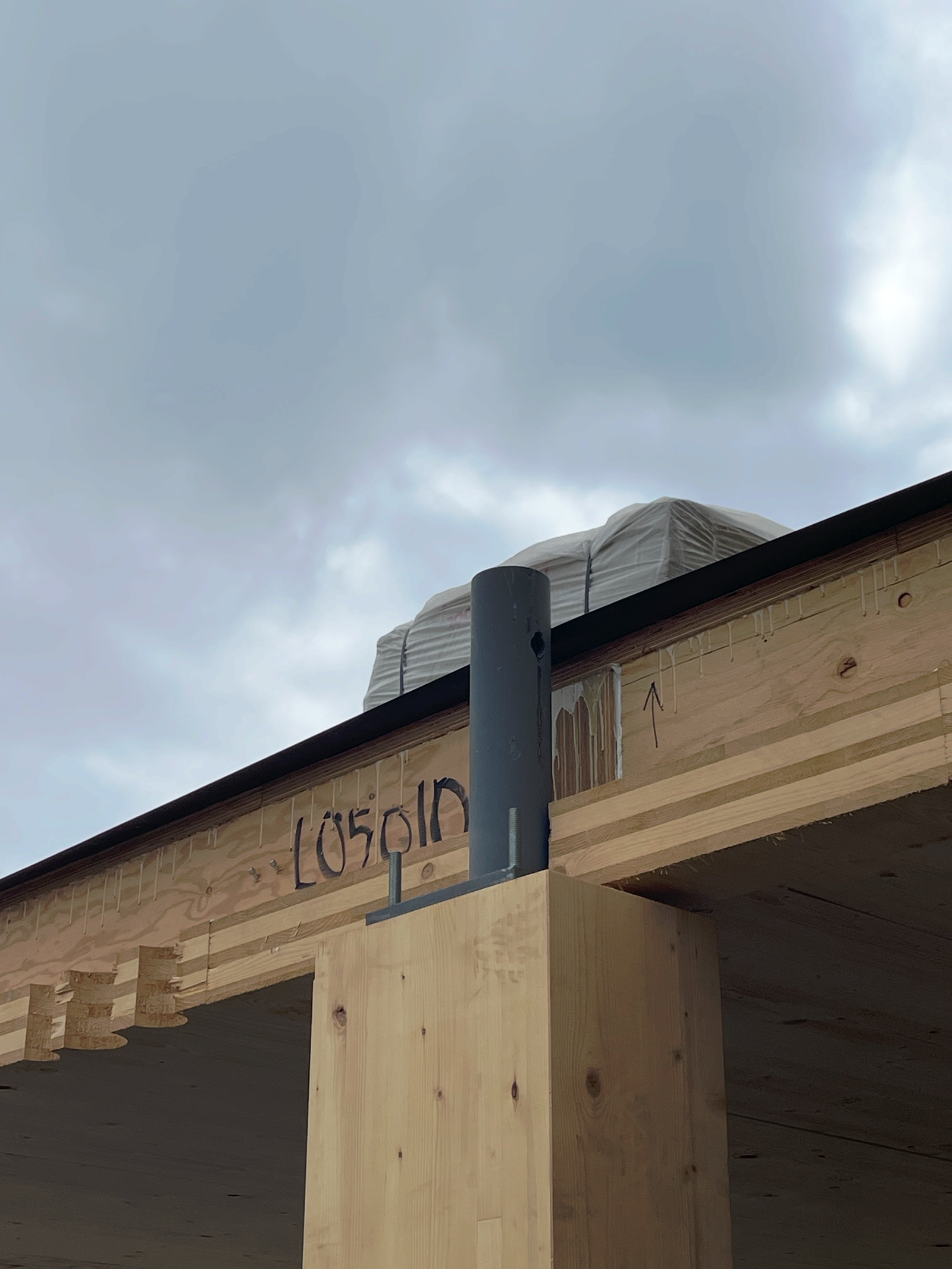
    This week, our team toured a new 9-storey mass timber residential building going up at 230 Royal York Road in Toronto. The developers are Windmill Developments and Leader Lane Developments. The construction manager is Oben Build. The mass timber company is Vancouver-based Intelligent City. And when it’s completed, it is expected to be the tallest residential building in Toronto. But I suspect it won’t hold this title for very long. Building out of wood is destined to become a major part of how we build in this city and country. So here are a bunch of photos from the site walk. I tried to include as many detail shots as possible so that you can all get a sense of how it pieces together.

  • Episode 88 of the Toronto Under Construction podcast

    July 10, 2025 · View original


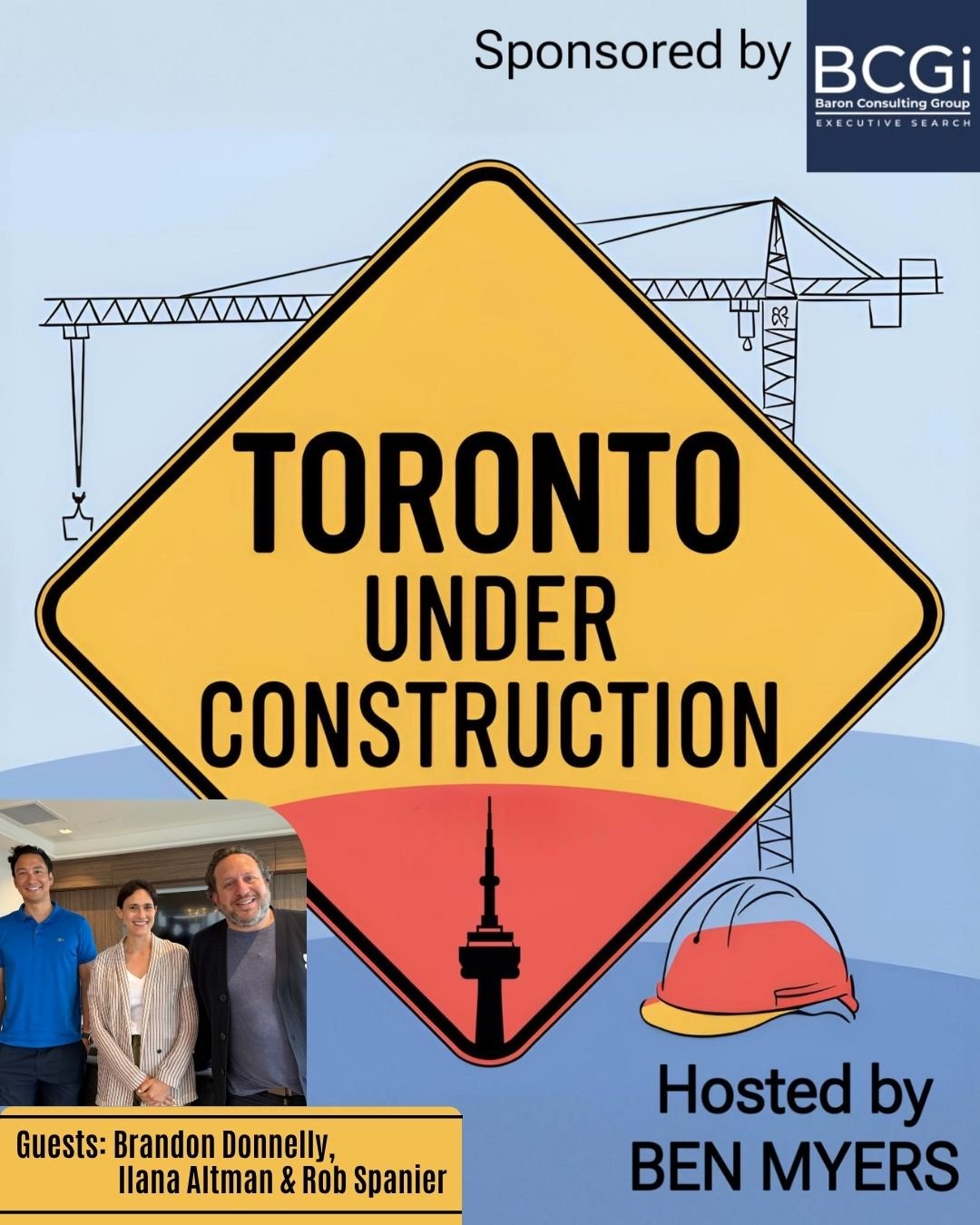
    I was recently on Ben Myers’ Toronto Under Construction podcast with Ilana Altman (The Bentway) and Rob Spanier (Spanier Group). It was generally a discussion about what makes for great public spaces, how Toronto is evolving its public realm under infrastructure like the Gardiner Expressway, and what it means to design cities with people at the forefront. If you’d like to have a listen, click here. I hope you enjoy it.

  • Generalist vs. specialist developer

    July 9, 2025 · View original


    A few weeks ago I accidentally sparked, via this tweet, an entertaining debate about what it takes to be called a developer. This led to my post “Do you even develop, bro?“, where I explained my view on when it might be appropriate. (Spoiler: It’s a broad term.) But my friend Brendan Whitsitt of Imprint Development has just published an even better post on the topic. It’s called “Developer vs. Dirt-Flipper” and you should give it a read.

    In it, he says this:

    > So if we tried to sketch a Platonic ideal for what a developer is, we might say that the ideal developer would have a solid understanding of, and experience in, all phases of development, including construction. This person will have a holistic perspective that attempts to optimize across all phases of a project rather than just one part.

    This doesn’t relate directly to the debate of who should be called a developer, but I think it’s an insightful comment. Developers have very specific skillsets, but they also tend to be generalists. Our job is to stitch together lots of different disciplines and elements to ultimately produce a space that people can live, work, play, and/or do other things inside. The more you know about the entire process, the better you can be at any one part.

    I even think this transcends just the development process. The more you know and understand about cities, market trends, human behavior and countless other things, the more thoughtful you can be about formulating new developments. It’s never ending and it makes for an interesting line of work. But I do think this raises the question of: When is it valuable to specialize?

    For example, some development companies like to follow a division of labor model. One team focuses on acquiring new sites, one team focuses on approvals/entitlements, and so on. Once a particular phase is completed, the project gets passed on to the next group. And in theory, these specialist teams should be able to go deeper and harder than a team forced to spread their time.

    But on the flip side, it means that the person trying to buy sites might not be thinking about what a pain in the ass it will be to build on. They may just be trying to get deals done. Let the other team worry about building the thing. So personally, I’ve always liked the accountability that comes with taking a project from beginning to end — it’s never somebody else’s problem. It’s your problem.

    Of course, even if you don’t do this, you’re still a developer.

    Cover photo by Max Langelott on Unsplash

  • What are Uber and Travis up to?

    July 8, 2025 · View original


    Uber’s stock has done exceptionally well this year. At the time of writing this post, it’s up over 60% year-to-date. But at the same time, it remains unclear to me what the relationship will be between Uber and this brave new world of autonomous vehicles.

    I mean, right now, if you’re in Phoenix, I’m told you can order a Waymo car through Uber’s app. But if you’re in San Francisco, Waymo customers must use the Waymo app. It’s all bit mirky right now, but Uber is just trying to put “as many cars on Uber’s network as possible.”

    There’s also an argument that, for the foreseeable future, ride-hailing networks are going to need some mixture of both human and robot drivers. I get this argument. But beyond the short term, I think there will be strong incentives to completely eliminate human drivers.

    Last month, the New York Times announced that Uber is in talks with Travis Kalanick, the company’s co-founder who got pushed out 8 years ago, to help him buy autonomous vehicle company Pony.ai.

    It’s a bit of an interesting story. Pony is a Chinese company, but because the US doesn’t want Chinese tech to become too deeply embedded in the American economy — and has become increasingly hostile to such companies — it has been readying a clean US subsidiary of the business for sale.

    This is what Travis allegedly wants to buy with the help of Uber. And it’s particularly noteworthy because it could be an indication that Uber is worried about Waymo and wants to have its own AV unit (which it had previously, but then sold off in an effort to quickly reach profitability).

    My sense is that Uber needs to do something along these lines. The risk of not having autonomous vehicle capabilities is simply too great.

    Cover photo by Viktor Avdeev on Unsplash

  • Attention Paris city builders

    July 7, 2025 · View original


    Neat B and I just booked some end-of-the-summer travel. We’re going to bounce around to a few different places, but the plan is to end up in Paris and then spend a week there working remotely — you know, from the Paris office.

    And by the Paris office, I mean a generous 323 sf aparthotel with a small kitchen, workspace, and shared laundry facility that we rented in the 10th. I started by searching diligently for an Airbnb; but I couldn’t find anything we liked, so I ended booking something through Edgar Suites.

    As part of this trip, I’m aiming to meet as many industry people as possible and hopefully tour some development projects. One of my goals is to better understand how Paris consistently pulls off beautiful infill housing projects like this.

    So if you’re a developer, architect, investor, or other kind of city builder based in Paris, please drop me a line at brandon.donnelly@globizen.com. I’d love to connect and learn more about your city and market, and about what you’re up to.

    Coffee and yummy pastries on me, of course.

  • Toronto needs a summer bathing culture

    July 6, 2025 · View original


    > Tweet: Man, Toronto in the summer is something else. I love this city.

    While this is true, I do I have some suggestions. At the top of the list is this: Toronto needs to make better recreational use of Lake Ontario and its waterways. More specifically, it needs a summer bathing culture.
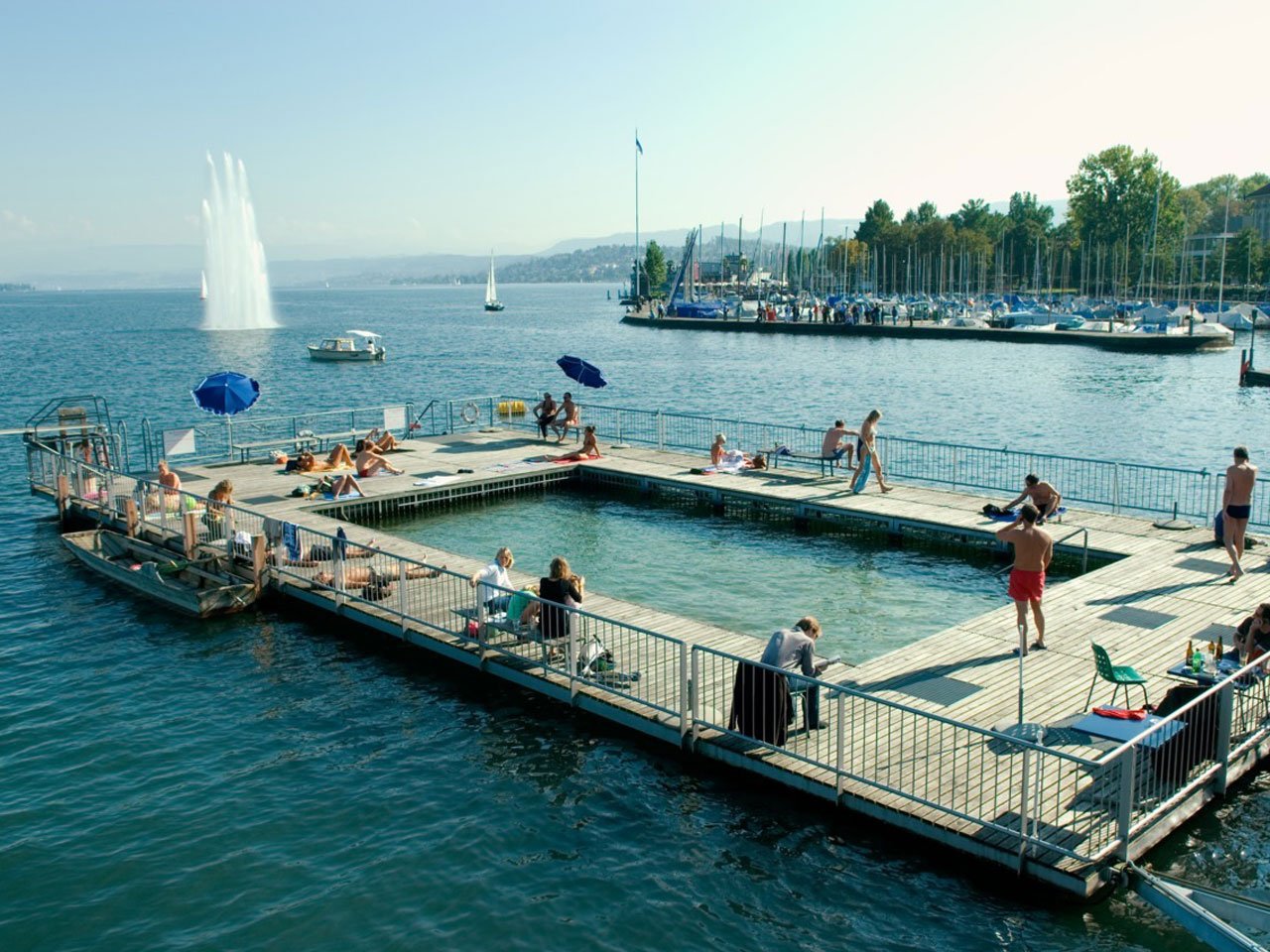
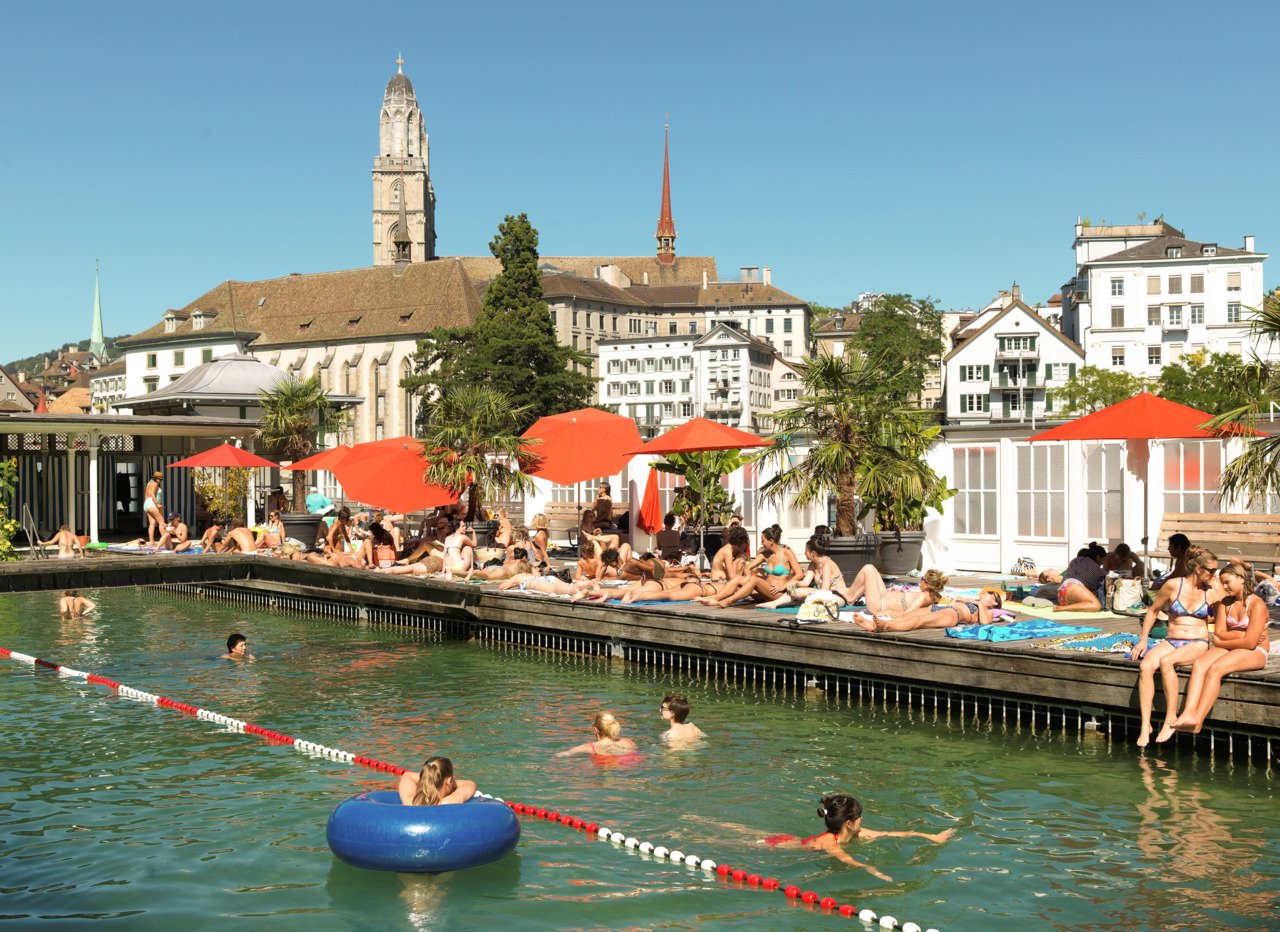
    One of the gold standards for this is easily Zürich. The city has a long history of urban swimming right in Lake Zürich and the Limmat River. And because the city has some of the cleanest urban water in the world, all that is really needed are platforms leading straight into water. But Zürich also has a rich history of beautiful public bathhouses (called Badis). These facilities accommodate the obvious daytime functions, but they also transform at night into bars, clubs, and event venues. It’s for these reasons that their seasonal opening in May is often viewed as the official opening of summer in the city. This is what Toronto needs. So how do we make that happen?

    The obvious first step is that we need clean water, which means we need to eliminate the poop. This remains a problem and here’s why (taken from this 2014 document):

    > About 30% of the land area, which is really in the older area of the city [of Toronto], is serviced by combined sewers. That’s a single pipe that carries both raw sewage and stormwater runoff when it rains. Inherent in the way these systems were configured back in the late 1800s and up to about 1950 is that during heavy rains there’s a spillage of combined sewer overflow, as we call it. It’s a mixture of raw sewage and stormwater runoff. We have about 80 outfalls across the city, 34 of which discharge to Lake Ontario.

    The good news is that we’re working on it. In 2018, Toronto started on the largest stormwater management program in the city’s history with the promise that it will virtually eliminate the release of combined sewer outflows into the Lower Don River, Taylor-Massey Creek and Toronto’s Inner Harbour. I don’t know enough, technically, to say whether this will get us all the way there, but I do know that it is absolutely crucial to making Toronto more like Zürich. Zürich also some combined sewers, but they use large retention tanks to hold excess wastewater and prevent it from overflowing into Lake Zürich and the Limmat River.
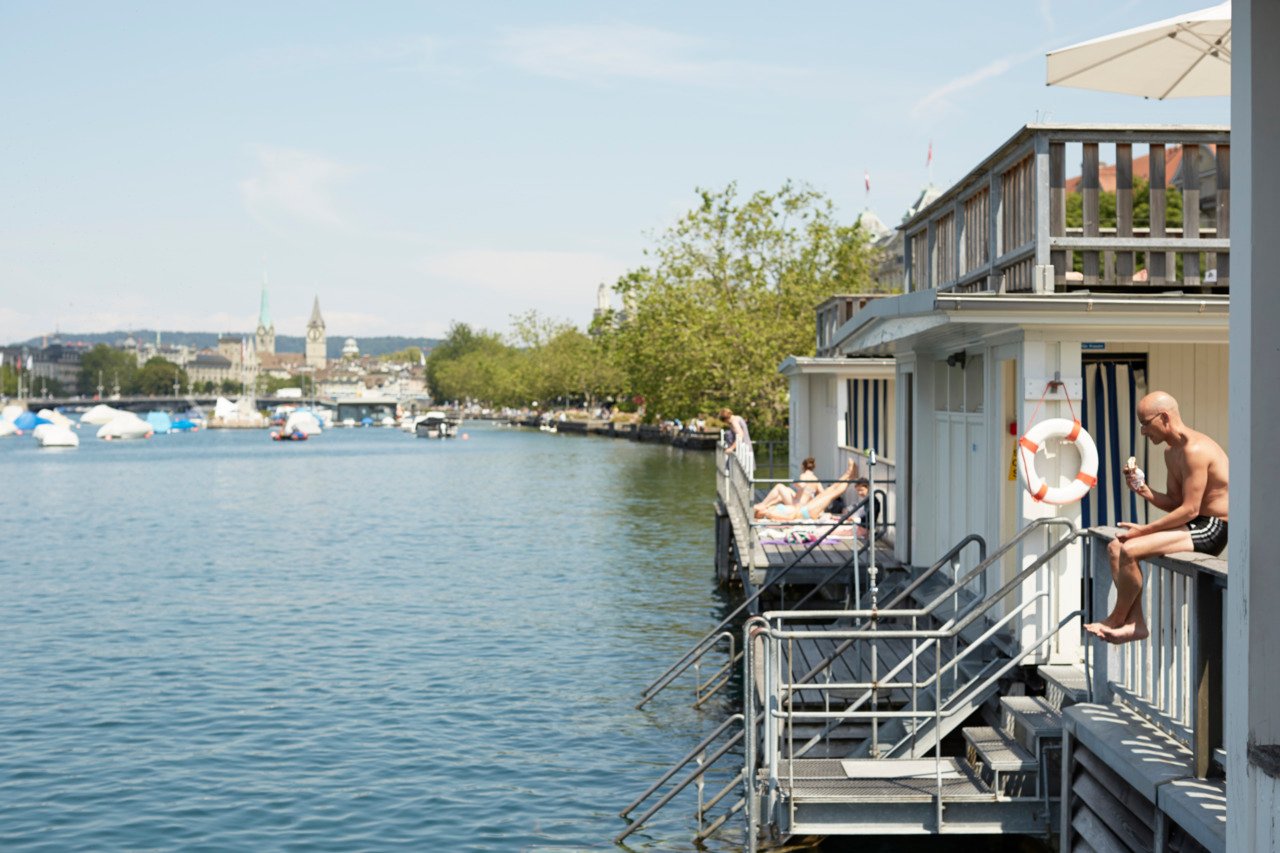
    The second step is that we need to invest in incredible bathhouse facilities. From what I can tell, this is also a work in progress. As part of the preliminary design for the Parliament Slip (in the city’s central waterfront), there is a proposal for a floating barge and two outdoor pools. There may even be a snack bar! (Let’s hope it’s a lot more than that.) This won’t be the same experience as swimming directly in Lake Zürich, but it will still be awesome and Toronto should make it happen.
    But there are other opportunities. One that often comes to mind for me is Sunnyside Bathing Pavilion. Originally constructed in 1922 and renovated in 1980, today it mostly feels abandoned, other than the mediocre cafe facing the boardwalk (and yes, the adjacent pool). It’s severely underutilized and under kept. What we ought to do is host an international design competition and challenge the world to rethink it and its relationship to the lake, just as we did for our central waterfront. And of course, we should do this in parallel with making our bodies of water some of the cleanest in the world.

    Toronto needs a summer bathing culture.

    Photos from Zürich Tourism

  • Toward more family-friendly housing on Toronto’s major streets

    July 5, 2025 · View original


    Yesterday afternoon, our team had a productive in-person meeting with senior planning staff at the City of Toronto. The purpose of the meeting was to talk about the challenges associated with delivering infill missing middle housing and to brainstorm the possible solutions.

    Some of the key topics that we discussed: Type-G loading / garbage requirements, amenity space requirements, right-sizing the Site Plan Control process, single-stair exiting, the cost of connecting to Toronto Hydro, the challenges with assembling small lots, specifics of the Major Street Study, and a bunch of other things. So many of the things that we regularly talk about on this blog.

    We also walked everyone through the site we had under contract but eventually dropped because the margins were just too thin. This included opening up our pro forma, projecting it onto the screen, and going through it line-by-line. We are happy to do this because we think this transparency helps everyone truly understand the obstacles.

    What’s clear is that we all want to see more family-friendly housing lining our avenues and major streets. And so there’s a real feeling of collaboration during meetings like the one we had yesterday. We’re all at the stage of “what is it going to take? Let’s figure it out!” This can-do attitude makes me feel optimistic that we are going to get there. And once we do, Toronto will be that much better for it.

    It was also nice having an in-person meeting back at City Hall. To be honest, I can’t remember the last time I did that. But it used to be standard operating procedure. We’d all arrive early, huddle in the cafe at the bottom of the building for a pre-meeting, and then look around to see what other teams/projects were also on deck with the city. It made me feel nostalgic — and older.

    Enjoy the weekend, everyone.

  • One of the most iconic and extreme railways in the world

    July 4, 2025 · View original


    YouTube video

    If you’re a regular reader of this blog, you’ll know that I like trains. So when I come across a video titled “This Sahara Railway Is One of the Most Extreme in the World,” there’s a high probably that I’m going to watch it — even if it’s over 6 years old. Now for a second, I thought that I may have already written about this rail line, but AI tells me that I haven’t.

    The Mauritania Railway is one of the most iconic and famous lines in the world. It’s approximately 704 kilometers long and it was built for the sole purpose of transporting iron ore from the Zouérat mines in northern Mauritania to the port city of Nouadhibou on the Atlantic coast. Iron ore represents somewhere around half of Mauritania’s exports.

    This railway runs some of the longest trains in the world — each train can have over 200 cars, which translates into trains that are up to 3 kilometers long. They can also transport up to 17,000 tons of iron ore, making it one of the heaviest trains anywhere in the world.

    But what I find most fascinating about this railway is the informal economy that unintentionally emerged on top of it. Because the trains return from Nouadhibou to Zouérat empty, local fishermen and traders use it to transport product inland to towns along the line. And for many of these towns, this is their lifeline — it’s their only connection to the outside world.

    It’s not a fun trip, nor is it a safe trip. It also takes 20 hours to travel from one end to the other. But it’s importantly free and it provides economic opportunity. It’s an extreme example of the power of rail. Here you have a single railway that likely shoulders at least a quarter of the country’s entire GDP, and that’s without including any of the benefits derived from its informal contributions.

    If you haven’t yet seen the above video, I would encourage you to take the 12 minutes and give it a watch. The visuals are important to see. And there’s a reason it has over 10 million views.

    Cover photo by Andrzej Kryszpiniuk on Unsplash

  • Toronto reneged on its commitment to allow six-unit buildings

    July 3, 2025 · View original


    Alex Bozikovic of the Globe and Mail wrote an excellent piece talking about what I wrote about last week in Old Toronto, and then the rest. Here are some of the zingers:

    > And Mayor Olivia Chow? She barely spoke. She ultimately supported the compromise, but she declined to stand up for a bolder vision. For a mayor elected with a mandate to address housing and equity, that silence was striking. > > Meanwhile, the opposition – led by suburban councillors – offered little beyond incoherent panic. “We are risking suburban alienation,” said Parthi Kandavel of Scarborough Southwest, as though allowing modest apartment buildings might rupture the civic fabric. “A one-size-fits-all approach does not fit the bill.” > > For Mr. Kandavel, as for a thousand politicians before him, one-size-fits-all is fine as long as that “one size” gives the loudest homeowners exactly what they want – and preserves economic segregation by keeping tenants away from where they don’t belong.

    He goes on:

    > In Mr. Kandavel’s ward, at least 52 per cent of residents lived in apartments as of 2021. Nearly half are renters. To speak as if tenants are invaders is to insult the very people he represents. > > If the federal government decides to withhold that $60-million, it would be entirely justified. A city that won’t allow a sixplex – a building the size of a large house – is not serious about housing, about urbanism, or about its own future.

    Cover photo by Julian Gentile on Unsplash

  • Happy (belated) Canada Day

    July 2, 2025 · View original


    I hope all of you had a great longish Canada Day weekend. I say longish, because maybe you took off Monday, or maybe you didn’t. Either way, yesterday was Canada Day. I love Canada Day. Every year I take out my giant flag and bring it with me wherever possible in celebration of this place.

    This past Saturday I took it to Electric Island. And what I will say is that I saw a noticeable uptick in house and techno fans wearing Canadiana. Everything from Blue Jays hats to t-shirts saying things about the direction of elbows. This is not at all surprising. We know what happened this year. And the result is that Canadian patriotism is surging.

    According to Leger and the National Post, 83% of people surveyed in June 2025 said they’re proud to be Canadian. And according to Angus Reid, who polled people in February of this year, nearly 60% of Canadians said they have a “deep emotional attachment” to country. This is what happens someone punches you in the face. You get your back up and seek out solidarity.

    But when channelled correctly, this can be a positive thing. What we need it to do is to continue to shake us out of complacency. The status quo puts us at risk and accepts mediocrity. We need to diversify our economy (away from the US), build with the greatest of urgency, and think of ourselves as an emerging global superpower.

    Happy (belated) Canada Day, everyone.

    Cover photo by Mvrkle on Unsplash