Daily insights for city builders, delivered every morning at 6 AM ET. I’m Brandon Donnelly — a Toronto-based real estate developer and founder of Globizen. I’ve been writing here since 2013.

Month: July 2025

  • Creative residencies at Parkview Mountain House, Park City

    July 21, 2025 · View original


    Parkview Mountain House has just launched a new creative residencies program intended to reinforce the house’s identity as a creative retreat. The way it works is very simple: If you’re an artist, designer, creative or a brand doing culture-shaping work, you can now apply for a free three-night stay at the house. In exchange for the stay, we ask that creative residents produce and share original content that reflects their experience in the mountains of Utah and at Parkview Mountain House. This could include photography, videos, written pieces, branded campaigns (such as a lookbook), and maybe even an artifact for the house. Long term, the idea is to assemble a kind of cultural archive with credit being given back to each individual creator and/or brand. We’re really excited to see what this residency program produces and we hope that the results will be design-focused, globally minded, and rooted in a deep love for the mountains.

    If you’d like to apply, or know of someone who would be a good fit, here’s the link.

  • An empire of one-bedroom apartments

    July 20, 2025 · View original


    Everybody wants a 3 bedroom condo or apartment until they see what they cost. We’ve spoken about this before. We know that the barrier is cost (i.e. affordability) and that many cities have more cost-effective alternatives. The result is that developers have a strong incentive to build smaller 1-bedroom apartments. And by strong incentive, I mean that it might be the only way to pencil a new project.

    I think some people believe that developers are only doing this to profit maximize and that they could build more family-sized apartments if only they really wanted to. But it’s not that simple. There needs to be a market for it at rental rates that can generate a positive margin for developers.

    > [Tweet: America’s cities are becoming empires of one-bedrooms

    This chart shows how apartment developers have changed the unit types built in Austin over past 25 years

    From 2000-2005, >50% units built were 2BRs From 2021-2025, <25% were 2BRs https://t.co/U0X3qElYDa](https://x.com/bobbyfijan/status/1946553358359130149)

    To show just how strong these market forces are, here’s a chart from Bobby Fijan showing how Austin has changed its unit mix over the past 25 years. From 2000 to 2005, more than 50% of new apartments were 2 beds. But from 2021 to 2025, this shared dropped to less than 25%, and studio and 1 beds now make up nearly 80% of the new multi-family market.

    This is the new construction market in the vast majority of North American cities today.

    Cover photo by Jeremy Doddridge on Unsplash

  • Southern Ontario has an immense supply gap when it comes to design-forward lifestyle hotels

    July 19, 2025 · View original


    If you would like to visit southern Ontario (specifically somewhere outside of Toronto) and stay in a cool design-forward lifestyle hotel, what are your options? The obvious ones are the Drake Devonshire, The Royal Hotel, and Wander the Resort in Prince Edward County (~2.5 hours east of Toronto).

    Looking north of Toronto, The Postmark Hotel in Newmarket is a nice boutique hotel. But I can’t think of any others and there aren’t any lifestyle hotels in Muskoka. That’s cottage country.

    Moving toward the west, Elora Mill is a popular hotel and destination (with very high ADRs), but I would not call it a design forward lifestyle hotel. It’s traditional luxury. So that’s roughly it. Your only other options are trendy motels, such as the Beach Motel in Southhampton.

    Now let’s look specifically at the Niagara Peninsula (where we have proposed a design-forward lifestyle hotel). The three most popular destinations are Niagara Falls, Niagara-on-the-Lake, and the Niagara Benchlands. And each year, this region receives over 13 million visitors, 30-40% of which are American.

    But again, I would argue that there are exactly this many design-forward lifestyle hotels on the Peninsula: 0. The market is dominated by Vintage Hotels, which is not this.

    But that’s set to change next year. The Clayfield, which is part of Hyatt’s Unbound Collection, is currently under construction across from Stratus Wines in Niagara-on-the-Lake. The design is by Sid Lee Architecture out of Montréal (which Globizen recently featured here) and, when it’s complete, it will be a cool lifestyle hotel and likely a great success. It will be the first hotel to serve this glaring hotel supply gap in the market.

    But this is only one hotel in what is Canada’s largest and most important wine region. It’s also a region with two Michelin-starred restaurants, countless recreational and cultural offerings, growing cycling tourism, and much more.

    We need more of this kind of offering, which is why we have also proposed a design-forward lifestyle hotel on the water in the Niagara Benchlands. Today, we refer to the larger mixed-use development as Project Bench.
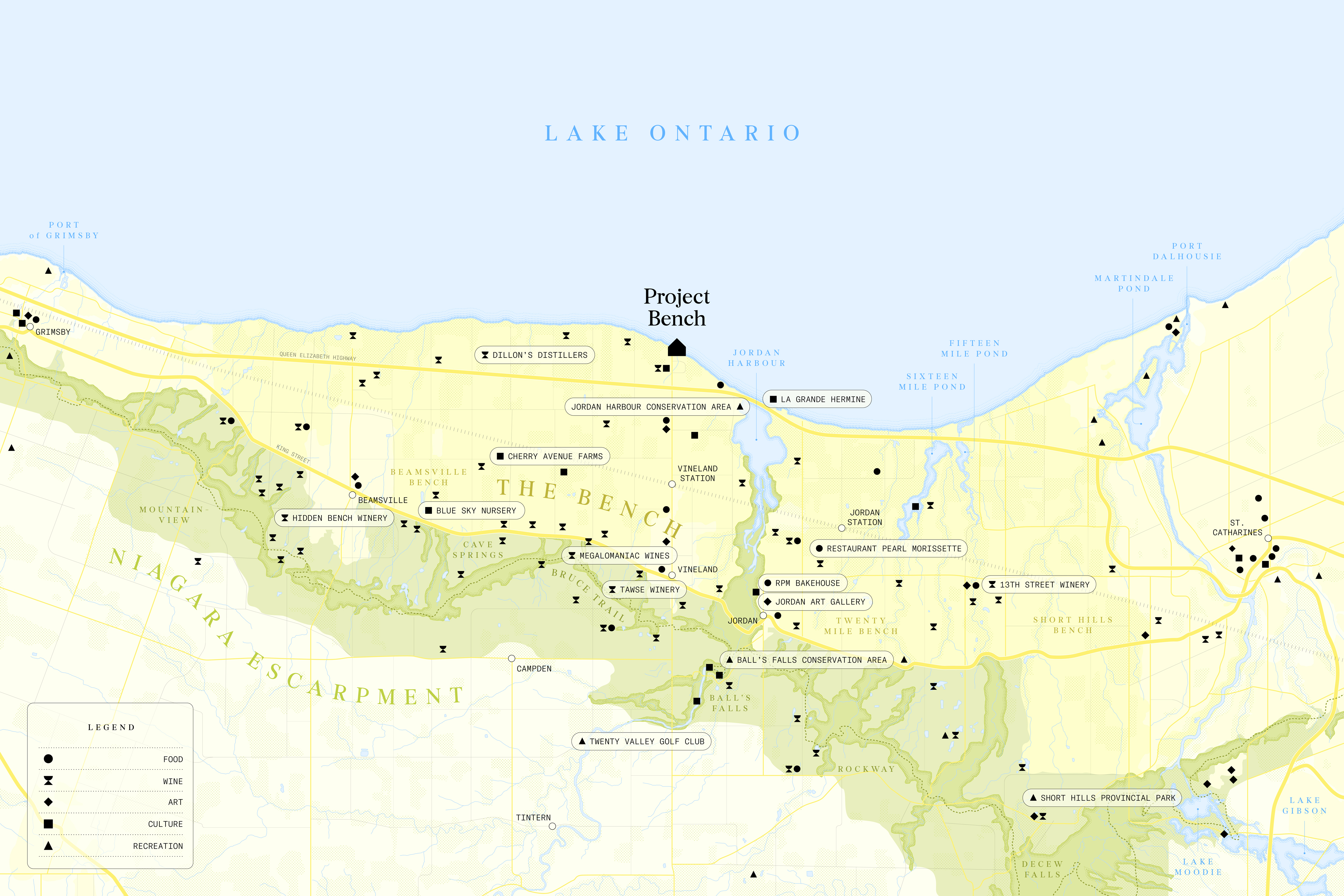
    For those of you that are interested, the Bench is a separate wine appellation from NOTL. It has an elevated and sloped terrain and a longer growing season that is ideal for Pinot Noir, Chardonnay, and Riesling. But in the end, we view these two subregions as being entirely complimentary, akin to Sonoma and Napa in California (incidentally, they also share similar differences in terms of style, climate, geography, and terroir).

    A rising tide lifts all boats.

    And we are of the opinion that a lack of design-forward accommodations — with global appeal — is holding back the economic potential of this region. And so we’re working as hard as we can to correct that. If this opportunity is also exciting to you, please do get in touch. We’re always looking to collaborate.

    You can also check us out here for more about the project.

    Cover photo from Beaumier

  • How long will it take to absorb Toronto’s pipeline of new condominiums?

    July 18, 2025 · View original


    Urbanation just released its Q2-2025 condominium market survey results for the Greater Toronto & Hamilton Area. The results are as expected: new home sales are slow (like, 91% below the 10-year average) and unsold inventory is rising. But what I’m most interested in is trying to guess the future.

    Urbanation expects a total of 17,117 condominium homes to complete in the second half of this year, which would bring total completions for 2025 to 31,422 homes (which is an elevated number). Completions in 2026 are then expected to drop to a more “historically normal level” of 18,037 units.

    At the same time, there are 64,623 condominium homes under construction as of Q2-2025. I take this to mean that, once the above 17,117 homes complete in the second half of this year, there will be at least 47,506 new homes still under construction as we start 2026.

    If we do end up completing 18,037 units next year, and ignoring any new starts, that will leave just under 30k units under construction into 2027. If completions remain at a similar level after this, we could then be close to building our way through this condominium pipeline by the end of 2027.

    Of course, this says nothing about actual absorption. It’s one thing to build a new home, but it has to ultimately get filled. And right now, there are almost 2,500 unsold condominium apartments in newly completed projects across the region. This is a record high going back as far as 2005.

    So it’s hard to say. But my view continues to be that, by 2028, we should be on the other side of this market. In the meantime, if you’re looking for a place to live in Toronto, I think you’d be hard pressed to find a better time to buy. Most people will be too scared, and that’s the point.

    Cover photo by Venrick Azcueta on Unsplash

  • Development charge revenue is disappearing — does that matter? It shouldn’t.

    July 17, 2025 · View original


    According to recent data from Altus, Toronto recorded 42 new condominium sales in the month of May. That’s a 97% decrease since May 2021, for a city of over 3 million people (city proper, not the metro area). So for all intents and purposes, the market is shut off. And it has resulted in upwards of 12,000 construction sector jobs disappearing over the last 12 months in Ontario. Moreover, it has left the Toronto Area with an unemployment rate that is close to 10%.

    But that’s not all.

    The Missing Middle Initiative estimates that this dramatic decline in new home sales (which is more of a leading indicator than housing starts) could conservatively result in all three levels of government forgoing something like $6.6 billion in tax revenue each year. And within this lost revenue, there’s something like a $2 billion reduction in revenue just from development charges (which don’t get paid if developers aren’t starting construction).

    These are alarming figures that beg the question: How will government make up this shortfall? But once again, here’s the thing. If development charges are intended to be “growth paying growth” then, in theory at least, development charge revenue shouldn’t matter. The growth has disappeared and so the things that DCs pay for should also disappear — right?

    In practice, we know that it’s more nuanced than this and that growth pays for a lot of stuff. The clearest evidence of this is likely to rear its head when the DC funds run out. We’re going to be forced to plug the hole with something else. So over the long term, I actually think this will prove to be a positive outcome for the housing market. Because it’s going to necessarily wean us off the practice of overtaxing new homes.

    There’s no other choice right now.

    Cover photo by Dinil Fernando on Unsplash

  • The Inditex trophy asset index

    July 17, 2025 · View original


    So this seems like a pretty cool strategy.

    Amancio  Ortega — who is the founder of the fashion brand Zara — is a ~59% owner of Inditex, which is the largest fashion group in the world and the parent company of Zara. This ownership stake sits in his investment vehicle Pontegadea and each year the dividends of Inditex result in many billions of euros being deposited into its accounts.

    In 2022, it was ~€1.7 billion. In 2023, it was ~€2.2 billion. And this year, it is forecasted to exceed €3 billion for the first time. What Ortega has decided to do with these billions is diversify risk away from the fashion sector and preserve generational wealth through stable, income-generating real assets. In other words, the strategy is to go around the world, buy the coolest trophy assets, and build a wealth fortress.

    For example, in 2022, Pontegadea acquired Royal Bank Plaza in Toronto for ~C$1.2 billion. This was one of the largest office building transactions in Canadian history and, as far as I can tell, it’s the largest single-asset purchase made by the company to date.

    This year alone, they’ve acquired an apartment building in Fort Lauderdale for €165 million, an office building in Barcelona for €250 million, and Hotel Banke in Paris for €97 million. This was their second acquisition in Paris this year, and hospitality seems to be a new push for the firm.

    Having billions of euros show up every year to recycle into global real estate acquisitions is pretty neat in its own right. But I also think it’s interesting to monitor where and what he’s buying. Pontegadea is not trying to time the market or bet against short-term dislocations. They’re methodically building a fortress of core assets in the world’s top global cities.

    Intuitively, we know what these core assets should be. But these intuitions are not always reliable. Prior to the pandemic, downtown San Francisco had one of the tightest office markets in the US. Today, it has one of the highest vacancy rates. I’m sure many investors would have labeled these same assets as core back in 2019.

    Watching Pontegadea feels like a direct commentary on what he/they see as having enduring long-term value. And boy is it fun to watch.

    Cover photo by Zarif Ali on Unsplash

  • Cold air drainage

    July 15, 2025 · View original


    I was on the Bench yesterday for meetings and, as is usually the case, I learned a little more about how wine is made. Typically when you’re laying out grapevines you want to align them for sun exposure. In hotter regions, you might align them east-west to minimize the harsh afternoon son. And in cooler climates, like Niagara or Burgundy, you might align them north-south to try and maximize sun exposure.

    But what I learned is that topography often takes priority over sun exposure — especially in cooler regions. In practice, this means you generally want to align the grapevines so that they follow the slope of the land. Why? Because cold air is heavier than warm air. Aligning with the slope allows cold air to naturally drain away, which helps the vines survive the winter and reduces the risk of things like spring frost.

    If, instead, you aligned the vineyard rows across the slope (as opposed to up and down), well then cold air might get trapped. The same is true for water drainage. I’m told you don’t want pooling. And this is why it tends to be more important to optimize for topography rather than just sun exposure, though I’m sure it gets a lot more nuanced when you really know what you’re doing.

    Regardless, I find all of this fascinating because it’s an intensely local activity. You need to understand how the sun moves across the site. You need to understand the site contours and where air and water will flow. And then you need to optimize for these specific conditions. It’s exactly how architecture used to work before we had active mechanical systems, like AC, that could do all of the work for us.

  • Canada should be celebrating Vancouver’s new Terminal 2 port

    July 14, 2025 · View original


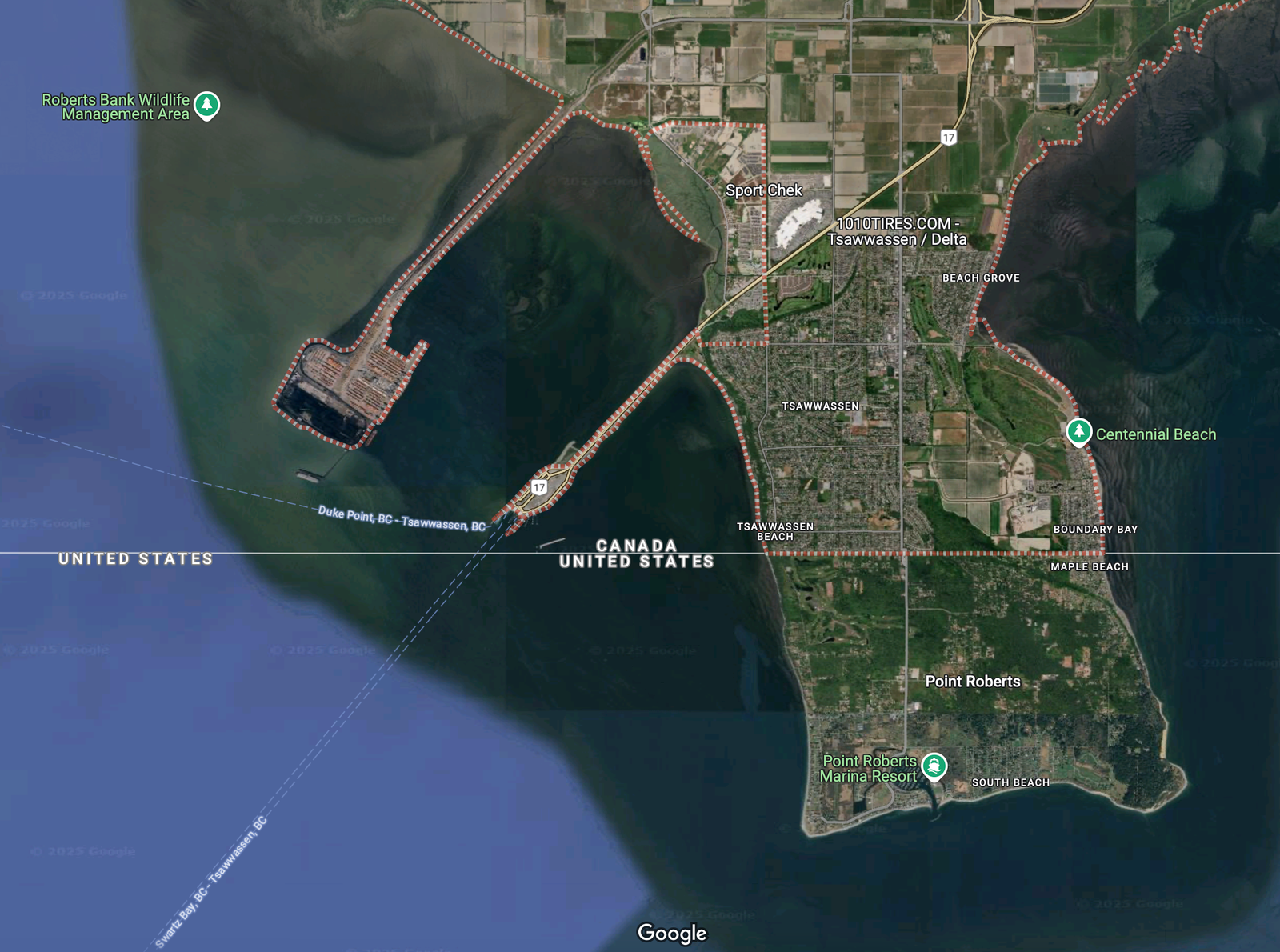
    Last week, the Vancouver Fraser Port Authority kicked off procurement for the new Roberts Bank Terminal 2 project by issuing a request for qualification (RFQ). Bidders now have until September 25, 2025 to submit their qualifications with the hopes of eventually being selected to deliver this “nation-building project” in the Lower Mainland of BC.

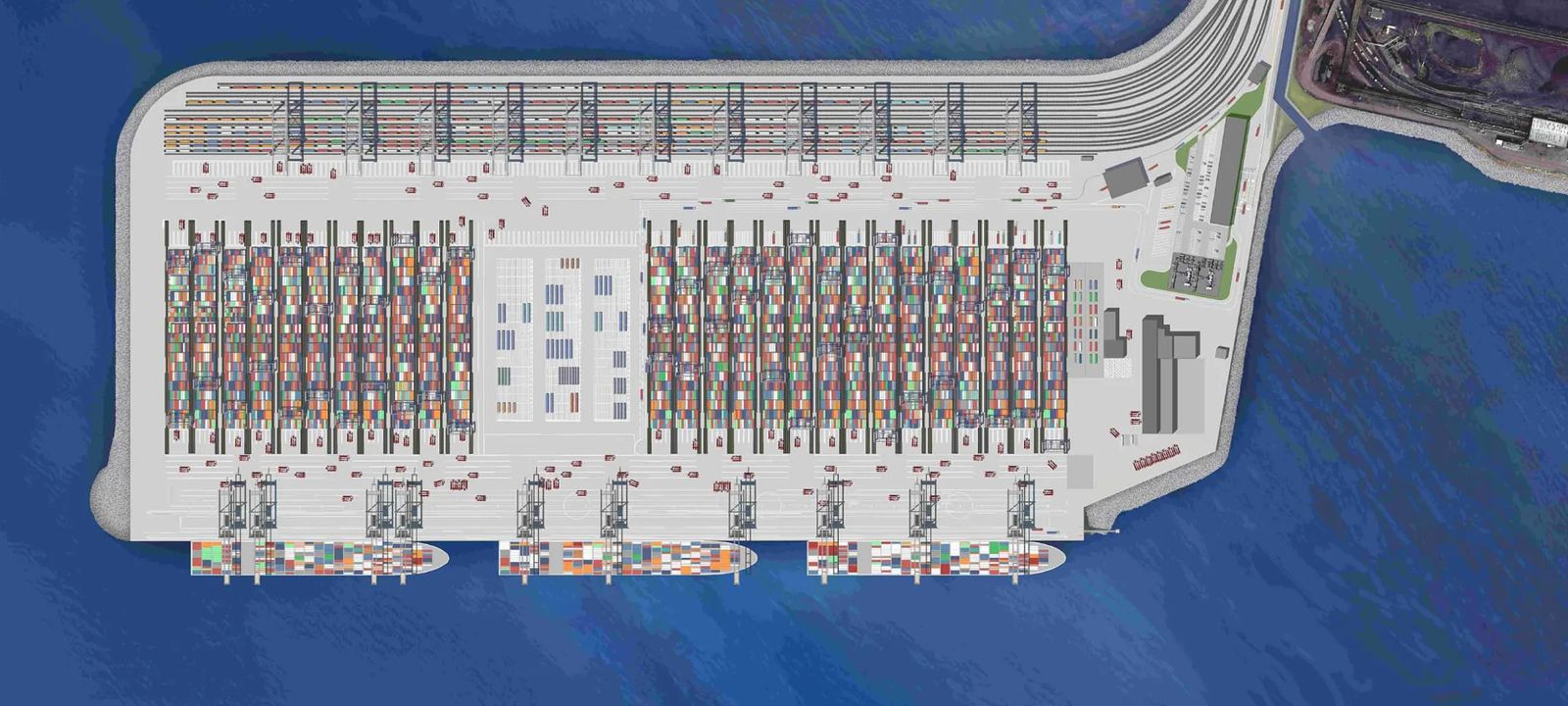
    The contract will include the delivery of an approximately 100-hectare marine landmass (~247 acres), 35-hectare widened causeway, 1,300-meter wharf structure and berth pocket, and expanded tug basin. And when complete by the mid-2030s, the new terminal is expected to create more than 17,000 well-paying long-term jobs, unlock $100 billion in new trade capacity, and contribute somewhere around $3 billion in annual GDP.

    Here’s a rendering of the new marine landmass:

    The Port of Vancouver is the largest port in Canada by tonnage and TEUs (twenty-foot equivalent units). It’s also one of the largest in North America. This expansion is expected to increase its capacity by up to 50%, which could have it leap ahead of several major US ports by the time it’s complete in the mid-30s. That could place it among the top 4 container ports in North America.

    It would be hard to overstate the importance of this project for Canada. The economic center of gravity for the world is steadily moving toward East Asia. In the 1980s, if you were to map and drop a pin at this economic center — according to GDP — it would have landed in the North Atlantic (between the US and Europe). By 2030, this economic center is projected to be near the border of India and China.

    Already, China is Canada’s second largest trading partner (after the US). And over 60% of the container trade flowing through Vancouver is transpacific. More specifically, it is trade with China, Japan, South Korea, Vietnam, and India. If we don’t expand our port capacity and if we allow our container supply chain to become bottlenecked, well then these containers will simply shift south to the US West Coast. It’s that simple.

    Though this project was approved by the federal and provincial governments in 2023, it has faced stiff opposition from local community groups and environmentalists. This is partly why it took approximately 10 years. The Federal Environmental Assessment process began in 2013. And it wasn’t until April 2023 that the feds granted approval with a list of 370 legally binding environmental conditions.

    What this means is that by the time this project is (hopefully) complete in the mid-30s, it will have taken at least two decades! And perhaps even longer knowing how construction works. This is far too long, which is obviously why we are working to make changes to how we, as a country, green light important nation-building projects. There’s no question that this is one of them, and so today I think it’s important to celebrate this milestone.

    It’s time to build, Canada. And as fast as possible.

  • The banking system is frustratingly archaic

    July 13, 2025 · View original


    I experience this feeling on a regular basis, especially because I’m also someone who interacts and uses crypto on an almost daily basis. This week’s frustration came about as I was trying to move money around from our Parkview Mountain House account in the US. We bank with US Bank and, for the record, the people in the Park City branch are absolutely lovely people.

    But here’s one of the things: US bank cannot interface with my mobile phone because I have a Canadian number. And because I live in Toronto, I’m also not able to download and use their mobile app. This means I cannot do rudimentary digital things like deposit a cheque (also known as checks in America). I’m constantly hamstrung and forced to do a lot of things in person. Is there really no simple solution to this?

    In contrast to this, I own brandondonnelly.eth, which links to my personal Ethereum wallet. It’a also linked to my Farcaster account (Twitter-like social network), as well as many other onchain platforms and products. And it works, as expected, anywhere in the world.

    If someone in Botswana would like to send me 0.001 ETH (~C$4) because they like what I write on this daily blog or they just want to buy me a morning coffee, they could easily do that by entering brandondonnelly.eth on their phone. They could also choose to do so with a stablecoin pegged to the US dollar. And when I eventually do my income taxes and I review my wallet’s ledger, this transfer would show up and I would be able to categorize it accordingly.

    This, to me, is very clearly the future of the global economy.

    Full disclosure: I am long ETH and companies like Coinbase.

    Cover photo by Ales Nesetril on Unsplash.

  • Up to 170,000 jobs are at risk of disappearing from Canada’s new construction sector

    July 12, 2025 · View original


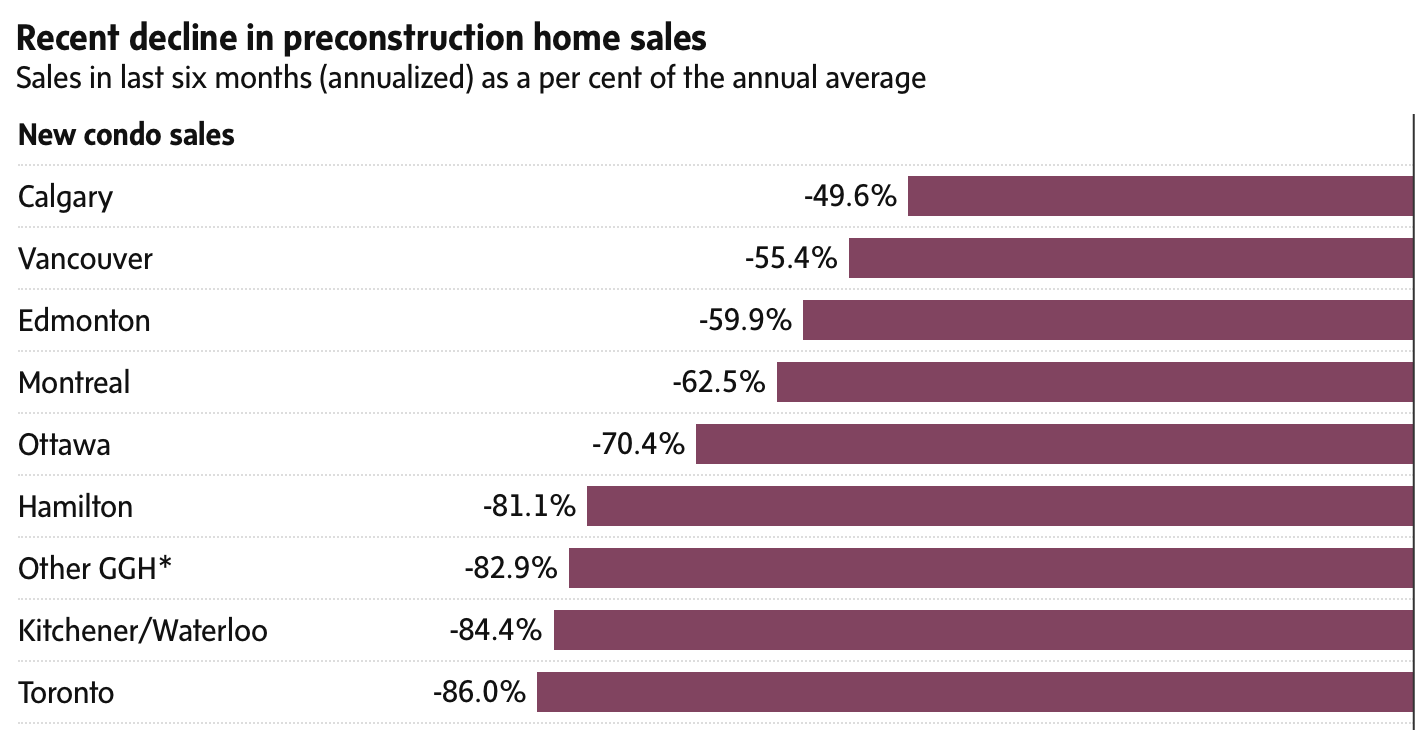
    The Globe and Mail just published this piece about job cuts across the real estate industry. And pictured in the article is my friend Norm Li, who runs a renowned visualization company here in Toronto, but just recently had to lay off 75% of his team.

    This is sad — and quite a departure from the way things were before 2022. You used to have to book Norm and his team many months in advance just to get in the queue. That’s how busy they were creating visual content for the architecture and development industry.

    But there’s not much you can do when the market more or less shut offs. And Norm is not alone. The article estimates that there are some 536,300 jobs in the new construction sector in Canada. And based on the way the above chart is looking, up to 170,000 of these jobs are currently at risk of disappearing.

    If you look at the comment section of the article you’ll find that a lot of people either couldn’t care less or actually relish the fact that the real estate industry is shedding jobs. A lot of people responded with “good.” This is not at all surprising (and not just because it’s, you know, a comment section). Homes remain unaffordable in Canada.

    In the first quarter of this year, RBC estimated that the share of income needed to cover homeownership costs in Toronto is still averaging over 60%. And so for many/most people, the new construction sector isn’t a source of personal utility; it’s a creator of things that aren’t affordable.

    Oh, you can’t make money anymore? Good.

    But here’s a better kind of “good” to consider: as painful as the current conditions are for everyone in the industry — myself included — the market is being forced into a reset. Among many other things, municipalities are rethinking their development charges, construction costs are coming down, and nearly every developer seems to be pivoting their new-home business toward bona fide end users (as opposed to investors).

    What I think this means is that when the market does return — and it, of course, will — it is highly likely that it will be rooted in sounder fundamentals. And this, I would say, is good.

    Cover photo by Maarten van den Heuvel on Unsplash; pre-construction home sales chart from the Globe and Mail