Daily insights for city builders, delivered every morning at 6 AM ET. I’m Brandon Donnelly — a Toronto-based real estate developer and founder of Globizen. I’ve been writing here since 2013.

Month: July 2025

  • NYC introduces European-style on-street garbage containers

    July 31, 2025 · View original


    Let’s talk some more about garbage.

    Manhattan Community District 9 has just become the first neighborhood in New York City to containerize 100% of its trash. This is being done through a pilot program that now requires all residents to dispose of their trash into either an individual bin (the kind you’ll find in most cities) or a new “Empire Bin.” Empire Bins are required for buildings with more than 31 units in the pilot district. Properties with 10-30 units can choose whichever bin they want. And properties with fewer than 10 units have to go with the smaller individual bins.

    The new Empire Bins look like this.

    > Tweet: As a New Yorker, these made me way more excited than I should be https://t.co/yRzRn5O9YJ

    These are stationary bins that live on the street and take up about half a parking space each. Each bin is also assigned to a specific property and can only be accessed by building staff using an access card. So these are not general purpose bins. In the pilot area, there are some 1,000 bins, replacing hundreds of parking spaces. And if this were to be expanded citywide, it is estimated that it would require the removal of more than 50,000 on-street parking spaces.

    In this instance, the use case is different than what we spoke about last week. The problem is not that large garbage trucks are taking up too much space inside of main street buildings. The problem is that these spaces don’t exist, and so NYC has had to default to an approach that is remarkably efficient for fostering a vibrant rat population: collect rat food, place it in easily accessible plastic bags, and then set it out on the street like a buffet.

    These efforts are about containerizing the city’s trash. And yeah, that makes a lot of sense.
  • How should we plan for a world of ubiquitous data centers?

    July 30, 2025 · View original


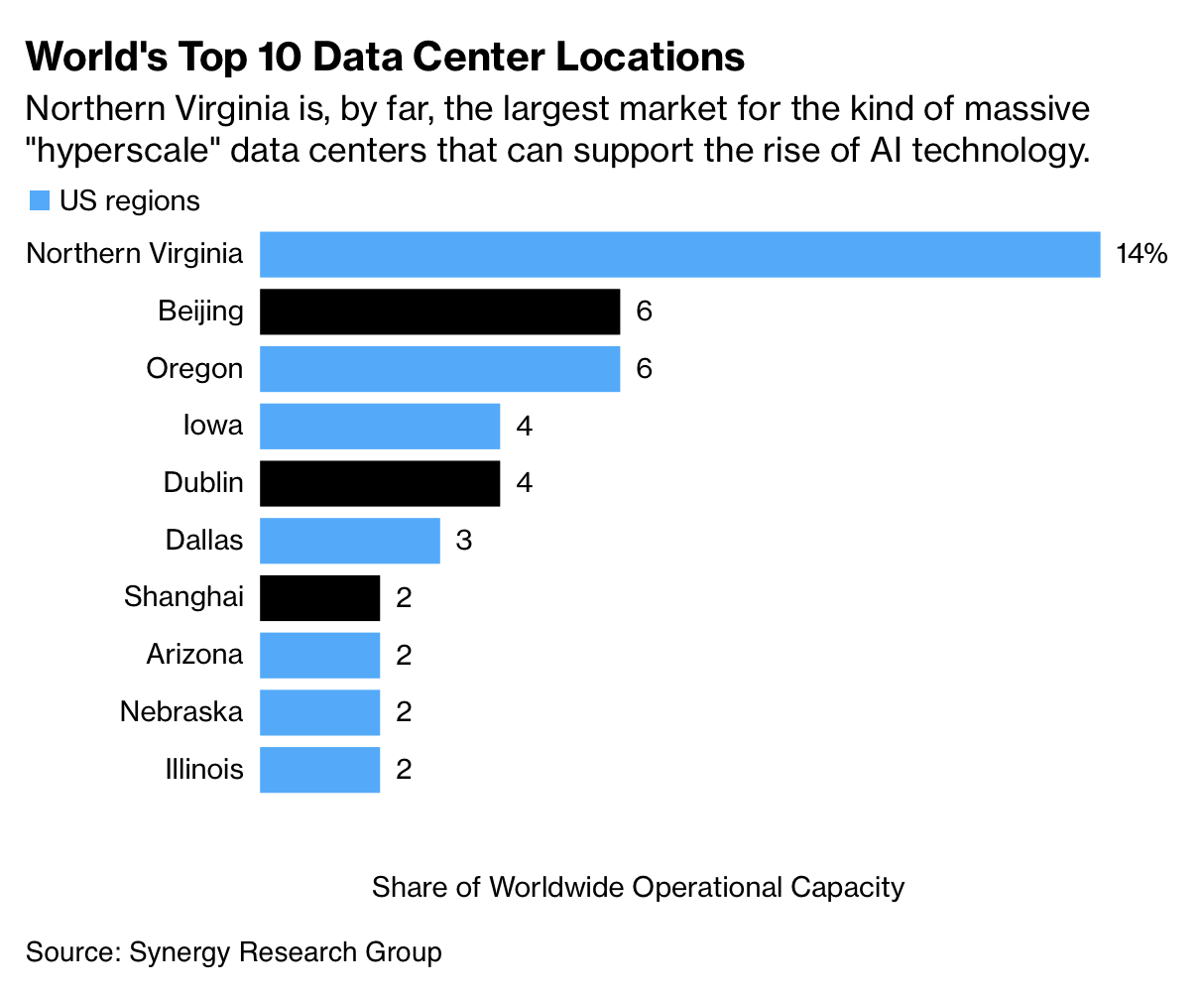
    As you know, Northern Virginia is now referred to as “data center alley.” It has, by far, the largest agglomeration of data centers in the world. The latest figures are somewhere around 200 completed facilities and some 49 million square feet, with a lot more in the pipeline.

    Here’s the global top 10 list via Bloomberg:

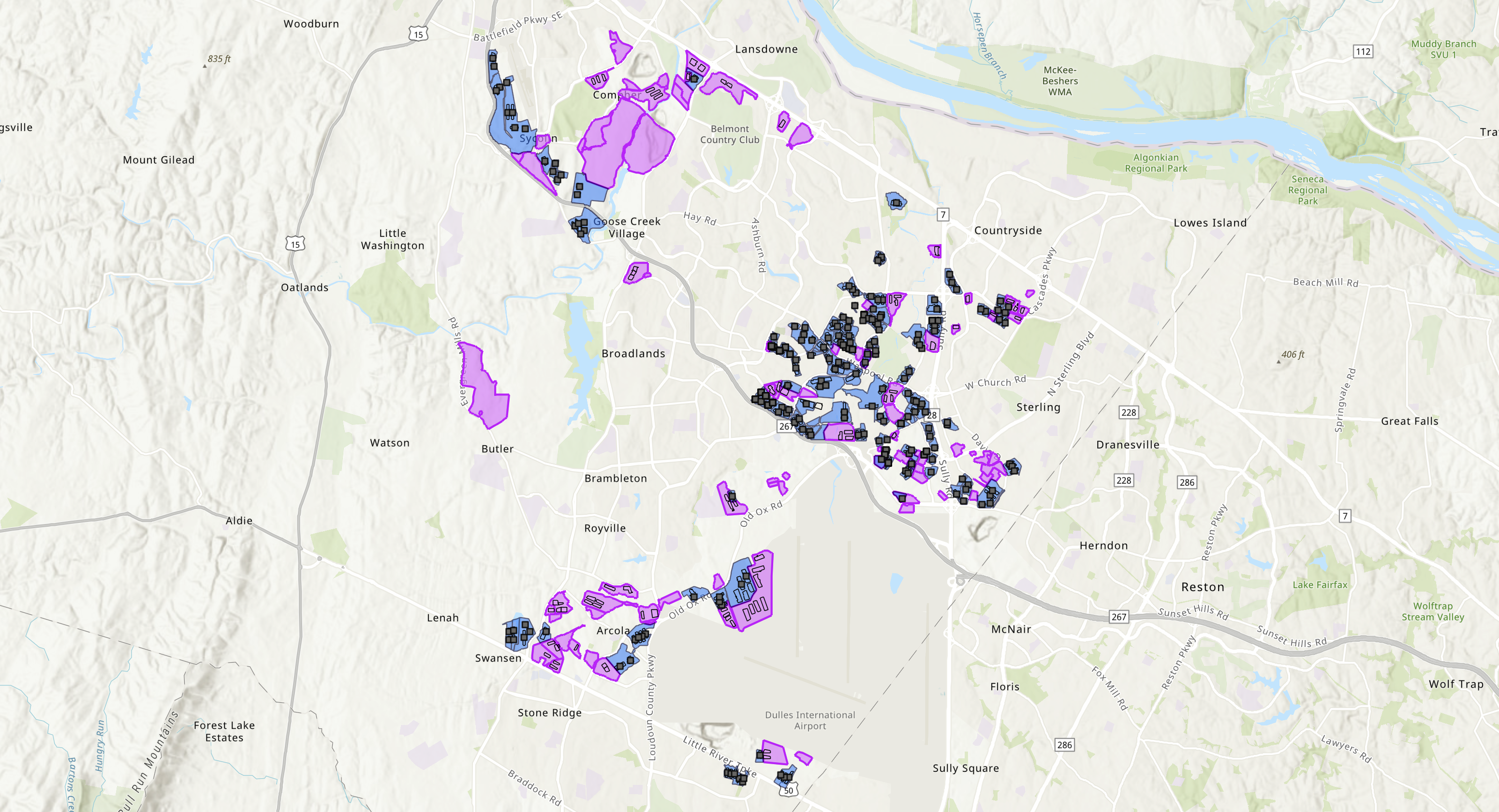
    And here’s a map of existing (blue) and proposed (purple) data centers via Loudoun County, Virginia:

    This has been an economic boon for Virginia. It’s estimated that the data center industry contributes up to 74,000 jobs and $9.1 billion in GDP to the state each year. But along with these benefits come some trade-offs, one of which has to do with the region’s built environment.

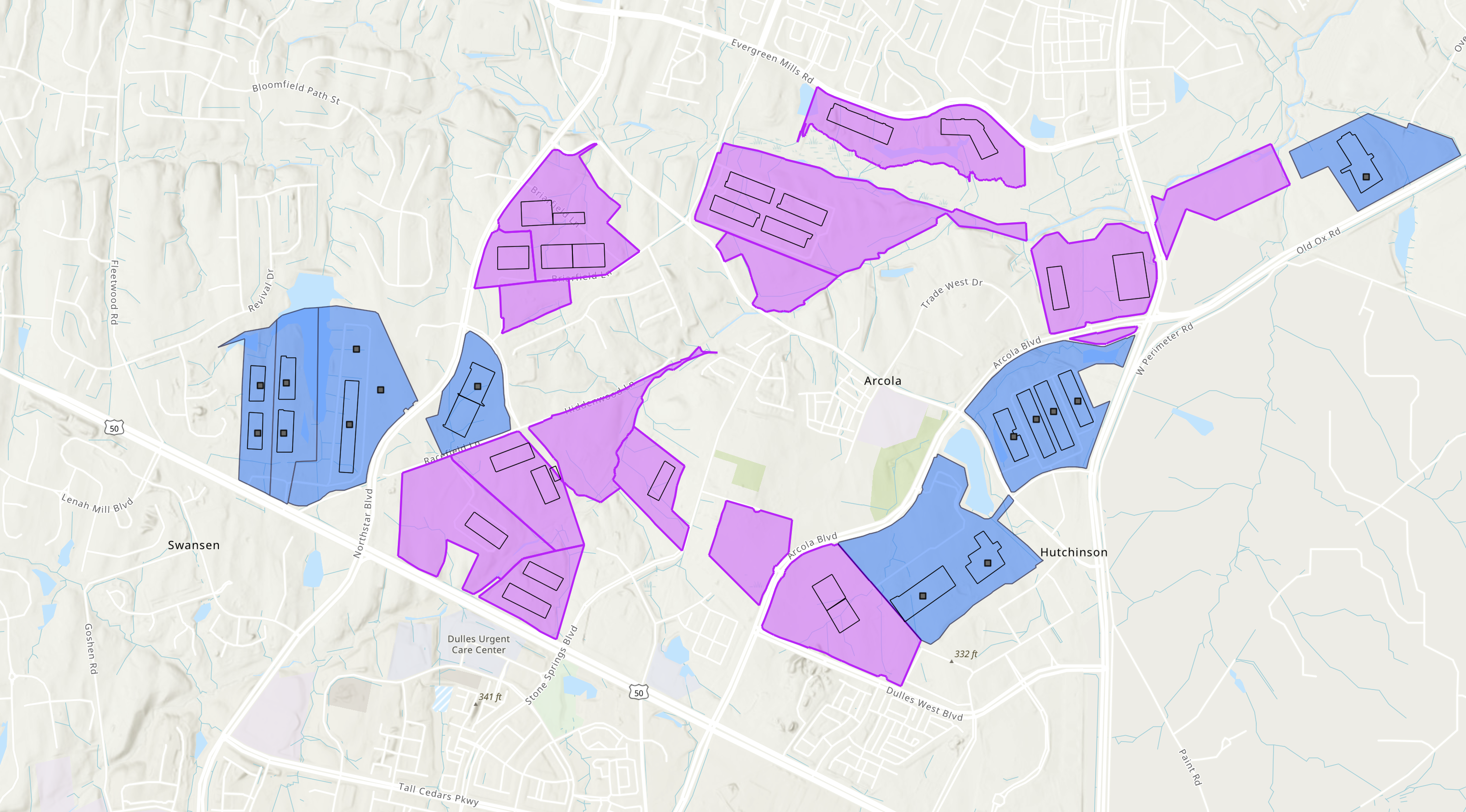
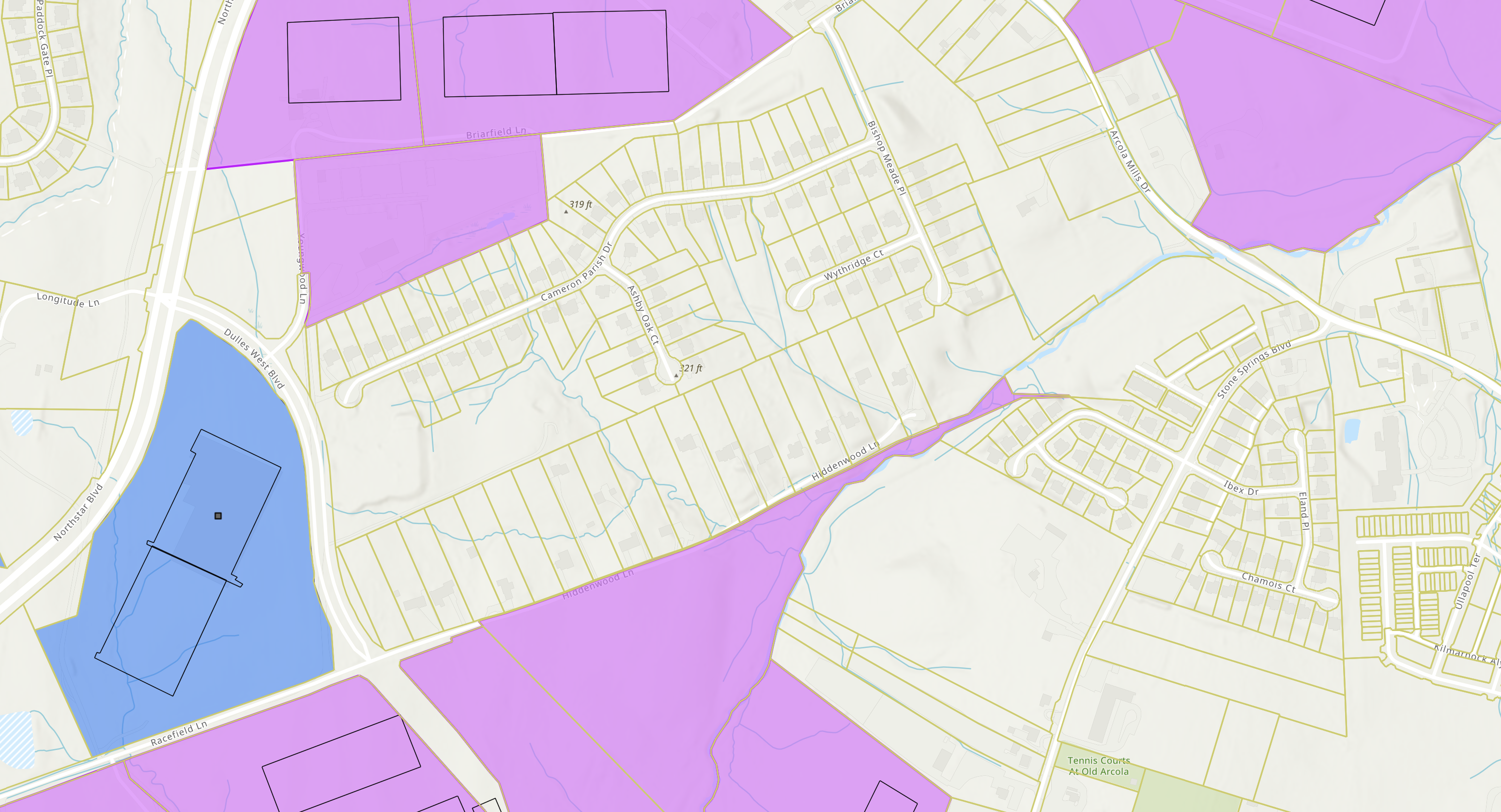
    Here are two zoom-ins of an area to the west of Dulles International Airport:

    These maps raise a question that is only going to become more important as time goes on: What’s the best way to insert large insular boxes into the fabric of a city or suburb? Of course, in some ways, this is not a new phenomenon. The suburbs are no stranger to this kind of built form.

    But it’s unique in that these boxes are not meant to be experienced in real life. They’re a physical manifestation of our online activities, juxtaposed against our offline lives. It’s two different worlds colliding. And already, it may be more appropriate to ask our question in the opposite direction: What’s the best way to plan a city or suburb around data centers?

  • Sprawl works, until it doesn’t

    July 29, 2025 · View original


    The Wall Street Journal recently published an article called, “Atlanta’s Growth Streak Has Come to an End.” It’s behind a paywall, though, so I don’t actually know what it says. But Paul Krugman did write about it, here, and I do know that one of the key statistics that you should know is this: For the first time since the data was collected, net domestic migration to Atlanta has turned slightly negative.

    Overall, the metro area is still growing because of natural births and international migration, but it’s still noteworthy that more Americans are leaving Atlanta than moving there. Because up until recently, Atlanta was a high-growth metro region. It’s an important logistics hub and it has had an elastic housing supply model. That is, it used suburban sprawl to keep home prices in check.

    But that is starting to change. Housing supply is dropping and traffic congestion has become one of the worst in the US. Paul Krugman hypothesizes that this is an example of “the limits of sprawl.” And I would agree with this. Sprawling cities have the advantage of being able to grow quickly when they’re relatively small. But eventually, they reach a population and geographic limit where the model starts to fail.

    The Atlanta urban region is massive. As defined by the US Census Bureau, it is 6,612.4 km2. The only urban region that is bigger is the one around New York City. Los Angeles — which might come to mind as another large car-oriented metro region — is smaller. It’s about 4,239.4 km2, but with ~2.4x the population of Atlanta.

    It may also surprise you to learn that Los Angeles is remarkably dense. When looking at the entire built-up urban area, it’s the densest in the US at 2,886.6 people per km2; whereas Atlanta is one of the least dense big city regions at 771.3 people per km2. This figure really stands out when you compare it to its peers, which means it’s going to be that much harder for it to overcome the limits of sprawl.

    Density is the unlock that allows you to get people onto trains.

  • The energy-to-value equation

    July 28, 2025 · View original


    One traditional metric for measuring the performance of a company is revenue per employee. And in a knowledge-based economy, this makes a lot of sense. Human capital is often the biggest expense. But as we enter the age of AI, this is now being called into question.

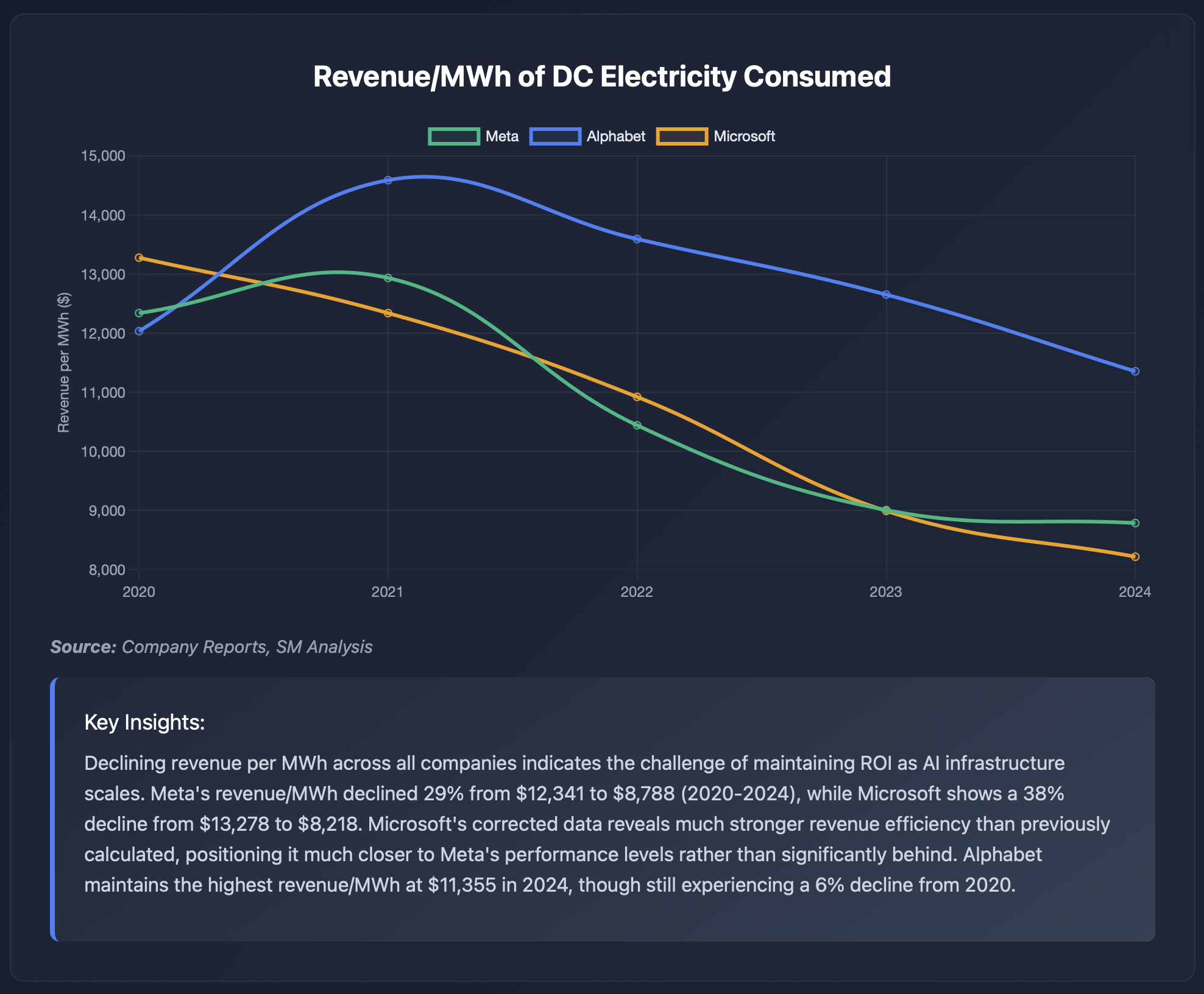
    Sara Menker has, for example, proposed a new metric: revenue per MWh. (See above comparing Meta, Alphabet, and Microsoft.) This is meant to reflect the fact that, as AI infrastructure scales, it is likely that operating costs in the future will be dominated by electricity consumption, rather than employee count.

    Naturally, this should make you wonder about a few things, namely: How will we manage the inequality that might (or will) arise from the decoupling of revenues from employees? And how are we going to sustainability supply this rapidly growing need for more and more electricity?

    Albert Wenger argues that the comparable metric for nations will be GDP per GWh. This means that, to win, you’re going to want cheap electricity. And as I understand it, the cheapest sources are wind, solar, and hydropower. This bodes well for Canada given that we dominate in the latter.

    Cover photo by Thomas Reaubourg on Unsplash

  • Iridescent balcony guard glass

    July 27, 2025 · View original


    Yesterday morning, Neat B and I were up at Friday Harbour messing about on jet skis with some friends. It was a lot of fun. It’s a good little day trip if you’re ever looking for something to do in the summer.

    I think that the developers of Friday Harbour have done a wonderful job creating a new waterfront resort and creating an alternative to traditional cottages. I know a bunch of people who have opted for a place here instead. It’s closer to Toronto, you don’t have the same upkeep, and you get to enjoy urban amenities while still feeling like you’re “up north.”

    Yesterday I also noticed that the most recent phase — which is just finishing up construction — looks like this:

    Never before have I seen balcony guard glass like this — at least not here in the Toronto region. It is some kind of iridescent laminated glass, which changes color depending on the light and the viewing perspective. I would imagine that it also offers some degree of privacy benefits, because it got fairly opaque from some angles.

    But the primary feature is that it just looks cool. And I think more projects should have fun like this. There’s no need to be afraid of color.

    What do you think?

  • Where do people buy vacation homes in the US?

    July 26, 2025 · View original


    Above is map from Brian Potter (over at Construction Physics) that shows every census tract in the US where vacation homes make up 20% or more of the total number of homes. What you are seeing is a relatively small number of census tracts — 3,372 out of a total of 84,414 (~4%).

    But more than half of all vacation homes are in one of these tracts. And nearly 20% of vacation homes are in a census tract where more than 50% of the homes are vacation homes. So in other words: vacation homes in the US tend to be highly concentrated.

    According to Potter, there are, perhaps not surprisingly, three main drivers of demand: beaches, lakes, and ski resorts. This is why if you drill down into Florida — which has the highest absolute number of vacation homes in the US at over 800k — you’ll see that these homes are not evenly distributed across the state. They’re on the coasts, and to a lesser extent inland near places like Disney World.

    Also noteworthy is the fact that these census tracts tend to match up nicely with the location of ski resorts. Here’s the same map of the US but with ski resorts overlaid:

    And here’s a close up of Salt Lake City and Park City, because, I love Park City:

    As of Q1-2025, the US had over 147 million homes, and somewhere around 4.3 million of these were seasonal or vacation homes. If you’d like to better understand where these are and the trends surrounding them, I recommend you check out Potter’s post.

    Maps via Construction Physics; cover photo by Joe Ol on Unsplash

  • Garbage trucks take up too much space

    July 25, 2025 · View original


    Here in Toronto, we have something known as “Type G” loading spaces. They’re used for collecting garbage and they are generally required in multi-family buildings with 30 or more homes (though exceptions do exist). The problem with these spaces is that they’re highly consumptive. Below is an excerpt from a recent article in Azure by Kelly Alvarez Doran and Mitchell May:

    > In order to accommodate a truck’s large arms to swing a garbage bin up and over its frame, residential buildings require what’s known as a “Type G” loading space, which measures at least 13 metres long, four metres wide and 6.1 metres tall. While the area of the loading space alone is significant, the required turnaround space — allowing trucks to navigate in and out of the building — is often double or even triple its size. Current City of Toronto regulations require this loading space to be designed in order to allow a garbage truck to enter the site, collect the waste, and exit the site without the need to reverse onto a public road — resulting in T- or L-shaped paved areas to accommodate the turns of a wide wheel base. Due to the site constraints and density of these developments, Type G loading is often internalized within the building’s footprint. The outcome? A truck’s manoeuvring effectively consumes the ground floor at the expense of retail space and street-level activity.

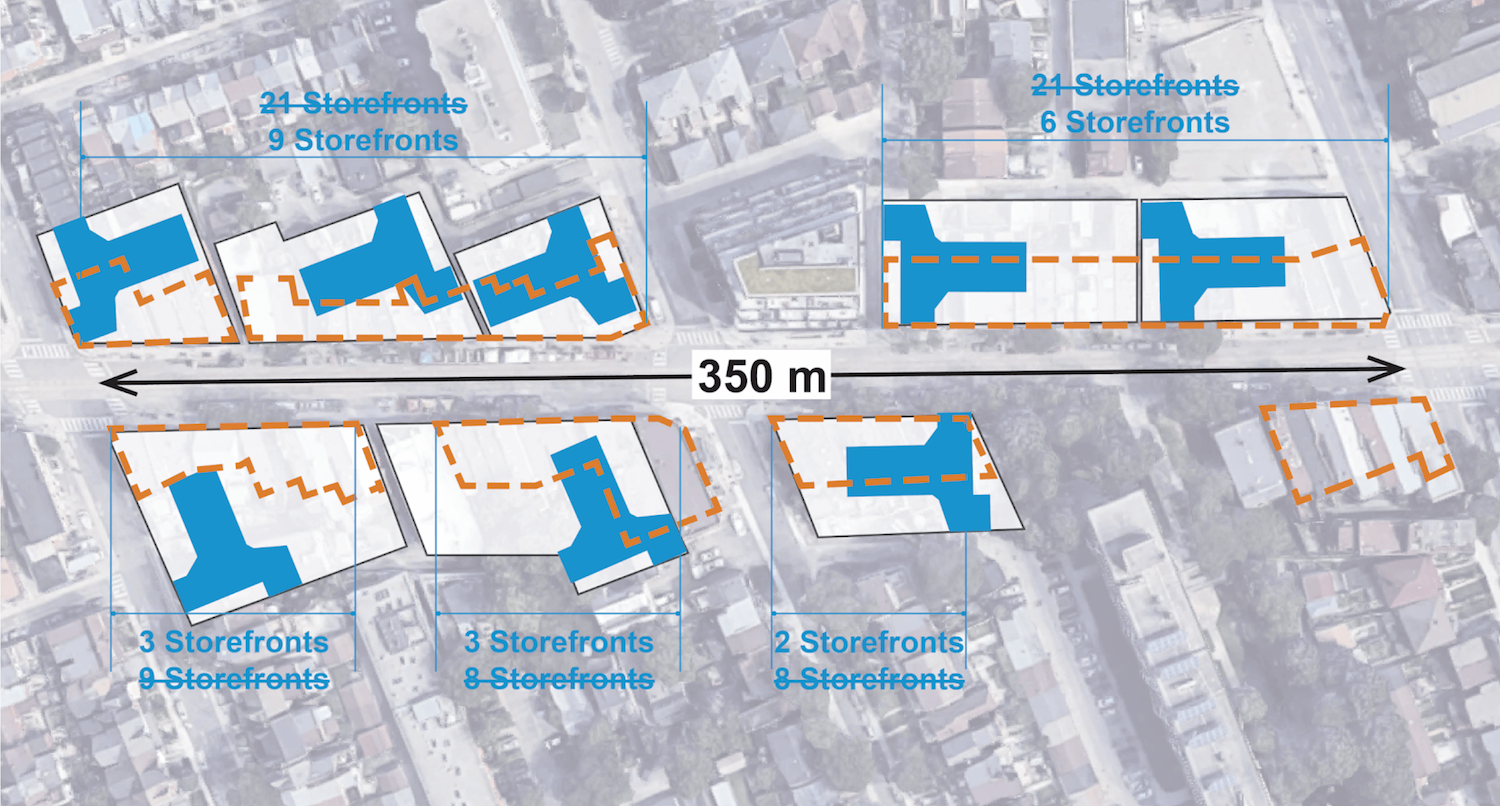
    They go on to analyze what would happen if you took a typical Toronto main street and then intensified it with buildings requiring Type-G loading. The result, for a particular stretch of Dundas Street between Dufferin and Brock, was that you’d end up losing somewhere around 44 storefronts just to accommodate all of this loading.

    Here’s their diagram showing the Type-G loading areas in blue:

    New developments are often criticized for how they perform at the ground floor. But a big part of this has to do with all of the back-of-house services and other requirements that they need to accommodate. Type-G loading is a big one and it’s simply not feasible on smaller projects. Projects between 31-60 homes can apply for an exception, but I think this flexibility should already be built in.

    Beyond increasing the unit trigger, what else could we do? Well, the obvious ones are (1) make the trucks smaller and more nimble and (2) centralize garbage collection. Our approach to garbage collection is decentralized. It is collected from every house and every building. But there is the option to cluster the pickups, which is what many European cities do.

    Here’s Barcelona via Google Street View. Note the bins.

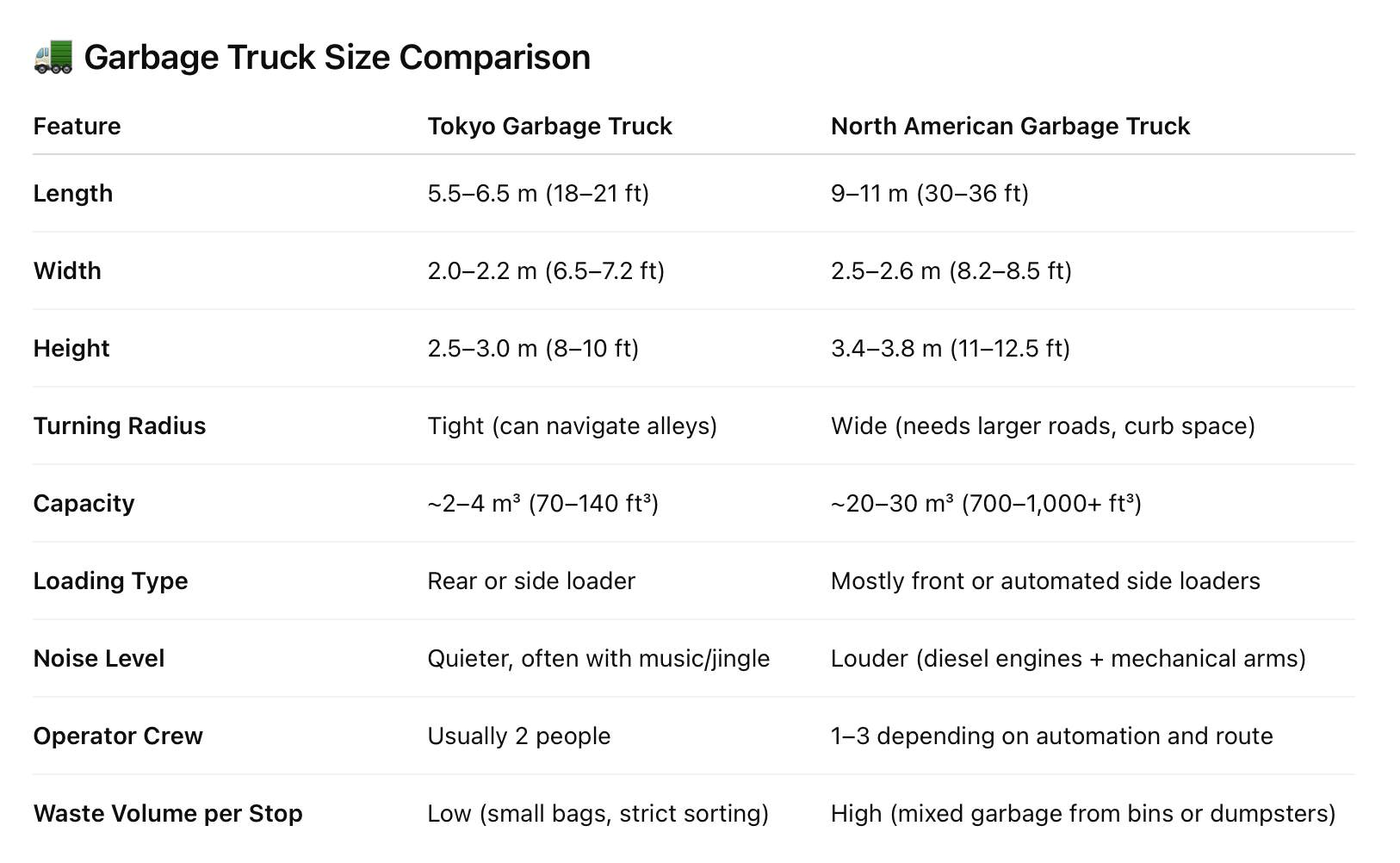
    Admittedly, this isn’t nearly as convenient as having a truck come right to your door or building, and it’s not the most attractive way to decorate a street. So I’m inclined to start with option one. And for that, there are cities like Tokyo we can look to. Tokyo is famous for its strict garbage collection rules and for its smaller, cuter trucks. Here’s a comparison to North American trucks via ChatGPT (meaning, I can’t be held liable for any inaccuracies in this chart):

    We aren’t quite Tokyo. Few cities are. But surely there are ways we can be just as functional and take up a lot less space. This would not only benefit our main streets, but also improve the overall viability of infill housing.

    Cover photo by Mak on Unsplash

  • No development charges and parkland dedication on sixplexes — hopefully

    July 24, 2025 · View original


    As you know, sixplexes are now permitted in certain parts of Toronto. We’ve spoken before about how it should be all of Toronto; but nevertheless, they are allowed in areas where they were not allowed before. That constitutes progress.

    But it gets much better: This week, Mayor Chow announced that she will be bringing forward a motion to Council to eliminate development charges and parkland dedication cash-in-lieu requirements for new developments of up to six residential homes. This is a big deal and something that is necessary if we want to spur more rental housing.

    To quote my friend Craig Race (of Craig Race Architecture), “this is the first thing [Olivia Chow has] done I’m happy about, and I hope to see more.” Mayor Chow was criticized for standing around while sixplexes were being debated, and so this is perhaps her now trying to step up. Whatever it is, home builders will take it.

    Globizen wasn’t looking at this scale before, but I’m now going to adapt one of our screening models to see if the math works. If it does, then expect the industry to mobilize around it.

  • Toronto’s “traffic czar” is doomed to fail

    July 23, 2025 · View original


    Okay, so the official title is Chief Congestion Officer.

    But whatever. What’s important is that the City of Toronto is apparently close to hiring a human that will become the so-called “congestion lead”. This will be, in their words, a senior strategic cross-divisional leadership role that reviews programs and projects, and then works to minimize traffic congestion (this is among other things).

    Translation: Construction is causing too much congestion so let’s make sure we’re better at managing what happens on Toronto’s streets. Fine. Nobody is going to argue against being too coordinated. But there are at least two problems with the overall framing of this position.

    Firstly, it is likely that this czar will go after things like construction lane closures. Maybe the city will make them harder to get and/or maybe they’ll increase the occupancy fees they charge. (Reminder: Developers pay cities lots of money to occupy public streets.)

    Regardless of what is done, it’s important to keep in mind that there’s a trade-off here. Any time you make construction more difficult, you add costs. And when construction costs are added, they have to go somewhere. Typically that means they get passed on to buyers and renters. So depending on how hard this czar goes after road closures, we could be indirectly increasing the cost of new housing.

    Pick your poison.

    But the even bigger problem with this new role is this: It presupposes that if only we did X, Y, and Z, we could solve traffic congestion. This is a fallacy. It’s not going to happen. Of course, I’m not saying that better coordination wouldn’t improve traffic flows; I’m saying that we’re ignoring the root problem.

    The Greater Toronto Area has a population of nearly 7 million people, and there’s simply no conceivable way we could all drive around everywhere and still have free-flowing traffic. It’s impossible — no matter how well we coordinate roadwork or how many people with whistles we plant at major intersections during rush hour.

    The only way to solve this problem is to embrace a multi-modal approach to urban mobility. And so rather than a “traffic czar” narrowly focused on car congestion, what we really need is a “mobility czar” focused more broadly on moving the most number of people as efficiently as possible — across all modes of transport.

    This is not the solution that many people want to hear — because it will mean a break from the status quo — but we already know that it works. Really well in fact.

    Cover photo by Cyan Chen on Unsplash

  • Riding out to the new Biidaasige Park

    July 22, 2025 · View original


    On Sunday evening, I rode out to the Port Lands area (of Toronto) to check out the new park that just (partially) opened up. Named Biidaasige Park (pronounced “bee-daw-si-geh”), it is the largest park to open in the city in many decades.

    The first phase is just over 50 acres, and an additional 10 acres is planned to open next year. It houses 5,000+ trees, 77,000+ shrubs, and over two-million herbaceous plants. In terms of spaces, there are picnic areas, a playground with ziplines, off-leash dog parks, trails, and a pebble landing where you can launch “non-motorized personal watercraft.” (Is it safe to swim?)

    I was impressed when I rode through it. It’s a huge quality of life upgrade for the city. But of course, what’s most impressive is that the island it sits on (Ookwemin Minising) is the result of a $1.4 billion investment in flood protection. One that now unlocks the Port Lands area for development. That’s up next.

    After my ride, I did the customary things. I made a protein shake (sidebar: I recently added creatine to the mix), shared my ride to Strava, and then tweeted out this video. The tweet got reshared a few times and so I received a bunch of replies. And whenever this happens, which isn’t often, I’m always a bit taken back by the type of comments. A lot of them are negative.

    In this case, people commented on the lack of trees (see number of trees planted above), said it would be filled with tents in a week, and even remarked that it would soon be overrun with Indian people. I won’t get into the specifics on this latter point, but there was more to it.

    Now, I know that this is what happens on the internet. And I don’t take any of it personally. I’ve also done my fair share of community meetings over the decades where I’ve had tomatoes thrown at me. But it always makes me think: Is this what is going on in people’s heads as they go about their day?

    To each their own, of course. But I am of the opinion that perspective matters. The world gives you what you give it. If you go about your day thinking negative thoughts, then eventually it will become a self-fulfilling prophecy. If, on the other hand, you show up with positivity, good things will happen to you.

    Here’s a silly example.

    On my ride over on Sunday, I ended up beside a guy who was similarly suited up on a road bike. He was giving off the “I’m a serious and intimidating cyclist” vibe. So naturally, I decided to strike up a conversation with him. We then ended up shooting the shit all the way over to the park. I got back exactly what I put in.

    All of this is not my area of expertise but I have been thinking recently about anonymity on the internet. I recognize that there are instances where this might be important; but broadly speaking, I don’t think it’s a good thing for our social fabric.

    When you say bad things in real life, there are repercussions. You are accountable for your words and actions. And as a result, people tend to behave a certain way. That is not the case when you troll behind an anonymous account on the internet.