
Canada must become a global superpower
The silver lining to the US starting a trade war with Canada and regularly threatening annexation is that it has forced this country out of complacency. Indeed, I'm hard pressed to remember a time, at least in my lifetime, when patriotism and nationalism has united so much of Canada. According to a recent survey by Angus Reid, the percentage of Canadians expressing a "deep emotional attachment" to the country jumped from 49% in December 2024 to 59% in February 2025. And as further evidence of...

The bank robbery capital of the world
Between 1985 and 1995, Los Angeles' retail bank branches were robbed some 17,106 times. In 1992, which was the the city's worst year for robberies, the number was 2,641. This roughly translated into about one bank robbery every 45 minutes of each banking day. All of this, according to this CrimeReads piece by Peter Houlahan, gave Los Angeles the dubious title of "The Bank Robbery Capital of the World" during this time period. So what caused this? Well according to Peter it was facil...
The story behind those pixelated video game mosaics in Paris
If you've ever been to Paris, you've probably noticed the small pixelated art pieces that are scattered all around the city on buildings and various other hard surfaces. Or maybe you haven't seen or noticed them in Paris, but you've seen similarly pixelated mosaics in one of the other 79 cities around the world where they can be found. Or maybe you have no idea what I'm talking about right now. Huh? Here's an example from Bolivia (click here if you can't see...

Canada must become a global superpower
The silver lining to the US starting a trade war with Canada and regularly threatening annexation is that it has forced this country out of complacency. Indeed, I'm hard pressed to remember a time, at least in my lifetime, when patriotism and nationalism has united so much of Canada. According to a recent survey by Angus Reid, the percentage of Canadians expressing a "deep emotional attachment" to the country jumped from 49% in December 2024 to 59% in February 2025. And as further evidence of...

The bank robbery capital of the world
Between 1985 and 1995, Los Angeles' retail bank branches were robbed some 17,106 times. In 1992, which was the the city's worst year for robberies, the number was 2,641. This roughly translated into about one bank robbery every 45 minutes of each banking day. All of this, according to this CrimeReads piece by Peter Houlahan, gave Los Angeles the dubious title of "The Bank Robbery Capital of the World" during this time period. So what caused this? Well according to Peter it was facil...
The story behind those pixelated video game mosaics in Paris
If you've ever been to Paris, you've probably noticed the small pixelated art pieces that are scattered all around the city on buildings and various other hard surfaces. Or maybe you haven't seen or noticed them in Paris, but you've seen similarly pixelated mosaics in one of the other 79 cities around the world where they can be found. Or maybe you have no idea what I'm talking about right now. Huh? Here's an example from Bolivia (click here if you can't see...
Share Dialog
Share Dialog


One of the truly remarkable things about Tokyo is that it manages to be both the largest metropolitan area in the world and one of the most livable cities in the world. That's quite an accomplishment. And one of the key ingredients has to be its heavy reliance on rail for mobility. Look at any list of the busiest train stations in the world and you'll find that the majority of them are in Japan.
But what does this mean for the average person living in a city like Tokyo? Well, every 10 years Tokyo does a "person trip survey" that looks at how people get around. And if you look at the last set of results from 2018, you'll find the following modal splits:
33% railway
27% private car
23% walking
13% bicycle
4% other (bus and motorcycle)
This is a big deal. Supposedly this is the highest railway split in the world. But the numbers may be even better than this. According to a recent book by Daniel Knowles, who is a correspondent for The Economist, only about 12% of trips in Tokyo are done with a car, giving the city one of the lowest driving rates in the world. Bike usage is also higher than the above at 17%.
Whatever the exact numbers are, it is clear that there's a heavy bias toward rail and other forms of non-car mobility. And you feel that in the city. You feel it in the lack of traffic congestion (which incidentally makes the city feel generally quieter and calmer) and you feel it in the way that density and pedestrian traffic is obviously concentrated around stations.
In the span of a 10 minute walk, you can go from feeling like you are, in fact, in a giant megacity, to feeling like you're in a tranquil community where grade-separated sidewalks aren't even needed because the cars, if any, all drive so slowly. It's an interesting dichotomy that is the result of true transit-oriented development.
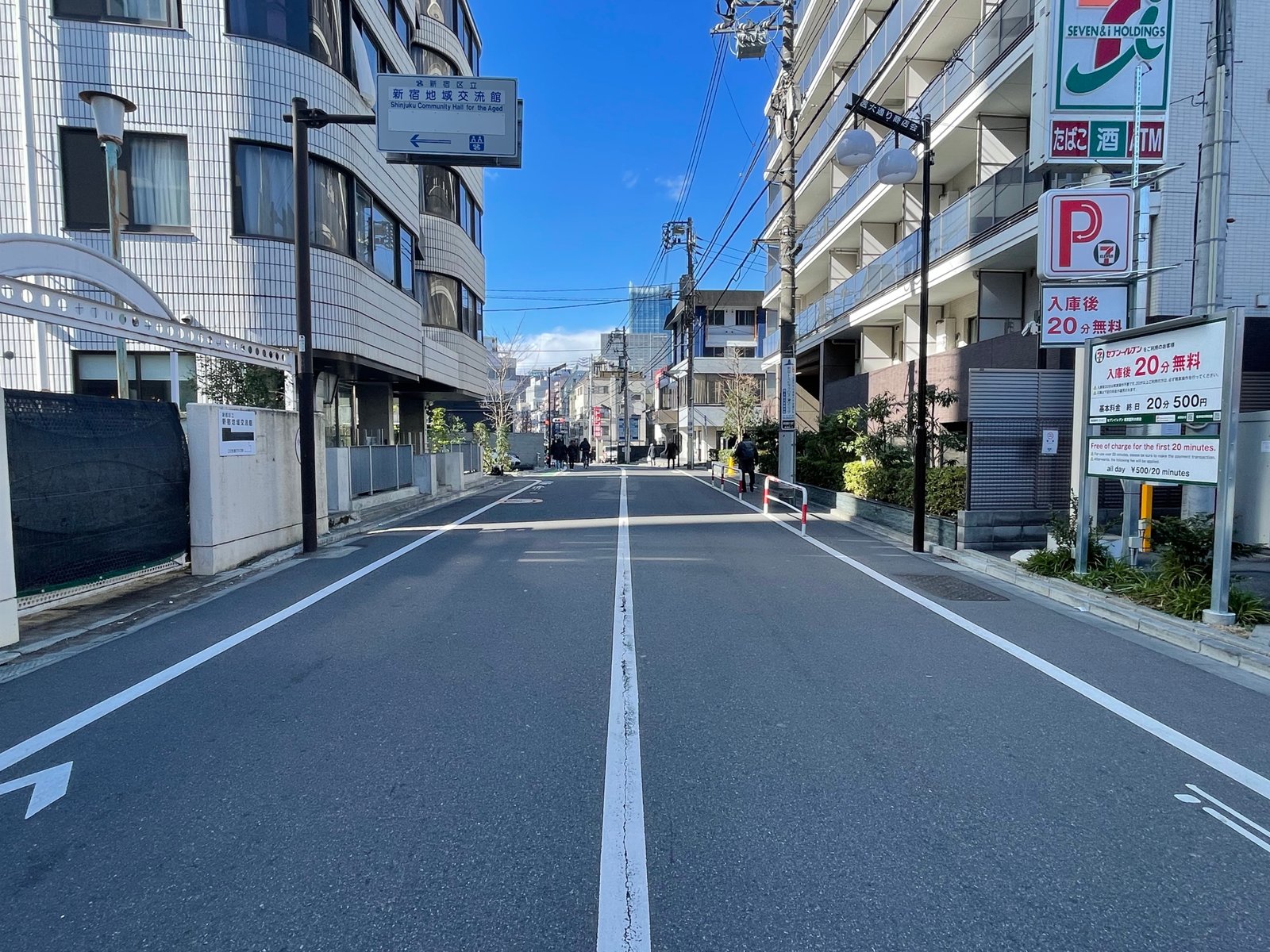

On-street parking is also virtually non-existent. According to Knowles, 95% of streets in Japan do not allow it, either day or night.

At the same time, this approach makes it easier to get around by car. We have taken a handful of Ubers on this trip, and they always arrived in a few minutes, and we have yet to be stuck in soul-crushing traffic. It's perhaps ironic that in a city many multiples larger than Toronto, it feels easier to move around. Or maybe it just goes to show you that it's not about how much urban space you have, it's about how efficiently you use it.
One of the truly remarkable things about Tokyo is that it manages to be both the largest metropolitan area in the world and one of the most livable cities in the world. That's quite an accomplishment. And one of the key ingredients has to be its heavy reliance on rail for mobility. Look at any list of the busiest train stations in the world and you'll find that the majority of them are in Japan.
But what does this mean for the average person living in a city like Tokyo? Well, every 10 years Tokyo does a "person trip survey" that looks at how people get around. And if you look at the last set of results from 2018, you'll find the following modal splits:
33% railway
27% private car
23% walking
13% bicycle
4% other (bus and motorcycle)
This is a big deal. Supposedly this is the highest railway split in the world. But the numbers may be even better than this. According to a recent book by Daniel Knowles, who is a correspondent for The Economist, only about 12% of trips in Tokyo are done with a car, giving the city one of the lowest driving rates in the world. Bike usage is also higher than the above at 17%.
Whatever the exact numbers are, it is clear that there's a heavy bias toward rail and other forms of non-car mobility. And you feel that in the city. You feel it in the lack of traffic congestion (which incidentally makes the city feel generally quieter and calmer) and you feel it in the way that density and pedestrian traffic is obviously concentrated around stations.
In the span of a 10 minute walk, you can go from feeling like you are, in fact, in a giant megacity, to feeling like you're in a tranquil community where grade-separated sidewalks aren't even needed because the cars, if any, all drive so slowly. It's an interesting dichotomy that is the result of true transit-oriented development.
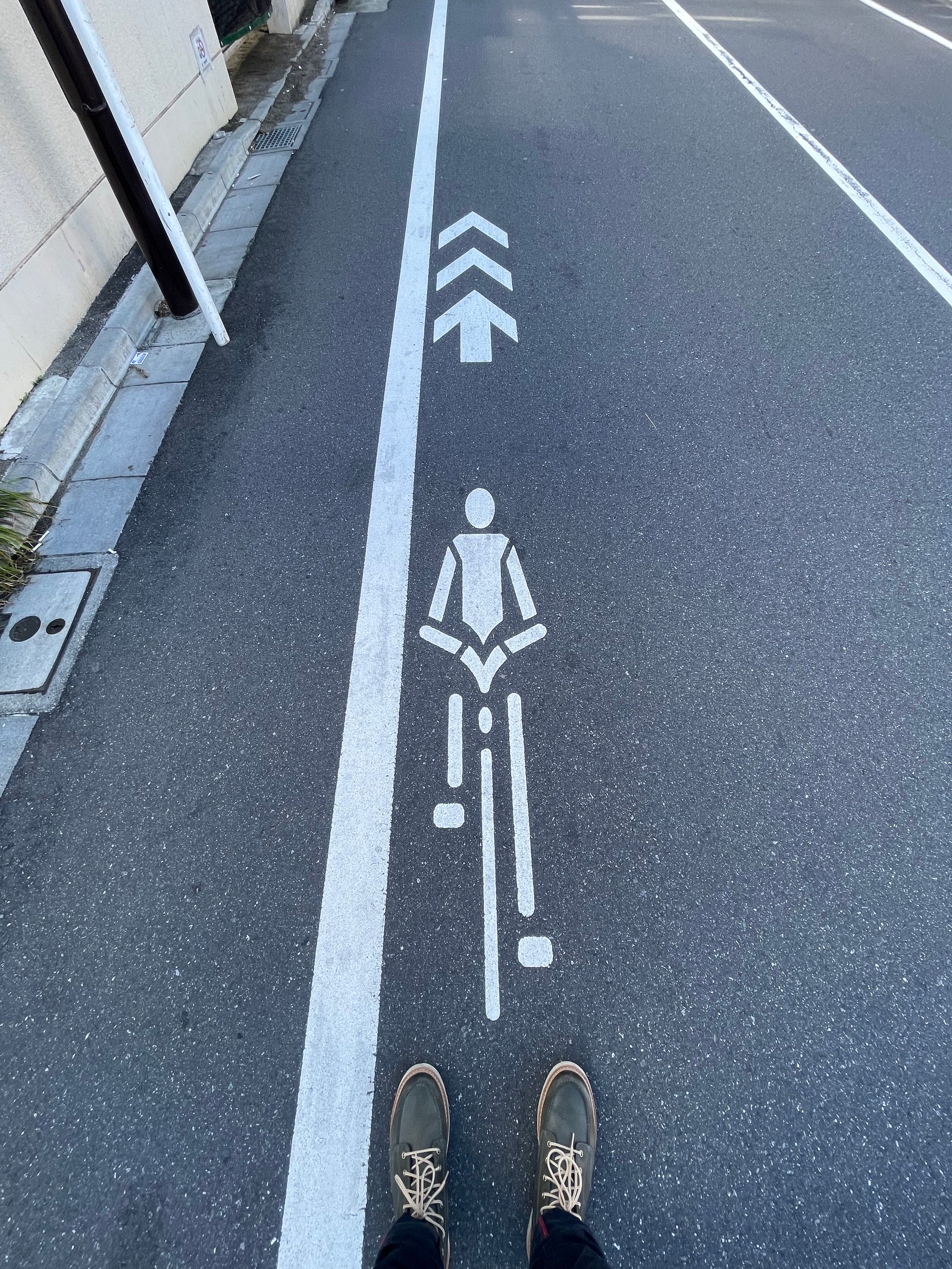

On-street parking is also virtually non-existent. According to Knowles, 95% of streets in Japan do not allow it, either day or night.
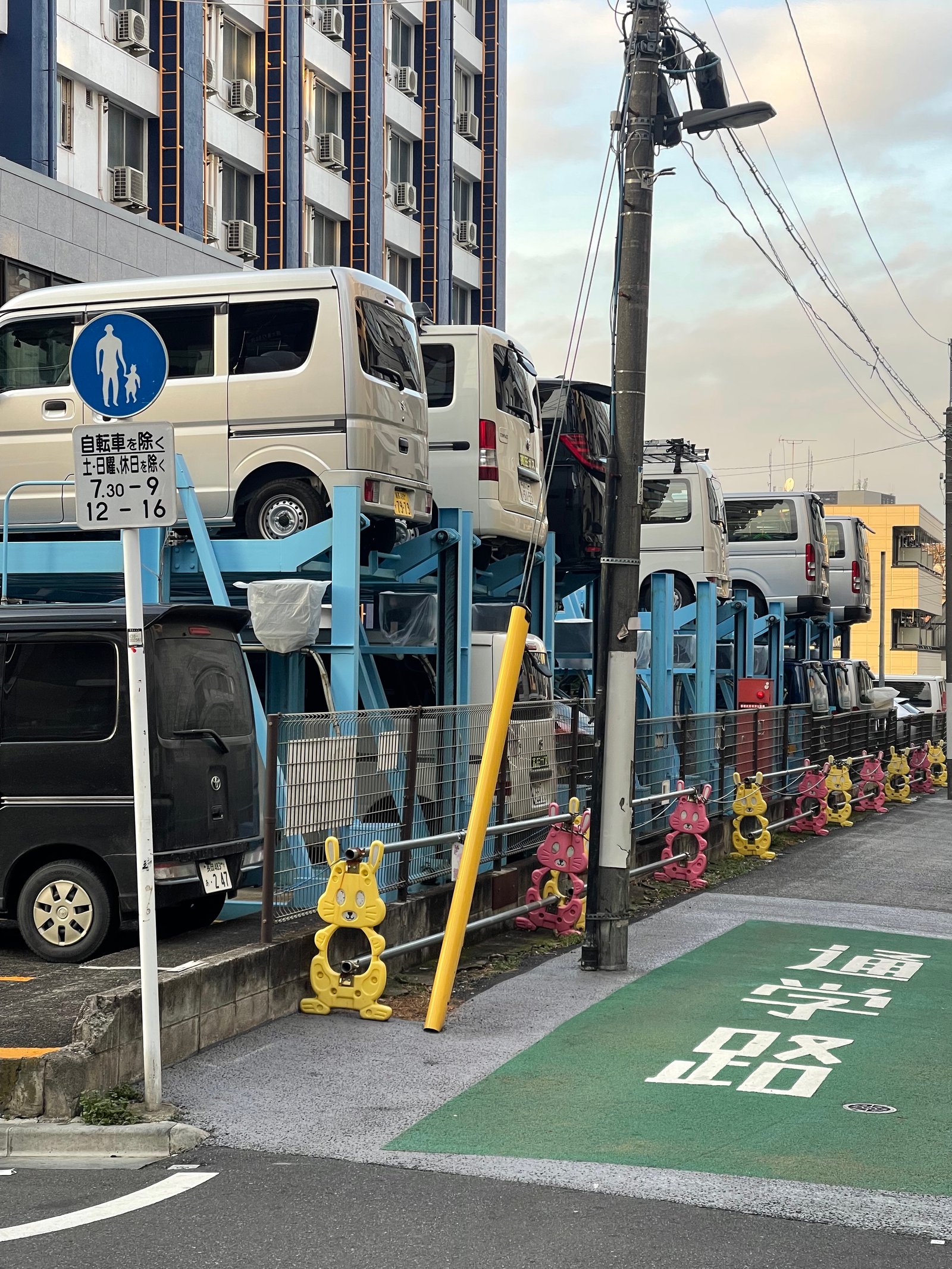
At the same time, this approach makes it easier to get around by car. We have taken a handful of Ubers on this trip, and they always arrived in a few minutes, and we have yet to be stuck in soul-crushing traffic. It's perhaps ironic that in a city many multiples larger than Toronto, it feels easier to move around. Or maybe it just goes to show you that it's not about how much urban space you have, it's about how efficiently you use it.
Indeed, Tokyo is one of the rare cities where I feel 100% to give up on cars to use train. Service is great, streets and buildings are safe and people are very polite and take care to leave rooms for others :)
what about european cities?
I'm really enjoying your anecdotes on Tokyo. Keep up the good work.
Rail-oriented development in Tokyo https://brandondonnelly.com/rail-oriented-development-in-tokyo