Daily insights for city builders, delivered every morning at 6 AM ET. I’m Brandon Donnelly — a Toronto-based real estate developer and founder of Globizen. I’ve been writing here since 2013.

Tag: utah

  • Big global events, small mountain towns

    I was speaking with our lawyer in Park City this week, and he commented to me that he wouldn’t be going into the office next week because Old Town would be too hectic with the Sundance Film Festival going on. His office is right on Main Street.

    When small mountain towns host major international events, there are going to be spillover effects. This is true of Sundance in Park City (population ~8,500) and it is true of the World Economic Forum, which was hosted in Davos (population ~10,000) this past week.

    Perhaps the most obvious impact is that people can rent out their homes for large sums of money. And so lots of people both do that and try to profit maximize while doing it. Here are some anecdotes from Davos (via NZZ):

    Ten days before the WEF, there are still 25 listings on the Airbnb internet platform. The prices here range from 8,000 to 56,000 Swiss francs. The son of an apartment owner says that his family receives 12,000 francs a week for their three-room apartment, which is quite close to the convention center. However, he says he assumes that they could achieve significantly more. The family rents out the apartment through an intermediary.

    Another interesting impact in Davos happens on the retail side (also via NZZ):

    According to expert Robert Weinert, the average rent per square meter of retail space in Davos is 248 Swiss francs. A businessperson renting a storefront of 80 square meters must therefore pay almost 20,000 francs in rent per year. However, if that business vacates the store during the WEF, it can earn 60,000 francs – three times the annual rent for the facilities.

    What this means is that some retail spaces remain vacant all year, just so that they can be available for when the WEF arrives and people need temporary commercial spaces. And why wouldn’t this be the case: 20,000 francs for the year or 60,000 francs for a week. If I’m the landlord, I’ll take the additional 40,000 francs and not think about the property for the rest of the year.

    Of course, if you’re trying to create a vibrant community with things, like, occupied retail spaces, then this isn’t ideal.

  • Framing nearing completion at Parkview Mountain House

    The building season is short in Park City. There was still snow on our site in May and there was snow again on our site by October. You can certainly build through the winter, but it’s not ideal. It slows you down, and so the team has been racing to get “closed in” before the real winter weather arrives. (Park City Mountain Resort opens for the season on November 17.)

    Right now, it looks like we’ll be finished framing by early next week. We have our framing inspection scheduled with Summit County on Wednesday. Here’s a progress shot of level three from last week:

    This is the top floor of the house, which will house the kitchen, dining area, living room, terrace (which is where the above photo was taken from), and two bay windows. The far one is going to serve as a seat in the living room, and the closer one (on the right) is going to be a workspace area. In both cases, they’re designed to orient you towards the trees and the mountain.

    Overall, this was Mattaforma’s design strategy — to create a kind of introverted house. The windows facing the street are generally small and placed to frame very specific views of the landscape; whereas the windows facing the trees and mountain are generous. The intent was to always connect you with nature as you move throughout the house.

    Sadly, PMH won’t be available for rent this winter. But if you’d like to get on the list for next summer and winter, click here.

  • Salt Lake City wants to build a new linear park around downtown

    It is well known that Salt Lake City has some of the biggest blocks and widest streets in the United States. This is typically a challenge if you’re trying to create a walkable urban environment; however, it can also be an opportunity, because it means you have a lot of public space that you can do other things with.

    It is for these reasons that SLC is working on something called the Green Loop:

    And the idea is to turn a ring of downtown streets into a new linear park that looks something like this:

    More specifically, the Green Loop wants to do the following five things (copied verbatim):

    • Develop a robust downtown urban forest
    • Serve as an active transportation corridor for walking and biking
    • Improve water quality through stormwater management
    • Create inviting social spaces that provide a variety of amenities and attractions
    • Create public front yards and gardens within the downtown that support the needs of all users

    In my mind, albeit as a non-Salt Laker, this has the potential to be truly transformational for the city and as impactful as the High Line was for New York. So if you are a local, I would encourage you to complete this short project survey. It’s open until Nov 30.

  • Summit County, Utah to vote on acquisition of 8,576-acre ranch

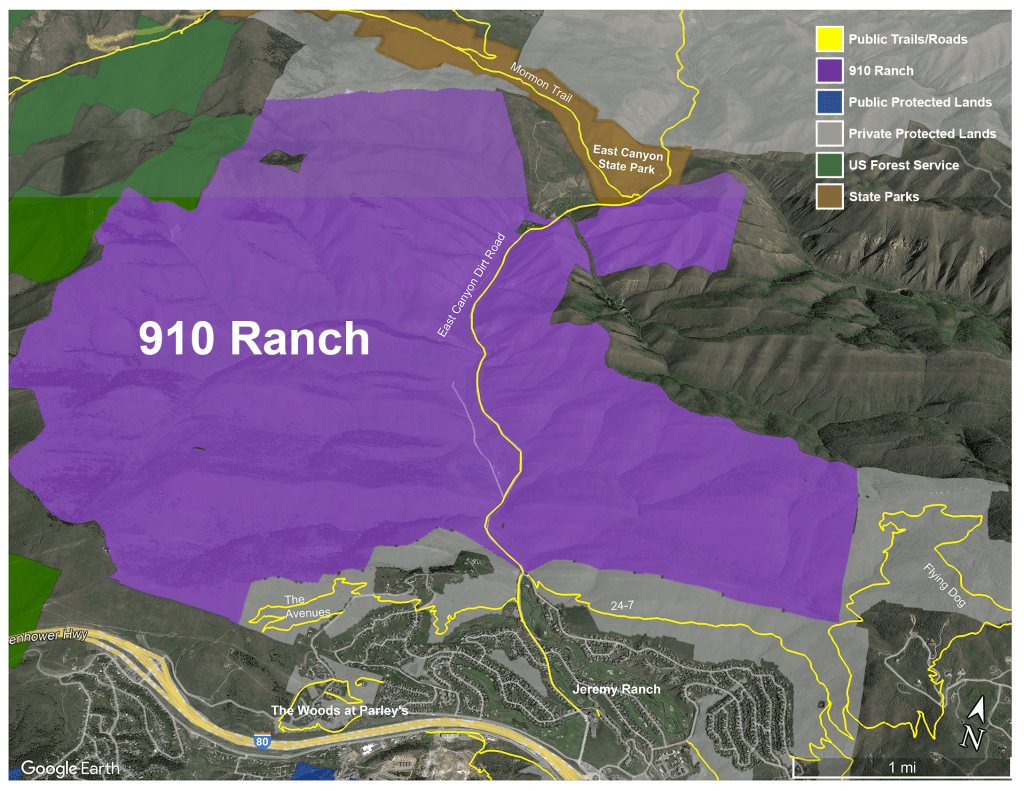
    Summit County Council is holding a special meeting this week to vote on the acquisition of an 8,576-acre property next to Jeremy Ranch and around the corner from Parkview Mountain House.

    The County Manager has recommended approval of the deal and these are the terms:

    – $55 million total purchase price (about $6,413 per acre)

    – Structured through a $15 million three-year option to purchase, with a right to extend for another year for an additional $5 million (option fees to be applied toward the purchase price)

    – During the option period, the County will have control of the property and pay $5,000 per month in rent

    Another way to look at this deal is that Summit County needs to initially come up with $15 million of equity. This is because they are getting seller financing for the remaining $40 million. (Implied loan-to-value of about 73%.)

    After 3 years, they will have to put in another $5 million, which lowers the implied LTV to about 64%. But in both cases, and assuming the $5k per month is all the County needs to pay, there’s effectively no interest on this 4-year “financing”. ($60k per year on $40-45 million.)

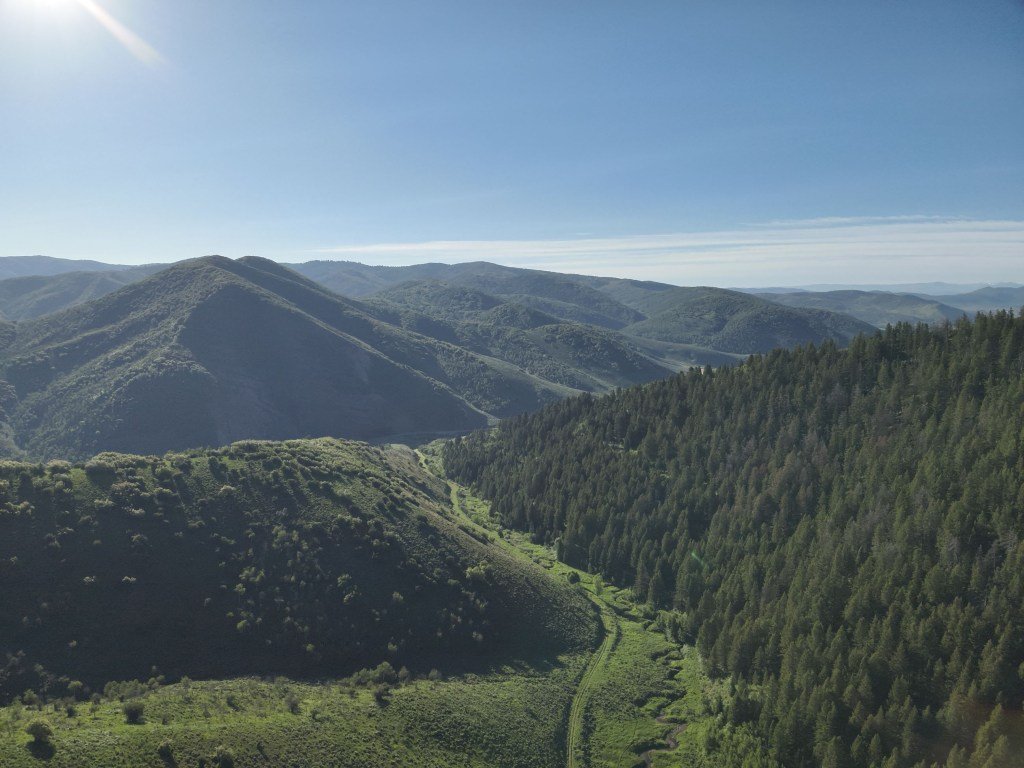
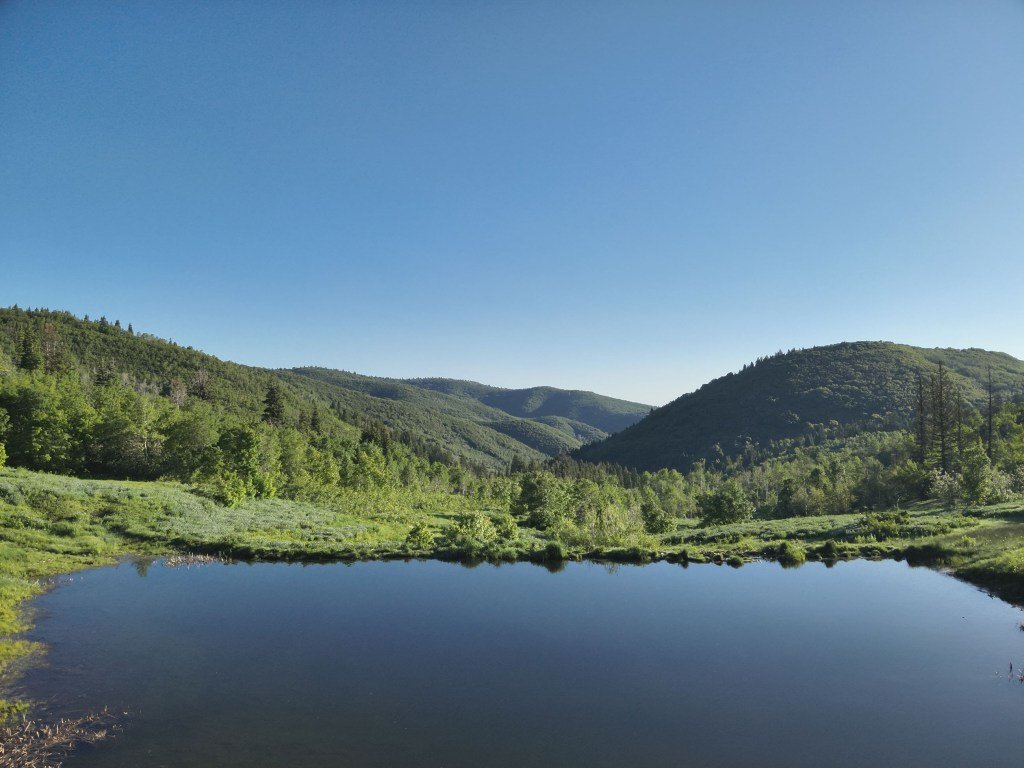
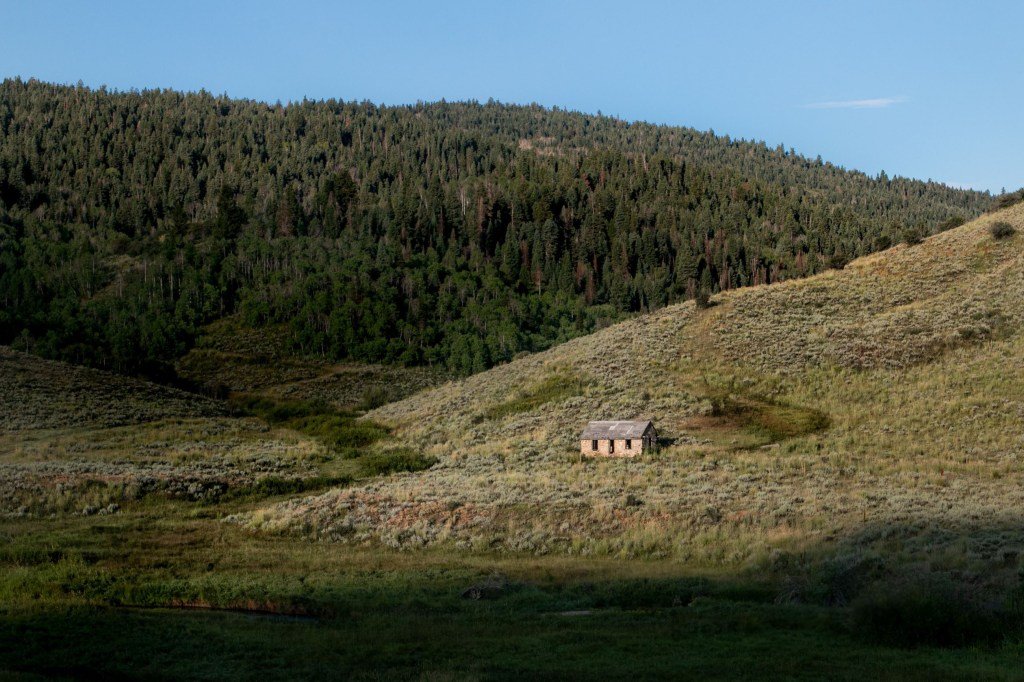
    The purchase price is also only ~$6k per acre, which should tell you that this is not development land. Its value is what you see here:

    And this is exactly what Summit County intends to do with the land: conserve it. As one of the last contiguous mountain ranches in the area that is privately owned, this sure seems like a win for the community. It’s a pretty good deal, too.

    Images: Summit County, Utah

  • Income migration across the US between 2020-2021

    Between 2020 and 2021, so right when the pandemic hit, Manhattan alone lost $16 billion of federally-taxable income, according to this recent study by Economic Innovation Group. And San Francisco saw net migration that reduced its federal income tax base by more than $8 billion. At the time, this represented about a 20% decline.

    Now, I don’t know to what extent this maybe changed, slowed, or reversed from 2021 to today, but the IRS tax data is pretty clear: the pandemic accelerated a longstanding trend of Americans moving out of older coastal cities toward newer, sunnier, and more sprawling cities in the sun belt and in the Mountain West region.

    Here is a map from EIG showing the difference in incomes between households moving in and moving out of each US county. A dark blue county means that the people who moved in were richer than the people who left. (For an interactive version, click through to their website.)

    To give two examples. Here is San Francisco County, which lost nearly 20,000 people with average incomes of around $240,000 per year.

    And here is Summit County, Utah (home of Parkview Mountain House in the Mountain West region), which saw 81 new tax returns and an average newcomer income of $395,000 per year.

    This is an important reminder that people — especially people of means — vote with their feet. If they stop liking a place, they will leave, along with their incomes, to somewhere else. Indeed, in the case of this IRS data, the income flows to these growth regions seem to have been largely driven by upper-income households.

  • Footings and foundations in Park City

    We poured the concrete footings/foundations for Parkview Mountain House this week. Above is a photo of the pour. We’re about two weeks behind schedule because of delays related to site works and excavation. (We’re building into the side of a mountain.) But I’m hopeful we can make it up once we finish concrete work and move on to wood framing next month.

    For those of you who like details, here’s a section showing the footing and retaining wall on the back of the property facing the slope of the mountain:

    Our tallest retaining wall is going to be 15 feet high, which, as I understand it, is more or less the maximum we could have done here without getting into more elaborate structural solutions (such as tiebacks). So the team spent a lot of time solving a design puzzle that involved the height of this retaining wall, the maximum allowable zoning height for the site, and our choice of established grade.

    Onward. More concrete to come and then we move to wood. It’s a race to get “closed in” before the snow starts up again.

  • Utah just chose an urban gondola for Little Cottonwood Canyon

    Every now and then somebody comes forward and proposes an urban gondola. The most recent one that I have heard about here in Toronto was this one from 2016 called the “Don Valley Cable Car.” But like many gondola proposals, it sort of just disappeared. Probably because it wasn’t entirely necessary. (I just checked their website and it is now down.)

    However, there are rare instances where a gondola makes a lot of sense. Medellin, for example, has a very successful urban gondola system that my friend Alex Feldman wrote about, here on the blog, after a visit to the city back in 2014. In this case, the gondola was instrumental in connecting hill-side communities that were previously disconnected from the rest of the city.

    Another less urbanized example is the one that Utah (Salt Lake County) is planning to build in Little Cottonwood Canyon. I wrote about this project back in March when I was there and, today, the Utah Department of Transportation announced their preferred mobility option. It is called Gondola Alternative B and, as far as I can tell, it is still the longest and most expensive urban gondola ever proposed.

    Here are the details in graphic form:

    To summarize, though:

    • The system is being designed to carry 1,050 passengers per hour, with cabins departing every 2 minutes.
    • The gondola itself is expected to cost $370 million, but when you add in a new parking garage for 2,500 cars, tolling infrastructure on the existing State Route, and other improvements, the total all-in capital cost is projected to be $729 million. The route itself is somewhere around 10 miles, so let’s call it $73 million per mile.
    • At the same time, the projected operating costs are relatively low at $8 million per year, so this option actually has the lowest 30-year lifecycle cost out of all the ones that were studied. The other alternatives included widening the existing roadway, enhancing the bus service, and adding rail. There was also one other gondola option, which was presumably called Gondola Alternative A.

    If you’re wondering why this is likely a good idea, check out my post from this past winter.

  • Vacation rentals in Park City

    We spent his morning meeting with prospective property managers for Parkview Mountain House. Here’s what we learned about the short-term rental market in Park City, Utah:

    • Property management fees generally range from 20-35% of revenue (these are turnkey solutions)
    • Airbnb is somewhere around 80% of the market here; though it does tend to skew toward slightly smaller rentals, whereas VRBO skews larger
    • Sundance Film Festival and New Year’s Eve are the two busiest times in Park City (demand greatly exceeds the available vacation rentals — 120%?)
    • Many Sundance guests tends to be people on expenses accounts: not price sensitive, but apparently very demanding
    • Winter is obviously peak demand because of snowboarding and skiing, but demand is still strong in the summer because of cycling, hiking, golfing, fishing, etc.
    • The two slowest times are spring (mud season) and fall
    • Many PMs will track booking lead times, which is the period of time between booking and check-in
    • This past winter season, demand was strong but average lead times were way down — meaning people were booking last minute and responding to snowstorms
    • During heavy snowfall seasons, like the one Utah had this past winter, you’ll likely need to budget for roof snow clearing (a few thousand for the season)
    • Heated driveways are a very good idea in the mountains
    • The most popular / most searched amenity is by far a hot tub; servicing one will run you about $125 per month

    I always find it fascinating to dig in and learn about a new industry and/or market. And that’s exactly what we did this morning.

  • Parkview Mountain House starts construction

    I am in Park City for the weekend because we just started site works for Parkview Mountain House (PMH).

    When you’re building in the mountains, there are generally two types of sites: sites that are uphill from the road and sites that are downhill from the road.

    The latter is significantly harder to build on because you have to first create access to the lot, which means bringing in soil and creating a ramp. You may also end up craning in materials.

    Thankfully, our site is on the uphill side. You bring in an excavator, dig into the mountain, and then you have a flat workable site.

    That’s what we’re doing on site right now and it’s what you’re seeing above — a big hole in the side of a mountain. And it’s pretty exciting.

    Photos: Isaac Silvera

  • /imagine prompt: A silver Land Rover Defender driving through a snowstorm in the mountains of Utah

    Like everyone else, I have started playing around with Midjourney to create AI-generated images. Here are two that I created last night using the prompt: “A silver Land Rover Defender driving through a snowstorm in the mountains of Utah.”

    Now, you can tell that these are AI-produced images, but it’s still wildly impressive that something like this can be easily generated in a matter of a few seconds. And that’s the thing about AI: it’s easier to get, especially compared to crypto. It’s immediately useful and it’s immediately clear what this can and will disrupt.

    Levis, for example, just announced that it will start using AI-generated photography in lieu of actual fashion photoshoots. This is obviously suboptimal for photographers, models, makeup artists, and so on, but a hell of a lot easier for Levis. I would also imagine that the same thing will happen to real estate renderings and many other things beyond just imagery.

    Ben Myers and Steven Cameron recently speculated on their podcast — Toronto Under Construction — that AI could be used for reviewing development applications. Imagine how much this would speed up reviews and the delivery of new housing! So there are very good reasons for why the hype cycle has moved over to AI from crypto and NFTs.

    However, I’d like to go on the record saying that my gut tells me that this will only make what crypto offers even more important. Permissionless public databases (as opposed to databases controlled by individuals/companies) and the ability to demonstrate authenticity/ownership, feel like two important things to me in a world where computers are constantly generating a flood of new content and nobody knows what is “real” anymore.

    It’s certainly a lot less tangible than, “hey, check out this badass Defender driving through the snow.” But I feel strongly that these two innovations will end up working together.