Daily insights for city builders, delivered every morning at 6 AM ET. I’m Brandon Donnelly — a Toronto-based real estate developer and founder of Globizen. I’ve been writing here since 2013.

Tag: utah

  • What’s next for Parkview Mountain House

    Since we first opened bookings for Parkview Mountain House, we have been using a third-party property manager. This seemed to make the most sense given our team is not local.

    But since then, we have learned that, along with the fees charged by Airbnb and VRBO, it’s simply too high a fee load. We also found it difficult to offer the exact hospitality experience we were after without full management control.

    So we have made the decision to terminate our management contract and transition the property to internalized management. What this will entail is taking on more management control (from Toronto) and having a local support team that we assemble and manage ourselves. This is underway and I’m personally enjoying getting further into the details of this business.

    What does this mean for bookings?

    Summer and fall remain open for bookings. But the winter season is now blocked off starting in early December. Expect an announcement this fall when it opens up. To stay in the loop, you can subscribe to this blog and also check off “Globizen Updates.”

    Are you local to Park City and SLC?

    In the meantime, if any of you live in the area and work in the hospitality, maintenance, or property management space, please drop us a line at pmh@globizen.com. We are currently assembling our local vendor team and we’d love to connect with you.

    I have a good feeling that it’s going to be an incredible winter season in Utah.

  • Low-carbon cement

    By some measurements, cement production alone is responsible for about 8% of human-caused carbon dioxide emissions every year. And so there is an imperative to find suitable low-carbon alternatives. Here is what is currently happening in the US (via Grist):

    On Tuesday, Terra CO2 Technology was picked to receive a $52.6 million federal grant to build a new manufacturing plant just west of Salt Lake City. The company has devised a method that turns common minerals into additives that can help replace Portland cement — a key component in concrete, and one of the most carbon-intensive materials in the world.

    In addition to this new facility, the company is set to start construction on its first plant in the Dallas-Fort Worth area:

    The project is expected to break ground in January 2025 and begin shipping out materials by late summer 2026, Yearsley said. The facility will be capable of producing up to 240,000 metric tons of SCM [supplementary cementitious materials] per year when completed, or enough to serve roughly half of the local metropolitan market.

    And all of this is part of a broader initiative by the US Department of Energy:

    The Utah facility is one of 14 projects provisionally selected this week to receive $428 million in total awards from the U.S. Department of Energy’s Office of Manufacturing and Energy Supply Chains. The initiative, which is funded by the Bipartisan Infrastructure Law, aims to accelerate clean energy manufacturing in U.S. communities with decommissioned coal facilities. Officials said the projects are expected to create over 1,900 high-quality jobs across a dozen states.

    For the rest of the article, click here.

  • The final push at PMH

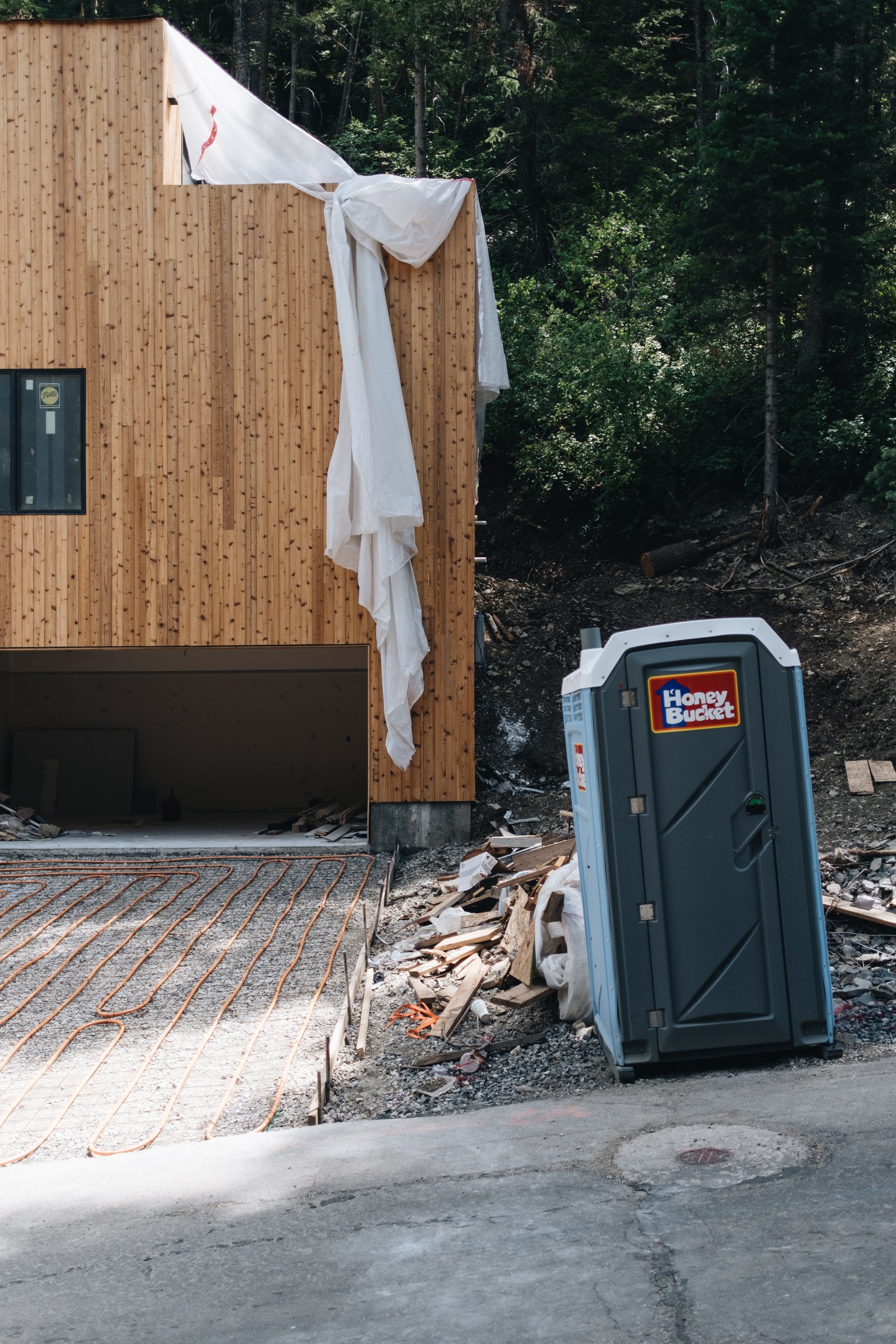
    We are into the final push at Parkview Mountain House. The radiant tubes are in for the heated driveway and walkway (essential), and the concrete is scheduled to be poured later this week. The kitchen countertops were installed this morning, and the backsplash was templated, with install scheduled for this Wednesday. The finish carpenter is back this week, and then the painters will be coming next week. The appliances and hot tub are also on standby in their respective warehouses and will be delivered to site as soon as the team is ready. As always, things are frenetic. But we’re pushing to get occupancy this month. I’m also excited to announce that we just hired an excellent management company. We’re in the midst of that onboarding process, and we’re looking forward to starting bookings sometime this fall. If you haven’t yet added yourself to our list, drop your email over here. We’ll be offering a bunch of discounted bookings on a first-come, first-served basis to the people on this list.

  • Ontario Silver Mining Company

    If you hang around Park City long enough, you will come across things with the name Ontario. There’s Ontario Avenue. There’s the Ontario hiking trail at Deer Valley. And I’m sure there are other things.

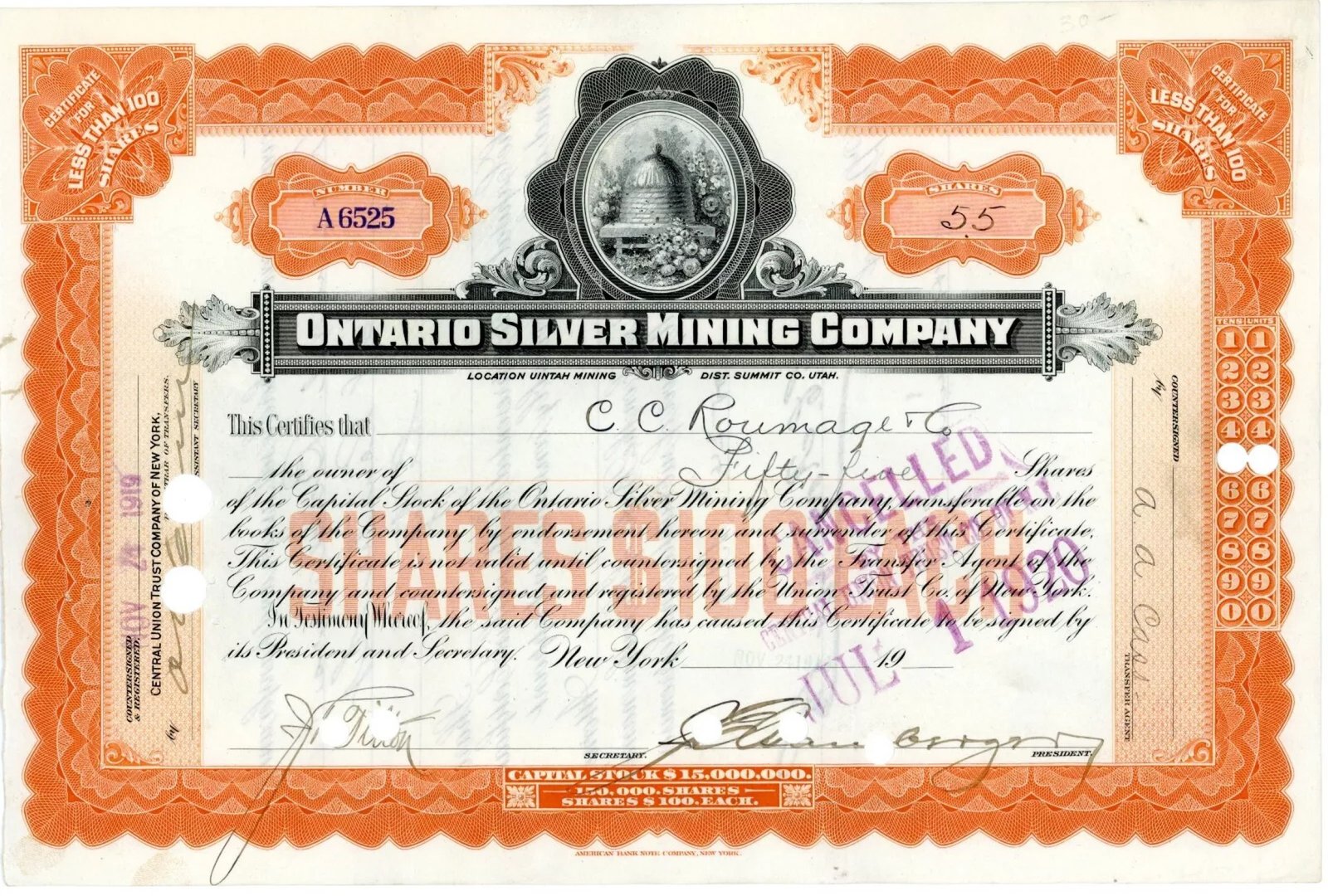
    As a Canadian, I couldn’t help but wonder why. So today I looked it up. And it turns out that the mining company that first put Park City on the map was the Ontario Silver Mining Company (see above stock certificate).

    Established in 1872, it was a major contributor to Park City’s economy (when it was a mining town) and it is usually credited as the mine that generated the most consistent yield in Utah during the late 19th century.

    Cool, so why was it called Ontario? Well, according to the Park City Museum, the mine was first discovered by prospectors from Canada (though they later sold off their claim to George Hearst for a handsome $30,000).

    I can’t seem to find any info about these Canadians, but the province of Ontario did get its name in 1867, so at least the chronology check outs.

    Image: Park City Museum

  • Cecret Lake

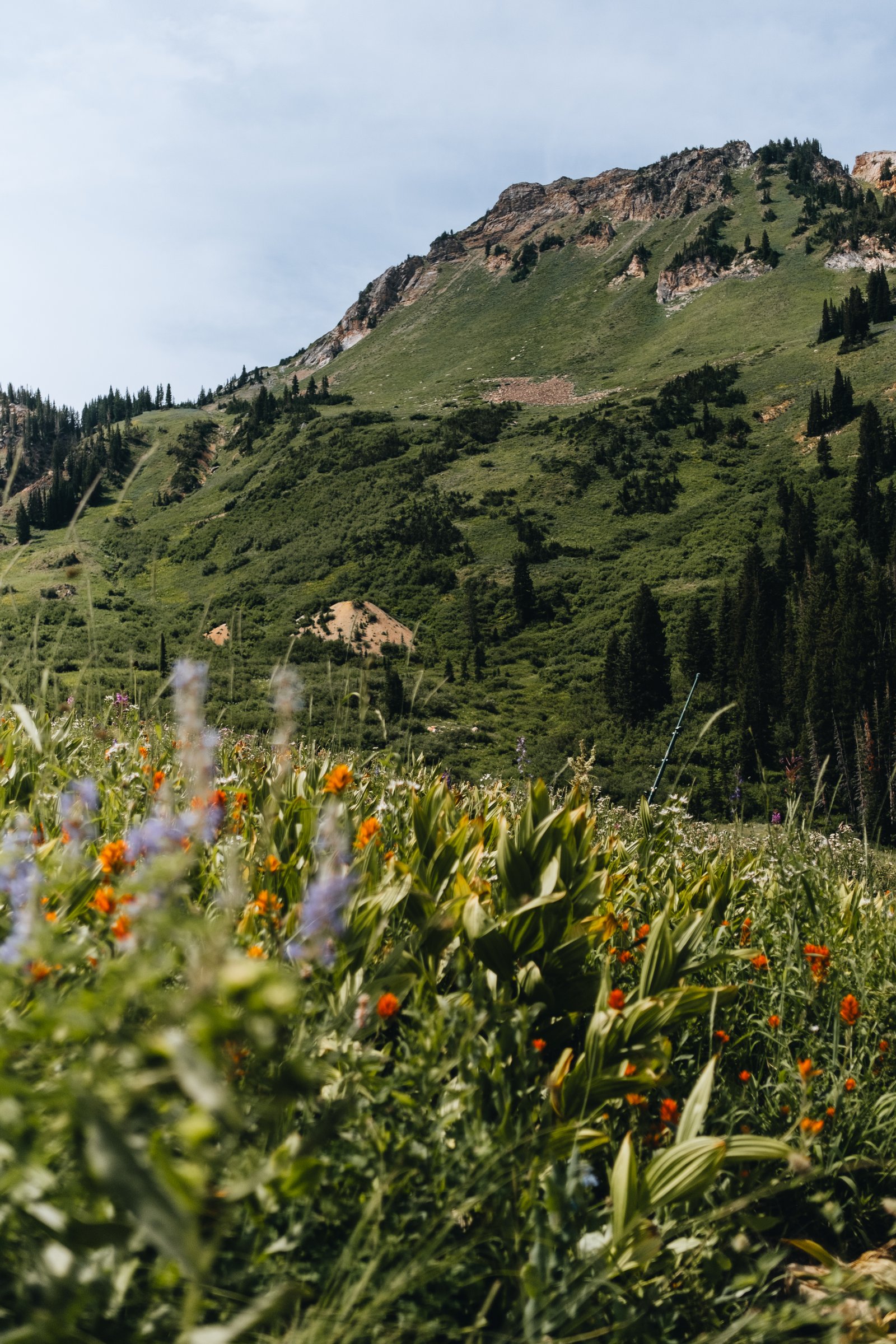
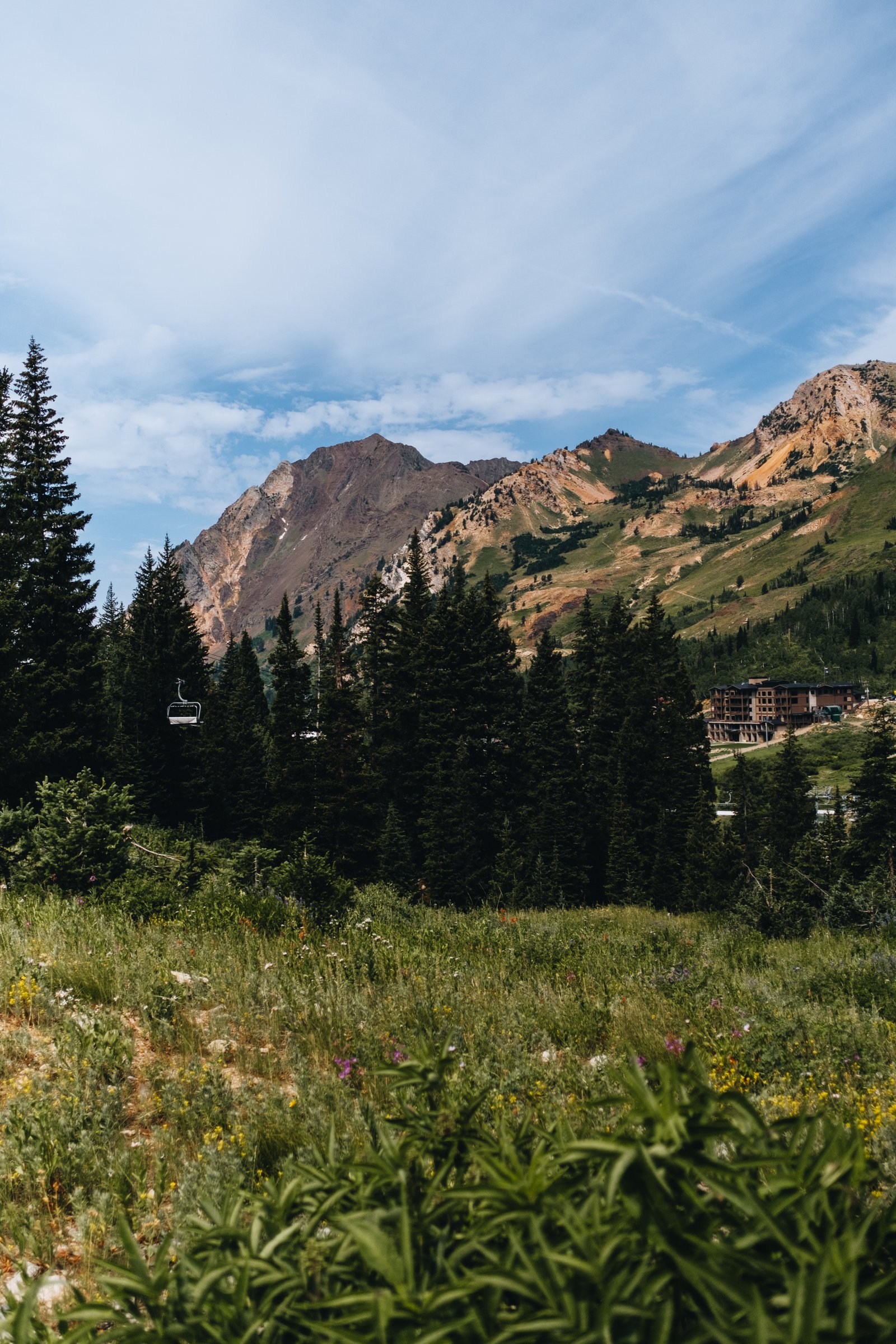
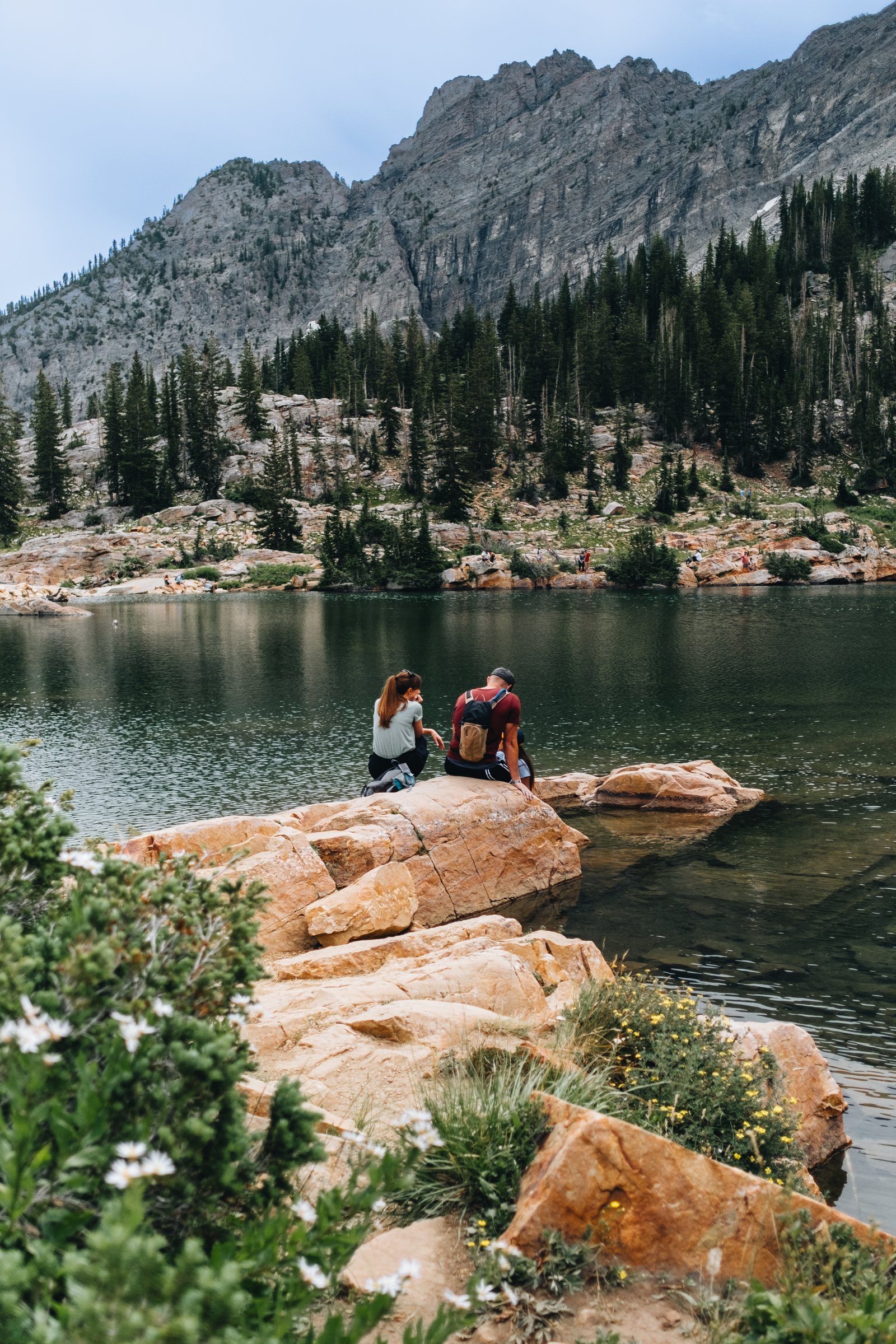
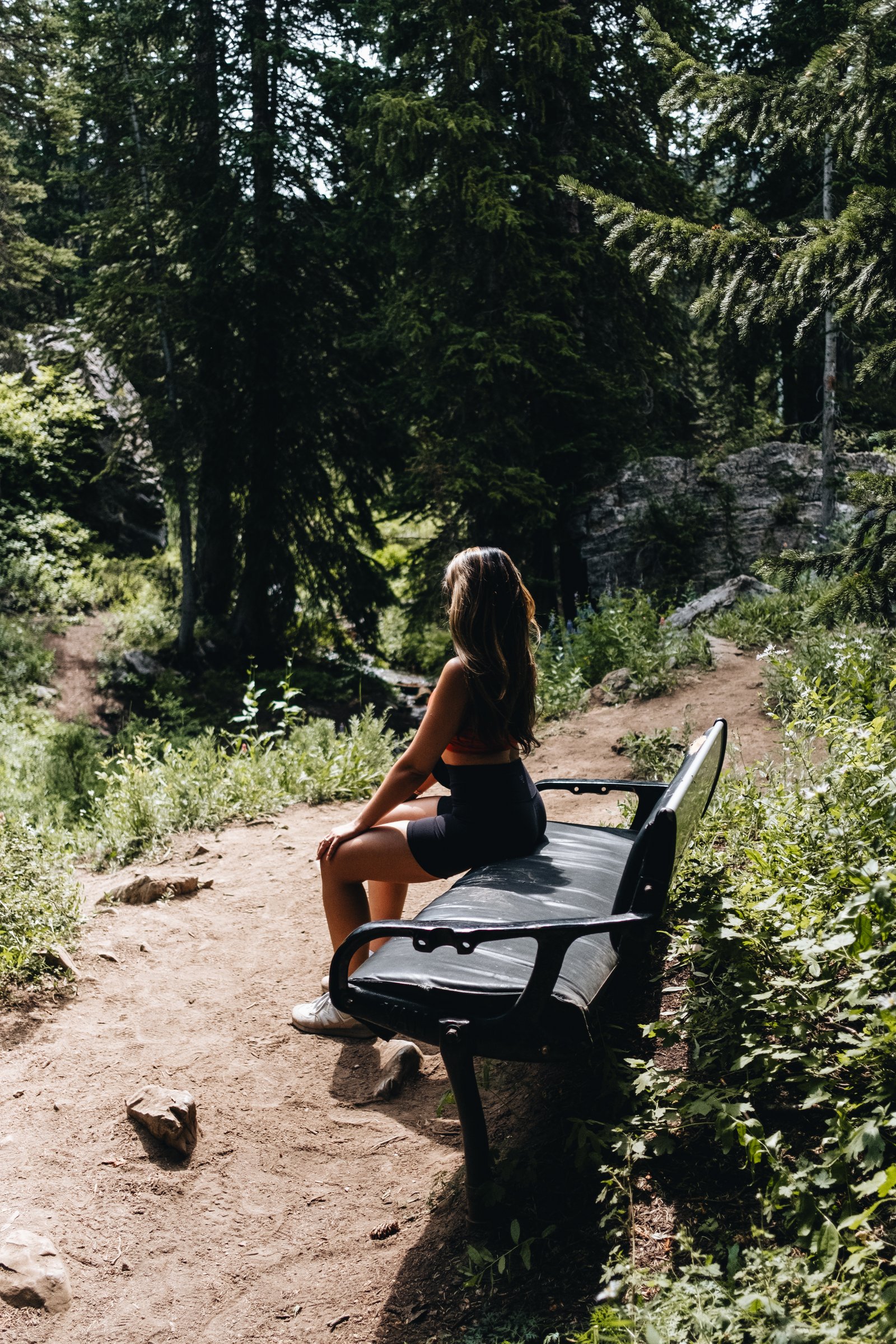
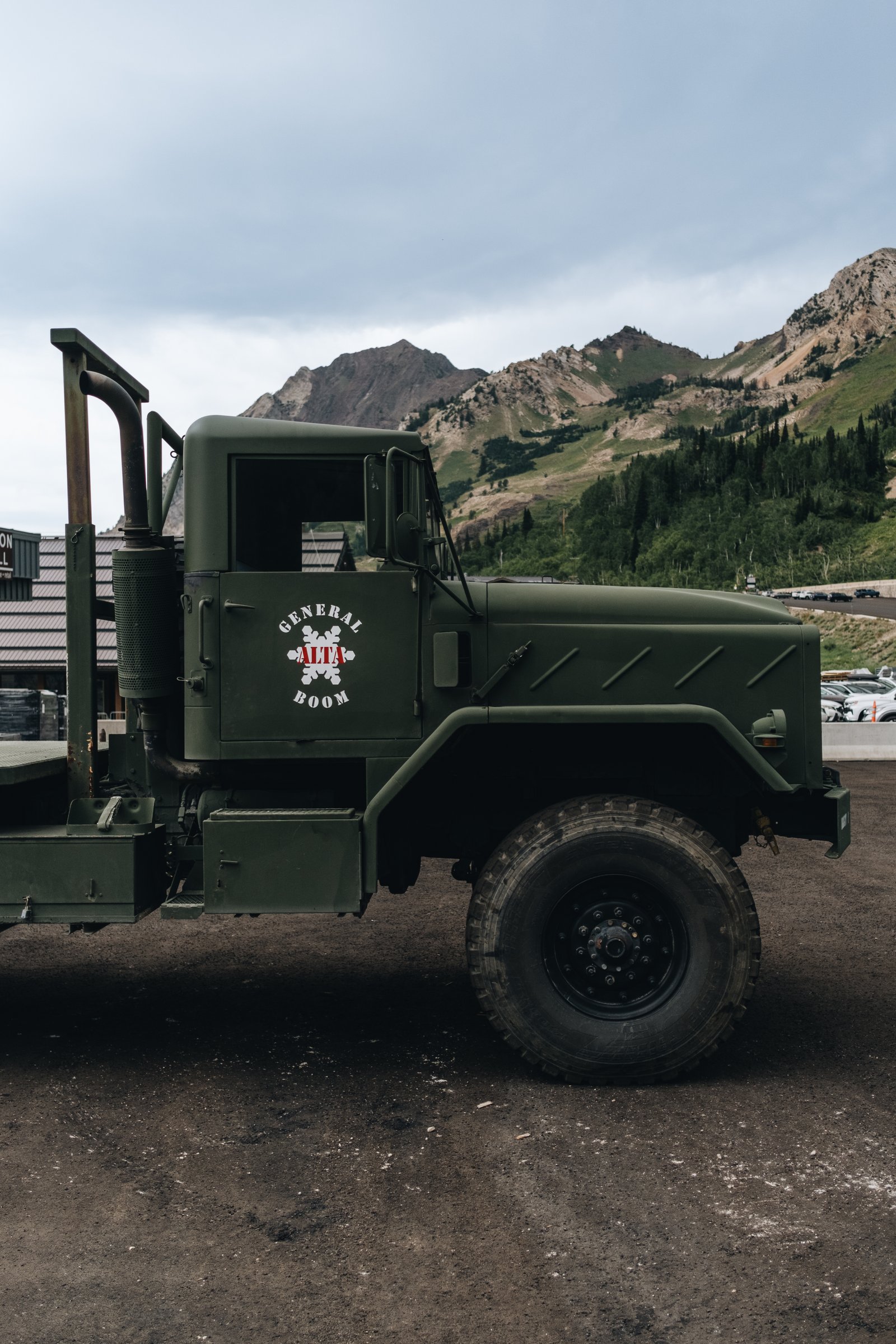
    It is Neat B’s birthday this weekend and we are hanging out in Utah. Today, we hiked up to Cecret Lake, which is accessible from the Alta Ski Area in Albion Basin. Alta is a ski-only resort, so hiking is the only way that my kind — snowboarders — gets to see this area. The basin is known for its beautiful wildflowers and it didn’t disappoint. Cecret Lake is also a watershed area for Salt Lake City. So as you hike up, there are signs telling you not to swim in the lake or do things like bath your dog. Because what goes into the watershed will end up in the faucets of Salt Lake City within 24 hours (according to the signs). If you haven’t done this hike, I would highly recommend it. It’s easy/moderate, and a great way to work up an appetite for In-N-Out Burger, which is a real treat for us Torontonians.

  • The French Alps and Utah are getting the Winter Games

    In my humble and partially biased opinion, two of the greatest places on earth to snowboard are the French Alps and Utah. I say the French Alps because, after 13 years of annual trips, I have yet to find better food and better après parties. And I say Utah because it’s, like, pretty hard to beat the greatest snow on earth.

    Well today, both of these places were announced as future hosts of the Winter Olympics. France will host the games in 2030 (once it has successfully met certain conditions) and Utah will host the games in 2034. This is exciting.

    But it was also entirely expected.

    France was the preferred choice since June. And Utah was the only choice for 2034. To host the Winter Games, you generally need to have at least two things: money and snow. And right now, fewer places want to spend the former on something that may or may not generate an ROI, and fewer places are getting the latter.

    Remember this post looking at the impact of climate change on the Winter Olympics?

    Because of these challenges, there is talk of the IOC adopting a permanent rotation of Winter Olympic cities. And Utah has been eagerly positioning itself to be one of the places. Biases aside, this feels like an obvious choice. Salt Lake City has some of the best and most accessible snowboarding in the world (SLC is a great airport) and — most importantly — it still snows there.

    Photo by Alex Moliski on Unsplash

  • If a tree falls in a forest…

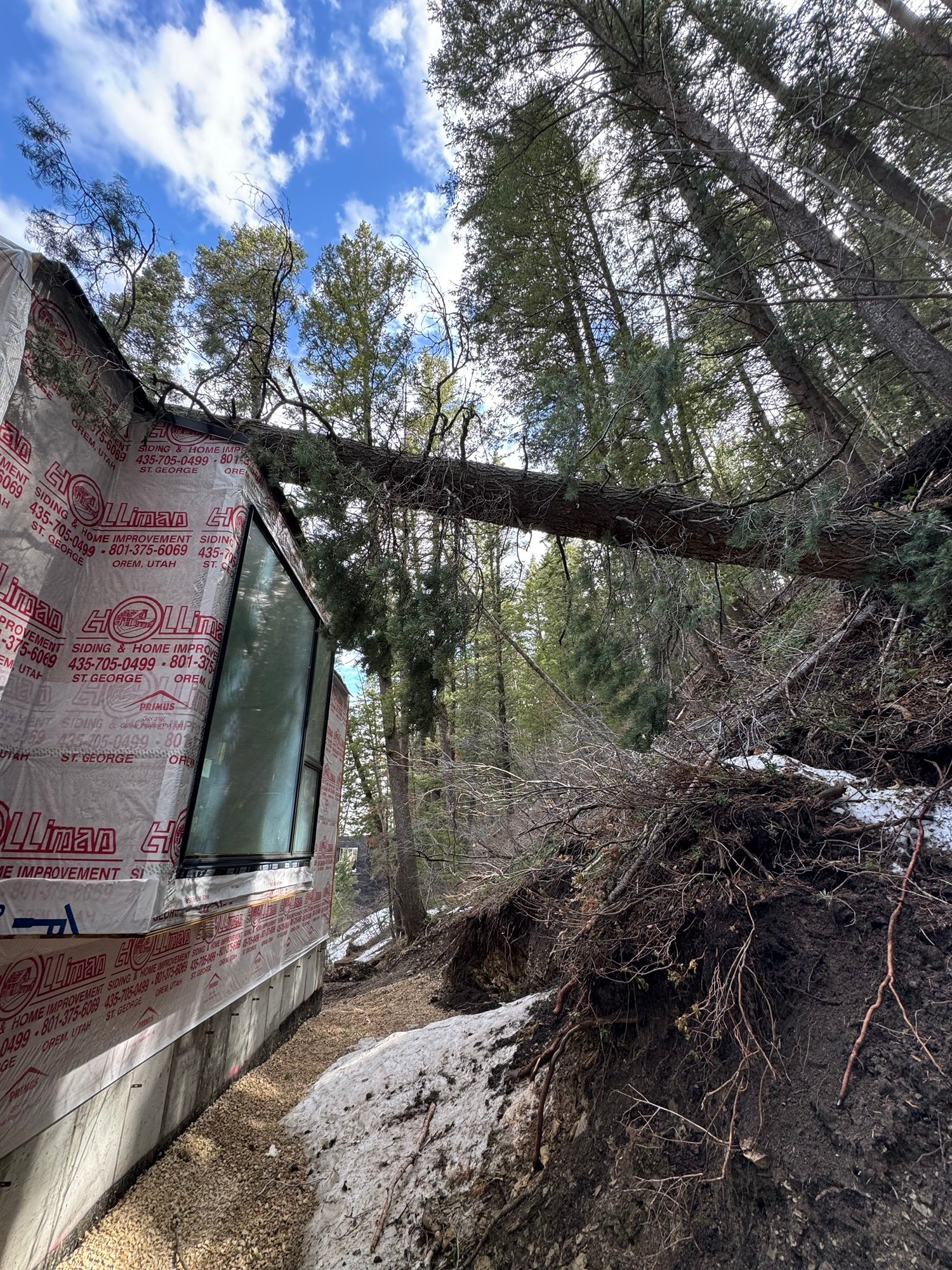
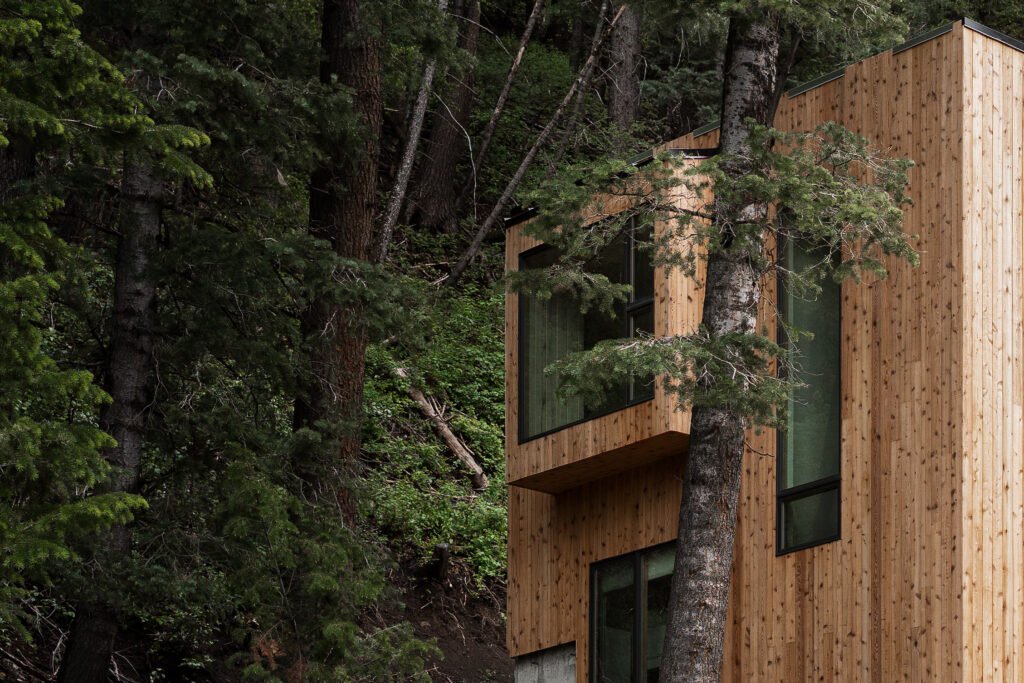
    Construction is risky. For example, last month a tree fell on top of Parkview Mountain House. The tree was located upgradient from the house and, it was so big, that pieces of it actually landed across the street on our neighbor’s property.

    Thankfully, it didn’t cause as much damage as it could have. It punctured the roof in a few places, but magically, the bay window that it landed on was perfectly fine. We also opened up the drywall around the window to inspect all of the structure.

    Needless to say, we didn’t have a line item in our budget for “trees that might fall on the house during construction.” We also didn’t have a line item to take down more trees behind the house, which is exactly what we decided to do after this happened. We called an arborist and asked them to fall anything that looked even remotely questionable. That ended up being 4 more trees.

    We were not expecting this.

    But this is why budgets have something called a construction contingency (although, we still have enough savings from some of our other contracts not to have to use it). In the end, we also learned something. If a tree falls in a forest and no one is around to hear it, the answer is — yes — it can still cost you a lot of money.

  • Last run of the season

    Shot on iPhone and a Fujifilm X-T3

  • I think Roman Mars would appreciate Utah’s new state flag

    Utah got a new state flag over the weekend that looks like this:

    And I immediately thought of this TED Talk by Roman Mars. For those of you who don’t know, Roman is the creator of 99% Invisible and a great lover of well-designed flags. His general rules of thumb are to keep things super simple and to use meaningful symbolism. And I’m fairly certain that he knows what he’s talking about because, in his talk, he refers to the Canadian flag as the gold standard for flags.

    In the case of Utah’s new flag, the symbols are this. The blue at the top is meant to represent Utah’s wide-open skies and lakes. The white in the middle represents its snowy mountains (of course). The red stripe is meant to represent Southern Utah’s red canyon landscape. The hexagon is meant to reference a honeycomb. And finally, the beehive is there because, well, Utah is the beehive state.

    Utah has long enjoyed this reference to beehives. Supposedly, it was early pioneers who started throwing around this reference because they believed it symbolized working together, perseverance, and overall industry. And that’s why the state’s official motto is, “Industry.” So I’d say that they used/kept the right meaningful symbolism.

    Though when I first saw the new flag, I immediately wondered whether the hexagon and honeycomb could have been made just a little simpler. Was the yellow fimbriation, for example, really needed within the blue hexagon? But the more I look at it, the more I like it and the more I think that Roman Mars would be happy with how this turned out. What are your thoughts?

  • How to design a mountain house in the French Alps

    This is the chalet that our group has been staying in for the last week:

    • We’ve been calling it a tree house. It is 5 levels in total. And you circulate through the house using a spiral staircase in the center of it. It’s space efficient, but there are a lot of stairs.
    • The site is downhill from the road, which, as we have talked about before, creates a more challenging build than uphill from the road.
    • You enter the chalet on the third level, which itself houses 2 bedrooms. One floor below and one floor above also have 2 bedrooms, meaning there are 6 bedrooms in total. On the lowest floor is an indoor hot tub, a shared parking garage, and a shared ski/snowboard room.
    • Every mountain house needs, at a minimum, two things: a fireplace and a hot tub. Ideally the latter is outside.

    • As is typical in the mountains, the main living space is on the top floor (level 5 in this case). You want this for the views. If you’re building into a sloping site, the lowest floors are usually somewhat constrained.
    • We did the same thing with Parkview Mountain House. But it does mean that you circulate through the more “private” spaces within the house before reaching the more “public” ones. This is the opposite of what happens in most homes.

    • The underground parking garage is accessed by way of a small parking elevator that lowers you down two floors. Initially this seemed excessive, but it is a shared elevator/garage. The chalet is semi-detached chalet, if you will, and so this was probably the only way they could get enough parking on the site. Assuming our attached neighbor is of a similar size, that’s 12 bedrooms.
    • It also creates an important pathway so that people don’t need to bring their skis and snowboards through the house.

    Every site has its challenges and that is especially the case in the mountains.