Daily insights for city builders, delivered every morning at 6 AM ET. I’m Brandon Donnelly — a Toronto-based real estate developer and founder of Globizen. I’ve been writing here since 2013.

Tag: utah

  • Why Utah wants to build the world’s longest and most expensive urban gondola

    If you drive around the Cottonwood Heights neighborhood in Salt Lake City, which I have done multiple times over the last year, you will invariably see lawn signs shouting for “no gondola!” And the reason for this is that last summer, the Utah Department of Transportation (UDOT) came forward with its preferred solution to traffic congestion in Little Cottonwood Canyon: an eight-mile long gondola all the way up and into the mountains. If built, this would apparently be the longest and most expensive urban gondola in the world.

    To try and explain why this is being recommended, I’ll give the example of what happened to us when we were there last week. We drove into Little Cottonwood Canyon on Tuesday morning when it was not snowing. We left Park City around 8am, passed through the valley (Salt Lake City), and arrived at Snowbird (resort) in around 45 minutes. This is normally how long it takes. But on the way up it started snowing, and it didn’t stop all day. (Nice!) So our drive home took significantly longer and looked like this (we were going 8-10 miles per hour all the way down):

    This is what happens when it snows in the canyons. Which is why a wise bartender at one of the resorts advised us that, “on powder days, you need to leave the valley at 6AM. Because at some point, some asshole is going to think they can get up the canyon in a Tesla, and they will ruin it for everyone. It’s better to nap in your car at the resort than white knuckle for 2-3 hours.” During our drive home, we learned that he was not at all joking. This is what happens. And it is why UDOT wants to build one really long urban gondola.

    There are, however, some very good reasons why urban gondolas aren’t really that common. Portland has one. Medellín has one. And apparently both are quite successful. But other than these examples, they generally aren’t thought of as the most effective tool in the transportation arsenal:

    Gondolas are low-capacity vehicles that quickly get cramped if turned into high capacity ones. They don’t work well for multiple stops. As a result, they are a point-to-point transportation method with low capacity. They are also expensive, especially relative to how many people they might serve, making them financially unattractive options for most applications. At their best, gondolas work when traversing difficult terrain with a consistent but low ridership, which is why they’re most often deployed on ski resorts.

    But this situation is maybe a bit unique. It’s kind of urban transport, but really it’s for people to get up the canyon and shred deep powder. Here’s more on how it might work:

    The Cottonwood Canyon gondola would be a hybrid of sorts between urban transportation solution and resort-based gondola. The proposal is to build a massive 2,500-spot parking garage at the base of the canyon, about 20 miles from downtown and the airport, where people will park. They will then ride the gondola for 27 minutes to Snowbird or 37 minutes to Alta, a trip duration which has no parallel in the urban or resort gondola scene (the Snowbird tram, one of the most famous in the world, fits more than 100 people per tram but takes less than 10 minutes to ride). Even though the gondola would serve two ski resorts, it belongs more to the urban gondola concept because it is being proposed and recommended by the state’s transportation department as a solution to a recurring traffic problem.

    As a snowboarder, this sounds great. But it is, of course, complicated. Conservation groups are objecting, and some/many taxpayers don’t want to pay for a gondola that will largely benefit two ski resorts. Especially one that doesn’t permit snowboarders (I made this part up). So we’ll see. A final decision is expected by UDOT this summer. In the meantime, if you’re interested in urban gondolas, check out this recent article in Vice Magazine by Aaron Gordon (quoted above). He does a good job explaining both sides of this debate. And if you are interested in this topic, I’d be curious to hear whether you think this is a good idea or not.

  • Cascading house in Park City lists for $29,000,000

    We were having pizza at Davanza’s the other night and I started flipping through one of those real estate magazines that you find scattered around places like Park City.

    Now, more often than not, when I come across a house listed for tens of millions of dollars, I usually look at it and think to myself, “okay, I know this is a really expensive home and it is likely that someone will want to buy it, but I objectively don’t like it.”

    However, as I was flipping through the magazine, I came across this listing and instead thought, “hey, this is actually a really cool house.”

    Designed by Wallace Cunningham, the 8,000 sf home features a cascading roof line that looks like an “S” in plan. (It also seems like all of the interior spaces were laid out in service of this plan design, which, depending on your own architectural proclivities, could be considered either a perfectly fine thing or an arbitrary thing.)

    It’s an interesting house. So here’s a video tour.

  • Big Cottonwood Canyon, Utah

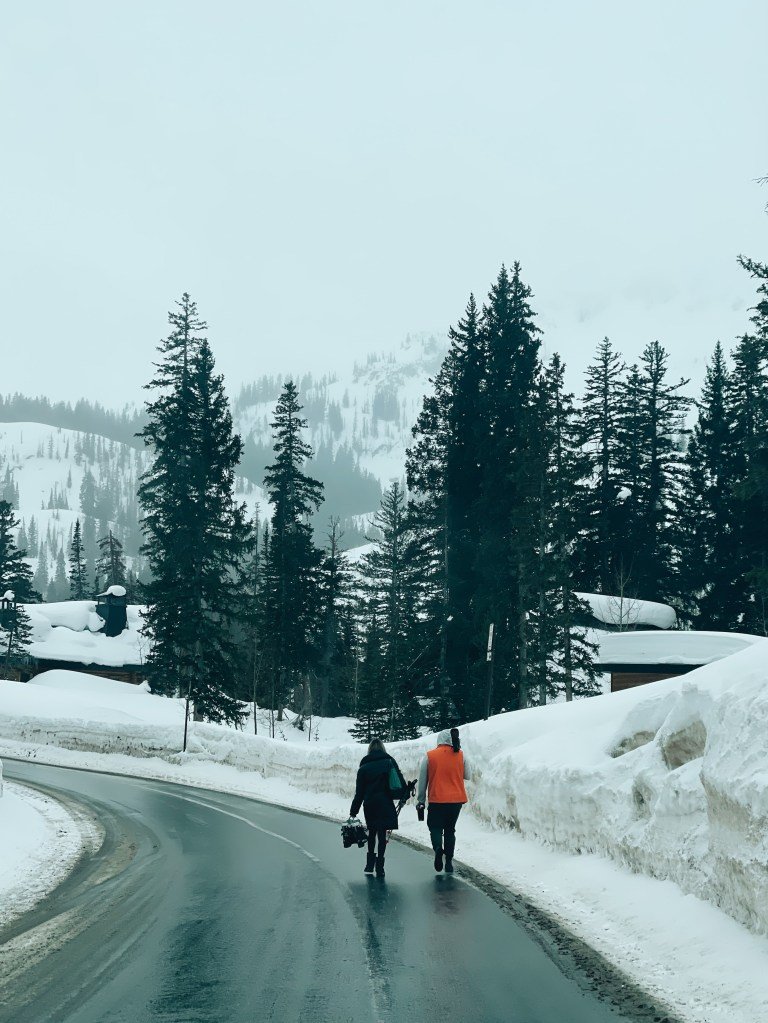
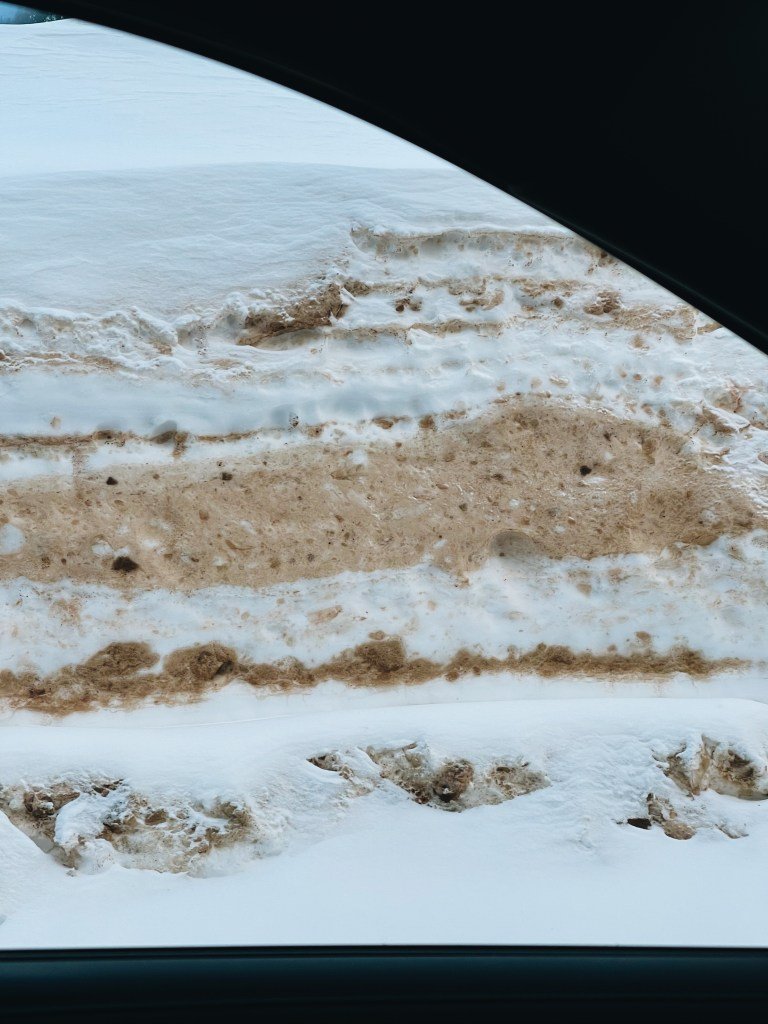
    Today we went skiing and snowboarding at Brighton, which is in Big Cottonwood Canyon. It was cool seeing the landscape transform and the temperature drop as we went from 4,300 feet (in Salt Lake City) to 8,755 feet (at the base of the mountain). Here are a few snaps from the road.

    Shot on iPhone

  • 12th annual

    For those of you who are long-time readers of this blog, you might remember that I do an annual ski and snowboard trip with a group of close friends from both Canada and the US. This year should technically be the 14th annual, but we took two years off during the pandemic (though some of us did meet up to ski), and so we’re referring to this as the official 12th annual. The last one was in February 2020 in Fernie, BC, and this weekend we’re off to Park City, Utah.

    This annual trip is something that I look forward to all year. And it has really cemented my love of snowboarding and the mountains. For me, it’s this wonderful combination of outdoor activity, beautiful landscapes, unplugging, and catching up with friends that I have known, in many cases, for over 20 years. In fact, I know that this trip is the reason that a few of us decided to get together to build Parkview Mountain House (our upcoming “creative mountain retreat” in Park City).

    A big part of what we want to do with the house (when it’s hopefully ready next winter) is share our love of the mountains with others. We want others to experience what we experience when we go on these trips. At the same time, we felt like there was a huge gap in the market. Park City is a world-renowned ski and snowboard destination, and yet it still feels hard to find modern and design-focused places to stay. So we decided to create our own.

    There is, however, one small problem: my right knee. It has been bothering me for the last few years whenever I snowboard, and usually only when I snowboard, to the point where I have to get off the mountain. This obviously pisses me off. So I decided to spend the last 2 months training my tender knees with Noah Mandel. We’ll see if that did anything this weekend. But I’m so committed to the mountains that, if it helps, I’m even prepared to switch to skiing!

  • A few observations about Salt Lake City

    Utah is beautiful. See here.

    People in SLC are really nice. Strangers greet you on the street. Motorists are also more polite and patient. I had no idea how to respond. I suspect it might have something to do with there being less traffic and, in turn, less frustration. But again, even if you ignore what happens on the road, people are nice.

    You will need a serious utility vehicle to navigate the topography of this region. Venturing into the surrounding canyons requires 4-wheel drive or chains during snowstorms. I was only there for a week and already I have visions of a classic Defender in my mind. Do they come in electric versions?

    The streets are too wide for proper enjoyment as a pedestrian. This is a challenging problem to fix, as I have mentioned before. That said — and this is going to be an unpopular opinion — the city felt void of any sort of real traffic. The distances travelled are great, but the highways actually flow freely. You also never really need to worry about parking.

    Electric scooters are popular in SLC. As is cycling — both for getting around and as a reason to wear tight-fitting bright clothes.

    SLC feels as if it is both under the radar and also rapidly emerging. My new favorite restaurant in SLC is a place called Post Office Place. We walked in without a reservation on a Friday night and they gladly took us. I couldn’t understand why the place wasn’t rammed. I mean, they have Marseille-style panisse on the menu!

    The Granary District is an area to watch. It is a former industrial area to the southwest of downtown. It is already home to breweries, food halls, and creative offices. But it needs some more time to properly fill in. We stayed at the Evo Hotel in Granary (highly recommend). The campus amenities include a rock climbing facility, an indoor skatepark, and plenty of places to work and Zoom.

    Most of the new infill housing appears to be mid-rise in scale and most of it is wood-frame construction on top of concrete.

    By my estimation (and by estimation I mean that I have a spreadsheet for this), the ski and snowboard communities surrounding SLC are some of the most accessible in North America. Land at SLC airport and you’re in the mountains in 20-30 minutes.

    Park City-Canyons is the most well-known ski destination. But if you’re a more aggressive skier — the kind that keeps your gloves together with duct tape and counts the number of ski days per season — you’ll want to head over to the Cottonwood canyons and places like Snowbird and Brighton.

    Snowbird remains one of my all-time favorite ski destinations for two reasons: the mountain itself and the brutalist architecture at the bottom of it. There’s none of that faux alpine crap over here — just exposed and unabashed concrete and wood. And who doesn’t love brutalism, right? (I haven’t been to Brighton yet but one of my local friends told me that it’s a great snowboarders mountain.)

    The Canyons Village at Park City is developing really nicely. As I understand it, it’s only about 30-40% built out at this stage. The Pendry Hotel just recently opened (announcement here) and I can tell you that the restaurants were generally busy every night of the week (summer experience). The project team did a wonderful job creating a place and a new anchor in the village.

    What did I miss in this list?

  • New NFT collection — Utah

    Our week of working remotely in the mountains of Utah has come to an end. Being on mountain time meant early mornings every day. But it also meant being able to enjoy the evenings, including sunsets like the one shown here at the top of Ensign Peak. This was my first time really experiencing the Salt Lake City area in the summer, and I’m grateful for the opportunity. It is a beautiful place, and one that still feels under the radar once you exclude its global draw as a ski and snowboard destination. I also had a great time capturing it on my camera. So I’m excited to share my latest NFT photography collection — Utah. All of the photos were taken on my Fujifilm X-T3 (35mm) and can be viewed and purchased over here on Foundation.

  • Salt Lake City’s urban street grid

    Salt Lake City is not a walking city. The blocks are too big (660 feet x 660 feet) and the streets are too wide (132 feet) for that. This has translated into many of the streets have upwards of 6 lanes. To put this into further context, here is a block comparison chart from 99% Invisible:

    In the past, I have called this inheritance one of the greatest city building challenges. Because once you’ve designed a city around the car, it can be hard to move away from that. But as I have also said in the past, there are, of course, lots of things that can be done to make a place more hospitable to pedestrians.

    What is also interesting is that, according to 99% Invisible, the original intent for Salt Lake City’s urban grid was not for its large 660 x 660 blocks to serve as a rigid and immutable plan for the city. The intent was that its large blocks would be further subdivided into smaller blocks as the city grew and developed.

    Other than maybe a few examples, this never happened. Salt Lake City’s large blocks remain a defining characteristic of the city. But who is to say it’s too late for change?

  • Accessible modernism

    One of the most extraordinary things about Salt Lake City is that you can land at its airport and then, in 20-30 minutes, you’re in the mountains looking at landscapes like this:

    By my estimation, this makes it the most accessible big city and mountain town combination in North America.

    Historically though, Salt Lake City hasn’t really been known for modern architecture. There is, of course, one glaring exception and that is the work of architect John Sugden.

    Sugden was originally from Chicago, had trained under Mies van der Rohe, and is credited with bringing a similar kind of International Style to Utah.

    The house pictured above is one of Sugden’s projects.

    I’m not sure when it was originally built, but it was meticulously renovated by Brent Jespersen, and featured in Dwell magazine back in 2009. If you’d like to take a closer look, click here. (It is again being renovated right now.)

    When I was researching who in Salt Lake City and Park City was building cool stuff, Brent’s name immediately came up. So I appreciate him taking the time to tour me through some of his projects this evening. Thank you, Brent.

    What is now clear to me is that this whole not being known for modern architecture thing is quickly going away.

  • A new 15-minute city is being developed near Salt Lake City

    In 2018, the Utah State Legislature passed a bill creating a new land authority to guide the future development of 600 acres of state-owned land in Draper, Utah (just south of Salt Lake City). It’s near an area called The Point of the Mountain and so that’s what’s this project is now being called — The Point. Here’s a map to help you get situated:

    In addition to this being a big and meaningful development opportunity with an estimated 7,400 new households being contemplated, the land authority also wants this to become an innovation hub and a model “15-minute city.”

    There has been a lot of talk about 15-minute cities over the course of this pandemic, but the idea is simply to have all/most of your daily needs within walking distance of where you live and to not have to always rely on a car. This is a difficult thing to achieve in many cities, but I think it’s one the greatest urban amenities out there.

    A big part of this is creating the right street network and planning for enough density, which is why this can be so challenging to do after the fact. Street grids, in particular, tend to be extremely sticky and mostly immutable. In this case, the plan is to create car free zones (or limited vehicle zones) across the various centers of the development.

    Developing walkable communities from scratch is a lot harder than slotting into existing urban fabrics, particularly when you have a contrasting context all around it. You have to get a bunch of different things right for it to be successful. But we continue to see lot more of these urban-focused masterplanning efforts and I think the trend will only continue.

    If you’re a developer who would like to participate in The Point, the RFP door is currently open.