Daily insights for city builders, delivered every morning at 6 AM ET. I’m Brandon Donnelly — a Toronto-based real estate developer and founder of Globizen. I’ve been writing here since 2013.
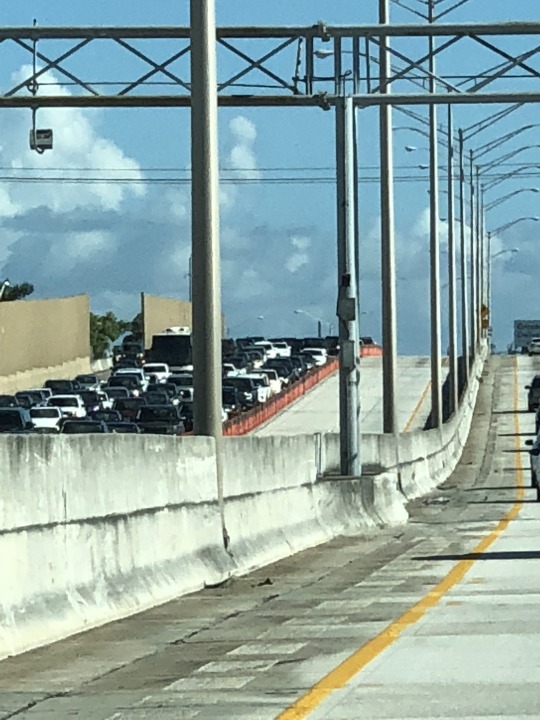
As a general rule, road pricing isn’t popular. But that’s not because it doesn’t work. The problem is that it works too well, and people don’t like the idea of driving less and paying for roads (that currently have a zero marginal cost).
Here’s a recent study by Robert Bain and Deny Sullivan that looked at just how well it can work. In it, they examine 76 data points from 16 countries, including roads, bridges, tunnels, and cordons (areas).
The question: What happens to demand once the marginal cost of using a road goes from $0 to some cost greater than zero? (As part of this, they also looked at whether the road or bridge in question has viable alternatives.)
The results:
The median traffic reduction was 25%. But the interquartile range was -17% to -44%. This is all very significant. Said differently, the traffic impact in nearly a quarter of the examples was -45% or more. So almost a halving of traffic congestion.
These reductions are obviously a function of the cost of using each road, but regardless, the overarching takeaway remains the same: You may not like or want road pricing, but it totally works.
For next year’s budget (2024), the City of Toronto is projecting a $1.5 – $1.7 billion budget shortfall. And over the next 10 years, this shortfall is expected to grow to nearly $47 billion if changes aren’t made. This is according to a recent report prepared by Ernst & Young and Strategy Corp. So right now, all of this is being looked at and debated by Council.
Where are we going to get this money?
One persistent debate is whether the city actually has a revenue problem, or whether it’s simply an expense/spending problem. I can’t say that I’ve scrutinized the city’s expenses at any length, so I’m not going to get into that level of detail today. For this post, I’d like to focus on two specific things. The first is property taxes.
Here is a figure, from the report, showing residential property tax rates across southern Ontario:
What you will see is that Toronto has the lowest rate of the 35 municipalities that they looked at. Now obviously there are some nuances to consider. The average home price in Toronto is higher than it is in, say, Sault St. Marie. Toronto also has a large commercial property tax base. But even still, historically speaking, Toronto has tended to increase its residential property taxes at or below the rate of inflation.
This is a problem. And it is the exact same problem that we have talked about on this blog in regards to residential rent controls. If you own an apartment building where the rents are capped and your expenses are, therefore, growing faster than your revenue, you are (1) highly incentivized not to invest in the apartment (you can’t afford to) and (2) eventually going to hit a financial wall.
Sound familiar? As far as I can tell, that is, at least partially, what is happening here.
Secondly, one of the first things that I did when I opened the report was run a search for “road tolls” and “congestion charges”. Regular readers of this blog will know that this is something I feel strongly about. Here’s what I found:
In 2017, when the City considered implementation of tolls for the Gardiner and the DVP, staff estimated that a $2-per-trip toll would generate $5.6 billion in 10 years. The province has refused several requests to consider these options, with the Minister of Transportation rejecting any discussion of uploading or tolling as recently as December 2022.
This is also a problem. One of the general rules with taxes is that you should ideally tax the things you want less of. Hmm. So why not tax traffic congestion? There is no question that it works. There’s lots of evidence from all around the world. We just lack the political will to actually do it. Instead, we pay lip service with solutions that don’t work.
At the same time, if we were to actually implement road pricing, I don’t believe that a flat toll is the way to go. $2 also seems low. The best practice is dynamic road pricing that fluctuates based on actual congestion levels. Meaning, if you’re driving at 5am, expect a low rate. And if you’re driving at 5pm, expect a high rate.
Virtually overnight, we know this would do at least three things: (1) it would reduce/eliminate traffic congestion (congestion levels would become a function of pricing); (2) it would reduce overall carbon emissions in the city; and (3) it would take a meaningful chunk out of this $47 billion budget shortfall.
Among developed cities, Tokyo has the lowest car use in the world. About 12% of trips are completed with a car, whereas 17% of trips are done with a bicycle. Most people walk and/or take transit. Tokyo has the most-used public transit system in the world — about 30 million people each day.
Car ownership across Japan is about 590 vehicles per 1,000 people. This is comparable to many European countries. In the US, it’s about 800 vehicles per 1,000. However, this figure drops in Tokyo. Here, the average is about 0.32 cars per household, which was interesting to see because most new housing projects in downtown Toronto have parking ratios that are much lower than even this figure.
The average size of a home in Tokyo is 65.9 square meters of usable area. By comparison, the average size of a home in London is 80 square meters. But given that according to Knowles, the average household size in London is 2.7 people, whereas it’s 1.95 in Tokyo. So per capita, Tokyoites actually have more space than Londoners.
35% of streets in Japan are not wide enough to fit a car. If you add in streets that are wide enough to fit a car but not wide enough that a car could stop and not entirely block traffic, this figure jumps to 86%. This to me is a massively significant statistic, because if you want people to walk places you need small streets.
95% of streets in Japan do not allow any sort of street parking — day or night.
The average Japanese car owner drives around 6,000 kilometers per year. This is about a third of what the average American does. In my case, it looks like I have averaged about 8,868 kilometers per year over the last 5 years. Though a big chunk of my kilometers would be from longer one-off snowboarding trips. In other words, I don’t drive all that often in the city.
Japan has some of the most expensive road tolls/prices in the world. Meaning, Japan does not actively subsidize driving and instead just charges drivers accordingly. Apparently the average is about 3,000 yen per 100 kilometers, which is about CA$30 per 100 kilometers.
In addition to not subsidizing cars, Tokyo is also one of the few cities in the world where their public transit does not need to be subsidized. A big part of this has to do with high ridership, but the other important part is that its transit authorities also develop real estate. Shockingly, this means that it tends not to build standalone and single-storey transit stations (ahem, I’m looking at you Crosstown LRT). Instead, they build lots of density where it always belongs: on top of transit.
Let’s assume that you’re Mayor of your city and that, for whatever reason, you have no need to pander to voters. You’re a benevolent dictator. You can do whatever you think is best overall for the city and it will just happen. What would you do? This is more or less the question I asked on Twitter this morning, and I think it’s only fair that I answer my own question. So here is a non-exhaustive list of items that came to mind while thinking of Toronto:
Substantially increase the pay of public sector workers throughout the city and bonus them based on measurable outcomes. Forget things like time limits on development applications; instead align incentives. For example, if we’re trying to get more shovels in the ground on affordable housing, incentivize people based on building permits issued. I’ll never forget what Roger Martin told me while I was at Rotman. When he became Dean of the school, Rotman was a whatever business school that wasn’t faring all that competitively in the rankings. One of the problems he discovered was that the school’s professors were getting paid far less than those at Wharton, Harvard, Stanford, and so on. So if you were a star, why would you ever want to teach at Rotman? He immediately matched the salaries of those top-tier schools and then, not surprisingly, the top-tier talent arrived. You get what you pay for.
Immediately price roads and congestion, and direct, to the fullest extent possible, the funds toward transit and cycling infrastructure. At the same time, the planning and building of transit would be depoliticized. There would be a reccurring funding stream and a plan that we’re continually building out. Minimize protracted debates. Never stop building. There’s a lot of talk this mayor election about solving traffic congestion. I have yet to see a plan that will actually work. Accurately pricing congestion likely won’t be popular, but I can guarantee you that it will be highly effective.
Ensure that property taxes are sustainably covering the costs of operating the city and then, at a minimum, peg all future increases to CPI.
Make any new housing development less than 12 storeys as-of-right. That would mean, no rezoning process and no site plan approval; just straight to building permit.
Empower the private sector to build affordable housing through incentives and subsidies. Affordable housing isn’t feasible to build on its own, which is why nobody is doing it. Inclusionary zoning also won’t get us there. Make developers want to build it and they’ll do it.
Liberalize licensing and cut red tape to empower small entrepreneurs across the city in various industries. A perfect example in my mind is street food. Toronto is the most diverse city in the world with some of the best restaurants, and yet the only thing you can buy on the street is a stupid hot dog. If we empowered small entrepreneurs to setup shop on our streets, we would easily have the best street food scene in the world. And I am positive that there are countless other latent opportunities in this city that are being held back by dumb and archaic rules.
Focus on art, design, culture, and innovation as central pillars of Toronto’s brand. Miami is a good example of what this approach — along with favourable taxes and nice weather — can do for a city. I’ve said this before, but here’s just one example: Toronto is in many ways the birthplace of the cryptocurrency Ethereum. Why is nobody talking about this? Why are we not celebrating and leveraging this? It’s a missed opportunity. Broadly speaking though, I think just having and doing three things can be effective in promoting new ideas for these pillars: have reasonably affordable housing, be a city that young people want to live in, and remain open and tolerant to immigrants.
Stop thinking of the night-time economy as a nuisance and instead think of it as a powerful economic development tool. I recently responded to this “night economy survey” that the City of Toronto released and the obvious bias is that nighttime things are seen as a terrible nuisance. In other words, “tell us how do we make all of this less annoying for grouchy voters.” My response was to extend last call to 4am and to start thinking of it as an opportunity to draw in young people, tourists, and whoever else. This complements my previous point.
This is, again, a completely non-exhaustive list. But if I had to summarize the overall ambition, it would be to make Toronto a truly exceptional and remarkable city. We should never be happy with mediocrity.
It asked whether developers should build more 3-bedroom apartments/condominiums. And not surprisingly, the vast majority of people voted yes. Of course, the problem with this poll is that it says nothing about the overall affordability of these larger suites. (We’ve talked about this many times before on the blog.)
So it is akin to asking: Should Mercedes put this concept car into production and make it widely available? My answer would obviously be yes. It’s a sweet car. I would like one. But I also don’t like spending money on depreciating “assets”, so in the end I probably wouldn’t buy it. That said, if you’re in the market for a sweet 3-bedroom condominium, I could sell you one right now.
My overly simplistic view of taxes is that it is generally good practice to tax the things you want less of — you know, things like cigarettes and pollution — and reduce taxes on the things you want more of — you know, things like housing and income.
The irony of this poll is that the vast majority of people voted for road tolls as the way to increase municipal funding. But in practice, this is not what we do at all! We heavily tax new housing and we are extremely reticent to even accurately price the usage of roads and highways.
Here in Toronto, I guess we kind of tried a few times, but in the end it never passes. Part of the problem, I think, is visibility. New home taxes are easy to hide from consumers. It is also easy to just vilify big bad developers. Road prices, on the other hand, are highly visible and they hit you repeatedly.
Perhaps what we ought to do is become more transparent about the charges that are levied on all new housing. I bet most people would be surprised.
If you are a longtime reader of this blog, you’ll know that I am a supporter of road pricing. I believe it’s the only way to realistically solve the problem of traffic congestion and I believe that underpricing roads (such as not charging for them) isn’t fair and equitable to taxpayers, especially given our need to shift to more sustainable forms of mobility.
Also, new highways are far more expensive than most people realize, typically costing tens of millions of dollars for each kilometre of lane. Considering land, construction and additional operating expenses, the cost-recovery price for additional highway capacity – the toll required to repay its incremental costs – is typically 50 cents to $2.00 per vehicle-kilometre, far more than what motorists pay in fuel taxes.
The law of demand is a fairly simple economic concept. It states that price and quantity demanded have an inverse relationship. The more you charge for something, the less demand there will be. And the less you charge for something, the more demand there will be.
So it shouldn’t come as a surprise to anyone that when you underprice road and highway usage, you get lots of demand — oftentimes too much demand. As Litman argues in his article: “You can have free roads or you can have free-flowing traffic, but it is not economically feasible to have both.”
Joe Cortright of City Observatory recently published a post about the types of policies that cities should be looking to adopt in response to autonomous vehicles. It’s called: Pricing roads for autonomous vehicles.
Many have argued, including urban economist Edward Glaeser, that autonomous vehicles are going to be positively disastrous for cities. Once you remove the labor costs associated with the driver and the overall price per kilometer plummets because of pooling/technological advances, we are going to see an huge surge in demand – well beyond the capacities of our roads.
Of course, there are solutions. We can accurately price the roads, which is something that more cities should be doing today even before autonomous vehicles arrive. Here is an excerpt from Cortright’s article:
“With modern electronics, and especially with autonomous vehicles, position and speed is monitored with great precision. There is no reason why they [drivers] should not pay for exactly the amount of roadway that they use. And we know that the cost of the city’s roadway varies substantially across space and over time. Use of road capacity in less dense neighborhoods at off-peak hours imposes nominal costs on the city’s road budget. In contrast, peak hour use of city streets and arterials, particularly in and near the city center, imposes huge costs on the city and its residents. Those who use the system at peak hours in congested locations should pay the costs associated with creating, maintaining, and where necessary expanding that infrastructure.”
This isn’t a novel concept, which is why when Toronto was looking at a flat road toll I argued here on the blog that it was a step in the right direction but that it was too blunt a tool.
I was out for dinner this evening and the topic of road tolls (road pricing) came up. All of us at the table agreed that this was a missed opportunity for Toronto. Yes we proposed it, but then we got cold feet and backed away.
Why might this be a good idea?
City Observatory did a good job explaining this with their post about free ice cream day at Ben & Jerry’s. They argued that this sort of promotion actually provides a great crash course in transportation economics. Nobody is paying, but the lines are real long.
Here’s an excerpt:
Substitute “freeway” for “free cone” and you’ve got a pretty good description of how transportation economics works. When it comes to our road system, every rush hour is like free cone day at Ben and Jerry’s. The customers (drivers) are paying zero for their use of the limited capacity of the road system, and we’re rationing this valuable product based on people’s willingness to tolerate delays (with the result that lot’s of people who don’t attach a particularly high value to their time are slowing down things for everyone).
What we are talking about is simple, but apparently it’s not easy to execute on.
Joe Cortright of City Observatory recently published an interesting post on HOT lanes (high-occupancy toll lanes) and cited a research paper by Austin Gross (University of Washington) and Daniel Brent (Louisiana State University). The paper looked at the behavioral response of drivers to dynamic HOT lane pricing.
They way HOT lanes work is simple: when traffic is light, the price dynamically decreases; when traffic is heavy, the price dynamically increases to ensure a minimum level of service. That is, the price increases until enough cars leave the lane and driving speeds increase to some minimum threshold. In this case, it’s 45 mph.
The key takeaway from the report is that “value of reliability” appears significantly more important to drivers than “value of time”. Put differently: it’s less about the time I’m wasting in traffic and more about the uncertainty of not knowing when I’m going to arrive at my destination.
It’s for this reason that HOT lanes are used more frequently in the morning (when you’re running late for that meeting) than in evening (when you’re just on your way home from work).
Gross and Brent estimate that the spread is about 7.5x. The typical driver values saving time at about $3 per hour and reliability improvements at about $23 per hour! This is fascinating because we tend to focus a lot on time. But arguably what people really want to buy is greater certainty.
I can tell you that it’s definitely one of the things that I love about walking to work, or for that matter cycling somewhere. I always know how long it’s going to take.