Daily insights for city builders, delivered every morning at 6 AM ET. I’m Brandon Donnelly — a Toronto-based real estate developer and founder of Globizen. I’ve been writing here since 2013.

  • Stubborn on vision, flexible on the details

    October 18, 2025 · View original


    So what did we uncover during yesterday’s great urban design debate?

    If I can extract one overarching takeaway, it’s maybe this one: We need to be big and bold (have a compelling vision!), while at the same time getting out of the way of small-scale urban innovation. Joe Berridge, for example, felt strongly that Toronto is not taking full advantage of its waterfront. We’ve been too focused on bike lanes and parks, rather than on creating noteworthy global draws and aggressively marketing ourselves externally. Toronto needs its Sydney moment — something like a globally significant Opera House that attracts people from all around the world. I don’t disagree. Cities need to do things that are remarkable.

    At the same time, we spent a lot of time talking about the micro scale. Some of the most loved urban environments from around the world have the simplest built form: fine-grained and humble buildings fronting onto human-scaled streets — streets like Ossington in Toronto and seemingly every street in Paris. But that was then. This kind of built environment is mostly incongruent with how we plan and develop new communities today. We develop big, we impose top-down planning, and we no longer have the same inherent flexibility that our older building stock had.

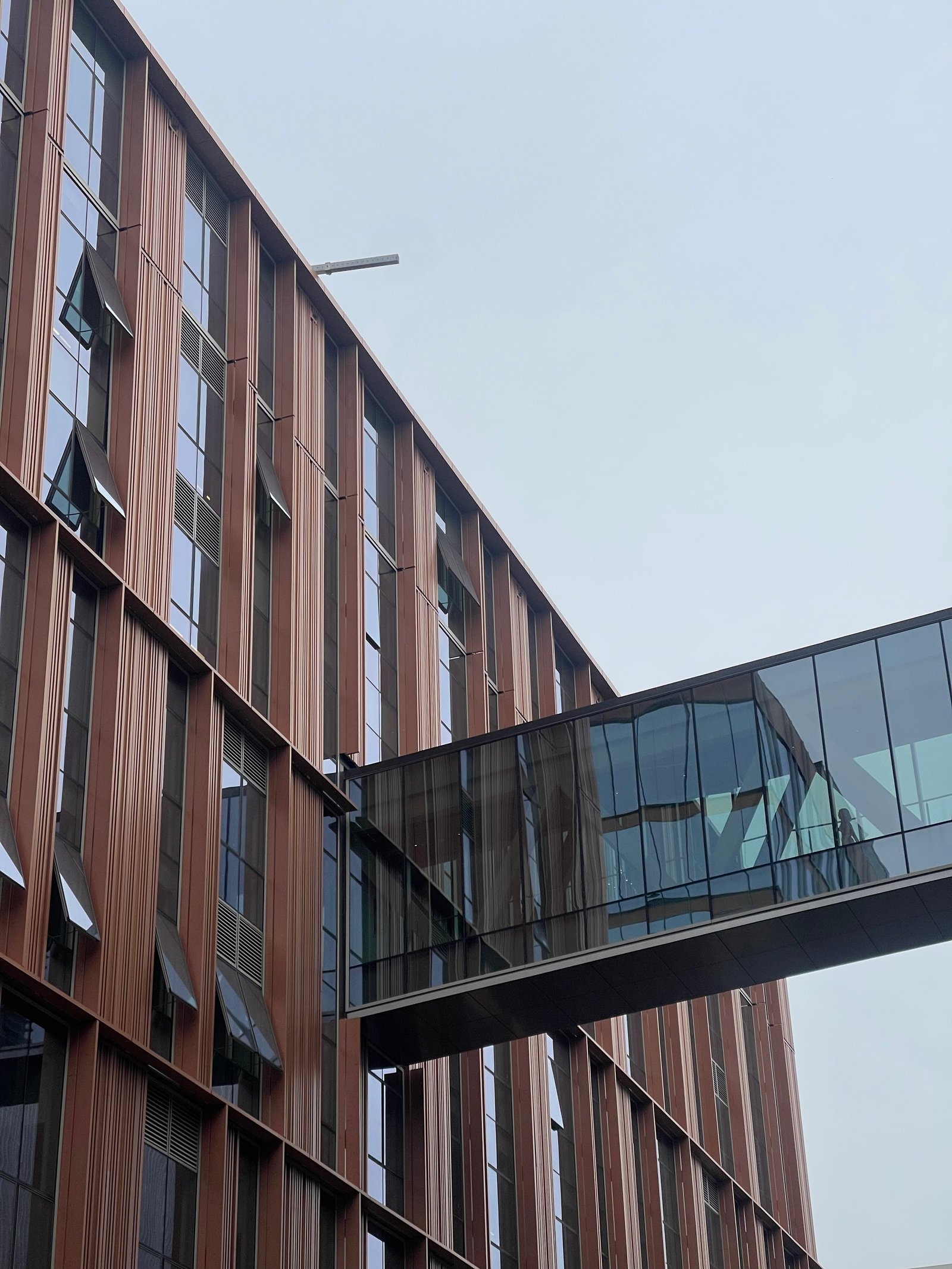
    Take, for instance, Toronto’s East Bayfront, which is where this conference is taking place. It’s a recently developed community with many or most of the hallmarks that constitute good urban design today: handsome architecture (including mass-timber buildings), pedestrian-friendly streets, well-designed public realms, and more. And yet, the area is largely void of any urban vibrancy. Other than the boardwalk along the water and a handful of restaurant patios, there’s very little public life. Many of the buildings are also connected by bridges, which is not in and of itself a problem, but it further removes life from the street.

    Here are a few photos of the area that I took while leaving the panel:
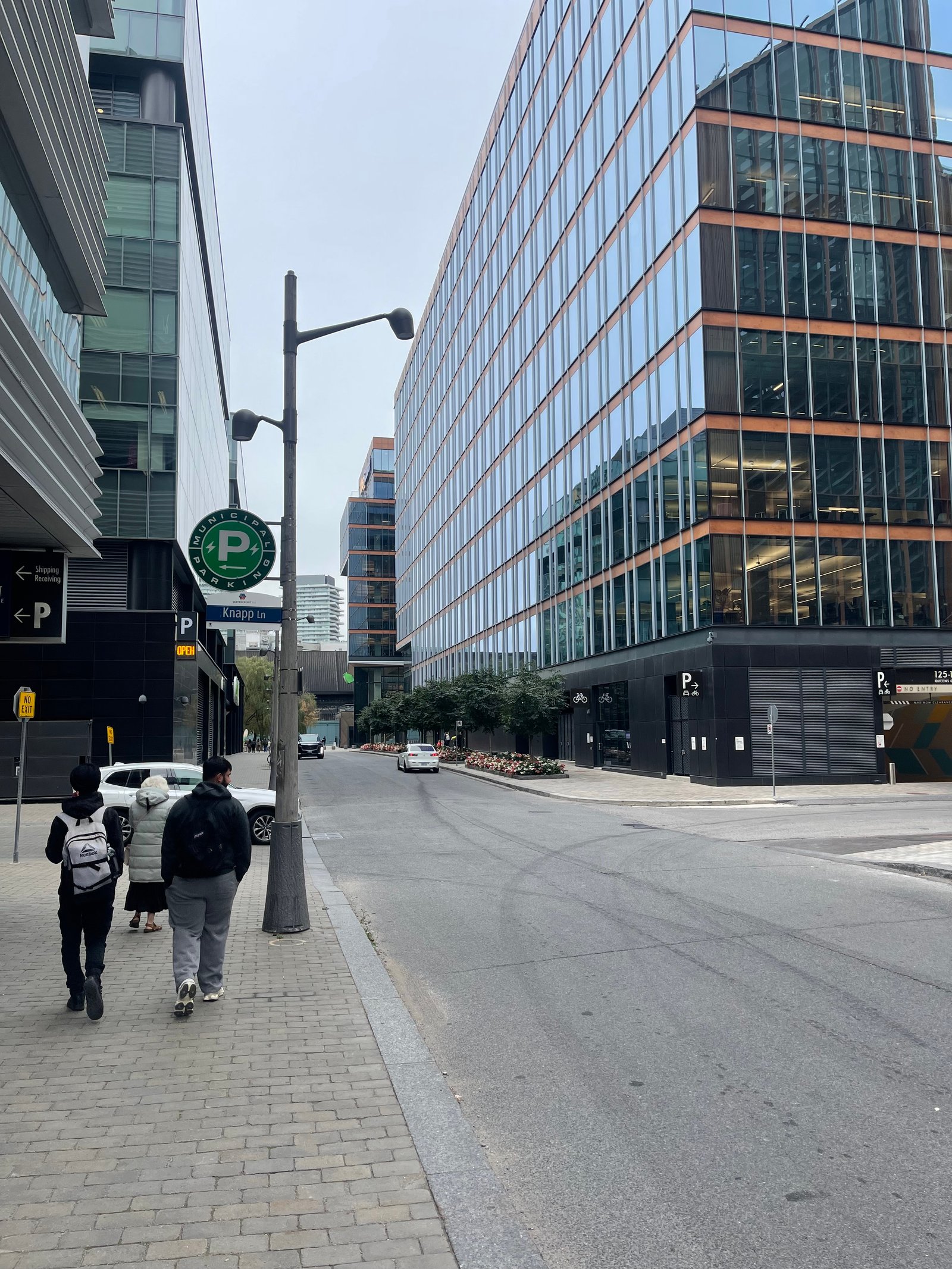
    Compare this to a random street in Tokyo:
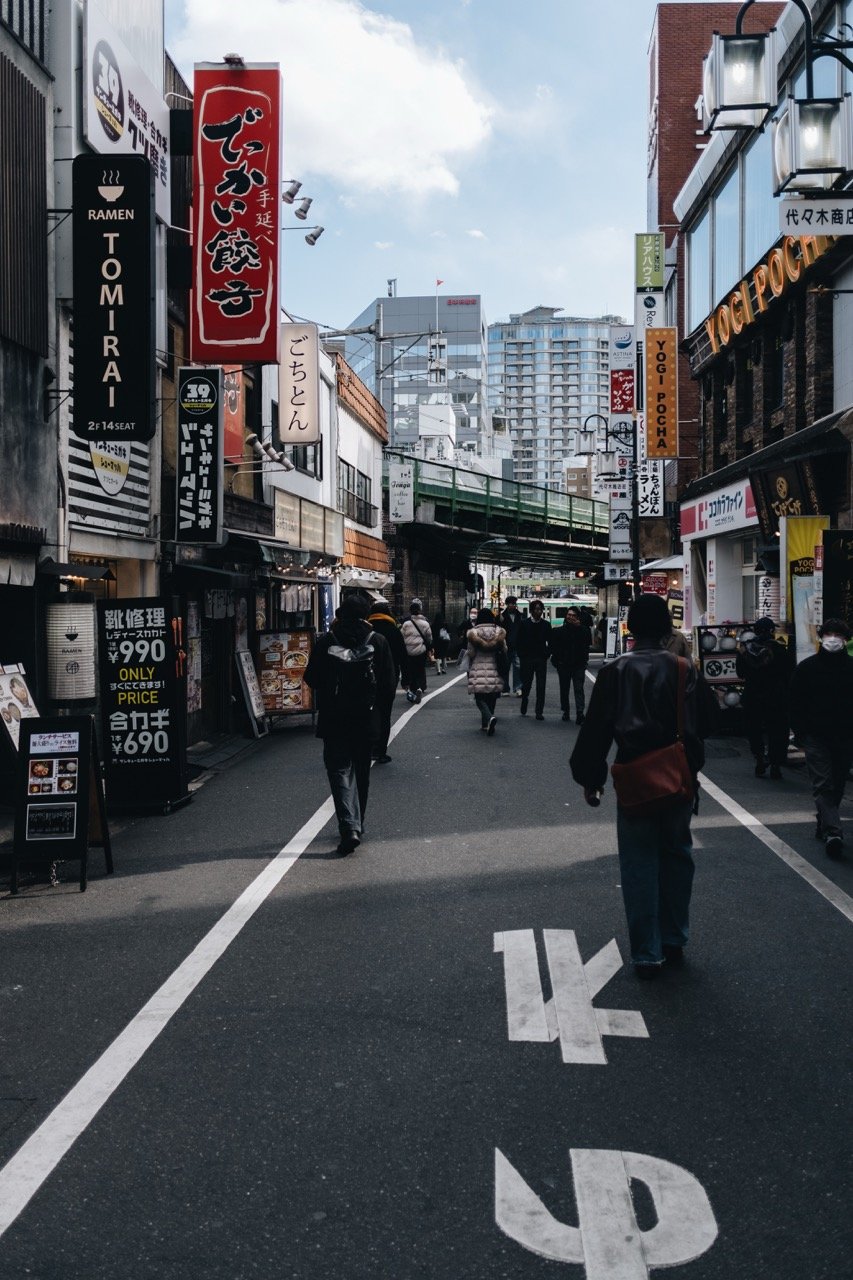
    The buildings are ugly, or at least nondescript. None of the tenants are following a consistent signage standard. There are no sidewalks. And there’s an overhead rail line bisecting the street. And yet, it’s vibrant. It’s a successful urban street. Most older cities have areas akin to this, but it’s a real challenge to create it from scratch in new developments (see above). I’m very interested in this challenge and, as we have talked about many times before on the blog, I think part of the answer lies in allowing flexibility and ground-up change. It’s impossible to predict what an area could become and, for that reason, top-down planning will never get it exactly right.

    Thinking about it this way, urban design isn’t dead; it just maybe needs a refocusing. And what I propose is approaching it along the lines of Jeff Bezos’ old management adage: You want to be stubborn on vision, but flexible on the details.
  • Is urban design dead?

    October 17, 2025 · View original


    Who knows?

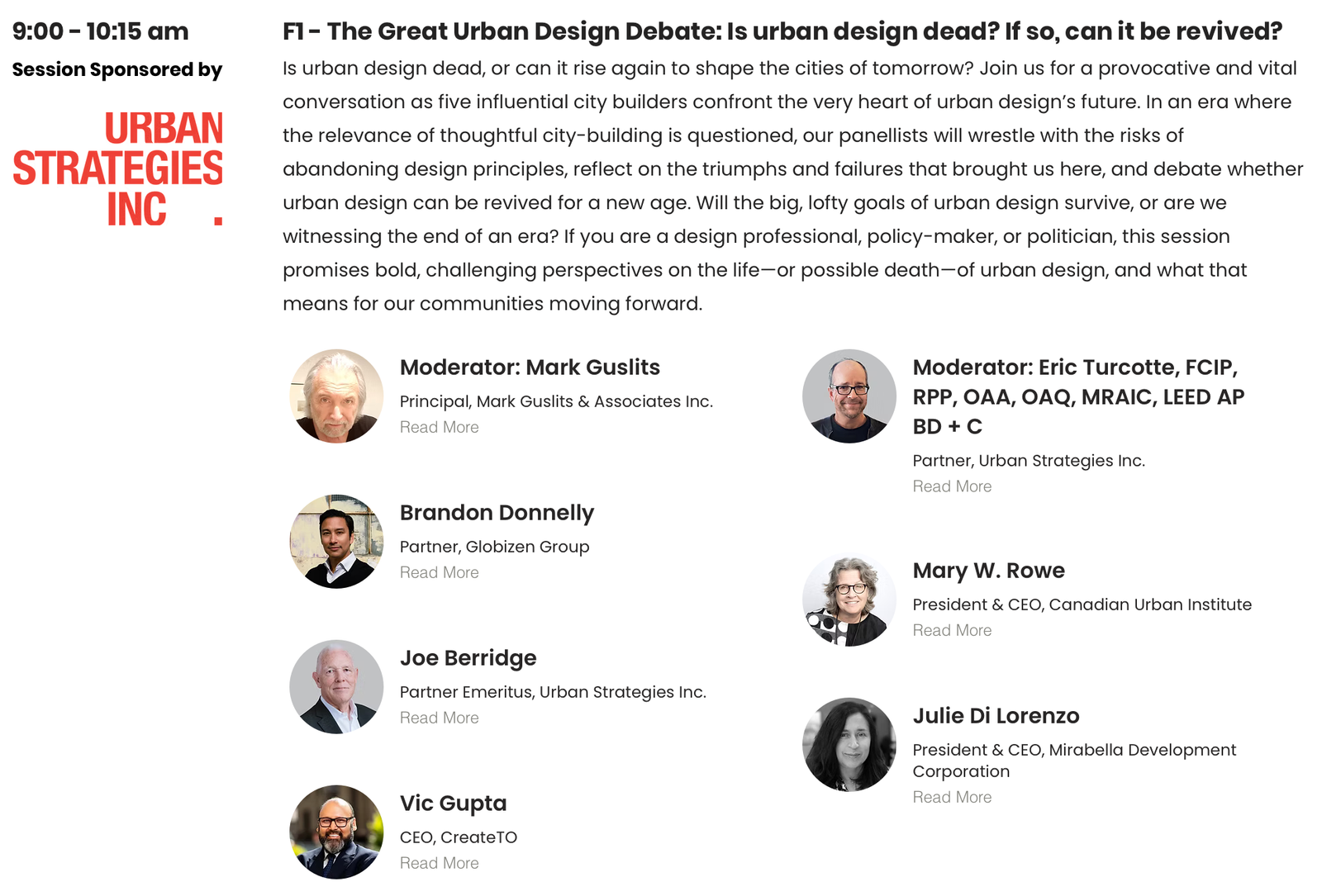
    But if any of you are attending the Council for Canadian Urbanism Forum in Toronto today, I’m going to be on a panel later this morning discussing this very topic.

    I’ll let you know what we uncover.

  • Winning and losing at the same time

    October 16, 2025 · View original


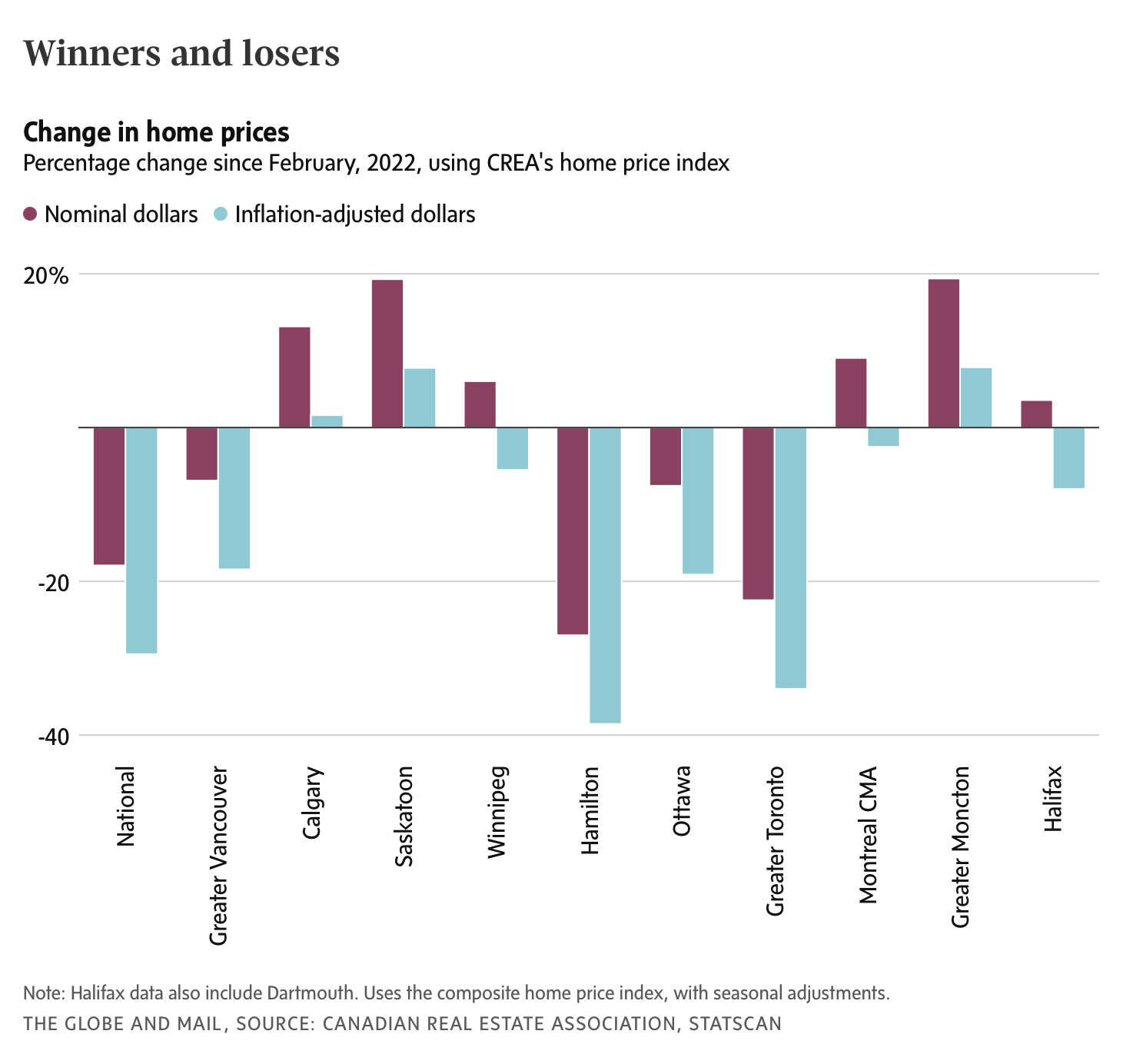
    The Globe and Mail just published this article about Canada’s real estate markets. It’s behind a paywall, but if you’re able to access it, you’ll find 10 housing charts. The first is called “Winners and losers,” and what it shows is the percentage change in CREA’s home price index since February 2022 — which, in hindsight, was the top of the market. (I don’t know what the end date is for this data, though.)

    The first thing you’ll see is that, very broadly, there’s Southern Ontario and Greater Vancouver, and then the rest of Canada. Prices have fallen materially in Canada’s most expensive markets, whereas in cities like Calgary, Saskatoon, and Moncton, nominal home prices are up by double-digit percentages. There isn’t just one Canadian market.

    The other thing I found interesting is the title “Winners and losers,” because it reminded me of the great paradox of modern housing policy. And by this I mean: which cities are winning and which are losing? If you already own a home, then winning is positive price appreciation. But if you don’t already own a home and you’d like to in the future, well then, falling home prices is winning — they’ve just become more affordable.

    Not surprisingly, it’s hard solving for two opposing kinds of winning.

  • How to eat healthier

    October 15, 2025 · View original


    A few weeks ago, my wife told me about an app called Yuka. What it does is scan the barcodes of food products and cosmetics and then give you a health rating out of 100. You can also drill deeper if you’d like to better understand why a particular food item is healthy — or not healthy.

    Since then, a few things have happened:

    – I’ve told as many people as possible about it. (I have my parents scanning at the grocery store.) – Grocery shopping takes a lot longer. (I have a colleague who has been mistaken for a store employee while using the app.) – We’ve made meaningful changes to the food we buy.

    And it’s not like we weren’t trying to shop healthy before.

    It works a lot like France’s Nutri-Score, except you have to do a bit more work. As soon as I see a low score, I no longer want the product and I move on to an alternative or I eschew it altogether. I can only imagine the positive impact that an app like this will have on our health and on the broader food landscape as our individual decisions compound over time.

    It also feels like a perfect use case for augmented reality and spatial computing. Right now, I have to juggle my phone in one hand and a basket in the other. But imagine a world where I can just pick up a package of Reese’s Peanut Butter Cups and my glasses will automatically tell me they’re a 0/100. That world is coming.

    If you care about the food you put into your body, I would highly recommend downloading Yuka on your phone. Ignorance is bliss until you’re no longer ignorant.

  • US cancels largest solar project in North America — why?

    October 14, 2025 · View original


    Data centers require electricity.

    And as we have talked about before, total electricity consumption by US data centers is forecasted to reach somewhere between 6.7 – 12% of total consumption by 2028 (figure from the US Department of Energy). Last year, Goldman Sachs also estimated that data center power demand would grow 160% by 2030.

    I kind of wonder if these numbers might be understated — given our current AI bubble — but whatever the case may be, we’re going to need a lot more electricity going forward. There’s no such thing as a wealthy, low-energy nation.

    Given all of this, I’m struggling to understand why the US would move to cancel what would have been the largest solar project in North America. Esmeralda 7, which was to be located on 62,300 acres of federal land to the north-west of Las Vegas, was expected to be a 6.2 gigawatt project — enough to power nearly 2 million homes.

    Instead, the Department of the Interior seems to be determined to accelerate fossil fuel projects, and help China maintain its clear dominance in renewables. I guess that makes sense in some world if you think renewal energy projects are a “scam.”

    Cover photo by American Public Power Association on Unsplash

  • Canada needs immigration because we don’t make enough babies

    October 13, 2025 · View original


    In the second quarter of this year, Canada saw its population grow by about 0.1% compared to the first quarter. This is not zero, but it’s close to it — the slowest second-quarter growth since 1946 (excluding the pandemic in 2020).

    Since World War II, Canada has generally been pro-immigration. It started as being explicitly Eurocentric, but later we adopted a point system which granted admission based on skills, education, and language ability rather than race or nationality. In other words, it became a meritocracy, and multiculturalism became policy.

    This approach served the country well, fueling economic prosperity and creating Canada’s only truly global city: Toronto. Immigrants are good for the economy, and Toronto is majority foreign born. They are more likely to start a business, more likely to obtain a patent, and their children tend to outperform native-born children academically.

    It is also not lost on me that I wouldn’t have been born in Toronto, and I wouldn’t have the life that I have today if it weren’t for these immigration policies.

    Of course, in recent years, public opinion on immigration shifted dramatically. There was, and is, a real sense that it was too much of a good thing. Canada wasn’t keeping up when it came to housing, healthcare, and overall public infrastructure. So the federal government responded, and now the expectation is that population growth in Canada should stay at or near zero until around 2028.

    Because remember, Canada has one of the lowest fertility rates in the world. In 2024, it dropped to 1.25 children per woman, placing us firmly in the “ultra-low fertility” category, alongside Switzerland, Italy, Japan, Singapore, South Korea, Spain, and others. Without immigration, we shrink. And we all know what that has meant for countries like Japan, which has had periods of prolonged economic stagnation.

    So sooner or later, Canada will need to get back into the business of competing for talent and welcoming the smartest and most ambitious people from around the world to our cities. This is where we want the world to be starting their new businesses. In the meantime, it also wouldn’t hurt if we started having more sex and making more babies.

    Looking ahead, if 2028 does end up being the year when immigration ramps back up, it will actually align with what I am predicting to be the start of a severe housing shortage — at least in cities like Toronto and Vancouver. That means we need to act now to start delivering more affordable urban housing at scale.

    All through history, the success of global cities has hinged on their ability to take in a large number of immigrants and make them economically productive. It’s what made cities like Toronto and New York what they are today. But in order for this to happen, people need a place to live.

    Cover photo by Ankush Nath Sehgal on Unsplash

  • Los Angeles is trying to go from car-first to transit-first

    October 12, 2025 · View original


    The largest urban region in the US, New York, is famously urban. Recently, we talked about how it has the highest share of zero-vehicle households and really stands on its own when it comes to US cities. But what about the country’s second-largest urban region — Los Angeles?

    It probably won’t surprise you that around 88% of households in this city own a car. Transit and other forms of non-car mobility remain deeply entrenched secondary options for most. But what you may not be aware of are all the initiatives that LA is undertaking to transform itself into more of a transit-first region.

    The city opened its first metro line in 1993. Today, it has a system that spans over 109 miles (~175 kilometers) across six lines with 107 stations. It also has wildly successful bus rapid transit (BRT) lines, with ridership levels that are 3x initial projections. The 18-mile Orange Line is viewed as one of, if not the, most successful bus lines in the US.

    In parallel, the city is doing what it needs to do on the land-use side by easing density restrictions and working to intensify around its transit stations. It also has a little extra motivation: Los Angeles has vowed to make the 2028 Summer Olympic Games a “transit-first” event. And with 15+ million visitors expected, there’s going to be no other way to do it.

    Los Angeles has long been known as a car-first city, but don’t be surprised if that changes this century.

    For more on this topic, here’s a recent article by Joseph Shortell, a Senior Analyst at Philadelphia-based Econsult Solutions.

    Cover photo by Studio Trista on Unsplash

  • An alternative explanation for America’s surge in pedestrian deaths

    October 11, 2025 · View original


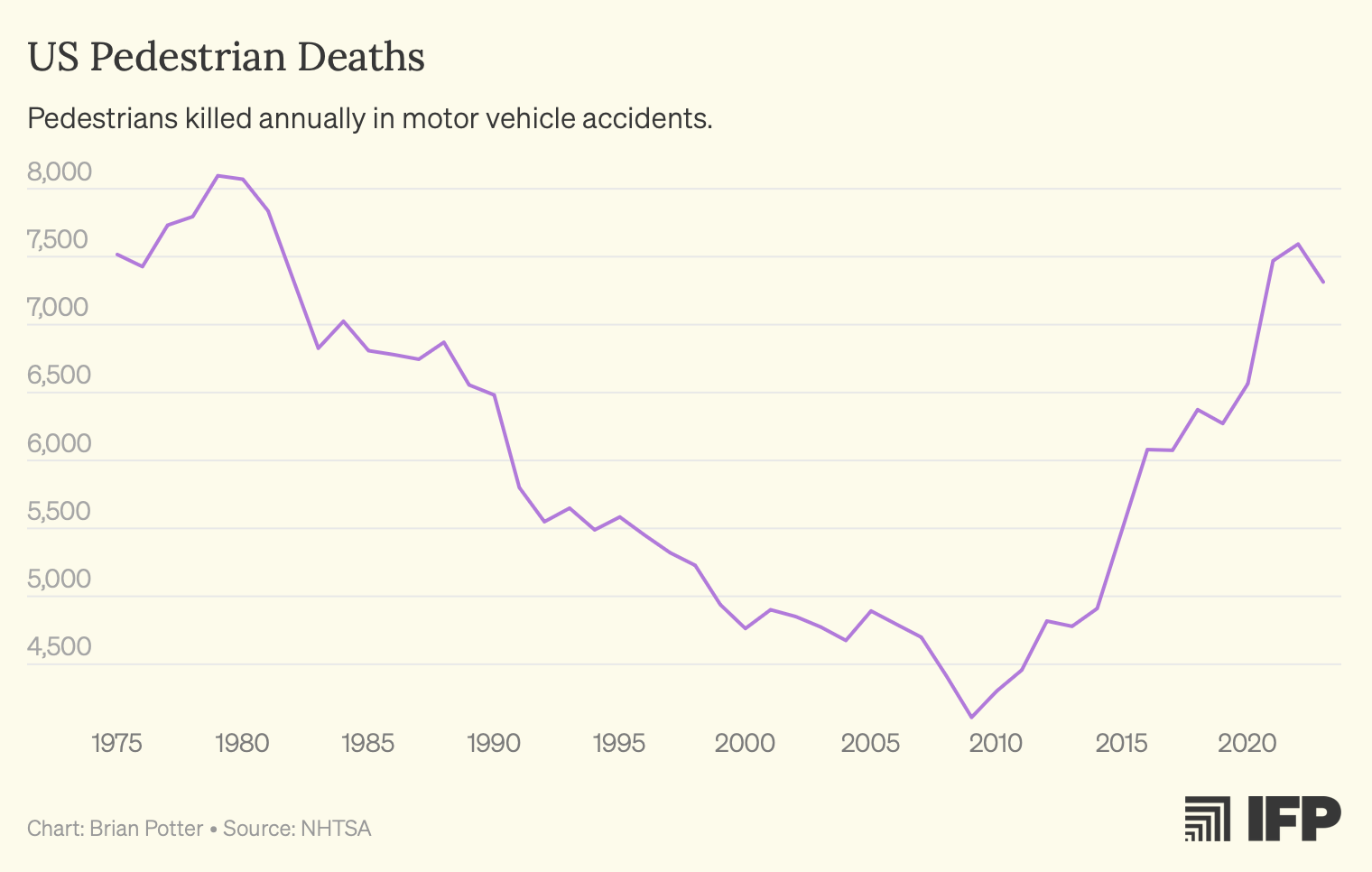
    The number of pedestrians killed in the US each year has increased 78% since 2009:

    This comes after decades of steady decline, causing many to wonder: What the hell is going on?

    Brian Potter of Construction Physics recently tried to answer this question, here. Perhaps the two most common theories are that (1) bigger cars have become more popular (and bigger cars are more deadly to pedestrians), and (2) people are increasingly distracted by smartphones.

    In his view, the SUV theory is maybe supportable, but the evidence is mixed. Pedestrian deaths involving smaller cars like Honda Civics are also up substantially. So it doesn’t seem to be just that.

    As for the smartphone theory, Potter cites data showing that traffic accidents rarely report “distracted” driving. I call bullshit. I suspect it’s because drivers don’t want to admit they were scrolling through TikTok; but even then, it doesn’t appear to be the clear cause. Smartphones are global, and yet this surge in pedestrian deaths is a uniquely American problem (based on other data from Potter).

    So what is it?

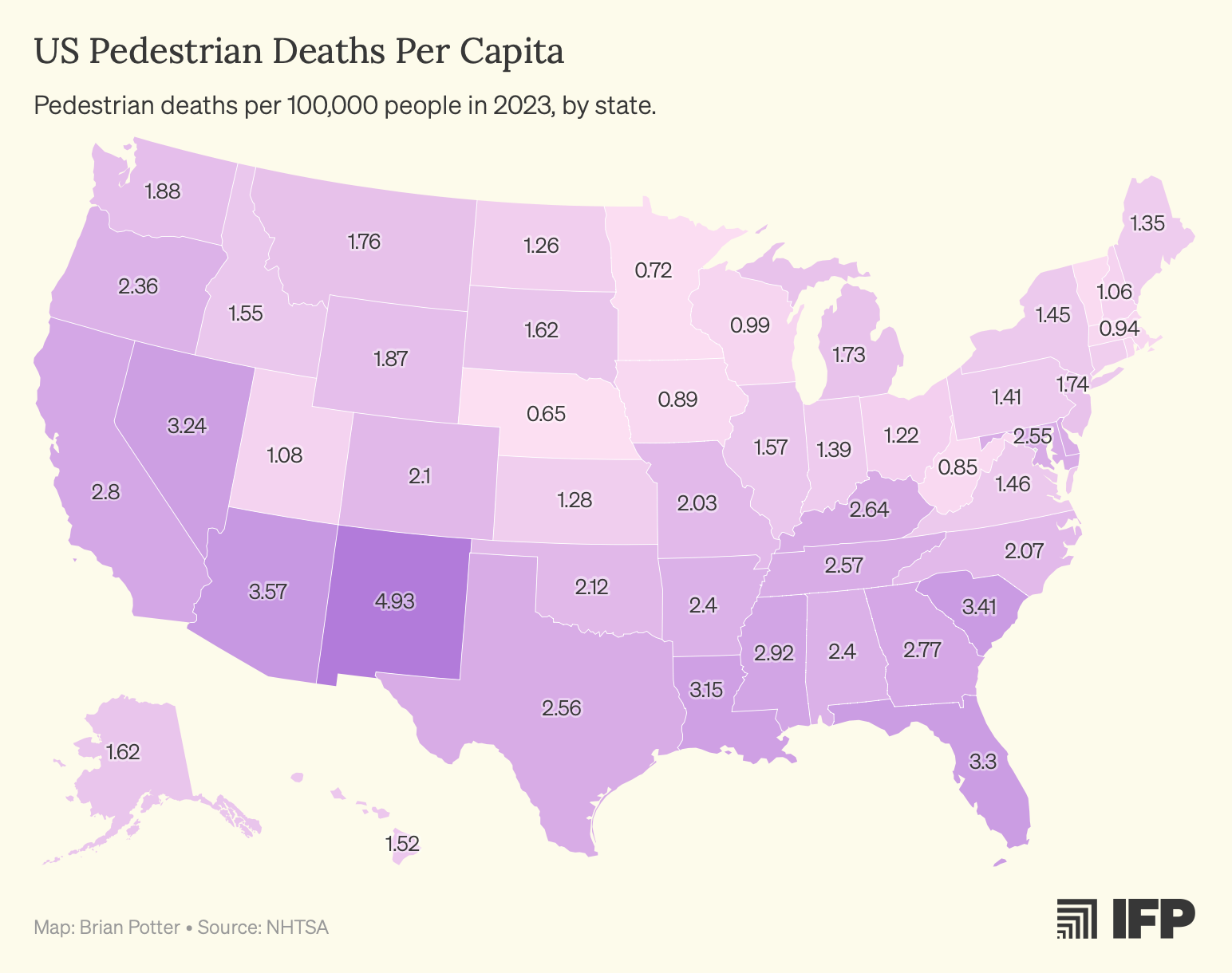
    My view — and this isn’t mentioned in the article — is that built form must be a factor. Much of it comes down to how we design our cities. Intuitively, this makes sense to me. But there’s also data to support it. First, if we look at pedestrian deaths per capita, there’s a clear bias toward the South and West, both of which tend to have more car-oriented urban patterns compared to the older cities in the North.

    Second, if you drill down into specific urban environments — including those adopting strong Vision Zero policies — you’ll see that local trends don’t always match what we’re seeing nationally or even at the state level. For example, in recent years, cities like New York have become much safer for pedestrians:

    > New York City continues to defy national trends around pedestrian deaths, which are currently at a four-decade high nationwide. Traffic fatalities were down in four of the five major travel modes the DOT tracks. Compared to 2013—the last year before implementation of Vision Zero—New York City traffic deaths have dropped by 14.7%, from 299 that year. Pedestrian deaths have decreased by 35.9% compared to 2013 figures. Cyclist fatalities were also down for the third straight year (17 in 2022, down from a 20-year high of 28 in 2019), declining even as bicycle ridership has soared in recent years.

    So my simple theory is this: Human-scaled spaces that are designed around pedestrians, rather than cars, are less likely to kill pedestrians.

    At the same time, I do think we’ll see pedestrian deaths naturally come down in the US as autonomous vehicles become more widespread. AVs are already better — or at least safer — drivers than humans, and that will help. None of us should be driving cars anymore if you’re just looking at the safety data. But I don’t see that as a good reason not to create more human-scaled spaces. They offer us much more than just safety.

    Diagrams: Construction Physics

  • How Vietnam’s tube housing empowers entrepreneurship

    October 10, 2025 · View original


    Vietnam has a building typology known as tube housing.

    It is characterized by narrow building frontages, often in the range of 3 to 4 meters, and multiple skinny levels. From what I’ve read, tube housing first appeared in the 17th century in cities like Hanoi. Its ubiquity over the years, however, has been aided by a myriad of factors, including Vietnam’s transition from capitalism to socialism. This change meant that far fewer apartment buildings were being constructed, and so households had to take matters into their own hands and build what they could.

    I’ve also read that this building type may have something to do with the way properties were taxed based on their frontage rather than their site area, though I haven’t been able to find a reliable source for this. Whatever the case, the end result is exactly what we discussed in this recent postThe 9-Step Rule: Why Simple, Narrow Buildings Are Good for Cities. Except with these frontages, it wouldn’t even take nine steps if the average building width is closer to 3–4 meters.

    What is equally interesting about this housing type is that it represents a ground-up intervention (as opposed to the result of top-down urban design) and it is highly adaptable. It is not uncommon for additional floors to be added to these tube houses as needs change, and for the ground floors to serve as garages, living rooms, thriving commercial spaces, or as all three at once. It is an entirely flexible space that fuels entrepreneurship and allows households to make money.

    > Tweet: Always interesting how the bottom floor of a Vietnamese tube home can be a garage/living room or family store, sometimes a combination of all three. https://t.co/9DaDhlPCFl

    Just think about how much easier it would be to open your own shop if you already owned the space. Conversely, how many of these ground-floor businesses wouldn’t exist if only there were a single line in the zoning regulations that said: “Nah, sorry, you can’t start and operate your own business here.” That is what I often worry about when it comes to land-use policy: what human potential are we quashing as a result of our decisions?

  • Paris is not a medium-density city

    October 9, 2025 · View original


    Earlier in the week, I came across this tweet about Paris: “Haussmann cracked the code on what makes a beautiful medium-density city. Why is it then that we can’t replicate this all around the world? Genuine question.” This is a topic that is near and dear to this blog, so I thought we should discuss it.

    But before we can answer this question, I think it’s important to ask whether it’s even fair to call Paris a medium-density city. Paris is generally considered to be the densest city in Europe. Most sources peg Paris proper (inside the Boulevard Périphérique) at around 21,000 people per km². However, there are areas that reach over 50,000 people per km², which is dense enough to rival any big megalopolis. So, from my perspective, I would not classify Paris as medium density.

    It’s a high-density city.

    The primary reason why this feature is so often overlooked is likely because the buildings aren’t very tall. People see mid-rise buildings of 6–8 storeys and automatically assume that these must translate into some form of a medium-density city. But this is the height–density fallacy. The two do not necessarily correlate. Paris is an example of a high-density city with mid-rise buildings. But I also can think of many low-density cities with high-rise buildings.

    Another reason I suspect Paris’s high urban density is often missed is that it’s also a highly livable and loved city. It doesn’t feel that dense (even if living spaces are compact and expensive). The term density can also carry negative connotations for some. Paris, high density? It can’t be. But that just helps to prove the point that density is good. You can’t have urban vibrancy without it.

    All of this gets at one part of the answer to our original question. Paris is not more widely replicated because building height is only one aspect of the Parisian model. Paris is not mid-rise buildings transitioning down to single-family houses. Paris is not mid-rise buildings in only designated areas. Paris is mid-rise buildings everywhere — and at very high densities.

    Not every city is prepared to do that. But if you truly want to emulate Paris, then that’s what it will take.