
The City of Vancouver recently published this video talking about missing middle housing. For those of you who are following this trend (and reading this blog), there won’t be a lot that is new in the video (although Uytae Lee is great). But I’m sharing it here, anyway, for three reasons. One, it’s an example of Toronto being ahead of Vancouver, which wasn’t the case with laneway housing. Vancouver started allowing these first. Two, it is further evidence that this shift toward intensifying low-rise residential neighbourhoods is really happening — and gaining momentum — all across North America. And three, the City of Vancouver is about to bring forward new multiplex housing policies. So now is a good time to get involved and say things.
Category: Places
-
A few observations about Venice
We are on the train headed to Milan this morning, so as is customary on this blog, here are a few observations from the last few days in Venice:
- Venice was a dominant republic for some 1,000 years. It was the fulcrum point of trade in Europe and, at one point, its wealthiest city. But that started to change in the 15th century, which is an important reminder that nothing is guaranteed. The world changes. Markets change. And maybe you won’t be as relevant tomorrow, unless you can find another economic reason for being.
- If you’re an old city with lots of history, perhaps the easiest fallback plan is tourism. And it goes without saying that Venice gets a lot of tourists. I was, of course, one of them. After Italian, the most commonly overheard language on the streets seemed to be French. Maybe it was the time of year?
- Besides my debilitating spring allergies, May feels like a reasonably optimal time to visit the city. I don’t think you want to visit Venice in peak summer. Too many meandering tourists taking photos (myself included). And too hot and humid. A high probability of “walking rage.”
- Hotels in Venice are not cheap. But the city itself didn’t seem overly expensive, at least compared to many other top tourist destinations. Think €2.50 jugs of wine, €20-30 for very nice local leather goods, and €110 for a 7-course Michelin-starred meal.
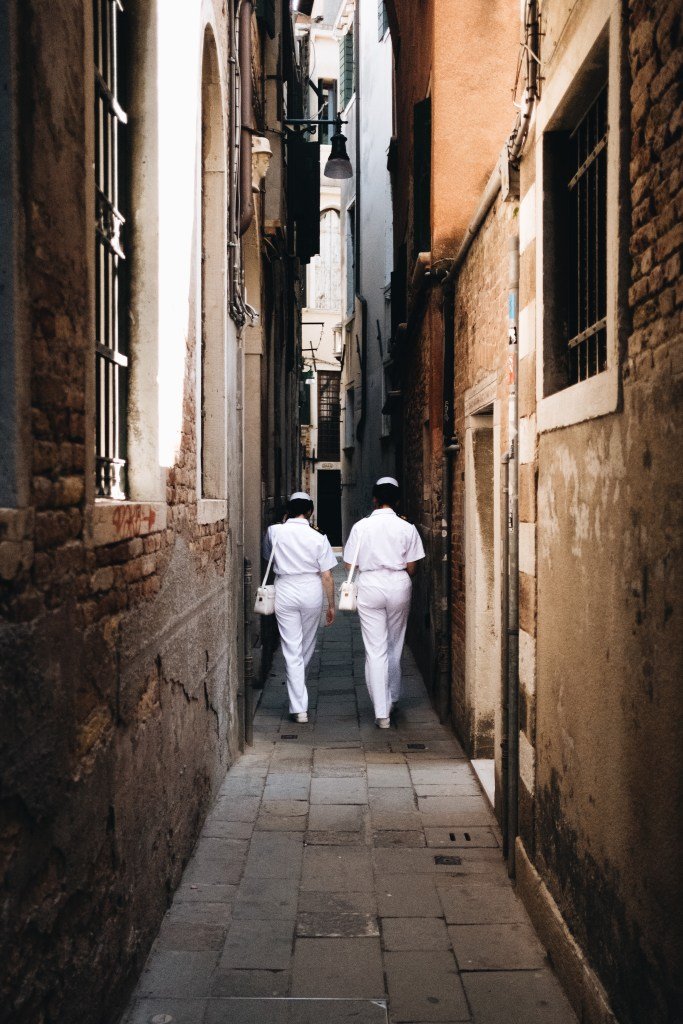
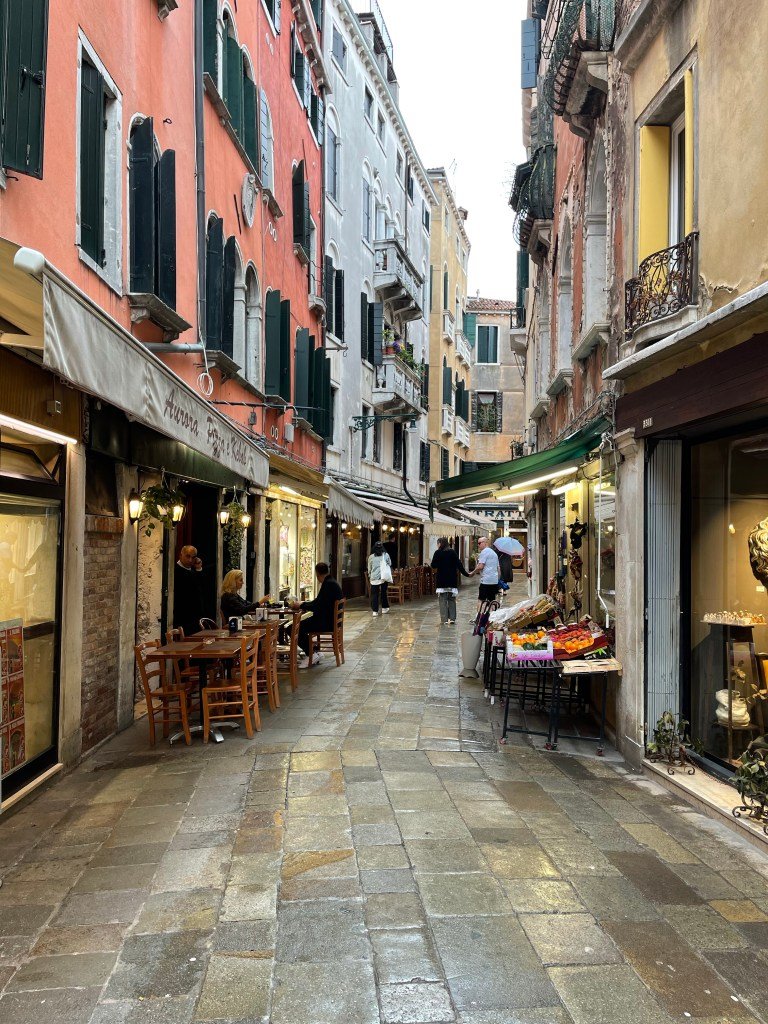
- Venice has some of the most compact streets I have ever walked in. I didn’t have my laser distance measurer on me, but in many cases, you can barely fit two people side-by-side. I certainly couldn’t extend my arms fully outward. (See above photo.)
- Wonderful doorbells. Virtually every apartment in Venice, has an array of doorbells at its front door. They are beautiful, typically in metal, and almost always round. But in addition to looking nice, there is also something very personal and about seeing people’s names right on the street. This probably tells you something about how differently privacy and security are viewed in the city.
- That said, Venice isn’t a place where I would want a pied-à-terre. (I like to think about this sort of thing when I travel because it speaks to impressions of a place.) I mean, I love it, but: Too many tourists and the whole “we are sinking and have regular floods” thing seems like a bit of a problem. For me, it’s a city that I’d like to regularly visit. We spent much of our 2 days at the Venice Biennale, and there’s obviously a lot more to see.
- Finally, and this also goes without saying, but Venice is a city that is necessarily preoccupied with controlling water. Our hotel room had big rain boots in it, just in case. The base of every building is generally solid up to knee height. Interiors have tall tile baseboards. Front doors have removable flood dams. And there are markings across the city indicating some of its historic flood levels. As I understand it, this was always a problem for Venice; however, it is getting worse. I think it tells you just how economically valuable it was for Venice to be located where it is, in a shallow lagoon at the top of the Adriatic Sea.
-
Streets of Venice
This entire city is centered around controlling water. Omnipresent front-door flood dam:
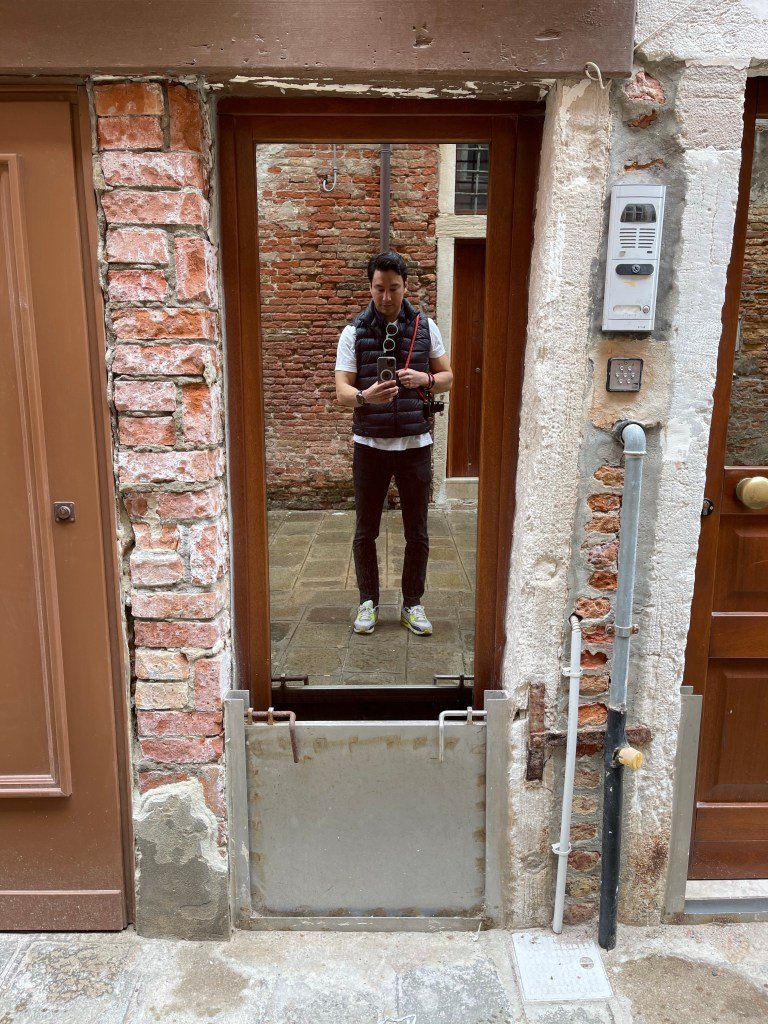
Venice has great doorbell game. If it hasn’t already been done, I think someone should make a coffee table book of these:


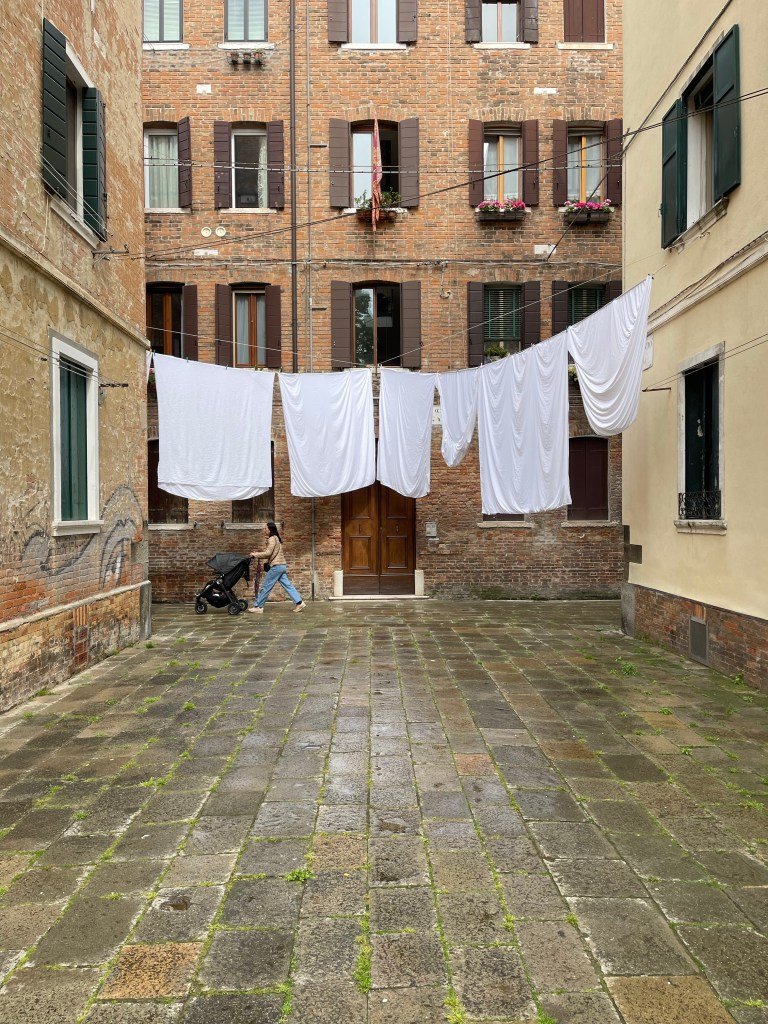
This city is also quite prolific when it comes to urban laundry:
We found a number of these street ladders. Presumably laundry related:

Religion in the streets:

Window garden:

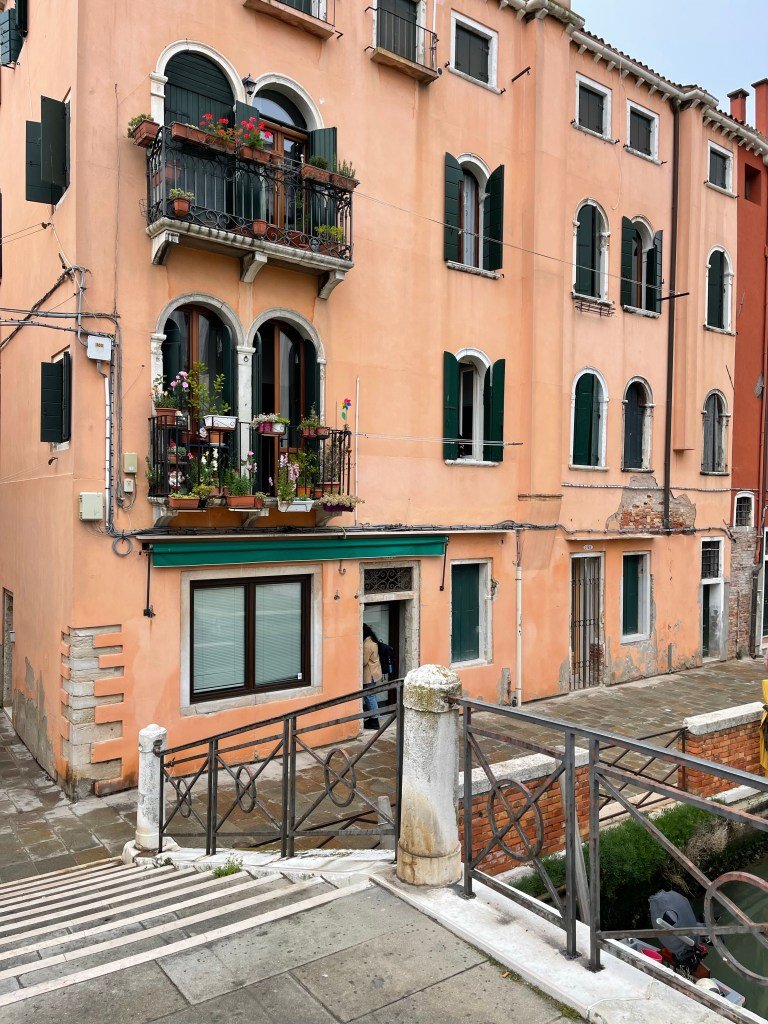
Balcony gardens. Your reminder that (1) small balconies can still be impactful and that (2) balconies with a relationship to the street are used differently:
Colorful shoes and green curtains:

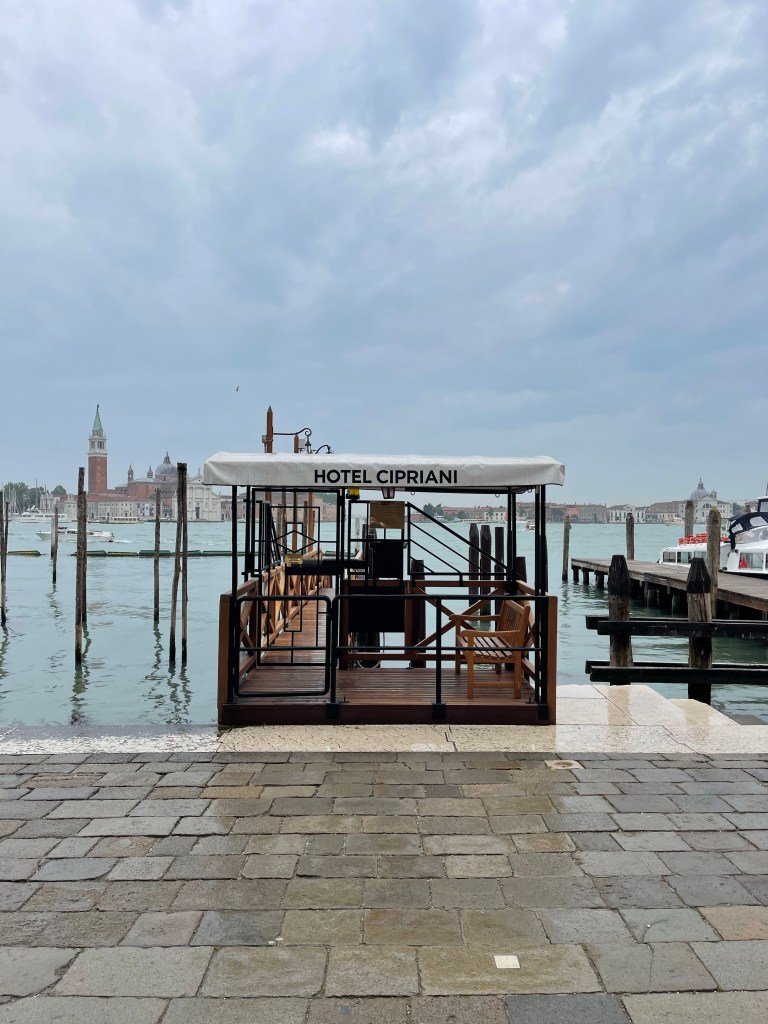
Grand Canal:
The kind of street we should allow in North American cities:
-
Project Profile: Montréal is really good at missing middle housing

We often talk about the challenges associated with smaller scale developments on this blog. They are difficult to underwrite, there are diseconomies of scale and, after a certain point, developers typically start to require a certain minimum size. In other words, if you have a big development machine with a lot of fixed costs, you probably don’t want to build even 100-150 homes at a time. You want something like 250-300 homes as a starting point.
But there is something so great about small infill projects, which is another topic that we like to talk about on this blog. Take, for example, the above 10,940 square foot project at 6001-6009 Rue St-Hubert in Montréal. Designed by L. McComber, the project includes 2 commercial spaces and 8 homes (specifically, 2 studios and 4 multi-level “townhouses”).
Using rough measurement approximations from Google Maps, the lot looks to be about 15m wide x 26m deep. So the lot itself is somewhere around 4,200 sf, which is effectively a double lot based on the prevailing frontages in the area. According to this rough math, I’m guessing the FSI (floor space index) of this development is somewhere around 2.5x.
It is certainly a beautiful project, but in my mind the two most noteworthy aspects of this development — at least for this audience — are the following:
- The architect essentially acted as the developer. They wanted to build and then own their own office space, and so they now occupy the ground floor of this project. As a partial end-user of the development, this likely means that they underwrote it slightly differently compared to if they were a pure developer.
- The project’s circulation space is outside and is largely housed in a central open-air courtyard.
Here’s what #2 looks like:


This second point about circulation is an important one because it’s an effective way to reduce hard costs, improve overall efficiency (rentable/saleable divided by gross construction area), and lower long-term operating costs. Of course, exterior stairs/circulation are quite common across Montréal’s walkups. So maybe this isn’t all that novel for them.
But I still think it’s a perfect reminder that we shouldn’t use climate as an excuse. Montréal is both colder and snowier than Toronto. And just look how they’re building. I would happily live here. Would you?
-
How Paris’ zoning envelope has changed over the centuries
I came across this French paper over the weekend, while I was at the gym pretending to work out my legs. It is a fascinating look at the evolution of Parisian urbanism from 1600-1902, including how the city’s height limits have changed over the centuries. Here, for example, are two section diagrams showing the allowable building envelopes for both an 8 meter street and a 10 meter street:

The way to read these is to start at the bottom with the width of the right-of-way (“voie”). As you move up, it then gives you the allowable heights for various dates. So for example, in 1667, the allowable building height for a 10 meter street was 15.60m. After this height, there was then a requirement to stepback following a 45 degree angular plane. Or in some cases, following a certain radius:

We don’t have a ton of 8 and 10-meter wide streets here in Toronto, but there are obvious similarities between what is shown here and what is in our mid-rise design guidelines. Of course, the big difference is that we’re mostly zoned for low-rises houses and Paris is not. This broader context matters a great deal and it’s why I keep asking: Are you sure you want Parisian-style urbanism?
-
Why so few people drive in Tokyo

Daniel Knowles, who is a correspondent for the Economist, recently authored a book called Carmageddon: How Cars Make Life Worse and What to Do About It. I haven’t read it, yet, but I did just read this excerpt about Tokyo, and it was jam-packed with interesting stats.
Here are some of them:
- Among developed cities, Tokyo has the lowest car use in the world. About 12% of trips are completed with a car, whereas 17% of trips are done with a bicycle. Most people walk and/or take transit. Tokyo has the most-used public transit system in the world — about 30 million people each day.
- Car ownership across Japan is about 590 vehicles per 1,000 people. This is comparable to many European countries. In the US, it’s about 800 vehicles per 1,000. However, this figure drops in Tokyo. Here, the average is about 0.32 cars per household, which was interesting to see because most new housing projects in downtown Toronto have parking ratios that are much lower than even this figure.
- The average size of a home in Tokyo is 65.9 square meters of usable area. By comparison, the average size of a home in London is 80 square meters. But given that according to Knowles, the average household size in London is 2.7 people, whereas it’s 1.95 in Tokyo. So per capita, Tokyoites actually have more space than Londoners.
- 35% of streets in Japan are not wide enough to fit a car. If you add in streets that are wide enough to fit a car but not wide enough that a car could stop and not entirely block traffic, this figure jumps to 86%. This to me is a massively significant statistic, because if you want people to walk places you need small streets.
- 95% of streets in Japan do not allow any sort of street parking — day or night.
- The average Japanese car owner drives around 6,000 kilometers per year. This is about a third of what the average American does. In my case, it looks like I have averaged about 8,868 kilometers per year over the last 5 years. Though a big chunk of my kilometers would be from longer one-off snowboarding trips. In other words, I don’t drive all that often in the city.
- Japan has some of the most expensive road tolls/prices in the world. Meaning, Japan does not actively subsidize driving and instead just charges drivers accordingly. Apparently the average is about 3,000 yen per 100 kilometers, which is about CA$30 per 100 kilometers.
- In addition to not subsidizing cars, Tokyo is also one of the few cities in the world where their public transit does not need to be subsidized. A big part of this has to do with high ridership, but the other important part is that its transit authorities also develop real estate. Shockingly, this means that it tends not to build standalone and single-storey transit stations (ahem, I’m looking at you Crosstown LRT). Instead, they build lots of density where it always belongs: on top of transit.
I may just have to read Knowles’ book.
-
New York City is piloting about a dozen motion sensor cameras
This won’t come as a surprise to many of you. But I recently attended a community meeting where someone was advocating for adding new lanes to a particular road. Their argument was that traffic congestion is forcing too many cars to sit needlessly idle and that that is bad for the environment. The proposed solution of adding new lanes would get traffic moving, reduce idling pollution, and therefore be overall better for the environment.
I disagree entirely.
But transportation planning seems to be one of those things that many people feel is intuitive. It’s one of those things where people feel confident saying, “I know how to fix this. We just need to do this.” But the reality is that cities are incredibly complex organisms and it’s not always obvious what should be done. So I think that a big part of making our cities better comes down to having much better data. And that’s why I’m very intrigued by the work that startup Viva, and others, are doing.
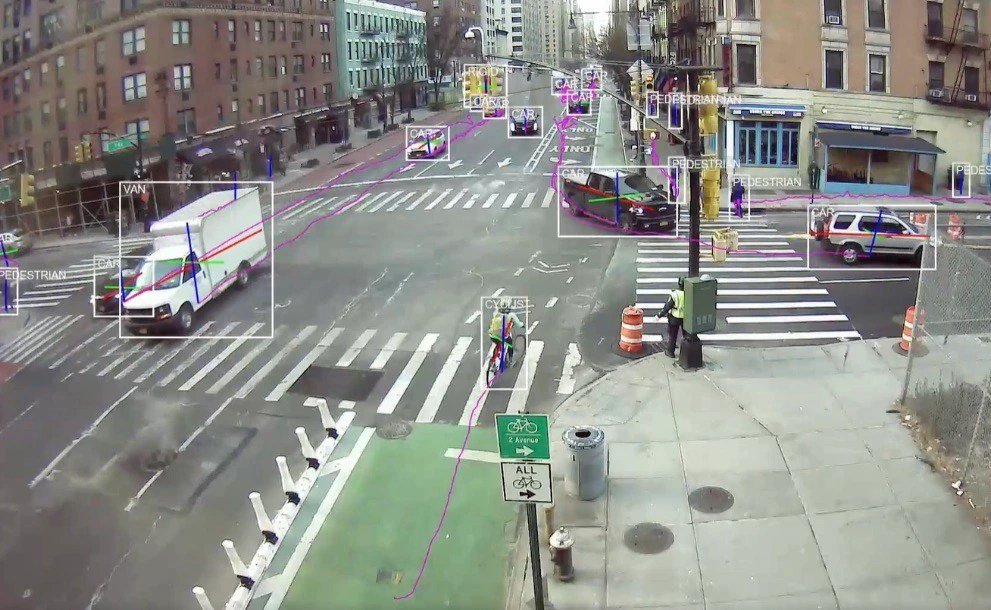
Viva uses small street-light mounted cameras and machine learning to track urban mobility (see image above). Currently they track 9 different modes: pedestrian, bicycle, e-scooter, motorcycle, car, van, light truck, semi-truck, and bus. And after they collect this data, the relevant information is extracted and then everything else is deleted for privacy reasons. There are also plans to make this data openly available to the public so that people can use it and/or build on top of it.
Obviously this is still going to raise privacy concerns and that is something that will need to be carefully addressed. But I do think that the data from a platform like this is going to be invaluable for cities. Among many other things, it will help us to better allocate space among the various modes and design much safer streets. Hopefully it can also help to take some of the politics out of these sorts of decisions: “Here’s the data. Take a look.”
Viva currently has 1,000 sensors already installed in London (where they are being used to evaluate the impacts of congestion pricing), and about half a dozen in New York. So it’ll be interesting to see what this leads to. And who knows, maybe it will actually turn us all into amateur transportation planners. We’ll certainly have access to a lot more data.
For more information on Viva, here’s their website.
Image: Viva
-
A small subset of Parisians really don’t like shared electric scooters
So Sunday came and went and Parisians voted overwhelmingly to ban shared electric scooters in the capital. Of those who voted, 89.03% were against them. And this, to be honest, is not all that surprising. Also not surprising is the low voter turnout (7.46% of 1.3 million registered voters).
But I do think it raises important questions about this “democratic” process — and not just because I happen to like electric scooters. One problem is that there’s an inherent bias. And this same phenomenon can be found in community meetings for new developments.
If you’re upset about something (and you have the time), then you are probably more intrinsically motivated to participate. In other words, if you think that electric scooters are a horrible nuisance, then you’re more likely to take the time to say something about them. But if you think electric scooters are just, like, fine, then you’re probably less motivated to go out and vote.
Maybe this doesn’t matter. Maybe the turnout percentage itself is the answer you’re looking for. Only 7.46% of registered voters cared enough about electric scooters to voice an opinion. So if the rest actually liked them, it’s their problem for not voting.
But if you think that this percentage should be higher to be more representative, then one solution is to try and reduce the barriers to participation. And I think there’s an argument to be made that something as dumb as a Twitter poll, open only to Parisians, might have been more inclusive.
-
Should Paris ban electric scooters?
This Sunday, Paris will be hosting an important referendum that has nothing to do with France’s retirement age. The question is whether shared electric scooters should be banned citywide. And while there are concerns about whether this single-question referendum will draw many people out to vote, the city has said that, whatever the outcome, the results will be binding.
To be clear, this would only apply to the three micromobility rental companies that operate in the capital: Lime, Dott, and Tier. It would not apply to privately-owned scooters, of which there are many. In fact, France might just be one of the scooter capitals of the world. Over 900,000 scooters were purchased across France in 2021, and last year the number was about 759,000.
Mayor Anne Hidalgo has publicly said that she thinks these scooters should be banned. But does that really solve things given the number of private scooters in circulation? And are the current problems truly ones we can’t solve? As I have said many times before, I like scooters. I like them a lot. They’re convenient and fun to ride, and I see their value in helping to solve the last-mile problem.
I also can’t help but think back to the early 1900s when cars were just starting to infiltrate our cities and there were absolutely no traffic regulations to think of. It was chaos, it was dangerous, and I’m sure it was similarly divisive at the time. So should we have banned them and stuck with horses? Hmm. Maybe.
-
/imagine prompt: A silver Land Rover Defender driving through a snowstorm in the mountains of Utah


Like everyone else, I have started playing around with Midjourney to create AI-generated images. Here are two that I created last night using the prompt: “A silver Land Rover Defender driving through a snowstorm in the mountains of Utah.”
Now, you can tell that these are AI-produced images, but it’s still wildly impressive that something like this can be easily generated in a matter of a few seconds. And that’s the thing about AI: it’s easier to get, especially compared to crypto. It’s immediately useful and it’s immediately clear what this can and will disrupt.
Levis, for example, just announced that it will start using AI-generated photography in lieu of actual fashion photoshoots. This is obviously suboptimal for photographers, models, makeup artists, and so on, but a hell of a lot easier for Levis. I would also imagine that the same thing will happen to real estate renderings and many other things beyond just imagery.
Ben Myers and Steven Cameron recently speculated on their podcast — Toronto Under Construction — that AI could be used for reviewing development applications. Imagine how much this would speed up reviews and the delivery of new housing! So there are very good reasons for why the hype cycle has moved over to AI from crypto and NFTs.
However, I’d like to go on the record saying that my gut tells me that this will only make what crypto offers even more important. Permissionless public databases (as opposed to databases controlled by individuals/companies) and the ability to demonstrate authenticity/ownership, feel like two important things to me in a world where computers are constantly generating a flood of new content and nobody knows what is “real” anymore.
It’s certainly a lot less tangible than, “hey, check out this badass Defender driving through the snow.” But I feel strongly that these two innovations will end up working together.


