Daily insights for city builders, delivered every morning at 6 AM ET. I’m Brandon Donnelly — a Toronto-based real estate developer and founder of Globizen. I’ve been writing here since 2013.

Category: Places

  • Summit County, Utah to vote on acquisition of 8,576-acre ranch

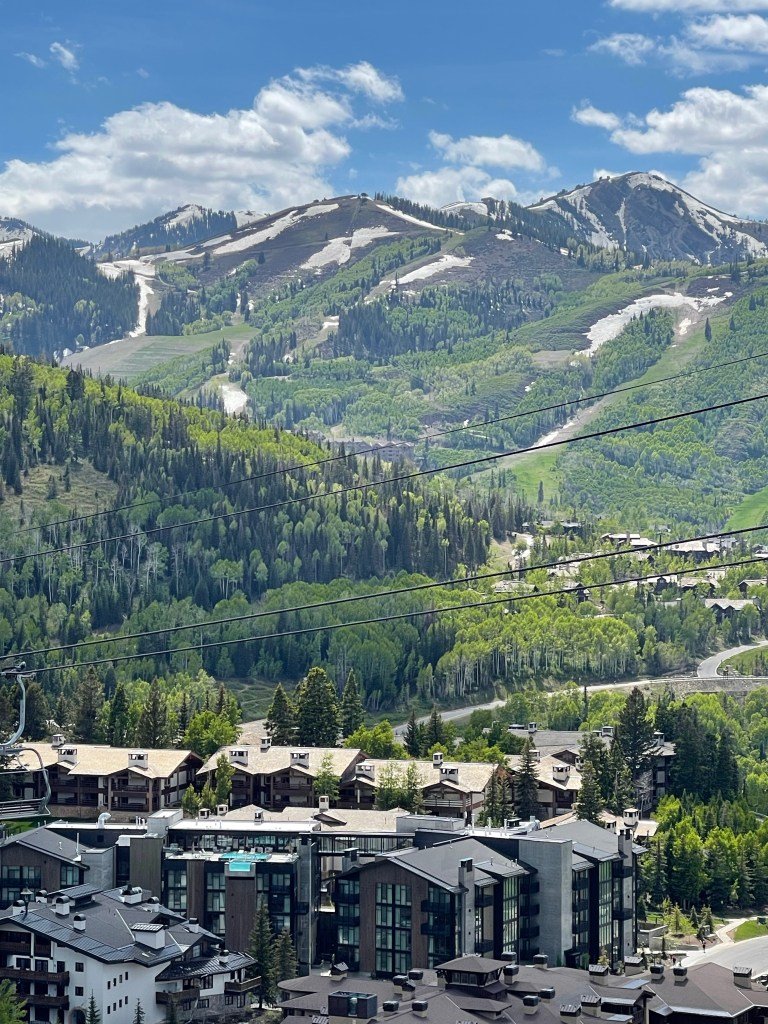
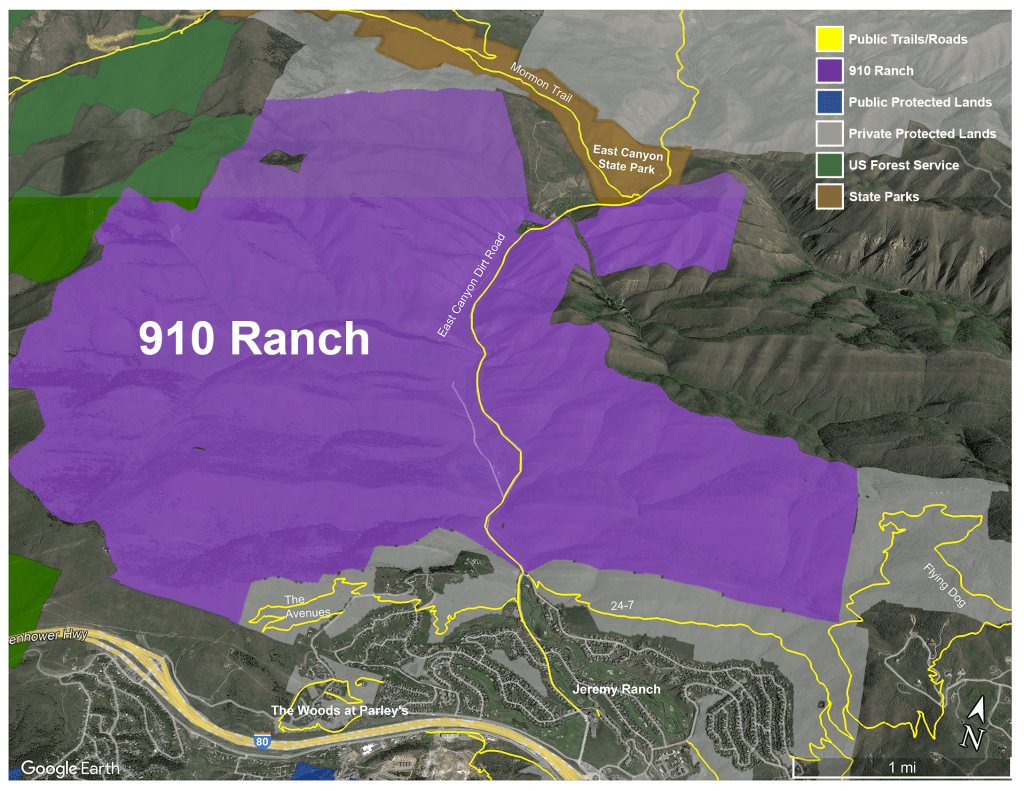
    Summit County Council is holding a special meeting this week to vote on the acquisition of an 8,576-acre property next to Jeremy Ranch and around the corner from Parkview Mountain House.

    The County Manager has recommended approval of the deal and these are the terms:

    – $55 million total purchase price (about $6,413 per acre)

    – Structured through a $15 million three-year option to purchase, with a right to extend for another year for an additional $5 million (option fees to be applied toward the purchase price)

    – During the option period, the County will have control of the property and pay $5,000 per month in rent

    Another way to look at this deal is that Summit County needs to initially come up with $15 million of equity. This is because they are getting seller financing for the remaining $40 million. (Implied loan-to-value of about 73%.)

    After 3 years, they will have to put in another $5 million, which lowers the implied LTV to about 64%. But in both cases, and assuming the $5k per month is all the County needs to pay, there’s effectively no interest on this 4-year “financing”. ($60k per year on $40-45 million.)

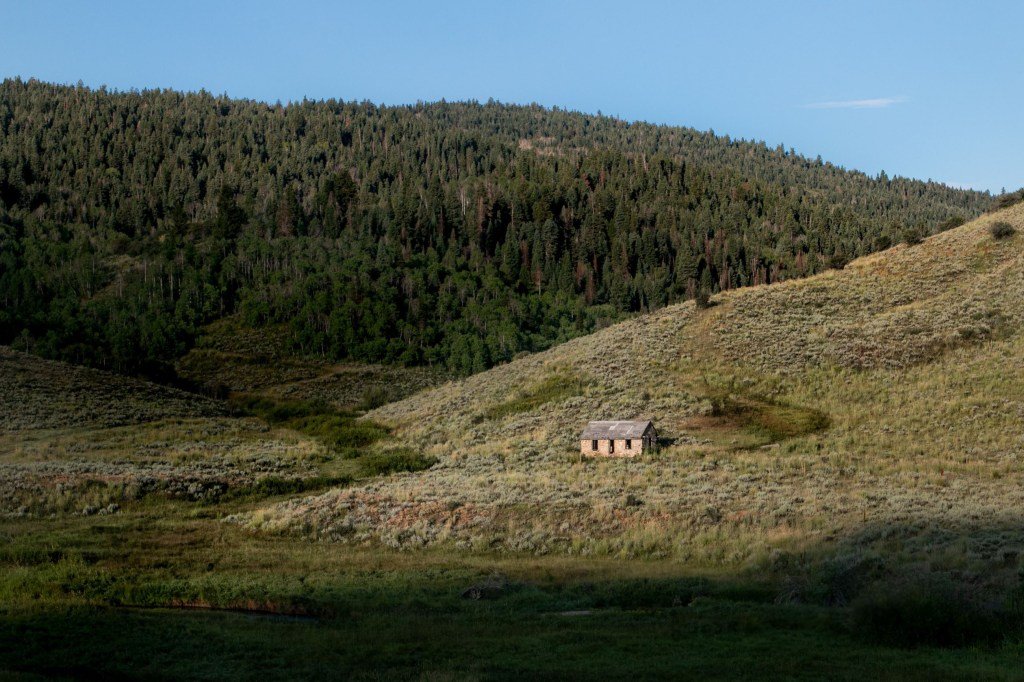
    The purchase price is also only ~$6k per acre, which should tell you that this is not development land. Its value is what you see here:
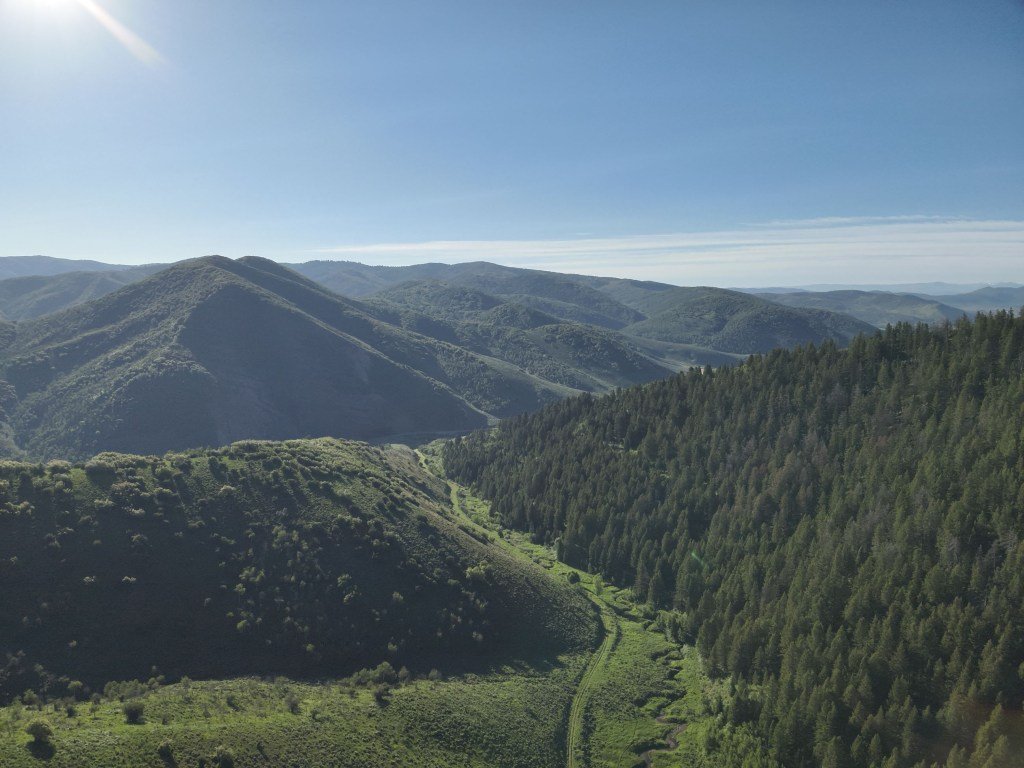
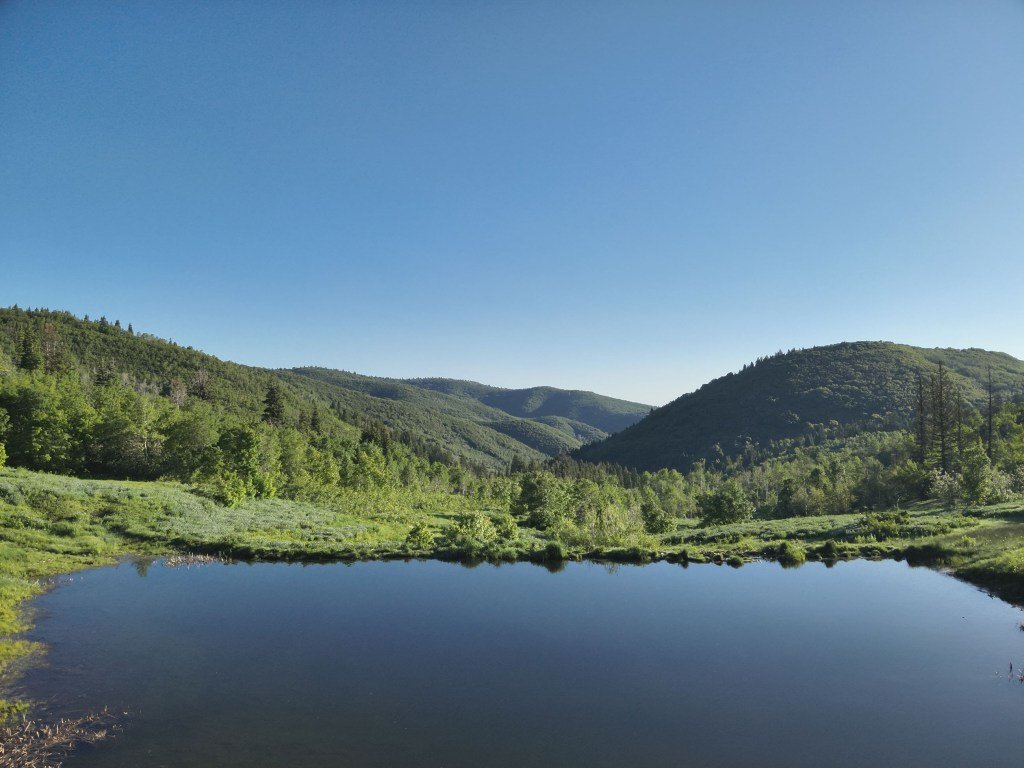
    And this is exactly what Summit County intends to do with the land: conserve it. As one of the last contiguous mountain ranches in the area that is privately owned, this sure seems like a win for the community. It’s a pretty good deal, too.

    Images: Summit County, Utah

  • Montreal’s Diverse Metropolis policy has delivered exactly zero affordable homes

    Montreal has a bylaw that came into effect on April 1, 2021 and that requires developers to contribute to the city’s supply of social, affordable, and family housing. (All three of these have their own definition.)

    Developers can meet this requirement in a number of different ways:

    • They can build the social, affordable, and/or family housing
    • They can contribute land or a building
    • Or they can pay cash-in-lieu

    Usually, I think of inclusionary zoning as being the first of these three bullet points: a hard requirement to build a certain amount of non-market housing. That is not an absolute requirement here, and so I see this policy as being IZ lite.

    Since the bylaw came into force, there have been approximately 150 new projects by private developers in Montreal, according to this CBC article. That has resulted in about 7,100 new market-rate homes. At the same time, it has resulted in exactly zero non-market homes.

    From what I can tell from the article, every single developer has opted for option three: pay the cash-in-lieu instead of actually building the housing. Supposedly this has produced about $24.5 million in new fees, which sounds like a lot. But if you divide it by 7,100 homes, it isn’t all that much: just under $3,500 for each new home.

    So what is clear is that this is the least expensive option. That’s why everybody is choosing it. If the fee was significantly higher and it was cheaper to just build the social/affordable/family housing, then every developer would just do that. This is how development pro formas work.

    But at the end of the day, we are still taxing new housing and new home consumers for the purpose of trying to create a smidgen of more affordable housing. And this has never sat well with me, especially considering that there are plenty of other things that we could be doing to make new housing more affordable for everyone.

  • Income migration across the US between 2020-2021

    Between 2020 and 2021, so right when the pandemic hit, Manhattan alone lost $16 billion of federally-taxable income, according to this recent study by Economic Innovation Group. And San Francisco saw net migration that reduced its federal income tax base by more than $8 billion. At the time, this represented about a 20% decline.

    Now, I don’t know to what extent this maybe changed, slowed, or reversed from 2021 to today, but the IRS tax data is pretty clear: the pandemic accelerated a longstanding trend of Americans moving out of older coastal cities toward newer, sunnier, and more sprawling cities in the sun belt and in the Mountain West region.

    Here is a map from EIG showing the difference in incomes between households moving in and moving out of each US county. A dark blue county means that the people who moved in were richer than the people who left. (For an interactive version, click through to their website.)

    To give two examples. Here is San Francisco County, which lost nearly 20,000 people with average incomes of around $240,000 per year.

    And here is Summit County, Utah (home of Parkview Mountain House in the Mountain West region), which saw 81 new tax returns and an average newcomer income of $395,000 per year.

    This is an important reminder that people — especially people of means — vote with their feet. If they stop liking a place, they will leave, along with their incomes, to somewhere else. Indeed, in the case of this IRS data, the income flows to these growth regions seem to have been largely driven by upper-income households.

  • Footings and foundations in Park City

    We poured the concrete footings/foundations for Parkview Mountain House this week. Above is a photo of the pour. We’re about two weeks behind schedule because of delays related to site works and excavation. (We’re building into the side of a mountain.) But I’m hopeful we can make it up once we finish concrete work and move on to wood framing next month.

    For those of you who like details, here’s a section showing the footing and retaining wall on the back of the property facing the slope of the mountain:

    Our tallest retaining wall is going to be 15 feet high, which, as I understand it, is more or less the maximum we could have done here without getting into more elaborate structural solutions (such as tiebacks). So the team spent a lot of time solving a design puzzle that involved the height of this retaining wall, the maximum allowable zoning height for the site, and our choice of established grade.

    Onward. More concrete to come and then we move to wood. It’s a race to get “closed in” before the snow starts up again.

  • Phase one of Montreal’s REM is now open

    The first phase of Montreal’s new Réseau express métropolitain (or REM) just opened it up. It is a 17 km light-rail line that includes five stations running from Brossard in the south (A1 above) to Gare Centrale in downtown Montreal. Eventually this network — which is distinct from but connected to the city’s existing metro network operated by STM — will span 67 kilometers and have a total of 26 stations. To put this into perspective, Montreal’s current metro totals 69.2 kms. So this is a near doubling.

    As with most big city building projects, Montreal’s REM is being and will continue to be criticized. Back in 2016, the project had an estimated total project cost of $5.9 billion. By 2021, this number had increased to $6.9 billion. Today, who knows what the number will be. But it will be more. The reality is that everything went up, by a lot, over the last five years. During the pandemic, we were seeing 30-40% cost increases on some of our construction line items.

    What’s perhaps most noteworthy about this project is its delivery model. It is being delivered through a partnership with the the Caisse de dépôt et placement du Québec (CDPQ):

    Under the pact, the Caisse’s infrastructure arm is assuming $3.5-billion of the project’s $6.9-billion construction cost while Quebec is committing $1.28-billion and the Canada Infrastructure Bank is providing a $1.28-billion loan. The balance consists of a $295-million payment from Hydro-Québec for the line’s electrification, while the Autorité régionale de transport métropolitain, the transit authority for the Montreal region, is pledging $512-million.

    Provincial and local governments will provide continuing operating subsidies for the REM to make sure the Caisse earns its required return on the project, currently pegged at 8 to 9 per cent. The pension fund manager will get 72 cents for each passenger-kilometre travelled on the light rail system. Without such a subsidy, fares would climb to a level few passengers could afford.

    It’ll be interesting to see how this approach stands the test of time. As I understand it, CDPQ wants to continue building and operating transit in other cities around the world. I don’t know any of the specifics other than what I have read online. But from the outside, things seem to be working. The first phase of the REM broke ground in April 2018, and the opening ceremony was held this month (July 2023). That’s basically warp speed in transit timelines.

    Map: Montreal REM

  • “Offices are over”

    This is an interesting article from Brookings that talks about the “myths of converting offices into housing.” What I especially like about the article is that it’s nuanced, and it directly addresses many of the myths that currently surround offices. The first one is that “offices are over.”

    Regular readers of this blog will know that I don’t agree with this. And the article provides some good data points to support this:

    • Office utilization may be below pre-pandemic levels in many cities, but the data suggests that we have not yet hit a plateau. Utilization rates continue to increase, albeit gradually. So if we are to be more precise here, it’s not that some people will never return to the office, it’s just that it’s taking longer than I think many people expected.
    • That said, this is not the case in all cities. Downtown Salt Lake City, as we have talked about before, is the busiest it has ever been. Similarly, ridership on the Utah Transit Authority network is up 26% from pre-pandemic levels.
    • Europe is generally ahead of North America with utilization rates in the 70-90% range, according to JLL. And Asia is even further ahead with rates in the 80-110% range. Meaning that, similar to downtown Salt Lake City, there are (many?) cities in Asia where more people are in the office today compared to in 2019.

    So I would not be so quick to claim that “offices are over.”

    For the full article, click here.

  • Utah just chose an urban gondola for Little Cottonwood Canyon

    Every now and then somebody comes forward and proposes an urban gondola. The most recent one that I have heard about here in Toronto was this one from 2016 called the “Don Valley Cable Car.” But like many gondola proposals, it sort of just disappeared. Probably because it wasn’t entirely necessary. (I just checked their website and it is now down.)

    However, there are rare instances where a gondola makes a lot of sense. Medellin, for example, has a very successful urban gondola system that my friend Alex Feldman wrote about, here on the blog, after a visit to the city back in 2014. In this case, the gondola was instrumental in connecting hill-side communities that were previously disconnected from the rest of the city.

    Another less urbanized example is the one that Utah (Salt Lake County) is planning to build in Little Cottonwood Canyon. I wrote about this project back in March when I was there and, today, the Utah Department of Transportation announced their preferred mobility option. It is called Gondola Alternative B and, as far as I can tell, it is still the longest and most expensive urban gondola ever proposed.

    Here are the details in graphic form:

    To summarize, though:

    • The system is being designed to carry 1,050 passengers per hour, with cabins departing every 2 minutes.
    • The gondola itself is expected to cost $370 million, but when you add in a new parking garage for 2,500 cars, tolling infrastructure on the existing State Route, and other improvements, the total all-in capital cost is projected to be $729 million. The route itself is somewhere around 10 miles, so let’s call it $73 million per mile.
    • At the same time, the projected operating costs are relatively low at $8 million per year, so this option actually has the lowest 30-year lifecycle cost out of all the ones that were studied. The other alternatives included widening the existing roadway, enhancing the bus service, and adding rail. There was also one other gondola option, which was presumably called Gondola Alternative A.

    If you’re wondering why this is likely a good idea, check out my post from this past winter.

  • Vacation rentals in Park City

    We spent his morning meeting with prospective property managers for Parkview Mountain House. Here’s what we learned about the short-term rental market in Park City, Utah:

    • Property management fees generally range from 20-35% of revenue (these are turnkey solutions)
    • Airbnb is somewhere around 80% of the market here; though it does tend to skew toward slightly smaller rentals, whereas VRBO skews larger
    • Sundance Film Festival and New Year’s Eve are the two busiest times in Park City (demand greatly exceeds the available vacation rentals — 120%?)
    • Many Sundance guests tends to be people on expenses accounts: not price sensitive, but apparently very demanding
    • Winter is obviously peak demand because of snowboarding and skiing, but demand is still strong in the summer because of cycling, hiking, golfing, fishing, etc.
    • The two slowest times are spring (mud season) and fall
    • Many PMs will track booking lead times, which is the period of time between booking and check-in
    • This past winter season, demand was strong but average lead times were way down — meaning people were booking last minute and responding to snowstorms
    • During heavy snowfall seasons, like the one Utah had this past winter, you’ll likely need to budget for roof snow clearing (a few thousand for the season)
    • Heated driveways are a very good idea in the mountains
    • The most popular / most searched amenity is by far a hot tub; servicing one will run you about $125 per month

    I always find it fascinating to dig in and learn about a new industry and/or market. And that’s exactly what we did this morning.

  • Paris just banned tall buildings

    So, Herzog and de Meuron are building this trapezoidal-shaped tower in Paris right now.

    It’s 158m tall and about 40 storeys (which makes it comparable in height to One Delisle). It’s extremely narrow in one direction (see above), and so from central Paris it is intended to be read as a kind of thin pencil tower. But when viewed in the east-west direction, you get the full width of its trapezoidal shape (see above, again).

    Not surprisingly, this has been a highly contentious development — which is why it was 15 years in the making. It is now under construction, though, and it is expected to be completed sometime in 2026. But this is likely to be the last tower in Paris for quite some time.

    Partially because of this Triangle Tower, Paris has just decided to ban tall buildings in the city. The new height limit is now back to 37 meters (or 12 storeys), which is essentially the same height cap that was put in place in 1977 following completion of the Tour Montparnasse.

    So this is seemingly how things work in Paris. Somebody builds a tall tower. People mostly hate it. And then the city bans tall buildings for a number of decades. The previous height cap was relaxed in 2010. (Also, for those of you who are wondering, La Défense, which is generally where Paris puts its tall buildings, is outside of the city limits.)

    Regardless, I think there’s no question that this new Triangle Tower is destined to become an iconic punctuation in the city’s skyline. Which means that we’re probably going to have to update our thinking. If Paris, today, is sometimes thought of as a city with two principal towers — the Eiffel Tower and the “awful tower” — it will soon be a city with three principal towers.

    Perhaps the only question that remains is: Will people learn to love it like the Eiffel Tower or will it end up as another Tour Montparnasse?

    Image: Herzog and de Meuron

  • France’s luxury goods empire

    The US has tech and France has luxury goods:

    The roots of French dominance lie in a luxury ecosystem that dates to the court of Louis XIV, and a culture of corporate raiding that began with Bernard Arnault. After gaining control of LVMH in 1989, he set out to build the first house of luxury brands through serial acquisitions. Rivals followed his lead. Increasingly, the global luxury industry is based on goods that are still made by small Italian firms but sold by big French conglomerates. Gucci, Bulgari, Fendi — all are Italian brands now under French owners.

    While US tech firms overshadow all rivals, the same can be said of French luxury. Among the top luxury firms, the French have annual sales three times higher than the Swiss, more than four times the Americans and Chinese and 12 times the Italians.

    One of the most interesting things that LVMH is doing, though, is a combination of tech and luxury goods. In 2021, they announced, along with founding partners Prada and Cartier, a new luxury goods blockchain called Aura.

    The idea behind Aura (an appropriate name, in my opinion) is to create a kind of digital passport that proves authenticity and ownership, and also allows for traceability. So if you want to sell one of your luxury items or you need to service it, now someone can easily see the chain of ownership and determine that it’s real.

    This to me is a perfect use case for the blockchain technology and, as of March of this year, the group was reporting 24 brands on board. At the same time, they also announced a new feature that allows brands to participate through public chains such as Ethereum or Solana.

    All of this is probably still very esoteric to most. But eventually the tech will recede into the background and most will probably just see it as, “I’m buying this expensive purse and along with it I get this digital passport thingy that lives on my phone. I don’t know or care how the tech works, but it makes me feel even more special.”

    However, a big question remains: What does all of this innovation do to industry concentration? (Which is one of the main points of the above article.) One promise of crypto is that it will be a decentralizing force in our economy. And while I believe this to be directionally true, I obviously understand that LVMH has an empire to maintain here.

    For those of us who deal in real estate, it is also interesting to think about this topic of brands and authenticity when it comes to property. And so we will talk about that later this week on the blog.