Daily insights for city builders, delivered every morning at 6 AM ET. I’m Brandon Donnelly — a Toronto-based real estate developer and founder of Globizen. I’ve been writing here since 2013.
Previously leased to Macmillan Publishers for the last 60 years, the building has been sitting vacant since 2019 and supposedly needs something like $100 million in CapEx to make it leasable again. Four of the five current owners have wanted to renovate it, but the fifth kept blocking it, and so the other partners sued for a “partition auction.”
That auction happened last week, and even though the four owners were really trying to lock down the 25% share that they didn’t own, the auction was won by an outsider at $190 million. That said, a 10% deposit was to be due the following day and, apparently, that never happened. So maybe it hasn’t sold yet. But whatever, it’s still interesting to think about its purchase price.
According to Wikipedia, the Flatiron Building is 255,000 square feet. So at $190 million, the building was “purchased” for $745 per foot. Assuming that it needs another $100 million, that’s another $392 psf, for a total of $1,137 psf.
What I am curious about now is how this compares to other office buildings in midtown Manhattan. Is there any sort of premium for being the Flatiron Building? And what would space in this building lease for following a renovation? i.e. What cap rate is the market demanding right now for an empty office building needing $100 million in renovations? Or, is the play to convert to residential?
I don’t know enough about the real estate market in midtown Manhattan to answer these questions with any sort of precision, but I’m hoping some of you do and that you’ll leave a comment below.
If you drive around the Cottonwood Heights neighborhood in Salt Lake City, which I have done multiple times over the last year, you will invariably see lawn signs shouting for “no gondola!” And the reason for this is that last summer, the Utah Department of Transportation (UDOT) came forward with its preferred solution to traffic congestion in Little Cottonwood Canyon: an eight-mile long gondola all the way up and into the mountains. If built, this would apparently be the longest and most expensive urban gondola in the world.
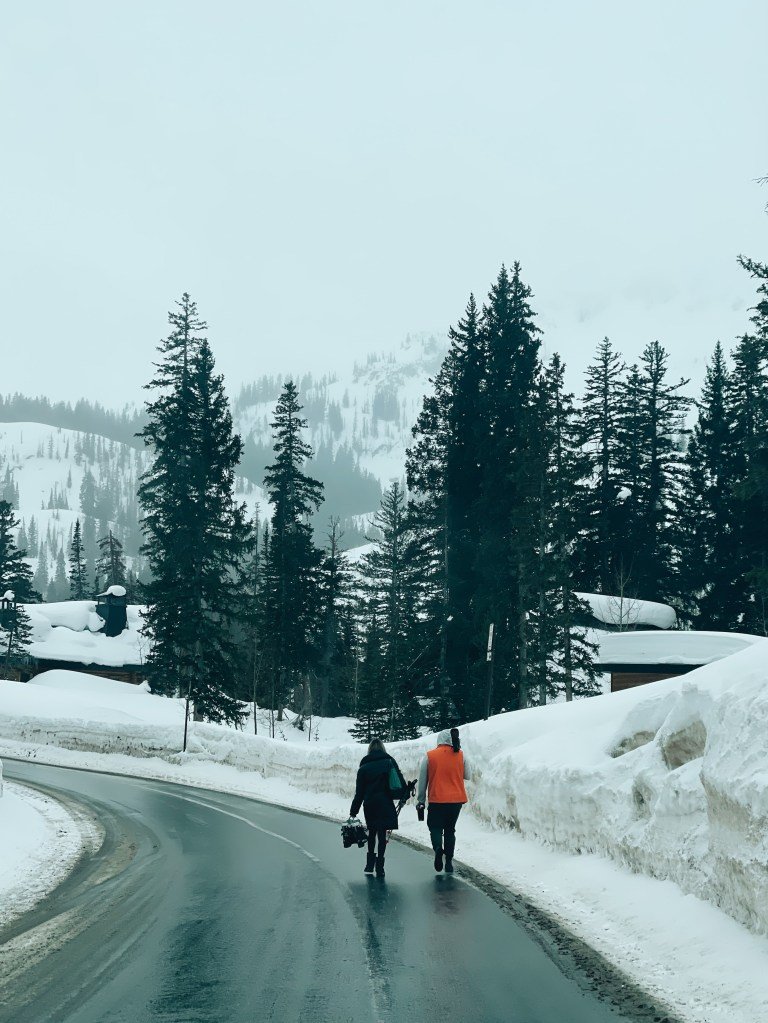
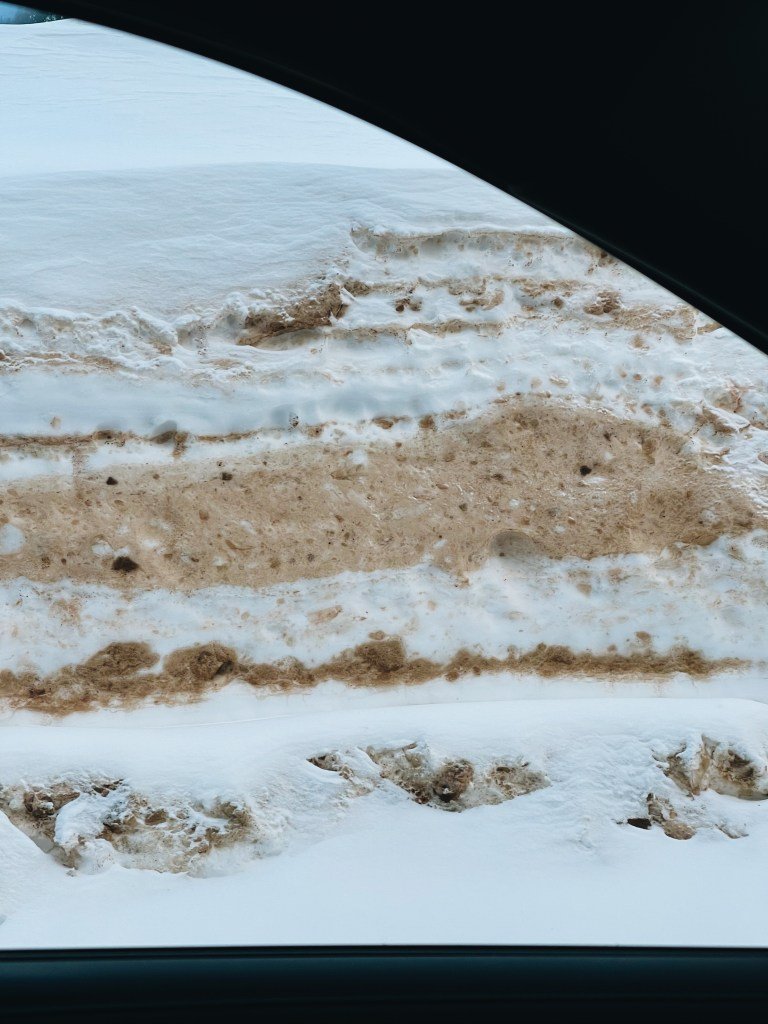
To try and explain why this is being recommended, I’ll give the example of what happened to us when we were there last week. We drove into Little Cottonwood Canyon on Tuesday morning when it was not snowing. We left Park City around 8am, passed through the valley (Salt Lake City), and arrived at Snowbird (resort) in around 45 minutes. This is normally how long it takes. But on the way up it started snowing, and it didn’t stop all day. (Nice!) So our drive home took significantly longer and looked like this (we were going 8-10 miles per hour all the way down):
This is what happens when it snows in the canyons. Which is why a wise bartender at one of the resorts advised us that, “on powder days, you need to leave the valley at 6AM. Because at some point, some asshole is going to think they can get up the canyon in a Tesla, and they will ruin it for everyone. It’s better to nap in your car at the resort than white knuckle for 2-3 hours.” During our drive home, we learned that he was not at all joking. This is what happens. And it is why UDOT wants to build one really long urban gondola.
Gondolas are low-capacity vehicles that quickly get cramped if turned into high capacity ones. They don’t work well for multiple stops. As a result, they are a point-to-point transportation method with low capacity. They are also expensive, especially relative to how many people they might serve, making them financially unattractive options for most applications. At their best, gondolas work when traversing difficult terrain with a consistent but low ridership, which is why they’re most often deployed on ski resorts.
But this situation is maybe a bit unique. It’s kind of urban transport, but really it’s for people to get up the canyon and shred deep powder. Here’s more on how it might work:
The Cottonwood Canyon gondola would be a hybrid of sorts between urban transportation solution and resort-based gondola. The proposal is to build a massive 2,500-spot parking garage at the base of the canyon, about 20 miles from downtown and the airport, where people will park. They will then ride the gondola for 27 minutes to Snowbird or 37 minutes to Alta, a trip duration which has no parallel in the urban or resort gondola scene (the Snowbird tram, one of the most famous in the world, fits more than 100 people per tram but takes less than 10 minutes to ride). Even though the gondola would serve two ski resorts, it belongs more to the urban gondola concept because it is being proposed and recommended by the state’s transportation department as a solution to a recurring traffic problem.
As a snowboarder, this sounds great. But it is, of course, complicated. Conservation groups are objecting, and some/many taxpayers don’t want to pay for a gondola that will largely benefit two ski resorts. Especially one that doesn’t permit snowboarders (I made this part up). So we’ll see. A final decision is expected by UDOT this summer. In the meantime, if you’re interested in urban gondolas, check out this recent article in Vice Magazine by Aaron Gordon (quoted above). He does a good job explaining both sides of this debate. And if you are interested in this topic, I’d be curious to hear whether you think this is a good idea or not.
At $2.5 billion per mile, construction costs for the 1.8-mile Phase 1 of the Second Avenue Subway were 8 to 12 times more expensive than similar subway projects in Italy, Istanbul, Sweden, Paris, Berlin and Spain, according to a report from New York University’s Marron Institute of Urban Management.
It is not possible to outdo the subway in capacity per amount of land consumed— and in a high-demand city, 12-lane freeways are prohibitively land-intensive. Hook (1994) argued that Japan focused on rail transportation in its largest cities because it had high land values in the postwar era and such strong property rights that widespread land condemnation for freeways based on the American model was impossible.
If this is a topic that interests you, I would encourage you to check out the report, as well as their Transit Costs Project website. It allows you to compare transit project costs for 159 different cities.
New York City Mayor Eric Adams today appointed Ya-Ting Liu as the city’s first-ever chief public realm officer, delivering on a key promise from his State of the City address. In this newly created role, Liu will coordinate across city government, community organizations, and the private sector to create extraordinary public spaces across the entire city and continue to drive the city’s economic recovery.
As chief public realm officer, Liu will focus on delivering two components of Mayor Adams’ “Working People’s Agenda.” She will execute on a plan to invest $375 million to create and expand high-quality public spaces in all five boroughs, which includes the Broadway Vision plan, a full reconstruction of Jamaica Avenue from Sutphin Boulevard to Merrick Boulevard, and permanent upgrades to Open Streets in the Bronx and on Staten Island. At the same time, she will lead the administration’s work to deliver a permanent outdoor dining program in partnership with the City Council that works for businesses and residents, building on the massive success of the pandemic-era temporary Open Restaurants program, with clear design guidelines and accessible tools for restaurant owners and communities.
When done right, public spaces have been proven to promote economic development. Perhaps the most obvious example in New York is the High Line. The first two phases cost around $153 million to construct, and as of 2014 it was already attracting some 5 million visitors a year and thought to be responsible for over $2 billion of economic activity. As of 2019, the number of annual visitors had increased to 8 million.
So if New York ends up with more of these spaces — you know, enjoyable spaces that attract lots of humans and investment — this could be a good idea.
We were having pizza at Davanza’s the other night and I started flipping through one of those real estate magazines that you find scattered around places like Park City.
Now, more often than not, when I come across a house listed for tens of millions of dollars, I usually look at it and think to myself, “okay, I know this is a really expensive home and it is likely that someone will want to buy it, but I objectively don’t like it.”
However, as I was flipping through the magazine, I came across this listing and instead thought, “hey, this is actually a really cool house.”
Designed by Wallace Cunningham, the 8,000 sf home features a cascading roof line that looks like an “S” in plan. (It also seems like all of the interior spaces were laid out in service of this plan design, which, depending on your own architectural proclivities, could be considered either a perfectly fine thing or an arbitrary thing.)
Today we went skiing and snowboarding at Brighton, which is in Big Cottonwood Canyon. It was cool seeing the landscape transform and the temperature drop as we went from 4,300 feet (in Salt Lake City) to 8,755 feet (at the base of the mountain). Here are a few snaps from the road.
For those of you who are long-time readers of this blog, you might remember that I do an annual ski and snowboard trip with a group of close friends from both Canada and the US. This year should technically be the 14th annual, but we took two years off during the pandemic (though some of us did meet up to ski), and so we’re referring to this as the official 12th annual. The last one was in February 2020 in Fernie, BC, and this weekend we’re off to Park City, Utah.
This annual trip is something that I look forward to all year. And it has really cemented my love of snowboarding and the mountains. For me, it’s this wonderful combination of outdoor activity, beautiful landscapes, unplugging, and catching up with friends that I have known, in many cases, for over 20 years. In fact, I know that this trip is the reason that a few of us decided to get together to build Parkview Mountain House (our upcoming “creative mountain retreat” in Park City).
A big part of what we want to do with the house (when it’s hopefully ready next winter) is share our love of the mountains with others. We want others to experience what we experience when we go on these trips. At the same time, we felt like there was a huge gap in the market. Park City is a world-renowned ski and snowboard destination, and yet it still feels hard to find modern and design-focused places to stay. So we decided to create our own.
There is, however, one small problem: my right knee. It has been bothering me for the last few years whenever I snowboard, and usually only when I snowboard, to the point where I have to get off the mountain. This obviously pisses me off. So I decided to spend the last 2 months training my tender knees with Noah Mandel. We’ll see if that did anything this weekend. But I’m so committed to the mountains that, if it helps, I’m even prepared to switch to skiing!
Last week, the Centre Pompidou — which is Europe’s largest modern art museum — announced that it has acquired its very first NFTs (18 pieces by 13 artists) and that it will be exhibiting the collection this spring. This makes them the first museum in France to own NFT art and, I’m guessing, one of the first in the world. (The Los Angeles County Museum of Art recently got some as well.)
This is fun for a few reasons. The obviously fun reason is that it’s good for NFT collectors and people who generally support this space. Big institutions bring legitimacy. It’s one thing to say that these JPEGs are stupid while sitting at home on your computer, but it’s an entirely different thing to travel to Paris, visit the Centre Pompidou, look at its white gallery walls, and then say that these JPEGs are stupid!
The other fun thing about this is that it shows a continued openness to new ideas and new technologies. Here are some words from the Pompidou (that have been translated, by Google, from French):
The idea was not to be the first, but to bring together a relevant collection, which could testify to a creative and critical appropriation of a new technology by artists, and how this disrupts and displaces the art ecosystem. From its creation, the Center Pompidou has relied on the idea that contemporary technological creation and creativity should be at the heart of the institution. From 1974-1975, therefore even before the opening of the Center, the National Museum of Modern Art acquired major works and installations by Dan Graham and Bruce Naumann. Video installations using real time, and it was the very first institution to do so.
This wasn’t always the case in France. One of my favorite art history classes from university was one that covered Impressionism. Partly because I thought their work was cool, but mostly because Impressionist painters were, in a way, early modernists. They rejected the academic approaches to painting and instead decided to make up their own rules.
At the time, in the 19th century, this was seen as entirely radical. And it meant harsh criticism from the established art world and an inability to meaningfully exhibit at the Salon (which was everything at the time). But history has a way of showing us that if something is inherently a good idea, you can only remain stubborn for so long.
The Impressionist painters began hosting their own exhibitions starting in 1874 and, by 1881, the government had withdrawn its official sponsorship of the annual Salon. The jurors wanted to cling to only traditional painting styles and the world wanted to move on. And here it is doing that again, today.
You can tell a lot about a place by the quality of its public toilets. I don’t know about you, but if I’m at a restaurant and the toilets are filthy, I automatically assume that the kitchen is at least as filthy.
And so what does it say about Japan that it decided to hire the country’s leading architects to design 17 new public toilets in Tokyo?
I first wrote about “The Tokyo Toilet” back in the summer of 2021. But now that the majority of them have been constructed, I figured it was time to revisit the project.
The two toilets designed by Shigeru Ban are particularly noteworthy in that they are clear glass boxes that become automatically opaque when in use. This was done so you can see if there’s anyone lurking inside.
But of course, all of them are remarkable and all of them are probably better than the general level of public architecture that you’ll find in most other cities.
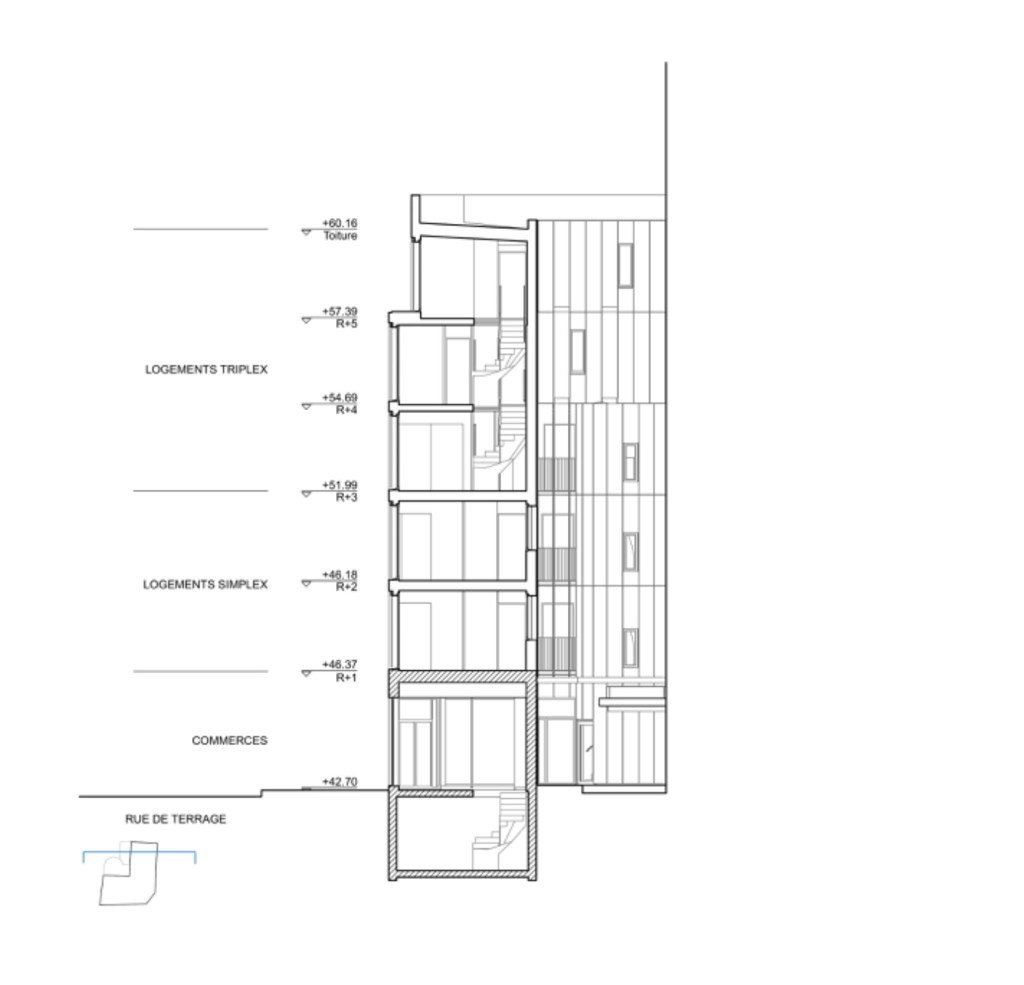
But here’s where things get really remarkable: the area of this corner site is less than 100 m2 (~1,000 sf), the construction budget was €940,000 (excluding VAT), and almost the entire structure was built out of cross-laminated timber. So overall, this is an incredibly sustainable build: it uses land and services efficiently and it uses low-carbon materials.
At this point, you should now be wondering, “why can’t we just do this everywhere?” And this would be the right question.
Lloyd correctly points out in his article that one of the things that makes this building feasible is that it only has one exit stair (as well as no elevator). Typically you need two means of egress, which can serve as a real barrier to smaller builds like this one here.
But in this case, and this is part of the argument, the building is small enough that, should a fire or emergency happen, occupants could be rescued through their windows. So technically there are still two ways of getting out.
In this year’s predictions, I mentioned that we would see “supportive building code changes”, which would help to encourage more infill housing. Exiting is one of the changes I had in mind when I wrote the post. So here’s hoping that policy makers are reading this blog, looking to projects like this one in Paris, and recognizing the benefits.
Talking about exit stairs may not be as exciting and seemingly impactful as something like a foreign buyer ban, but I promise you that removing the many barriers to building this scale of housing would ultimately bring more benefit to our cities.