Daily insights for city builders, delivered every morning at 6 AM ET. I’m Brandon Donnelly — a Toronto-based real estate developer and founder of Globizen. I’ve been writing here since 2013.

Category: Places

  • Japan pays people to leave Tokyo

    We have spoken over the years — here, here, and here — about the centralizing and decentralizing forces that play out within our cities. Agglomeration economies, for example, are a centralizing force. There are real economic benefits to people and firms clustering together in cities.

    However, there are also many decentralizing forces. Traffic congestion is one. And of course, the pandemic also proved to be a powerful one for many cities.

    But the fact that we even have cities in the first place should tell you that the centralizing forces do tend to win out over the decentralizing ones. And a perfect example of this is Tokyo. Usually considered to be the largest metropolitan area in the world, Tokyo has about the population of Canada in one city region.

    And here, the centralizing forces are so great — even for families — that the government actually pays people to relocate to places outside of Tokyo’s 23 wards (and its immediately surrounding areas). Previously the maximum figure was ¥300,000 per child (~CA$3,056), but this has now been increased to ¥1 million per child (~CA$10,188).

    A key driver of this is surely Japan’s demographic problem (namely a shrinking and aging population base). But it doesn’t change the fact that lots of people appear drawn to the world’s largest city.

  • Where the rich don’t drive — is density the new luxury?

    This data is from 2019, but I imagine that things would look pretty similar today and that it might even be a little more pronounced. The dataset from the above article looked at how many people have cars in a given area (a darker dot = fewer cars) and then plotted this against population density and income per capita.

    Here’s what that looks like for the regions of New York, Boston, Los Angeles, and Houston (data from 2013 to 2017):

    What is fascinating about these charts is that they show two different correlations. In dense and transit-rich cities such as New York and Boston, car usage is most closely linked with population density and not with income. The dark dots form a horizontal line near the top.

    However, in the case of Los Angeles and Houston, car usage is instead most closely linked with income and not with population density. The dark dots form a vertical line near the left — the lowest income per capita.

    So what does this tell us?

    It tells us that if you design a city to broadly require a car, then you are likely to sort people based on those that can afford a lot of car and those that cannot. On the other hand, if you design a city around transit, then you are likely to instead create a place where both the rich and poor get around in similar ways.

    There is also evidence that the latter is being increasingly viewed as more desirable. 2017 was the first year in the US where high-income young people (ages 26 to 33) drove less than low-income young people. Presumably these high-income people had choices, and so I tend to view this as a preference.

    As a whole, this is surely a good thing for our cities. But now I think we need to be careful not to allow density and walkability to become the new luxury that only the rich can afford.

  • A “New” New York

    Earlier this year, the Mayor of New York City, Eric Adams, and the Governor of New York, Kathy Hochul, assembled a panel of civic leaders and industry experts to try and come up with a plan for a “New” New York.

    Initially, this panel was intended to be entirely focused on reviving the city’s business districts, and in particular those that have been slow to recover from the pandemic. But scope creep happens and it ultimately grew to include two other important goals: make it easier to get around and encourage “inclusive, future-focused growth.”

    The recommendations from this panel were released today and it’s in the form of a report with 40 specific initiatives. In keeping with its original intent, the first recommended initiative is one that you would expect: “Make Midtown and other business districts more live-work-play.” And what that means is the following:

    We will remove barriers that have kept Midtown and other business districts stagnant by making it easier to convert and redevelop outdated office buildings to other uses, including residential, thereby empowering the market to create more vibrant, mixed-use districts. We will also update old-fashioned regulatory codes that have prevented small businesses from locating, expanding, and innovating in those districts, providing zoning flexibility for businesses to thrive. And we will unite our business districts behind a shared goal of vitality by aligning incentives for businesses to help maintain vibrant business districts.

    New York isn’t the first city to be encouraging office-to-residential conversions and it certainly isn’t going to be the last. I think most of you know that I am a firm believer in office-centric cultures and that I’m in mine 5 days a week. But this is a recalibration that is going to need to take place in some submarkets.

    And here is one of the capitals of the world — New York City — telling us that it needs to happen there.

  • New ideas like buildings people don’t want

    There is a very common story that plays out in cities. It starts with an area that has seen disinvestment and is probably a little seedy and/or dangerous . This creates an environment where rents and real estate as a whole are relatively inexpensive. New, cool and creative businesses start to move in (attracted by said inexpensiveness) and the area begins to turn around. Eventually it becomes suitable for institutional-type investors, and this ultimately leads to everything becoming expensive as a result of demand outstripping supply. Gentrification complete.

    The great irony of this story is that you sometimes, or oftentimes, lose the very things that made the area cool and interesting in the first place. Here is an example from Miami:

    The result has been a property speculation boom that, when combined with the city’s relatively low wages, put many businesses and residents on the street. Asking rents for industrial space, for instance, went up by 53 percent in the last year alone. Nobody can afford to buy, let alone rent, adequate space for a music venue because so much land has been snapped up by outside investors with a predilection for grand, “world-class urban” designs. 

    And for some areas, it is arguably the result of a careful and deliberate plan that was put in place nearly two decades ago:

    Teele’s commissioner district in the early 2000s included both Park West and the historically Black neighborhood of Overtown. At the turn of the millennium the area was blighted and crime-ridden thanks to years of racist, regressive policy decisions from segregation to redlining. His plan was simple but incredibly effective. He spearheaded a campaign to revitalize the area by granting a limited number of 24-hour liquor licenses to clubs like Space. Dozens of venues rose up on and around 11th Street, including vast, multi-room clubs like Metropolis, live venues like Studio A and Grand Central, and more intimate spots like Vagabond. Sporadic police raids also gave the area a druggy, dangerous reputation, inadvertently raising its allure. 

    This reoccurring arc has led some people to conclude that cities and/or areas seem to want to follow a kind of binary outcome: they’re either dying or they’re too successful. Why can’t we just have urban homeostasis? I don’t think this is necessarily always the case. Cities go through cycles just like any other market. I also know that it’s complicated. But I do feel strongly that we need to be mindful that part of what makes cities such wonderful places is that they are factories for new ideas and creativity.

    I can’t remember when or exactly how he said it, but YouTuber Casey Neistat once described New York City as an incredible island (Manhattan?) where misfits from all over the world come to do whatever the hell they want. And that part of the reason for this is that nobody cares what you do, because everyone is just so damn busy. You could certainly argue that New York isn’t what it used to be. But the lesson here remains the same: Cities are at their best when they allow humans to create, build, experiment, and express themselves.

    And oftentimes a great place for that is in a space that nobody else wants.

  • Bikes and property in Paris

    I have been reading Fred Wilson’s blog for over a decade now (and he has been blogging for almost two decades). A lot of the time it is about venture capital and tech, but similar to what I do here, it can be about almost anything. Today he wrote about the two weeks that he just spent in Paris with his wife (the Gotham Gal). And the post covers everything from real estate to relationship advice. But here are two points that will be particularly relevant to what we usually talk about around here:

    • Paris has done an excellent job of prioritizing cycling and building a ton of new lanes over the last number of years. We know this. But another good point that Fred makes is that Paris has allowed competition in their micro-mobility ecosystem. It started with Velib, but now you can also use Dott and Lime. The last time I was in Paris I used Lime bikes and scooters, mostly because I already had the app and because they were everywhere. Competition is good and Toronto should probably allow the same. Our bike share system — specifically the mobile app — is incredibly cumbersome to use, and the last time I checked most of the e-bikes were consistently out of service. Let’s see if someone else can do a better job. We should, of course, also add scooters to the mix while we’re at it.
    • Next, Fred describes Paris’ real estate market as being more “stable.” And by this he means that, for whatever reason, values and rents seem to be more moderated. This has some benefits. Restaurants and other retail businesses seem to stick around for decades, whereas according to Fred, “it’s hard to find a shopping street in Manhattan that doesn’t have multiple vacant stores”. I’m not exactly sure why this is the case in Paris (assuming it is). I don’t believe that they have any sort of vacant store tax. Though they do have a tax on unoccupied homes. Maybe this is just what happens when you’re a little less capitalistic. (This is me deliberately avoiding the term socialism.)

    If any of you have more insight into the real estate market in Paris, I would love to hear from you in the comment section below.

  • New York City proposes a bounty for reporting bike-lane blockers

    The general rule when it comes to bike lanes is that, if you build them without some sort of grade-separation, at some point a car is going to park in them. But here are two possible solutions to this problem. The first is that you could build some sort of grade-separation that can’t be driven over. And the second is as follows:

    Now a New York City Council member is pushing a bill that would give civilians the power to report bike lane scofflaws, as well as vehicles that block entrances or exits of school buildings, sidewalks and crosswalks. New Yorkers who submit evidence of a parking violation can earn 25% of a proposed $175 ticket. The Department of Transportation would review the evidence to determine whether an infraction has occurred, according to the bill’s text.

    What this essentially does is decentralize rule enforcement by paying people to be rats. Off hand, I can’t think of any other cities that have done something like this and so I don’t know how effective it might actually be. But being a rat sounds like it could be a good paying job.

    Let’s assume that somebody decided to treat this as their full-time job and work 8 hours a day, Monday to Friday. And then let’s assume that they were able to rat out one person per hour. Here’s how much money they could make in a year:

    • $175 x 25% = $43.75 per illegal incident
    • $43.75 x 8 incidents per day = $350 per day
    • $350 per day x 5 days a week = $1,750 per week
    • $1,750 per week x 52 weeks = $91,000 per year

    Now, if the goal of this rat-people-out program is to ultimately change behaviors, then it might make sense to assume that your revenues would decline over time as more people start following the rules. Either way, something tells me that more than a few people would be happy to take on this job.

  • Community living rooms in New York City

    This is a great collection of third places or “community living rooms” in New York City. Simply speaking, a third place is any space where people hang out that isn’t their home and isn’t their place of work. Hence the third moniker. The most typical example is arguably the humble coffee shop. But what is clear from this thread list, is that a third place can take on many different permutations — everything from a bathhouse to an art library with the world’s largest collection of artist’s sketchbooks. What is also clear is that these are the kinds of spaces that really define a city. They create a sense of place, they give us community, and they help us with our sense of self — because they allow us to think things like, “I am the kind of person who hangs out and enjoys independent bookstores in the East Village.”

  • 3 things about Le Corbusier’s Cité Radieuse

    I have written about Le Corbusier’s Cité Radieuse in Marseille many times before on the blog. It is one of the most influential multi-unit buildings of the 20th century. For better and for worse, it inspired a generation of architects. But up until this afternoon, I had yet to actually see it in person. Now that I have, here are 3 takeaways.

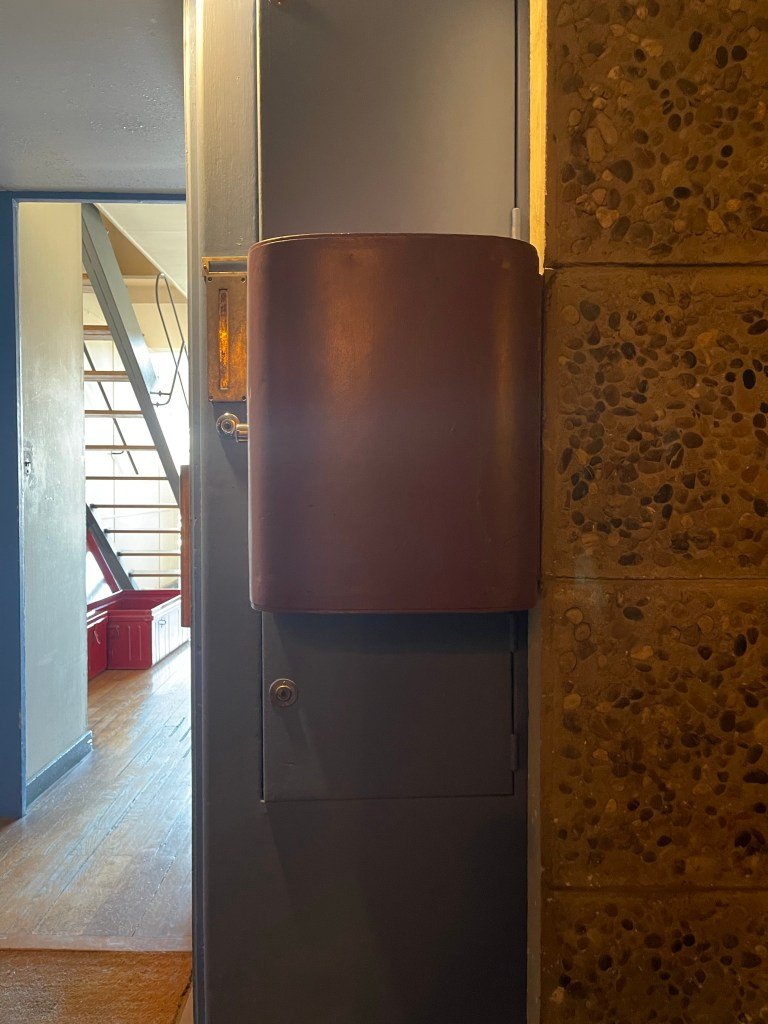
    The corridors throughout the building were thought of as “streets” in a vertical village. Because of this, each street had a mailbox and each front door came equipped with an elaborate delivery system. The large curvy thing pictured above was for general deliveries (mostly food I’m guessing). And the smaller door below was for ice block deliveries (i.e. refrigeration). In both cases, these doors could be accessed from inside the kitchen.

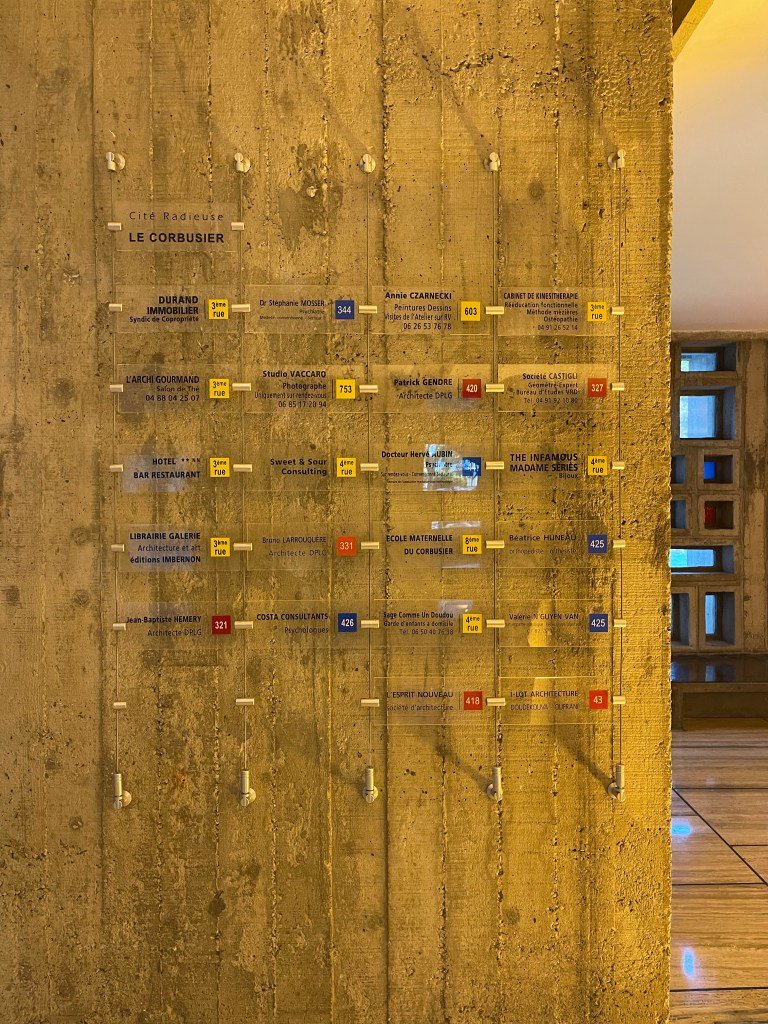
    The two “streets” in the middle of the building were dedicated to commercial uses. And by being in the middle of the building, they were equidistant from residents living either above or below. I was told that when the building first opened in the 1950s, these streets were actually quite successful — filled with everything from bakeries to grocery stores. So you can imagine people running deliveries up and down to the other streets. But that quickly fell off as the retailing landscape developed in Marseille and in France. Today, this portion of the building houses mostly offices, art galleries, and specialty boutiques. Though there remains a widely-used 21-room hotel (pictured above).

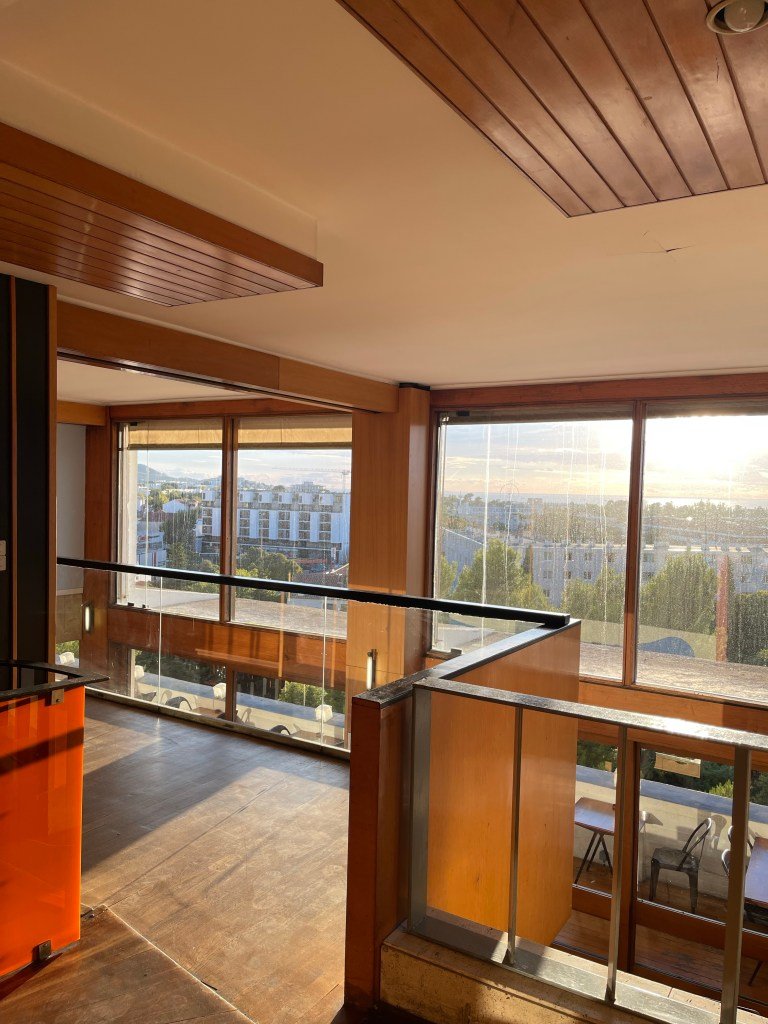
    To fully appreciate what the Cité Radieuse meant for housing in France, you kind of have to imagine what the rest of its stock was like at that time. The introduction of duplex and dual aspect units with modern kitchens and bathrooms and with views of the sea, represented meaningful progress at the time. But it is interesting to see how much ceiling heights have changed over the years. They’re really low here — well under 8 feet. And that is probably its greatest Achilles’ heel today.

    If ever you happen to find yourself in Marseille, I would encourage a visit to the Cité Radieuse. Many of the things we do today started in this building. And there are some other ideas here that might also be worth bringing back.

  • Laser distance metering Le Panier in Marseille

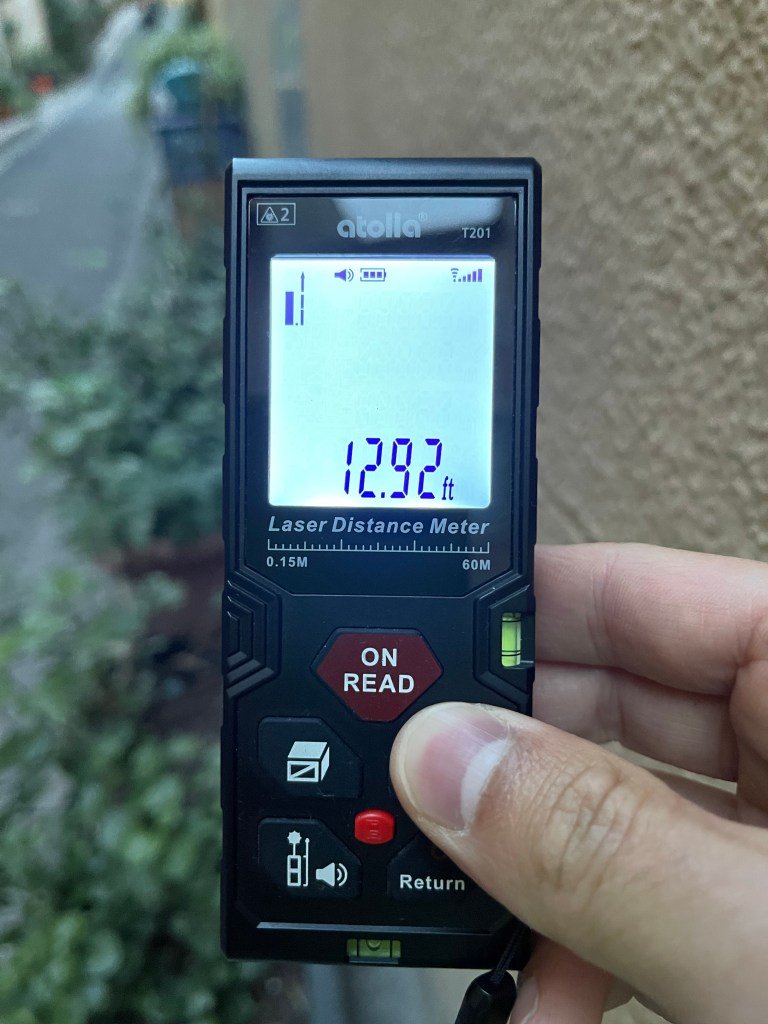
    I usually always have a laser distance meter in my bag. I use it when I’m on construction sites and I need to confirm important dimensions. But they can also be useful when you’re traveling and you want to appear as nerdy as humanly possible to the locals.

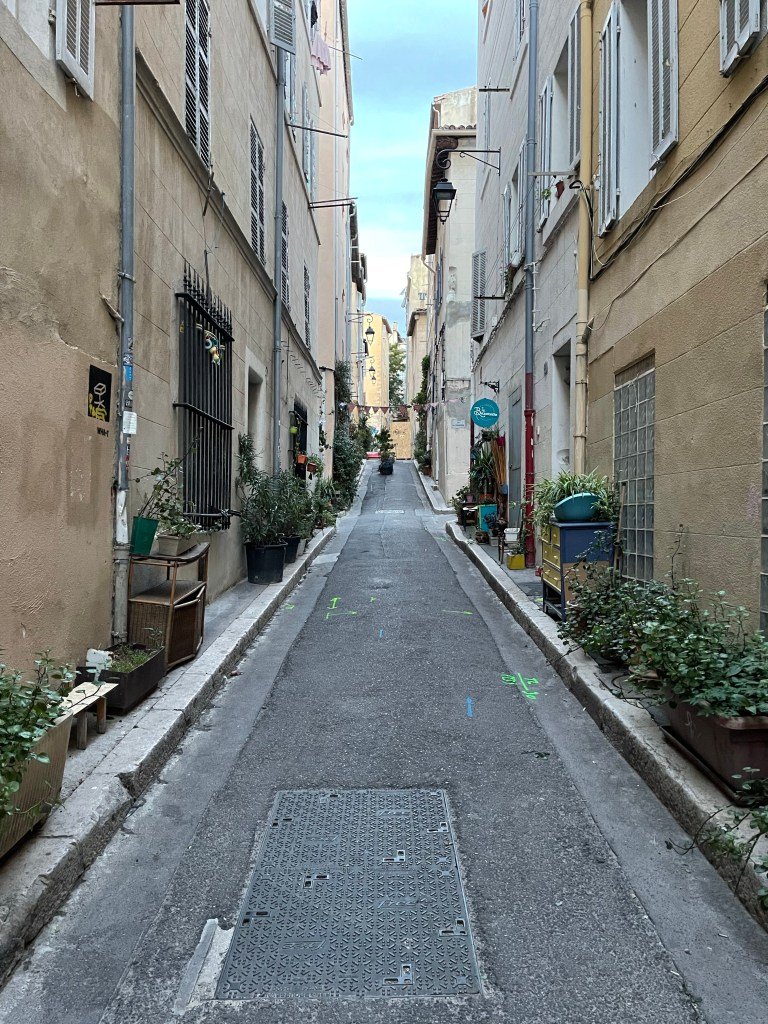
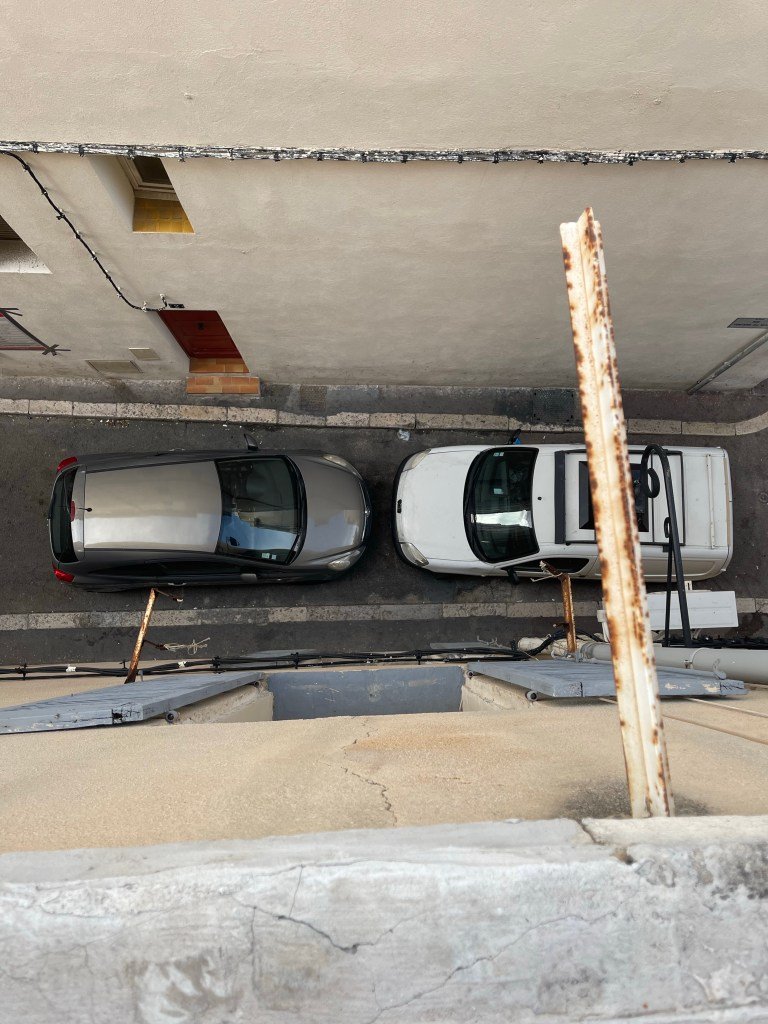
    This is a typical older street in Le Panier area of Marseille, which is the oldest part of the city in probably the oldest city in France. Greek settlers colonized this area around 600, and at that time it was called Massalia.

    There is one major street in Le Panier — la rue de la République — which will make you feel like you’re in Paris. It was pierced through in the late 19th century, around the same time that Paris was doing its large-scale urban renewal things.

    But there remains lots of examples of what you see here: streets that are 12 to 13 feet wide from building face to building face. This is wider than your typical Toronto condo living room, but not by much.

    There are, I guess, sidewalks on these streets. But most of them tend to be taken over by potted plants and other urban accessories. Everyone who uses these streets really just has to figure out how to share them.

    It would be illegal to build this close and compact in most modern cities. Part of this is, of course, because modernity used to view this kind of urban form as being unhealthy and generally undesirable. Humans needed light, air, and space.

    This is true. But we also like intimate urban spaces that put people first.

  • Super-prime home sales in New York and London

    Here’s what I can tell you this morning: Real estate development is a bit more fun when you don’t have to constantly worry about supply-chain issues, access to labor, high inflation, and regularly increasing interest rates. That said, if you just want to buy a super-prime property in one of the world’s preeminent global cities, things seem to be just fine:

    According to FT, both New York and London have continued to see a rise in super-prime sales this year and both have seen more of these sales in the first 8 months of 2022 compared to all of 2019 (before the pandemic). Note: These charts are showing home sales greater than US$10 million and greater than £5 million, respectively.

    On top of this, many or most of these buyers are, apparently, still able to access financing at LTVs of 100% (i.e. no money down). For what it’s worth, there is a London mortgage broker quoted in the article saying that he has arranged more 100% mortgages this year than in his entire 20-year career. Turns out that the best way to ensure access to debt is to not need it in the first place.

    Charts: FT