Daily insights for city builders, delivered every morning at 6 AM ET. I’m Brandon Donnelly — a Toronto-based real estate developer and founder of Globizen. I’ve been writing here since 2013.

Category: Tokyo

  • A three-meter-wide home in Tokyo

    November 1, 2025 · View original


    > Tweet: Zero-setback house in Tokyo, designed by Haryu Wood Studio & Selma Masic. Three levels, family of four, and just 63 square meters in total area. https://t.co/8mNdI7PrUm

    I am endlessly fascinated by some of the small homes that get built in Tokyo. This one, also pictured above, is called the Borderless House.

    Designed by Selma Masic — in collaboration with Sei Haganuma (Haryu Wood Studio) — the house sits on a 3-meter-wide lot, has a total area of 63 square meters across three floors (~678 square feet), and allegedly houses a family of four. Bridgestone also appears to be its immediate neighbor.

    To put these dimensions into perspective, 3 meters is roughly the width of a “typical” new apartment living room here in Toronto. Usually, if you have a floor plate that can accommodate an outboard bedroom up at the glass, you design for a structural grid somewhere between 6–6.5 meters.

    This gives you around 10 feet for the living room and around 10 feet for the bedroom. (As a a Canadian, it’s important to always bounce back and forth between metric and imperial.) In this case, the entire lot is only 3 meters wide, though a corner lot always enhances a floor plan.

    All of this is fascinating because, compared to North America, it represents a completely different way of conceptualizing space. Of course, the point of posts like this one is not to suggest that this is what all homes should be like. The point is that there are benefits to allowing those who would like such a home to be able to build it.

    Cover photo by Selma Masic

  • Does quality of life have to decline as a city grows?

    October 29, 2025 · View original


    When it comes to cities, quality of life is a subjective measure. Some people may prefer a small city where homes are more affordable and commute times are negligible, while others may find the unique amenities of a big city more appealing — enough to outweigh the negatives.

    Whatever the exact case, there are some obvious negatives that come with urban scale. The usual suspects are high housing costs, traffic congestion, noise and pollution, crime and safety concerns, and the list goes on. But is it universally true that quality of life has to decline as a city grows?

    I don’t think so at all. I wasn’t able to find a good primary source on this topic, but the obvious example and outlier that comes to mind is Tokyo. It is both the largest metropolitan area in the world and a city that consistently ranks near the top of most quality of life indices.

    So how do they do it?

    There are lots of ingredients that go into a city like Tokyo, but I would argue that one of if not its most important, is its transit network. Tokyo has one of the highest rail modal splits and one of the lowest driving rates in the world. And it’s the only way a city of this scale could actually function as efficiently as it does.

    This is not me being an ideologue (which I am sometimes called); it is me being a pragmatist. Show me a big global city with more than 10 million people that is oriented around the car and does not have a traffic congestion problem, and I’ll happily change my mind.

    Cover photo by Leongsan on Unsplash

  • Stubborn on vision, flexible on the details

    October 18, 2025 · View original


    So what did we uncover during yesterday’s great urban design debate?

    If I can extract one overarching takeaway, it’s maybe this one: We need to be big and bold (have a compelling vision!), while at the same time getting out of the way of small-scale urban innovation. Joe Berridge, for example, felt strongly that Toronto is not taking full advantage of its waterfront. We’ve been too focused on bike lanes and parks, rather than on creating noteworthy global draws and aggressively marketing ourselves externally. Toronto needs its Sydney moment — something like a globally significant Opera House that attracts people from all around the world. I don’t disagree. Cities need to do things that are remarkable.

    At the same time, we spent a lot of time talking about the micro scale. Some of the most loved urban environments from around the world have the simplest built form: fine-grained and humble buildings fronting onto human-scaled streets — streets like Ossington in Toronto and seemingly every street in Paris. But that was then. This kind of built environment is mostly incongruent with how we plan and develop new communities today. We develop big, we impose top-down planning, and we no longer have the same inherent flexibility that our older building stock had.

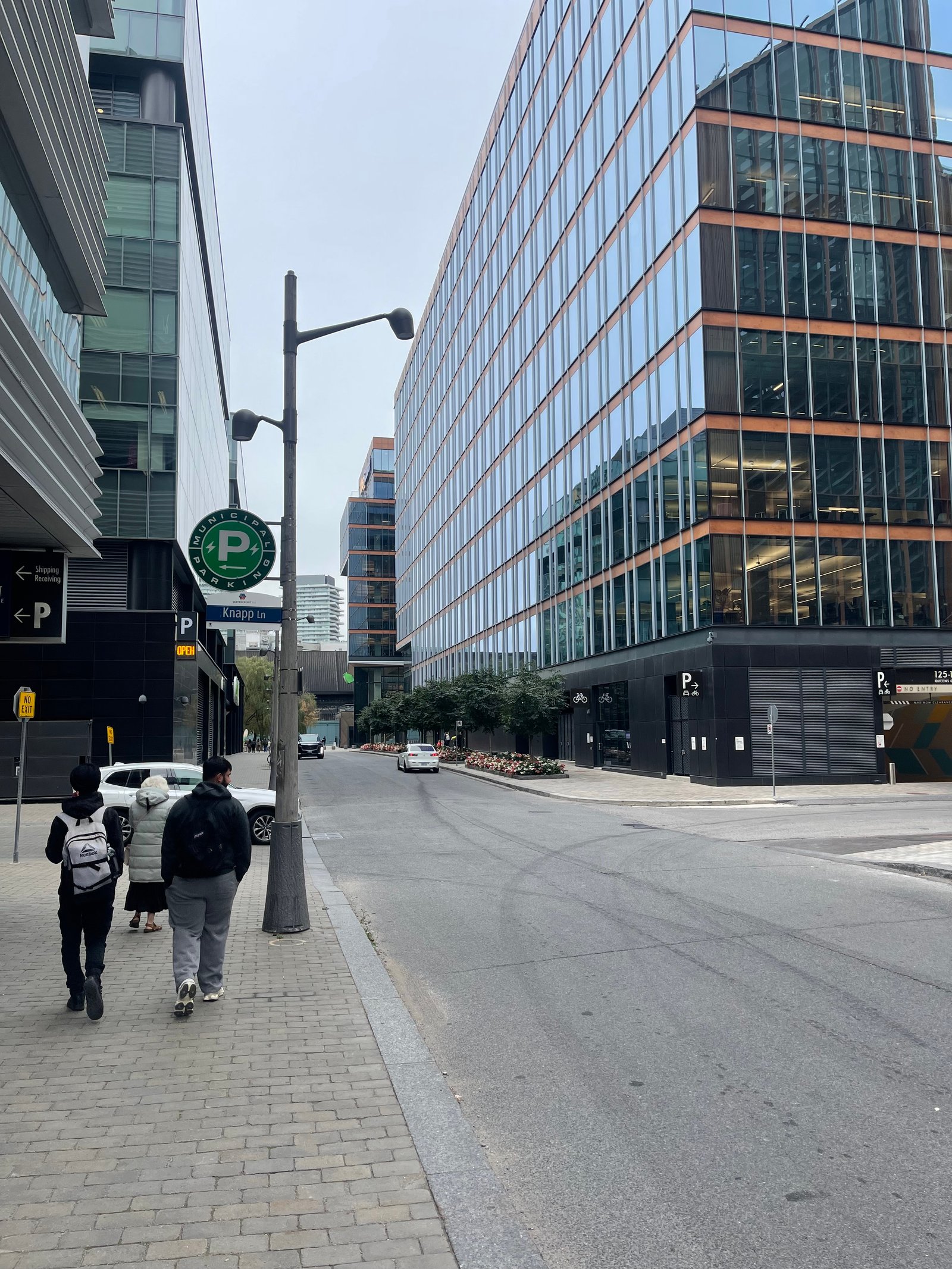
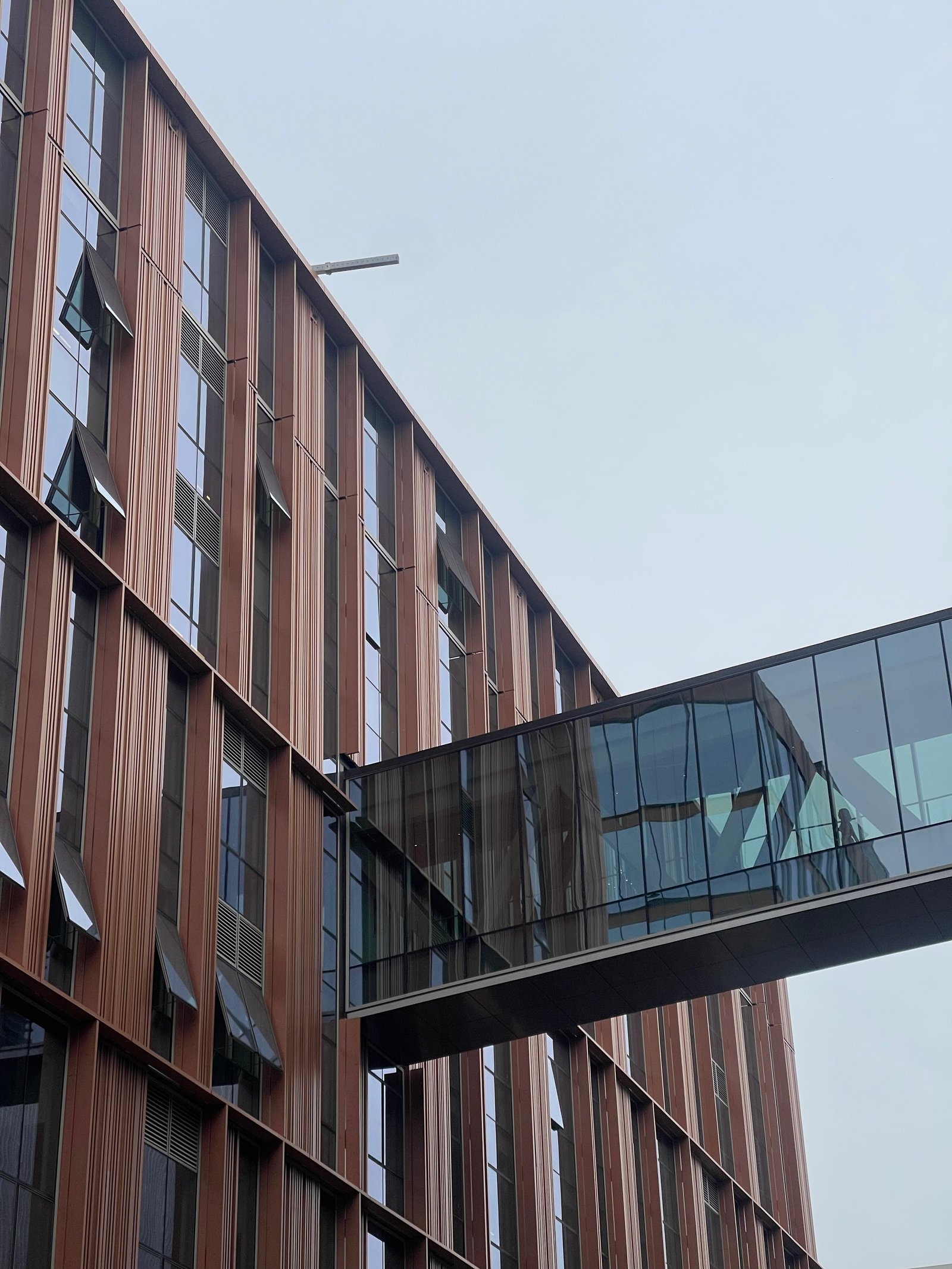
    Take, for instance, Toronto’s East Bayfront, which is where this conference is taking place. It’s a recently developed community with many or most of the hallmarks that constitute good urban design today: handsome architecture (including mass-timber buildings), pedestrian-friendly streets, well-designed public realms, and more. And yet, the area is largely void of any urban vibrancy. Other than the boardwalk along the water and a handful of restaurant patios, there’s very little public life. Many of the buildings are also connected by bridges, which is not in and of itself a problem, but it further removes life from the street.

    Here are a few photos of the area that I took while leaving the panel:

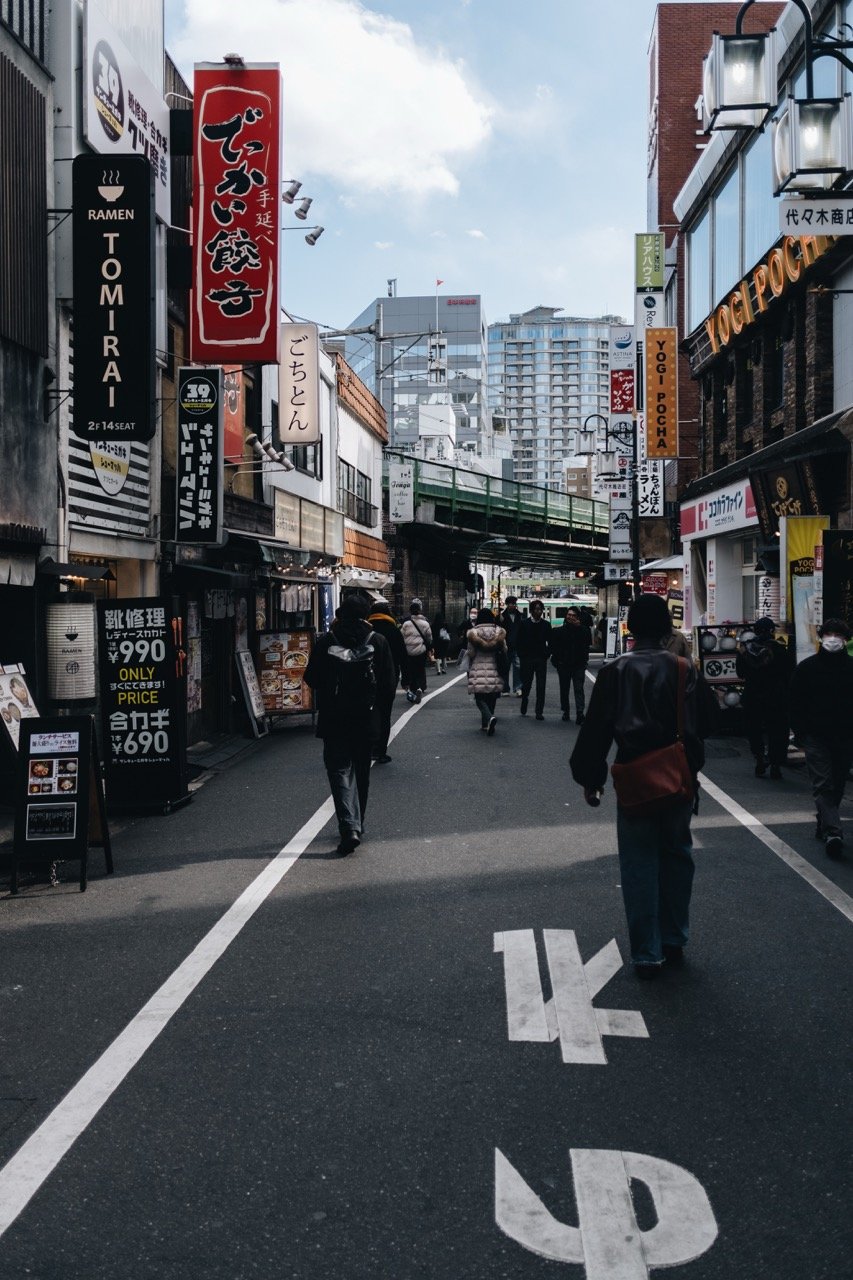
    Compare this to a random street in Tokyo:

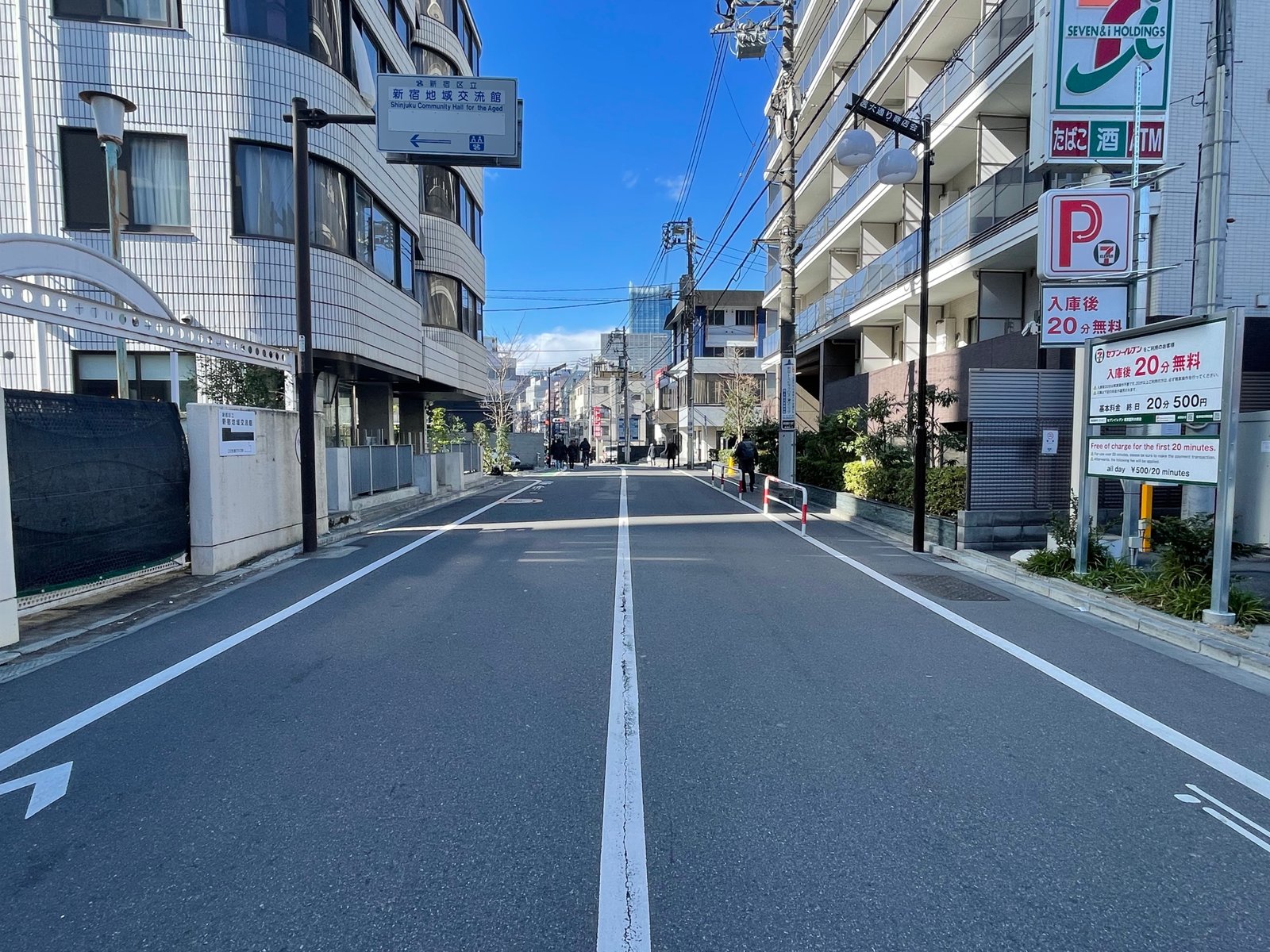
    The buildings are ugly, or at least nondescript. None of the tenants are following a consistent signage standard. There are no sidewalks. And there’s an overhead rail line bisecting the street. And yet, it’s vibrant. It’s a successful urban street. Most older cities have areas akin to this, but it’s a real challenge to create it from scratch in new developments (see above). I’m very interested in this challenge and, as we have talked about many times before on the blog, I think part of the answer lies in allowing flexibility and ground-up change. It’s impossible to predict what an area could become and, for that reason, top-down planning will never get it exactly right.

    Thinking about it this way, urban design isn’t dead; it just maybe needs a refocusing. And what I propose is approaching it along the lines of Jeff Bezos’ old management adage: You want to be stubborn on vision, but flexible on the details.

  • How Tokyo manages to be so clean without any public garbage bins

    June 22, 2025 · View original


    One city that we didn’t talk about from Monocle’s recent Quality of Life Survey, but that regularly appears on the list, is Tokyo. In this year’s ranking, it was bestowed with “best for cleanliness.”

    > All of this isn’t to say that there’s no rubbish in Tokyo but, overall, it’s much tidier than other cities of a comparable size. Tokyo spends a fortune on keeping things presentable. The Clean Authority of Tokyo’s waste management budget for the central wards is ¥105bn (€640m) this year, of which ¥83bn (€507m) is dedicated to cleaning. But the secret to the city’s sparkle is that it’s not simply the work of city employees: it’s a collective job.

    If any of you can remember my “Takeaways from Japan” post from this earlier this year, you might recall that cleanliness shows up in my first point. It is absolutely astounding that the largest city in the world — it almost has the entire population of Canada — manages to be so clean. On top of this, it manages to achieve this with almost no public garbage bins.

    If you’ve been to Tokyo, you’ll know this. There are very few places to throw out your garbage in a public space. This is perhaps the irony of Tokyo’s cleanliness. But it works because of the expectation that people will take their garbage home and then sort it according to the city’s strict separation rules. And of course, this is what people do.

    That said, there are some other reasons for the lack of public bins, namely the 1995 subway sarin attack. There remains a deep fear that garbage bins might be used to conceal a terrorist device, which is why if you do see a garbage bin, it’ll often be transparent in nature so that nothing nefarious can be concealed. But by and large, the Tokyo approach seems to work because everyone wants it to.

    This reminds me of an incident when our ski and snowboard group was there in February. We were walking around Harajuku and a few of us decided to indulge in a set of elaborate desserts involving crepes, various fruit-like mixtures, and an absolutely excessive amount of whipped cream. You know, the sort of thing you’d never order if you were at home.

    One of us ended up wearing their dessert. He had it on his face, his chest, his hands, and somehow all over this jacket sleeves. There was whipped cream everywhere. He needed to abandon ship immediately and rid himself of what remained of his dessert. Except, there were no garbage bins anywhere! This is despite being on one of the busiest tourist streets in the city (see cover photo).

    It became a mission to get himself cleaned up. But what he absolutely did not do is litter. That’s just not how one conducts oneself in Japan — with or without public garbage bins.

    Cover photo by Elton Sa on Unsplash

  • Why aren’t Japanese toilets more popular?

    April 5, 2025 · View original


    Things have been pretty serious around here lately. We’ve been talking a lot about isolationist tariffs that make zero economic sense and that have been blatantly miscalculated, and so let’s switch gears and talk about something a little more fun: toilets.

    If any of you remember my post from earlier this year called “Takeaways from Japan,” you might remember this:

    > Our toilets are in the stone ages. You’re not going to get yourself clean with just paper. You need a comfortable warm seat and highly adjustable jets of water. I never fully appreciated this need before the trip, but now I’m a true believer. It’s time for a new toilet.

    Well, I meant it when I said it:

    This week, I finally got around to installing a new TOTO WASHLET seat on my existing toilet. My bathroom may now look a little more geriatric, but it’s a fantastic quality of life upgrade that more people, outside of Japan, should adopt. So why don’t they?

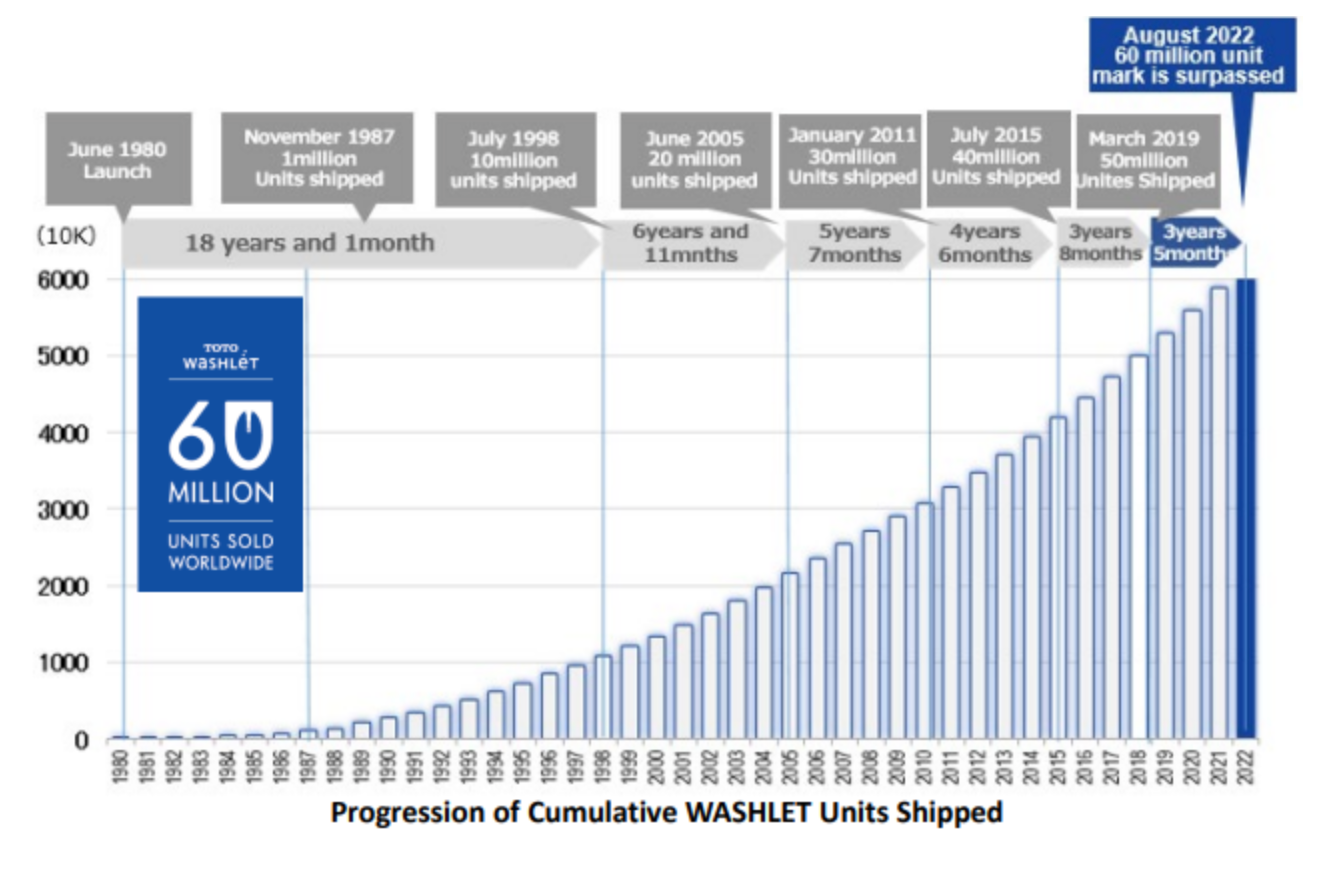
    The TOTO WASHLET seat was first created in 1980. And since then (and up until 2022), the company has reported selling more than 60 million units, with the majority of them being sold in Japan. As of 2021, it was believed that over 80% of Japanese households were equipped with some sort of heated bidet toilet.

    Market penetration is much lower in the West. In the US, ChatGPT think it’s less than 5%. And based on anecdotal evidence, this does not seem far off. I almost never see them in public places (though The Butcher Chef here in Toronto has one) and I rarely see them in people’s homes.

    My gut is that it’s a combination of a lack of awareness and people thinking it’s weird and/or unhygienic. I mean, is that wand clean? But if you travel to Japan, you will have an aha moment. So maybe TOTO needs to figure out a way to export this moment to the rest of the world through, oh I don’t know, some sort of public toilet program.

    Note: This post is not sponsored by TOTO. But I really wish it were, because then maybe I would have gotten my seat for free.

  • The 10 largest urban areas in the world

    February 18, 2025 · View original


    I have a new not-so-serious goal. I say not-so-serious because I’m busy with lots of other things and who knows if/when I’ll actually get around to this. So let’s just say that this goal is based on a strong interest. I would like to visit the 10 largest urban areas in the world.

    I was careful to say urban areas, because largest cities can be misleading. City proper boundaries are an arbitrary measure. What matters more are the built up areas.

    I have already been to a handful of them, namely the ones centered around Tokyo, Dhaka, and Mexico City. But there are more on the list that I haven’t been to.

    There are, however, two immediate challenges with setting a not-so-serious goal like this one. The first is that it’s not easy to come up with a definitive list of the largest urban areas. It’s nuanced and, for some cities, population estimates are very much rough estimates.

    The second is that population figures are constantly changing. So by the time I get around to this, many of the largest cities might be in Africa (current forecast for this century) and I may be checking off the wrong list.

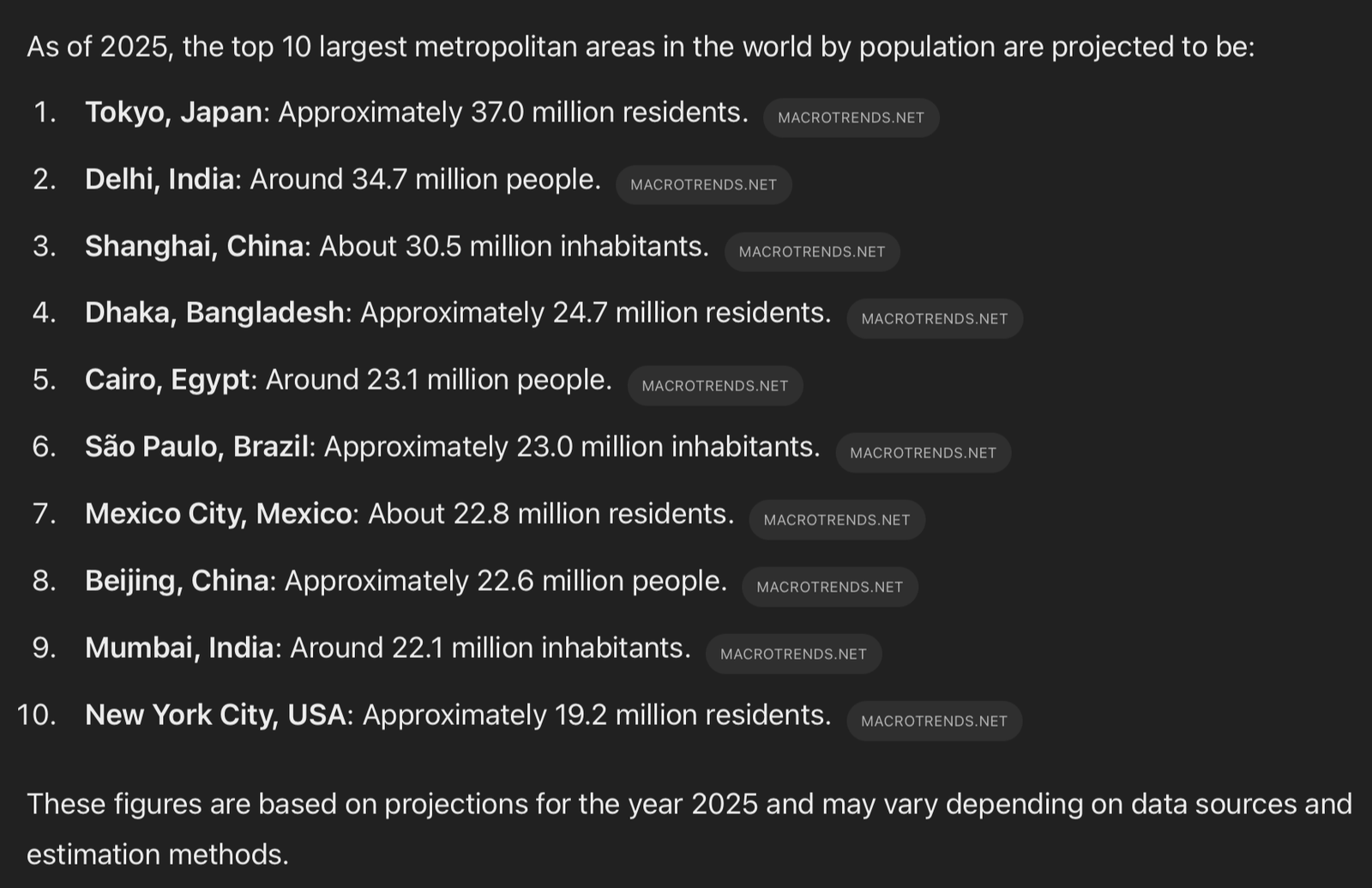
    But let’s not let perfect be the enemy of good. Here’s what I came up with. And by “what I came up with,” I mean that I asked ChatGPT its opinion. This is the list I got:

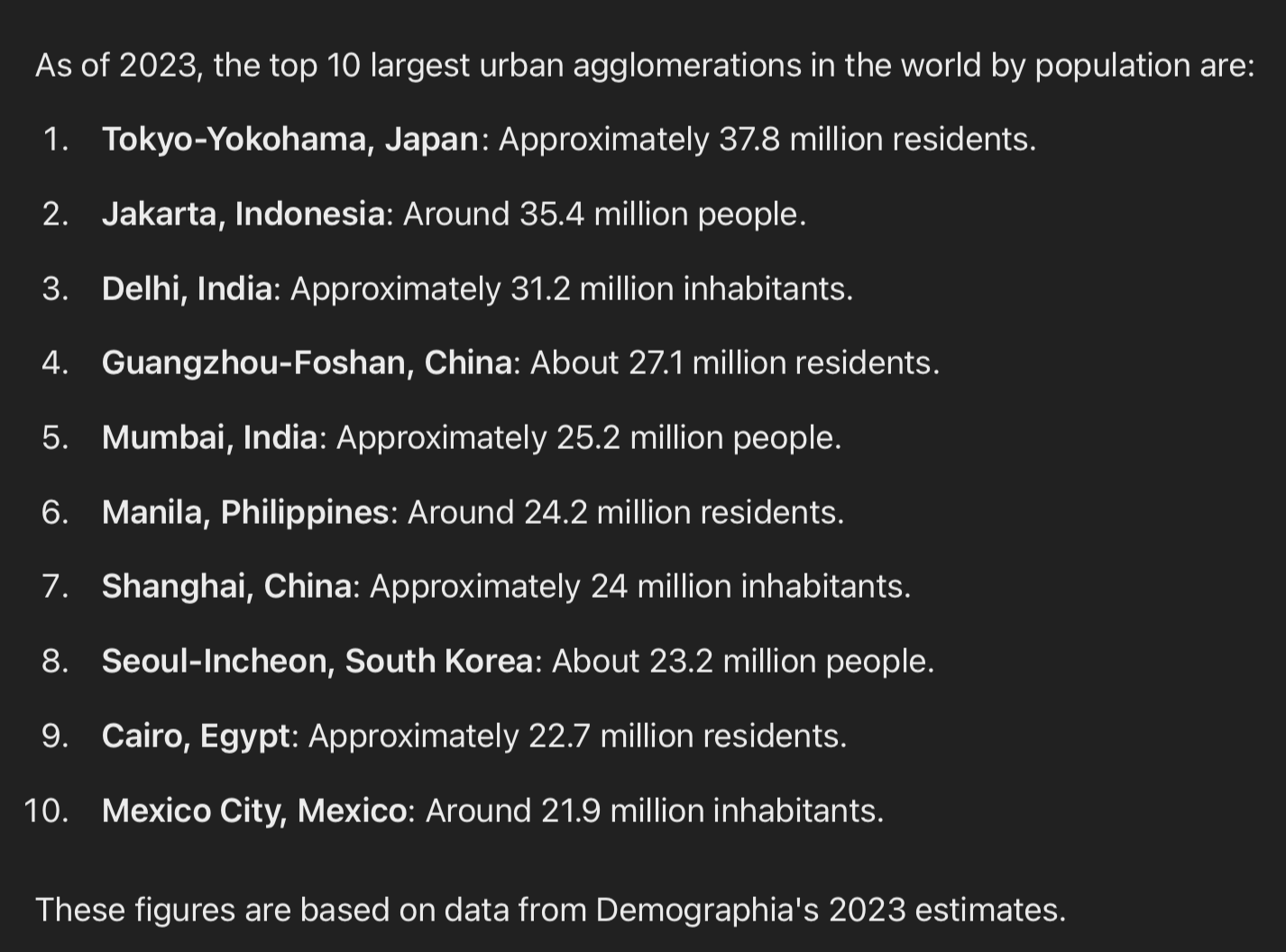
    Then I asked the question in a slightly different way and got this list:

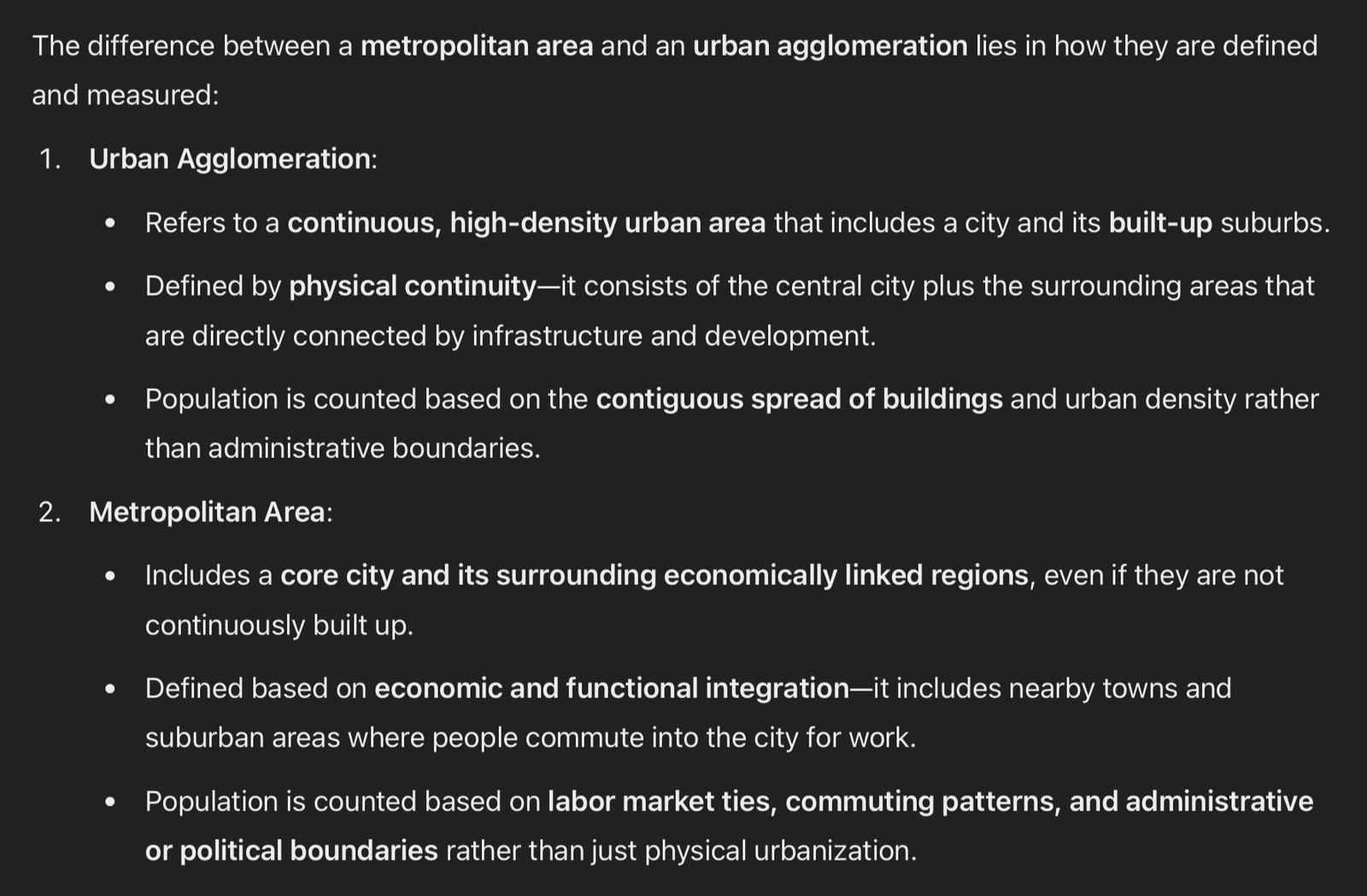
    Then I asked it to tell me its definition of metropolitan area vs. urban agglomeration:

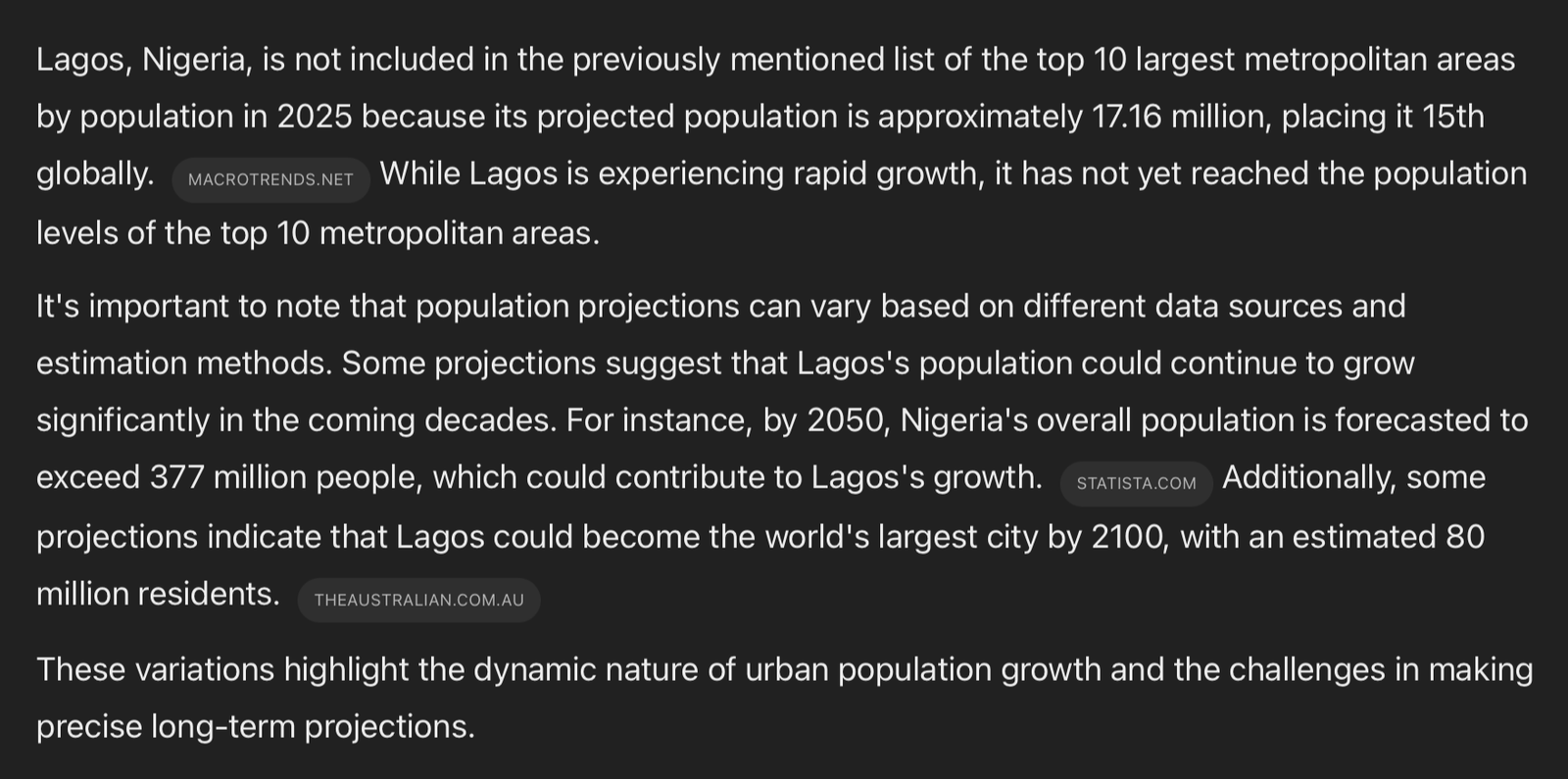
    Finally, I asked it why Lagos, Nigeria was not on the list. Current estimates place this urban region at more than 20 million people (which would place it ahead of New York in the first list), but I don’t think anyone really knows for sure. Whatever the current number, it is widely understood to be one of the fastest growing city regions in the world. This is how ChatGPT responded:

    I’m a little torn because high on my list of cities to visit are São Paulo and Seoul. And they don’t seem to be finding themselves on the same list. I’m also very curious to see Lagos, and I have a suspicion that it’s much larger than official estimates. Regardless, there are some clearly big cities to check off. India and China would be good places to start. So I better get to work. Or not. Since this is a not-so-serious goal.

  • A return to local corner stores

    February 17, 2025 · View original


    Here’s a timely article talking about the difference between 7-Eleven stores in North America versus Japan, and why the Canadian company, Alimentation Couche-Tard, wants to buy the Japanese company for $47 billion:

    > So far, owner Seven & i Holdings Co. hasn’t been able to replicate that success at its 13,000 US and Canadian stores, better known for their constantly rolling hot dogs and 30-ounce soft drinks than their fresh food or their ability to inspire effusive posts from social media influencers. The Tokyo-based company, which has been closing underperforming North American stores faster than it’s been opening new ones, is now the target of a $47 billion takeover bid by a Canadian rival that says it can do a better job translating that overseas magic to the market.

    I have no idea if this will happen, but Couche-Tard has been trying to buy the company since 2005. If successful, this will create the largest convenience store operator in the world. It will also go down as one of the largest foreign takeovers in Japan. (On a related note, Couche-Tard tried to buy French grocery chain Carrefour SA in 2021, but that was blocked by the French Finance Minister.)

    What is clear, though, is that there’s an obvious user-experience gap between the stores in Japan and the stores in Canada and the US. As we talked about here, convenience stores in Japan serve solid food and act very much as community hubs. I didn’t know this until right now, but in Japan, people also use these stores to do things like send parcels and pay utility bills, and top chefs regularly judge the food.

    However, this is based on a supply-chain network that is, at least right now, unique to Japan:

    > In Japan, which is much smaller, the chain relies on a robust supplier network, where inventory and food preparation take place at more than 150 factories churning out breakfast, lunch and dinner. Product lineups and displays change quickly based on consumer tastes, with each store responsible for analyzing the sales of every product and adjusting orders to reduce waste and control inventory. It’s a management method known as tanpin kanri, which was even taken up as a Harvard Business School case study. “Japan’s convenience stores’ food preparation central kitchens and logistics infrastructure would be more challenging to establish and operate efficiently over vast areas in the US,” Boston says.

    There appears to be universal consensus that the key to unlocking additional value is more fresh food and overall better offerings. And presumably Couche-Tard is of the opinion that it will be a better operator and that it can figure out whatever supply chain is needed. Time will tell. But I find it interesting that all of this is arguably about creating a kind of “local corner store” that better serves people’s needs.

    Cities used to have these in spades. But then we zoned them away, scaled everything up, and optimized around rolling hot dog cookers and big gulps. So in many ways, this story is about a return to fundamentals. It’s about figuring out a way to serve quality products to local neighborhoods, in a globalized world. That sounds simple enough, but it’s clearly not easy.

    Cover photo by Lisanto 李奕良 on Unsplash

  • A home, an office, and a public space in Japan

    February 16, 2025 · View original


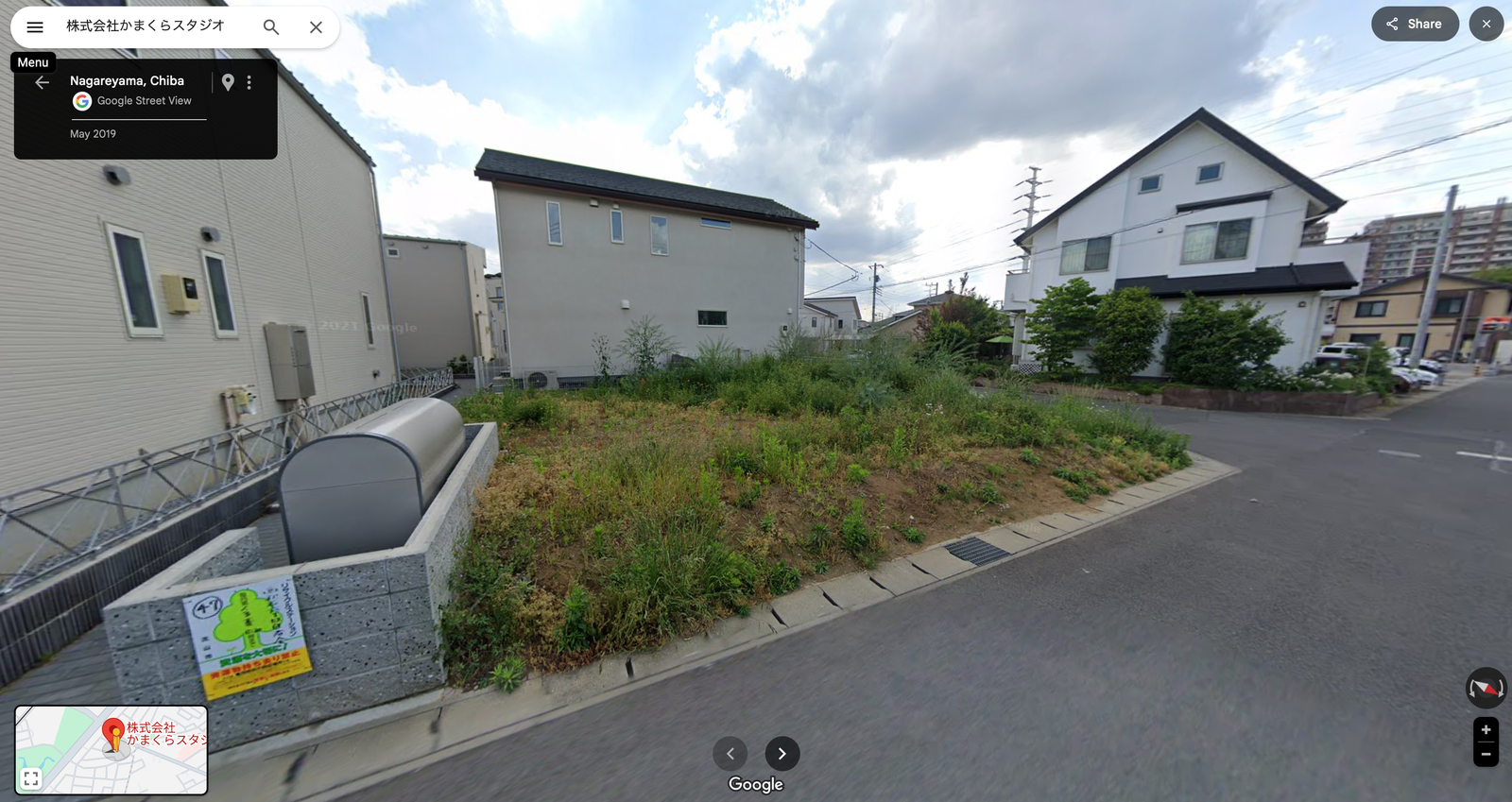
    In my recent post about “takeaways from Japan” I spoke about a willingness to experiment and be playful with the built environment. I said that quite often people design homes around what they want, as opposed to what they think might broadly appeal to the market. So today, let’s look at an example. Below is a site on the outskirts of Tokyo, about an hour from the center of the city. The architect — Kamakura Studio — describes it as being situated in a “new town” where about 75% of the residents have moved in within the past decade. And like Japan as a whole, problems of aging and population decline are expected in the future.

    Using Google Maps to get rough dimensions, the site looks to be somewhere around 8m wide by 11m deep. So this is not a huge site compared to what you might find in the suburbs of other cities, but it’s certainly a very workable set of dimensions. Also noteworthy is the fact that the area has no sidewalks. This is common throughout Tokyo. Ordinarily, this would imply a suburban mental model. But in practice, Tokyo’s streets actually feel very pedestrian-friendly. And that’s because they tend to be narrow and the entire city is oriented mostly around rail.

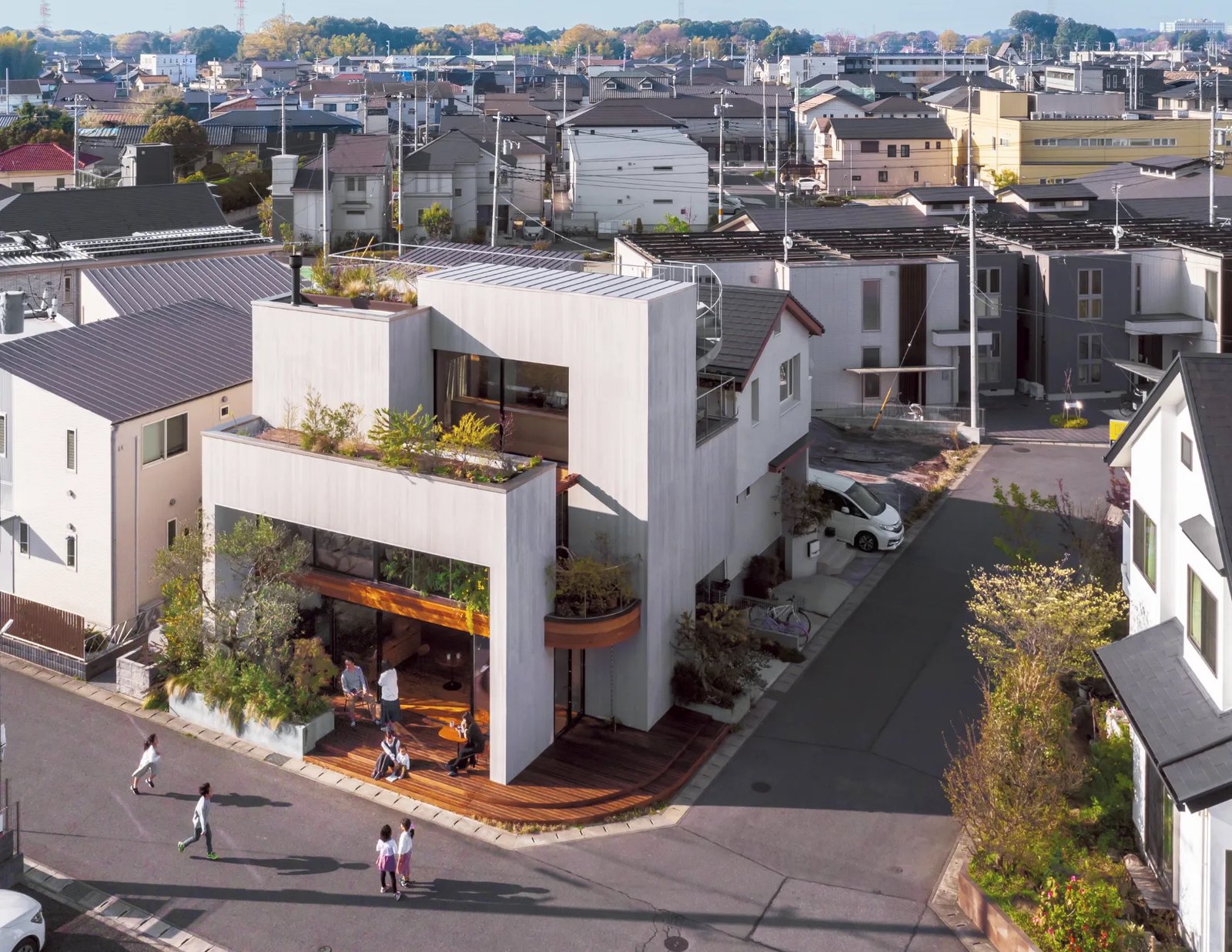
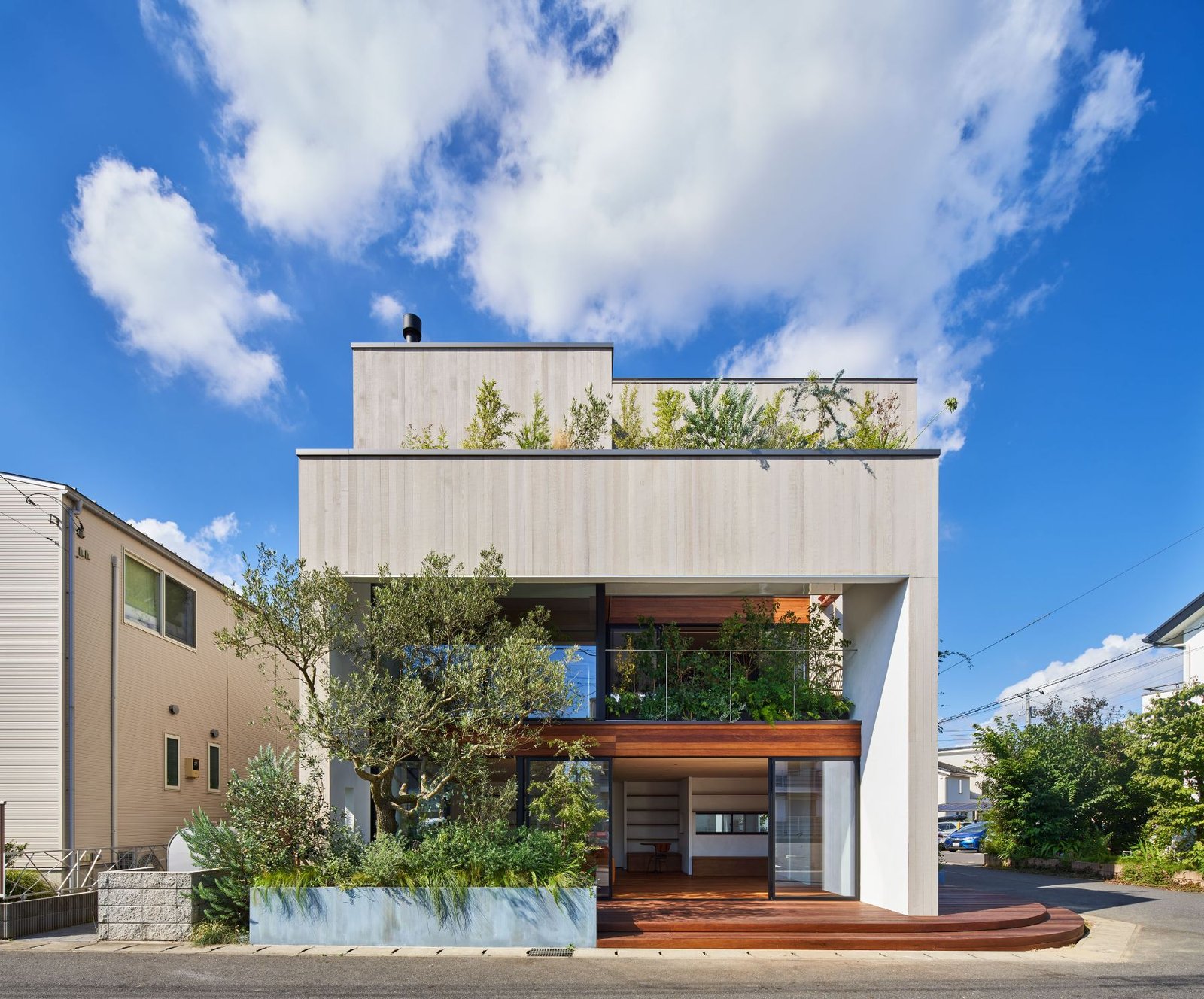
    What was ultimately developed on the site is this (House F):

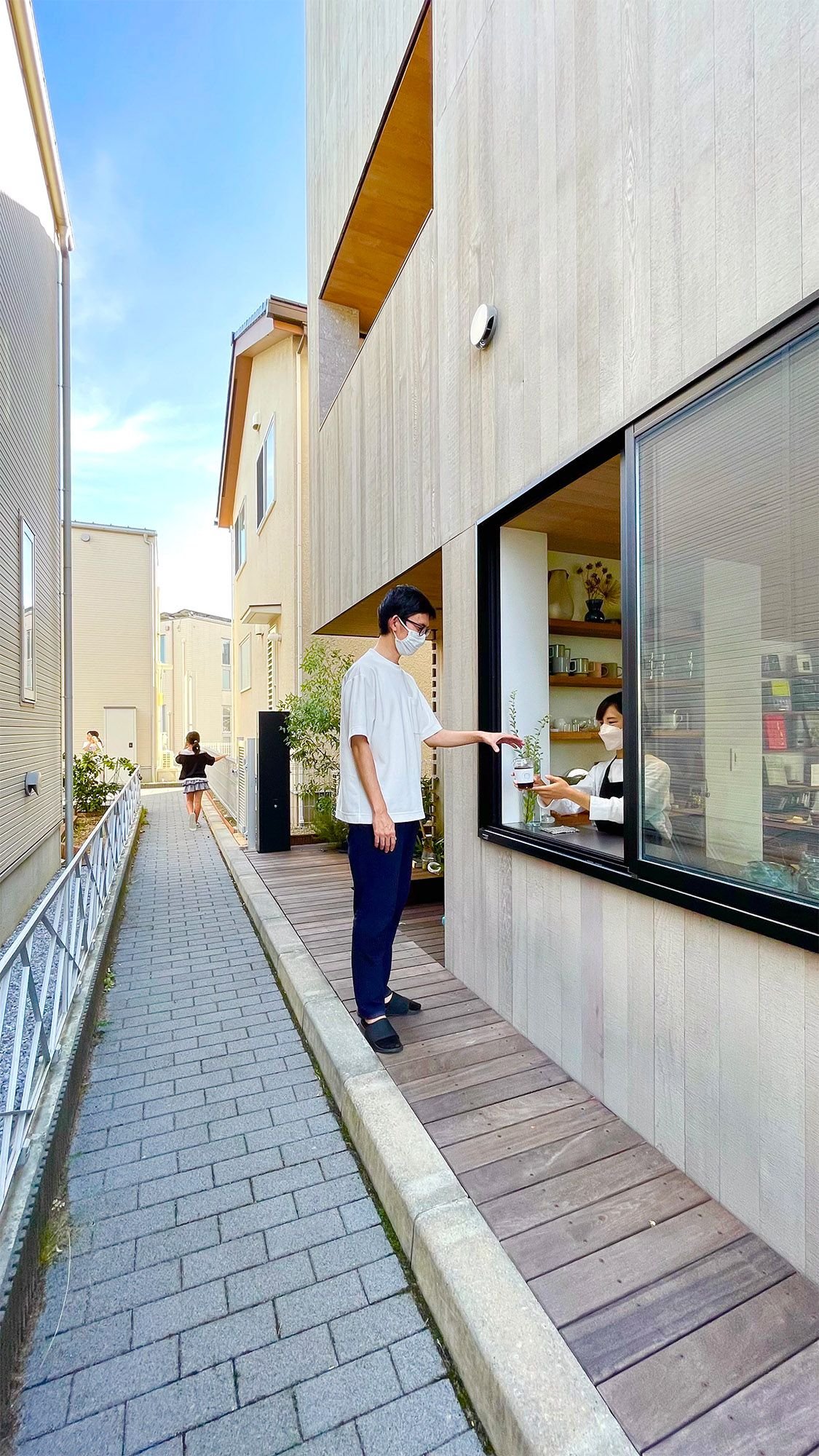
    Totalling 169 m2, the first floor of the house serves as an office for the architect and as an open space for the local community. The firm opens up the space to people who may want to stop in for coffee (or just hang out) and for movie nights. There’s even a “plant-sharing network” on the terrace where dozens of households supposedly contribute and participate. On the second and third floor of the house are the domestic quarters. Here there are two generous bedrooms, study spaces, and multiple balconies, one of which provides access to a rooftop terrace.

    It’s a highly livable house, but it’s also designed to meet a particular set of ambitions. I mean, look at the above coffee window. And this is one of the really cool things about domestic architecture in Japan. (If any of you are familiar with how the zoning would work for a site like this, I’d love to understand that.)

    Project images via Kamakura Studio

  • Takeaways from Japan

    February 12, 2025 · View original


    It’s a wrap for the 14th annual fresh pow adventure. (Here’s a short video.) I’m now on a plane home. But let me tell you, “Japow” did not disappoint. We went for the powder and, without any exaggeration, it snowed every single day. I have never seen snow accumulate as fast as it does on Hokkaido. I now understand why after big storms some people need to leave their house via the second floor. The region gets that much snow in January and February.

    Of course, we also got the chance to spend a number of days in Tokyo. When I first visited the city over 20 years ago, I absolutely loved it. And I feel the same way after this trip. Tokyo is up there for me — it’s one of my favorite cities. It’s obviously enormous, but it’s highly livable and it works, really well in fact. So here’s a list of some of the things — both small and big — that I admire about the place and that I think we should adopt back in Toronto.

    – Its reputation is, of course, true. Tokyo is a neat and clean city, especially given its scale. And everyone seems to be bought into it, because they don’t even have public garbage cans. I don’t exactly know how you instil this into the culture of a place, but I think it goes along with the overall pride they seem to take in their work and the commitment to quality. How you do anything is how you do everything. – Without fail, every time you sit down at a restaurant, the first thing you will receive is a moist towel to clean your hands. It’s a super simple and welcome gesture. Why not clean your hands before you eat? – Everything has a place. Receipts are handed over in trays. Restaurants have baskets at each table so you don’t have to put your bag on the floor. Hangers are provided so you don’t throw your jacket on the back of your chair. And the list goes on. It’s orderly and civilized. – Our toilets are in the stone ages. You’re not going to get yourself clean with just paper. You need a comfortable warm seat and highly adjustable jets of water. I never fully appreciated this need before the trip, but now I’m a true believer. It’s time for a new toilet. – Lots of people still wear masks in Japan, and across Asia. Unselfishly, people do this when they themselves are sick and want to protect others from their germs. It’s a practice that I had hoped would stick in the Western world following the pandemic. But it did not. – Convenience stores (7-11, Lawson, Seicomart, etc) are everywhere and they’re actually good. You can have a decent meal at any of them. We need to up our game. As North American cities relax their zoning to allow more small-scale retail in residential neighborhoods, I also hope that, generally, we see a stronger culture of “going to the corner store.” – Tokyo cares deeply about art, architecture, design, and fashion. There’s a culture of investing in all of it, and you see it clearly across the city. I mean, look at their public toilets, many/most of which have been designed by a celebrated architect. – There’s also a high willingness to experiment and be playful with the built environment, including domestic architecture. Many people seem to design their homes around what they want, as opposed to what might broadly appeal to most people in the market. (This is a topic we’ve spoken about before.) – Alongside all of this, I find that there’s a cartoon quality to a lot of the aesthetics in Tokyo. You see this in the graphic design, the design of everyday objects, and, of course, all the actual cartoons and anime you see everywhere. It makes the city feel very playful at times. – Tokyo is very much a vertical city, as opposed to just a city with tall buildings. There are buildings all over the place with retail uses located on some hidden upper floor and where you need to queue for an elevator to access it. There’s no shortage of evidence to suggest that this “only works in Asia”, but maybe it could work in more places than we think. Oftentimes our land use policies limit the amount of commercial floor area in mixed-use zones. But why even bother? Let the market determine what’s viable. – Finally, and we talked about this last week, Tokyo is a city that is clearly oriented around rail. And it’s the only way that a city of this size could operate as beautifully as it does. This isn’t new information, but it remains my number one takeaway. Because Tokyo is an easier city to get around than Toronto. In fact, we found ourselves not wanting to take Ubers because rail was actually faster, cheaper, and more convenient. That’s a testament to the power and efficiency of rail.

    What did I miss? Let me know in the comment section below.