Daily insights for city builders, delivered every morning at 6 AM ET. I’m Brandon Donnelly — a Toronto-based real estate developer and founder of Globizen. I’ve been writing here since 2013.

Month: March 2026

  • How immigration actually boosts local economies for everyone

    March 21, 2026 · View original


    The Brookings Institution recently published something called Metro Monitor 2026. It’s an interactive dashboard that provides decision-makers with data on how the largest metro areas in the US performed between 2014 and 2024. You can check it out here.

    As part of this analysis, they looked at the relationship between immigration and regional economic performance. More specifically, they examined how regional economies with growing immigrant populations have performed over the last decade, and how that growth has been shared across immigrant and native-born households.

    To answer these questions, they looked at the change in the foreign-born share of the working-age population in the 196 largest metro areas, and then compared it to a variety of different economic markers. And what they found, not surprisingly, was that more immigrants tend to be better than fewer immigrants:

    > Metro areas with larger increases in the foreign-born share of their working-age population saw stronger growth in gross metropolitan product (GMP) and employment between 2014 and 2024, as well as in key prosperity metrics such as productivity and wage growth.

    It increased employment rates for both native-born and foreign-born workers:

    > Between 2014 and 2024, employment rates in metro areas with the largest increases in their foreign-born workforce share were nearly 3 percentage points higher for both native-born and foreign-born workers than in metro areas with the smallest foreign-born workforce share increases. Put simply, metro areas with larger increases in the foreign-born share of their workforce tended to deliver stronger employment outcomes for both immigrant and native-born workers.

    And it also increased median earnings, again for both native-born and foreign-born workers:

    > We find a similar pattern when examining changes in regional median earnings. Metropolitan economies with larger increases in the foreign-born share of their working-age population consistently recorded higher median earnings for both native-born and foreign-born workers.

    Once again, we’re reminded that, when managed properly, immigration isn’t a zero-sum game. There is a common narrative that foreign-born workers depress wages and/or take opportunities away from native-born citizens. But the data suggests that the opposite is true.

    Next up (or soon up): Let’s talk about Canada’s now-declining population.


    Cover photo by Clay Banks on Unsplash
  • The fragility of the Dubai model

    March 20, 2026 · View original


    My friend Alex Feldman just shared this New York Times opinion piece with me. Along with it, he said, “Thought you’d appreciate this.” And he was right, because he knows me. He and I have a long history of geeking out about cities, hosteling around Europe together, and booking irresponsible flights at odd times in odd locations.

    The article is by Richard Florida, and it’s called “Dubai Was Not Built For War.” It follows one of the themes that we recently spoke about, here. People come to cities in search of opportunity. Cities are labour markets. But Dubai is perhaps an extreme example of this. You could say it’s a city designed almost exclusively for opportunists. From Florida:

    > Nearly nine in 10 Dubai residents are nonnationals — by far the highest percentage of any major city in the world. Across the Emirates as a whole, about 10 million of 11.4 million residents are foreign nationals. Many are from Britain or the United States, but many more are guest workers who do the service jobs on which the city depends and typically come from South Asia, Southeast Asia and the wider Middle East. Even a traffic violation can trigger deportation. Citizenship is based almost entirely on descent; it’s been intentionally made very difficult for even long-term foreign residents or their children to become Emirati, even after decades of living and working there. The system is designed to rely on migrants while keeping them permanently temporary. That makes it extremely hard to be rooted, to belong, to be attached.

    The result is a new urban model (“Dubai-ification”) compared to how we used to think about cities:

    > This new kind of city is a sharp break with the past. For most of human history, people lived and worked in the same place, and cities grew up around that basic fact. They transform, rebuild after fires and disasters and become richer and sometimes poorer, but they draw their resilience from their rootedness, the fact that people feel they belong there. To say “I am a New Yorker” or a Londoner or “I am from Pittsburgh” or Detroit or Rome or Barcelona — that is not just a map. It conveys a deep sense of history, belonging and meaning, a personal identity, not just a transaction. Those identities are messy and unequal, but they are substantial. They are one of the primary ways people answer the basic questions of who they are and where they belong. And they are part of what brings people back to hang on and rebuild, no matter what.

    At the time of writing this post, Polymarket shows a less than 50% chance of a ceasefire with Iran by the end of May, and a 71% chance of one by the end of December. That’s not 100%. So, we’ll see. Maybe it becomes even more protracted. Hopefully not. Regardless, the question everyone is asking is: How many of the “permanently temporary” will actually stick around if they no longer feel safe?

    My view is not many.


    Cover photo by Christoph Schulz on Unsplash

  • The Red Queen hypothesis

    March 19, 2026 · View original


    Entrepreneurship is a critical component of city-building. You want people taking risks, starting new companies, and creating jobs to grow the overall economy. And to accomplish this, you roughly need a bunch of smart people, access to money, and a culture that accepts failure and risk-taking. Then, maybe, you might get some successful startups.

    The key word, however, is maybe.

    Here’s an interesting essay by Jerry Neumann — a retired venture investor — called “We Have Learned Nothing.” In it, he argues that there is no science of entrepreneurship:

    > Of course, no science of entrepreneurship can be a science in the sense most people think of the term. There are no fixed and universal recipes, no ultimate truth. This may be unsatisfying to the aspiring founder, but any science that guaranteed success would bring us right back to the perpetual money machine. The best we can hope for is a science that makes startups meaningfully more likely to succeed and that is honest about the limits of its own prescriptions. And then, when those prescriptions harden into orthodoxy, we try something different. A true science of entrepreneurship embraces the Red Queen dynamic so completely that it rejects any attempt to permanently systematize it.

    The “Red Queen hypothesis” is an evolutionary biology concept that states that one has to constantly adapt and evolve just to survive and maintain a position, never mind make any progress. It follows that as soon as you stop innovating as a company, you don’t just stay where you are; you fall behind. And that’s because the entire landscape is constantly shifting around you. Neumann argues that this is a better mental model for startups and that it’s a fool’s errand to try to permanently codify what it takes to create a successful one.

    I’m going to take this even further and say that the same is true for cities. It’s not enough to just follow “best practices” and copy what has been successful in other places. There is no set formula for urban leadership. Cities are rewarded most for being different, and for doing that different thing first. This is particularly true in a world of increasing global sameness. Creating a replica of the London Eye or New York’s High Line will not magically turn you into a comparable global city. It is a recipe for mediocrity.


    Cover photo by Laine Cooper on Unsplash

  • Bank balances over built form

    March 18, 2026 · View original


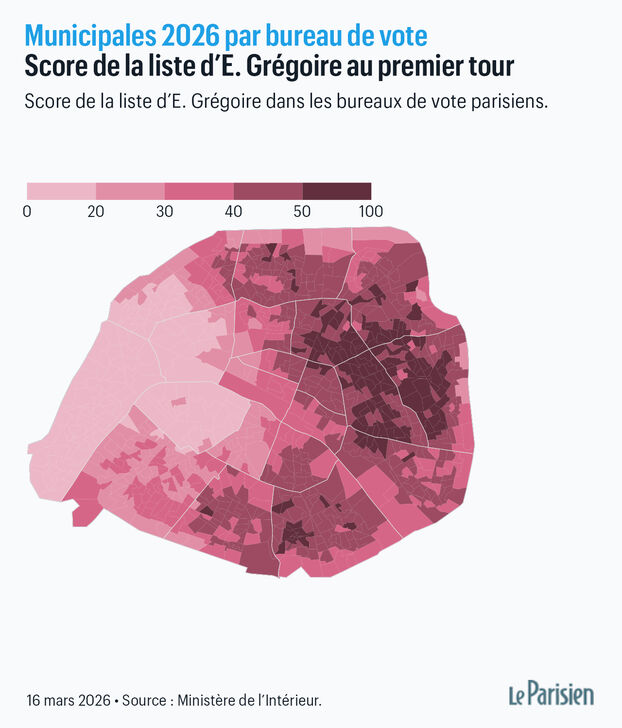
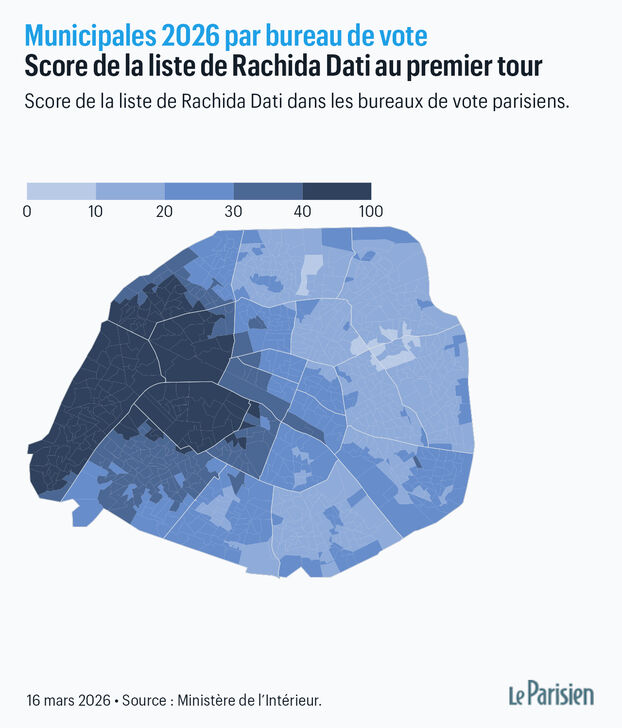
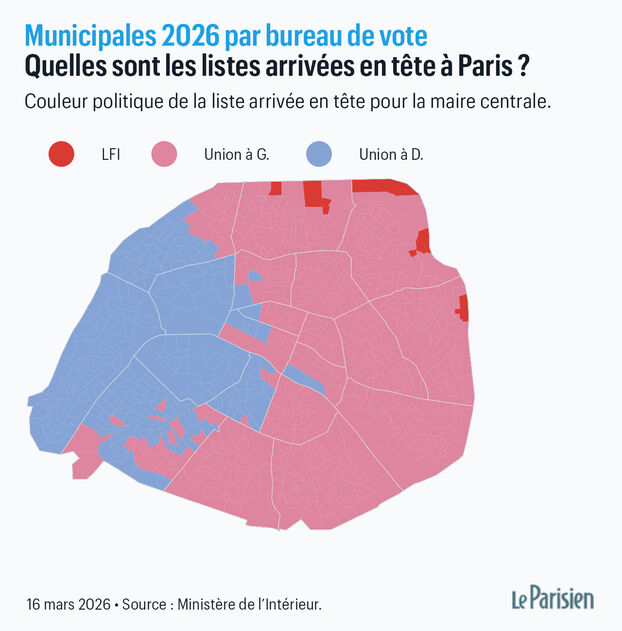
    Now that the results from Paris’ first round of municipal elections are in, I thought I would do a follow-up to my post from a few days ago (which was mostly about bicycles). The second and final round happens this weekend, but here’s what we’ve learned so far:

    Emmanuel Grégoire (Union of the Left) is in the lead with 37.98% of the vote:

    And Rachida Dati (Union of the Right) is in second with 25.46% of the vote:

    What is not unexpected, but super interesting nonetheless, is the clear divide between the west and east within Paris proper. The west voted right, and the east voted left.

    Here in Toronto, our voting maps typically exhibit a semi-clear divide between “Old Toronto” and the inner suburbs. For example, these are the results from our 2023 mayoral by-election:

    Conveniently, it is a divide that loosely tracks the city’s built form. If you live in the oldest parts of the city, where transit usage is higher and there’s rail in the middle of the street, there’s a higher probability that you voted for Chow. The inner suburbs, on the other hand, tended to vote for Bailão.

    In the case of Paris, there isn’t the same built form contrast. This is not an urban-suburban divide; it’s a socio-economic divide. The western arrondissements have historically been the wealthiest areas of Paris (for a variety of reasons), and that continually appears in the voting patterns.

    It also shows up in the modal splits. The western arrondissements tend to have higher car ownership rates compared to the east. These basic facts are interesting because Paris represents more of a controlled urban experiment, in contrast to Toronto’s dense downtown and otherwise generally low-rise built form.

    But in the end, I’m not sure the political mappings of Paris and Toronto are all that different. If you look closely at Toronto’s 2023 by-election map, you’ll see that the wealthiest pockets of the city voted exactly as you would expect. Turns out, bank balances may matter more than built form.


    Cover photo by Maximilian Zahn on Unsplash

  • How road deaths are counted and why the math matters

    March 17, 2026 · View original


    Every time you get into a car, there is a non-zero chance that you might get injured, or worse, die. The probability of this happening depends largely on where you’re driving and, of course, how much you drive. However, there are a few different ways to measure this statistical risk. A recent Bloomberg article by David Zipper highlights one ongoing debate.

    The three most common methods are:

    – Road deaths per capita – Road deaths per registered vehicle – Road deaths per distance traveled

    In my opinion, options 1 and 3 seem the most relevant. Option 1 is useful because it measures a citizen’s overall risk and allows driving risk to be easily compared to other causes of death (which tend to be measured on a per capita basis). The limitation is that it is harder to compare a country where everybody drives to a country where few people drive.

    That’s where option 3 comes in. In theory, it provides the best indicator of road risk by accounting for distance traveled, which is the primary argument for why it’s commonly used in the US where the car is king. But it does “dilute” the fatality count the more people drive, and it hides overall car dependency. In his article, Zipper likens this approach to measuring cancer deaths per cigarette smoked.

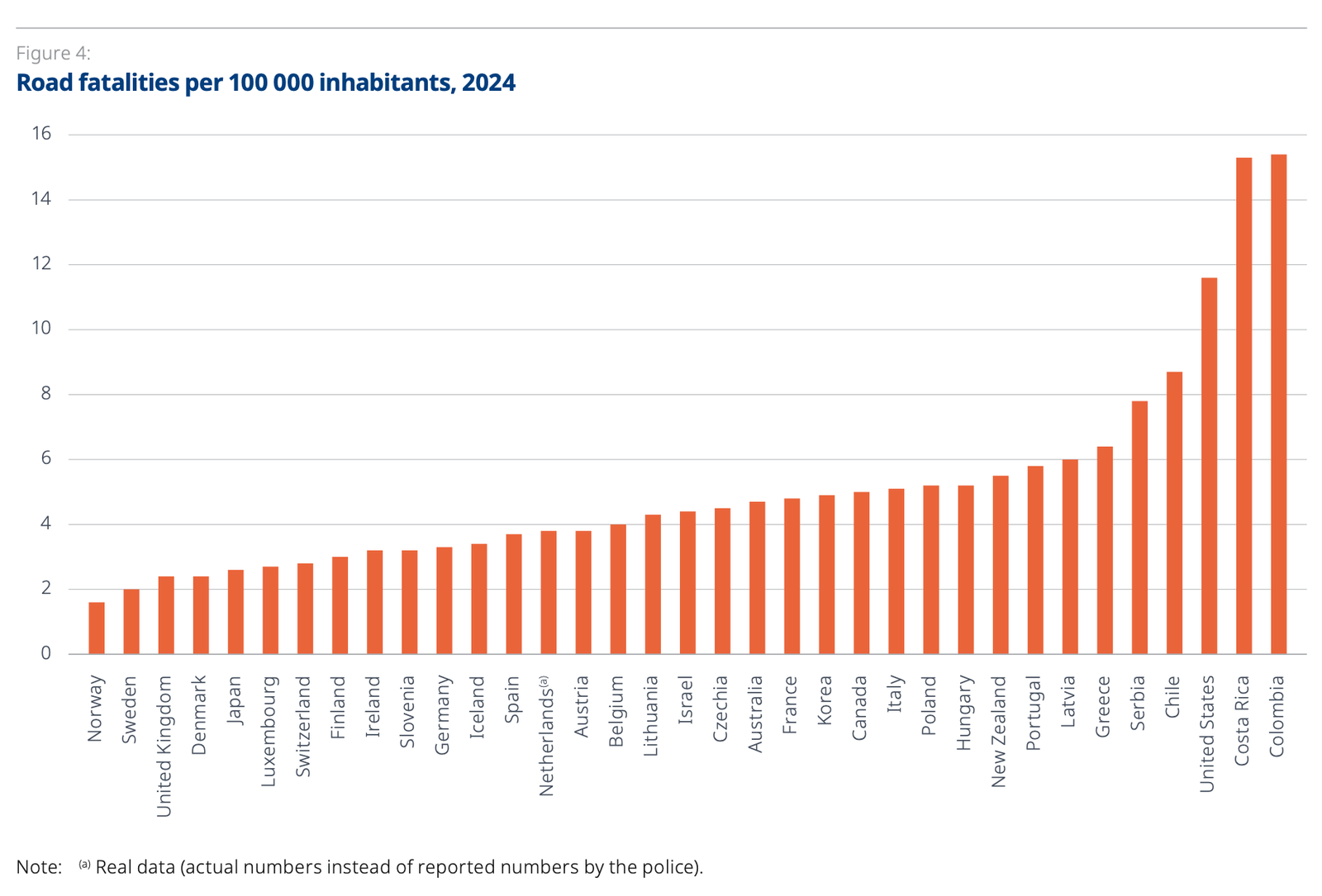
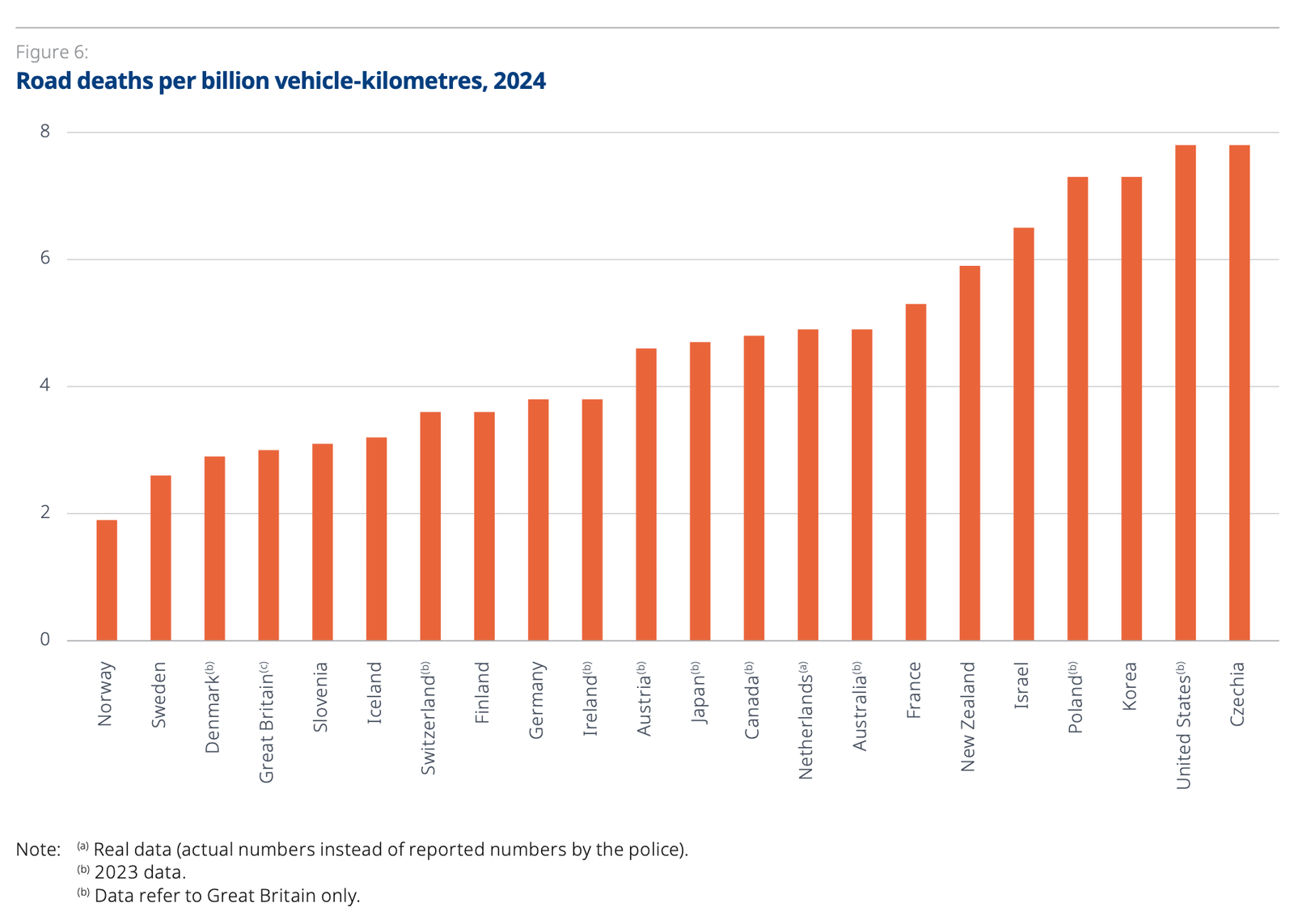
    In any event, here is how both methods appear in the International Transport Forum’s 2025 Annual Road Safety Report (which is cited in the article):

    On a per vehicle-kilometre basis, the data appears much more gradual. But on a per capita basis, the countries with the highest road fatalities appear much more as outliers. Here, you can more easily see that, broadly speaking, a person in Colombia is nearly ten times more likely to die in a road-related incident than a person in Norway (pretty much the gold standard when it comes to road safety).

    Perhaps the answer is to just look at both figures to make sure you’re not lying to yourself.


    Cover photo by Tom Barrett on Unsplash

    Charts from Road Safety Annual Report 2025

  • The $1.3 billion fund that wants unsold condominiums

    March 16, 2026 · View original


    High Art Capital recently announced the launch of a new fund called the Greater Toronto Area (GTA) Rental and Affordable Housing Initiative. It has been anchored by a $300 million mezzanine debt commitment (and a “nominal equity investment”) from the Building Ontario Fund (BOF) and is expected to be capitalized in total with a minimum of $1.3 billion.

    The objective is to acquire approximately 2,200 rental homes in blocks within newly completed, unsold condominiums across the GTA and convert them into long-term rental housing. Included within this will be approximately 550 affordable rental homes that are expected to be title-protected at rents set at the lower of 25% below local market rent or 30% of median gross household income.

    This is interesting, but it’s certainly not the first example of investors buying, or wanting to buy, excess condominium inventory. However, it may become the largest in Toronto and, as far as I know, it’s the only one to partner with the public sector (BOF is a provincial Crown agency).

    The way it is intended to work is as follows:

    Condominium developers are sitting on unsold inventory and maybe on inventory they took back after purchasers defaulted (and which may be subject to legal action). What High Art will do is say to developers, “Hey, if you give me a really awesome deal, I’ll take 50 of those condominium units off your hands.” And if the developer is desperate enough, they will say, “Sure, that sounds good. Let’s do a deal and then go for a nice closing dinner.”

    But at what price?

    As we’ve talked about many times before on the blog, developer pricing is typically based on a cost-plus model. We take our costs, add a margin, and there’s the final sticker price. The reason prices haven’t fallen as much as one might expect on unsold units is because they’re hitting the “cost floor”; developers don’t want to lose money, unless they are given no other option.

    But for this rental fund model to work at reasonable costs of debt, I suspect that, in many/most cases, deals will need to be struck below a developer’s cost basis. So, it’ll be very interesting to watch how this fund deploys capital and who the winners and losers are in this market.

    Regardless, I think it is good that we are seeing this sort of activity. The faster we deal with the pain, the faster we’ll get to the other side.


    Cover photo by Patrick Boucher on Unsplash

  • In Paris, the bike beat the car

    March 15, 2026 · View original


    Within a week, Paris will know, with near certainty, who its next mayor will be. (The first round of results will be announced this evening.) The two frontrunners are Emmanuel Grégoire (on the left) and Rachida Dati (on the right). Grégoire is the status quo vote, and Dati is the “I want change” vote.

    From a city-building standpoint, one of the ways that this is being presented is as a battle between bikes and cars. Not surprisingly, the current mobility approach has been criticized for creating a divide between wealthier residents in transit-rich central Paris (where only about a quarter of households own a car) and residents in the more car-oriented suburbs.

    Because after 12 years under Mayor Anne Hidalgo it’s pretty clear that “the bike beat the car in Paris.” From 2002 to 2023, car traffic fell by more than half, dedicated cycle lanes expanded sixfold, and today, bike trips outnumber car trips by more than 2 to 1 in the city.

    As an outsider to the city, I can only read about what’s going on, but what I find interesting is that this particular mobility issue doesn’t appear to be as political as the headlines might suggest.

    In fact:

    > Dati has softened her initial criticism of popular cycle lanes and instead focused on concerns over dirty streets. > > “We’re not fighting an ideological battle on [transportation] issues,” Dati told news agency Reuters while greeting shoppers in northern Paris. “We just want things to be organised.”

    And:

    > She [Dati] has promised not to reverse the left’s flagship policy of transforming a once traffic-clogged dual carriageway into a car-free pedestrian walkway along the banks of the Seine, but will renovate those pedestrian spaces.

    Correct me if I’m wrong, but what this tells me is that Parisians actually like the city’s transition away from the car. I’m reminded of last summer in Paris when I was in an Uber and the driver surprised me by saying that these mobility changes needed to be done — bikes are a more efficient form of urban transport and they have greatly reduced pollution within the city.

    General public sentiment also seems to reflect my anecdotal evidence. A recent Keolis-IFOP survey found that more than one in two French people (~56%) would like to see cars play a smaller role in the cities of tomorrow. Importantly, this response also seems to transcend geography and socio-economic divides. The same sentiment is found in Paris and in rural areas.

    This month’s mayoral election will certainly tell us something about Parisian preferences for the status quo versus change. But I’m always encouraged when issues can become less about ideology and more about whether we are accomplishing productive objectives based on, you know, facts and information.


    Cover photo by Irina Nakonechnaya on Unsplash

  • The Dubai shock

    March 14, 2026 · View original


    It is worth reiterating that one of the main reasons the majority of people live in cities is because they would like to make money and improve their economic status. There are, of course, other reasons too, but making money is an enduring attractor. In Alain Bertaud’s book, Order Without Design: How Markets Shape Cities, he famously argued that cities are, first and foremost, labour markets.

    Because of this, the success of cities depends on their ability to harness talent and turn it into economic progress. New York City, for example, is the city it is today because it was the largest port of entry for immigrants. And because transportation costs were high at the time, people arrived in New York and stayed in New York to work and create businesses.

    The same thing is generally true today in the San Francisco Bay Area. It is estimated that roughly 50% of all tech startups and 59 of the top 100 highest-valued unicorns have a foreign-born founder. (I’d love to know what percentage are Canadian graduates of the University of Waterloo.) These are immigrants looking for money and economic opportunity, and the local ecosystem is providing the right preconditions.

    But if the preconditions for success disappear, people will start to both leave and not come in the first place. So, it’s also worth reiterating that the fortunes of cities have always risen and fallen over a long enough time horizon. Here’s a great excerpt from a recent Bloomberg article by Richard Frost and Mary Hui, talking about what “war-rattled Dubai can learn from Hong Kong’s expat exodus.”

    > Financial centers rise and fall with the tides of geopolitics. From the mid-1500s, the tiny Portuguese enclave of Macau served as the primary intermediary for trade between Europe, Japan and China. In the mid-1800s, it was displaced by Hong Kong, which Britain secured by defeating the Qing dynasty. Hong Kong, in turn, was overtaken by Shanghai in the 1920s, when its more glamorous though still Western-run rival became the wealthiest city in East Asia. Both were occupied by Japanese forces during World War II, and their expatriate elite were interned in camps. > > Shanghai never regained its prewar status. After their 1949 victory in China’s civil war, the Communists seized foreign-owned assets, bringing an end to the dominance of one of Asia’s most prominent business dynasties — the Baghdadi-Jewish Sassoon family, known as the “Rothschilds of the East.” The exodus of wealthy Shanghainese to Hong Kong helped lay the foundations for the city’s modern-day revival as Asia’s leading financial hub.

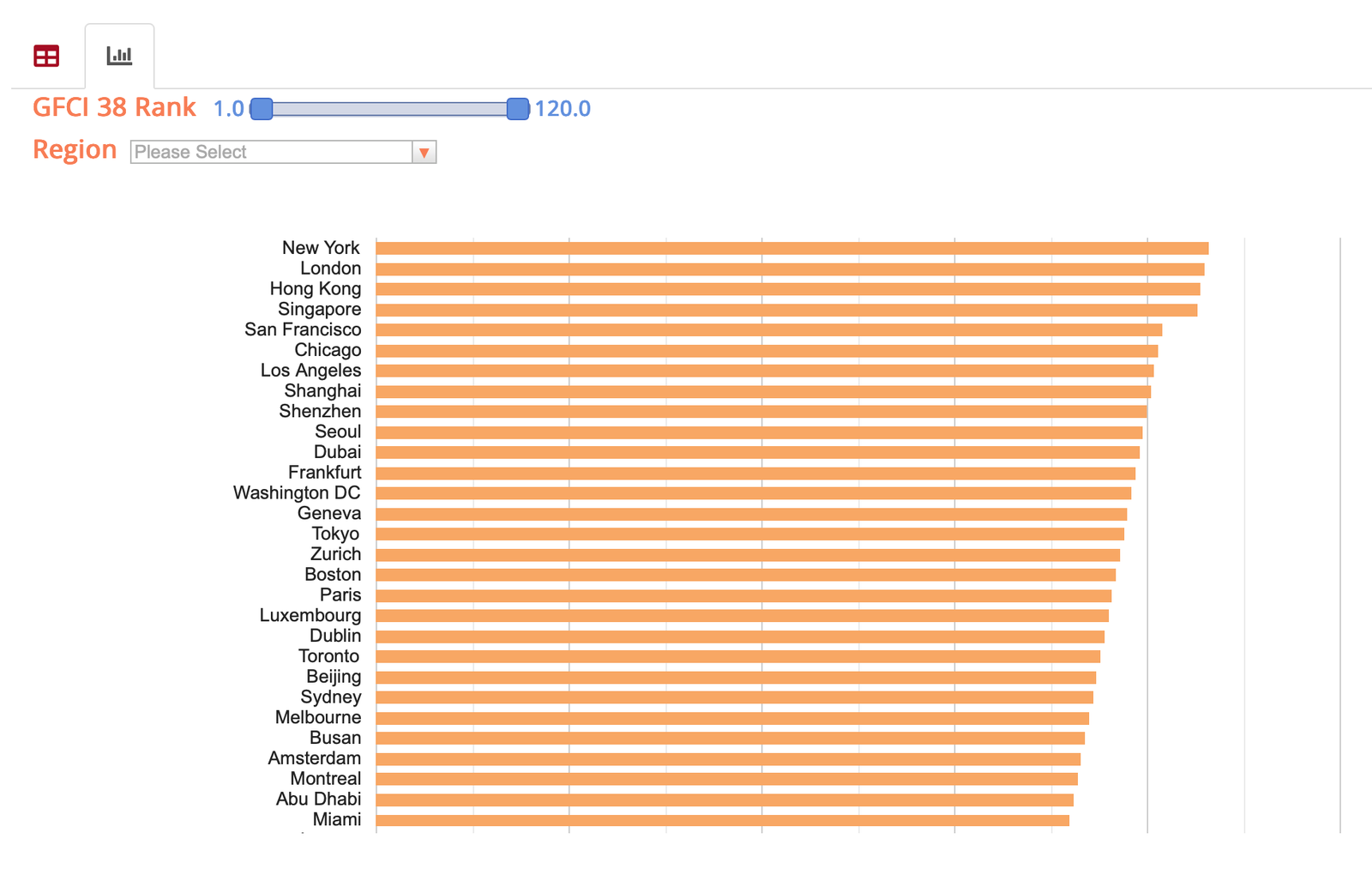
    But between the protests of the 2010s, the 2020 national security law, and the draconian pandemic lockdowns, in recent years, it did feel like Hong Kong might be at risk of losing at least some of its status as a global financial hub. According to the latest Global Financial Centres Index, Hong Kong is still ranked third, behind New York and London, respectively. But Singapore is nipping at its heels in fourth position.

    Today, some are arguing that the current turmoil in the Middle East has broken the promise of Dubai as a stable, global financial capital where influencers roam freely on the beach. People are, not surprisingly, leaving in the immediate term, but will it be lasting? I think it’s too early to be calling the fall of Dubai, but there’s no question that this is a meaningful exogenous shock. Its real estate index fell 30% in two weeks.

    History shows us that there are no guarantees. Preeminence exists until something happens, and then it doesn’t. If this war becomes protracted, it will be a major problem for Dubai. Capital and talent want openness, stability, opportunity, and a favourable business environment (keep taxes reasonable and get out of the way). After all, it’s arguably the main reason why people come to cities in the first place.


    Cover photo by Sepehr Moradian on Unsplash

    Chart via the Global Financial Centres Index

  • Singapore’s Build-to-Order housing model

    March 13, 2026 · View original


    It is well known that the majority of Singaporeans live in public housing (that is, housing provided by the Housing and Development Board, or HDB). However, what you may not know is that the majority of residents obtain their housing through a model that shares some high-level similarities with the way we deliver new condominiums in Toronto.

    In 2001, the HDB introduced a program known as Build-to-Order (BTO). The way it works is fairly straightforward: the HDB announces a new project, prospective buyers apply and are assigned a queue number, and then, if they’re selected, they get to buy. Once a sufficient number of “pre-sales” have been obtained, the project begins construction, and buyers get a brand-new, subsidized apartment in 3 to 5 years.

    Singapore also mandates that the apartments must be owner-occupied and so, in this carefully controlled delivery model, supply very closely mirrors demand. This is different from traditional condominium pre-sales where some buyers might be end users, some might be planning to rent out the home, and some might want to sell immediately upon completion. In those markets, the risk of overbuilding and speculative volatility is greater.

    HDB classifies the apartments themselves into three groups: Standard, Plus, and Prime. This classification is meant to reflect the locational value of certain projects; but importantly, the intent is that they’re all equally attainable to citizens. The difference is that “choicer” locations (their vocabulary — now you have a new Scrabble word) require greater subsidies to make them affordable, and so they come with additional obligations.

    For example, in the case of Prime flats, there is a subsidy recovery upon any future sale (I’m told it’s between 6-9% of the first resale price), the minimum occupation period (MOP) is 10 years (versus 5 for the Standard class), and you can never ever rent out the whole home, even once the MOP has lapsed. Once again, this is about strictly matching new supply to end-user demand.

    It’s a lot of rules. But in Singapore, the majority of people accept them in exchange for affordability.


    Cover photo: Tengah, Singapore via Monocle

    Chart: Housing and Development Board

  • What your grocery store might say about your home value

    March 12, 2026 · View original


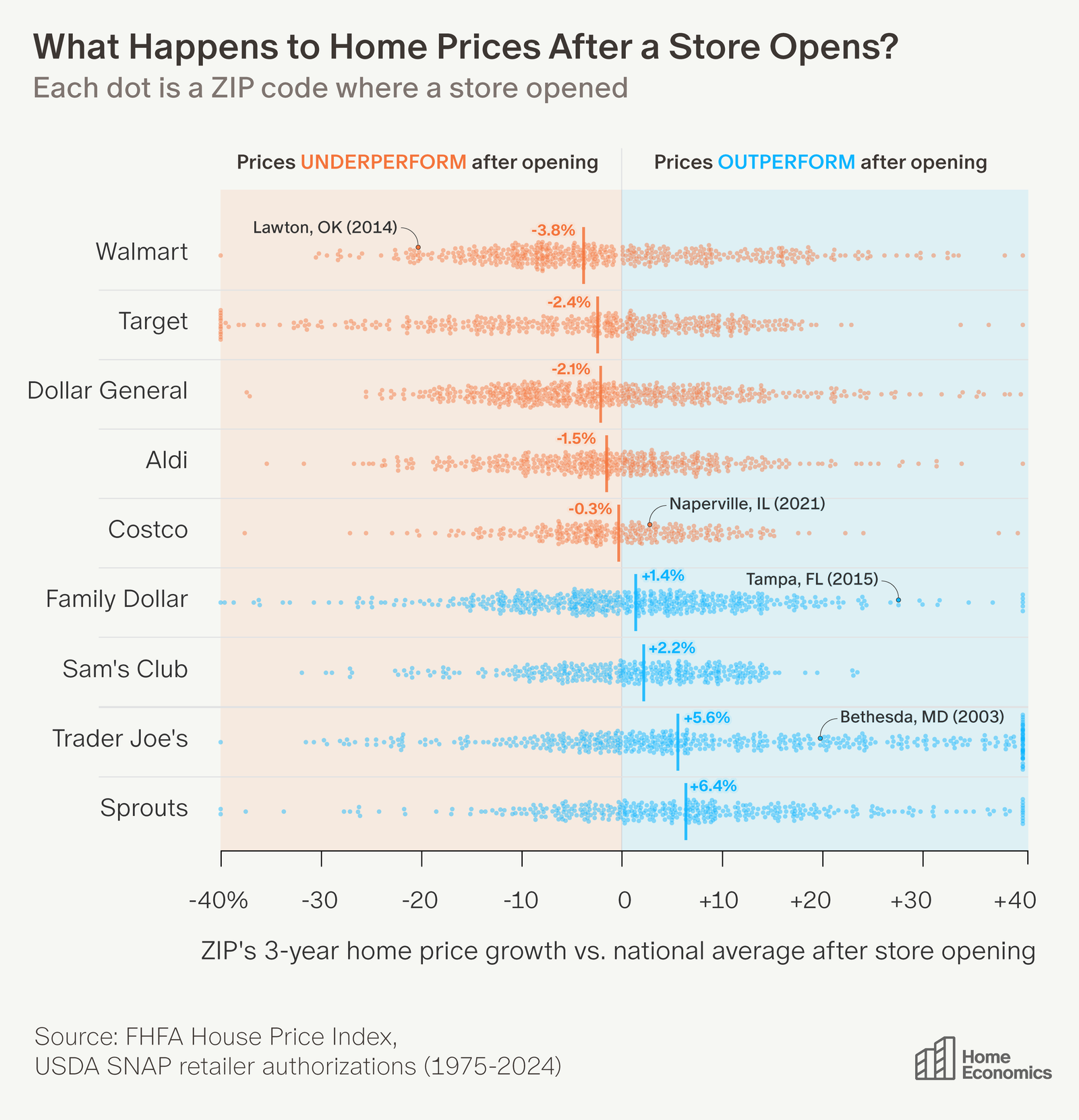
    After this post, I promise to stop continually plugging the work and writing of Aziz Sunderji — at least for a few days. Over the weekend, I wrote about his recent post on happiness in America. Today, his latest post is about what happens to home prices after a particular grocery store opens. And for this, he looked at 32,000 store openings dating back to the mid-1970s and then compared them to ZIP-code-level home price data.

    Here’s what he found:

    The average Walmart neighbourhood in this study has a median household income of $49,000, a college degree attainment rate of 23%, and a median home price of $144,000. And when a new Walmart opens, home prices have tended to underperform the national average by about 4% in the three years that follow.

    On the flip side, the average Trader Joe’s neighbourhood has a median household income of $82,000, a college degree attainment rate of 52%, and a median home value of $425,000.

    Importantly, though, Trader Joe’s isn’t just picking neighbourhoods with obviously favourable demographics (retail is a lagging indicator — it generally comes once the demand is already there). It seems to be picking neighbourhoods that, in the words of Aziz, have “room to keep running.” In the three years that follow a new Trader Joe’s opening, homes in those ZIP codes have tended to outperform the national average by 6%!

    One of the fascinating things about this finding is that it seems to perfectly support the company’s target market. It has been said that Joe Coulombe (founder of the company) used to describe his target customer as “overeducated and underpaid.” In other words, he actively targeted university graduates.

    But being underpaid only lasts so long. We know that educational attainment is typically the single best predictor of household income. So, if you target this group, chances are that they’ll eventually become fairly paid or maybe even overpaid. And when this happens, I guess it shows up in area home prices.


    Cover photo by Karolina Bobek on Unsplash

    Chart from Home Economics