Daily insights for city builders, delivered every morning at 6 AM ET. I’m Brandon Donnelly — a Toronto-based real estate developer and founder of Globizen. I’ve been writing here since 2013.

Month: March 2026

  • The hidden cost of regulatory fat

    March 31, 2026 · View original


    In the olden days here in Toronto, approved development land used to sell for a premium compared to unapproved land. This was true because approved land meant you could start construction much sooner. And since time has value, this was worth something.

    Today, this is far less valuable to developers (if at all) because, in most cases, the market does not support new construction. So, the land may be approved, but what does one do with it?

    Rather than speed, I would say that the most valuable feature right now is the ability to be patient. Developers need to be able to stay solvent long enough for the market to return. But this does not mean that there isn’t a cost to permitting, approvals, and lengthy pre-construction periods.

    Here is a recent paper (that I discovered via Thesis Driven) by economists Evan Soltas (Princeton) and Jonathan Gruber (MIT) that asks: “How Costly Is Permitting in Housing Development?” What they discovered in the Los Angeles market is the following:

    – Developers have been willing to pay roughly 50% more for pre-approved development land (averaging about $48 per square foot). – The permitting process in Los Angeles accounts for about 40% of the time required to develop and construct a new housing project. – Approximately one-third of the gap between home prices and construction costs can be explained by permitting costs and delays.

    This last point is an interesting one to focus on because it tells you how much regulatory fat there is in the system. In a perfectly free and efficient market, the market price of a home should, in theory, be roughly equal to the cost of the land, construction costs, and the developer’s margin.

    When you have a massive gap between the cost of the physical materials and labour required to build the home and the price of the home, it means that there are other costs being shouldered. The paper refers to some of these as “pure wait” (time) and “capitalized hassle” (dealing with bullshit).

    This is an important way to think about the efficiency of housing markets, because minimizing the gap is a clear way to make housing more affordable.


    Cover photo by Josh Miller on Unsplash

  • On the future of cities

    March 30, 2026 · View original


    Bruno Carvalho has just published a new book that is right in the wheelhouse of this blog. It’s called The Invention of the Future: A History of Cities in the Modern World.

    The book starts in the mid-18th century with cities like Lisbon, Paris, and London. However, more than being just a history of cities, it is (from what I’ve read) the story of how city builders throughout history have tried to predict and create the future, only to often get it wrong.

    In the words of Carvalho (via CityLab): “The constant of urbanization is change, so we have to always imagine our solutions as being contingent.”

    The same is, of course, true today. For example, building tunnels for Tesla cars may seem like a clever and futuristic solution to urban traffic congestion, except that it’s hard to imagine it actually working (also via CityLab):

    > “One of the values of history is to give us a sharper sense of what’s new in the present. Many people imagine solutions that to them represent the great rupture, but that’s not always the case. The tunnels are a good example; they bring together the problems of cars having very low carrying capacity and subways being very hard to build. That doesn’t strike me as a very futuristic approach to mobility, but rather one that just hasn’t learned enough about the past.”

    I now have Carvalho’s book on my reading list, and I thought I would share it here in case some of you would like to do the same.


    Cover photo by Michiel Annaert on Unsplash

  • Sidewalks as a bug

    March 29, 2026 · View original


    I’m a big fan of walking. I like it for the health benefits, the freedom to explore, and the simple luxury of being able to walk to things. In fact, it’s an important housing prerequisite for me: can I walk to stuff?

    But as we often talk about on this blog, the ability to do this depends largely on the prevailing land use patterns, the overall built environment, and, to a great extent, when a neighborhood was built.

    It is commonly argued that the “best” neighborhoods were all built before the widespread use of the car, and there’s a lot of truth to this. (This makes me wonder if self-driving cars will eventually create a similar “pre and post” divide in our built environment.)

    However, not everyone sees it this way. I just read an article about how residents in the suburbs of Minneapolis-St. Paul are vehemently opposed to the construction of sidewalks in areas where there are currently none.

    Perhaps I haven’t been paying enough attention to the suburban sidewalk wars, but this is the first time I’ve seen this level of opposition. Some people view sidewalks as a feature, and some people view them as a bug. Clearly, there are residents in the Twin Cities who view them as the latter.

    Why? Because they interrupt large front lawns:

    > “I chose my home with the nice big lawn out front,” Edina resident Melissa Cohen told the mayor and City Council at a Dec. 8 hearing about proposed sidewalks for streets in Prospect Knolls. “We are in a quiet neighborhood. This does not require a sidewalk.”

    And for some people, they’re unsightly:

    > In 2007, a Golden Valley resident named Charles Upham told the Star Tribune “sidewalk is a four-letter word. U-G-L-Y.”

    You could call it a kind of rural ideology, where sidewalks symbolize the opposite: the city. I suppose there are also practical considerations, like the fact that snow removal on sidewalks often becomes the homeowner’s responsibility.

    But it appears to me that a large part of this opposition stems from wanting to maintain some semblance of pastoral exclusivity, even if we’re talking about higher-density suburbs and the opposition is masquerading as an environmental preservationist movement.

    On the flip side, there are practical benefits to sidewalks. They give you a safe place to walk. So, what I wonder is to what extent are the people opposing these sidewalks also anti-walkers? Or is it that the traffic flows in these neighborhoods are so low that people simply feel comfortable walking on the street, like here?

    Not surprisingly, there’s lots of data to support that people who live in neighborhoods with sidewalks are significantly more likely to walk and be active. If you want people to walk more, build sidewalks. If you want people to ride bikes more, build bicycle lanes. And if you want people to drive more, build roads and highways.

    This is how this behavioral stuff works. We’re not completely independent actors; we’re products of our environment.


    Cover photo from The Minnesota Star Tribune

  • Competition and redistribution

    March 28, 2026 · View original


    I recently joked that, because of AI, everyone now sends you a 50-page PDF for review. Of course, what we all do next is just ask AI to summarize it and help prepare a response. So, the net effect is AI talking to AI.

    We’re all becoming a kind of intermediary because the volume of information is simply too great for any human to reasonably process. In many ways, this can feel overwhelming. It also makes me feel like it’s becoming harder to maintain a long attention span.

    But this appears to be where the world is heading. Eventually, we are going to have what is known as Artificial General Intelligence (AGI), and that is going to have a profound impact on our lives.

    Venture capitalist Albert Wenger has been spending a lot of time thinking about what an AGI-level economy might look like, and he recently published a post where he modeled some of the possible scenarios.

    I will give you the spoiler here: His intuition is that we’re going to need to create an economy that combines competition and redistribution (also referred to as a Negative Income Tax, which provides people with a basic income).

    Because without competition, productivity gains will be captured as rent, rather than resulting in lower prices. And without redistribution, we are likely to see an untenable increase in inequality.

    If you’re interested in this topic, I would encourage you to check out his post.


    Cover photo by Alex Knight on Unsplash

  • A new opportunity for congestion pricing

    March 27, 2026 · View original


    We’ve been talking about the merits of congestion pricing for as long as I’ve been writing this blog. But it remains politically unpopular, despite the overwhelming evidence that it consistently does what it’s supposed to do: it reduces congestion, shortens commute times, improves air quality, and raises money for alternative modes of transport, among other things.

    The status quo bias is strong, but right now we have an opportunity. Self-driving cars are in the midst of shifting the mobility landscape, and there’s a growing belief that (1) roads are going to need to be more accurately priced to deal with the surge in demand, and (2) this is a moment in time that grants us the opportunity to do it. Here’s a recent tweet by Chris Spoke of Toronto Standard that makes this point and that I agree with.

    The basic idea behind point number two is that many voters don’t like the idea of a congestion charge for themselves, but will probably mind a charge on robot cars a lot less — both because they are robot cars and because there are relatively few of them on the road today. However, at some point, robot cars will form the majority of vehicles on the road, so now would be a good time to establish new practices.

    What do you think?


    Cover photo by Minku Kang on Unsplash

  • The development charge cliff

    March 26, 2026 · View original


    One of the reasons why we are seeing more multiplexes in Toronto (smaller infill buildings with less than seven homes) is that the city has waived development charges and parkland dedication fees on this scale of new housing.

    This has helped enormously; without these changes, we’d be seeing far fewer of these housing projects being built.

    But here’s the odd thing about this exemption: if you build even one more home in the same building, the project is now subject to development charges on all of the homes (minus any credits you might receive for existing homes on the site).

    Adding a seventh unit shouldn’t suddenly trigger hundreds of thousands of dollars in fees for the first six. This makes zero sense:

    – It creates a disincentive to build incrementally more homes on sites that can accommodate them. – It creates a bias toward multiplexes (also known as “houseplexes”) and away from apartments. The housing type shouldn’t matter. We’re talking about homes. – It perpetuates the “missing middle” problem. Build small or build big enough to shoulder the additional costs and regulatory burden.

    If we’re waiving DCs on sixplexes, why not at least waive them for the first six homes on every site? Better yet, waive them on even more homes. This is just one specific example of the hurdles I was talking about yesterday.

    Note: My understanding is that the City of Toronto is currently looking to remove this DC cliff and implement a universal first-six-free rule.


    Cover photo by Jason Ng on Unsplash

  • Toward more fine-grained development

    March 25, 2026 · View original


    Yesterday we spoke about the merits of fine-grained urbanism and why the direct and obvious way to achieve this is to just, you know, encourage more small-scale development. So today, let’s talk about some of the specific things that would likely need to happen in order to unlock all of the small and under-utilized sites that today are not being developed at scale.

    I’m going to speak from a Toronto perspective and talk specifically about small-scale “apartments,” which in today’s planning environment are generally buildings with seven or more dwelling units. Under this threshold, we have new terminology like “houseplex.” But I’m sure that much of what I raise will translate to other cities and building types.

    Here’s my working list (I’ve also added a few items from this Twitter discussion):

    – As-of-right zoning permissions (the key, though, is that what’s as-of-right needs to be economically viable) – No side-yard and front-yard setbacks – No site plan control approval (currently required for projects with 10 or more homes) – No/lower development charges – No parkland dedication fees – No required parking – No required amenity spaces (the city is the amenity) – Curbside garbage collection (as opposed to internalized collection facilities) – Reasonable servicing connection costs (I’m specifically looking at you Toronto Hydro) – No Record of Site Condition, or a streamlined process (Ministry of the Environment, Conservation and Parks approval) – Single egress stair – Flexible elevator sizing – No rental replacement – Predictable financing terms from agencies like CMHC

    There’s a lot on this list. But there isn’t just one thing standing in the way of more fine-grained development. If you think I missed anything (or you just disagree with my line of thinking), feel free to leave a comment below.

    What Toronto has demonstrated with its efforts to expand housing options in its neighbourhoods is that, when it makes economic sense to do so, people will actually build small. Today, the market is building single-unit laneway houses, and increasingly, it is building things like fourplexes and sixplexes.

    So, what’s standing in the way of more 10-, 20-, and 30-unit projects? It’s the barriers and hurdles we have erected.


    Cover photo by Jason Ng on Unsplash

  • Toward greater coarseness

    March 24, 2026 · View original


    One of the benefits of older cities and neighbourhoods is that their scale and rhythm of development often allow for walkability and a wide variety of experiences in a short period of time (here’s a related post). The typical characteristics include small lot sizes, diverse ownership, short city blocks, a mix of uses, and visual variety. And in planning speak, this is typically referred to as fine-grained urbanism.

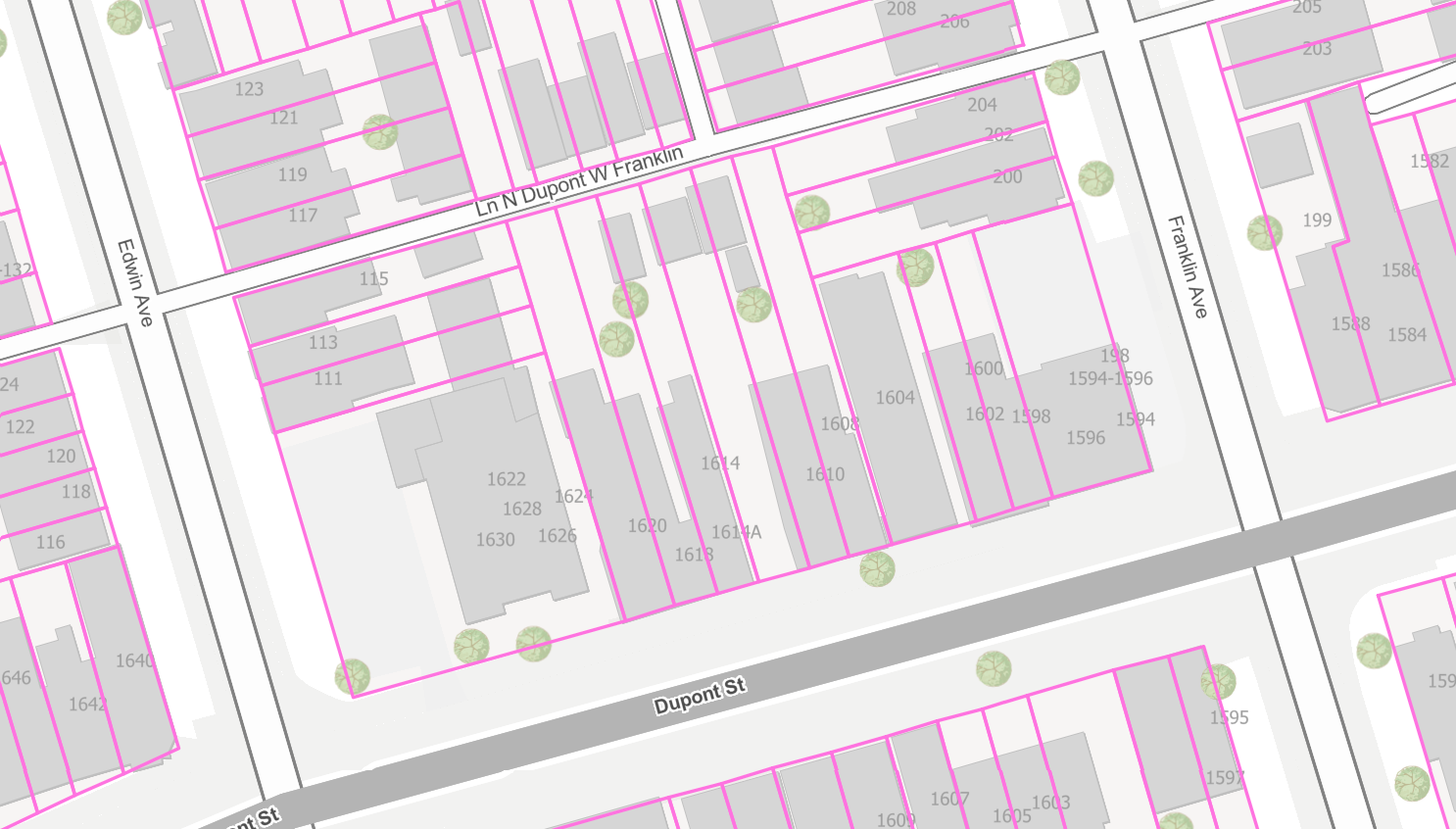
    Here’s a random block example from Toronto that I’m choosing simply because I had a wonderful sourdough sandwich on this street over the weekend:

    The longest lots in the middle of this block are over 45 metres deep and under 5 metres wide. The result is some very long and narrow buildings, but at the same time, a lot of storefront variety when you’re walking along Dupont Street. It has the bones for a great retail street. The only problem is that, for the most part, we don’t build our cities like this anymore. We do the opposite. We build bigger, which is conversely referred to as coarse-grained urbanism.

    But since we know that fine-grained urbanism makes for better street experiences, it is common to try to impose it on new developments. Cities will say, “Hey, I know that you have a big, wide, shallow retail space on the ground floor of your building, but can you chop it up into smaller, fine-grained spaces such that they all become totally unleasable?” (I half kid. See here for some context.)

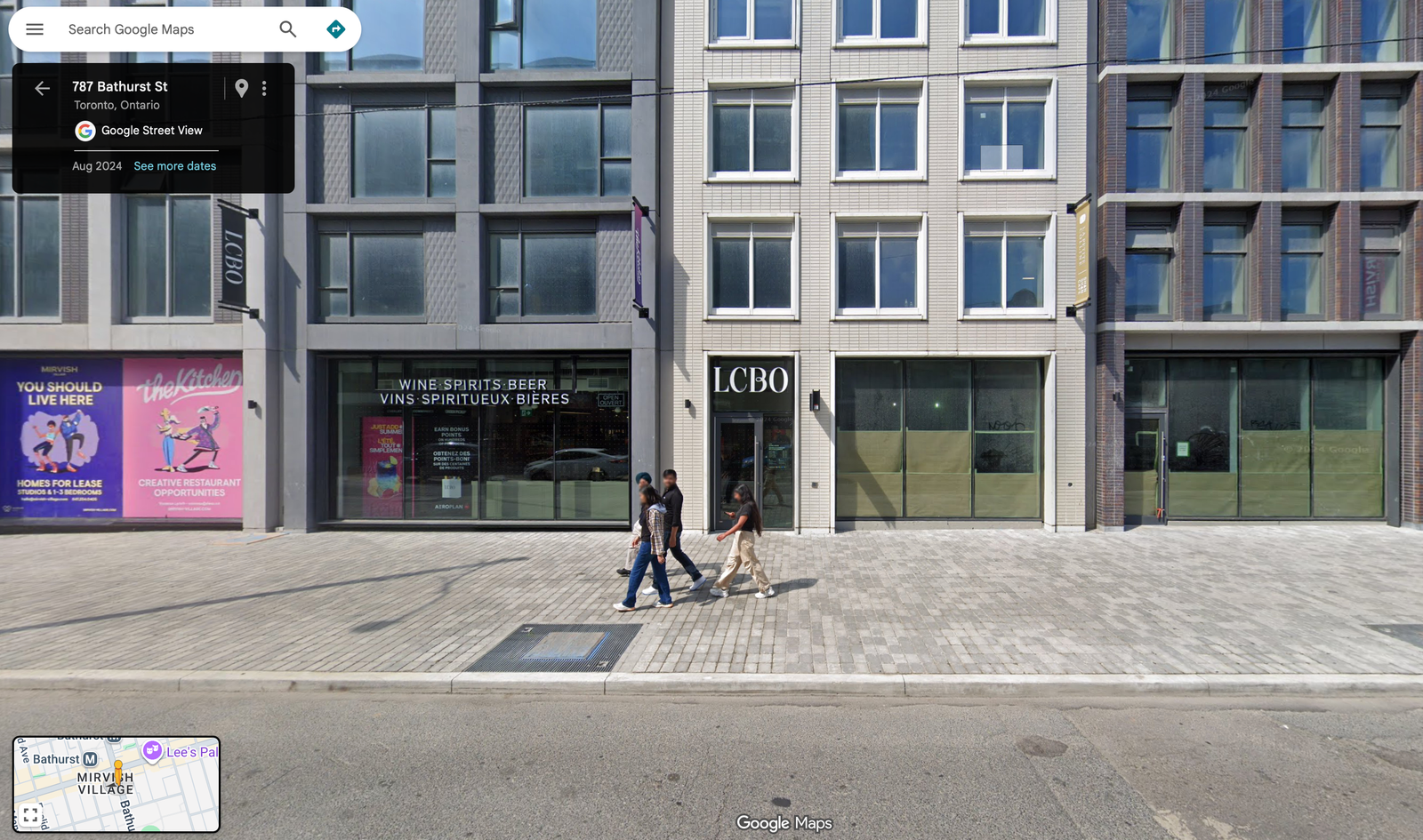
    The result:

    To be clear, I am in no way picking on this development. As a rule, I don’t do that sort of thing on this blog. Development is hard. I also like it. I just think it’s perhaps the clearest example of what all urban-minded planners and developers are trying in earnest to do, and that is to create coarse-grained urbanism masquerading as fine-grained urbanism. The architectural rhythm of the storefronts matches the existing context, but the scale of the retailers may not.

    And that’s okay. This is the reality of the world today, and modern retailers want what they want. I’m also a believer in the power of free markets. But to this same end, I want to point out something that is exceedingly obvious: the best way to create fine-grained urbanism is to simply encourage small-scale development!

    Every hurdle we erect only increases the incentive for developers to build bigger and coarser. It becomes the only way to underwrite profitable projects. The solution is to lower the barriers to development and, in turn, make small more feasible. Because if we do that, we already know it’ll make our cities better. I think we’ll also find that the market will respond with a different category of tenants and entrepreneurs.

    Tomorrow, we’ll talk about the specific ways in which Toronto and other cities could execute on this better.


    Cover photo by Finn on Unsplash

  • The Coffee opens at Junction House

    March 23, 2026 · View original


    This past weekend, the Brazilian-Japanese coffee house, The Coffee, soft-opened at the base of Junction House (right at the corner of Dundas St W and Watkinson Ave). And it was busy! I’ve been eagerly awaiting this opening since it was first announced last year.

    But not for any direct economic reasons — unless, of course, it reminds you that you should buy a new home at Junction House! As I mentioned before, we (the developers) no longer own this retail space. This is not our tenant.

    I’m mostly excited as a proud resident of the Junction, and because I think it’s a perfect fit for the building and the neighourhood. So, I would encourage you to check it out at 2720 Dundas St W. Starting today, any coffee meetings I take in the Junction will be held here.

  • Why Canada’s shrinking population is actually part of the plan

    March 22, 2026 · View original


    This week, Statistics Canada reported that, for the first time in over 70 years, the country’s population declined. Current estimates indicate a decline of around 102,000 people last year, leaving a total of 41,472,081 people in the country as of January 1, 2026.

    Opinions on this are mixed. On the one hand, a declining population can help improve things like housing affordability and increase GDP per capita (total wealth becomes divided by fewer people). It can also help improve productivity by forcing a country to innovate in lieu of relying on physical labor.

    But at the same time, there are consequences to a declining population. It can result in economic stagnation and it can topple the equilibrium of pension plans. Not enough young people paying into the system. Fewer savers. Fewer spenders. Fewer innovators.

    It can also reduce the soft and hard powers of a country. According to the IMF: “…some historians attribute France’s 1871 defeat in the Franco-Prussian War to the low fertility and slow rate of population growth that stemmed from early and widespread use of contraception among married couples in France.”

    My own simplistic view is that growth is good. We want Canadians having babies and we want the absolute best and brightest and most ambitious from around the world clamouring to come here to innovate, start companies, and grow the total economy.

    The good news is this continues to be our plan.

    The leading factor in Canada’s current population decline is fewer non-permanent residents. That is, temporary foreign workers, a great number of whom are/were international students. As many of you know, this policy is in response to a demographic shock that the country experienced between 2022 and 2024 that, among other things, lowered productivity levels.

    Going forward, the federal plan is as follows:

    – Dramatically reduce the number of temporary residents (international students and low-skill temporary workers). Again, this specific policy is largely responsible for the current population correction. – Stabilize permanent immigration to 380,000 people per year from 2026 to 2028 (under 1% of the population). – Admit most permanent immigrants under the “economic” classification. The target is 64% of all permanent residents by 2027. This is a class of applicants who are scored based on age (younger is better), education (smarter is better), language proficiency, and relevant work experience, with the goal of having them immediately contribute to the Canadian economy. – Target 12% Francophone permanent resident admissions outside of Quebec by 2029. (As a self-proclaimed Francophile/Quebecophile and proponent of bilingualism, I laud this effort.)

    What all of this should mean is that by the end of 2026, we are expected to “burn off” the wave of temporary residents leaving the country and, by 2027, we should return to steady and manageable population growth. This is one of the reasons why I believe that 2026-2027 will be a turning point for many of our housing markets, and hopefully the start of our next economic cycle.


    Cover by Robbie Palmer on Unsplash

    Chart from the Globe and Mail