
Spain has one of the lowest homebuilding rates in Europe. Over the last decade, it has barely expanded its housing supply, according to this recent FT article by John Burn-Murdoch.
When you layer on increased immigration, rising tourism, and growing housing demand from digital nomads and others, you naturally get an environment where rents outstrip income growth. According to the same article, more than 50% of young Spanish adults (aged 18-34) now live with their parents!
The knee-jerk reaction to all of this by most governments is stronger rent controls. Rents are growing too quickly, so let’s just block them from doing that, right? While this certainly does help the already housed, study after study shows that it has negative consequences for the broader housing market.
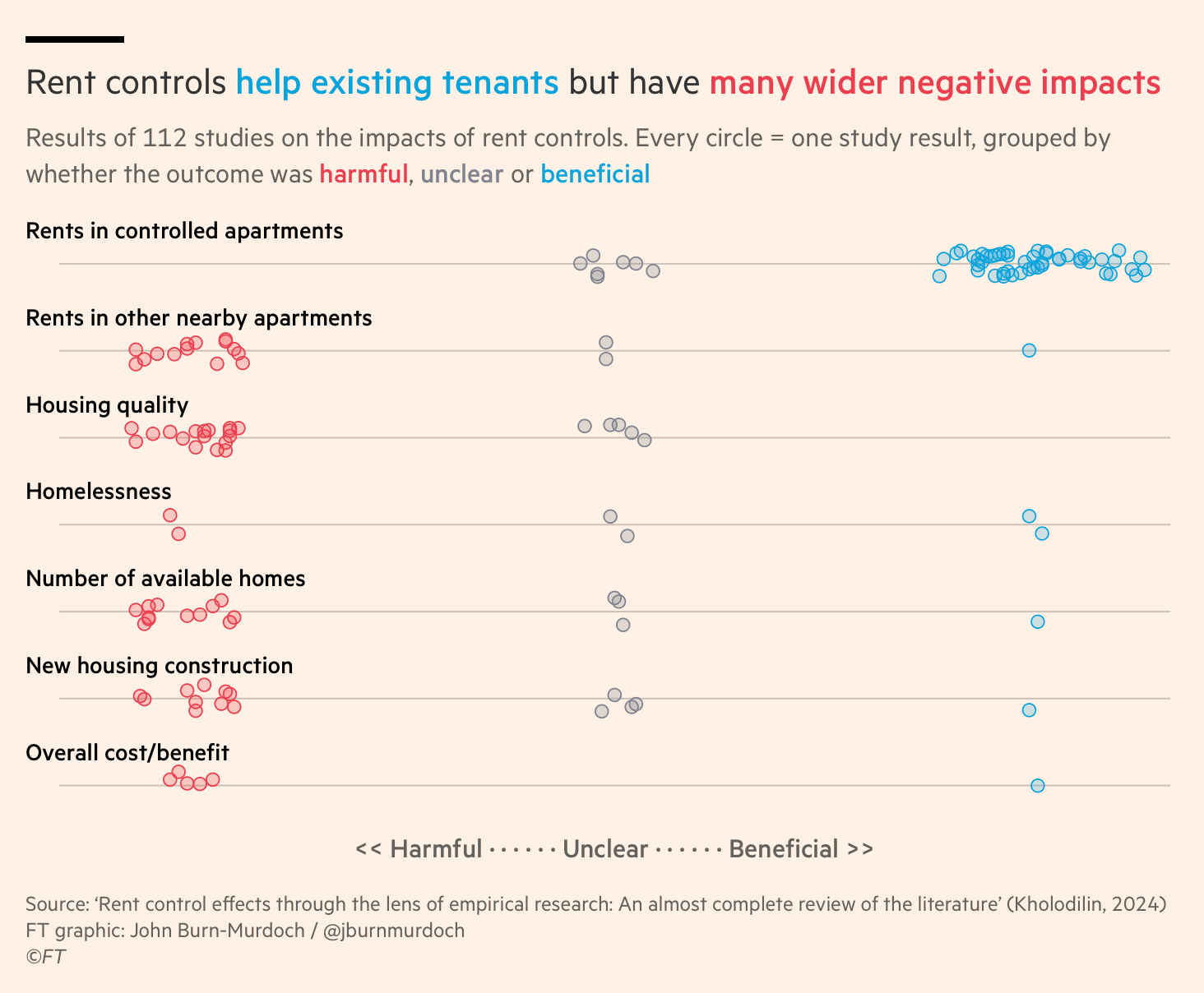
Non-controlled rents go up, overall housing quality drops, and, perhaps most importantly, new housing supply goes down, further exacerbating the initial problem it’s trying to solve.
You can’t intervene in the market and not expect there to be second- and third-order consequences. In this case, it’s akin to telling a group of kids there’s an ice cream shortage, fixing the price below the cost of production for the few who do have access, and then wondering why other ice cream trucks don’t show up to service the unmet demand.
Spain doesn’t seem to get this, but other markets appear to. According to Burn-Murdoch, Ireland recently “watered down rent controls over concerns they were contributing to weak rates of new construction in the rental sector.”
It needs to be understood that there are no shortcuts to solving housing crises. You need to start from first principles and do the hard work of building housing.
Diagram by John Burn-Murdoch via the FT
Leave a Reply