Daily insights for city builders, delivered every morning at 6 AM ET. I’m Brandon Donnelly — a Toronto-based real estate developer and founder of Globizen. I’ve been writing here since 2013.

Tag: spain

  • Why you can’t price-control your way out of a housing shortage

    Spain has one of the lowest homebuilding rates in Europe. Over the last decade, it has barely expanded its housing supply, according to this recent FT article by John Burn-Murdoch.

    When you layer on increased immigration, rising tourism, and growing housing demand from digital nomads and others, you naturally get an environment where rents outstrip income growth. According to the same article, more than 50% of young Spanish adults (aged 18-34) now live with their parents!

    The knee-jerk reaction to all of this by most governments is stronger rent controls. Rents are growing too quickly, so let’s just block them from doing that, right? While this certainly does help the already housed, study after study shows that it has negative consequences for the broader housing market.
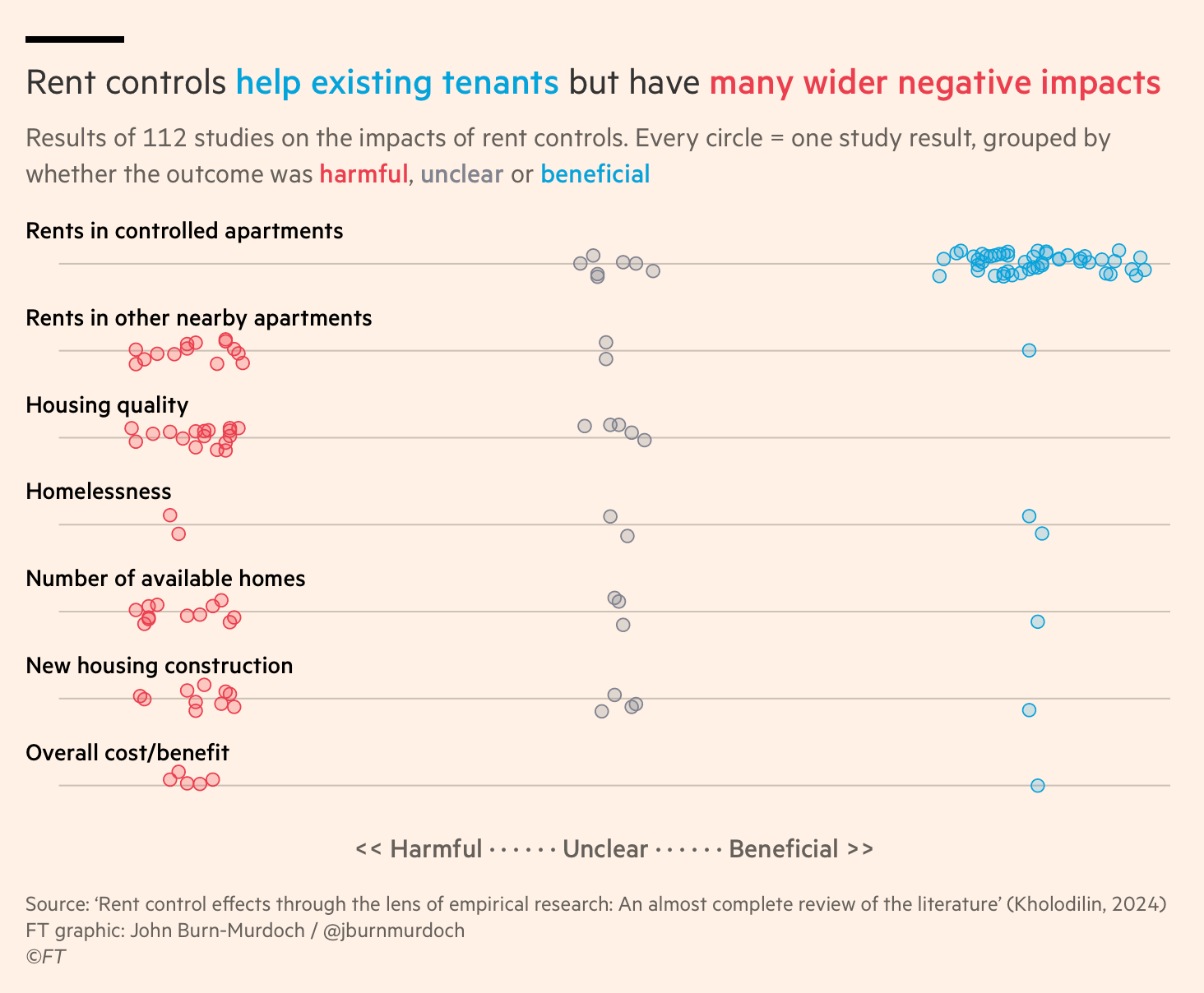
    Non-controlled rents go up, overall housing quality drops, and, perhaps most importantly, new housing supply goes down, further exacerbating the initial problem it’s trying to solve.

    You can’t intervene in the market and not expect there to be second- and third-order consequences. In this case, it’s akin to telling a group of kids there’s an ice cream shortage, fixing the price below the cost of production for the few who do have access, and then wondering why other ice cream trucks don’t show up to service the unmet demand.

    Spain doesn’t seem to get this, but other markets appear to. According to Burn-Murdoch, Ireland recently “watered down rent controls over concerns they were contributing to weak rates of new construction in the rental sector.”

    It needs to be understood that there are no shortcuts to solving housing crises. You need to start from first principles and do the hard work of building housing.


    Diagram by John Burn-Murdoch via the FT
  • How tax policy shapes the immigration equation

    Immigration is an exciting topic (to put it one way). Over the last few years, public sentiment around it has shifted significantly in Canada from viewing it as a positive thing to thinking there’s too much of it.

    But as John Burn-Murdoch points out in this recent FT article about the real fiscal costs of immigration, it’s important to be precise about what’s going on. Our decisions and policies guide assimilation and affect whether an immigrant becomes a net cost or net contributor.

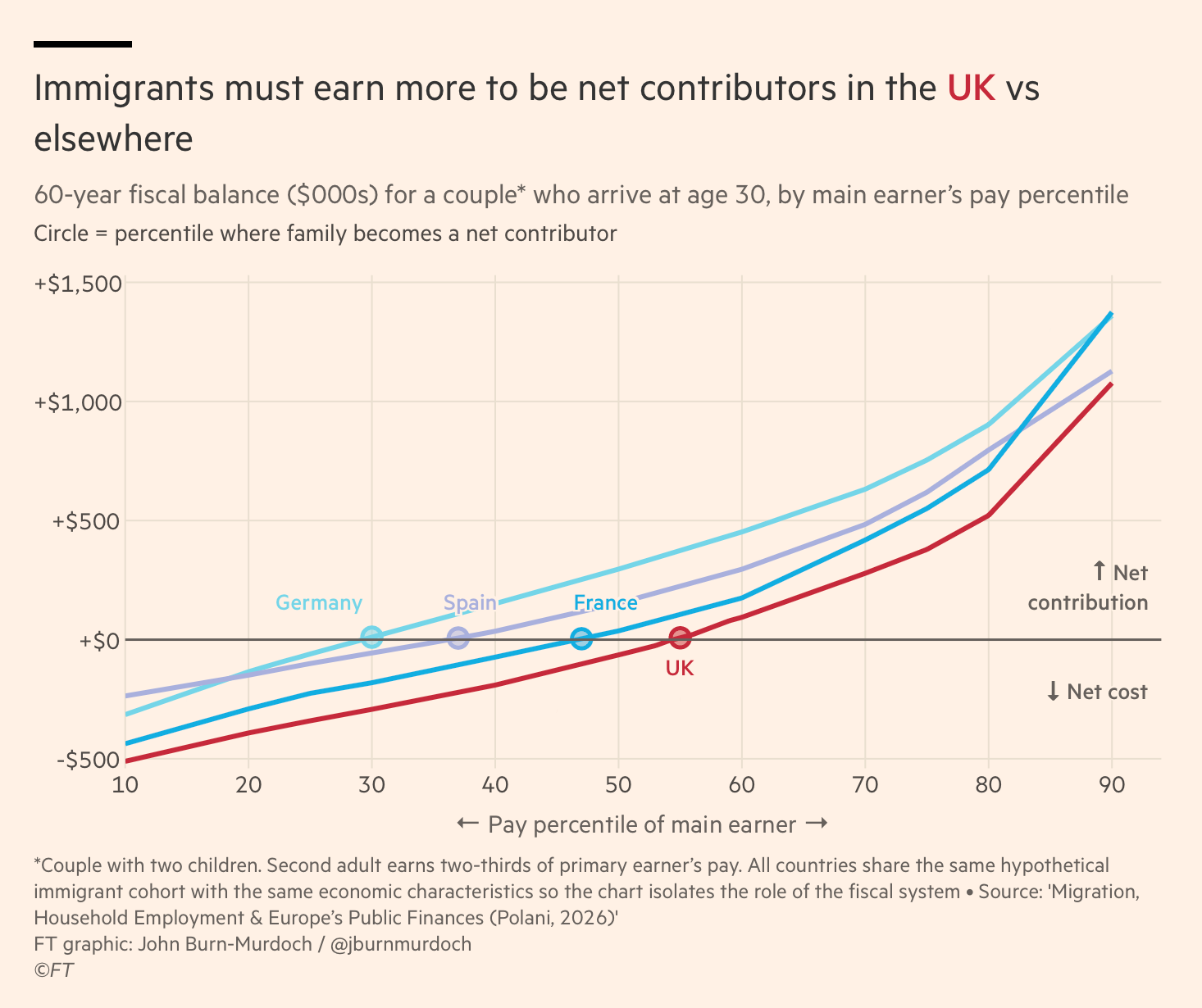
    Here, for example, is an interesting chart showing what pay percentile a primary earner needs to reach in order to become a net contributor to the country:

    In the UK, the average couple arriving at age 30 needs the primary earner to have a salary at the 55th percentile, compared to only the 28th percentile in Germany. This is because of the relatively low tax rates for low-income workers in the UK, and flatter tax regimes in the other countries in the chart.

    This is just one example demonstrating that “immigration,” to use the words of Burn-Murdoch, is “not a fixed thing across time and place.” Who are we attracting? And what policies do we have in place to ensure people economically assimilate and become net contributors?

  • Swimming in coves

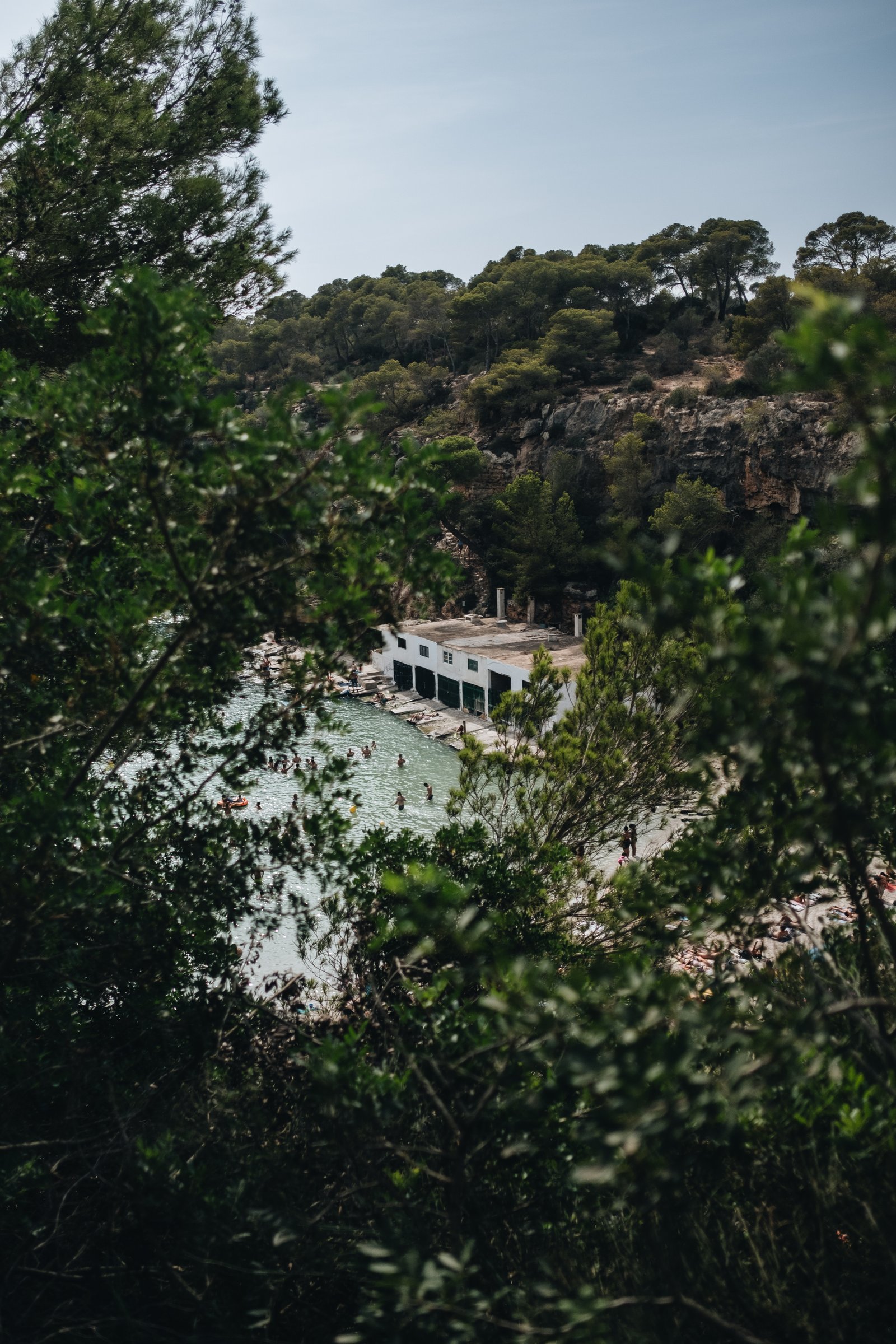
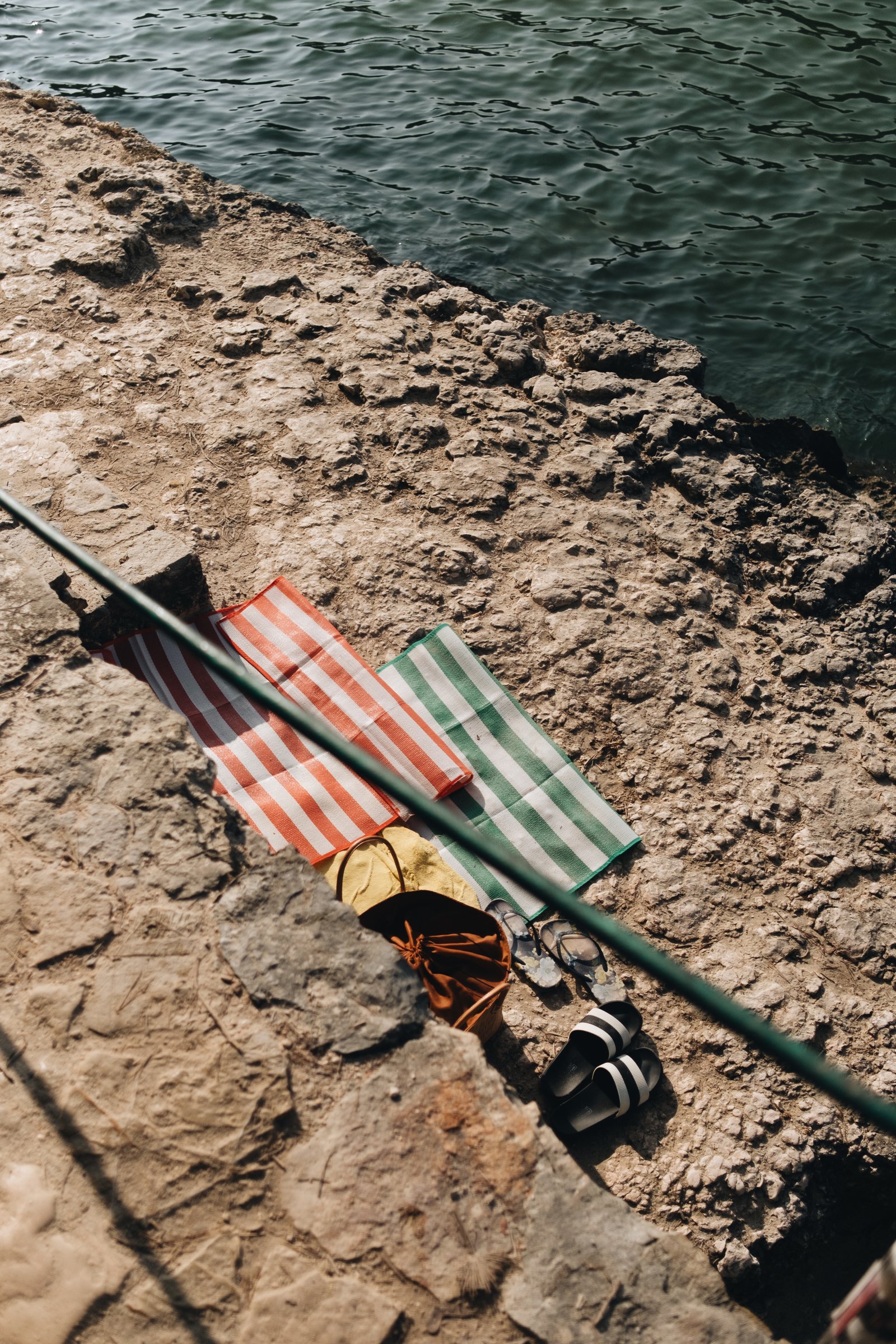
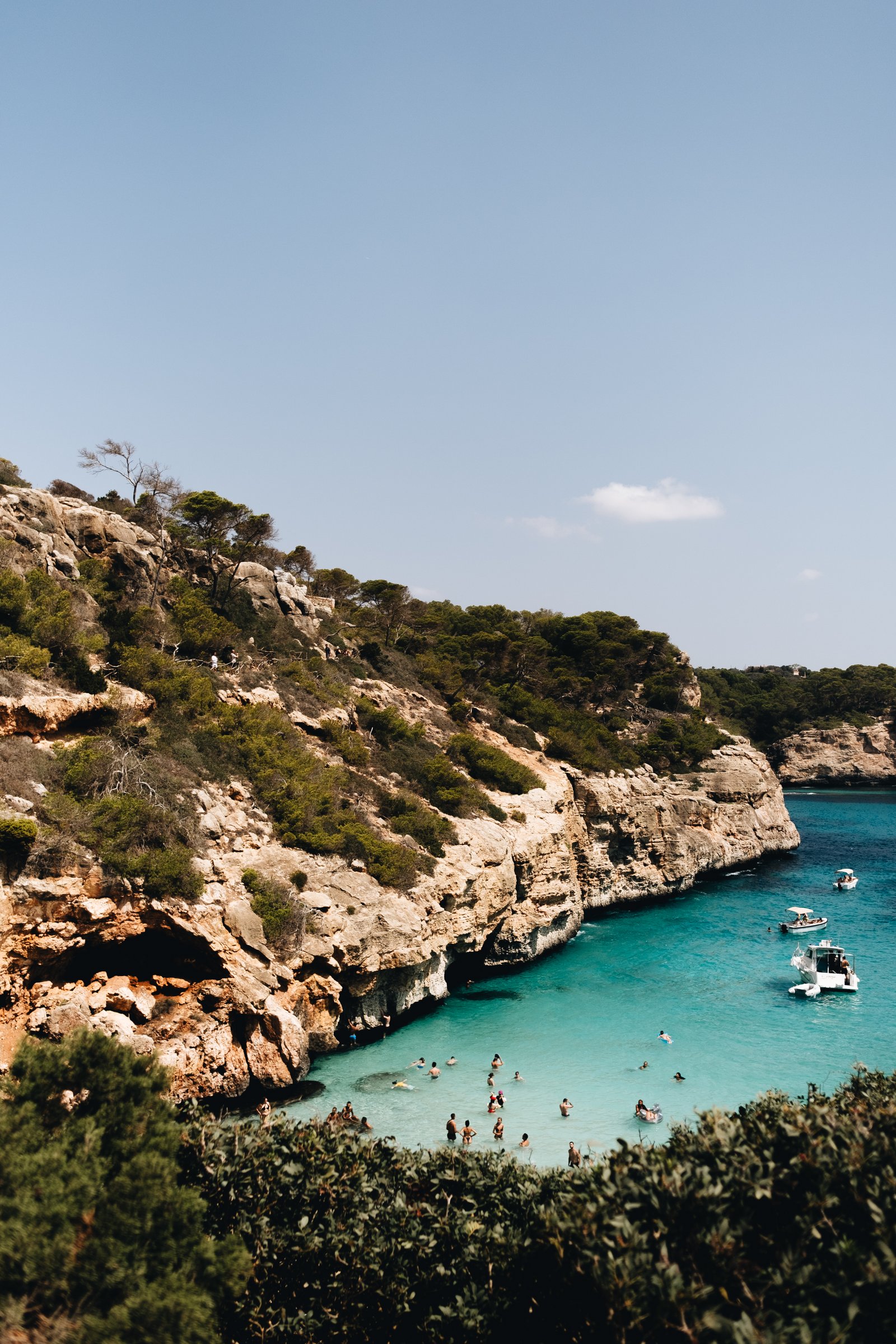
    Here are some photos from Caló del Moro, Cala s’Almonia, Cala Llombards, and Cala Pi (all in Mallorca). As I mentioned two days ago, these are some of the most beautiful public spaces that I have ever seen. We loved swimming in these coves. The Mediterranean is such a special place in the summer. But here’s a tip: If you’re planning to roam around on and jump off of the rocks, you’re going to want to invest in a good pair of water shoes.

    Next up: Marrakesh, Morocco.

    Camera: Fujifilm X-T3 (23mm lens)

  • Palma

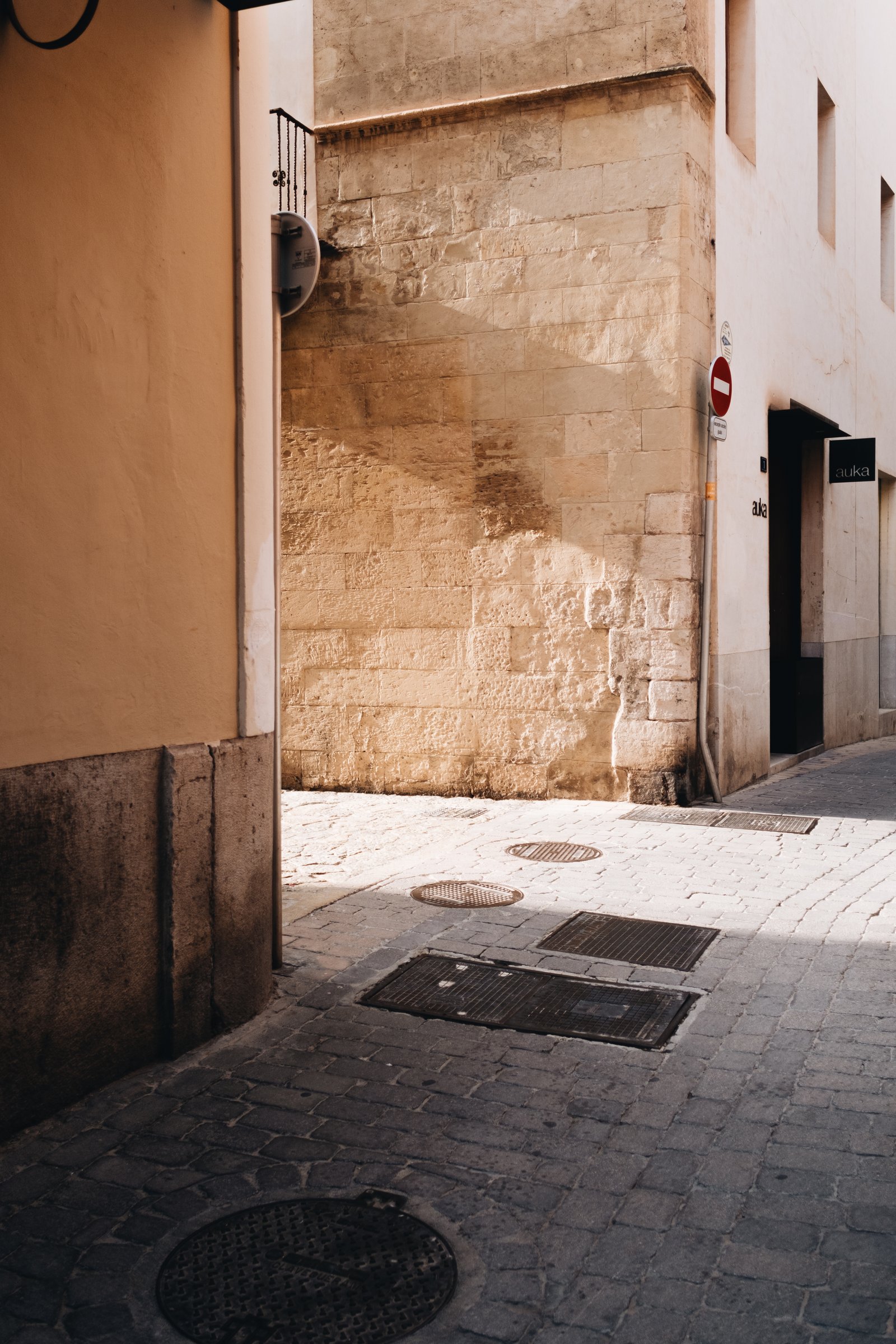
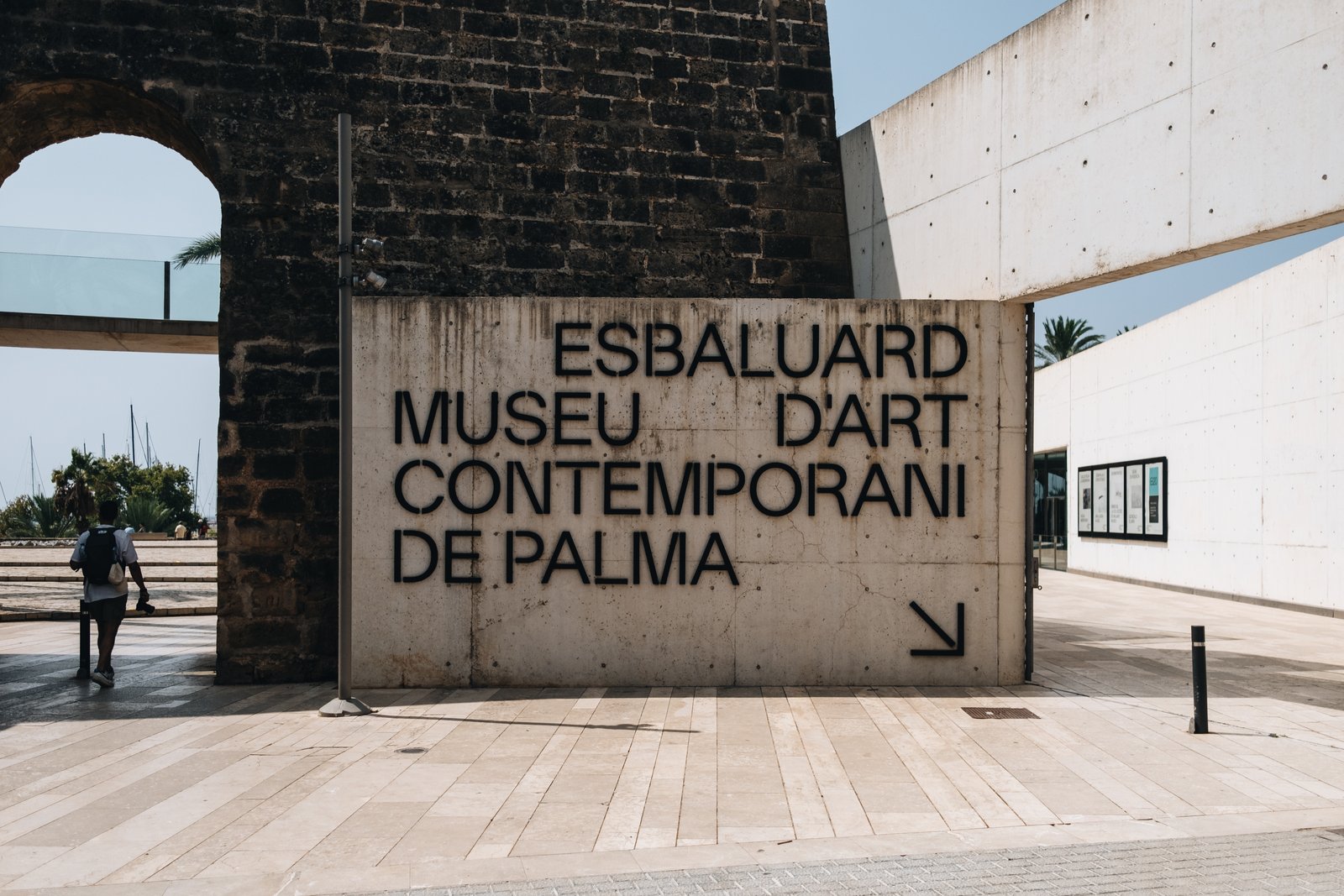
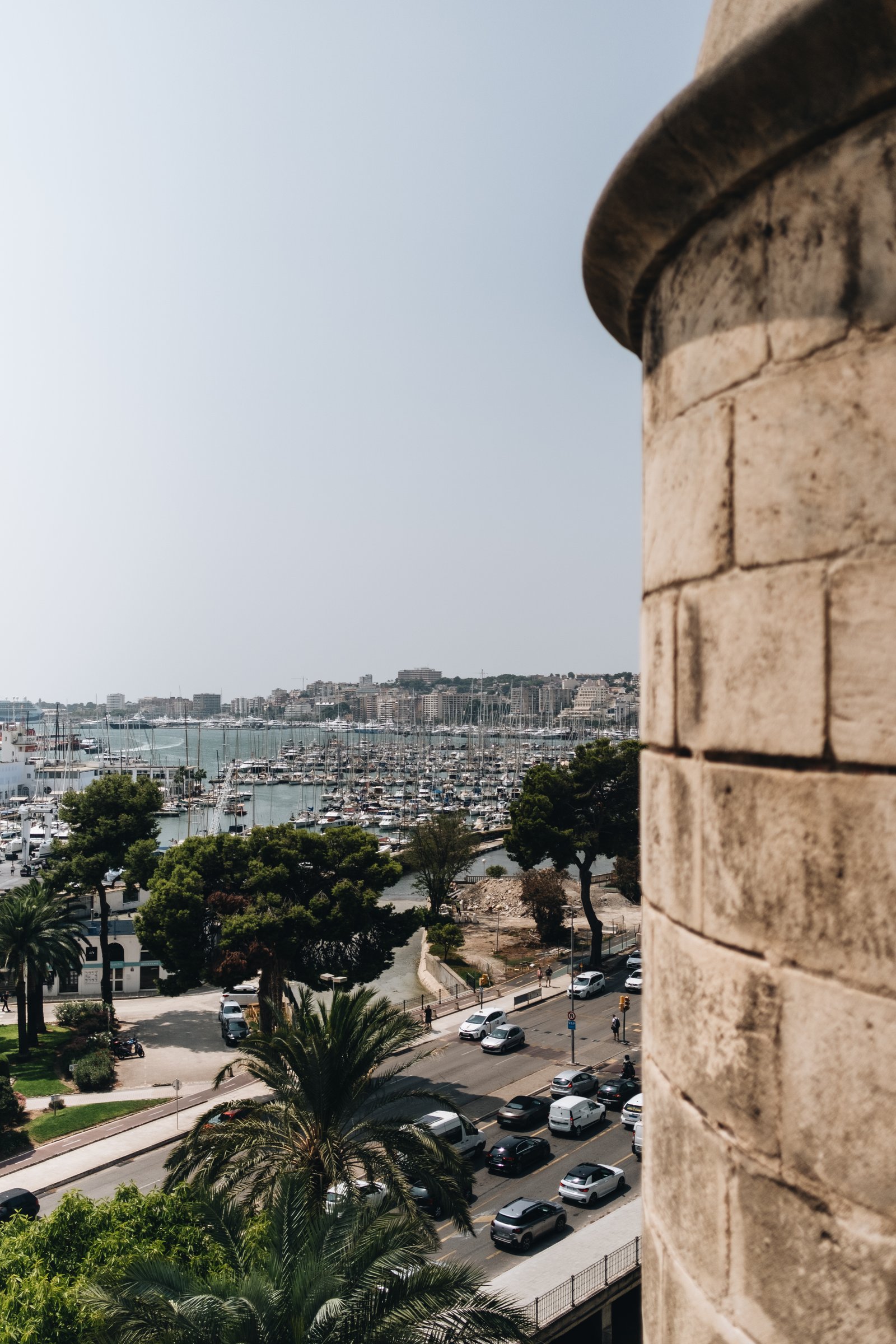
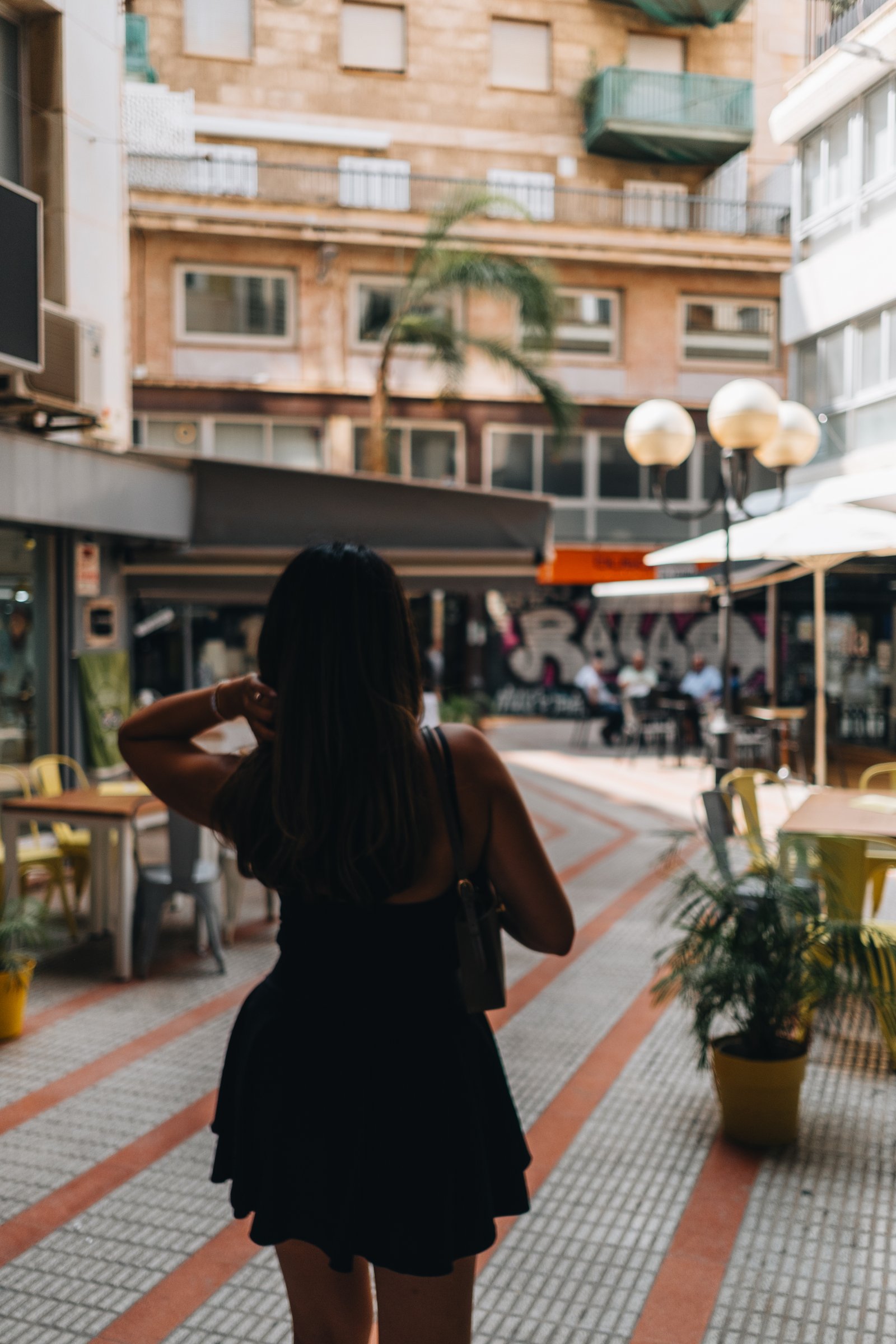
    Traveling is one of life’s greatest experiences. Pack a carry-on (so you bring only what you really need). Strip yourself of your regular surroundings. And explore the world with new eyes — maybe with a camera in your hand.

    Camera: Fujifilm X-T3 (23mm lens)

  • Paseo Mallorca 15

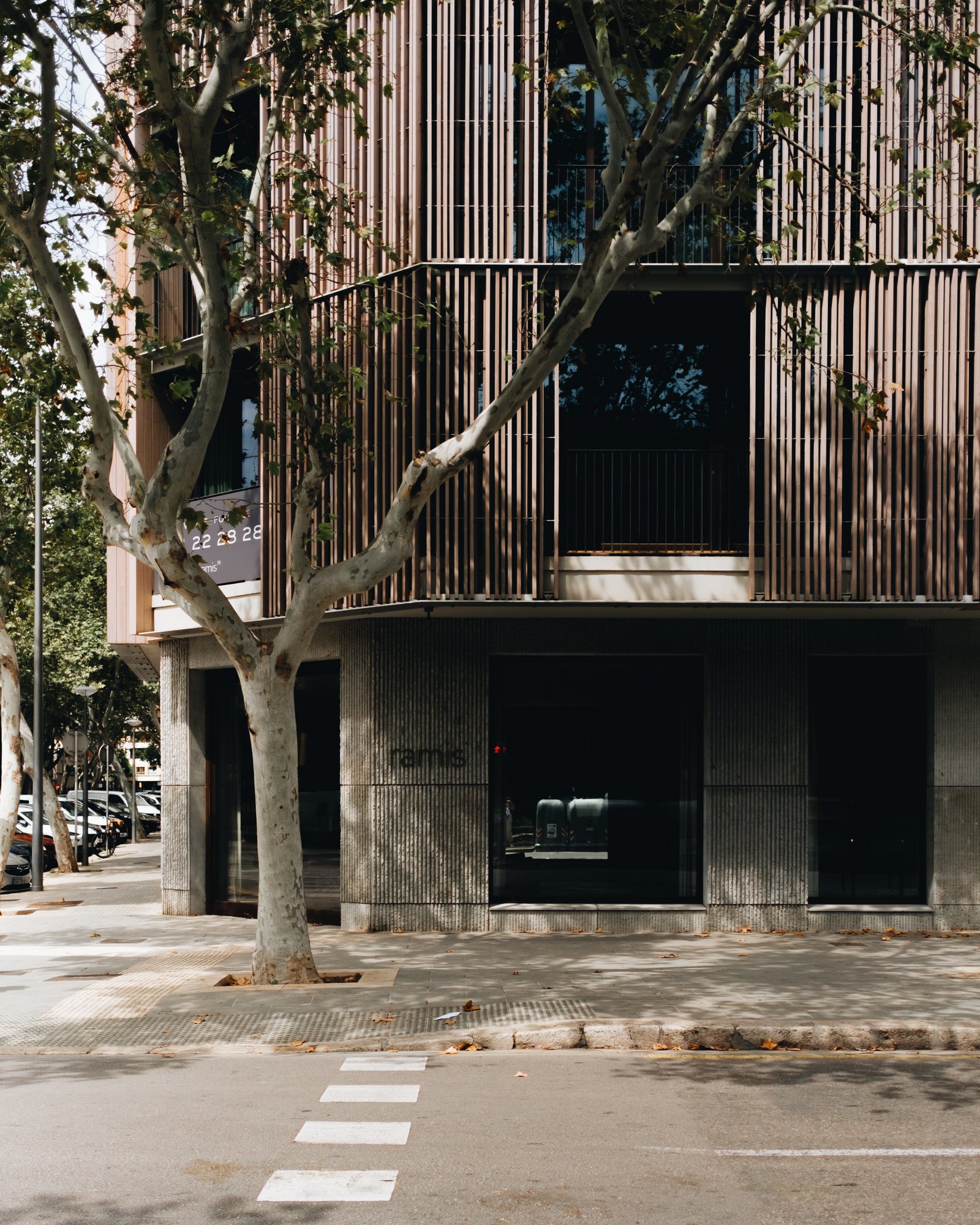
    This is a beautiful apartment building in the center of Palma. Brutalist ground floor. Operable wooden slats up the rest of the facade. It feels right at home in this climate. It’s also a passive-energy building that uses 90% less energy compared to a “conventional” apartment building. The technical classification is nZEB (or a nearly zero energy building). It’s pretty amazing that with only 9 apartments, these kinds of projects pencil here. Perhaps it’s no surprise that it’s also a single-stair building.

    The architect is OHLAB. For more information, here’s their website.

  • Turn off the AC

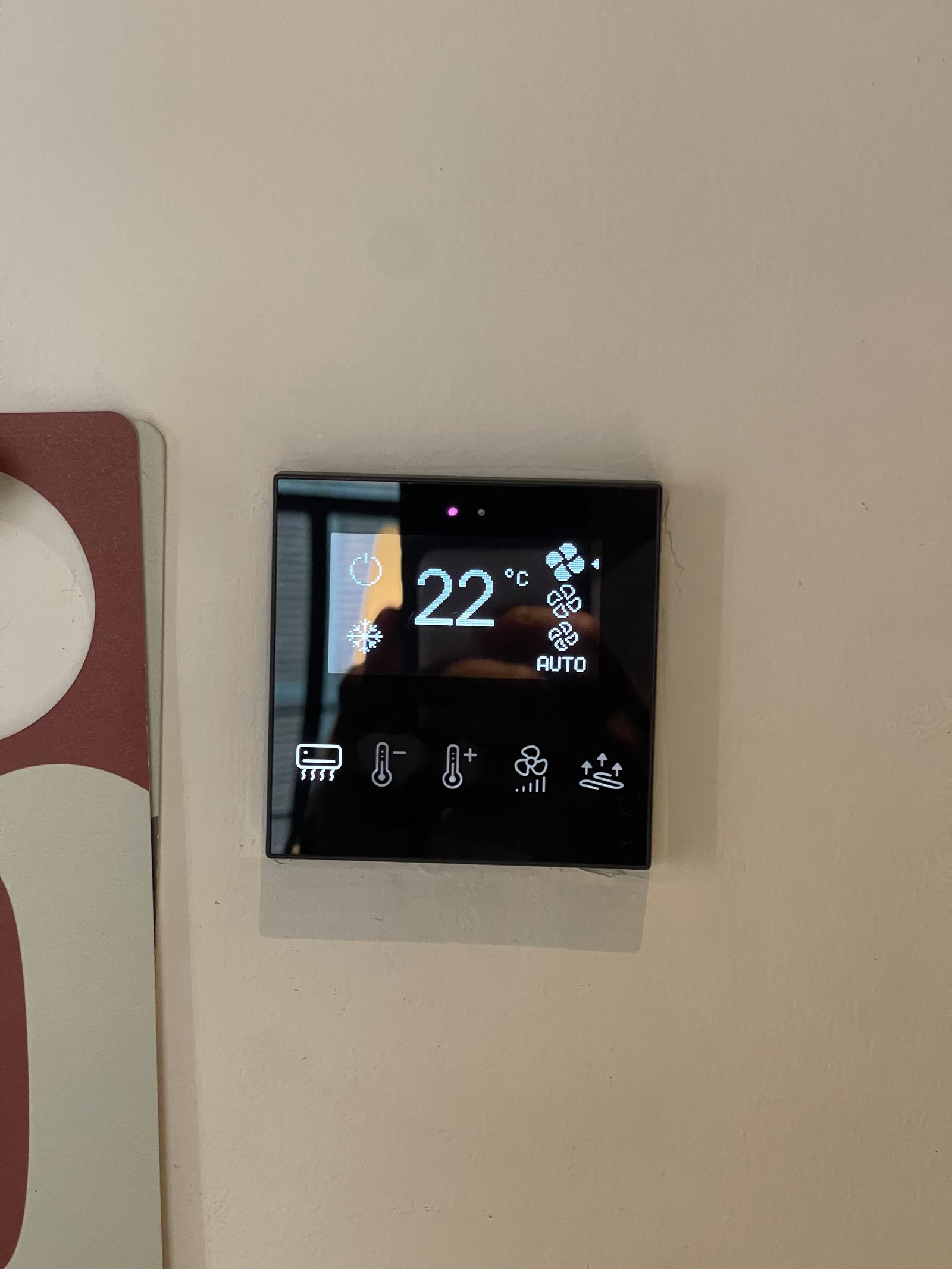
    We just checked into our hotel in Palma and one of the first things I noticed is that as soon as you open any of the windows/doors, the AC automatically turns off. A message on the thermostat then alerts you that it will come back on once you close the windows. I haven’t yet figured out how this particular hotel room is sensing that things are open, but it’s relatively easy to do this at home through smart thermostats and sensors like these. I make a real concerted effort to do this manually, and so it’s great to see it automated in a hotel room, where people are naturally going to care less about wastage. Europe is so far ahead of North America when it comes to energy efficiency.

  • Out of office

    I just turned on my out of office. Neat B and I leave this evening for our honeymoon. Our first stop is Mallorca. Neither of us have been before and it has been on our list.

    One of our goals for this trip is to be active. So among lots of other things, the plan is to get on some bikes at some point. We hear that Mallorca is a pretty good island for that.

    As always, I’ll be continuing to write. I love writing when I’m on vacation and experiencing new things. The laser distance meter is also in my bag, so expect some of this and this.

  • Coastline villages

    I recently collected two NFTs from aerial photographer Vitor Esteves. I purchased one of Menton, France and one of Las Negras, Spain (pictured above). Both are from his 1/1 Coastline Villages collection on Sloika. I know that NFTs aren’t nearly as popular as they were last year, but that is exactly why now is a great time to be collecting. Talented artists continue to create, but ETH gas fees have come way down (a few dollars versus sometimes over a hundred at the peak) and there is now far less competition out there. It is no different than trying to buy great real estate when the rest of the market is sleeping.

    At some point, I’m going to need to pull the trigger on a good NFT display. I’ve been contemplating a Tokenframe, but I also think that most TVs are going to appropriate this function pretty soon. Some already have.

  • Project Profile: Side Gallery Barcelona

    Side Gallery opened up a new 700 square meter exhibition space in Barcelona last month that is worth showcasing. It’s a beautiful space. Designed by Spanish architect Guillermo Santomà, the space sits within an old 19th century factory that used to house an Italian pasta company. It’s minimal and stark white, but the architecture of the former factory still comes through. There’s also a prominent greenhouse featuring flora that is local to South America. Fitting given that the gallery focuses on Latin American design. Have a look.

    I also love these images from the architect, which (I think) use light to completely transform the space.

    All photos via Side Gallery and Guillermo Santomà

  • The rooftops of Spanish architect Alberto Campo Baeza

    I love the contrast in this villa between the more private spaces, which are housed in a brutalist concrete structure, and the more public spaces, which sit on top and are housed in minimalist glass box that is reminiscent of the Farnsworth House.

    All of this was done in order to maximize views of the surrounding mountains from this upper floor. But it also creates a certain lightness within the next landscape. And I’m sure that the views out are that much better after emerging from such a contrasting space below.

    Located to the southwest of Madrid, the villa was designed by Spanish architect Alberto Campo Baeza in 2000. It’s called the Casa de Blas and it’s currently on the market for €850,000. Listing information over here.

    But I would also encourage you to check out some of the firm’s other work. It’s absolutely magical. One of my favourites is the House of the Infinite, which was designed in 2014 and, in my mind, shares some similarities with the above villa.

    In both the Blas House and the House of the Infinite, the rooftop spaces feel like everything. In some ways, they have been privileged over almost everything else. And so instead of wanting to be inside the houses, the architecture seems to pull you toward wanting to be on top of them.

    Image: ArchitectenWoning