Daily insights for city builders, delivered every morning at 6 AM ET. I’m Brandon Donnelly — a Toronto-based real estate developer and founder of Globizen. I’ve been writing here since 2013.

Tag: toronto

  • Density vs. infrastructure in Liberty Village

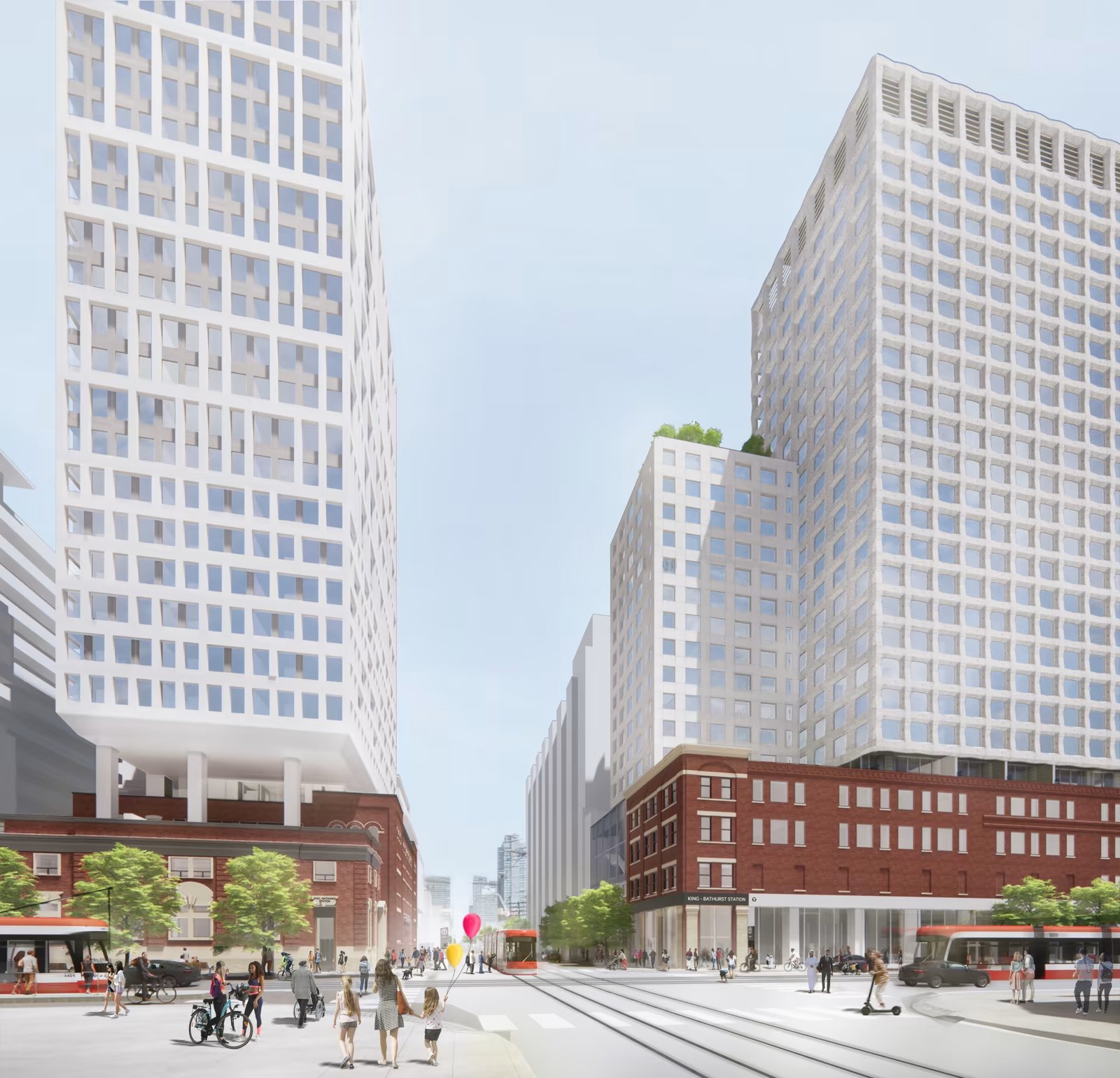
    A beautiful new 43-storey rental building was just approved in Toronto’s Liberty Village neighborhood. More info about the project can be found, here. Not surprisingly, some people in the community were against it. Here is a recent article that blogTO published talking about people who live in high-rises not wanting a new high-rise next to them.

    One argument that is being made is that the neighborhood is already full. It has reached its density limit. We also hear this about the City of Toronto as a whole. But we know this isn’t true. Architect Naama Blonder recently did a study that found we could fit another 12 million people within our boundaries with more efficient land use policies.

    This particular site in Liberty Village is also about 400 meters from a future subway stop on the Ontario Line. So it is exactly where we should be putting more density. The problem today is that the area is suffering from a massive infrastructure deficit. The road network is inadequate and the King streetcar hasn’t been prioritized.

    It’s no wonder the area feels full. But the reality is that there are lots of examples of highly livable neighborhoods from around the world with much higher population densities. The difference is that they have the right infrastructure, the right public realms, and the right modal splits.

    Liberty Village will get there as well and it’s already underway. For a preview of the future, check out the City of Toronto’s Public Realm Strategy for the area. It was published in April 2024 and it includes things like new streets, new mid-block connections, and new parks. It is what the area needs and it’s exciting to see it happening.

  • Development charges are an insidious problem

    Here is a recent chart from Mike Moffat showing how much development charges have increased in the City of Toronto from 2009 to today:

    We’ve, of course, seen this before. Back in 2020, I shared an article that developer Urban Capital published where they did a cost comparison between a project they had done in 2005 and a project they were doing in 2020. What they uncovered was that development charges alone had increased by 3,244%! The most of any line item in their pro forma.

    Development charges over the last real estate cycle have been an insidious problem. Meaning, the industry knew they were crazy high, and we were all trying to be vocal about it, but let’s face it — the general public doesn’t have a lot of sympathy for developers complaining about high fees. They are also largely hidden from purchasers and renters. The charges just get lumped in.

    If our industry could figure out how to be more transparent and separate out these charges, much like a sales tax, I think it would go a long way to showing consumers what they’re actually paying when it comes to new housing. And then maybe something positive would happen. Because this is a major reason why new housing has gotten so expensive in this region.

    Can you imagine if property taxes had increased by 3,244% over the last 15 years? I can’t. Because no one would have ever allowed that to happen.

    For better and for worse, the current market is going to serve as a rude awakening for municipalities. We’ve reached the breaking point. The housing market is, as we’ve talked about, in a “state of economic lockdown.” And when people don’t buy new homes, it means developers no longer have the money to pay development charges.

  • Bordeaux’s tramway network

    I was very impressed by Bordeaux’s tramway network. It felt like no matter where you were in the city, there was a tram gracefully passing you by. Here’s a high-level summary of the system:

    • The network has 4 lines and a total route length of 77.5 km.
    • The first line opened in 2003.
    • The network has 130 stops, which crudely results in an average stop spacing of around 600 m.
    • The system pioneered ground-level power supply for the trains, which means no overhead wires. Supposedly this caused some issues upfront, but now it seems to be working just fine.
    • Most of the network runs on a dedicated right-of-way (en site propre). Meaning, the trains don’t compete with car traffic. Many of the lines are quite beautiful too – see above video.
    • In 2018, the network carried close to 100 million people. This is in a city of ~260k people and a metro area of ~1.4 million people (2020).

    The key differentiators for me are (1) the stop spacing and (2) the fact that most of the system runs on its own dedicated right-of-way. These are two reasons why Toronto’s streetcars perform so poorly. They stop too frequently. And most of the lines have to compete with traffic.

    So why bother? Walking can be faster.

    Bordeaux shows that — if you implement light rail correctly — you can actually move a ton people efficiently. With surface rail, you can also build out a robust network in a relatively short period of time.

    Twenty years isn’t that long in city-building years. It has already been 10 years since Toronto was first promised SmartTrack.

  • Lingua franca

    The two official languages of Mallorca are Catalan and Spanish. However, there is also a local dialect of Catalan spoken on the island called mallorquí. Many of the locals we met last week spoke all three. At the same time, it was also our experience that everyone spoke English.

    In Morocco, the two official languages are Arabic and Berber. Berbers are an ethnic group that predate the arrival of Arabs to the Maghreb region of North Africa. And today, about a quarter of Moroccans still speak it according to Wikipedia.

    French colonial rule in Morocco (which lasted from 1912 to 1956) also means that a large percentage of the population speaks French. The “official” number was above 60% in 2012, but our experience in Marrakech has been that it’s virtually everyone.

    This has also been our experience with English. Though, interestingly enough, some of the locals have told us that this was not the case as recent as 10 years. English is a new phenomenon in Marrakech. Anecdotally, it means that many of the locals seem to speak a minimum of 4 languages.

    This is, of course, par for the course in this part of the world. But as a Canadian who is working diligently to try and master only two languages — I take a weekly French class at Alliance Française in Toronto — it’s an easy way to feel linguistically inadequate.

    Languages are difficult. They’re relatively easy to learn when you’re young, but if you don’t use them consistently and if you’re not immersed, they’re also easy to lose. Which is why some estimate that by the end of this century, at least 50% of the languages currently spoken will become critically endangered or completely extinct.

    Here is how UNESCO classifies endangered languages:

    The simple takeaway is that it starts with children. A “vulnerable” language, for instance, means that kids still speak the language, but that it may be restricted to only certain domains, such as at home with relatives. A “definitely endangered” language means that kids are no longer learning and speaking it. This is a kiss of death.

    So to get a sense of where things are headed, it’s a good idea to ask people, “what languages do kids learn in school and/or at home today?” And the answer to that question in Marrakech seems to suggest that English has overtaken French as the preferred second language after Arabic.

    As we all become more globally connected, it only heightens the need for a lingua franca — a common language that we can all use to communicate with each other. And today that global language is English. That certainly makes things easier and more efficient, but it also comes with negative consequences.

    It is going to mean sacrificing the local languages and dialects that emerged at a time when the world wasn’t so small.

  • We should use more permeable pavers

    Today we rented a car so that we could go and explore other parts of Mallorca. We went to three different beaches and coves on the southeast coast, and they were some of the most beautiful public spaces I have ever seen.

    Along the way, we stopped at an Aldi to grab picnic supplies. I love Aldi. It’s amazing how much less expensive everything is here compared to back in Toronto, even once you do the EUR to CAD conversion.

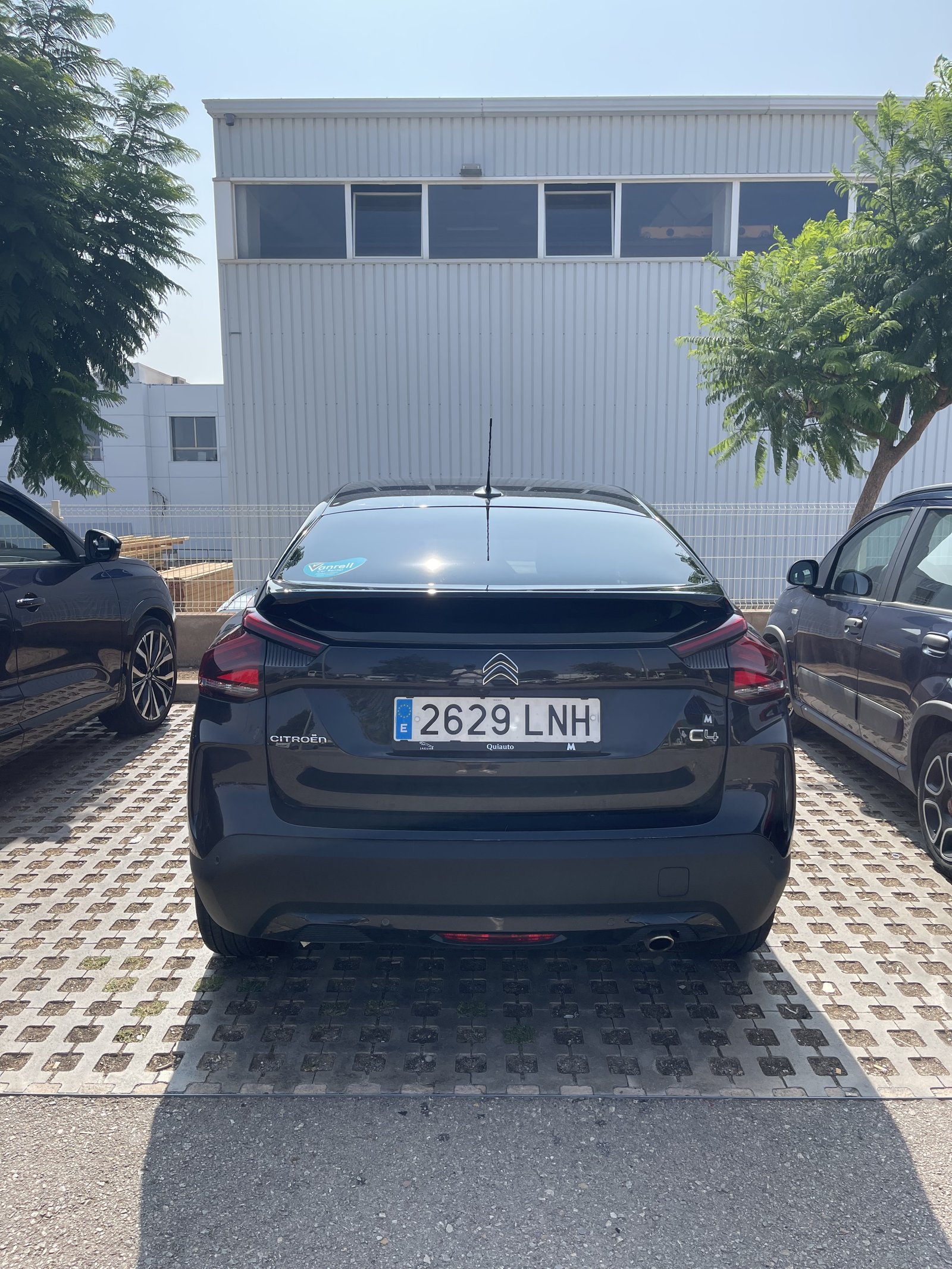
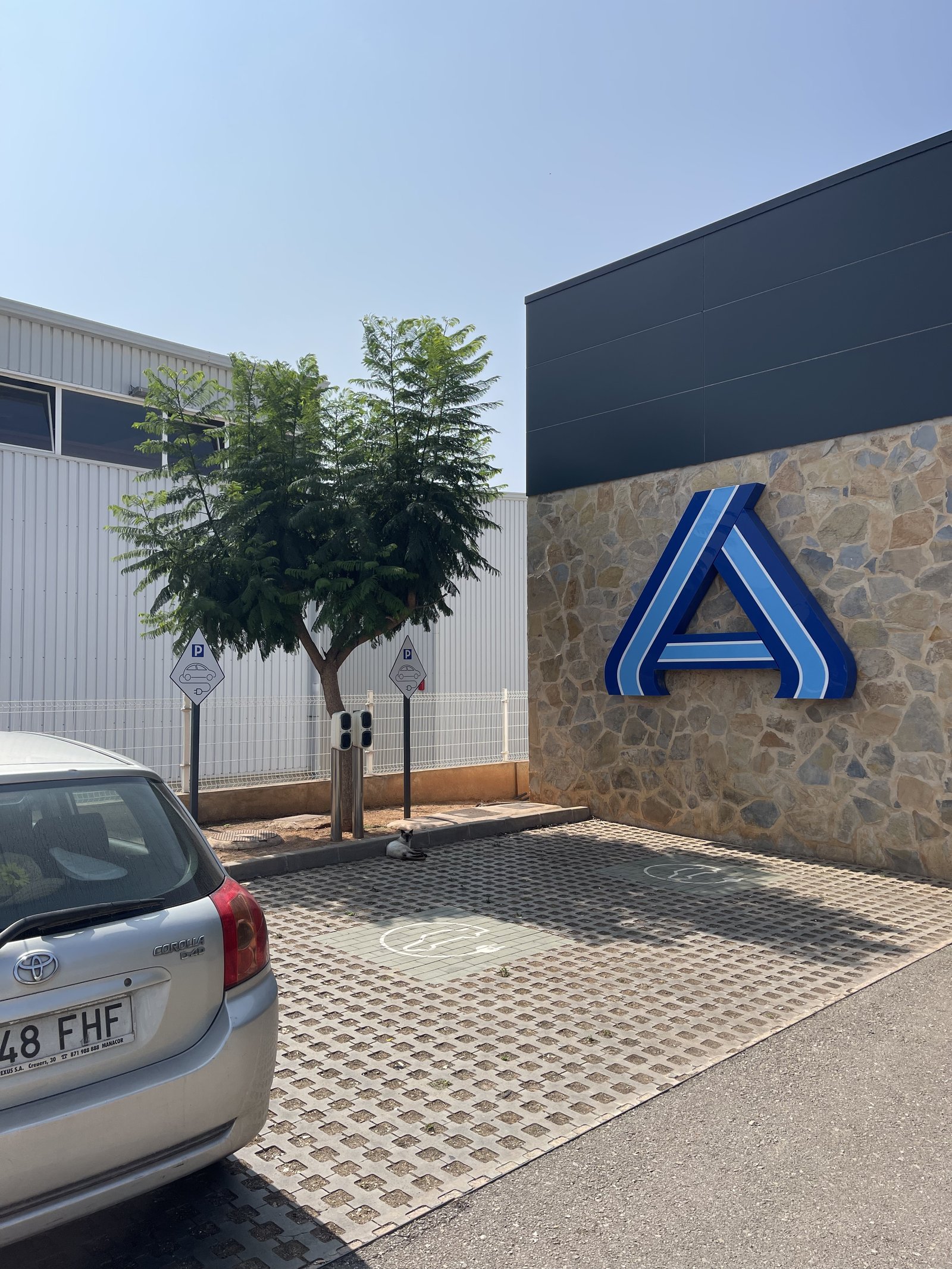
    As soon as we pulled in, the first thing I noticed is that every single parking space had permeable pavers. Here are two photos. The second photo is to also show you their EV charging spaces and one of the two cats that seems to live at the store.

    Permeable pavers are, of course, useful because they help to reduce surface runoff. Meaning, they allow some amount of water to filter into the ground, which is not the case with impermeable surfaces.

    Considering that Toronto has already had two major flood events this summer alone, I think it behooves us to take note. When is the last time you’ve seen permeable pavers used in a public parking lot in Canada or the US? Serious question. I can’t think of an example.

    Having a store cat could also be a good idea.

  • Roncesvalles is a great, single-sided, street

    Roncesvalles Avenue is a successful north-south main street in the west end of Toronto. I say successful, because it is truly a great street. It has transit, bike lanes, a fine-grained built form, and lots of interesting retail:

    But it is somewhat unique in that a large section of it is a one-sided retail street. Meaning, it looks like this:

    This obviously isn’t a fatal flaw. It remains a wonderful street. And there are lots of examples of thriving one-sided retail streets. Ocean Drive in Miami Beach immediately comes to mind (notwithstanding the fact that locals tend not to go to it).

    But conventional retail wisdom does dictate that two sides are better than one. Consider this 2023 report by Cushman & Wakefield ranking the top global main streets across the world. All of the streets that I have been to before are two-sided:

    • 5th Avenue in New York between 49th and 60th (above 60th is, incidentally, when the street converts to single-sided because of Central Park)
    • Montenapoleone in Milan
    • The main street of Tsim Sha Tsui in Hong Kong
    • New Bond Street in London
    • Avenues des Champs-Élysées in Paris
    • Grafton Street in in Dublin
    • Passeig de Gracia in Barcelona
    • Bloor Street in Toronto

    These are all two-sided retail streets.

    None of this is to say that the west side of Roncesvalles has nothing going on. It has a diverse mixture of uses, including churches, libraries, apartments, and many other things. But I think there is still an argument to be made that it has been hamstrung by restrictive zoning.

    That said, Roncevalles is defined as a “major street” in Toronto’s Official Plan and so it does fall under the city’s new Major Street Study. Maybe that changes things.

  • Why do we choose traffic?

    Scott Stinson gets a lot right in this recent Toronto Star article about road pricing:

    There is a simple tool to combat traffic congestion that has been proven to be effective. There are real-world examples of where it has been deployed to great and long-lasting success. It’s called road pricing. And we seem to be deathly afraid of it.

    This is even if the benefits are real and measurable:

    Jonas Eliasson, director of travel accessibility at the Swedish Transport Administration, has first-hand experience with the effects of the congestion charge implemented in Stockholm in 2006. Public polling showed two-thirds of voters were against the road-pricing plan before it was introduced in a pilot program. A local politician called it the “most expensive way ever devised to commit political suicide.” But after it began, Stockholm traffic levels dropped by 25 per cent, more than double initial estimates. In a subsequent referendum, Stockholm residents voted to adopt the congestion charge permanently.

    There are lots of reasons why road pricing is commonly opposed, but at the end of the day, it works, and we know all too well — especially here in Toronto — that the status quo sucks:

    “Over the years, transportation economists and planners have pointed out that there really is no other solution to traffic congestion than more efficient pricing,” he said in an interview. “So every time somebody said ‘No, I don’t want road pricing or congestion pricing,’ they’re actually saying, ‘I want traffic congestion.’”

    I’ve been writing about this topic for almost as long as I’ve been writing this blog. So at this point, I think we just need to run a pilot. No more studies and reports. No more protracted debates.

    Let’s try it out and see how many people prefer (1) less traffic congestion and (2) more money for alternative modes of transport.

  • Over-building and then under-building: Is Toronto headed for a severe shortage of new rental housing?

    As we know — because here’s the data — this is the current state of affairs:

    The GTA condo market is in a state of economic lockdown. The math doesn’t make economic sense from both the demand side (investors) and the supply side (developers), leaving the market at a standstill.

    The above excerpt is from a recent CIBC Capital Markets article by Benjamin Tal (CIBC) and Shawn Hildebrant (Urbanation). And what it ultimately means is that the supply of new condominiums in the GTA is falling and will continue to fall for the foreseeable future. Below are two charts, from the same article, that show that.

    Because of this, I actually think that, if you need or want a place to live, right now is a near ideal time to buy a condominium, especially if it’s from developer inventory (in an already completed project) or it’s a resale. Of course, most people won’t want to do this because they’d rather buy when most other people in the market want to buy. This is how markets tend to go.

    It has been a while since the GTA has gone through one of these real estate cycles, but it is typical: developers are prone to both over-building and under-building. It simply takes too long to build a building, and so it is natural for there to be moments when supply and demand don’t exactly line up.

    Pre-selling condominiums is — in theory only — supposed to protect against too much overbuilding. But as we have spoken about many times before, it can be challenging for end users to buy a new home so far in advance. And so the new condominium market has come to rely on investors who want to buy early and then either sell later or rent later.

    According to the above article (and MLS data), the share of newly completed condominiums used as rentals reached a peak of 34% in 2023. So a third of new condos. My gut tells me that the actual number is much higher. Many rentals never reach MLS. Overall, I think it’s very safe to assume that the majority of new condominiums are owned by investors.

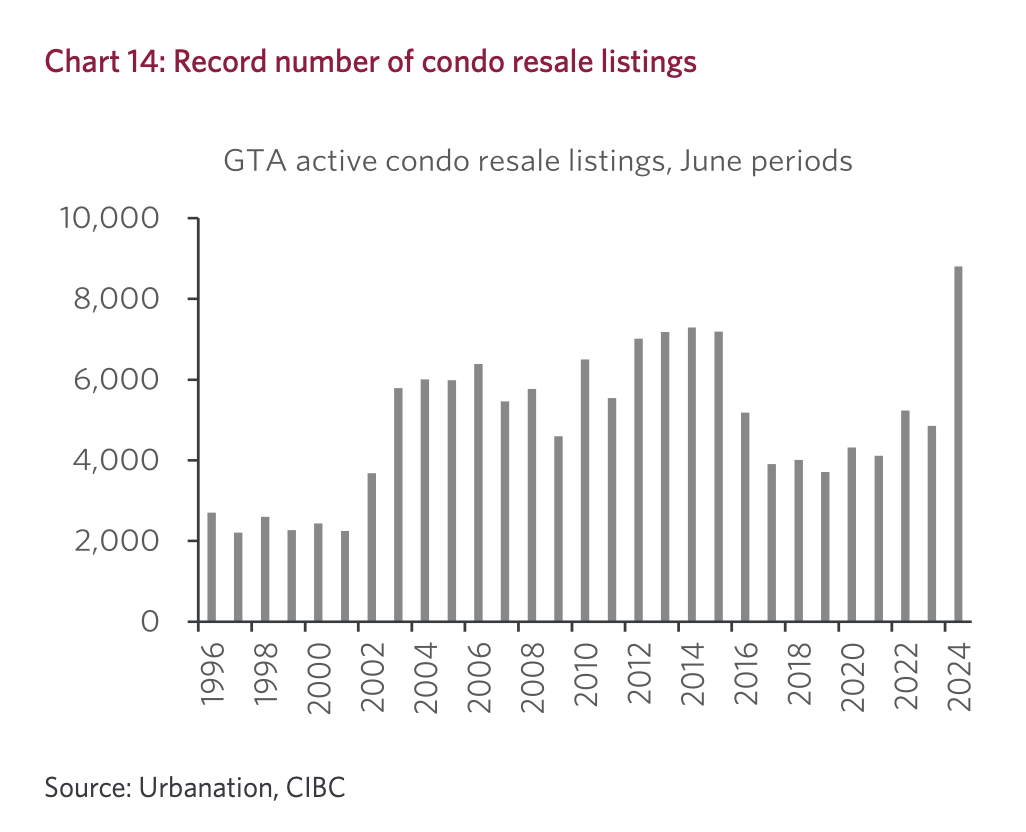
    But right now, fewer investors want to own condominiums, which is why the number of resale listings has spiked this year:

    This is, again, why I think right now is an excellent time to buy a condo. You know, be greedy when others… Regardless, this inventory will need to get absorbed and that will ultimately happen. Some of it will go to end users and some of it will go to investors who can make sense of the rental math and/or want to take a long view on Toronto. But if more goes to the former, we will be losing a lot of new rental housing.

    At the same time, while all of this is going on, construction starts are likely going to remain depressed (chart 3 above). It’s impossible to know how long this lasts, but at some point we will reach a moment in the cycle where we are under-building new housing. Maybe we’re already there. Development simply can’t turn on fast enough when demand spikes. There will almost always be a lag.

    So, since the majority of new condominiums have been serving as new rental housing, there’s a strong case to be made that at some point we will run into a potentially severe shortage of rentals. Condo investors are sometimes vilified in the media, but we will soon find out what happens when you take a big chunk of them out of the housing market.

  • The Ontario Line is happening

    Yesterday afternoon, I took the 504 King streetcar from the Bloor-Dundas West mobility hub down to King & Bathurst to meet a friend at the Wheat Sheaf Tavern. In case you didn’t know, this is believed to be the oldest continually-operating pub in the city. It opened in 1849.

    My streetcar ride took an obscenely long time (over an hour) and so it was the wrong mobility choice for a peak summer afternoon. I should have biked. But once I did finally arrive at Toronto’s oldest pub, it was great to see all of the activity happening right at the intersection for the new King-Bathurst subway station (Ontario Line).

    I’m always a bit cynical when it comes to transit plans. Like, it’s hard for me to believe that something is actually happening. I’m still waiting for SmartTrack to open. So I need constant visual reminders like these:

    What you are seeing above is the northeast corner of the intersection, which is where one of the two station entrances will go. Naturally, the station platform and track itself are also aligned on a diagonal so as to minimize “significant construction impacts” to the Wheat Sheaf (southwest corner).

    This stop is also one of Infrastructure Ontario’s Transit-Oriented Communities, which means the intent is to have a private developer build things on top of the station. Directionally, this is, of course, the right approach. It didn’t happen on the Eglinton Crosstown line; but we know that the best way to maximize the value of transit investment is to combine it with smart land use planning (the rail + property model). Density is your friend.

    From what I could glean during my time on the patio at the Wheat Sheaf, all of this appears to be moving forward. And already today, there is a ton of foot traffic in the area — meaning the future transit station should do very well from a ridership perspective. Now we just need this line extended up to the Bloor-Dundas West mobility hub so that the 504 streetcar can be relieved of some of its duties.

    Station Plan/Rendering: Metrolinx and IO

  • I really want to live over there

    One way to describe cities is to call them labor markets. Historically, people have chosen to live in cities because they have provided economic opportunities (among, of course, many other things). That’s why the data is very clear: wages are higher in larger cities.

    But what we have also seen over the last few years — and what is causing a lot of dislocation in real estate markets — is an untethering of work. More people are working from home and from locations that offer greater lifestyle benefits (or greater tax benefits).

    We spoke recently about what this divide between in-person and remote work might mean, but regardless of this outcome, I think there’s an important truth here: Lots of people would like to live somewhere else. (In my case, my daydreams take me to Paris.)

    And for the first time ever, really, it is possible for more people to do this and stay connected to work somewhere else. Earlier innovations, such as the streetcar or car, also compressed geographies and empowered people to travel greater distances. But now the catchment area has seemingly expanded to the world.

    I’m not saying anything particularly novel here, but I do think it’s important to point out that this desire exists in many of us. Because this tension between “I do work here” but “I really want to live over there” seems like it’s only increasing.