Daily insights for city builders, delivered every morning at 6 AM ET. I’m Brandon Donnelly — a Toronto-based real estate developer and founder of Globizen. I’ve been writing here since 2013.

Tag: south florida

  • Two different multifamily markets

    I had lunch today with a friend (from school) who runs a multifamily development company in South Florida. His business is very similar to the apartment strategy that we are now working on in Toronto, in that he builds a repeatable apartment product (garden style apartments). In fact, he was telling me that he now has a dedicated design & QA/QC team within the company. Their job is to focus on continuous optimization and on reducing construction inefficiencies.

    This is the way!

    But each market is obviously unique. His rents are in the US$3 – 3.25 psf range (call it ~C$4.15 – 4.50 psf), whereas in Toronto you need something closer to C$5 psf to have a feasible project. Our yields are also lower on average. It’s hard work to get to an untrended yield-to-cost of 5% here. But for him, he can’t raise capital with anything less than 6.5%, which represents a development spread of at least 150 bps over where multifamily cap rates are today in his market (~5%).

    Juicy by comparison.

  • The new Miami

    The last year has been challenging for the hospitality industry. But at the same time, it was a good year to renovate. The W South Beach recently unveiled a $30 million renovation project that includes all 357 rooms. Designed by local studio Urban Robot Associates, the project directive was an interesting one. The team was asked to reimagine the hotel for the “new Miami.” A Miami that is more grown up and cultured, but that, of course, still has a bit of an edge. With all of the attention that Miami and Florida are getting right now, this project feels timely and indicative of something broader underway. Indeed, it’s hard not to acknowledge that Miami is having a moment right now. This also happens to be one of the last hotels that I stayed at prior to last March’s lockdown. So I have a clear “before” in my mind. It’s fun to see how much it has changed over the last year while I was mostly sitting at home. (Shameless plug: I also love the pale wood herringbone floors, which, coincidentally, will also be on offer at One Delisle.)

    Images: Urban Robot Associates

  • Condo transaction volumes in Miami-Dade county are up 61.4% year-over-year

    This pandemic seems to have been good for real estate located in places that people like to spend time in, but maybe had to limit their time there in the past because of things they had to do like, you know, work in an office. This includes everywhere from “cottage country” outside of Toronto to sunny destinations like Miami.

    Here are some figures that I came across for South Florida via Analytics Miami. Comparing November 2020 to a year prior, condo transaction volumes in Miami-Dade country are, interestingly, up 4.3% for condos less than $1 million and up 61.4% for condos worth more than $1 million.

    Somewhat similarly, single family home transaction volumes in Miami-Dade county (for the same time period) are down 5.2% for houses worth less than $1 million and up 100% for houses worth more than $1 million.

    Sometimes you see a decline like this (the -5.2%) because there simply aren’t enough houses on the market for less than $1 million. But it could also be that more rich people are looking for expensive properties in Miami compared to last year.

    As you may have gathered from here and here and here, I’m not all that bullish on the permanency of this whole working from home thing. But there’s no denying that there’s a very clear trend around people moving to places that are warmer. This was happening well before COVID-19.

    There is also some evidence that rich people are starting (continuing?) to eschew high tax states like California for lower tax states like Florida and Texas. I don’t have the data to be able to comment on how meaningful this trend is, but, for whatever it’s worth, apparently Elon Musk just moved to Austin.

    Photo by aurora.kreativ on Unsplash

  • Mapping spring breakers

    The following video was published last week showing the “secondary locations of anonymized mobile devices that were active at a single Ft. Lauderdale beach during spring break.” Said differently, the company used anonymized mobile phone data to see where spring breakers went after they left the beach. This was in order to better understand how they may have contributed to the spread of COVID-19. If you can’t see the video below, click here.

    The video is astonishing for two reasons. One, it shows you the extreme reach of just one beach in South Florida. Imagine if they had analyzed all of the beaches up and down the coast. And two, a lot of you are probably freaked out that this sort of mobile phone data is available to private companies. If you’d like to learn more about how this all works, check out this opinion piece from the New York Times.

  • The Florida homestead exemption

    I was at a family dinner over the weekend and the topic of the Florida homestead exemption came up. The Florida Constitution bestows a number of advantages upon homeowners (provided the home is that person’s primary residence). And like all rules, it impacts behaviors.

    For one, your primary residence is largely protected from creditors, meaning a sale generally can’t be forced in order to pay back what you might owe. If you’re out there in the world “betting the farm,” this might be a way to protect yourself.

    There are also a number of property tax benefits. You can reduce your assessed value by certain specified amounts, and any increases are (I think) capped at the lesser of 3% or the rate of inflation. (Related post: California’s Proposition 13.)

    As we’ve talked about before on the blog, this second exemption likely creates a disincentive for longtime homeowners to sell/move, as even a lateral move would result in possibly much higher taxes. So why move unless you really have to?

    The counter argument is that it helps fixed income retirees not get squeezed by rising taxes (and that’s an important consideration in Florida). But it also means that first-time/younger buyers end up shouldering more of the property tax burden — at least initially.

    If any of you have strong opinions about the Florida homestead exemption, I would be interested in hearing from you in the comment section below. I am not a lawyer or a tax expert. So please don’t consider this post as any sort of advice.

  • Development is a local business

    This past weekend I toured my friend’s purpose-built rental project in Wynwood, called Midtown 29. It was completed last year and has already been stabilized.

    Real estate development is very much a local business. It is that way because so much of it is driven by relationships, but also because every market has its own little idiosyncrasies.

    This is always valuable to see. Sometimes we do things in our home market because it makes perfect sense to do so and sometimes we do it just because it’s, “the way we’ve always done it.”

    One of the most obvious things about development in South Florida is that the parking is always above-grade. No basements. That has the result of bringing down construction costs; though I understand that, with sea level rise, insurance costs are on the rise.

    If (or when) this whole autonomous vehicle thing does in fact take hold, it’s going to be a hell of lot easier to convert all of that excess parking in Miami than it will be in Toronto.

    Image: Midtown 29 (Art by Peter Gronquist)

  • Homes for as low as $1

    I was reading today about some houses in Boca Raton, Florida selling for as low as $1.

    The reason they’re selling for nothing, in some cases, is because you’re required to join the local golf/country club as part of the purchase. Initiation fees could be in the range of $70,000 and that doesn’t include whatever ongoing fees you would also be responsible for paying.

    What this demonstrates is that there isn’t enough demand from the next generation to sustain the pricing for this housing type. Part of this probably has to do with simply cohort size (the number of people retiring), but I suspect that there may have also been some changes in consumer preference.

    Some of it is probably golf related. Participation in the sport is relatively tepid among Millennials. And some of it may be related to the fact that these communities don’t have the kind of (urban?) amenities that the next generation is looking for.

    But if you derived enjoyment from the home during your retirement years, maybe it’s not the end of the world that there isn’t a strong resale market.

  • Building on stilts

    image

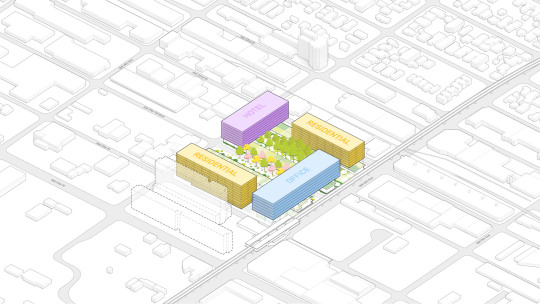
    Last week Bjarke Ingels Group and UIA Management announced a 125,000 square meter mixed-use complex in Allapattah, Miami called the Miami Produce Center. 

    The proposed project includes office, residential, and hotel uses on stilts over three existing warehouse buildings. The existing buildings will be transformed into restaurants, shops, cafes, and a school. And supposedly, at least according to the renderings, the parking garage will be designed so that it can be transformed into a club at a night. This is Miami after all.

    Here are a few diagrams from BIG showing the build up:

    imageimageimageimage

    Perhaps best known for its warehouses and Dominican population, investors have been speculating for years that Allapattah would eventually become the next Wynwood. Here’s some evidence that it already has the requisite bars and artsy things.

    Does this project signify a tipping point for the area? Feels like it. But those of you who know Miami better than I do would be in a better position to comment.

    Images via Dezeen

  • Flood-prone areas see dip in real estate sales

    image

    The New York Times has an interesting article up talking about the possible impacts of climate change on coastal real estate in the United States. In it they make the argument that sales velocity is declining in flood-prone areas. Here are two snippets:

    Over the past five years, home sales in flood-prone areas grew about 25 percent less quickly than in counties that do not typically flood, according to county-by-county data from Attom Data Solutions, the parent company of RealtyTrac. Many coastal residents are rethinking their investments and heading for safer ground.

    In the past year, home sales have increased 2.6 percent nationally, but have dropped about 7.6 percent in high-risk flood zones in Miami-Dade County, according to housing data. Many coastal cities are taking steps toward mitigation, digging runoff tunnels, elevating roads and building detention ponds.

    I would like to see more data supporting this argument, but I can’t say I’m surprised. Flood risk is certainly something I would think about – particularly in high-risk areas such as South Florida. Florida has 6 of the 10 most vulnerable urban centers in the US.

    The other piece that caught my attention is this:

    Flood risks are easily overlooked because past flood damage often goes unreported and, as in Virginia, the burden of discovering it falls to the buyer. LexisNexis, a news and legal research company, can supply sellers a report with the history of flood claims on the property, but buyers usually do not know to ask for it. FEMA collects information on federal insurance claims for homes nationally, but the agency has been reluctant to make it public for privacy reasons.

    It is yet another example of how opaque the real estate industry is. A lot of the information – assuming it’s even available – is fragmented across a number of different sources. If you’re playing hot potato, this obviously works to your benefit. But I don’t believe it’s the best thing for the overall market.

  • Building on optimism

    To be a real estate developer, or at least to be a good real estate developer, I think you need to have a certain kind of personality. Specifically, I think you need to be an optimist.

    Because if you’re going to take big risks and deal with lots of uncertainty – which is how most development projects work – then you have to believe that you’re going to be able to figure it all out and make it happen.

    That is not to say that you’re not worried about risk and you’re not thinking critically about what you’re doing. Managing risk is a hugely important part of the business.

    Rather it’s accepting that unexpected things will come up, whether it’s a small construction hiccup or a huge black swan event. And knowing that if and when that happens, you’re going to do whatever it takes to get through it.

    As an example, I remember a developer telling me a story about one of his projects in South Florida. This was back when I was in grad school so some of the details are a bit fuzzy.

    But basically he had excavated a site for an underground parking garage and they had just finished pouring the foundations and first underground level. (Because of its high water table, underground parking garages are rare and expensive to build in South Florida.)

    It’s then 2 ’clock in the morning and he gets a call from his engineer telling him that a hurricane is coming through. And that once it comes through the water is going to lift up his foundation from below and basically destroy it.

    They immediately start brainstorming solutions and the engineer ultimately decides that if they fill up the hole with water before the hurricane comes through that it will weigh down the built structure and keep it intact.

    So in the middle of the night, before a storm was about to hit, they’re all on-site pumping water into a big hole.

    The storm eventually came and went and the engineer was right: the water-filled hole kept everything in place. So instead of spending what could have been millions, the developer probably spent tens of thousands on a water bill. That’s a much easier pill to swallow.

    This, of course, wasn’t in the development pro forma or in the construction schedule. But it happened, as stuff invariably does. And for future projects, I’m sure it’ll be something he thinks about it. 

    But it’s all part of the game. And to be good at the game, I believe you need to be an optimist.