Daily insights for city builders, delivered every morning at 6 AM ET. I’m Brandon Donnelly — a Toronto-based real estate developer and founder of Globizen. I’ve been writing here since 2013.

Tag: seattle

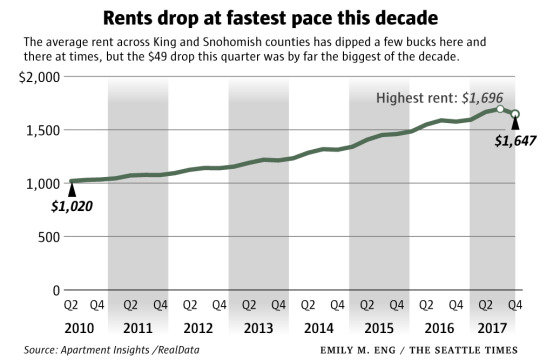
  • Why are apartment rents in Seattle dropping?

    This week I saw it reported that in this decade alone, the Seattle area is set to deliver more new rental apartments than it did in the prior 50 years combined. 

    And as a result, the sentiment is that new housing supply is finally starting to keep pace with demand and put downward pressure on rents. 

    Do you remember who was the crane capital of the US a year ago? They may still have that title.

    In some of the most desirable neighborhoods of Seattle – where much of the new supply is coming online – rents dropped 6% compared to the prior quarter. At the county level, this last quarter was by far the biggest drop of the decade according to the Seattle Times.

    Funny how that works.

    It’s also worth noting that the US as a whole is building far more rental apartments than condominiums. Here is a post I wrote in August 2015 which pegged condos as a percentage of overall multifamily construction at around 5.5%. That’s a tiny percentage.

  • Constructing the tallest building in San Francisco

    Alexis C. Madrigal recently published a piece about the Salesforce Tower in San Francisco called: The Tower at the Heart of the Tech Boom. At 61 floors and 1,070 feet, it is now the tallest building in San Francisco and the second tallest building west of the Mississippi River after the Wilshire Grand Center in Los Angeles.

    Hines and Boston Properties are the developers of the building. Pelli Clarke Pelli is the architect. And Salesforce is the anchor tenant. In April 2014, it was announced that they had leased 714,000 sf on floors 1, 3-30, and 61. (Get that top floor.) So almost half of the building.

    Perhaps not surprisingly, Madrigal calls the Salesforce Tower the “the most visible monument to the industry [tech] in the region and the country.” It is a demonstration of the power and reach of Silicon Valley. San Francisco has a new symbol. The TransAmerica Pyramid now feels inadequate.

    Though interesting, this is actually not what I want to talk about today. I’d like to talk about what it took to build such a tall building in a seismically active city like San Francisco. Unfortunately, this feels timely given that the sinking Millennium Tower is getting so much attention right now.

    The structural engineer for the Salesforce tower is Seattle-based Magnusson Klemencic Associates (MKA). They are a world-renowned structural and civil engineering firm that have been around since the 1920s. Other projects they are currently working on include the third tallest building in Chicago.

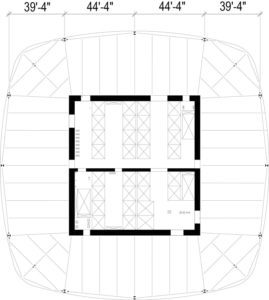
    The tower’s seismic force-resisting system is made up of reinforced concrete shear walls that surround the central elevator and exit stair core. These walls are 24 to 48 inches thick. Here is a plan taken from a STRUCTURE Magazine post written by Ron Klemencic of MKA:

    image

    The tower’s foundations have been well documented, or at least frequently mentioned, because of how deep they had to go down. The site has poor soil conditions (fill, sand, San Francisco “old bay clay”, and weak bedrock), and so given the weight of the tower the only option was to go down to bedrock – approximately 250 feet below grade.

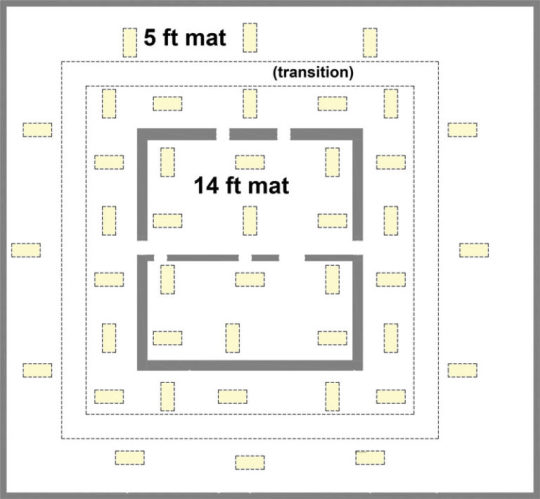
    The foundation system they ended up going with uses something called Load-Bearing Elements (LBEs). The typical LBE measures 5′ x 10.5′. The entire foundation system uses 42 LBEs and a mat foundation that varies in thickness from 14′ around the core to 5′ around the perimeter. (See image below.) The LBEs were brought down to rock. And in some cases, they went down more than 310 feet below grade.

    image

    As a condition of buying the site, the Transbay Joint Powers Authority required proof that any future tall building would not negatively impact the surrounding structures – including the adjacent Transbay Transit Center – and that it would perform under a Maximum Considered Earthquake (MCE) event.

    So while the tower itself may be a symbol for the new world, its structural system also achieves many firsts in terms of how to build a supertall in a seismically active region.

    Please keep in mind that I am not a structural engineer. I just pretend to be an architect sometimes. If you’re interested in more of the details, check out the post by Ron Klemencic. All of the above information was taken from there.

  • Amazon orange

    This week (Thursday) was the deadline to submit proposals for Amazon HQ2. About 100 cities across North America are thought to have a bid in. 

    New York lit up every single landmark in the city with “Amazon orange” in an “embarrassing attempt” to try and win this thing. That’s how bad cities want this.

    I already think that Toronto has won an incredible prize with Sidewalk Toronto. Arguably, it may turn out to be more impactful to this city than Amazon HQ2. It’s an opportunity to define the future of, not just this city, but all cities. It’s an opportunity to lead.

    At the same time, I continue to believe that there’s no better place for Amazon HQ2 than here in Toronto. Not surprisingly, our bid emphasized the point that I’ve been hammering home on this blog since Amazon first announced the RFP. Toronto’s key competitive advantage: talent. 

    Below is an excerpt from the submission cover letter. The entire letter emphasizes our ability to grow, attract, and retain top talent.

    Thirty-nine percent of the Toronto Region—and 51% of Toronto proper—are born outside of Canada. We welcome more new immigrants each year than New York, LA, and Chicago combined. We speak over 180 languages and dialects. Toronto is heralded as the most multicultural city in the world, and our labour force and economy benefit directly from our diversity and inclusivity. We build doors, not walls. And those doors open to highly-skilled economic immigrants and international students who can easily become permanent residents and citizens.

    For the full Toronto region submission, click here

    Okay, enough about Sidewalk Labs and Amazon. Regular scheduled programming will resume on the blog starting tomorrow.

  • Supply-side toolkit for greater housing affordability

    image

    McKinsey Global Institute just published a “supply-side toolkit” for cities struggling with housing affordability. This seems to be every successful city.

    The article includes a long list of potential tools. Some of them you may agree with. And others you may disagree with. But I am sure that many of them will be familiar to you. One of the tools in the toolkit is accessory dwelling units.

    Of course, the overarching theme is that housing supply has not and is not keeping pace with housing demand:

    California, for instance, added 544,000 households but only 467,000 net housing units from 2009 to 2014. Its cumulative housing shortfall has expanded to two million units.

    Another one of the tools in the toolkit is “overcoming NIMBYism.” Here is an excerpt:

    People who come to a city to work need to be able to find an affordable place to live there. But the voices of existing homeowners who want to preserve the status quo often drown out those of newcomers, young adults, low-income service workers, and renters who need more housing. After a 2009 audit found that neighborhood councils were not representative of the city’s broader population, Seattle replaced these bodies with a central Community Involvement Commission that includes mayoral and council appointees chosen to represent a broader set of stakeholders.

    I am intrigued by Seattle’s move to create a central body and a new approach to public engagement – one that moves away from local district-councils. However, it appears that this Community Involvement Commission is still very much in its infancy.

    If any of you are familiar with the Seattle market, I would be curious to hear your thoughts on it in the comment section below. I am, however, going to spend some time reading up on it.

    For the full toolkit, click here.

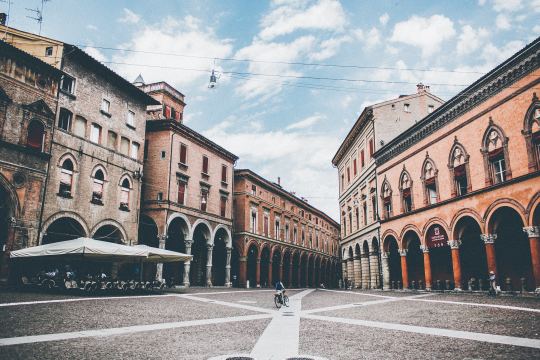
    Photo by Sarah Brink on Unsplash

  • Sidewalk Labs, Amazon HQ2, and the Milanese Leonardo

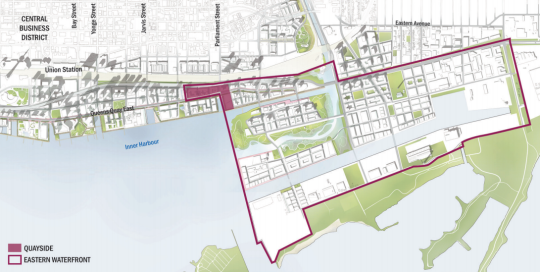
    Earlier this week the WSJ announced that Sidewalk Labs (Alphabet Inc.’s urban innovation organization) is close to a deal with Waterfront Toronto to develop a new 12-acre section of the eastern waterfront. Sidewalk Labs would be their innovation and funding partner. It’s not final yet and it’s still subject to board approval, but the sentiment is that it should go.

    There aren’t a lot of details about the project – other than the fact that it will be fairly big, up to 3 million square feet – but the overall intent is digital city building. It’s about imagining what a city could be if you built it today “from the internet up.” More info about Sidewalk Labs, here.

    I thought of this project as I read Seth Godin’s daily blog post this morning in bed. Here are two snippets from that post:

    When a new technology arrives, it’s often the nerds and the neophiliacs who embrace it. People who see themselves as busy and important often dismiss the new medium or tool as a bit of a gimmick and then “go back to work.”

    There’s never a guarantee that the next technology is going to be the one that moves to the center of the conversation. But it’s certain that a new technology will. It always has.

    Openness matters.

    I’m anxious to learn more details about the project, but this is obviously very exciting. It also creates momentum and strengthens the case for Amazon HQ2 in Toronto. The above 12-acre Quayside area is only the tip of the iceberg. There’s the rest of the eastern waterfront and also East Harbour.
    image

    Some people have been critical of this city’s push for Amazon HQ2. Anthony Lacavera, chairman of Globalive Capital, called this “the biggest Trojan Horse of all time.” His view is that Amazon would simply use HQ2 Toronto as a mechanism for cheaper labor (USD > CAD) and to siphon the best and brightest down to the US.

    Now, I agree that it would be more impactful to create the next Amazon then to simply lure in its second headquarters. Big entrepreneurial successes are what fuel the darwinian evolution of startup hubs. The founders, early employees and investors make boatloads of money and then they start reinvesting that back into the ecosystem by, among other things, backing the next generation of entrepreneurs.

    But does this necessarily mean that an Amazon HQ2 would be detrimental to Toronto by acting as a conduit to the US? Will it discourage entrepreneurship? Should we eschew all US firms out of fear that this may in fact happen? I don’t think so.

    There’s tremendous value in concentrating smart people in one place – ideas build on ideas. And I don’t think technology has been able to disrupt that, at least not yet. One example of this is a theory that Paul Graham calls the Milanese Leonardo:

    You can see how powerful cities are from something I wrote about earlier: the case of the Milanese Leonardo. Practically every fifteenth century Italian painter you’ve heard of was from Florence, even though Milan was just as big. People in Florence weren’t genetically different, so you have to assume there was someone born in Milan with as much natural ability as Leonardo. What happened to him?

    And his reasoning is as follows:

    Nothing is more powerful than a community of talented people working on related problems. Genes count for little by comparison: being a genetic Leonardo was not enough to compensate for having been born near Milan instead of Florence. Today we move around more, but great work still comes disproportionately from a few hotspots: the Bauhaus, the Manhattan Project, the New Yorker, Lockheed’s Skunk Works, Xerox Parc.

    Xerox Parc (Palo Alto Research Company) is a great example of the kind of positive externalities that can happen as a result of smart people being in close proximity to each other while they wrestle with similar problems. It has been well documented that it was Steve Jobs’ visit to Xerox Parc that inspired many of Apple’s early innovations.

    So my view: let’s increase Toronto’s urban metabolism and make it the Florence of 1450.

    Ed Clark – who is leading the charge for HQ2 in Toronto – has been clear that large taxpayer subsidies are not on the table for Amazon. That would not be fair to the existing companies in this city. If that is what it is going to take, then we are not going to win. We will win based on our city, our human capital, and our openness to the rest of the world. That feels right.

    Welcome Sidewalk Labs. Welcome Amazon. This city is open for business and to new ideas. 

    Image: Waterfront Toronto

  • Is Trump good for Canada?

    Richard Florida and Joshua Gans just published an article in Politico called: Trump Is Making Canada Great Again. The overarching argument is that as the US closes its borders, Canada benefits. The best and brightest from around the world are coming here.

    This fall, international student applications at the University of Toronto were up 70% compared to last year. And numerous companies in Toronto are reporting “steady, double-digit increases” in the number of job applications from Americans.

    This is exactly what I was getting at when I made the pithy prediction that Amazon is going to choose Toronto for HQ2. It’s about access to human capital (though I acknowledge the political reality of selecting a city outside of the US). 

    Perhaps here or here might work for a location.

    Here is an excerpt from the Politico article that starts to speak to the importance of foreign-born workers in the US:

    As of 2013, foreign-born workers in STEM fields—science, technology engineering and math—accounted for nearly a fifth of workers with bachelor’s degrees in the United States, 40 percent of those with master’s degrees and more than half of those with Ph.D.s. In the San Jose metro area, consisting largely of Silicon Valley, immigrants comprise more than 55 percent of adults who hold advanced degrees.

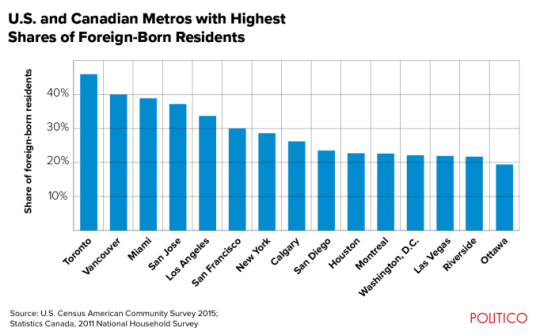
    Here is a chart showing the US and Canadian metros with the highest percentage of foreign-born residents:

    image

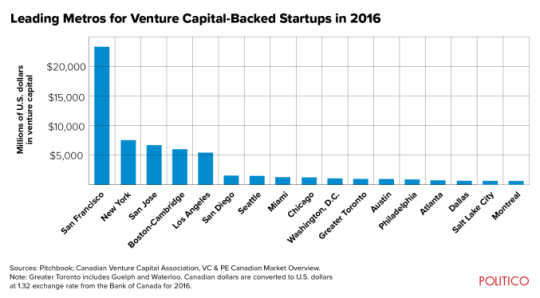
    And here is a chart showing which metro areas receive the most venture capital dollars (in millions of US dollars):

    image

    As to be expected, Toronto, Vancouver and Miami lead in terms of the percentage of foreign-born residents. Though, I would bet that Toronto’s foreign-born population is far more diverse than those of Vancouver and Miami.

    However, when you look at venture capital dollars invested, Toronto is nowhere near the top. Vancouver isn’t even on the list. And I suspect that some of you are surprised to see Miami sitting in between Chicago and Seattle (arguably a city that overperforms in tech relative to VC dollars invested). I was.

    Perhaps Trump will help with this by making Canada great again.

  • The public life data protocol

    The Gehl Institute has just launched (in beta) something called the Public Life Data Protocol. It was developed by the Institute, as well as by Gehl (the practice), the Municipality of Copenhagen, the City of San Francisco, and Seattle’s Department of Transportation.

    The goal of the protocol is to improve the way in which we collect, share, and compare public space information. It is about improving public life in public spaces.

    To do this, they have proposed a series of metrics that measure everything from “posture within the space” to “objects brought into the space.” They also propose spatial metrics that help to analyze public life in relation to its physical context.

    Gehl is a real leader in this space. I commend them on opening up their methodology and working to create “a common language for people data.” Great data will only help us to build more human-centered cities.

    To download a full PDF of the protocol, click here

    Photo by Thaddaeus Lim on Unsplash

  • Airbnb-ing your way to homeownership

    I just discovered an interesting new Seattle-based startup called Loftium

    The way it works is that they provide down payment assistance (up to $50,000) to prospective homeowners as long as they commit to renting out one of the home’s bedrooms on Airbnb for 12 to 36 months. Loftium is positioning it as a way to help first time buyers get onto the property ladder.

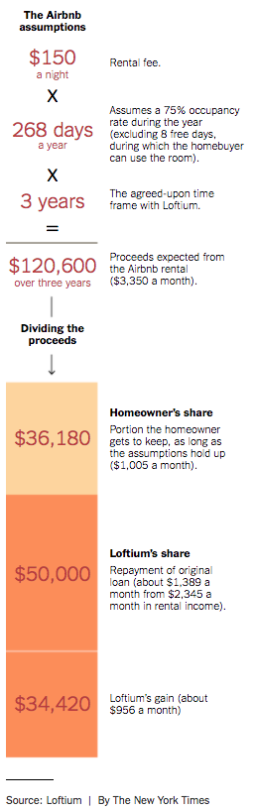
    Here’s an example of how the math might work (taken from the New York Times):

    The details certainly matter a great deal here but, high level, the homeowner gets $50k upfront, ~$1k per month in shared Airbnb revenue, and the opportunity to buy a home. You just have to be committed to being a host.

    And from Loftium’s perspective, they put out $50k at the outset and get back just over $28k a year for 3 years. Assuming these assumptions are correct, that’s a pretty good IRR. 

    However, if the home doesn’t generate enough Airbnb income during the agreed upon term, Loftium is on the hook because the homeowner doesn’t owe anything after the “services contract” expires.

    Think this will fly? Would you use it?

  • My prediction for Amazon HQ2

    “Now the trick is that we gotta look like we don’t need this shit and they give us the shit for free.“ –Mike Peters

    This is a line from one of my favorite movies, Swingers. Short video clip here. Mikey and Trent are in a Las Vegas casino trying to play it cool. They’re looking to make a scene at a table and Mikey throws out this gem of a line. He knows that people want what they can’t have and that confidence matters.

    I was reminded of this line today after Amazon announced its HQ2 Request for Proposal (full RFP document here) and every city, from Chicago and Toronto to Philadelphia and Dallas, started swooning over the prospect of housing Amazon’s second headquarters in North America. 

    But to be clear, I do not think this is a bad idea. I actually think Amazon HQ2 is an incredible city building opportunity that would generate countless positive externalities for the selected city. I’m thrilled that Mayor John Tory will be personally “leading the charge” with respect to Toronto’s response.

    Over $5 billion in construction and as many as 50,000 employees making on average over $100,000 per year. Amazon is looking for about 500,000 sf of space in phase 1 (2019) and up to 8,000,000 sf in total. Based on the RFP, they seem to be pegging their capital investment at somewhere around $600 per square foot.

    If I’m being as objective as possible, I honestly believe that Toronto is the city to beat in his competition. I think it will come down to access to talent. Human capital is the lifeblood of a company and Trump’s immigration policies simply put U.S. cities at a disadvantage in this regard.

    Of course, Toronto is also awesome. So that’s my prediction: Amazon HQ2, Toronto.

  • Two-hour grocery delivery

    Today it was announced that Amazon is planning to launch its “Prime Now” service in Vancouver and Toronto this November and January, respectively. 

    The pilot program will offer two-hour deliveries for members and, according to the Wall Street Journal, will be be heavily focused on groceries. 

    It’s worth noting that most of Whole Foods’ stores in Canada (now owned by Amazon) are in and around Vancouver and Toronto. And that Amazon has already started lowering prices to make those stores more competitive.

    Right now a “Prime” membership in Canada costs CAD$79 per year. I’m not sure if the price will change at all for “Prime Now”, but let’s assume for the sake of argument that it won’t. 

    If this service was available to you today (or if you’re in a city that currently has it), would you (do you) use it? I would love to hear your thoughts in the comment section below.

    Two common objections around online grocery shopping are that many people want to touch and feel the goods before they buy and that perishable deliveries are a challenging thing to coordinate.

    I think I can work around those objections and would certainly try this today if it was available in Toronto. What about you?