Daily insights for city builders, delivered every morning at 6 AM ET. I’m Brandon Donnelly — a Toronto-based real estate developer and founder of Globizen. I’ve been writing here since 2013.

Tag: florida

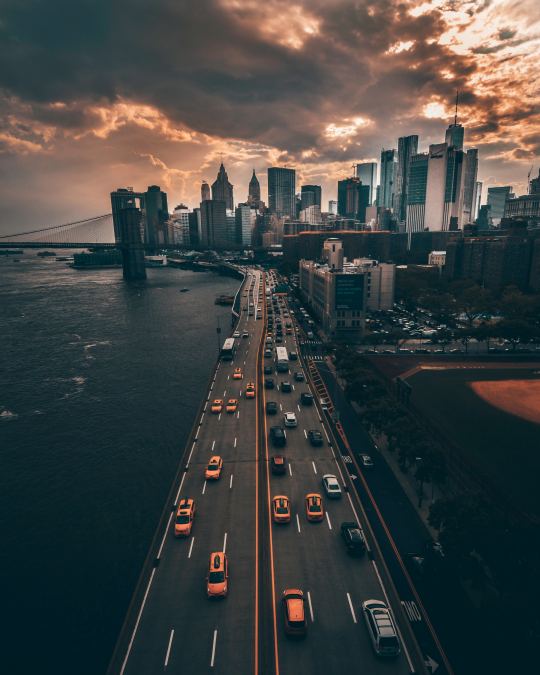
  • New York City isn’t dead

    I was speaking to some friends in New York City over the weekend and they said to me, “you know what Brandon, we don’t really go out at night anymore. It doesn’t feel safe. There are homeless people everywhere and they’ve started to get very aggressive, particularly against Asians.”

    They live in a good neighborhood in Manhattan.

    I was somewhat surprised to hear this, but at the same time, I don’t think for one minute think that New York City is dead. But some do, including James Altucher. James moved to Florida because of the pandemic and recently penned an article in the NY Post called, “New York City is dead forever.”

    That didn’t sit well with Jerry Seinfeld and so this morning he published a rebuttal op-ed piece in the New York Times. It has been making the rounds online today with people responding from both sides of the fence. Richard Florida responded with this tweet thread.

    If you’re a regular reader of this blog, you’ll know where I sit on this topic. I love technology, but sitting at home all day going from Zoom meeting to Zoom meeting is not the kind of life I aspire to live. I agree with Jerry. There’s no energy. In fact, it sucks the energy right out of me.

    With that, I’ll leave you with some more words from Jerry Seinfeld:

    There’s some other stupid thing in the article about “bandwidth” and how New York is over because everybody will “remote everything.” Guess what: Everyone hates to do this. Everyone. Hates.

    You know why? There’s no energy.

    Energy, attitude and personality cannot be “remoted” through even the best fiber optic lines. That’s the whole reason many of us moved to New York in the first place.

    You ever wonder why Silicon Valley even exists? I have always wondered, why do these people all live and work in that location? They have all this insane technology; why don’t they all just spread out wherever they want to be and connect with their devices? Because it doesn’t work, that’s why.

    Real, live, inspiring human energy exists when we coagulate together in crazy places like New York City. Feeling sorry for yourself because you can’t go to the theater for a while is not the essential element of character that made New York the brilliant diamond of activity it will one day be again.

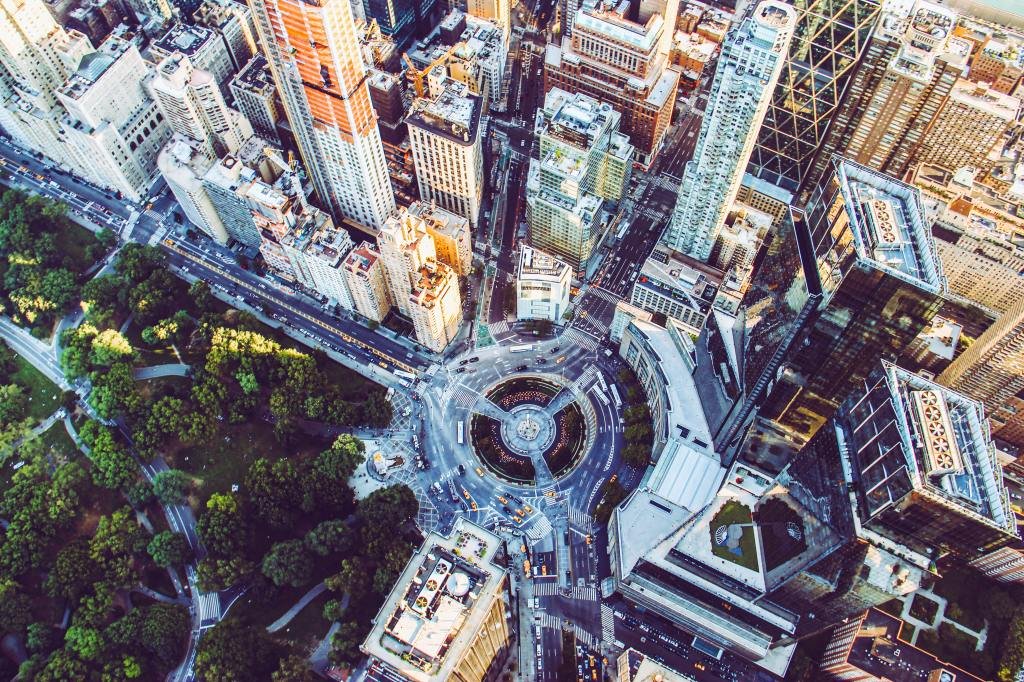
    Photo by Florian Wehde on Unsplash
  • Was NYC’s urban density really the problem?

    I posted this chart on Twitter last night. It’s from the WSJ showing new weekly confirmed COVID-19 cases in Florida, New York, and the U.S. as a whole. Now, the first thing I will say is that I relinquished my hopes of becoming an amateur epidemiologist back in April. I have no idea how this is all going to play out. But as an urbanist, it is interesting to note that back in April, many believed that New York City’s urban density was a real problem and the almost singular cause of its high number of cases (despite many other big and dense cities around the world doing much better). There was also a belief (or hope) that warmer temperatures might have a positive impact on transmission rates. That’s maybe why Florida was doing relatively better. But things have flipped. Cases in Florida are up and California just surpassed NY for the US state with the most number of cases. So who knows what will happen next. But what I do know is that wearing a mask isn’t a big deal (I have mine with me all the time) and that big urban centers will be just fine. City Observatory recently published apartment search data suggesting that dense cities have actually been getting more, rather than less, attention in the wake of COVID. That doesn’t surprise me.

  • New Yorkers are actually pretty healthy

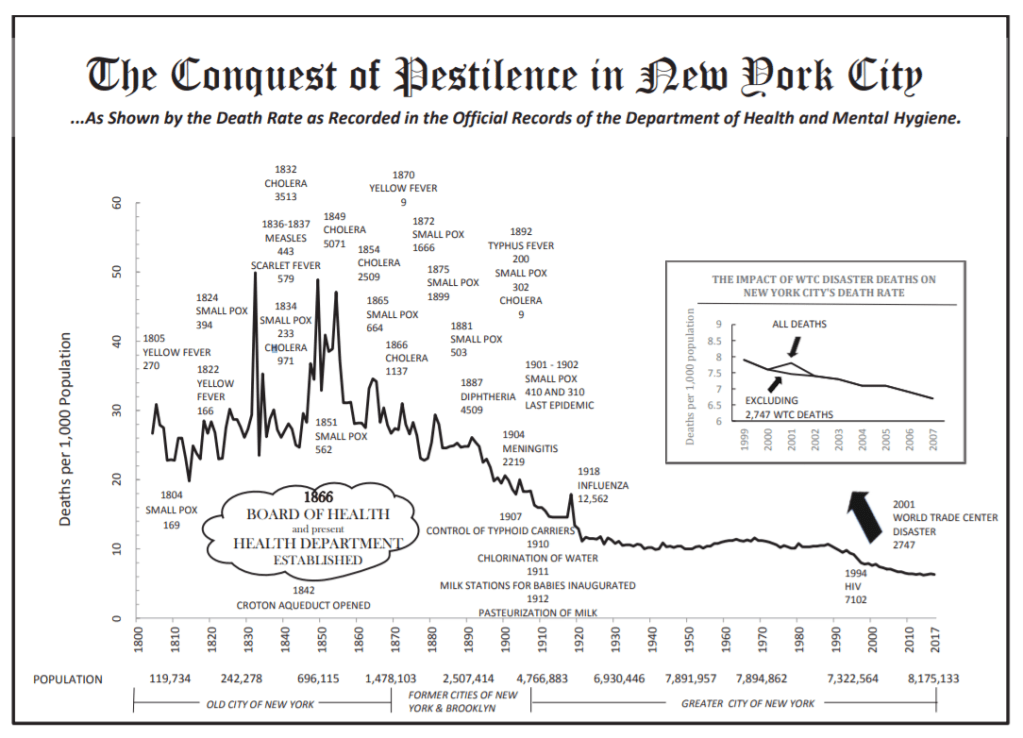
    Nicole Gelinas’ recent piece in CityLab is a good reminder that — despite all of the debates around COVID-19 and urban density — New York City is actually a really healthy place to live. Part of this obviously has to do with the city’s investments in public health. But the biggest factor, Nicole argues, is the city’s transit network. Six million people move around New York City each day without a car. That translates into a meaningfully lower traffic fatality rate. New York State’s rate is about 4.8 per 100,000, whereas Florida’s is 14.7 deaths per 100,000. Taking transit (and having an urban morphology that supports taking transit) also brings along with it other benefits, such as increased walking. And I have to believe that is an important factor. The obesity rate in New York City is thought to be about 22%, compared to a shocking 42% for the country. All of this rolls up into a life expectancy of about 81.2 years for New Yorkers, as of 2017. This is compared to 78.6 years for the US as a whole.

    For more on the health of New Yorkers, check out this 2017 Summary of Vital Statistics. (It’s the source of the above chart.)

  • The Florida homestead exemption

    I was at a family dinner over the weekend and the topic of the Florida homestead exemption came up. The Florida Constitution bestows a number of advantages upon homeowners (provided the home is that person’s primary residence). And like all rules, it impacts behaviors.

    For one, your primary residence is largely protected from creditors, meaning a sale generally can’t be forced in order to pay back what you might owe. If you’re out there in the world “betting the farm,” this might be a way to protect yourself.

    There are also a number of property tax benefits. You can reduce your assessed value by certain specified amounts, and any increases are (I think) capped at the lesser of 3% or the rate of inflation. (Related post: California’s Proposition 13.)

    As we’ve talked about before on the blog, this second exemption likely creates a disincentive for longtime homeowners to sell/move, as even a lateral move would result in possibly much higher taxes. So why move unless you really have to?

    The counter argument is that it helps fixed income retirees not get squeezed by rising taxes (and that’s an important consideration in Florida). But it also means that first-time/younger buyers end up shouldering more of the property tax burden — at least initially.

    If any of you have strong opinions about the Florida homestead exemption, I would be interested in hearing from you in the comment section below. I am not a lawyer or a tax expert. So please don’t consider this post as any sort of advice.

  • Who is going to buy the homes vacated by Baby Boomers?

    The Wall Street Journal estimates that, from now until about 2037, roughly 21 million homes in the United States will be vacated by seniors. To put this number into perspective, it’s about 25% of the US for-sale housing stock and more than double the amount of new homes that were sold during the 1998 to 2008 housing boom. That number was about 10 million (see below).

    This is part of the normal cycle of housing, but in this particular instance, there’s concern that the new generation won’t be there to backfill these homes, or least not in the same way. For one, there are more boomers than there are Gen Xers. So right away there’s a potential gap. But on top of this, the next in line don’t appear to necessarily have the same preferences in housing type and location.

    As someone who would fall into the 65.9 million birth bucket highlighted in deep mustard (had I been born in the US), I can tell you that I am far less interested in many of the housing products (real estate speak) / typologies (architect speak) popularized by the generation ahead of me. Whether my opinion is representative is, of course, debatable.

    Anecdotally, I can also say that I know many boomers who have started making real estate decisions based on the assumption that demand for certain types of housing will be tepid going forward. This is not to say that some of these communities won’t be able to reposition themselves if it comes to that. But there is uncertainty.

    Images: WSJ

  • A small site solution: Inverse Density

    My recent post about minimum project sizes triggered some great follow-up discussions over email. Today, I learned about a Master Plan that was recently completed for Little Havana, Miami by the urban design and planning firm Plusurbia.

    In it, they try to address some of the problems that I described in my post through something they call “Inverse Density.” Given the tendencies toward larger projects, they are proposing to incentivize the development of smaller and underused lots with more density.

    The idea being that if you can encourage more smaller scale development, you can actually help to protect the character of a place. In 2017, the National Trust for Historic Preservation declared the neighborhood a national treasure.

    Here’s a screenshot from the plan:

    What you are seeing here is existing vs. proposed policies. The proposed scenarios both result in higher densities, even though the lots are smaller. Alongside this, they are proposing to get rid of parking minimums for lots less than 7,500 sf.

    It’s an intriguing idea and I’m glad they shared it with me. If you’d like to download a copy of the full Little Havana Master Plan, click here.

  • Driving distance between two adjacent homes

    I came across this tweet by Sean Galbraith last night. You will probably need to click through to see the full extent of the photos. It is a series of images showing two back-to-back houses. The lands touch one another. But if you were to drive from one house to the other, it would take you about 18 minutes because of the area’s road network. Approximately 7.1 miles.

    This, of course, is far from urban. It would take over two hours to walk this same distance (assuming an average walking speed of 1 mile every 18 minutes). If you’re an urbanist, this is surely galling to you. But I think it’s also important to remember that this is, at least partially, a result of a consumer preference for dead end streets that limit through traffic.

  • Development is a local business

    This past weekend I toured my friend’s purpose-built rental project in Wynwood, called Midtown 29. It was completed last year and has already been stabilized.

    Real estate development is very much a local business. It is that way because so much of it is driven by relationships, but also because every market has its own little idiosyncrasies.

    This is always valuable to see. Sometimes we do things in our home market because it makes perfect sense to do so and sometimes we do it just because it’s, “the way we’ve always done it.”

    One of the most obvious things about development in South Florida is that the parking is always above-grade. No basements. That has the result of bringing down construction costs; though I understand that, with sea level rise, insurance costs are on the rise.

    If (or when) this whole autonomous vehicle thing does in fact take hold, it’s going to be a hell of lot easier to convert all of that excess parking in Miami than it will be in Toronto.

    Image: Midtown 29 (Art by Peter Gronquist)

  • Homes for as low as $1

    I was reading today about some houses in Boca Raton, Florida selling for as low as $1.

    The reason they’re selling for nothing, in some cases, is because you’re required to join the local golf/country club as part of the purchase. Initiation fees could be in the range of $70,000 and that doesn’t include whatever ongoing fees you would also be responsible for paying.

    What this demonstrates is that there isn’t enough demand from the next generation to sustain the pricing for this housing type. Part of this probably has to do with simply cohort size (the number of people retiring), but I suspect that there may have also been some changes in consumer preference.

    Some of it is probably golf related. Participation in the sport is relatively tepid among Millennials. And some of it may be related to the fact that these communities don’t have the kind of (urban?) amenities that the next generation is looking for.

    But if you derived enjoyment from the home during your retirement years, maybe it’s not the end of the world that there isn’t a strong resale market.

  • Street-level intelligence and analytics

    I discovered a company yesterday called CARMERA, which just raised a $20 million Series B funding round. They call themselves a “real-time, street-level intelligence platform” and their flagship product, called Autonomous Map, provides HD maps and real-time navigation data to autonomous vehicles. That’s the way AVs work. They need maps like CARMERA’s to function. Here is an overview of what is supposedly the largest AV taxi service in the world. It is a partnership between CARMERA and Voyage.

    One of the interesting things about this product is that it is cleverly powered through another one of their products: a free fleet monitoring tool for commercial operators. So fleet managers use this service to keep track of their actual human drivers and, at the same time, CARMERA uses the vehicles to collect the data it needs for its Autonomous Map. They call it “pro-sourcing” the data (a play on crowdsourcing).

    It is perhaps a good example of “single user utility.” The product you’re making often has to be valuable to a single user before scale is reached. In this case, Autonomous Map would be a hard sell without a critical mass of pro-sourced data. It solves the perennial chicken-and-egg problem when creating new marketplaces.

    Finally, I think many of you will be interested to know that CARMERA has also announced a partnership with the New York City Department of Transportation. As part of this, the company will be handing over the data they have on pedestrian density analytics and real-time construction detection events. Part of their mission is to “automate cities” and better street analytics will certainly help to open up a new world of city building possibilities.

    Photo by Yeshi Kangrang on Unsplash