Daily insights for city builders, delivered every morning at 6 AM ET. I’m Brandon Donnelly — a Toronto-based real estate developer and founder of Globizen. I’ve been writing here since 2013.
Bloomberg recently reported that Canada admitted 321,065 permanent residents last year. This is up 12% from 2017, where the country admitted 286,479. Last year was also the largest cohort since 1913 (the year before World War I), where the country admitted just over 400,000 people.
Here is a chart from Bloomberg (it is interactive if you click through):
Of course, Canada was a much smaller country back in 1913 (about 7.6 million people), and so on a percentage basis we are much lower than where we were at the beginning of the 20th century. We’d have to admit close to 2 million permanent residents a year to get to a similar rate.
I couldn’t find a geographic breakdown for last year, but in 2017, about 40% of admitted permanent residents (or 111,925 total) ended up in Ontario and about 72% ended up in Ontario, Quebec, and Alberta (the top 3 provinces for this year). If we add in BC, it brings this figure up to 86%.
Here are also the top 10 countries of origin:
If you’d like to download a PDF of the full report, you can do that here.
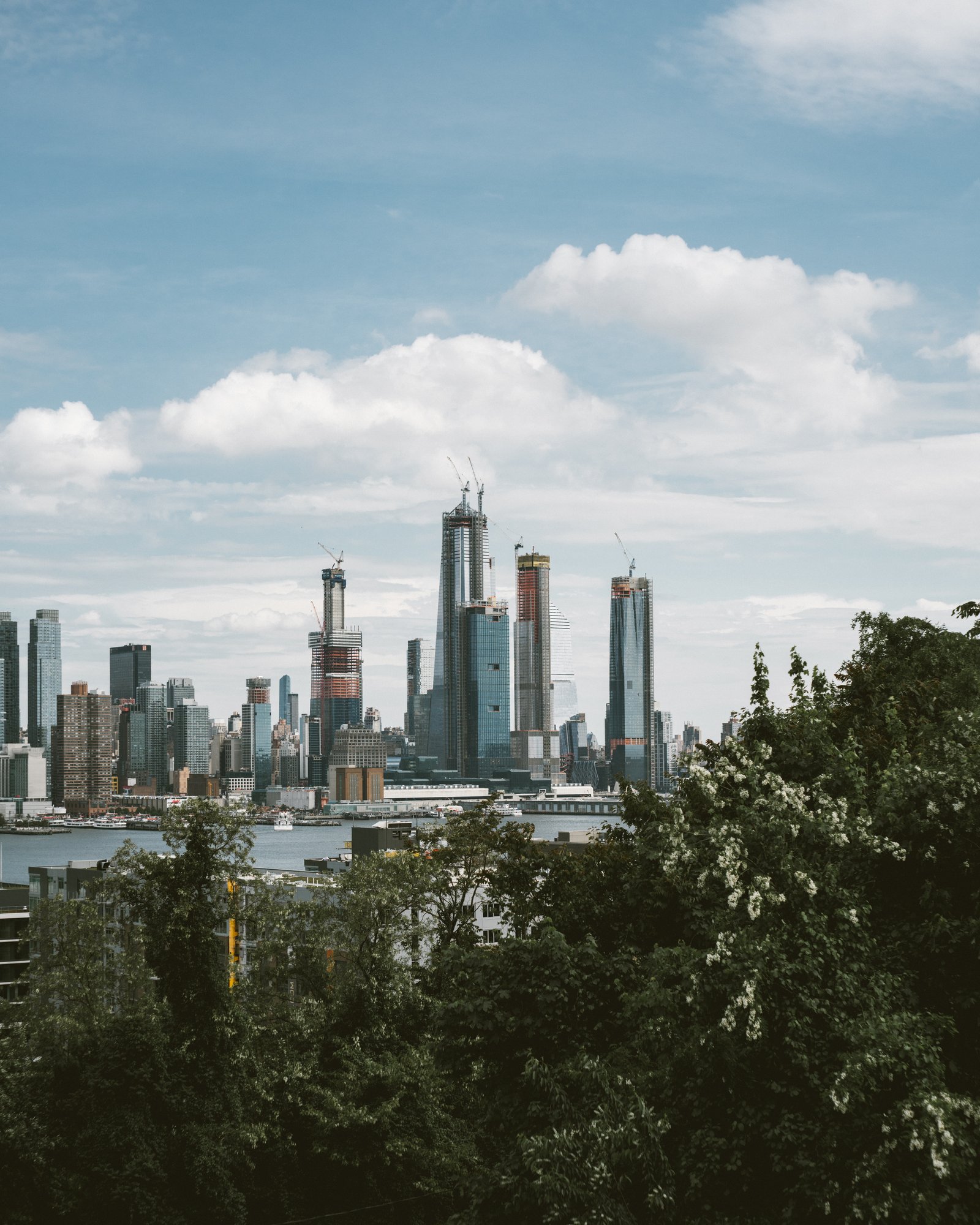
Hudson Yards officially opened today on the west side of Manhattan. More specifically, the eastern half of Hudson Yards opened. There’s a second phase to come on the western yards. And the highly anticipated observation deck at 30 Hudson Yards — the highest outdoor observation deck in the Western Hemisphere — is also not quite ready. It is expected to open in early 2020.
Considered the largest mixed-use private real estate project in American history by square footage, Hudson Yards has been in the works for many decades and was previously part of New York’s (failed) bid for the 2012 Olympic Games. Dan Doctoroff, who is now the CEO of Sidewalk Labs, led the bid under the Bloomberg administration.
So today is a bit of a big deal.
To commemorate the opening, the architecture critic for the New York Times, Michael Kimmelman, published this searing, but highly visual, piece about the project. I think it is fairly safe to assume that he isn’t a huge fan (he doesn’t seem to love developers either).
Purportedly inspired by ancient Indian stepwells (it’s about as much like them as Skull Mountain at Six Flags Great Adventure is like Chichen Itza) the object — I hesitate to call this a sculpture — is a 150-foot-high, $200 million, latticed, waste-basket-shaped stairway to nowhere, sheathed in a gaudy, copper-cladded steel.
It preens along the critical axis between the High Line and the newish No. 7 subway station at Hudson Yards, hoping to drum up Instagram views and foot traffic for the mall, casting egregious shadows over what passes for public open space, ruinously manspreading beside the Shed, the most novel work of architecture on site, and the only building the private developers didn’t build.
If any of you have formulated your own opinions about Hudson Yards, I would love to hear from you in the comments below. I’m looking forward to exploring the neighborhood in person sometime soon. If you’re interested in learning more about the project, Curbed also just published, The ultimate guide to Hudson Yards.
Last summer Bloomberg ran a visual essay on how America uses its land. In case some of you missed it, I thought I would share it here today.
They started by breaking the country down into 6 main land uses. Each square represents about 250,000 acres.
What likely won’t surprise any of you is that urban areas punch well above their weight:
Even though urban areas make up just 3.6 percent of the total size of the 48 contiguous states, four in five Americans live, work and play there. With so much of the U.S. population in urban areas, it’s little surprise that these areas contribute an outsize amount to the economy. The 10 most productive metropolitan areas alone contributed to about 40 percent of U.S. GDP in 2016.
Here’s a further breakdown of the map:
There is a lot that is interesting here. Note that golf courses made the cut.
Bloomberg recently published a good summary of Zillow’s business and their move into algorithm home buying and flipping. (They are trying to avoid the “flipping” moniker because of the negative connotations associated with it.)
Zillow started buying homes directly from owners last spring. They charge the seller between 6-9%, so more than using a typical agent, but inline with their competitors. There’s clearly a segment of the market willing to pay a premium for the added convenience.
The thinking used to be that discount brokerages were the way to disrupt the housing market. This is the opposite strategy.
Interestingly enough, Zillow felt that they needed to make this pivot with their business model. It used to be about selling ads. They were definitive in that they were not a disruptor of real estate agents.
But now:
If getting an offer from an iBuyer became a crucial step in the selling process, they worried, Zillow could lose its audience and its advertising base. What’s more, market researchers kept finding that consumers said they’d pay a modest premium to get a cash offer. “People expect to press a button and have magic happen,” says Rascoff, a 43-year-old former Expedia executive who’d earlier started the travel search engine Hotwire, which he sold to Expedia for $700 million. Getting into the business of buying homes directly, Rascoff says, was “the only way to remain in a leadership position.”
Here is a map of the companies in this particular space and the cities in which they operate:
Some investors aren’t sold on this strategy and have begun short selling Zillow (according to the Bloomberg article). I keep getting the sense that there’s a greater end game in the cards here. It is about building up A (algorithmic home buying and flipping) in order to unlock B.
But what’s B — a new end-to-end transactional model for the housing market?
According to Amazon’s recent annual 10-K filing, the company leased and owned (most of their space is leased) about 288,419,000 square feet of space around the world at the end of 2018. Of this number, about 80% is used for “fulfillment, data centers, and other.” Amazon doesn’t break out this line item any further, but GeekWire reckons that a good 3/4 of their real estate is dedicated to their fulfillment warehouses.
Here’s the full summary of their facilities (from the 10-K filing):
Given that fulfillment is such a large share of their properties, I am most interested in understanding the geography of their warehouses and how that impacts their core value proposition, which is largely all about convenience.
In the early days of online retail, the decision of where to warehouse had meaningful tax implications. Because (in most cases in the US?) you only had to collect sales tax if you had a physical presence in the same location as your purchasers.
As that changed, it then made more sense to create a broader distribution network and minimize the distance between fulfillment center and purchaser. By 2016, Bloomberg estimated that nearly 78 million Americans lived in a zip code where Amazon offered free same-dame delivery. That number has obviously increased since.
And in the paper “Economies of Density”, they discovered the following cost savings as a result of Amazon’s growing fulfillment network:
We find that Amazon saves between $0.17 and $0.47 for every 100-mile reduction in the distance of shipping goods worth $30. In the context of its distribution network expansion, this estimate implies that Amazon has reduced its total shipping cost by over 50% and increased its profit margin by between 5 and 14% since 2006. Separately, we demonstrate that prices on Amazon have fallen by approximately 40% over the same period, suggesting that a significant share of the cost savings have been passed on to consumers.
The interesting question for real estate people and city builders — which is brought up in the Knowledge@Wharton podcast but is difficult to answer — is whether there are diminishing returns to this “economies of density” phenomenon. In other words, how dense does Amazon’s fulfillment network want to be?
Bloomberg Businessweek just published a longish article about Vancouver and the Chinese capital that fuels it. It’s called, The City That Had Too Much Money.
Most of you are already familiar with this narrative, but here’s an excerpt that talks about the city’s economic base and its apparent dependency on foreign capital:
Change will be difficult and fraught. Vancouver has been closely connected to Asia since the late 19th century, when the first Chinese laborers arrived to help build the trans-Canada railway, and the city is proud of its record of integrating immigrants. Also, beyond real estate, Vancouver’s economic base is shallow. It’s not the business capital of western Canada—that’s Calgary—and it has few major corporate headquarters or large-scale manufacturing operations. “Asian capital has kept this economy alive, end of story,” says Ron Shon, a Chinese-Canadian venture capitalist who arrived as a teenager in the late 1960s. “You can see it in every aspect of our lives.”
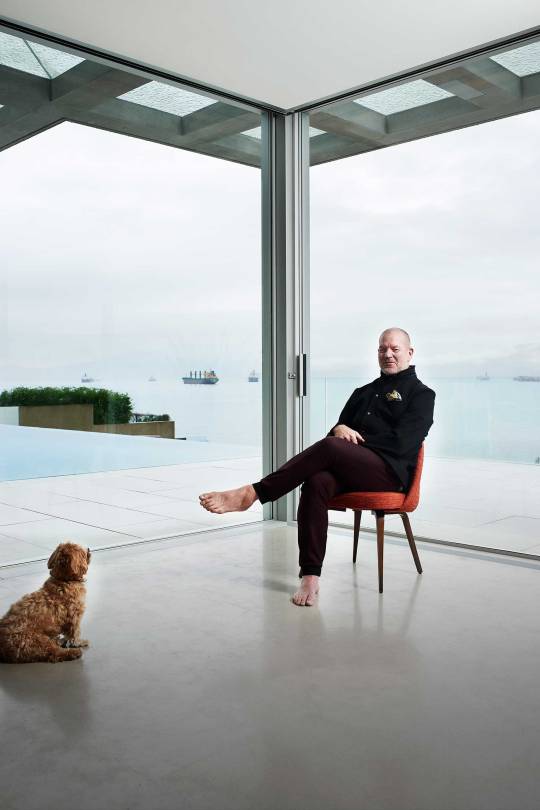
One of the things I found particularly interesting were Chip Wilson’s comments around what is going on. Chip is the founder of Lululemon and is largely credited with pioneering the current “athleisure” trend.
Yet as Wilson explains, sitting in his office on the top floor of a century-old warehouse, these days he’s as interested in bricks and mortar as in quick-drying fabrics. “The global capital flowing out of China across the world, you’d have to be an idiot not to acknowledge it,” he says. “You know, we could just be at the cusp of that.”
To profit from the deluge, he’s been buying up land all over town, especially in False Creek Flats, a derelict industrial area that’s slated for redevelopment. He estimates that about a third of his holdings are now in real estate. British Columbia’s current government may succeed in slowing inflows temporarily, Wilson says, but China’s boom has created many multimillionaires who need a place to put their money. “So where do you go if you’re Chinese? Sydney, maybe. But nowhere, probably, is more friendly than Vancouver.” One way or another, he says, those funds will find their way to Canada.
That’s why, Wilson says, whenever he returns from a trip to Asia, his first thought is simple: “Buy land, Chip. Buy land.”
Bloomberg is running a video series right now called Next Jobs. It is a look at the careers of the future. Episode four is about a vertical farmer named Katie Morich and a startup called Bowery Farming, which does this out of a nondescript building in New Jersey.
The video focuses more on Katie’s life and less on vertical farming. But it did introduce me to Bowery Farming, which I am intrigued by. So I thought I would share both the video and the company. It is a compelling pitch: local production; ideal conditions; no pesticides; and software that optimizes it all.
Bloomberg Businessweek just published this article summarizing the impact that Bird and its electric scooters are having on Los Angeles. Here are a couple of highlights:
– Bird launched a year ago and is, today, valued at around $2 billion.
– The company has around 15,000 scooters on the road in Los Angeles. We already know that this is making some/many people grouchy.
– The cost to rent a scooter is $1 plus $0.15 a minute.
– LA has an incentive program in place that allows Bird to expand its fleet within low-income areas. Still, their scooters tend to be concentrated in wealthier areas of the city.
– Beverly Hills is trying to figure out how to handle/regulate these scooters and currently has a 6 month ban in place.
– Supposedly, you can ride a Bird through West Hollywood but you’re not allowed to park it anywhere.
The company is based in Santa Monica, so it’s not surprising that they have such a stronghold in the LA market. Still, there appears to be a lot of latent demand for this kind of mobility.
According the US Department of Energy, almost 60% of vehicle trips in the US last year were less than 6 miles. And around 40% were less than 2 miles.
So these “last mile scooters” do appear to have a lot of utility. Do any of you regularly use an electric scooter to get around?
This morning I came across two news item that are interesting in their own right, but also have a noteworthy relationship.
$AAPL now has a market cap that exceeds $1 trillion. And not surprisingly, everyone, from the New York Times to Bloomberg (photo essay), is talking about it.
But the one thing that continues to stand out for me about this story is what Steve Jobs said back in 2011 when he unveiled iPad 2.
He said that fundamental to Apple’s DNA is its ability to marry technology with the liberal arts and the humanities. Its secret sauce is not technology alone.
Now let’s move on to the second piece of news that caught my attention.
As of 2017, less than 5% of college and university students in the US were studying one of the big four humanities majors – a sharp cliff-like drop from 2011 according to this data.
That’s almost certainly because business degrees and STEM degrees are thought to be more valuable and in demand in the labor market. And I’m sure they are right out of school.
But perhaps we shouldn’t forget Apple’s trillion dollar lesson. And I think this goes for both the tech space and the real estate industry, as well as others.