Daily insights for city builders, delivered every morning at 6 AM ET. I’m Brandon Donnelly — a Toronto-based real estate developer and founder of Globizen. I’ve been writing here since 2013.

  • Where do people buy vacation homes in the US?

    July 26, 2025 · View original
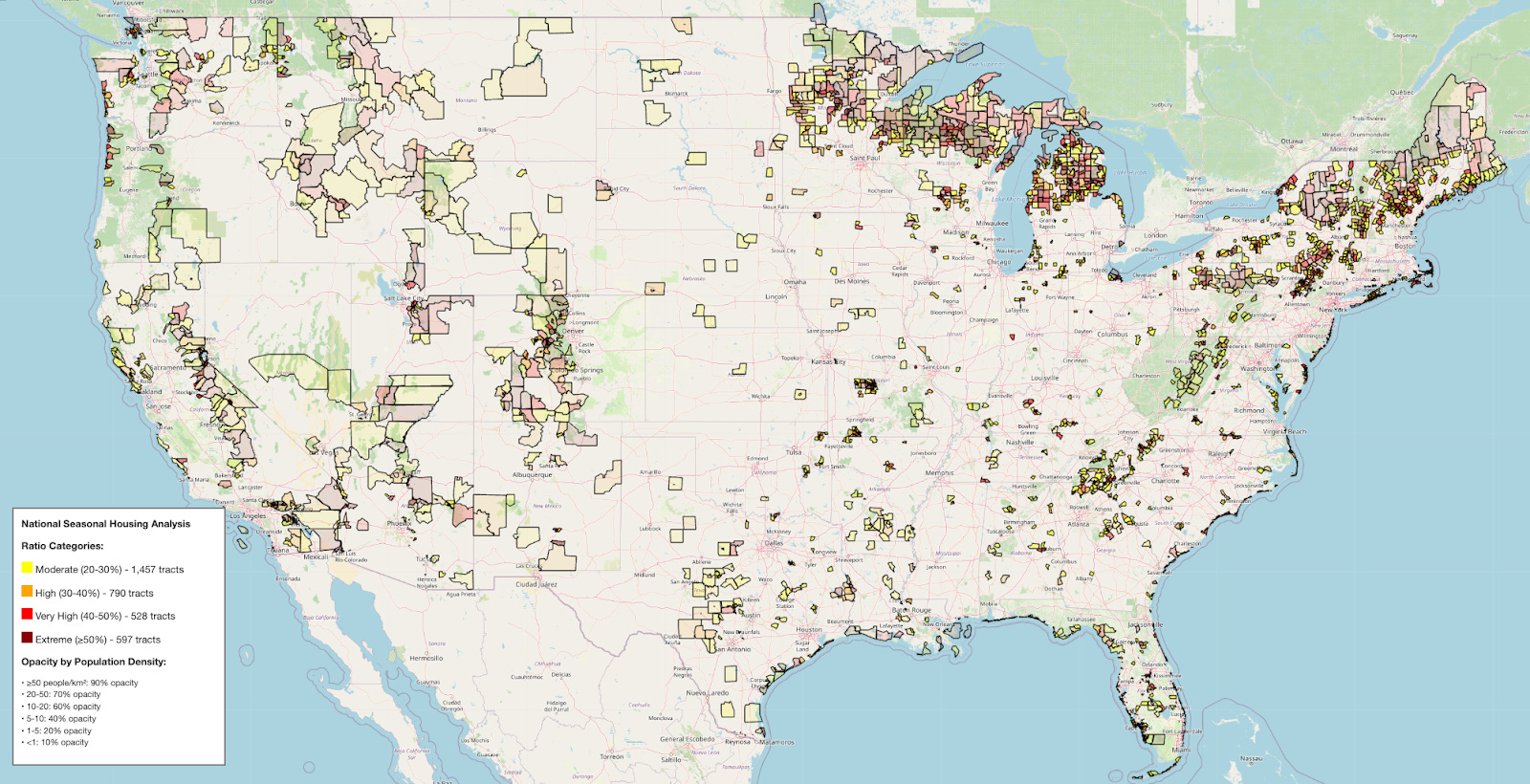

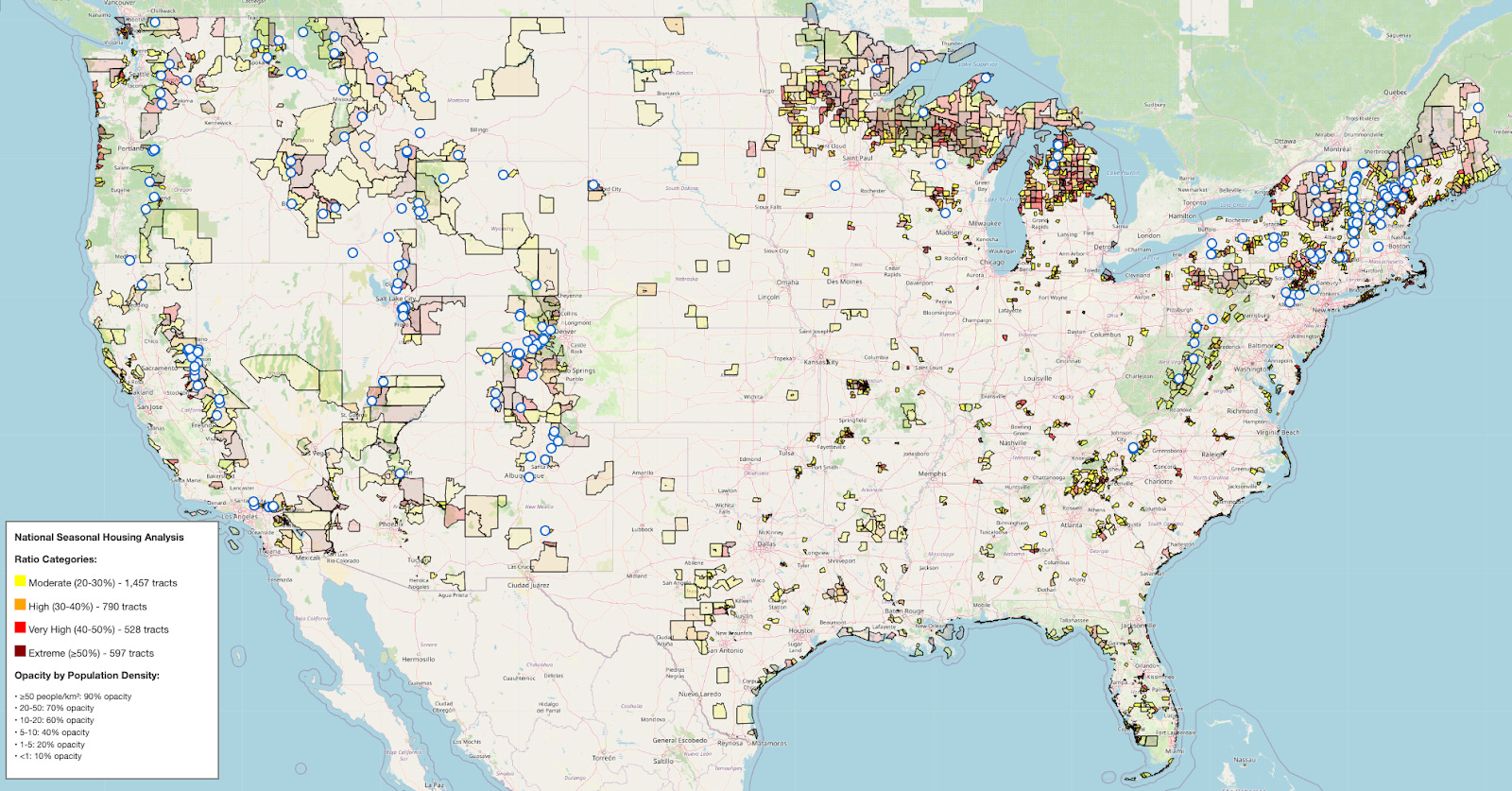
    Above is map from Brian Potter (over at Construction Physics) that shows every census tract in the US where vacation homes make up 20% or more of the total number of homes. What you are seeing is a relatively small number of census tracts — 3,372 out of a total of 84,414 (~4%).

    But more than half of all vacation homes are in one of these tracts. And nearly 20% of vacation homes are in a census tract where more than 50% of the homes are vacation homes. So in other words: vacation homes in the US tend to be highly concentrated.
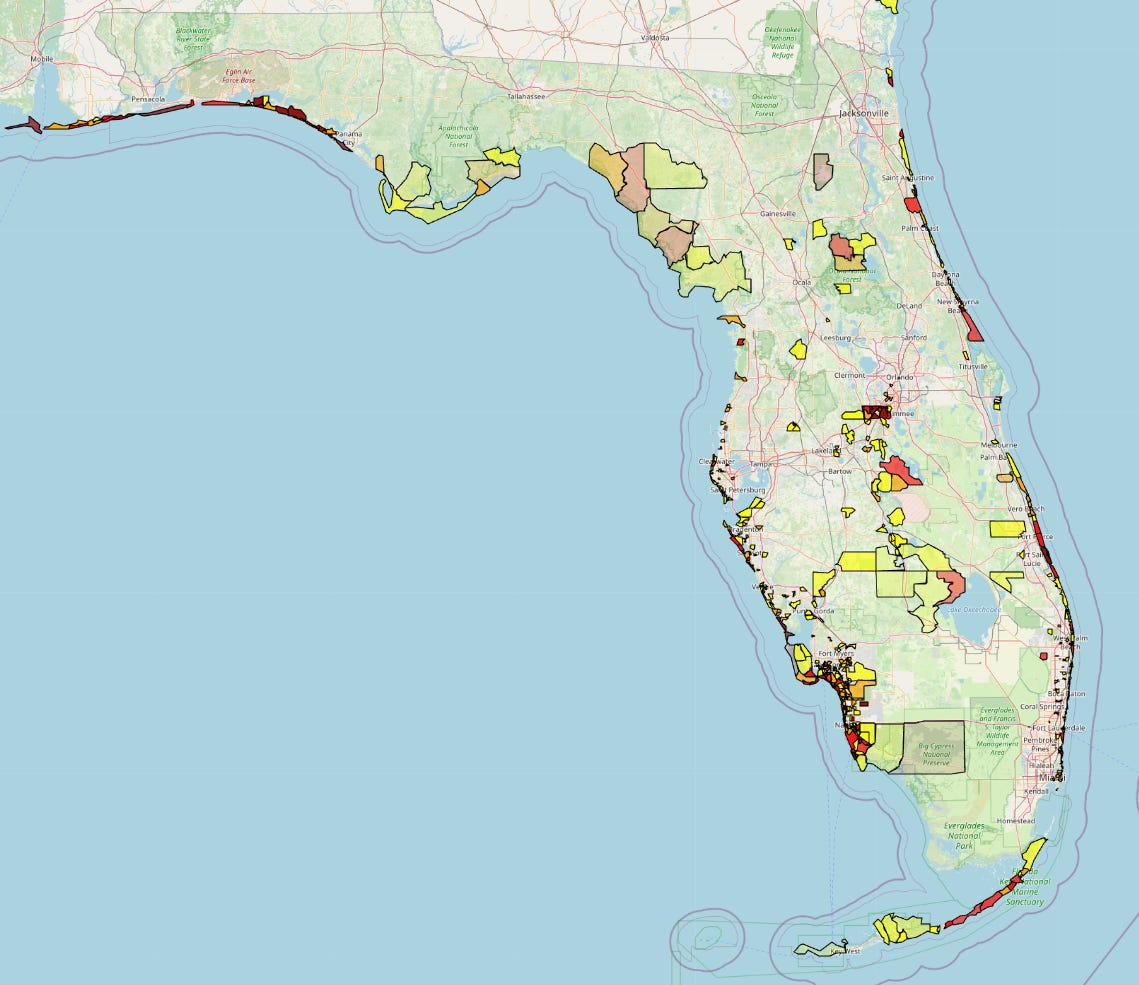
    According to Potter, there are, perhaps not surprisingly, three main drivers of demand: beaches, lakes, and ski resorts. This is why if you drill down into Florida — which has the highest absolute number of vacation homes in the US at over 800k — you’ll see that these homes are not evenly distributed across the state. They’re on the coasts, and to a lesser extent inland near places like Disney World.

    Also noteworthy is the fact that these census tracts tend to match up nicely with the location of ski resorts. Here’s the same map of the US but with ski resorts overlaid:
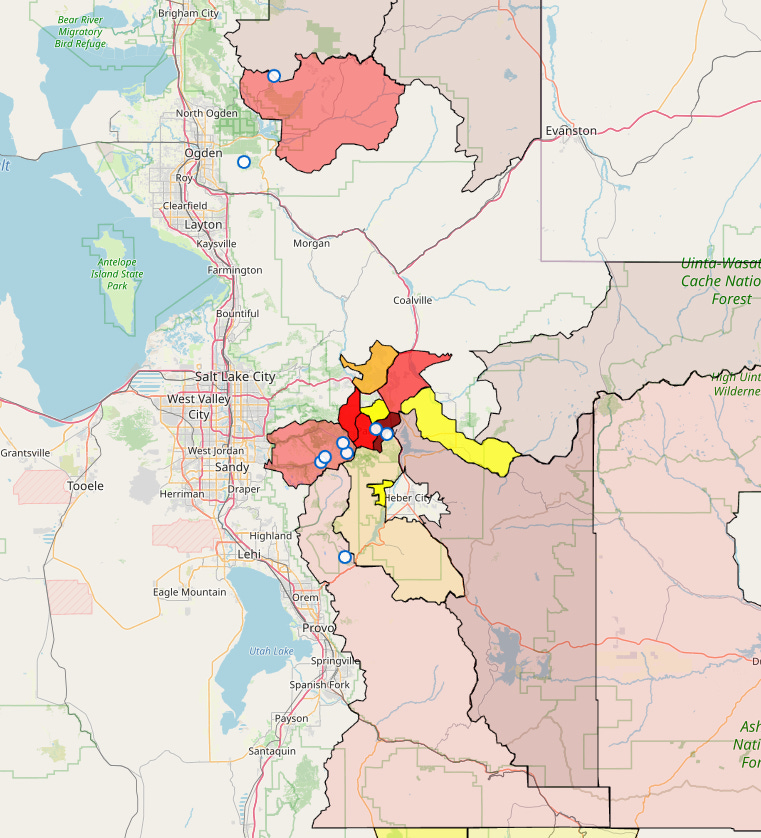
    And here’s a close up of Salt Lake City and Park City, because, I love Park City:
    As of Q1-2025, the US had over 147 million homes, and somewhere around 4.3 million of these were seasonal or vacation homes. If you’d like to better understand where these are and the trends surrounding them, I recommend you check out Potter’s post.

    Maps via Construction Physics; cover photo by Joe Ol on Unsplash
  • Garbage trucks take up too much space

    July 25, 2025 · View original


    Here in Toronto, we have something known as “Type G” loading spaces. They’re used for collecting garbage and they are generally required in multi-family buildings with 30 or more homes (though exceptions do exist). The problem with these spaces is that they’re highly consumptive. Below is an excerpt from a recent article in Azure by Kelly Alvarez Doran and Mitchell May:

    > In order to accommodate a truck’s large arms to swing a garbage bin up and over its frame, residential buildings require what’s known as a “Type G” loading space, which measures at least 13 metres long, four metres wide and 6.1 metres tall. While the area of the loading space alone is significant, the required turnaround space — allowing trucks to navigate in and out of the building — is often double or even triple its size. Current City of Toronto regulations require this loading space to be designed in order to allow a garbage truck to enter the site, collect the waste, and exit the site without the need to reverse onto a public road — resulting in T- or L-shaped paved areas to accommodate the turns of a wide wheel base. Due to the site constraints and density of these developments, Type G loading is often internalized within the building’s footprint. The outcome? A truck’s manoeuvring effectively consumes the ground floor at the expense of retail space and street-level activity.

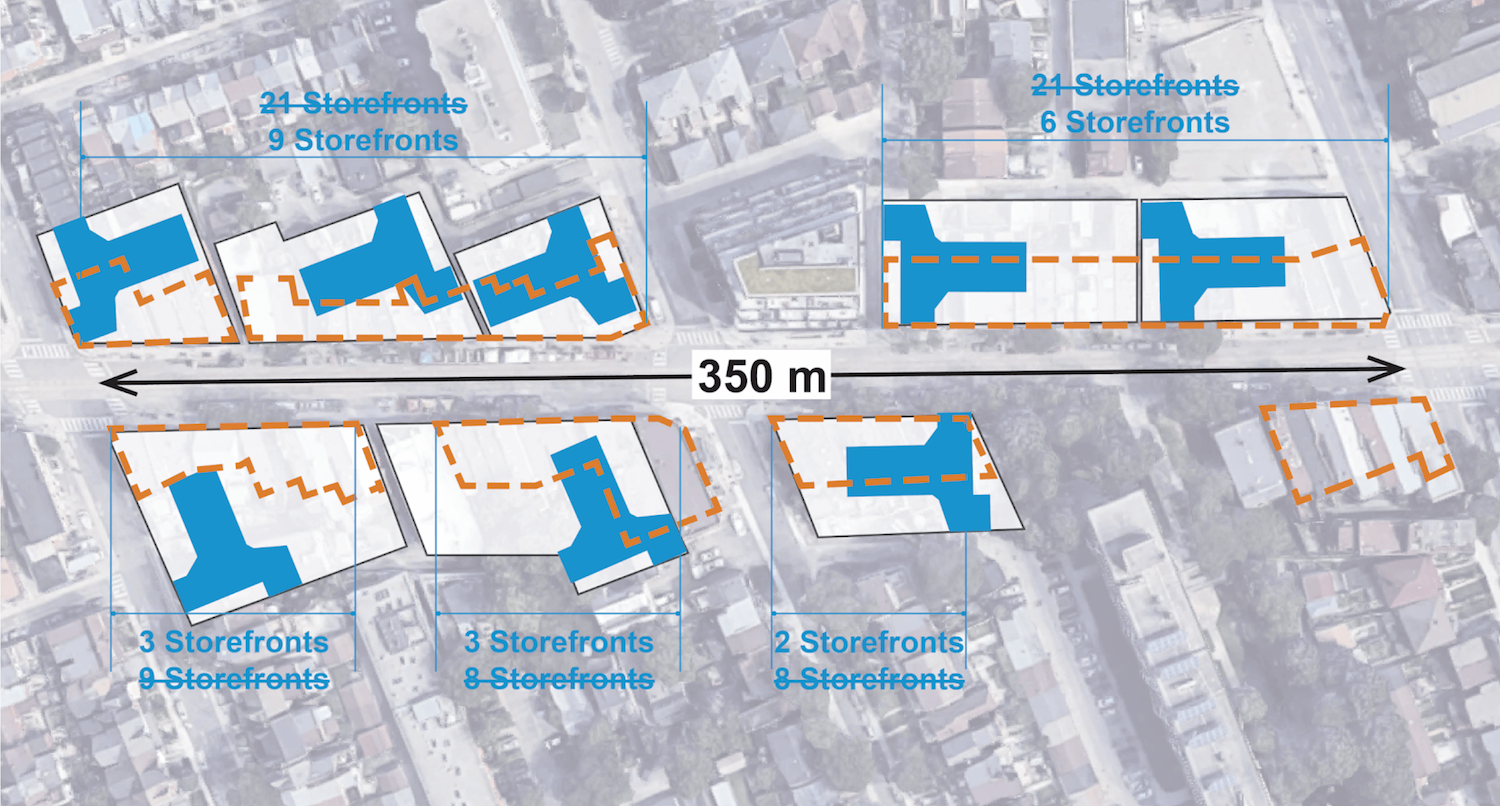
    They go on to analyze what would happen if you took a typical Toronto main street and then intensified it with buildings requiring Type-G loading. The result, for a particular stretch of Dundas Street between Dufferin and Brock, was that you’d end up losing somewhere around 44 storefronts just to accommodate all of this loading.

    Here’s their diagram showing the Type-G loading areas in blue:

    New developments are often criticized for how they perform at the ground floor. But a big part of this has to do with all of the back-of-house services and other requirements that they need to accommodate. Type-G loading is a big one and it’s simply not feasible on smaller projects. Projects between 31-60 homes can apply for an exception, but I think this flexibility should already be built in.

    Beyond increasing the unit trigger, what else could we do? Well, the obvious ones are (1) make the trucks smaller and more nimble and (2) centralize garbage collection. Our approach to garbage collection is decentralized. It is collected from every house and every building. But there is the option to cluster the pickups, which is what many European cities do.

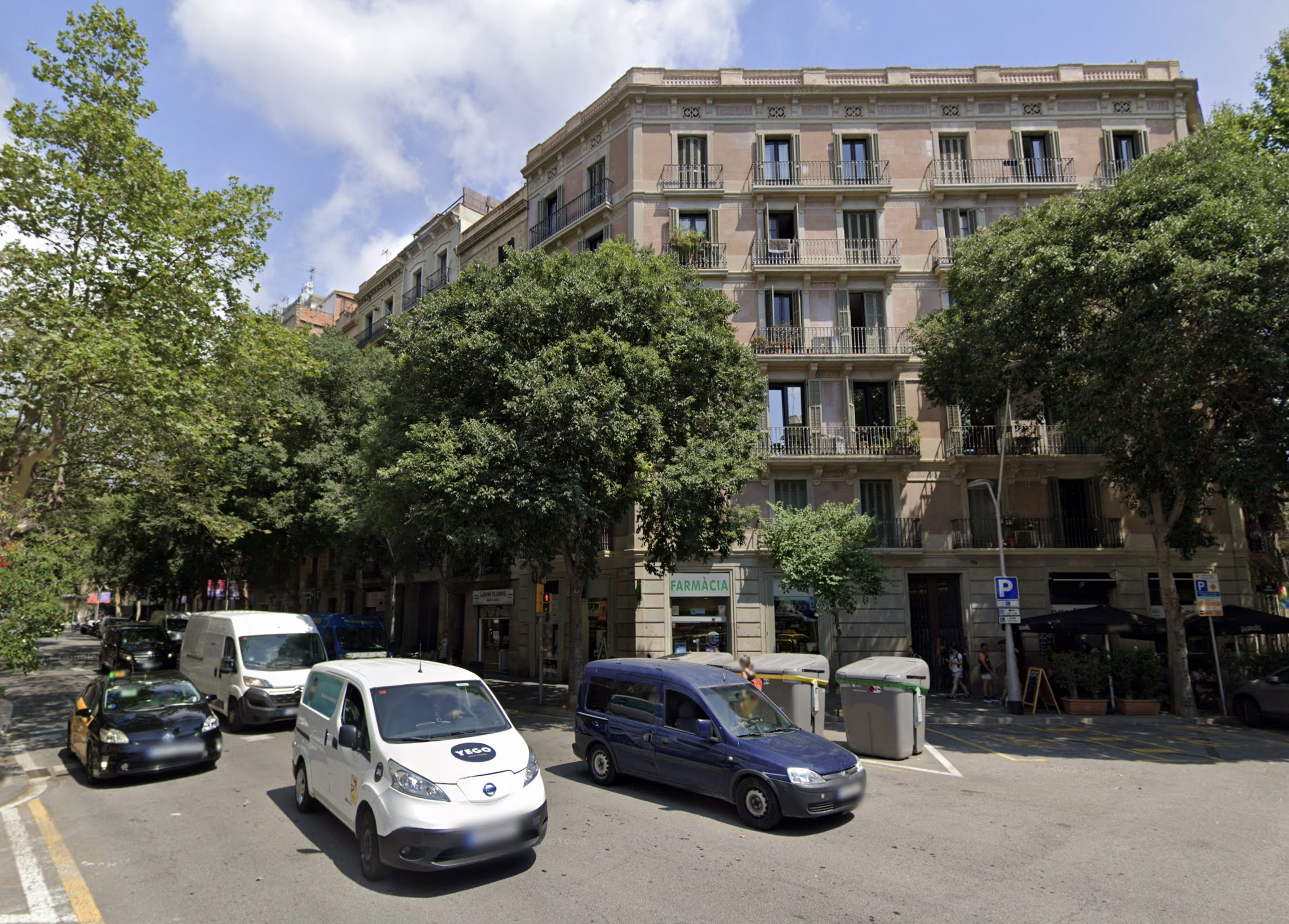
    Here’s Barcelona via Google Street View. Note the bins.

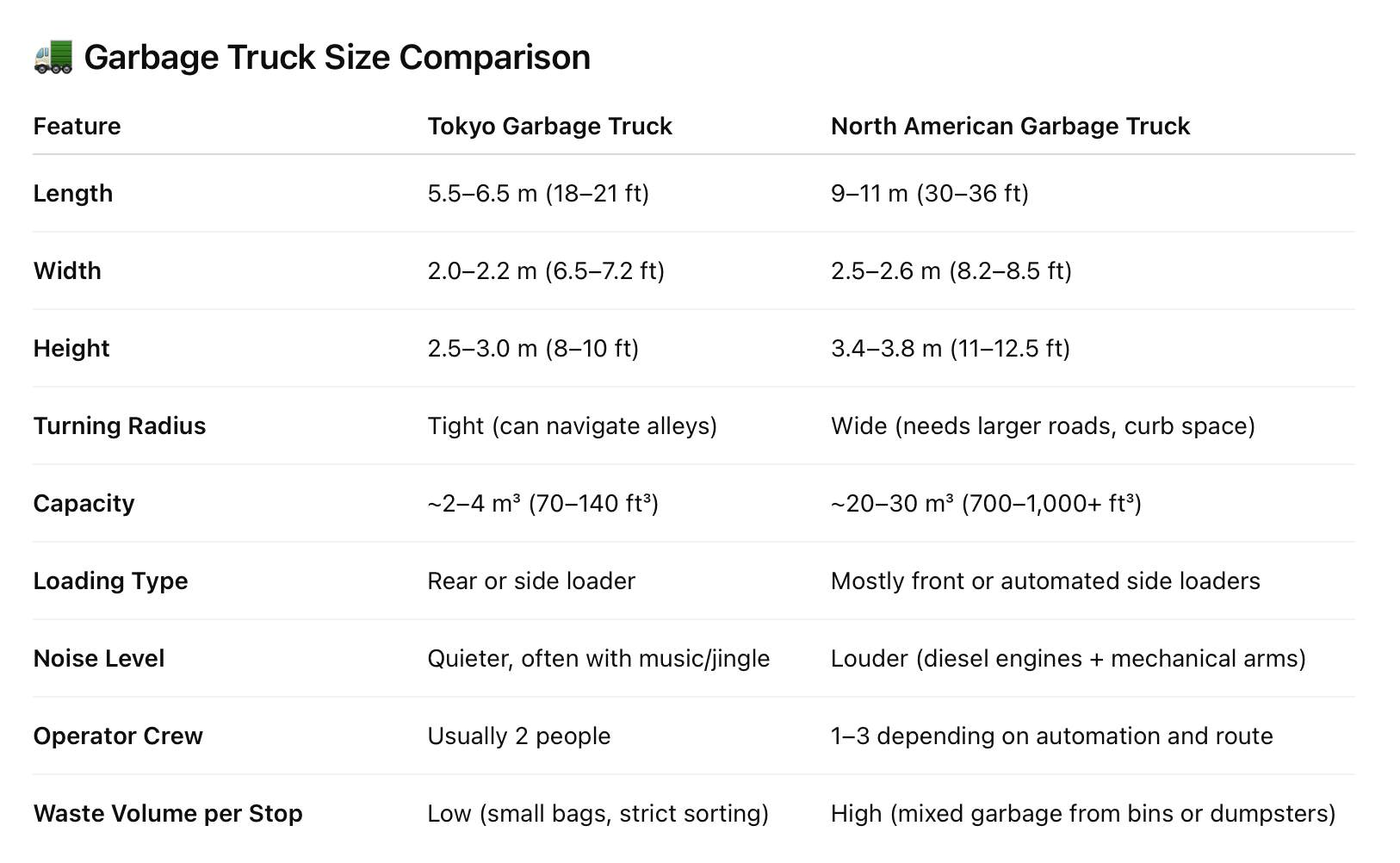
    Admittedly, this isn’t nearly as convenient as having a truck come right to your door or building, and it’s not the most attractive way to decorate a street. So I’m inclined to start with option one. And for that, there are cities like Tokyo we can look to. Tokyo is famous for its strict garbage collection rules and for its smaller, cuter trucks. Here’s a comparison to North American trucks via ChatGPT (meaning, I can’t be held liable for any inaccuracies in this chart):

    We aren’t quite Tokyo. Few cities are. But surely there are ways we can be just as functional and take up a lot less space. This would not only benefit our main streets, but also improve the overall viability of infill housing.

    Cover photo by Mak on Unsplash

  • No development charges and parkland dedication on sixplexes — hopefully

    July 24, 2025 · View original


    As you know, sixplexes are now permitted in certain parts of Toronto. We’ve spoken before about how it should be all of Toronto; but nevertheless, they are allowed in areas where they were not allowed before. That constitutes progress.

    But it gets much better: This week, Mayor Chow announced that she will be bringing forward a motion to Council to eliminate development charges and parkland dedication cash-in-lieu requirements for new developments of up to six residential homes. This is a big deal and something that is necessary if we want to spur more rental housing.

    To quote my friend Craig Race (of Craig Race Architecture), “this is the first thing [Olivia Chow has] done I’m happy about, and I hope to see more.” Mayor Chow was criticized for standing around while sixplexes were being debated, and so this is perhaps her now trying to step up. Whatever it is, home builders will take it.

    Globizen wasn’t looking at this scale before, but I’m now going to adapt one of our screening models to see if the math works. If it does, then expect the industry to mobilize around it.

  • Toronto’s “traffic czar” is doomed to fail

    July 23, 2025 · View original


    Okay, so the official title is Chief Congestion Officer.

    But whatever. What’s important is that the City of Toronto is apparently close to hiring a human that will become the so-called “congestion lead”. This will be, in their words, a senior strategic cross-divisional leadership role that reviews programs and projects, and then works to minimize traffic congestion (this is among other things).

    Translation: Construction is causing too much congestion so let’s make sure we’re better at managing what happens on Toronto’s streets. Fine. Nobody is going to argue against being too coordinated. But there are at least two problems with the overall framing of this position.

    Firstly, it is likely that this czar will go after things like construction lane closures. Maybe the city will make them harder to get and/or maybe they’ll increase the occupancy fees they charge. (Reminder: Developers pay cities lots of money to occupy public streets.)

    Regardless of what is done, it’s important to keep in mind that there’s a trade-off here. Any time you make construction more difficult, you add costs. And when construction costs are added, they have to go somewhere. Typically that means they get passed on to buyers and renters. So depending on how hard this czar goes after road closures, we could be indirectly increasing the cost of new housing.

    Pick your poison.

    But the even bigger problem with this new role is this: It presupposes that if only we did X, Y, and Z, we could solve traffic congestion. This is a fallacy. It’s not going to happen. Of course, I’m not saying that better coordination wouldn’t improve traffic flows; I’m saying that we’re ignoring the root problem.

    The Greater Toronto Area has a population of nearly 7 million people, and there’s simply no conceivable way we could all drive around everywhere and still have free-flowing traffic. It’s impossible — no matter how well we coordinate roadwork or how many people with whistles we plant at major intersections during rush hour.

    The only way to solve this problem is to embrace a multi-modal approach to urban mobility. And so rather than a “traffic czar” narrowly focused on car congestion, what we really need is a “mobility czar” focused more broadly on moving the most number of people as efficiently as possible — across all modes of transport.

    This is not the solution that many people want to hear — because it will mean a break from the status quo — but we already know that it works. Really well in fact.

    Cover photo by Cyan Chen on Unsplash

  • Riding out to the new Biidaasige Park

    July 22, 2025 · View original


    On Sunday evening, I rode out to the Port Lands area (of Toronto) to check out the new park that just (partially) opened up. Named Biidaasige Park (pronounced “bee-daw-si-geh”), it is the largest park to open in the city in many decades.

    The first phase is just over 50 acres, and an additional 10 acres is planned to open next year. It houses 5,000+ trees, 77,000+ shrubs, and over two-million herbaceous plants. In terms of spaces, there are picnic areas, a playground with ziplines, off-leash dog parks, trails, and a pebble landing where you can launch “non-motorized personal watercraft.” (Is it safe to swim?)

    I was impressed when I rode through it. It’s a huge quality of life upgrade for the city. But of course, what’s most impressive is that the island it sits on (Ookwemin Minising) is the result of a $1.4 billion investment in flood protection. One that now unlocks the Port Lands area for development. That’s up next.

    After my ride, I did the customary things. I made a protein shake (sidebar: I recently added creatine to the mix), shared my ride to Strava, and then tweeted out this video. The tweet got reshared a few times and so I received a bunch of replies. And whenever this happens, which isn’t often, I’m always a bit taken back by the type of comments. A lot of them are negative.

    In this case, people commented on the lack of trees (see number of trees planted above), said it would be filled with tents in a week, and even remarked that it would soon be overrun with Indian people. I won’t get into the specifics on this latter point, but there was more to it.

    Now, I know that this is what happens on the internet. And I don’t take any of it personally. I’ve also done my fair share of community meetings over the decades where I’ve had tomatoes thrown at me. But it always makes me think: Is this what is going on in people’s heads as they go about their day?

    To each their own, of course. But I am of the opinion that perspective matters. The world gives you what you give it. If you go about your day thinking negative thoughts, then eventually it will become a self-fulfilling prophecy. If, on the other hand, you show up with positivity, good things will happen to you.

    Here’s a silly example.

    On my ride over on Sunday, I ended up beside a guy who was similarly suited up on a road bike. He was giving off the “I’m a serious and intimidating cyclist” vibe. So naturally, I decided to strike up a conversation with him. We then ended up shooting the shit all the way over to the park. I got back exactly what I put in.

    All of this is not my area of expertise but I have been thinking recently about anonymity on the internet. I recognize that there are instances where this might be important; but broadly speaking, I don’t think it’s a good thing for our social fabric.

    When you say bad things in real life, there are repercussions. You are accountable for your words and actions. And as a result, people tend to behave a certain way. That is not the case when you troll behind an anonymous account on the internet.

  • Creative residencies at Parkview Mountain House, Park City

    July 21, 2025 · View original


    Parkview Mountain House has just launched a new creative residencies program intended to reinforce the house’s identity as a creative retreat. The way it works is very simple: If you’re an artist, designer, creative or a brand doing culture-shaping work, you can now apply for a free three-night stay at the house. In exchange for the stay, we ask that creative residents produce and share original content that reflects their experience in the mountains of Utah and at Parkview Mountain House. This could include photography, videos, written pieces, branded campaigns (such as a lookbook), and maybe even an artifact for the house. Long term, the idea is to assemble a kind of cultural archive with credit being given back to each individual creator and/or brand. We’re really excited to see what this residency program produces and we hope that the results will be design-focused, globally minded, and rooted in a deep love for the mountains.

    If you’d like to apply, or know of someone who would be a good fit, here’s the link.

  • An empire of one-bedroom apartments

    July 20, 2025 · View original


    Everybody wants a 3 bedroom condo or apartment until they see what they cost. We’ve spoken about this before. We know that the barrier is cost (i.e. affordability) and that many cities have more cost-effective alternatives. The result is that developers have a strong incentive to build smaller 1-bedroom apartments. And by strong incentive, I mean that it might be the only way to pencil a new project.

    I think some people believe that developers are only doing this to profit maximize and that they could build more family-sized apartments if only they really wanted to. But it’s not that simple. There needs to be a market for it at rental rates that can generate a positive margin for developers.

    > [Tweet: America’s cities are becoming empires of one-bedrooms

    This chart shows how apartment developers have changed the unit types built in Austin over past 25 years

    From 2000-2005, >50% units built were 2BRs From 2021-2025, <25% were 2BRs https://t.co/U0X3qElYDa](https://x.com/bobbyfijan/status/1946553358359130149)

    To show just how strong these market forces are, here’s a chart from Bobby Fijan showing how Austin has changed its unit mix over the past 25 years. From 2000 to 2005, more than 50% of new apartments were 2 beds. But from 2021 to 2025, this shared dropped to less than 25%, and studio and 1 beds now make up nearly 80% of the new multi-family market.

    This is the new construction market in the vast majority of North American cities today.

    Cover photo by Jeremy Doddridge on Unsplash

  • Southern Ontario has an immense supply gap when it comes to design-forward lifestyle hotels

    July 19, 2025 · View original


    If you would like to visit southern Ontario (specifically somewhere outside of Toronto) and stay in a cool design-forward lifestyle hotel, what are your options? The obvious ones are the Drake Devonshire, The Royal Hotel, and Wander the Resort in Prince Edward County (~2.5 hours east of Toronto).

    Looking north of Toronto, The Postmark Hotel in Newmarket is a nice boutique hotel. But I can’t think of any others and there aren’t any lifestyle hotels in Muskoka. That’s cottage country.

    Moving toward the west, Elora Mill is a popular hotel and destination (with very high ADRs), but I would not call it a design forward lifestyle hotel. It’s traditional luxury. So that’s roughly it. Your only other options are trendy motels, such as the Beach Motel in Southhampton.

    Now let’s look specifically at the Niagara Peninsula (where we have proposed a design-forward lifestyle hotel). The three most popular destinations are Niagara Falls, Niagara-on-the-Lake, and the Niagara Benchlands. And each year, this region receives over 13 million visitors, 30-40% of which are American.

    But again, I would argue that there are exactly this many design-forward lifestyle hotels on the Peninsula: 0. The market is dominated by Vintage Hotels, which is not this.

    But that’s set to change next year. The Clayfield, which is part of Hyatt’s Unbound Collection, is currently under construction across from Stratus Wines in Niagara-on-the-Lake. The design is by Sid Lee Architecture out of Montréal (which Globizen recently featured here) and, when it’s complete, it will be a cool lifestyle hotel and likely a great success. It will be the first hotel to serve this glaring hotel supply gap in the market.

    But this is only one hotel in what is Canada’s largest and most important wine region. It’s also a region with two Michelin-starred restaurants, countless recreational and cultural offerings, growing cycling tourism, and much more.

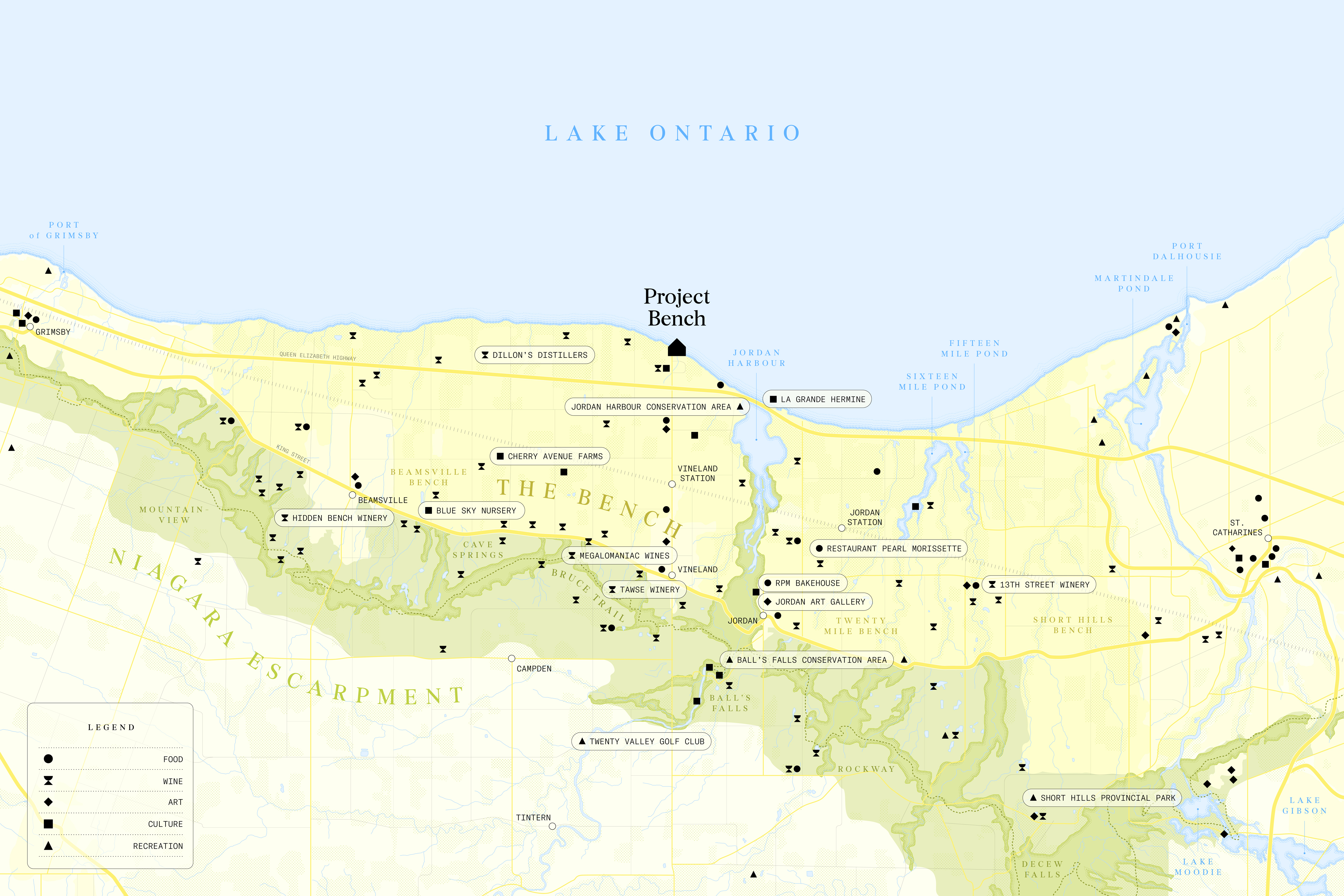
    We need more of this kind of offering, which is why we have also proposed a design-forward lifestyle hotel on the water in the Niagara Benchlands. Today, we refer to the larger mixed-use development as Project Bench.

    For those of you that are interested, the Bench is a separate wine appellation from NOTL. It has an elevated and sloped terrain and a longer growing season that is ideal for Pinot Noir, Chardonnay, and Riesling. But in the end, we view these two subregions as being entirely complimentary, akin to Sonoma and Napa in California (incidentally, they also share similar differences in terms of style, climate, geography, and terroir).

    A rising tide lifts all boats.

    And we are of the opinion that a lack of design-forward accommodations — with global appeal — is holding back the economic potential of this region. And so we’re working as hard as we can to correct that. If this opportunity is also exciting to you, please do get in touch. We’re always looking to collaborate.

    You can also check us out here for more about the project.

    Cover photo from Beaumier

  • How long will it take to absorb Toronto’s pipeline of new condominiums?

    July 18, 2025 · View original


    Urbanation just released its Q2-2025 condominium market survey results for the Greater Toronto & Hamilton Area. The results are as expected: new home sales are slow (like, 91% below the 10-year average) and unsold inventory is rising. But what I’m most interested in is trying to guess the future.

    Urbanation expects a total of 17,117 condominium homes to complete in the second half of this year, which would bring total completions for 2025 to 31,422 homes (which is an elevated number). Completions in 2026 are then expected to drop to a more “historically normal level” of 18,037 units.

    At the same time, there are 64,623 condominium homes under construction as of Q2-2025. I take this to mean that, once the above 17,117 homes complete in the second half of this year, there will be at least 47,506 new homes still under construction as we start 2026.

    If we do end up completing 18,037 units next year, and ignoring any new starts, that will leave just under 30k units under construction into 2027. If completions remain at a similar level after this, we could then be close to building our way through this condominium pipeline by the end of 2027.

    Of course, this says nothing about actual absorption. It’s one thing to build a new home, but it has to ultimately get filled. And right now, there are almost 2,500 unsold condominium apartments in newly completed projects across the region. This is a record high going back as far as 2005.

    So it’s hard to say. But my view continues to be that, by 2028, we should be on the other side of this market. In the meantime, if you’re looking for a place to live in Toronto, I think you’d be hard pressed to find a better time to buy. Most people will be too scared, and that’s the point.

    Cover photo by Venrick Azcueta on Unsplash

  • Development charge revenue is disappearing — does that matter? It shouldn’t.

    July 17, 2025 · View original


    According to recent data from Altus, Toronto recorded 42 new condominium sales in the month of May. That’s a 97% decrease since May 2021, for a city of over 3 million people (city proper, not the metro area). So for all intents and purposes, the market is shut off. And it has resulted in upwards of 12,000 construction sector jobs disappearing over the last 12 months in Ontario. Moreover, it has left the Toronto Area with an unemployment rate that is close to 10%.

    But that’s not all.

    The Missing Middle Initiative estimates that this dramatic decline in new home sales (which is more of a leading indicator than housing starts) could conservatively result in all three levels of government forgoing something like $6.6 billion in tax revenue each year. And within this lost revenue, there’s something like a $2 billion reduction in revenue just from development charges (which don’t get paid if developers aren’t starting construction).

    These are alarming figures that beg the question: How will government make up this shortfall? But once again, here’s the thing. If development charges are intended to be “growth paying growth” then, in theory at least, development charge revenue shouldn’t matter. The growth has disappeared and so the things that DCs pay for should also disappear — right?

    In practice, we know that it’s more nuanced than this and that growth pays for a lot of stuff. The clearest evidence of this is likely to rear its head when the DC funds run out. We’re going to be forced to plug the hole with something else. So over the long term, I actually think this will prove to be a positive outcome for the housing market. Because it’s going to necessarily wean us off the practice of overtaxing new homes.

    There’s no other choice right now.

    Cover photo by Dinil Fernando on Unsplash