Daily insights for city builders, delivered every morning at 6 AM ET. I’m Brandon Donnelly — a Toronto-based real estate developer and founder of Globizen. I’ve been writing here since 2013.

  • Traffic congestion isn’t going away

    October 24, 2025 · View original


    Reece Martin tells it like it is in his recent post called, “Toronto: Congestion Isn’t Going Away.”

    > If we want people to feel less congested, they are going to have to get out of cars — and sadly sometimes onto crowded transit, but at least on transit we have a fighting chance of building the capacity so that congestion isn’t totally unbearable. The differential between the demand to use roads and the actual road space is so large that no matter what we do in the foreseeable future, the roads will always be busy, and even if we made it so that the auto fleet in the region barely grew at all (not going to happen), congestion would still be getting worse.

    It’s a perfect follow-up to my recent post about trains. And it’s the reality we all need to accept if we are truly serious about managing congestion. It’s time for some tough love, and for solutions over politics.

  • The economics behind Toronto’s condominium freeze

    October 23, 2025 · View original


    > [Tweet: Home prices in Toronto are not higher than Winnipeg because of development fees.

    Development fees have ZERO impact on what a typical buyer is willing to spend on a home.

    They only impact the price a builder needs to sell at to make a profit.](https://x.com/JohnPasalis/status/1981021084792053986)

    Urbanation just released its Q3-2025 condominium market survey results for the Greater Toronto and Hamilton Area. Last quarter, a total of 319 new condominium apartments were sold across the entire region. This is the lowest quarterly total since Q3-1990 and is 92% below the latest 10-year average for Q3 periods. It also places us on track for the worst sales year in about three and a half decades. But this isn’t news to anyone in the industry. And I’ll remind you all that, in my view, now is the time for contrarianism, not conformity.

    Here’s something I found interesting in the data, though, and it ties into the above quote tweet. The average prices for unsold condominiums in Q3 were as follows:

    – $1,315 psf for unsold pre-construction suites (i.e. projects in the pre-sale period) – $1,199 psf for unsold developer-owned suites (i.e. remaining inventory in built projects) – $867 psf for resales in recently completed buildings

    Why do you think there’s this gradient? The answer is that these are condominiums of different vintages and, therefore, of different cost structures. Developers generally price projects on a cost-plus basis — meaning if development charges go up (see above tweet), then developers have no choice but to raise home prices to cover their costs. And if the market isn’t there at these new higher prices, well then too bad for developers. We don’t get to build. The floor is the floor.

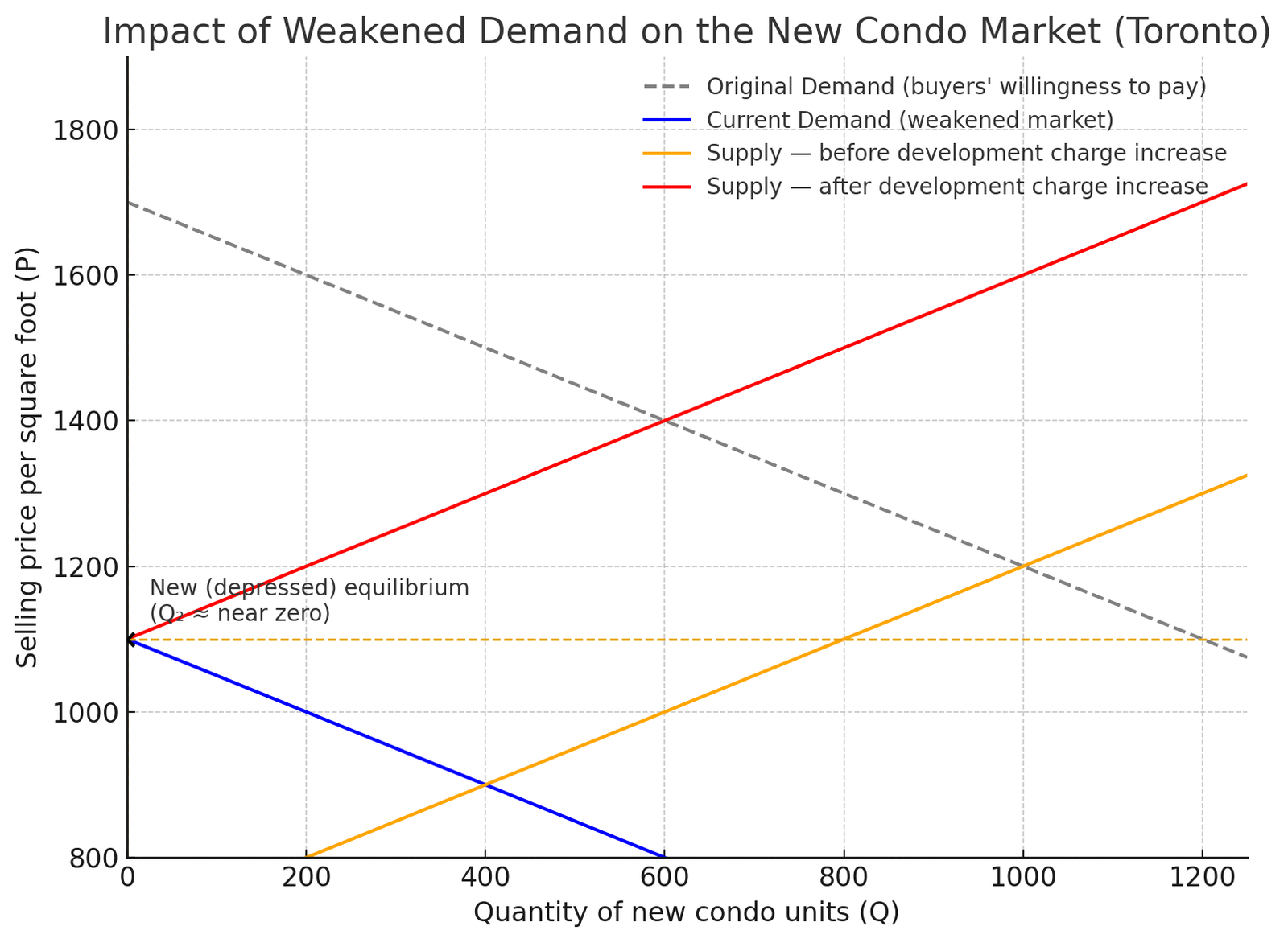
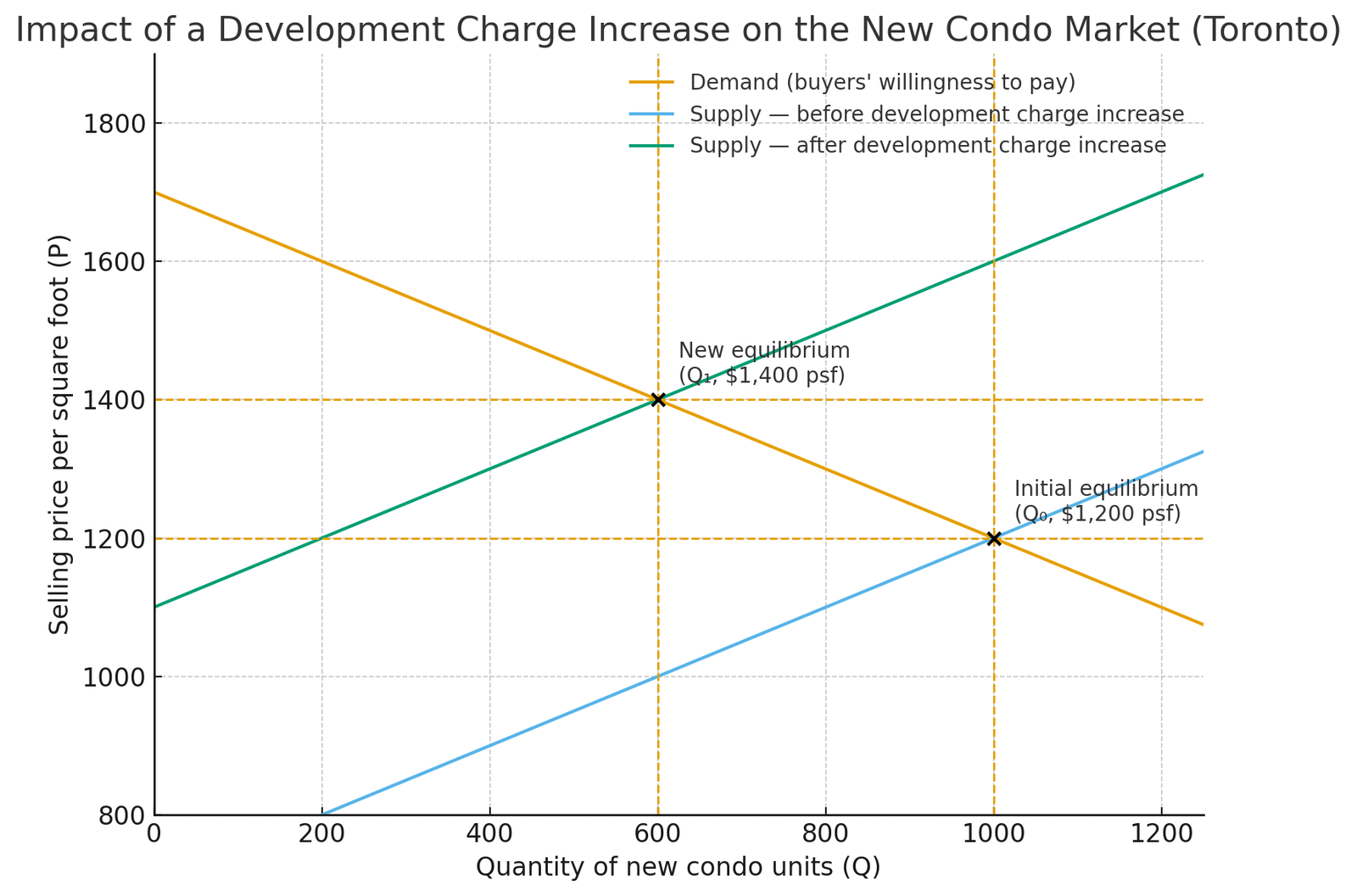
    In economic terms, what is happening right now is that the marginal cost of producing new condominium homes exceeds the marginal benefit to home buyers (i.e. costs are greater than what the market is willing to pay for new condominium homes). And for this to change, one or both of the following adjustments will need to occur. The cost of building will need to come down and/or the price buyers are willing to pay for new homes will need to go up. Until then, Urbanation will continue to publish gnarly market updates.

    But while the market works to find a new equilibrium, I do think it’s disingenuous to try and detach the cost of building new homes from end-user prices (which is what the above quote tweet seems to do). Increasing the marginal cost of a good forces prices to rise. In turn, the quantity demanded falls because fewer people can afford it. And if the demand curve also shifts to the left, which is what happened starting in 2022, then the quantity demanded can even approach zero (see second chart).

    Pretending we can heavily tax housing and not pay the price doesn’t help anyone looking for more affordable options.

  • Blue Jays are going to the World Series — and I still made it home

    October 22, 2025 · View original


    This past Monday, approximately 44,770 attendees descended on the SkyDome, I mean Rogers Centre, in downtown Toronto to watch Game 7 of the ALCS between the Blue Jays and the Mariners. I was lucky enough to be one of them. And with one swing of George Springer’s bat, we did it.

    The Blue Jays became only the fourth team in the history of Major League Baseball to come back and win a best-of-seven series after losing the first two games at home. (Baseball is full of fun little stats.)

    This is what makes October baseball so exciting. It’s slow and suspenseful, but then all of a sudden — boom — you completely lose your voice because you’re screaming so hard. I still don’t have mine back at the time of writing this post.

    What a game. What a moment for Toronto.

    Now let’s switch gears and think about all of this from an urban mobility standpoint. Forty-five thousand is a lot of people. How do you efficiently move this many people to and from a stadium? One option is you could build a ton of parking.

    Here, for example, is Dodger Stadium in Los Angeles:
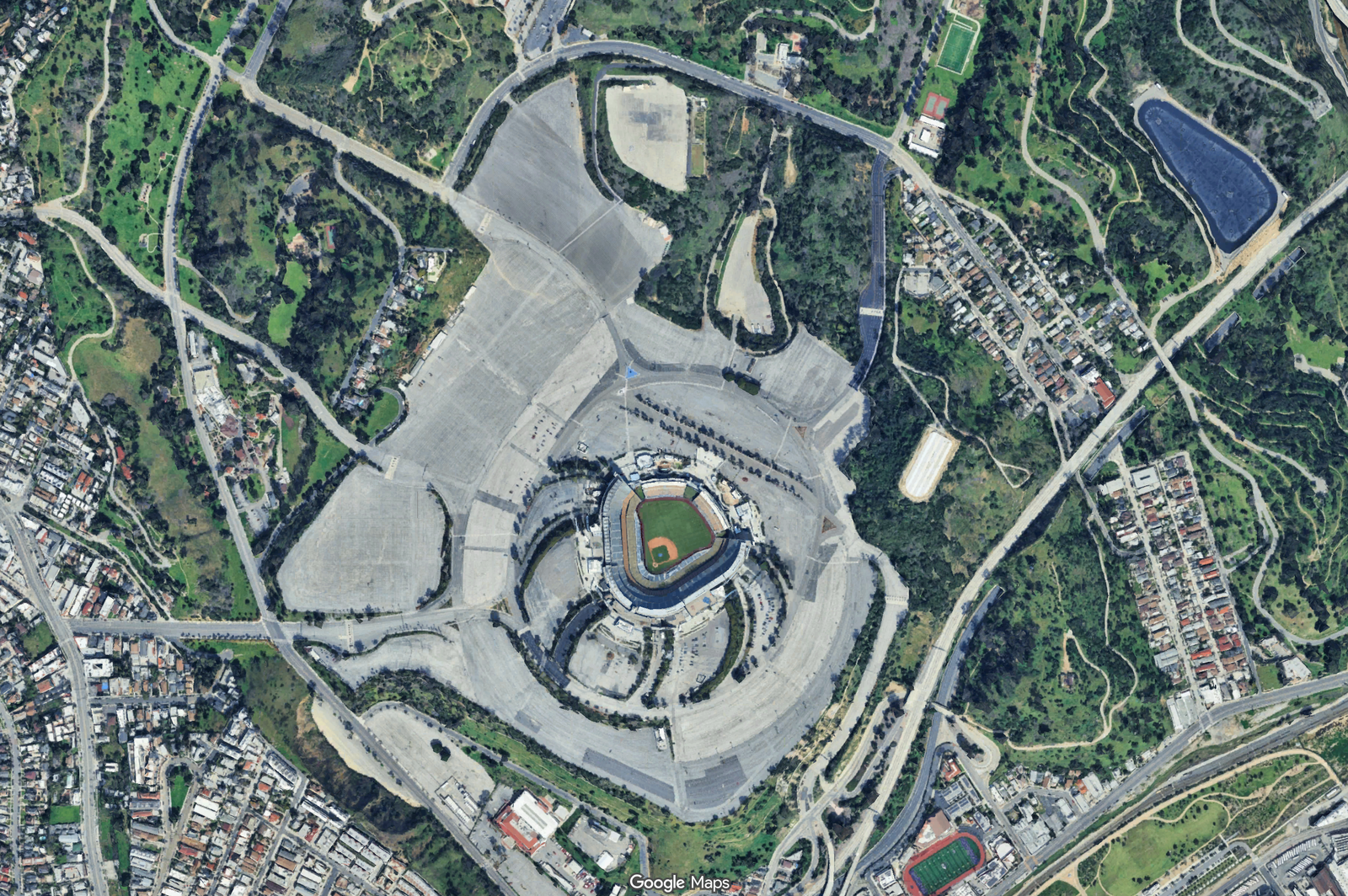
    But this is a suboptimal approach, which is why a year ago the LA Times had to write: “Going to Dodger Stadium for the World Series? Five ways to avoid parking and traffic headaches.” In it, they suggest the following: Take the bus, take the Dodger Stadium Express Bus, take an Uber, ride your bike, or walk 30 minutes to the nearest metro station (Chinatown).

    On Monday, we took the Union Pearson Express from Bloor to Union. The train was absolutely packed, but we got on the first one and we were door-to-door in a little over 30 minutes. After the game, it was pandemonium. People were swinging from light poles, lighting off smoke bombs, and the lineup to get back on the UP Express looked like this:
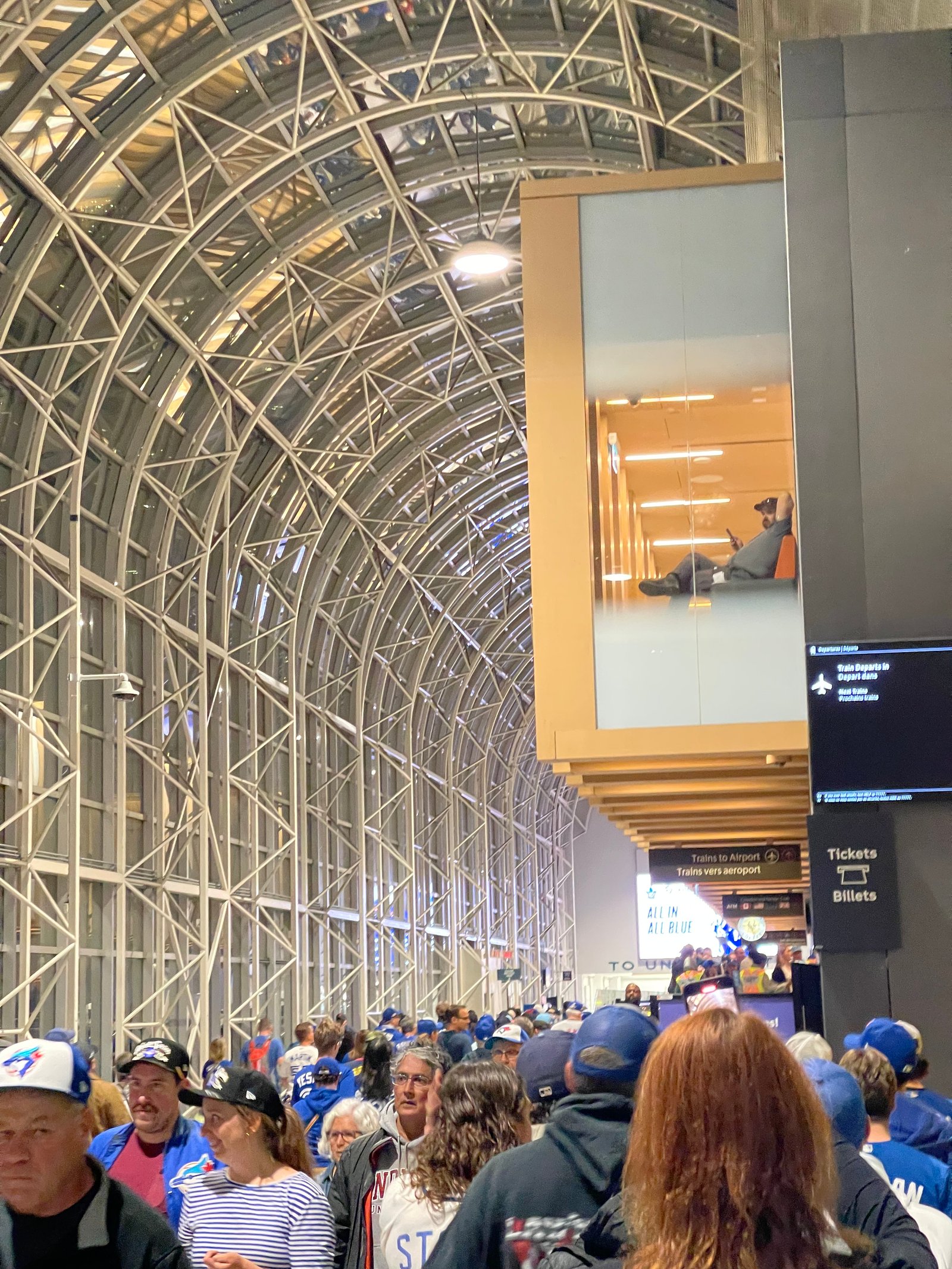
    But here’s where I need to give a lot of credit to whoever was responsible for keeping things together on Monday night. They had stanchions lined up to accommodate the crowds flooding out of the Rogers Centre, they had staff walking up and down the lines so people could tap on ahead of time, and they had more trains operating. The result was that we waited maybe 10 or so minutes before getting on one.

    Nobody got out of downtown this quickly unless you were on a train or you biked. My friends who had to take Ubers home were stuck for hours. In fact, one driver said, “We’re not moving for a while. You’re better off going into that bar right now and I’ll come back for you later.”

    Sometimes when I write about trains and public transport, people comment that I’m living in the past and that it’s an outdated technology. Look, I’m all for new tech. Bring on the autonomous vehicles and let’s get the global financial system onto the Ethereum blockchain already. But when it comes to urban mobility, trains work. They’re highly efficient at moving the greatest number of people.

    And you really see that in action when there are sudden demand shocks, like what happened on Monday night when the Blue Jays punched their card to the World Series for the first time since 1993. Go Jays!

  • Uber launches “digital tasks”; Waymo to launch in London

    October 21, 2025 · View original


    Last week, Uber announced something called “digital tasks.” These are simple, quick tasks that drivers can do when they are not driving — things like recording a voice note in a person’s mother tongue, submitting a document in a different language, or uploading images of everyday items (such as a menu or storefront).

    This is Uber expanding its data-labeling and AI-training business, and they are positioning it as a “new way to earn” for drivers. But another way to think about this move is that it’s a way for Uber to start to repurpose its workforce in preparation for a world where human drivers are far less essential to the business. That feels like the case to me.

    On a related note, Waymo also announced last week that it will start operating its autonomous ride-hailing service in London, beginning in 2026. This is another first for the company: the first commercial operation outside of the US. Though they are also driving vehicles around Tokyo in preparation for eventually launching there.

    Things continue to happen. As a casual observer of this market, Waymo feels like it is out front, which often makes me wonder about Tesla’s sky-high valuation. Does the market really believe their Robotaxis have more potential?

    In theory, this could be true. Their decentralized model — where individuals own the vehicles and plug them into their ride-hailing network — could allow them to scale quickly. But this is less proven — they’re still in the pilot/validation phase. They also seem to chronically overpromise.

    Regardless, I would really like to see Waymo launch in Toronto in the near future. As I understand it, regulatory barriers are the problem. I hope whoever is in charge is working on fixing this.

  • How home prices have changed in America’s largest cities since the pandemic

    October 20, 2025 · View original


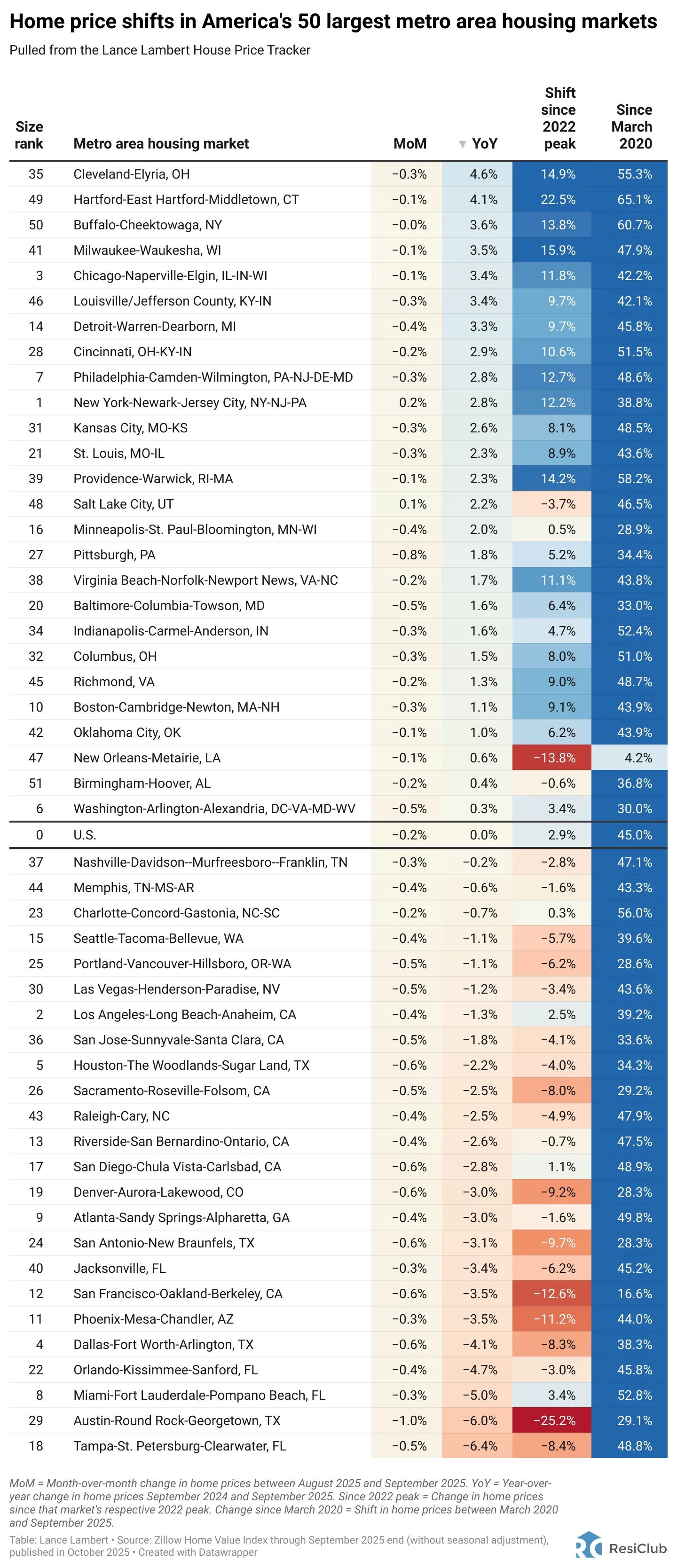
    Here is a chart from Residential Club showing home price changes in America’s 50 largest metro areas.

    The month-over-month figure is between August and September 2025. The year-over-year figure is between September 2024 and September 2025. And the “shift since 2022 peak” is the change in home prices since each market’s respective 2022 peak (not always the same date apparently).

    A number of things stand out.

    The month-over-month figures do not look encouraging. The vast majority of markets have gone negative. Of course, one month does not make a trend. The year-over-year column (which is how this table is sorted) looks more balanced, but the national average is still at 0%.

    The most prominent outliers in the negative direction are New Orleans (which has been uniquely flat since the start of the pandemic in March 2020), San Francisco and Phoenix (which have both seen a double digit percentage drop since the peak), and Austin (which is down over 25% since the peak).

    Austin is a prime example of what happens when you bring a lot of new housing supply to a market — prices come down. Earlier this year we spoke about apartment rents being down 22% from their August 2023 peak. These effects are also being heightened by increased outmigration from the city (previously the fastest growing US metro area).

    Back to the office, I guess.

    Even with the declines since 2022, most markets remain up significantly, with many smaller markets like Buffalo and Hartford continuing to show strong year-over-year gains. It is interesting to me that over 5 years later, we are still working through the market distortions brought about by the pandemic. The market is searching for a new equilibrium.

  • Current status of single-stair buildings in Toronto

    October 19, 2025 · View original


    As many of you know, the Ontario Building Code requires multi-residential buildings over two storeys in height above grade to have more than one means of exiting the building. This typically means two exit stairs.

    If you’d like to build something more ambitious than this, you generally have two options. One, you could design your second-floor homes to be multi-storey. I’m not a building code expert, but I’ve seen architects like Craig Race (and others) do this without triggering the requirement for a second exit.

    Your second option is to apply for what’s called an “alternative solution.” This is basically a way of saying to the building department, “Hey, my design deviates from the standard prescriptive method, but it still achieves an equal or greater level of safety, performance, and functionality, so you should approve it anyway.”

    Last year, the City of Toronto sent a message that it was going to be more open to single-egress alternative solutions. It commissioned a report that looked at the feasibility of relaxing egress requirements for buildings up to four storeys and published a guide to help builders prepare these proposals. The goal was and is to encourage more missing middle housing.

    So has it worked?

    This past week, Pamela Blais shared her experiences on Twitter. She is trying to build a three-storey sixplex (Part 9 of the Ontario Building Code) with a single stair, so she submitted an ASP. It included:

    – Fully sprinklered building – Widened exit stair (1200mm vs. 900mm) – Expanded landings (1650mm) – Stairwell skylight for smoke exhaust – Improved fire ratings (structure, suite separation, exits, and balconies) – Balcony in every home for refuge or direct exit

    And the city’s response was: “Nope. This does not meet the required performance levels.”

    I can also share that we have had meetings with code consultants regarding the feasibility of doing a single stair in a six-storey building and the guidance we received was that there’s no way an ASP would be approved. We would be wasting our time and money. All of this should make it clear that we’re not there yet.

    Thank you, Pamela, for sharing your experience. As one commenter on Twitter said: “A noble quest you are on.”

  • Stubborn on vision, flexible on the details

    October 18, 2025 · View original


    So what did we uncover during yesterday’s great urban design debate?

    If I can extract one overarching takeaway, it’s maybe this one: We need to be big and bold (have a compelling vision!), while at the same time getting out of the way of small-scale urban innovation. Joe Berridge, for example, felt strongly that Toronto is not taking full advantage of its waterfront. We’ve been too focused on bike lanes and parks, rather than on creating noteworthy global draws and aggressively marketing ourselves externally. Toronto needs its Sydney moment — something like a globally significant Opera House that attracts people from all around the world. I don’t disagree. Cities need to do things that are remarkable.

    At the same time, we spent a lot of time talking about the micro scale. Some of the most loved urban environments from around the world have the simplest built form: fine-grained and humble buildings fronting onto human-scaled streets — streets like Ossington in Toronto and seemingly every street in Paris. But that was then. This kind of built environment is mostly incongruent with how we plan and develop new communities today. We develop big, we impose top-down planning, and we no longer have the same inherent flexibility that our older building stock had.

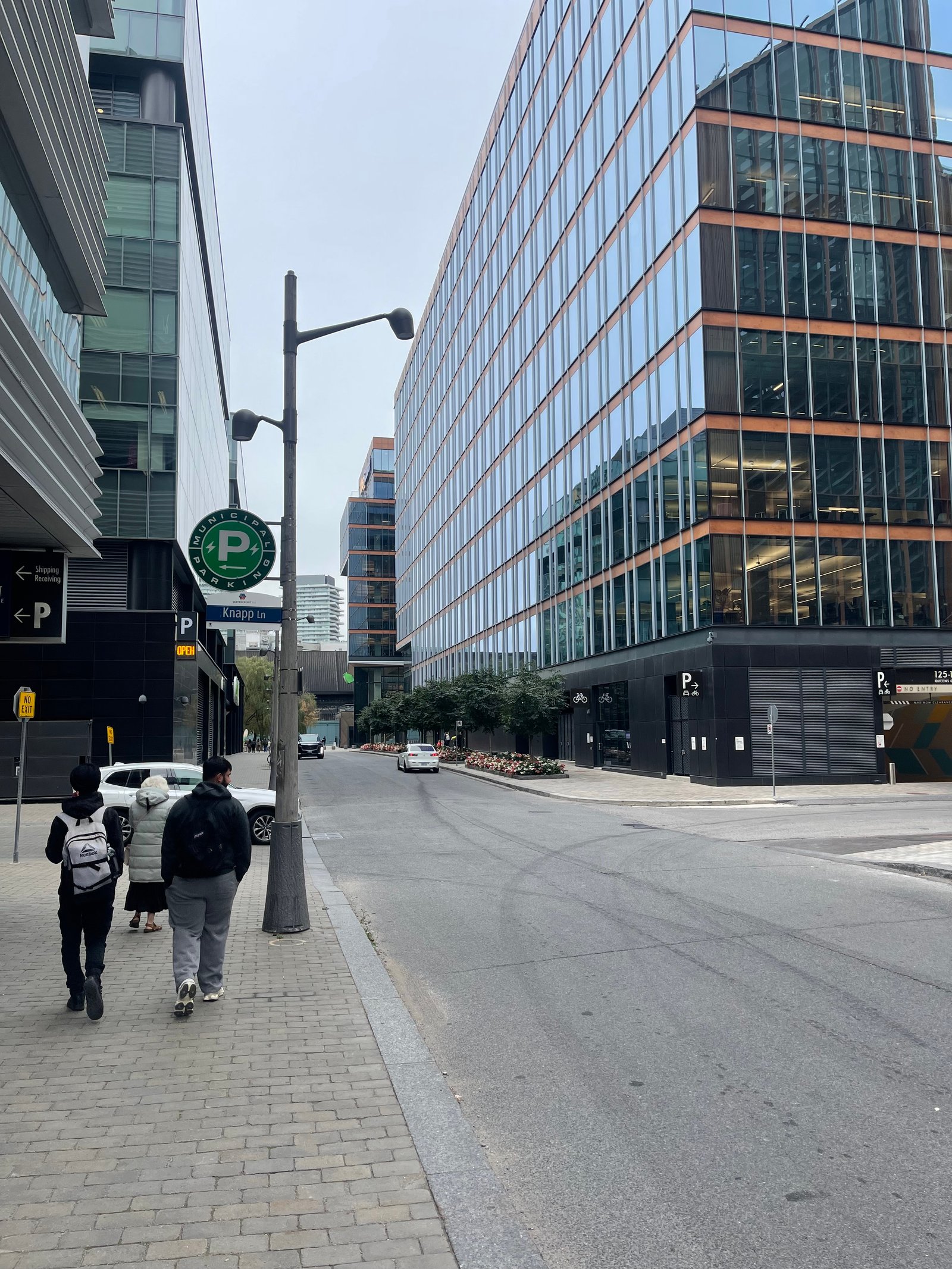
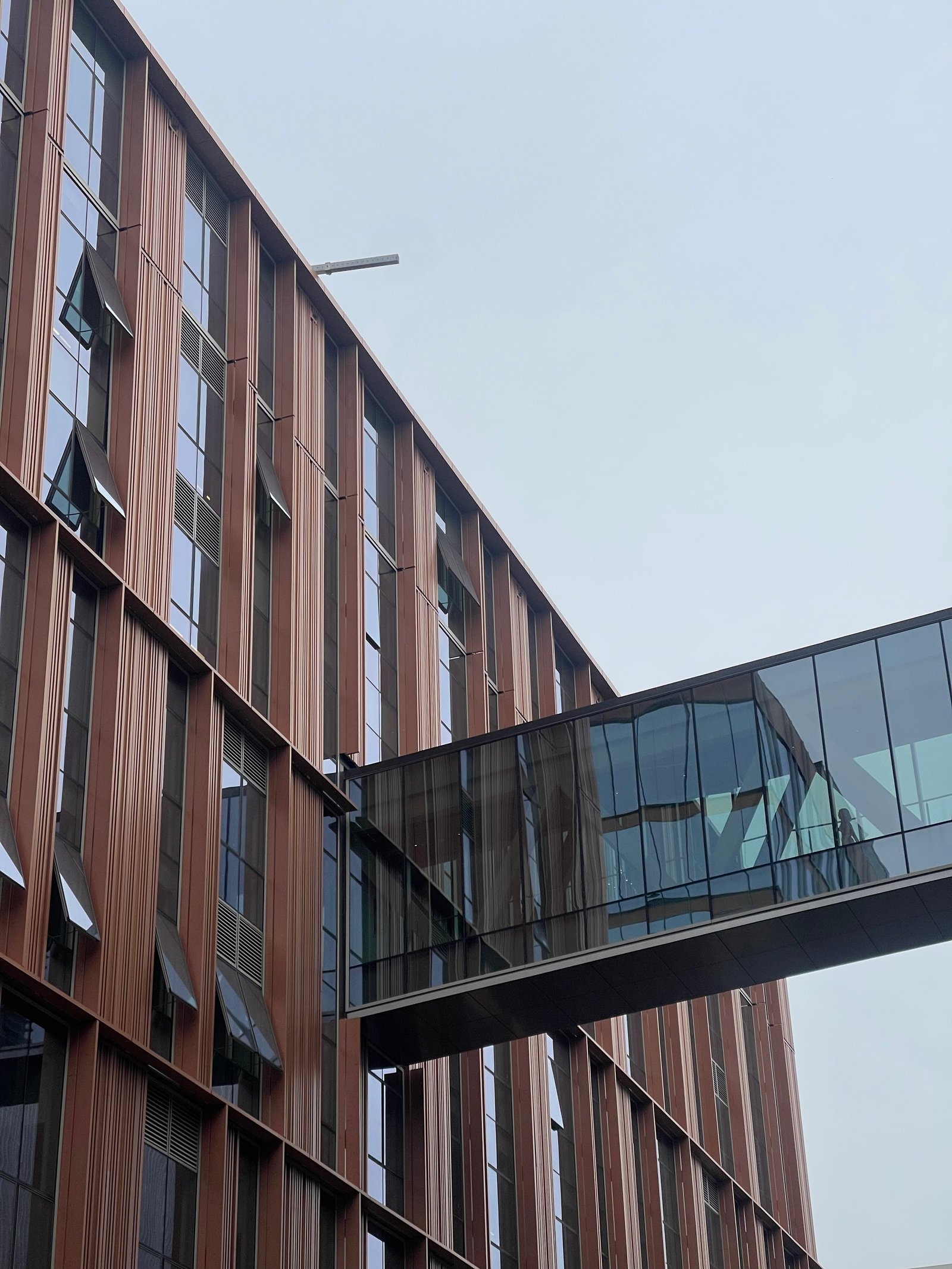
    Take, for instance, Toronto’s East Bayfront, which is where this conference is taking place. It’s a recently developed community with many or most of the hallmarks that constitute good urban design today: handsome architecture (including mass-timber buildings), pedestrian-friendly streets, well-designed public realms, and more. And yet, the area is largely void of any urban vibrancy. Other than the boardwalk along the water and a handful of restaurant patios, there’s very little public life. Many of the buildings are also connected by bridges, which is not in and of itself a problem, but it further removes life from the street.

    Here are a few photos of the area that I took while leaving the panel:

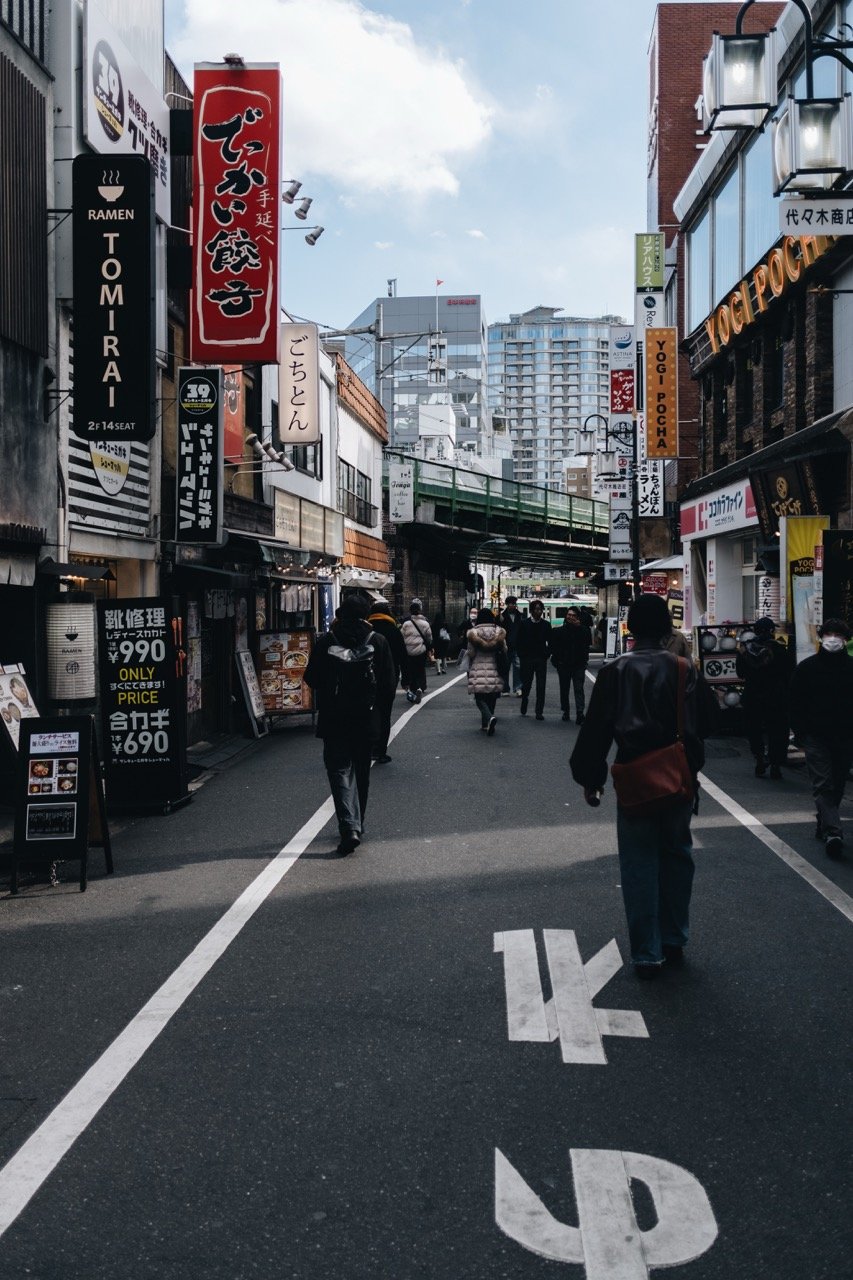
    Compare this to a random street in Tokyo:

    The buildings are ugly, or at least nondescript. None of the tenants are following a consistent signage standard. There are no sidewalks. And there’s an overhead rail line bisecting the street. And yet, it’s vibrant. It’s a successful urban street. Most older cities have areas akin to this, but it’s a real challenge to create it from scratch in new developments (see above). I’m very interested in this challenge and, as we have talked about many times before on the blog, I think part of the answer lies in allowing flexibility and ground-up change. It’s impossible to predict what an area could become and, for that reason, top-down planning will never get it exactly right.

    Thinking about it this way, urban design isn’t dead; it just maybe needs a refocusing. And what I propose is approaching it along the lines of Jeff Bezos’ old management adage: You want to be stubborn on vision, but flexible on the details.

  • Is urban design dead?

    October 17, 2025 · View original


    Who knows?

    But if any of you are attending the Council for Canadian Urbanism Forum in Toronto today, I’m going to be on a panel later this morning discussing this very topic.

    I’ll let you know what we uncover.

  • Winning and losing at the same time

    October 16, 2025 · View original


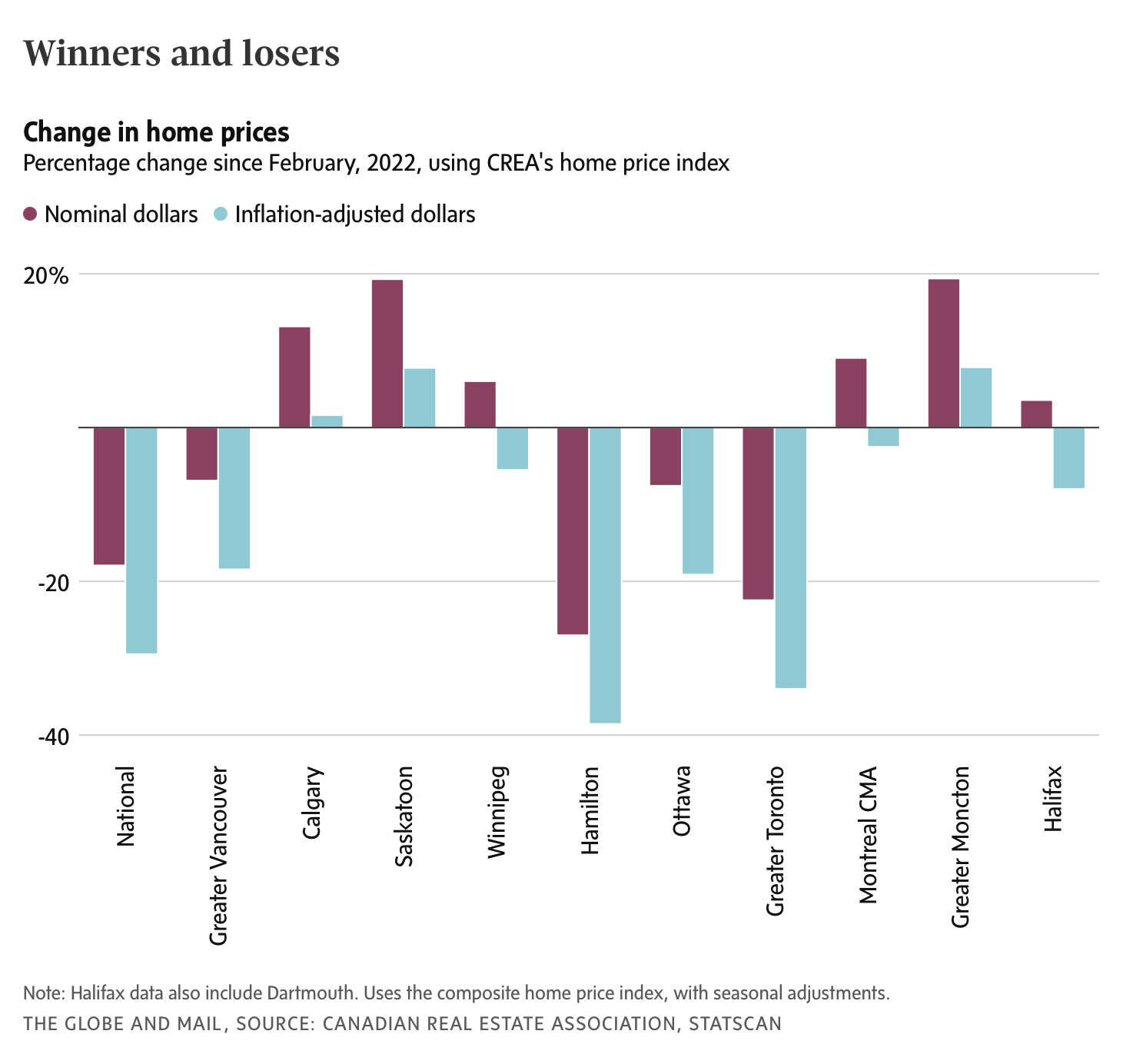
    The Globe and Mail just published this article about Canada’s real estate markets. It’s behind a paywall, but if you’re able to access it, you’ll find 10 housing charts. The first is called “Winners and losers,” and what it shows is the percentage change in CREA’s home price index since February 2022 — which, in hindsight, was the top of the market. (I don’t know what the end date is for this data, though.)

    The first thing you’ll see is that, very broadly, there’s Southern Ontario and Greater Vancouver, and then the rest of Canada. Prices have fallen materially in Canada’s most expensive markets, whereas in cities like Calgary, Saskatoon, and Moncton, nominal home prices are up by double-digit percentages. There isn’t just one Canadian market.

    The other thing I found interesting is the title “Winners and losers,” because it reminded me of the great paradox of modern housing policy. And by this I mean: which cities are winning and which are losing? If you already own a home, then winning is positive price appreciation. But if you don’t already own a home and you’d like to in the future, well then, falling home prices is winning — they’ve just become more affordable.

    Not surprisingly, it’s hard solving for two opposing kinds of winning.

  • How to eat healthier

    October 15, 2025 · View original


    A few weeks ago, my wife told me about an app called Yuka. What it does is scan the barcodes of food products and cosmetics and then give you a health rating out of 100. You can also drill deeper if you’d like to better understand why a particular food item is healthy — or not healthy.

    Since then, a few things have happened:

    – I’ve told as many people as possible about it. (I have my parents scanning at the grocery store.) – Grocery shopping takes a lot longer. (I have a colleague who has been mistaken for a store employee while using the app.) – We’ve made meaningful changes to the food we buy.

    And it’s not like we weren’t trying to shop healthy before.

    It works a lot like France’s Nutri-Score, except you have to do a bit more work. As soon as I see a low score, I no longer want the product and I move on to an alternative or I eschew it altogether. I can only imagine the positive impact that an app like this will have on our health and on the broader food landscape as our individual decisions compound over time.

    It also feels like a perfect use case for augmented reality and spatial computing. Right now, I have to juggle my phone in one hand and a basket in the other. But imagine a world where I can just pick up a package of Reese’s Peanut Butter Cups and my glasses will automatically tell me they’re a 0/100. That world is coming.

    If you care about the food you put into your body, I would highly recommend downloading Yuka on your phone. Ignorance is bliss until you’re no longer ignorant.