
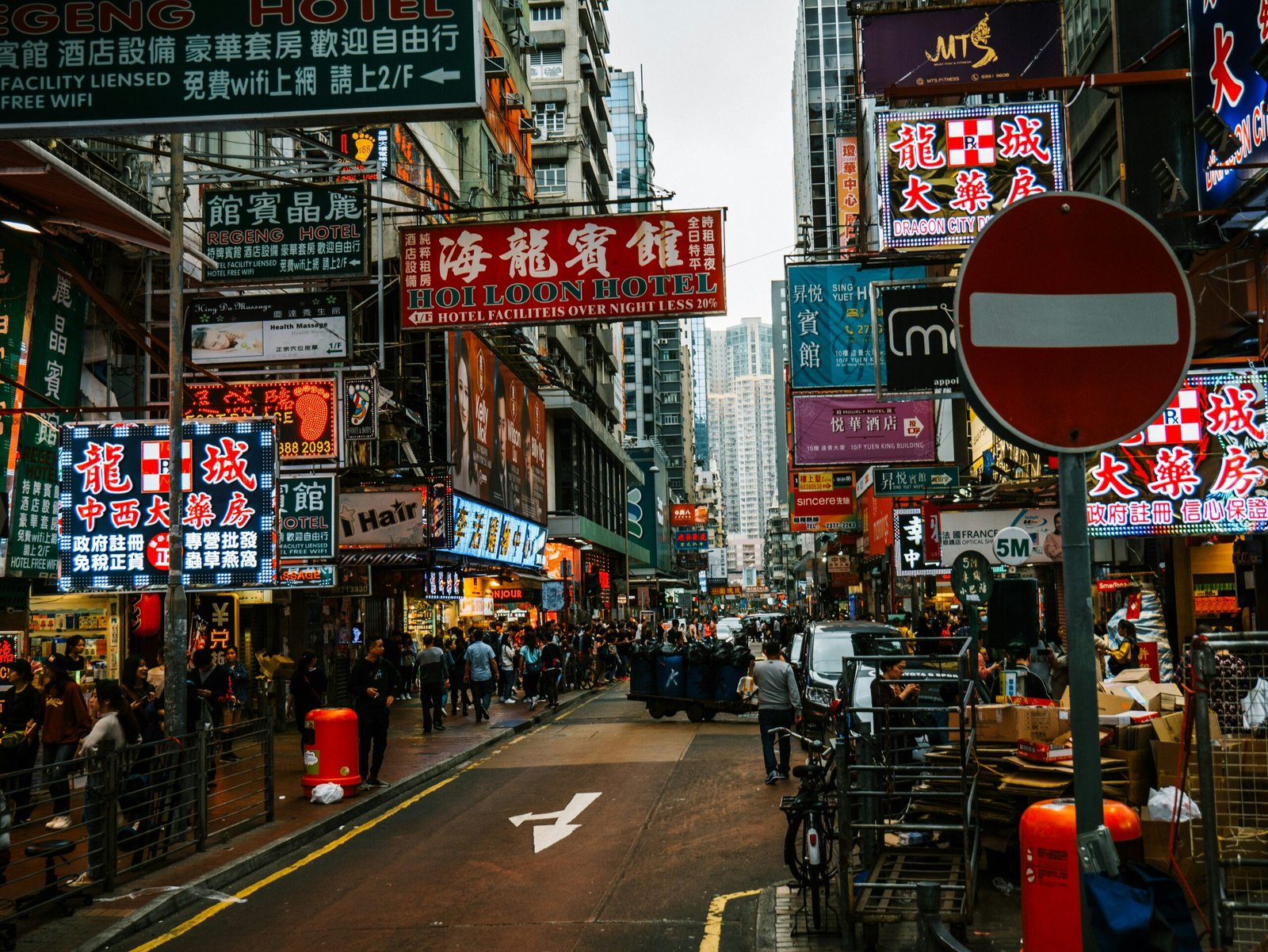
A blog reader sent me this article by Adam Clermont arguing that “Hong Kong was a 15-minute city before the rest of the world knew what to call it.” It’s great. He was right. I did find it interesting, so much so that I subscribed without really looking at what I was subscribing to.
Here’s an excerpt:
There are things Hong Kong does not do well. The apartments are small. Mine is small. I have made peace with this in the way that a man makes peace with anything, which is to say, incompletely and with occasional resentment. The rents are obscene. The air quality on bad days could strip paint off a Renault. Nobody is moving here for the spaciousness. But the fifteen-minute city crowd keeps talking about access, about proximity, about the ability to live a full urban life without depending on a car. And on that score, Hong Kong is not a case study. Hong Kong is the answer key that the rest of the world keeps trying to peek at while pretending they came up with it themselves.
His overarching argument compares Hong Kong to Paris. While Paris was busy talking and planning to be a 15-minute city — by redesigning its streets and removing space for cars — Hong Kong was already busy doing it, by accident and out of necessity.
While it is certainly true that Paris has undergone a deliberately planned urban transformation over the last decade or two, it’s worth pointing out that we’re talking about two of the most dense cities in the developed world.
Hong Kong is, of course, on another level of hyper density, but Paris, as we like to talk about on this blog, is also sneakily dense, despite its mid-rise heights.
The fact that both cities might be described as so-called 15-minute cities places them in a rarified universe, regardless of how deliberately or accidentally they may have ultimately gotten there. Not all cities have the benefit of density, and Paris already had lots of 15-minuteness before it became a buzzword and it started planning for it.
Adam has a line that “density is not a problem to be solved but a feature to be exploited,” and I would agree with this. However, the broader problem to be solved is how do you create this feature in the first place, if you don’t already have it?
Modern cities are typically not as dense. It is almost universally true that high urban densities are the result of necessity — physical constraints and/or economic gravity. Hong Kong is an island with no place to go but up. The same is true of Manhattan.
Paris is not an island, but it hemmed itself into practical equivalents over the centuries through fortified walls. Even today, the boundary of Paris proper is the Boulevard Périphérique, which sits where the city’s last defensive walls were built in the 19th century.
Dhaka, to throw out another example, is hemmed in by major waterways that flood every year like clockwork. Naturally, the city focused development on higher, safer ground, though there are informal settlements that have found ingenious ways to navigate its precarious waters.
Density may be a feature to be exploited, but it tends to happen best when there’s no other choice. That’s why Hong Kong is so good at it. The real problem to be solved is getting there when it’s not the only option.
Photo by Antonio Sokic on Unsplash
Leave a Reply