Daily insights for city builders, delivered every morning at 6 AM ET. I’m Brandon Donnelly — a Toronto-based real estate developer and founder of Globizen. I’ve been writing here since 2013.

Category: Urbanism

  • Why some of the world’s most valuable real estate is human-centred

    Yesterday we spoke about the growing divide between what I am calling machine-centred and human-centred real estate (feel free to suggest better titles in the comment section below). Machine-centred assets are introverted. By definition, they do not need to engage their environmental context. They are utilitarian spaces optimized for machine efficiency. Human-centred spaces, on the other hand, are extroverted spaces.

    A prime example of this is the approach taken by luxury conglomerate LVMH:

    • Trophy Real Estate: LVMH sees value in prime urban real estate in the world’s top global cities. In 2023, the company spent €2.45 billion on real estate in cities like Paris, London, and New York.
    • Mixed-Use Placemaking: Stores are no longer just stores. They are mixed-use places that blur the lines between retail, culture, food and beverage, hospitality, and whatever else strengthens the core brand.
    • High Street Bias: Between July 2024 and July 2025, JLL found that 59% of new luxury store openings across the US were in open-air, street-level locations. The three most active areas in the US were Madison Avenue, Fifth Avenue, and SoHo.

    A big part of this strategy is naturally about complete control. By owning standalone real estate assets in prime urban locations, brands can decide if they want to clad a 15-storey building in monogrammed Louis Vuitton trunks. But implicit in this desire is a recognition that the human experience is paramount when it comes to luxury. Emotional immersion, physical discovery, and a curated brand story are all part of the offering.

    Physical spaces also provide a platform for signaling identity and status, which is primarily why people buy luxury products in the first place. Machines can optimize for function, but human-centred spaces create the emotion that fuels some of the world’s most valuable real estate.

  • The great bifurcation: Machine-centred vs. human-centred real estate

    “When you fall in love again, you don’t think about the ex very much.” —Travis Kalanick, co-founder of Uber, talking about how he feels about Uber today

    You’d be forgiven for thinking that Travis Kalanick, co-founder of Uber, is back. Since leaving Uber heartbroken in 2017, he has been relatively quiet. But in his words, “I’ve been working my ass off the whole time. I just haven’t been talking about it.” Clearly. Last month, he announced that his startup Atoms had just raised $1.7 billion in equity. The round was led by venture firm a16z.

    Atoms is an audacious business and I would encourage you to check out their website and read their vision. Travis describes his life’s work as “digitizing the physical world” and Atoms’ mission is “physical automation to transform industry and move the world.”

    What that means — and what’s fascinating for us real estate people — is that he’s creating a physical AI company that uses single-purpose machines (as opposed to general-purpose humanoids like what Tesla has been promising for a number of years) to automate specialized tasks such as food preparation, resource extraction, and transport.

    However, all of these “atoms” need to be stored and processed somewhere, and so Travis views land and real estate as a critical resource in the world of physical AI. He goes on to argue that real estate development is a “dramatically underappreciated” ingredient. Everyone in tech has been too focused on software. And he means it. I took a look at their careers section and they have dozens of real estate-related job postings across the world.

    The hope with all of this is a new Golden Age:

    “Everything in our world, in our cities, in our civilization – look around you – is mined or grown – manufactured and moved. The next Golden Age will be upon us when the means of growing, mining, manufacturing and moving physical things becomes fully divorced from human labor.”

    When you consider this vision and our current data centre boom, it’s not hard to imagine the potential impacts on our built environment. Our cities are bifurcating into two broad forms of real estate: machine-centred and human-centred real estate.

    The machine-centred assets might service our online lives or the physical world, as is the case with Atoms, but they won’t necessarily need to engage with their broader environment or have things like windows, climate control, and even lights. They are “black boxes” for machines.

    Human-centred assets are, on the other hand, the sort of spaces that we talk about on this blog: walkable, human-scaled communities where people genuinely want to live, work and play. This, in my view, is the divide we are headed toward and it’s going to mean a reconfiguration of our urban areas and a repricing of real estate assets.

    Intuitively, I think this will only enhance the value of human-centred assets. We are going to want what is scarce: authentic human connections, beautiful architecture, and differentiated people-first experiences.

  • The spirit of a place

    We often think of cities in terms of their built environment. This city has lots of futuristic tall buildings, this one has lots of ornate mid-rise buildings, and this one is mostly suburban sprawl. But the built environment is only one component.

    Underlying the physical environment (let’s call it the hardware of a place) is a cultural ethos that connects our spaces and influences our behaviors (let’s call it the software of a place). In the architecture community, this is often referred to as the genius loci, or the “spirit of a place.”

    I was reminded of this when reading a recent column by Benedict Evans that starts with him reminiscing about the six years he spent living and working in the San Francisco Bay Area:

    “More fundamental than that, though, is the ethos and the sense of possibility. Of course, you’re going to do amazing things. Of course, you’re going to make a company – that’s what everyone does. Of course, this new thing is going to change the world. The world is malleable. You can do things. You can create a giant company from a PowerPoint in a couple of years.”

    This, of course, is a well-documented feature of the Bay Area. And its origins can almost certainly be traced all the way back to the Gold Rush of the mid-1800s when risk-taking misfits flocked to the region in search of overnight riches, transforming a sleepy hamlet into a place.

    But even though the lineage may appear clear in the case of San Francisco, the genius loci of a place does not represent immutable code. It changes over time, just as the fortunes and influence of a city also rise and fall over time.

    I often think about this in the case of my city, Toronto. Instead of being founded by maverick gamblers, the city was founded on an opposite set of principles: British imperial loyalty, Protestant morality, and anti-revolutionary order.

    Toronto has changed a great deal since then, through massive waves of immigration and robust post-war expansion, and the city’s built environment has naturally transformed from orderly Victorian row houses to supertall towers.

    But now, with the frenetic condominium boom of the last cycle in the rear-view mirror, there’s an increasing sense of what’s next. What will be Toronto’s genius loci of the future? That’s the exciting opportunity in front of us today and it’s up to us to decide. Indeed, the world is malleable.

  • Density is a feature of cities

    My sense is that density is a misunderstood characteristic of successful cities. I think most people see it as a bug. They see some of the negative externalities associated with cities, such as traffic congestion, and they assume that the culprit is too many people.

    But they are confusing population density with land-use inefficiencies. This, I can only assume, is why some people arrive at the selfish conclusion that their city is full.

    There are, of course, many counterexamples to this line of thinking. Paris, Seoul, Barcelona, Singapore, Tokyo, and many others have both high population density and are viewed as being highly livable and desirable cities.

    Not all high-density cities are livable, but that’s because other ingredients are missing. I will remind you that Tokyo once again placed first in Monocle’s annual quality-of-life survey this year.

    What I think gets missed are the following three key features of urban density.

    One, dense cities dramatically lower the cost of delivering infrastructure over the long term and reduce per capita energy consumption.

    Two, cities are wealth-generating machines and density drives “agglomeration economies.” Put smart and entrepreneurial people in close proximity to one another, and good things happen.

    Three, the only way to create an enormous, well-functioning city like Tokyo is on the backbone of transit. And the only way to make transit viable and convenient for most people is to build density all around it. Density is the unlock that makes it all possible.

    Ironically, then, density is what can make cities feel less congested and more livable.

  • What does Toronto want to be?

    So, what bold and uncomfortable 21st-century master plan should Toronto adopt? I don’t know exactly, but what I was getting at in my lead-up post is that it’s hard not to sometimes feel like Toronto is trying to run a 21st-century global city on a 19th-century Victorian street grid, surrounded by Houston.

    In the core of the city, we have narrow, generally 20-metre rights-of-way. Many of these east-west arteries are beautiful streets to walk on with fine-grained retail patterns, but the streets themselves have slow-moving streetcars in the middle two lanes and on-street parking on both sides. The result is streets that don’t move and are frustrating to navigate for all users: drivers, transit riders, and cyclists. It can take an hour to drive 10 km.

    Other major streets don’t have streetcars or much retail activity, but the land-use pattern reflects a bygone era. It doesn’t make sense to have only single-family housing on Toronto’s busiest arteries. It’s time for these streets to grow up. (To be fair, the City of Toronto is trying to achieve this with its new Major Streets policies, but the development economics do not make these changes feasible at scale.)

    As you move out of the core, Toronto’s major streets naturally widen along with the recency in which they were built. Now we have the opposite problem where we’re faced with “stroads” with little to no urbanity. Overall, it’s the result of a city that grew organically over time without the same kind of defined plan seen in cities like New York, Barcelona, and Paris (after it had already been built out).

    Here’s the thing: Toronto’s low-rise single-family era is over. Virtually the only single-family housing that gets built nowadays is when somebody demolishes an existing house and builds anew. The future is a uniformly higher-density city built on the backbone of robust transit, vehicular, and cycling networks; not a monocentric downtown that people commute to.

    So what might that mean exactly?

    To start, I believe it means getting our transit vehicles onto their own dedicated lanes, widening certain major streets (for the benefit of cars), shrinking and pedestrianizing others (for the benefit of human-scaled urbanism), carving through new major streets to fix connectivity gaps, and pricing congestion as a means of funding constant transit expansion. My fellow urbanists may not want to hear me advocate for the selective widening and creation of arterial roads, but we have to stop pretending that cars are going to disappear.

    Once the bones are in place, it’s then a matter of getting the land-use policies right and letting the private sector do what it does best — build for the future. Now, I don’t profess to know the exact combination of major street widths, one-way patterns, and whatever else should be done, but I do feel strongly that it’s time for a bold and uncomfortable 21st-century master plan for Toronto.

    What does Toronto want to be? We should host an international design competition and find out.


    Cover photo by Oles Borys

  • The entire city is your backyard

    I rarely watch any TV, but when I do, I enjoy browsing YouTube. One of my favourite channels, one that I have mentioned before on this blog, is Never Too Small. It’s a look at small urban spaces from around the world, with the architect or designer walking you through their intent and the various design details. Whenever I watch an episode, I usually get excited about the possibility of buying some piece-of-shit apartment in Paris and turning it into something cool. One day.

    Now NTS has a new series coming out, and it’s premiering this week on July 30. It’s called My City, My Backyard, and it’s a look at cities, specifically through the eyes of creatives. I already know that I’m going to like it, and I love the title. When you live in a city, the entire city is your backyard and amenity. The first city in this new series also happens to be one of my favourite cities: Marseille.

    Marseille is having a moment right now, and that’s not just my confirmation bias speaking. In 2024, the city saw 19.5 million overnight stays, which were a 20% increase compared to the year prior (they hosted 10 medal events during the Paris 2024 Olympics). But even if you strip out its Olympic boost, tourism is rising. Spring 2025 recorded a 7% year-over-year increase, which included a 19% increase in international visitors. Summer 2025 visitors were also 10% higher than in 2023.

    What’s driving this, beyond its vibrant culture, great restaurants, and breathtaking landscapes, is that Marseille has just the right amount of edge. It’s not always a hyper-polished Instagram moment; it’s an effortlessly cool place where finding an uncomfortable rock next to turquoise waters will give you everything you need.

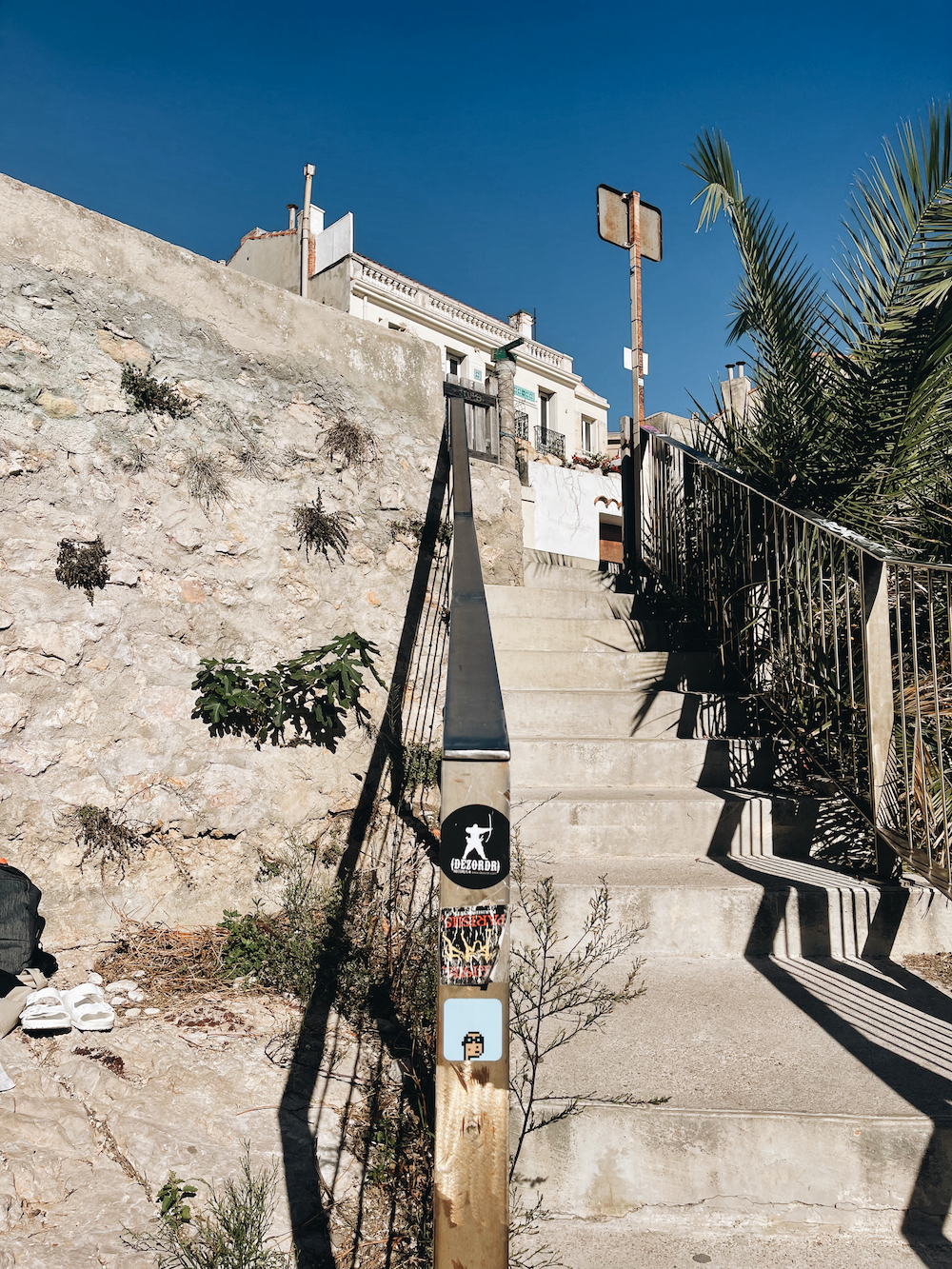
    In other words, it is a place that feels authentic. And in a world of global sameness and AI-generated simulacra, I think many of us are now seeking that authenticity — something that feels real and a little raw. Marseille has that in spades. Oh, and if any of you happen to visit la plage de Maldormé, let me know if my unauthorized sticker is still there.

    Here is NTS’s channel in case you want to check out Marseille this week.


    Cover photo by Jeet Sandhu

  • Toronto needs a bold and uncomfortable 21st-century master plan

    Earlier this week, I tweeted that Toronto needs a Haussmann moment where we make some bold and uncomfortable changes in order to set ourselves up to be a dominant 21st-century global city. I mentioned Haussmann because his work is perhaps the most notable, but that is just one example.

    In addition to Haussmann’s renovation of Paris (1853-1870), I was also thinking about the Commissioners’ Plan for New York City (1811), and Ildefons Cerdà’s grid system of octagonal blocks for Barcelona (1859), as well as some more contemporary examples.

    In recent years, Barcelona has revisited its grid system and pioneered a new set of “superblocks” that focus traffic along the periphery and create pedestrian-focused spaces on their interior.

    The common thread among these examples is that they all represent a grand master plan. In the case of Barcelona and New York, it was a plan that served to guide development as the city grew. And in the case of Paris, it was a destructive plan that went back and redid what was deemed to have not been working. (In thinking about this now, it’s probably best that I used Haussmann as the example in my tweet).

    Toronto has never had such a plan. We flirted with the City Beautiful movement at the beginning of the 20th century — a movement intent on beautifying and introducing monumental grandeur to our cities — but, not surprisingly, we ultimately saw it as a superfluous and frivolous spending exercise.

    Instead, Toronto has grown incrementally, becoming what I see as an accidental global city. We are no longer the ultra-conservative, deeply Protestant city that we once were, but at the same time, it’s hard not to feel like we have a grid and public realm that doesn’t reflect the city we have become today.

    Toronto needs a bold master plan. And over the coming weeks, I’ll put some of my ideas to paper. In the meantime, if you have any of your own, please feel free to share them in the comment section below.

  • Uber and Waymo are breaking up

    The writing is always on the wall when aggressive lobbying starts. Here’s the situation. A proposed bill has been put forward that would allow autonomous vehicles to operate in Washington, D.C., updating a prior Autonomous Vehicle Act from 2012. Uber is opposing the bill, arguing that it would displace for-hire human drivers and hand Waymo a de facto monopoly in the District, according to TechCrunch.

    Instead, the company is lobbying for a system that would require robotaxis, like Waymo, to operate on a ride-hailing network that also uses human drivers. This would give consumers the ability to access both. Do I want to make small talk or not?

    Now, Uber’s position in the face of autonomous vehicles has always been that human drivers aren’t going anywhere because it’s simply too expensive to own and operate a fleet of AVs based on peak demand times. The only option is to top up the supply base with human drivers, and this is why the Uber marketplace will always remain essential.

    This narrative was initially supported by a series of announced partnerships, but now there seems to be a growing divide between the companies, and it’s not so clear that Waymo needs Uber as much as Uber would like. Because if Waymo were truly concerned about having human drivers, then the two companies wouldn’t be on opposite sides of the table with this bill. Uber knows this could be existential.

    At the end of the day, Uber disrupted traditional taxis and changed how our cities operate. Autonomous vehicles are set to do the same. Should we feel bad? Monopolies are, of course, bad. But creative destruction is not.


  • Louis Vuitton’s Big Duck

    When I first saw this picture of Louis Vuitton’s flagship store in Manhattan I thought it was AI. That is where we are right now. When something looks wild, I just automatically assume it’s fake. But alas, it’s not fake. Louis Vuitton is renovating their flagship store at the corner of 57th Street and 5th Avenue and so, naturally, they decided to completely cover it with luggage facade wraps.

    These wraps make the entire building look like six grey trunks stacked on top of each other and are a nod to a 19th century luggage design from the company. They even used real metal details throughout. Apparently the heaviest luggage handle weighs something like 5,000 pounds.

    This is wild and remarkable in so many ways. The scale of it is remarkable. This is a 15 storey building concealed entirely by luggage trunks. It also speaks to the scale and dominance of New York as a city. Not every city can absorb a pile of giant luggage trunks and not bat an eye. But in New York, it’s just another noteworthy thing within its relentless urban grid.

    I also can’t help but think of the work of architects Robert Venturi and Denise Scott Brown. In 1972, they published a book called Learning from Las Vegas. And in it, they defined two types of contrasting buildings: decorated sheds and ducks. Decorated sheds are, as the name suggests, nondescript buildings. Think big box stores. These buildings get their specificity from signage and other ornament because, without this, they’d just be nondescript sheds.

    Duck buildings are, on the other hand, buildings that take on a symbolic form. In other words, their shape and construction tell you what they’re all about. The term duck comes from an actual building that looks like a duck, namely The Big Duck on Long Island. This is a building that was built in the 1930s to help promote the owner’s duck farming business and is now on the US National Register of Historic Places.

    The Big Duck is and was an actual building, whereas Louis Vuitton’s trunks are just temporary construction wrap. So they’re not exactly the same thing. Still, the similarities are there. Both were erected to promote their respectiveness businesses. And both tell you, through their form, what’s meant to happen inside. So in this sense, Louis Vuitton has just created its own Big Duck.

    Photo by Brad Dickson via Dezeen

  • What happens when Uber doesn’t have to pay its drivers?

    This is an interesting video by Phil Andrews of Maxinomics talking about the economics of Uber and what it could stand to gain from autonomous vehicles.

    As part of this, he touches on the exclusive partnership that was announced between Uber and Waymo back in September. That was a big deal.

    I find this topic fascinating because it’s hard to imagine it not reshaping the landscape of our cities. And it continues to get more real by the day.