Daily insights for city builders, delivered every morning at 6 AM ET. I’m Brandon Donnelly — a Toronto-based real estate developer and founder of Globizen. I’ve been writing here since 2013.

Category: Travel

  • Wealthiest cities in the world

    According to this annual survey by Henley & Partners (first chart from Bloomberg), these are the top 10 wealthiest cities in the world when you count the number of high-net-worth individuals (i.e. people with investable wealth greater than US$1 million):

    However, if you instead count billionaires, the top city flips from New York City to the Bay Area (which includes San Francisco and all of Silicon Valley). This isn’t all that surprising.

    Also not surprising is the precipitous decline in the number of HNWIs residing in Hong Kong. From 2012 to 2022, the number declined by 27%. That said, a bunch of other cities fared even worse. The city that lost the most millionaires over this same decade was Moscow. It declined by 44%.

    For those of you wondering about Toronto, we placed 12th, just after Chicago, with 105,200 millionaires, 193 centi-millionaires, and 18 billionaires:

    The next city in Canada on the list is Vancouver, and following that is Montreal:

    It is interesting to see how much further behind Montreal places with these metrics given that it is an urban region with about 1.6x the population of that of Vancouver’s.

    Also interesting — given its size and global importance — is Paris (18th when it comes to HNWIs):

    However, when it comes to seasonal draw, Paris is second only to Miami, which appears to be the undisputed global destination for rich people in the winter. Paris has 126 centi-millionaire residents, but during its peak holiday month (presumably summer), this number is believed to increase to over 300:

    Finally, looking at Park City, Utah, it has 8 permanent centi-millionaires and this number is thought to increase to over 100 during the winter snowboarding season. And to be clear, this transient population figure only includes people who own a second home there. It does not include rich people paying US$3,700 per night to stay at Deer Valley. That’s pretty good for a small town of only 8,500 permanent residents.

    To check out the full list of 97 cities, click here.

  • Lufthansa unveils new multi-seat layout in business class

    Maybe it’s my design background or maybe it’s the extreme discomfort in my legs, but usually when I’m on a plane I can’t help but think about redesigning the cabin interior. Of course, there are only so many options in economy when your femur doesn’t fit between the seats. However, in business class, where airlines actually make their money, the options are endless.

    Below is a redesign that Lufthansa just launched this spring. Co-created with Pearson Lloyd, the concept is based on three distinct travel experiences: calm, focus, and share. The idea here is that maybe you just want to sleep (calm). Maybe you just want to work (focus). Or maybe you want to work and/or hang out with someone beside you (share). And depending on what you’re looking for, your seat should reflect that.

    The result is 7 different seat types that are bookable depending on what “job you’re looking to hire it for.”

    It is about consumer choice instead of one size fits all. But I’m curious:

    • Were they able to maintain the same number of overall seats in business class, or are they betting on higher revenue per passenger because the seats are now better?
    • How does booking work? What happens if I really want “calm,” but the only available seat is “share”? And then what happens if my “share” neighbor is really talkative?
    • Has anyone looked at multi-seat arrangements in economy? Or is it a non-starter because you really need to squeeze femurs in order to make the math work?

    Lufthansa, if you’re reading this and you’d like me to do a thorough review of your new Allegris Business Class seating, I would be happy to accept a flight to Paris sometime this summer. Until then, you can all find more information about this new seating layout and the design process, here.

    Images: Pearson Lloyd

  • Sleeper trains — what’s old is popular again

    One of the great promises of autonomous vehicles is that, one day in the future, you’ll be able to get into your car, fall asleep, and then wake up refreshed at your destination. This would be a nice luxury, and it would almost certainly reshape the geography of our cities.

    But at the same time, it’s worth a reminder that “sleeper cars“, or bed carriages as they were originally called, are definitely not a new thing. Possibly the first example of a sleeper car was in England in the 1830s. Trains, of course, don’t take you exactly where you want to go like a car, but a sleeper train does allow you to travel while you sleep.

    And so it is interesting to see that sleeper trains are apparently seeing a resurgence in popularity across Europe. To the point that the trains are full and rail operators can’t seem to get their hands on new carriages. I can’t recall ever travelling in a sleeper train, but I have to say that this looks like a highly civilized way to move around:

    Image: ÖBB (Austria’s national rail operator)

  • The first vacation rental REIT

    This is a fascinating interview with John Andrew Entwistle, the founder of vacation rental company Wander. The way to understand Wander is that it is a vertically integrated travel company. So unlike Airbnb, for example, Wander owns all of their real estate (vacation homes in top destinations), they property manage, they asset manage, and they are building out the technology required to connect all of this stuff.

    They have also created what they are calling the first ever vacation rental REIT, which means that you can buy a piece of their real estate portfolio (currently 13 properties). In addition to being a source of cash, this creates an interesting flywheel effect where maybe you stay in a Wander and then decide to become an investor in their REIT, or vice versa.

    Eventually though, Wander hopes to be just as asset light as Airbnb (which again, doesn’t own any real estate; they’re a booking platform). The idea is that REIT unit holders will ultimately own the real estate and they will be the asset manager / technology platform that sits on top. But that they will still control the entire travel experience.

    John also gets into some of the specifics of how they run their business. For example, in each destination, they hire local cleaning crews and handy people (who are not Wander employees). They typically spend about 7% of the value of a property to furnish it (which is typically around $80-150k per property right now). And their average order size is around $4.5k, which suggests that people are willing to pay a premium for this vertically integrated travel experience.

    If you can’t see the video above, click here.

  • Why Utah wants to build the world’s longest and most expensive urban gondola

    If you drive around the Cottonwood Heights neighborhood in Salt Lake City, which I have done multiple times over the last year, you will invariably see lawn signs shouting for “no gondola!” And the reason for this is that last summer, the Utah Department of Transportation (UDOT) came forward with its preferred solution to traffic congestion in Little Cottonwood Canyon: an eight-mile long gondola all the way up and into the mountains. If built, this would apparently be the longest and most expensive urban gondola in the world.

    To try and explain why this is being recommended, I’ll give the example of what happened to us when we were there last week. We drove into Little Cottonwood Canyon on Tuesday morning when it was not snowing. We left Park City around 8am, passed through the valley (Salt Lake City), and arrived at Snowbird (resort) in around 45 minutes. This is normally how long it takes. But on the way up it started snowing, and it didn’t stop all day. (Nice!) So our drive home took significantly longer and looked like this (we were going 8-10 miles per hour all the way down):

    This is what happens when it snows in the canyons. Which is why a wise bartender at one of the resorts advised us that, “on powder days, you need to leave the valley at 6AM. Because at some point, some asshole is going to think they can get up the canyon in a Tesla, and they will ruin it for everyone. It’s better to nap in your car at the resort than white knuckle for 2-3 hours.” During our drive home, we learned that he was not at all joking. This is what happens. And it is why UDOT wants to build one really long urban gondola.

    There are, however, some very good reasons why urban gondolas aren’t really that common. Portland has one. Medellín has one. And apparently both are quite successful. But other than these examples, they generally aren’t thought of as the most effective tool in the transportation arsenal:

    Gondolas are low-capacity vehicles that quickly get cramped if turned into high capacity ones. They don’t work well for multiple stops. As a result, they are a point-to-point transportation method with low capacity. They are also expensive, especially relative to how many people they might serve, making them financially unattractive options for most applications. At their best, gondolas work when traversing difficult terrain with a consistent but low ridership, which is why they’re most often deployed on ski resorts.

    But this situation is maybe a bit unique. It’s kind of urban transport, but really it’s for people to get up the canyon and shred deep powder. Here’s more on how it might work:

    The Cottonwood Canyon gondola would be a hybrid of sorts between urban transportation solution and resort-based gondola. The proposal is to build a massive 2,500-spot parking garage at the base of the canyon, about 20 miles from downtown and the airport, where people will park. They will then ride the gondola for 27 minutes to Snowbird or 37 minutes to Alta, a trip duration which has no parallel in the urban or resort gondola scene (the Snowbird tram, one of the most famous in the world, fits more than 100 people per tram but takes less than 10 minutes to ride). Even though the gondola would serve two ski resorts, it belongs more to the urban gondola concept because it is being proposed and recommended by the state’s transportation department as a solution to a recurring traffic problem.

    As a snowboarder, this sounds great. But it is, of course, complicated. Conservation groups are objecting, and some/many taxpayers don’t want to pay for a gondola that will largely benefit two ski resorts. Especially one that doesn’t permit snowboarders (I made this part up). So we’ll see. A final decision is expected by UDOT this summer. In the meantime, if you’re interested in urban gondolas, check out this recent article in Vice Magazine by Aaron Gordon (quoted above). He does a good job explaining both sides of this debate. And if you are interested in this topic, I’d be curious to hear whether you think this is a good idea or not.

  • The impact of climate change on the Winter Olympics

    It was pure luck, but we couldn’t have timed this last week any better. It started snowing in the mountains around Salt Lake City on Tuesday, and it felt like it didn’t stop until Saturday. On Wednesday morning, which was peak powder, the main resorts were reporting anywhere between 23″ and 30″ of fresh now. It was the stuff of magical dreams.

    But snowfall is, of course, highly variable. SLC is having a record year, whereas many resorts in Europe weren’t able to open until mid-January because of a lack of snow. And from a macro perspective, things are generally getting worse. According to this report, for every one degree increase in the world’s average temperature, global snow cover is reduced by about 8%.

    What this mean is that, even in low emission scenarios, many of the places that previously hosted the Winter Olympics, may struggle to do so again in the future because of “non-reliable” snow cover. Freestyle ski and snowboard, for example, typically wants a minimum of 1 meter of snowpack as a base, and sometimes more if melting is expected.

    Things do not look positive for Vancouver, Garmisch-Partenkirchen, and even Chamonix in the below chart. (And as a further blow, the authors of the report also don’t know how to spell Vancouver.) Naturally, this is something that you might want to consider when looking at long-term investments that are dependent on fresh snow.

    You can, however, ignore Sochi in the above chart. Because this was never a great place for the Winter Olympics and it’s unclear to me why this place was ever chosen (other than for presumably nefarious reasons). It’s like: “We are one of the largest and coldest countries in the world. We have a lot of snow in Russia. But for fun, let’s choose one of the few places with a sub-tropical climate.”

    Excluding Sochi, though, this is an alarming chart.

  • Cascading house in Park City lists for $29,000,000

    We were having pizza at Davanza’s the other night and I started flipping through one of those real estate magazines that you find scattered around places like Park City.

    Now, more often than not, when I come across a house listed for tens of millions of dollars, I usually look at it and think to myself, “okay, I know this is a really expensive home and it is likely that someone will want to buy it, but I objectively don’t like it.”

    However, as I was flipping through the magazine, I came across this listing and instead thought, “hey, this is actually a really cool house.”

    Designed by Wallace Cunningham, the 8,000 sf home features a cascading roof line that looks like an “S” in plan. (It also seems like all of the interior spaces were laid out in service of this plan design, which, depending on your own architectural proclivities, could be considered either a perfectly fine thing or an arbitrary thing.)

    It’s an interesting house. So here’s a video tour.

  • Big Cottonwood Canyon, Utah

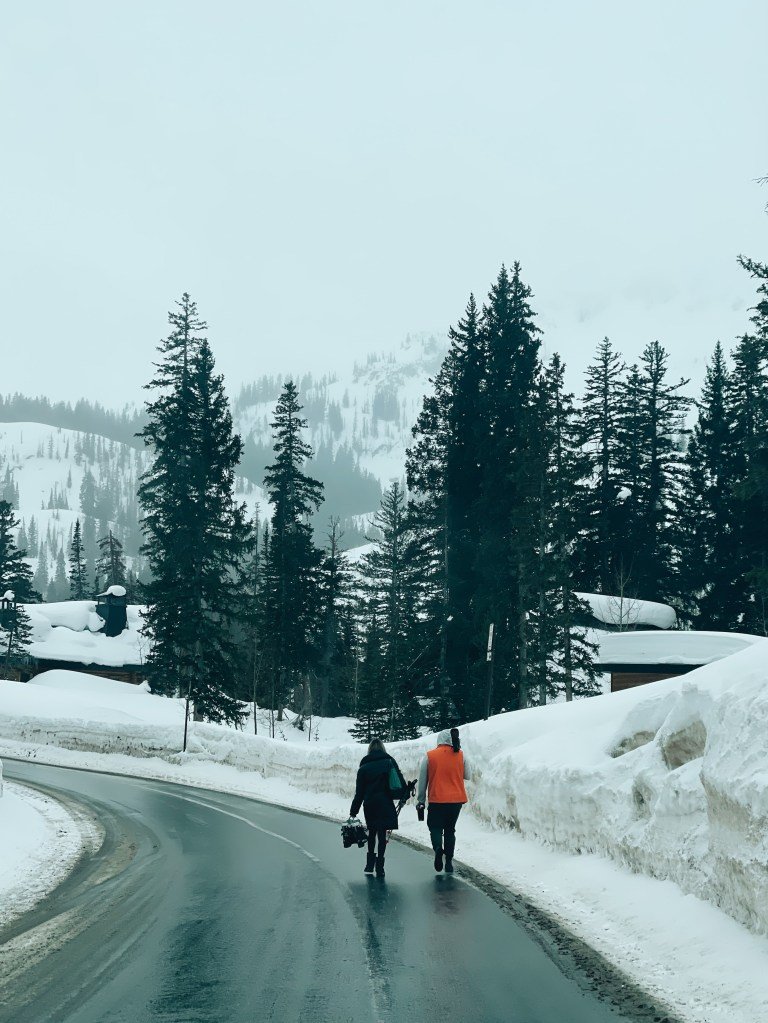
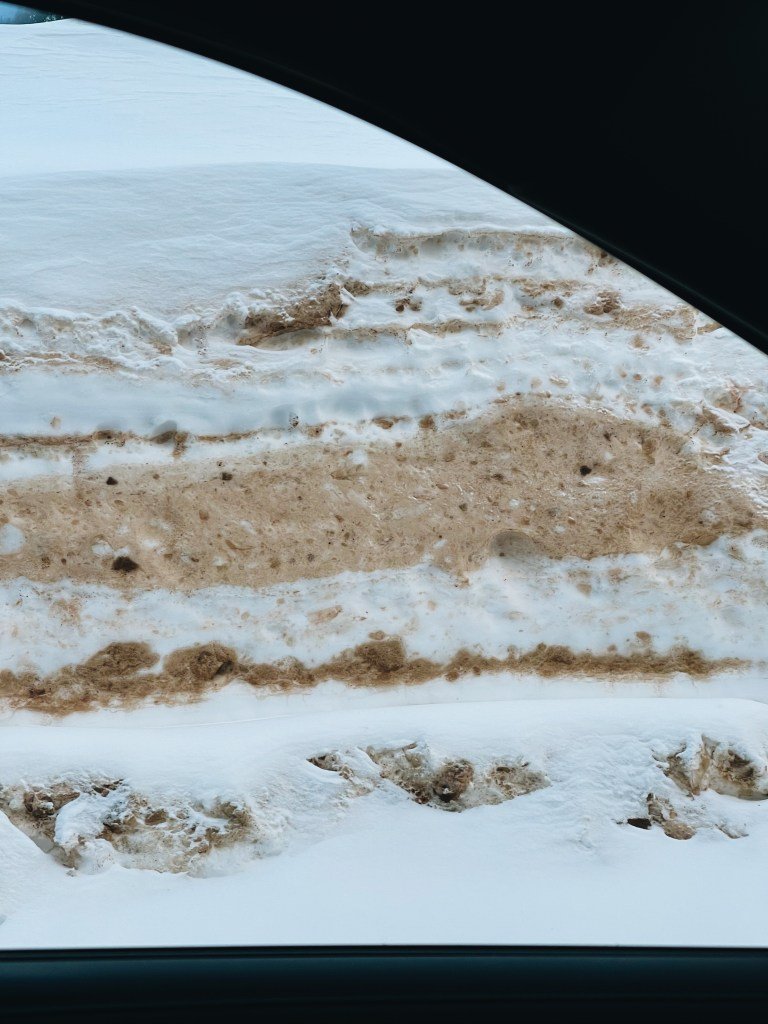
    Today we went skiing and snowboarding at Brighton, which is in Big Cottonwood Canyon. It was cool seeing the landscape transform and the temperature drop as we went from 4,300 feet (in Salt Lake City) to 8,755 feet (at the base of the mountain). Here are a few snaps from the road.

    Shot on iPhone

  • 12th annual

    For those of you who are long-time readers of this blog, you might remember that I do an annual ski and snowboard trip with a group of close friends from both Canada and the US. This year should technically be the 14th annual, but we took two years off during the pandemic (though some of us did meet up to ski), and so we’re referring to this as the official 12th annual. The last one was in February 2020 in Fernie, BC, and this weekend we’re off to Park City, Utah.

    This annual trip is something that I look forward to all year. And it has really cemented my love of snowboarding and the mountains. For me, it’s this wonderful combination of outdoor activity, beautiful landscapes, unplugging, and catching up with friends that I have known, in many cases, for over 20 years. In fact, I know that this trip is the reason that a few of us decided to get together to build Parkview Mountain House (our upcoming “creative mountain retreat” in Park City).

    A big part of what we want to do with the house (when it’s hopefully ready next winter) is share our love of the mountains with others. We want others to experience what we experience when we go on these trips. At the same time, we felt like there was a huge gap in the market. Park City is a world-renowned ski and snowboard destination, and yet it still feels hard to find modern and design-focused places to stay. So we decided to create our own.

    There is, however, one small problem: my right knee. It has been bothering me for the last few years whenever I snowboard, and usually only when I snowboard, to the point where I have to get off the mountain. This obviously pisses me off. So I decided to spend the last 2 months training my tender knees with Noah Mandel. We’ll see if that did anything this weekend. But I’m so committed to the mountains that, if it helps, I’m even prepared to switch to skiing!

  • Canadian complacency

    The founder and Editor-in-Chief of Monocle Magazine, Tyler Brûle, recently had a nice trip to Ottawa:

    If you’ve never been to Ottawa, don’t bother. Of all the G7 capitals, it’s one that hardly conjures up much in the way of attractive images. Don’t believe me? Try it. What comes to mind? What stands out? You see what I mean? No Big Ben, no Lincoln Memorial, no Eiffel Tower. Ottawa might have had an easier time when Germany was partitioned and Bonn was its capital but that credit ran out when Berlin was reinstated as Haúptstadt and the Brandenburg Gate roared back as a symbol for the Federal Republic’s capital.

    He and his mom also thoroughly enjoyed their hotel:

    We walked into the bar and the whole space seemed gripped by a similar force that plagued the front desk: no speed, movement or sense of urgency. A man-child showed us to the table and barely said a word. His colleagues at the bar were having their own discussion, disconnected from the patrons around them. I started to laugh. My mother urged me to stop. “It’s incredible that this is the best that our country can do for people coming to the capital, no?” I said.

    As an unabashedly proud Canadian, this is deeply upsetting. It is upsetting because a lack of movement, a lack of urgency, and an overall lack of engagement are truly terrible qualities to possess. But more importantly, it is upsetting because one could argue that Tyler’s Ottawa and hotel experiences were a microcosm of some broader national issues around Canadian complacency.