Daily insights for city builders, delivered every morning at 6 AM ET. I’m Brandon Donnelly — a Toronto-based real estate developer and founder of Globizen. I’ve been writing here since 2013.
We checked into a hotel in Montréal last night and I discovered this room service robot sitting next to the elevators. I have been told that if you ask it nicely, it will deliver champagne to your room. But I have yet to confirm this invaluable service.
Montréal is one of my all-time favorite cities. I have been coming here regularly since I was a teenager and I have always felt uniquely drawn to it. It is the history, the urban grandeur, and the way that it feels effortlessly sexy. Not many cities are like this.
So I’m happy to be ringing in the new year with family in this great city. Happy new year, everyone.
Winemakers in Niagara will tell you that southern Ontario isn’t the easiest of places to grow and make wine. But whatever, I think that Niagara is highly underrated. Niagara has some exceptional wineries that you really should explore if you aren’t familiar. Ontario is also the largest ice wine producer in the world, by a long shot. We produce something like 90% of the world’s supply. Ice wine can be a bit of an acquired taste — they’re sweet. But if you get a chance, try one from Stratus. They are supposedly the driest in the world.
I don’t know how the wine demographics have shifted in other regions, but we were told over the weekend that 10 years ago it was mostly gray hairs who were out at wineries buying wine. Today, there are tons of young people in their 20s, 30s, and 40s. And we certainly saw that over the weekend. This shift has winemakers now adjusting their wines. I couldn’t tell you what a younger wine palate wants, but apparently it’s something.
Lastly, there is a complete lack of cool and modern boutique hotels in the area. I would imagine that part of this is because the Niagara wine region is still emerging. But I think the other reason has to do with my previous point: younger people now want to go to wineries and the hospitality sector hasn’t yet caught up. This strikes me as a massive opportunity.
The first time I went to Italy was, I think, when I was about 18 or 19 years old. My friend and I took the train down to Milan from Zug, Switzerland (where his father lives), and we got out of the train station without any idea as to where we were going or where we were going to stay. We were young and brazen and clearly not very prepared. I was probably also wearing Diesel jeans and holding a Sony Ericsson T68 in my hand. Sadly, neither of these things were all that helpful as travel aids.
Today it’s impossible to imagine traveling without our smartphones and apps like Google Maps, Google Translate, Airbnb, Uber, and many others. I know that Uber has received its share of criticism over the years, but if you want to fully appreciate what Uber brought to the world, go to a place that you don’t know, that is generally unsafe, and where you don’t speak the language. It becomes invaluable. (This was Rio de Janeiro for me.) But even without all three of these things, it’s an incredibly powerful tool.
In situations where there is zero overlap in languages, I have also used Google Translate to have entire conversations. When push comes to shove, I prefer this approach over trying to impose English (or French) on someone. After all, I am the visitor. I should be the one bending as much as possible. You can also use the app to photograph a restaurant menu and have the entire thing translated in realtime. This to me — realtime reading — feels like a powerful use case for when augmented reality arrives.
I also like to use to Google Maps to fastidiously track where I want to go and where I have been. I love logging my travels, and that is much easier to do today compared to the Diesel jean days. I also try and remember to pre-download whatever maps I need so that I’m less reliant on roaming. Here is what Marseille and Sicily look like right now following our trip:
(If any of you are looking for recommendations, CRABE-TORO was our absolute favorite restaurant in Marseille and Càssaro was our favorite place for a drink in Noto, Sicily. We, unfortunately, never tried the food at the latter, but I’m sure it’s terrific.)
Technological change has always elicited criticism, negative externalities, and some people wishing that things would just remain as they are. And there is, of course, something liberating about getting off a train in a foreign city and figuring out things as you go. In Milan, we simply walked into various hotels, asked them what their rates were, and then probably got taken advantage of as two young Canadians.
At the end of the day, though, I am a firm believer that the world is a better place because of technological progress. From the Gutenberg printing press to Google Maps, technology empowers us as humans. And I have little doubt that 10 years from now we’ll all be traveling with some sort of augmented reality device and romanticizing the good old days of pins on a Google Map.
For the Canadian readers out there, I wish you all a happy Thanksgiving weekend. I am back in Toronto and regularly scheduled programming will now resume on the blog. I hope you enjoyed some of the post diversions over the last 10 days.
I have written before about how Lisbon’s kiosks both anchor and beautify the city’s public spaces. I have also written about how Toronto should have something similar — #KioskTO anyone?
Some of you might remember an expanded street food program that the city piloted many years ago. It was a complete and utter failure. In my opinion (and from what I can remember), it was too heavily regulated. The food ended up being far too expensive and, frankly, none of it was very good.
That’s not how this should work. The entire point of things like food trucks and street kiosks is that they are cheaper alternatives to a conventional physical location. You can also more easily place them in locations where demand is being underserved.
The one pictured here is in Catania, Sicily. I carried my beer over from a panini shop down the street and then we ordered three espressos for a total of 2€. I tried to sit on a crate they had lying on the ground but I ended up breaking it. Sorry, guys. So we stood instead. It was all rather civilized.
Let entrepreneurs figure out what to sell and where. It will be a boon for both small business and for our public spaces.
P.S. I tweeted this photo out earlier today and it elicited a good discussion on Twitter. Toronto wants this.
So it turns out that the narrow streets in Le Panier (in Marseille) are actually far too wide at nearly 13 feet. What were the planners even thinking back in 600? Here’s a street I found in Noto, Sicily at just over 4 feet. I’m not sure if this is considered some sort of tertiary lane or not, but it had a street sign, addresses, and businesses in a courtyard at the end of it. So I’m going to assume it’s a bona fide street. It’s hard to imagine getting much tighter than this. I wonder if Jeff Bezos delivers here.
This afternoon we went to the Mucem (Museum of Civilizations of Europe and the Mediterranean) here in Marseille. By far, my favorite exhibition was one that dealt with the urbanization of five cities surrounding the Mediterranean — namely Marseille, Venice, Istanbul, Cairo, and Alger. At one point, this was the center of the commercial world. Great empires were forged and great fortunes were made here. But things have changed a little since then. And in some cases, what we are now left with are scenes like the one you see above (photograph by Martin Parr). This is easily the greatest photo of Venice I have ever seen. Venice is a tiny city, but it receives tens of millions of tourists each year. This photo does an extraordinary job of capturing what that might feel like.
I love seeing these little Invaders all over Marseille. They are everywhere — and usually in a place where you’d be looking even if it wasn’t there (see above). I just learned that there’s also a game you can play with them called Flash Invaders. The way it works is that you earn points every time you come across one and snap a photo. I haven’t been playing. But even without that, they are a lot of fun to discover. I see them as 100% public art and I wish we had something similar in Toronto.
I have written about Le Corbusier’s Cité Radieuse in Marseille many times before on the blog. It is one of the most influential multi-unit buildings of the 20th century. For better and for worse, it inspired a generation of architects. But up until this afternoon, I had yet to actually see it in person. Now that I have, here are 3 takeaways.
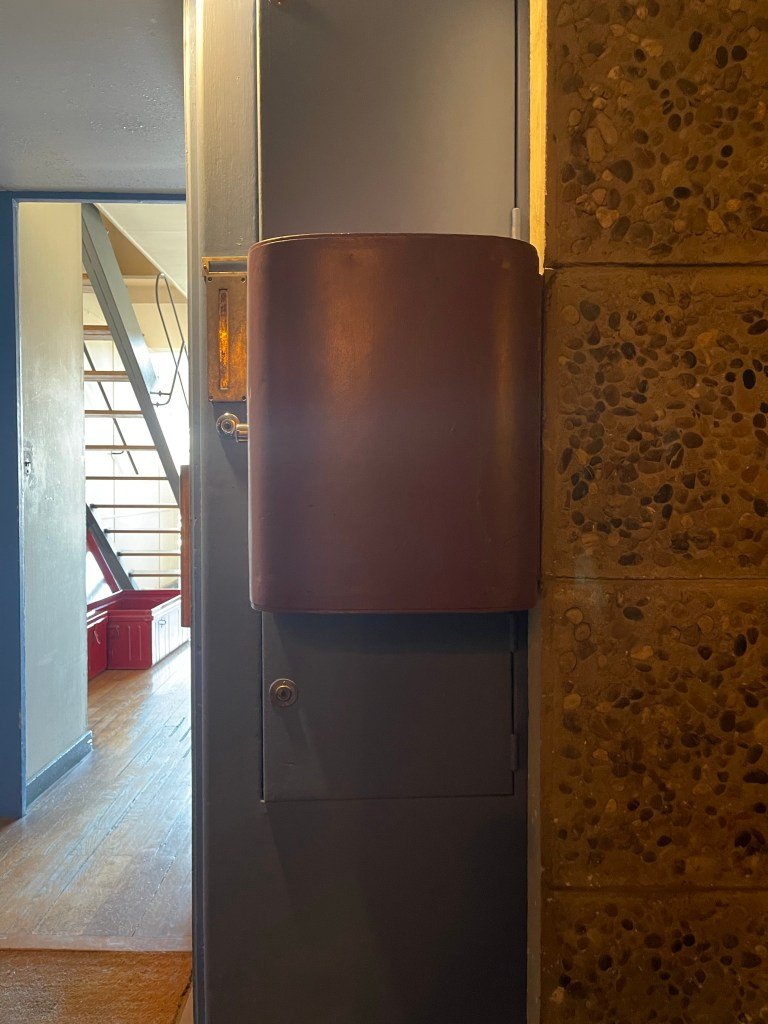
The corridors throughout the building were thought of as “streets” in a vertical village. Because of this, each street had a mailbox and each front door came equipped with an elaborate delivery system. The large curvy thing pictured above was for general deliveries (mostly food I’m guessing). And the smaller door below was for ice block deliveries (i.e. refrigeration). In both cases, these doors could be accessed from inside the kitchen.
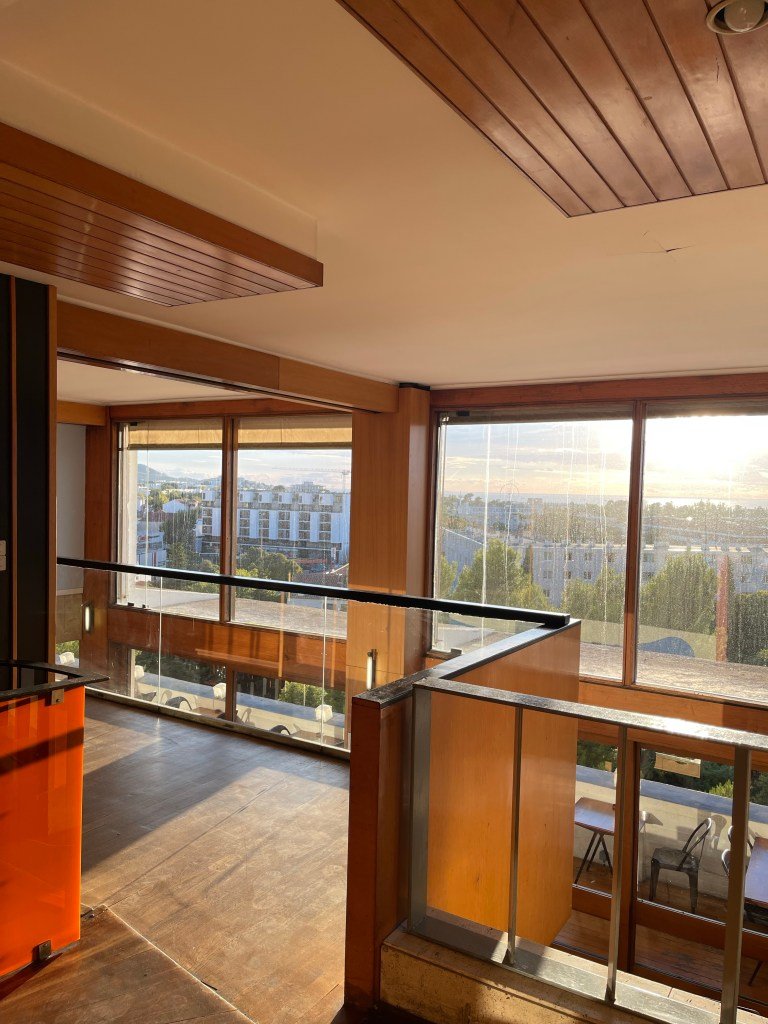
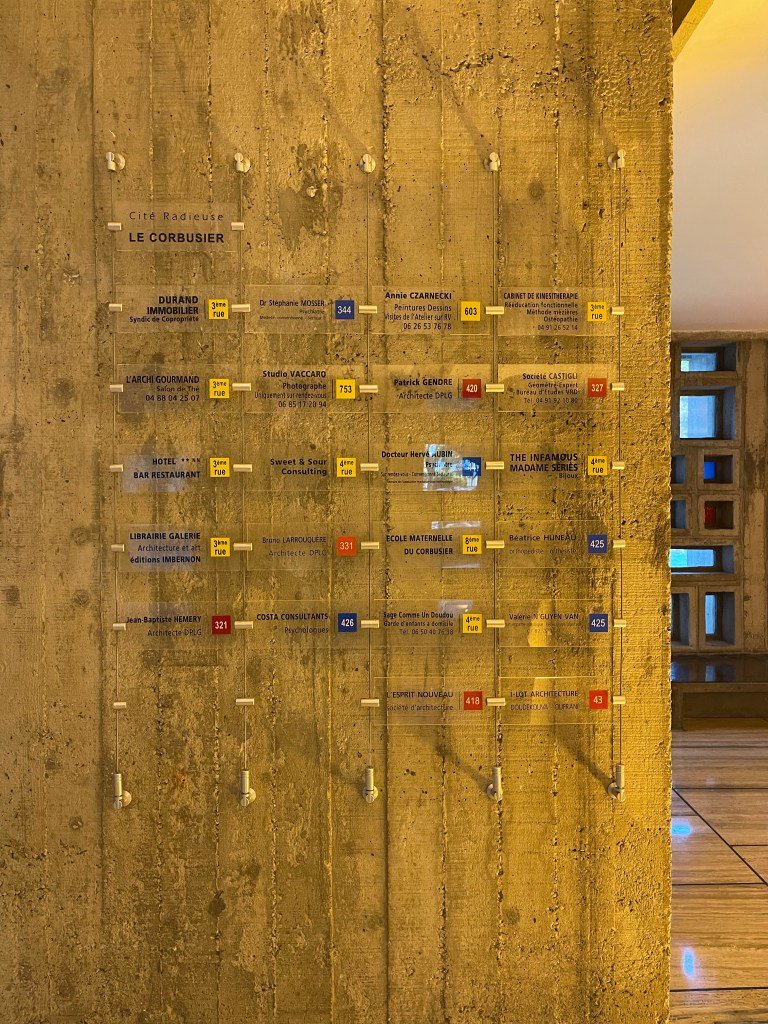
The two “streets” in the middle of the building were dedicated to commercial uses. And by being in the middle of the building, they were equidistant from residents living either above or below. I was told that when the building first opened in the 1950s, these streets were actually quite successful — filled with everything from bakeries to grocery stores. So you can imagine people running deliveries up and down to the other streets. But that quickly fell off as the retailing landscape developed in Marseille and in France. Today, this portion of the building houses mostly offices, art galleries, and specialty boutiques. Though there remains a widely-used 21-room hotel (pictured above).
To fully appreciate what the Cité Radieuse meant for housing in France, you kind of have to imagine what the rest of its stock was like at that time. The introduction of duplex and dual aspect units with modern kitchens and bathrooms and with views of the sea, represented meaningful progress at the time. But it is interesting to see how much ceiling heights have changed over the years. They’re really low here — well under 8 feet. And that is probably its greatest Achilles’ heel today.
If ever you happen to find yourself in Marseille, I would encourage a visit to the Cité Radieuse. Many of the things we do today started in this building. And there are some other ideas here that might also be worth bringing back.
I have written about Koto a few times before (check here and here). They design and fabricate beautiful modular homes and cabins that are designed to connect you back to nature.
One location where you can already find these cabins is on Fritton Lake, which is about 2 hours and 45 minutes outside of London. The way it works is that you buy a plot of land in the Fritton Lake community and then you choose which Koto home you would like.
There are two models available — Ki and Miru — and they can be customized as either 2 or 3-bedroom cabins. Apparently it then takes somewhere between 4 and 6 months for your new cabin to be fabricated and delivered to site.
But today it’s perhaps easy to imagine a world where only the top end of the market builds on-site and custom. Koto is also evidence that these homes can be just as, if not more, beautiful and sustainable.
FYI: The Koto team is having an “open day” on Saturday, October 1, 2022 at Fritton Lake. If you happen to be in the area and would like to check out the cabins (and do things like swim in the lake), drop them a note to book a spot.