Daily insights for city builders, delivered every morning at 6 AM ET. I’m Brandon Donnelly — a Toronto-based real estate developer and founder of Globizen. I’ve been writing here since 2013.

Category: Park City / Utah

  • Salt Lake City wants to build a new linear park around downtown

    It is well known that Salt Lake City has some of the biggest blocks and widest streets in the United States. This is typically a challenge if you’re trying to create a walkable urban environment; however, it can also be an opportunity, because it means you have a lot of public space that you can do other things with.

    It is for these reasons that SLC is working on something called the Green Loop:

    And the idea is to turn a ring of downtown streets into a new linear park that looks something like this:

    More specifically, the Green Loop wants to do the following five things (copied verbatim):

    • Develop a robust downtown urban forest
    • Serve as an active transportation corridor for walking and biking
    • Improve water quality through stormwater management
    • Create inviting social spaces that provide a variety of amenities and attractions
    • Create public front yards and gardens within the downtown that support the needs of all users

    In my mind, albeit as a non-Salt Laker, this has the potential to be truly transformational for the city and as impactful as the High Line was for New York. So if you are a local, I would encourage you to complete this short project survey. It’s open until Nov 30.

  • What’s real anymore?

    Generative AI has made it a lot easier to make things up using software like Photoshop. This, of course, isn’t a new thing. But it has gotten significantly easier for people like me who aren’t experts in photo editing.

    Here are two examples that I created this morning. The first is a photo of me from last summer in the Salt Flats of Utah:

    And here I am again after adding new clothes, a dog friend, a couple taking photos, a more impressive backdrop, and some sort of body of water in front of me:

    The second is a photo from Paris:

    Now here it is again with tall buildings in the background, glass storefronts, a few neon signs, string lights above the middle of the street, a bollard blocking car access, and a few more people:

    These aren’t entirely perfect if you’re really paying attention. But for the most part, I think they’re pretty convincing — especially the second one.

    Generated images are only going to get better going forward and I don’t think that’s a bad thing. But we do have to start training ourselves to question whether something is real or doctored. It’s already hard to tell.

  • Summit County, Utah to vote on acquisition of 8,576-acre ranch

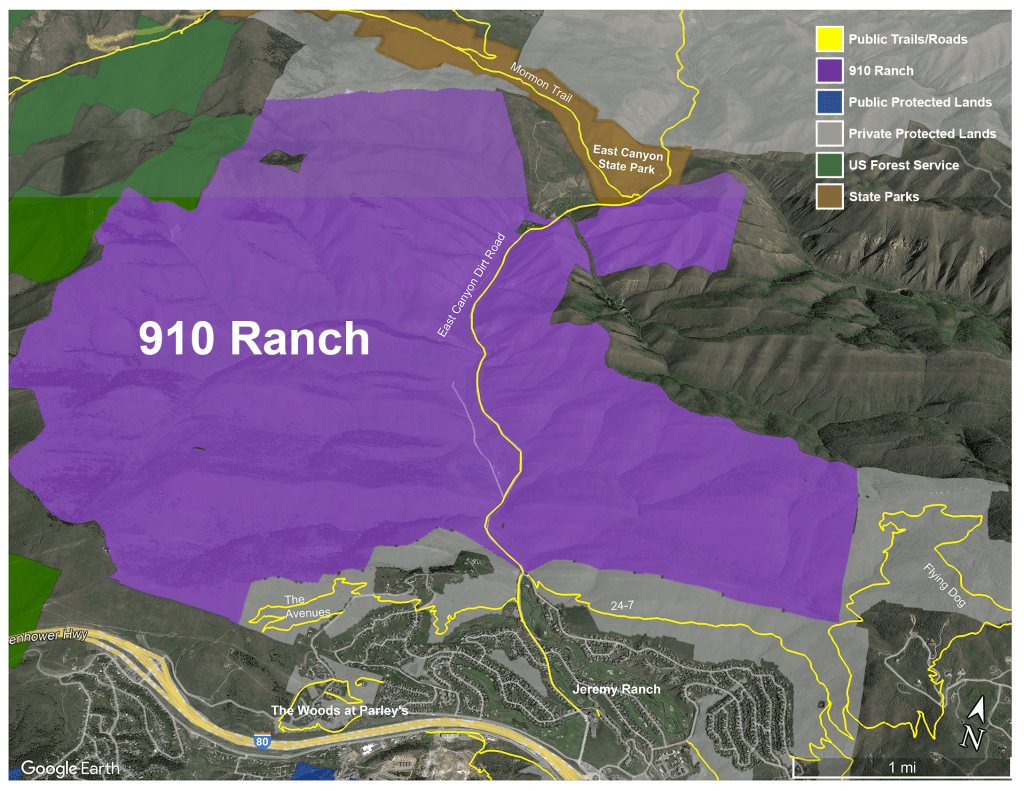
    Summit County Council is holding a special meeting this week to vote on the acquisition of an 8,576-acre property next to Jeremy Ranch and around the corner from Parkview Mountain House.

    The County Manager has recommended approval of the deal and these are the terms:

    – $55 million total purchase price (about $6,413 per acre)

    – Structured through a $15 million three-year option to purchase, with a right to extend for another year for an additional $5 million (option fees to be applied toward the purchase price)

    – During the option period, the County will have control of the property and pay $5,000 per month in rent

    Another way to look at this deal is that Summit County needs to initially come up with $15 million of equity. This is because they are getting seller financing for the remaining $40 million. (Implied loan-to-value of about 73%.)

    After 3 years, they will have to put in another $5 million, which lowers the implied LTV to about 64%. But in both cases, and assuming the $5k per month is all the County needs to pay, there’s effectively no interest on this 4-year “financing”. ($60k per year on $40-45 million.)

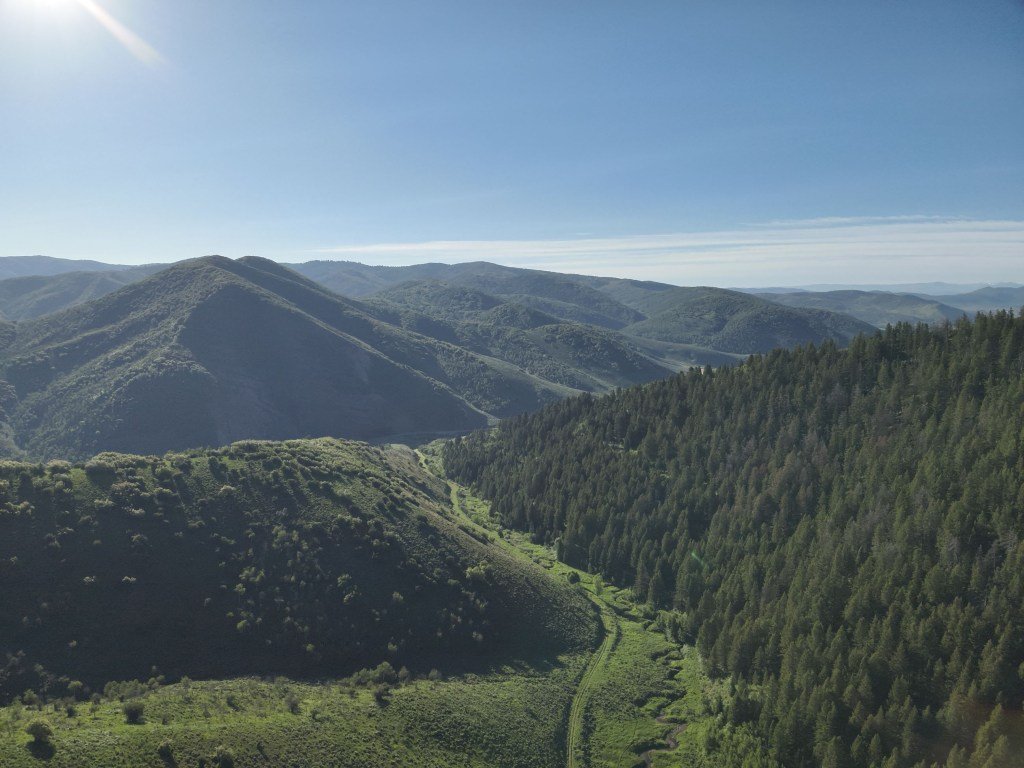
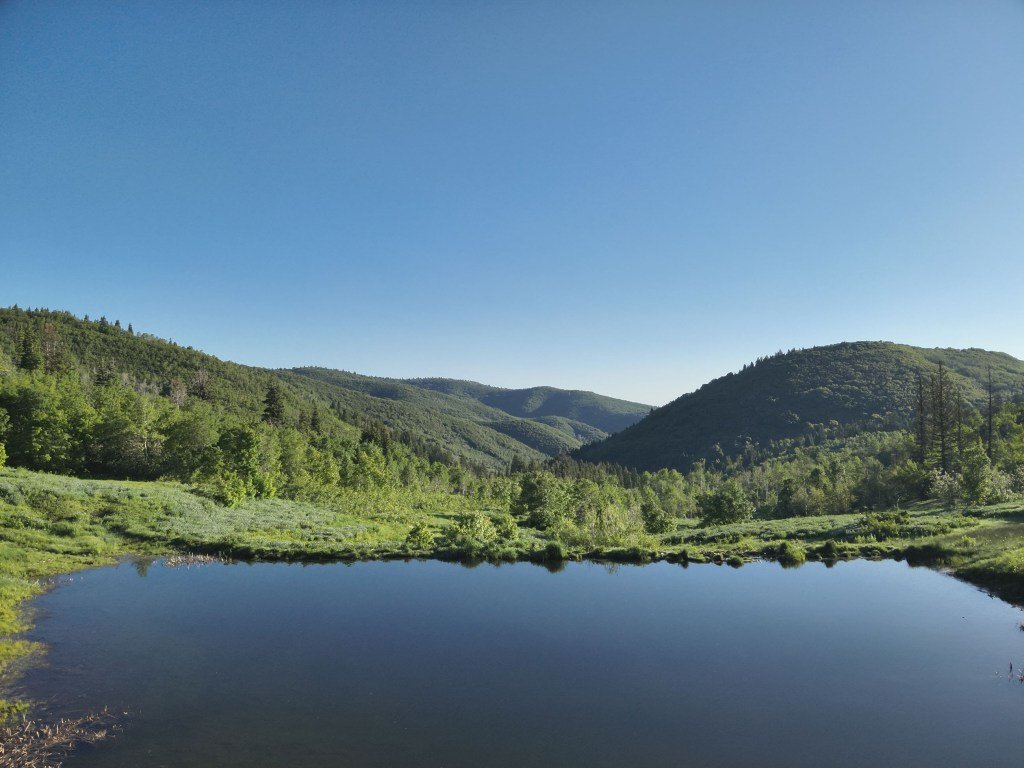
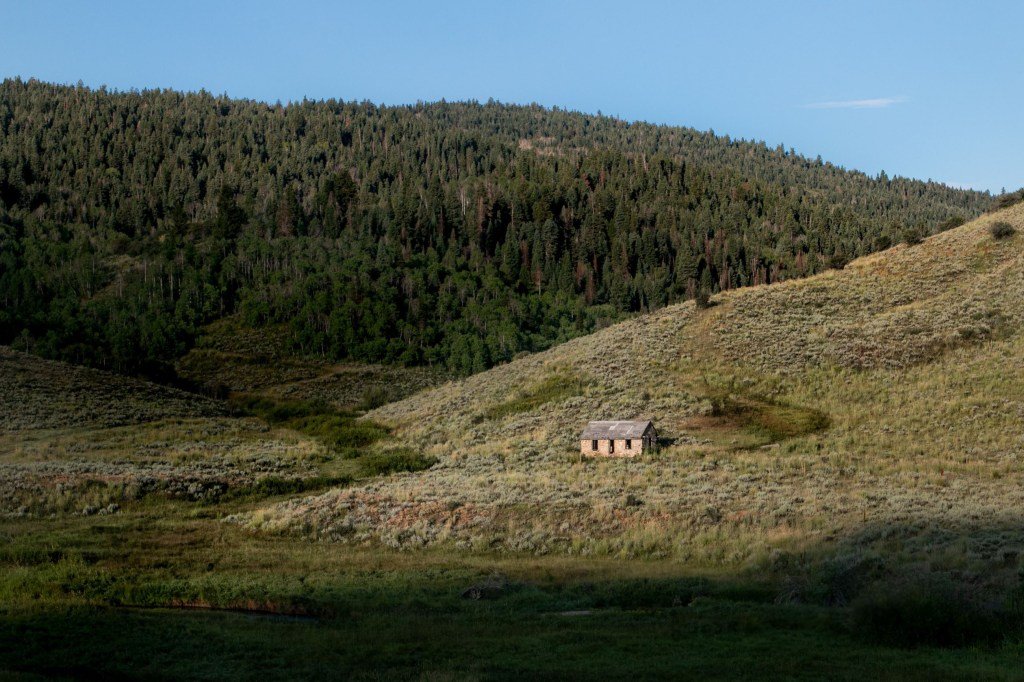
    The purchase price is also only ~$6k per acre, which should tell you that this is not development land. Its value is what you see here:

    And this is exactly what Summit County intends to do with the land: conserve it. As one of the last contiguous mountain ranches in the area that is privately owned, this sure seems like a win for the community. It’s a pretty good deal, too.

    Images: Summit County, Utah

  • Income migration across the US between 2020-2021

    Between 2020 and 2021, so right when the pandemic hit, Manhattan alone lost $16 billion of federally-taxable income, according to this recent study by Economic Innovation Group. And San Francisco saw net migration that reduced its federal income tax base by more than $8 billion. At the time, this represented about a 20% decline.

    Now, I don’t know to what extent this maybe changed, slowed, or reversed from 2021 to today, but the IRS tax data is pretty clear: the pandemic accelerated a longstanding trend of Americans moving out of older coastal cities toward newer, sunnier, and more sprawling cities in the sun belt and in the Mountain West region.

    Here is a map from EIG showing the difference in incomes between households moving in and moving out of each US county. A dark blue county means that the people who moved in were richer than the people who left. (For an interactive version, click through to their website.)

    To give two examples. Here is San Francisco County, which lost nearly 20,000 people with average incomes of around $240,000 per year.

    And here is Summit County, Utah (home of Parkview Mountain House in the Mountain West region), which saw 81 new tax returns and an average newcomer income of $395,000 per year.

    This is an important reminder that people — especially people of means — vote with their feet. If they stop liking a place, they will leave, along with their incomes, to somewhere else. Indeed, in the case of this IRS data, the income flows to these growth regions seem to have been largely driven by upper-income households.

  • Footings and foundations in Park City

    We poured the concrete footings/foundations for Parkview Mountain House this week. Above is a photo of the pour. We’re about two weeks behind schedule because of delays related to site works and excavation. (We’re building into the side of a mountain.) But I’m hopeful we can make it up once we finish concrete work and move on to wood framing next month.

    For those of you who like details, here’s a section showing the footing and retaining wall on the back of the property facing the slope of the mountain:

    Our tallest retaining wall is going to be 15 feet high, which, as I understand it, is more or less the maximum we could have done here without getting into more elaborate structural solutions (such as tiebacks). So the team spent a lot of time solving a design puzzle that involved the height of this retaining wall, the maximum allowable zoning height for the site, and our choice of established grade.

    Onward. More concrete to come and then we move to wood. It’s a race to get “closed in” before the snow starts up again.

  • “Offices are over”

    This is an interesting article from Brookings that talks about the “myths of converting offices into housing.” What I especially like about the article is that it’s nuanced, and it directly addresses many of the myths that currently surround offices. The first one is that “offices are over.”

    Regular readers of this blog will know that I don’t agree with this. And the article provides some good data points to support this:

    • Office utilization may be below pre-pandemic levels in many cities, but the data suggests that we have not yet hit a plateau. Utilization rates continue to increase, albeit gradually. So if we are to be more precise here, it’s not that some people will never return to the office, it’s just that it’s taking longer than I think many people expected.
    • That said, this is not the case in all cities. Downtown Salt Lake City, as we have talked about before, is the busiest it has ever been. Similarly, ridership on the Utah Transit Authority network is up 26% from pre-pandemic levels.
    • Europe is generally ahead of North America with utilization rates in the 70-90% range, according to JLL. And Asia is even further ahead with rates in the 80-110% range. Meaning that, similar to downtown Salt Lake City, there are (many?) cities in Asia where more people are in the office today compared to in 2019.

    So I would not be so quick to claim that “offices are over.”

    For the full article, click here.

  • Utah just chose an urban gondola for Little Cottonwood Canyon

    Every now and then somebody comes forward and proposes an urban gondola. The most recent one that I have heard about here in Toronto was this one from 2016 called the “Don Valley Cable Car.” But like many gondola proposals, it sort of just disappeared. Probably because it wasn’t entirely necessary. (I just checked their website and it is now down.)

    However, there are rare instances where a gondola makes a lot of sense. Medellin, for example, has a very successful urban gondola system that my friend Alex Feldman wrote about, here on the blog, after a visit to the city back in 2014. In this case, the gondola was instrumental in connecting hill-side communities that were previously disconnected from the rest of the city.

    Another less urbanized example is the one that Utah (Salt Lake County) is planning to build in Little Cottonwood Canyon. I wrote about this project back in March when I was there and, today, the Utah Department of Transportation announced their preferred mobility option. It is called Gondola Alternative B and, as far as I can tell, it is still the longest and most expensive urban gondola ever proposed.

    Here are the details in graphic form:

    To summarize, though:

    • The system is being designed to carry 1,050 passengers per hour, with cabins departing every 2 minutes.
    • The gondola itself is expected to cost $370 million, but when you add in a new parking garage for 2,500 cars, tolling infrastructure on the existing State Route, and other improvements, the total all-in capital cost is projected to be $729 million. The route itself is somewhere around 10 miles, so let’s call it $73 million per mile.
    • At the same time, the projected operating costs are relatively low at $8 million per year, so this option actually has the lowest 30-year lifecycle cost out of all the ones that were studied. The other alternatives included widening the existing roadway, enhancing the bus service, and adding rail. There was also one other gondola option, which was presumably called Gondola Alternative A.

    If you’re wondering why this is likely a good idea, check out my post from this past winter.

  • Vacation rentals in Park City

    We spent his morning meeting with prospective property managers for Parkview Mountain House. Here’s what we learned about the short-term rental market in Park City, Utah:

    • Property management fees generally range from 20-35% of revenue (these are turnkey solutions)
    • Airbnb is somewhere around 80% of the market here; though it does tend to skew toward slightly smaller rentals, whereas VRBO skews larger
    • Sundance Film Festival and New Year’s Eve are the two busiest times in Park City (demand greatly exceeds the available vacation rentals — 120%?)
    • Many Sundance guests tends to be people on expenses accounts: not price sensitive, but apparently very demanding
    • Winter is obviously peak demand because of snowboarding and skiing, but demand is still strong in the summer because of cycling, hiking, golfing, fishing, etc.
    • The two slowest times are spring (mud season) and fall
    • Many PMs will track booking lead times, which is the period of time between booking and check-in
    • This past winter season, demand was strong but average lead times were way down — meaning people were booking last minute and responding to snowstorms
    • During heavy snowfall seasons, like the one Utah had this past winter, you’ll likely need to budget for roof snow clearing (a few thousand for the season)
    • Heated driveways are a very good idea in the mountains
    • The most popular / most searched amenity is by far a hot tub; servicing one will run you about $125 per month

    I always find it fascinating to dig in and learn about a new industry and/or market. And that’s exactly what we did this morning.

  • /imagine prompt: A silver Land Rover Defender driving through a snowstorm in the mountains of Utah

    Like everyone else, I have started playing around with Midjourney to create AI-generated images. Here are two that I created last night using the prompt: “A silver Land Rover Defender driving through a snowstorm in the mountains of Utah.”

    Now, you can tell that these are AI-produced images, but it’s still wildly impressive that something like this can be easily generated in a matter of a few seconds. And that’s the thing about AI: it’s easier to get, especially compared to crypto. It’s immediately useful and it’s immediately clear what this can and will disrupt.

    Levis, for example, just announced that it will start using AI-generated photography in lieu of actual fashion photoshoots. This is obviously suboptimal for photographers, models, makeup artists, and so on, but a hell of a lot easier for Levis. I would also imagine that the same thing will happen to real estate renderings and many other things beyond just imagery.

    Ben Myers and Steven Cameron recently speculated on their podcast — Toronto Under Construction — that AI could be used for reviewing development applications. Imagine how much this would speed up reviews and the delivery of new housing! So there are very good reasons for why the hype cycle has moved over to AI from crypto and NFTs.

    However, I’d like to go on the record saying that my gut tells me that this will only make what crypto offers even more important. Permissionless public databases (as opposed to databases controlled by individuals/companies) and the ability to demonstrate authenticity/ownership, feel like two important things to me in a world where computers are constantly generating a flood of new content and nobody knows what is “real” anymore.

    It’s certainly a lot less tangible than, “hey, check out this badass Defender driving through the snow.” But I feel strongly that these two innovations will end up working together.

  • Why Utah wants to build the world’s longest and most expensive urban gondola

    If you drive around the Cottonwood Heights neighborhood in Salt Lake City, which I have done multiple times over the last year, you will invariably see lawn signs shouting for “no gondola!” And the reason for this is that last summer, the Utah Department of Transportation (UDOT) came forward with its preferred solution to traffic congestion in Little Cottonwood Canyon: an eight-mile long gondola all the way up and into the mountains. If built, this would apparently be the longest and most expensive urban gondola in the world.

    To try and explain why this is being recommended, I’ll give the example of what happened to us when we were there last week. We drove into Little Cottonwood Canyon on Tuesday morning when it was not snowing. We left Park City around 8am, passed through the valley (Salt Lake City), and arrived at Snowbird (resort) in around 45 minutes. This is normally how long it takes. But on the way up it started snowing, and it didn’t stop all day. (Nice!) So our drive home took significantly longer and looked like this (we were going 8-10 miles per hour all the way down):

    This is what happens when it snows in the canyons. Which is why a wise bartender at one of the resorts advised us that, “on powder days, you need to leave the valley at 6AM. Because at some point, some asshole is going to think they can get up the canyon in a Tesla, and they will ruin it for everyone. It’s better to nap in your car at the resort than white knuckle for 2-3 hours.” During our drive home, we learned that he was not at all joking. This is what happens. And it is why UDOT wants to build one really long urban gondola.

    There are, however, some very good reasons why urban gondolas aren’t really that common. Portland has one. Medellín has one. And apparently both are quite successful. But other than these examples, they generally aren’t thought of as the most effective tool in the transportation arsenal:

    Gondolas are low-capacity vehicles that quickly get cramped if turned into high capacity ones. They don’t work well for multiple stops. As a result, they are a point-to-point transportation method with low capacity. They are also expensive, especially relative to how many people they might serve, making them financially unattractive options for most applications. At their best, gondolas work when traversing difficult terrain with a consistent but low ridership, which is why they’re most often deployed on ski resorts.

    But this situation is maybe a bit unique. It’s kind of urban transport, but really it’s for people to get up the canyon and shred deep powder. Here’s more on how it might work:

    The Cottonwood Canyon gondola would be a hybrid of sorts between urban transportation solution and resort-based gondola. The proposal is to build a massive 2,500-spot parking garage at the base of the canyon, about 20 miles from downtown and the airport, where people will park. They will then ride the gondola for 27 minutes to Snowbird or 37 minutes to Alta, a trip duration which has no parallel in the urban or resort gondola scene (the Snowbird tram, one of the most famous in the world, fits more than 100 people per tram but takes less than 10 minutes to ride). Even though the gondola would serve two ski resorts, it belongs more to the urban gondola concept because it is being proposed and recommended by the state’s transportation department as a solution to a recurring traffic problem.

    As a snowboarder, this sounds great. But it is, of course, complicated. Conservation groups are objecting, and some/many taxpayers don’t want to pay for a gondola that will largely benefit two ski resorts. Especially one that doesn’t permit snowboarders (I made this part up). So we’ll see. A final decision is expected by UDOT this summer. In the meantime, if you’re interested in urban gondolas, check out this recent article in Vice Magazine by Aaron Gordon (quoted above). He does a good job explaining both sides of this debate. And if you are interested in this topic, I’d be curious to hear whether you think this is a good idea or not.