Daily insights for city builders, delivered every morning at 6 AM ET. I’m Brandon Donnelly — a Toronto-based real estate developer and founder of Globizen. I’ve been writing here since 2013.

Category: Paris

  • Paris isn’t as architecturally conservative as it may seem

    September 13, 2025 · View original


    It would be easy to assume that Paris might be a city trapped in its architectural past. Its global brand is most often associated with the work of Haussmann from the 19th century. The city itself is almost entirely devoid of modern skyscrapers. And heritage preservation rules are, from what I gather, strict. But look behind and beyond Haussmann’s facades, and you’ll find a city that is progressive and experimental.

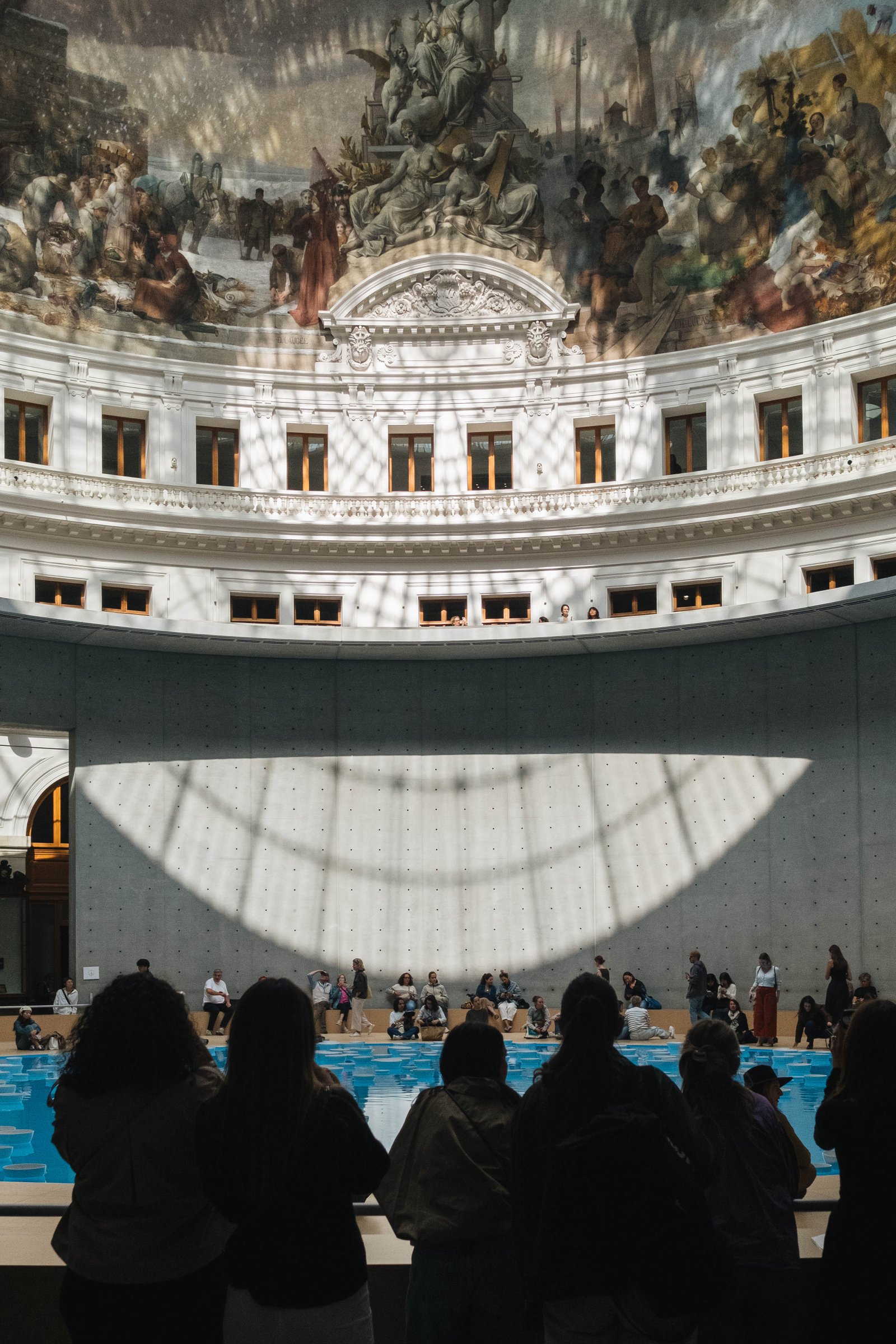
    Take, for example, the Bourse de Commerce. Originally constructed in the 18th century as a hall to both store and sell wheat, a recent renovation by Japanese architect Tadao Ando dropped an exposed concrete cylinder right in the middle of it. It is now a contemporary art museum and, in my opinion, one of the most architecturally interesting buildings in the city.

    Paris certainly cares about its past — as it should — but it’s also not afraid to intervene and break free from it in dramatic ways.

  • What it’s like to stay in a Paris aparthotel

    September 12, 2025 · View original


    We are staying in an aparthotel in Paris. We decided on this type of accommodation for a few reasons. One, we wanted a kitchen so that we could prepare meals. Two, we wanted to be able to do laundry, given that this is the last leg of our trip and we almost exclusively travel with carry-ons. And three, we wanted a workspace area.

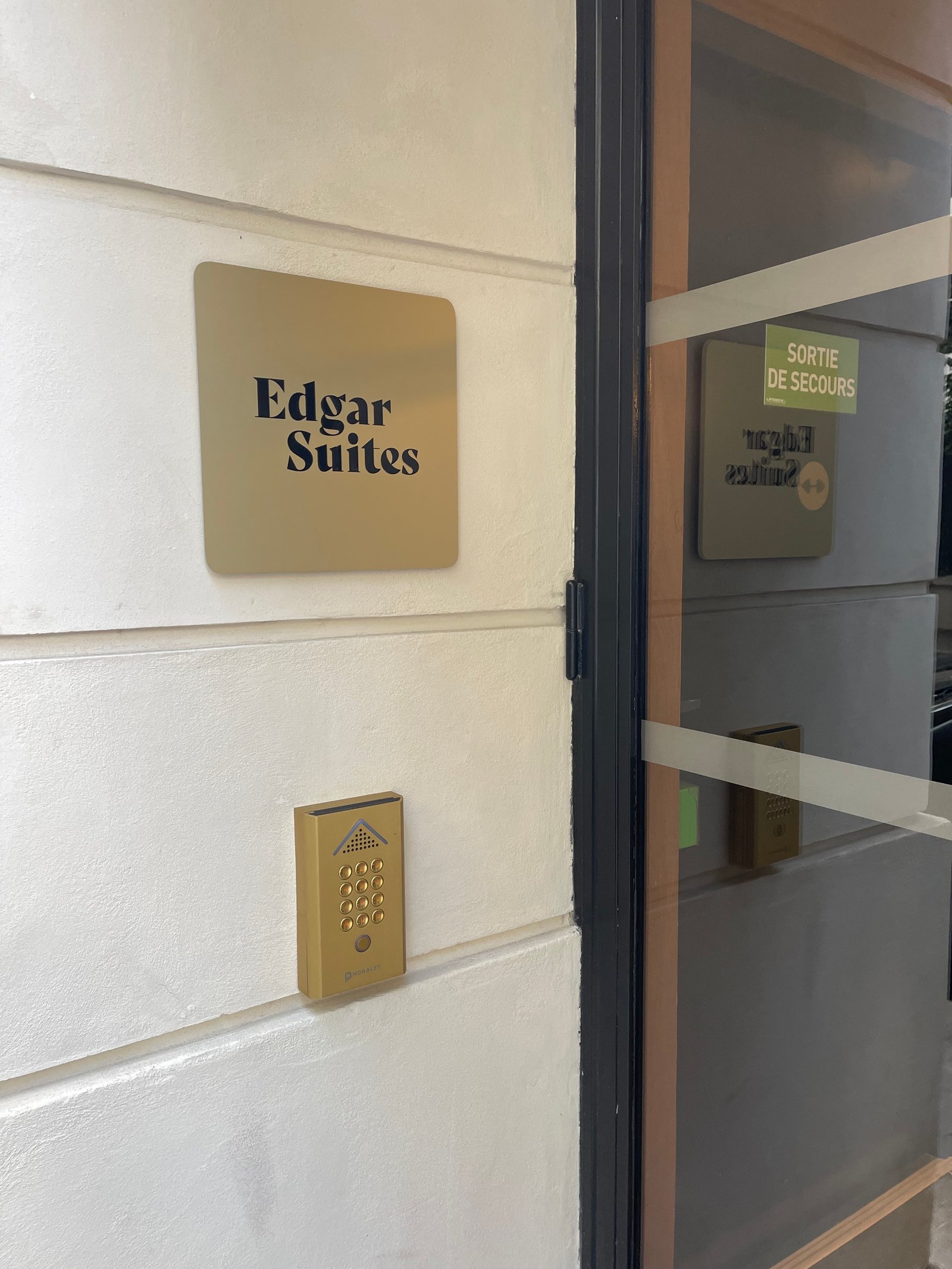
    The options for these criteria are generally aparthotels, serviced apartments, and Airbnb rentals. But we struggled to find a suitable Airbnb that was reasonably priced and didn’t feel lived in. So we ended up booking a place from Edgar Suites, which has a really nice portfolio of properties across Paris and other cities in France.

    My view is that we will see more of these kinds of properties as cities systematically work to restrict — and sometimes ban — Airbnb. And so a fourth reason I wanted to stay here was to do some market research.

    Here’s what I can tell you about our stay.

    The check-in process was entirely digital. The night before check-in, I received an email with a code for the building, a one-time code for our apartment (for initial validation), and a go-forward code once our check-in had been validated. Everything worked seamlessly.

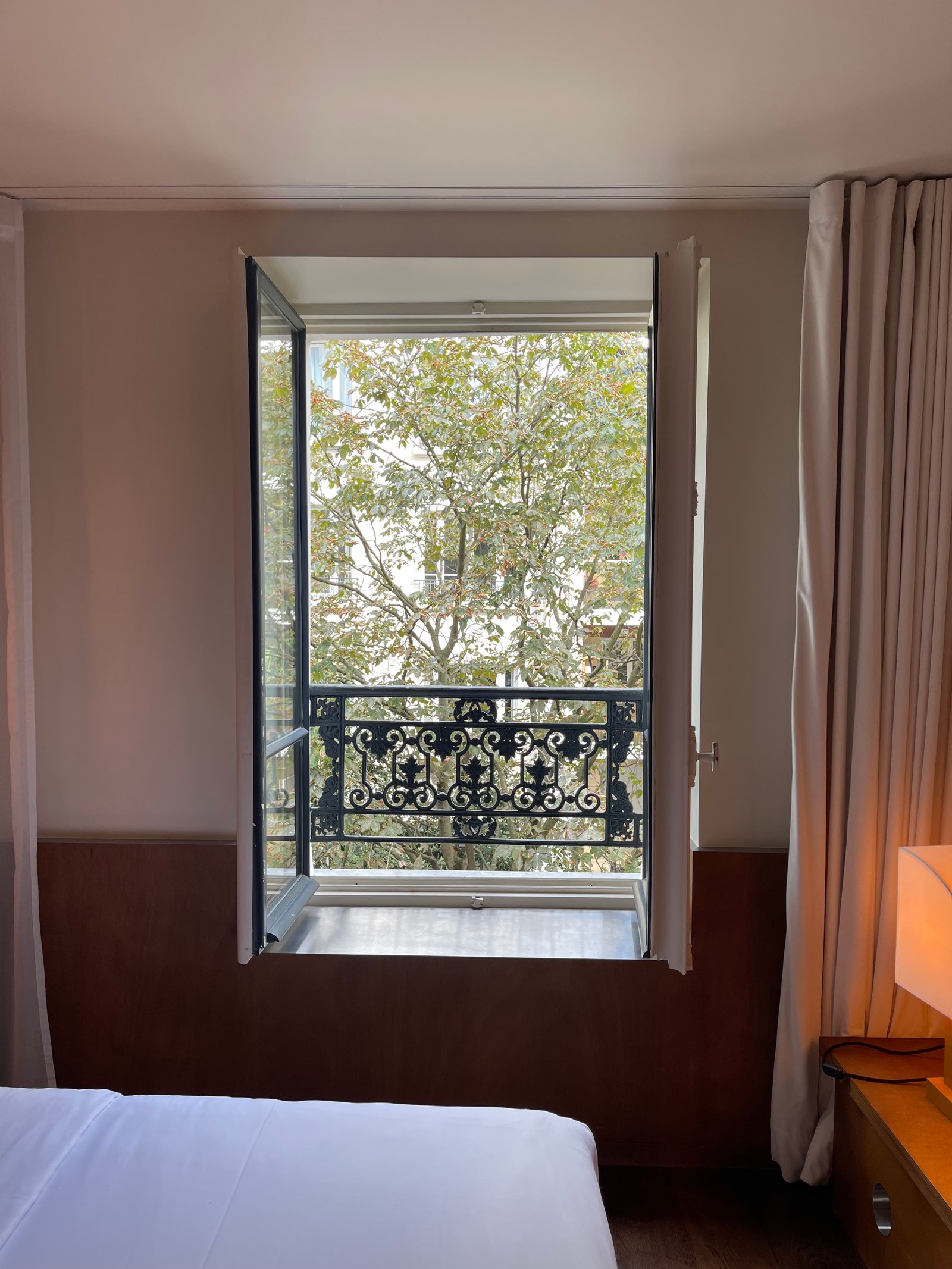
    There weren’t many pictures of our exact suite online, so, to be honest, we weren’t 100% sure what we were getting. But we knew it was going to be compact. In Paris real-estate speak, it’s a two-piece apartment. That means there are two rooms: a living/kitchen area and a bedroom. The bedroom is a generous 3m x 3.5m. And the street-facing window has a nice ledge that can be used for doing one’s makeup or as a place for brazen pigeons to land.

    The bathroom is a good size (about 1.5m x 2m), and there’s also a separate water closet (toilet room). These are extremely common throughout Europe no matter how small the apartment might be. In Canada, these are far less common and only really appear in the top-end of the market. I certainly think they’re a nice feature, but I personally wouldn’t sacrifice in other areas of a small space just to have it.

    The kitchen is more of a kitchenette. Its linear dimension is just under 1 meter (or 3’3″). We’ve made some fairly elaborate meals in this kitchen, but it certainly requires some jockeying around. It’s nice not having to eat every meal out, especially if you’re also trying to work.

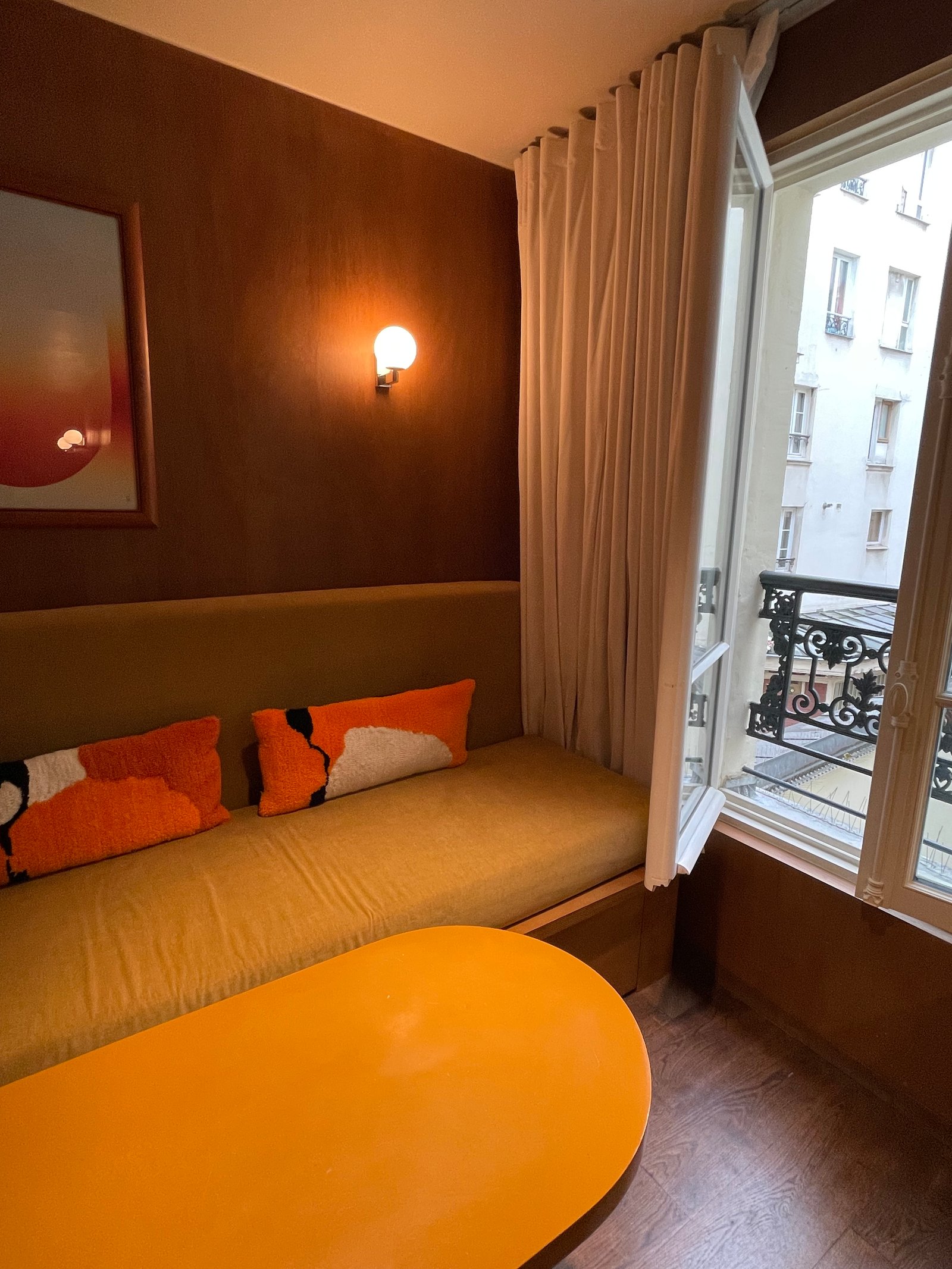
    Opposite the kitchen is banquette seating and a table for everything. It’s the dining table, the work table, and the kitchen prep table. It also folds up against the wall if you’d like to have exactly one incremental person come over and sit in this room. Outside of the kitchen/living area is the building’s courtyard (see here for plans of the building).

    For those of you who also like to nerd out about dimensions, it’s about 5.8m in its longest direction, which means that’s the separation distance between our kitchen and our neighbor’s bed. So even though this is a small space, it is a dual-aspect apartment. The toilet room also has a window opening up onto this courtyard space.

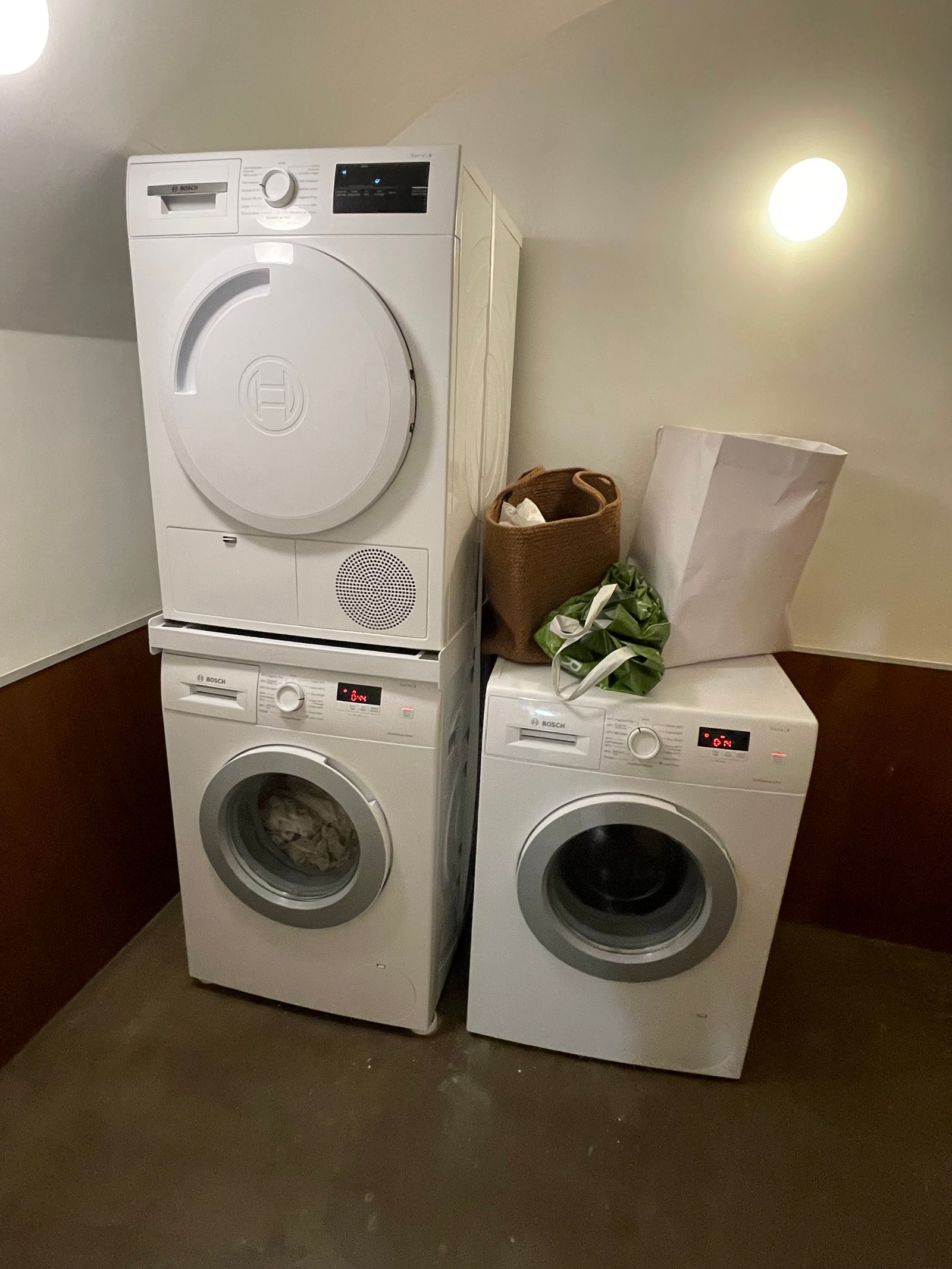
    Finally, the laundry facilities are located in the basement of the building. There are two washing machines and one dryer. We’ve done multiple loads and they’ve been great. There’s also a small gym on the main floor, which I would add to the list of highly desirable amenities for an aparthotel, or any hotel for that matter.

    Overall, we’ve been very happy with our stay. My only comments would be that a larger living space would be needed for longer stays, there’s a surprising lack of conveniently placed outlets in the apartment (one of my part-time jobs is charging devices), and better bathroom products would be a nice upgrade. My wife has taught me that desirable bathroom products, including body lotion, are a huge value-add in hospitality.

    If any of you have stayed in a great aparthotel or serviced apartment, please share a link in the comments section below. I am betting that they will only become more common for longer stays, family travel, remote work, and people who are less tethered to one place.

  • The New Paris: Discovering Greater Paris beyond the Périphérique

    September 11, 2025 · View original


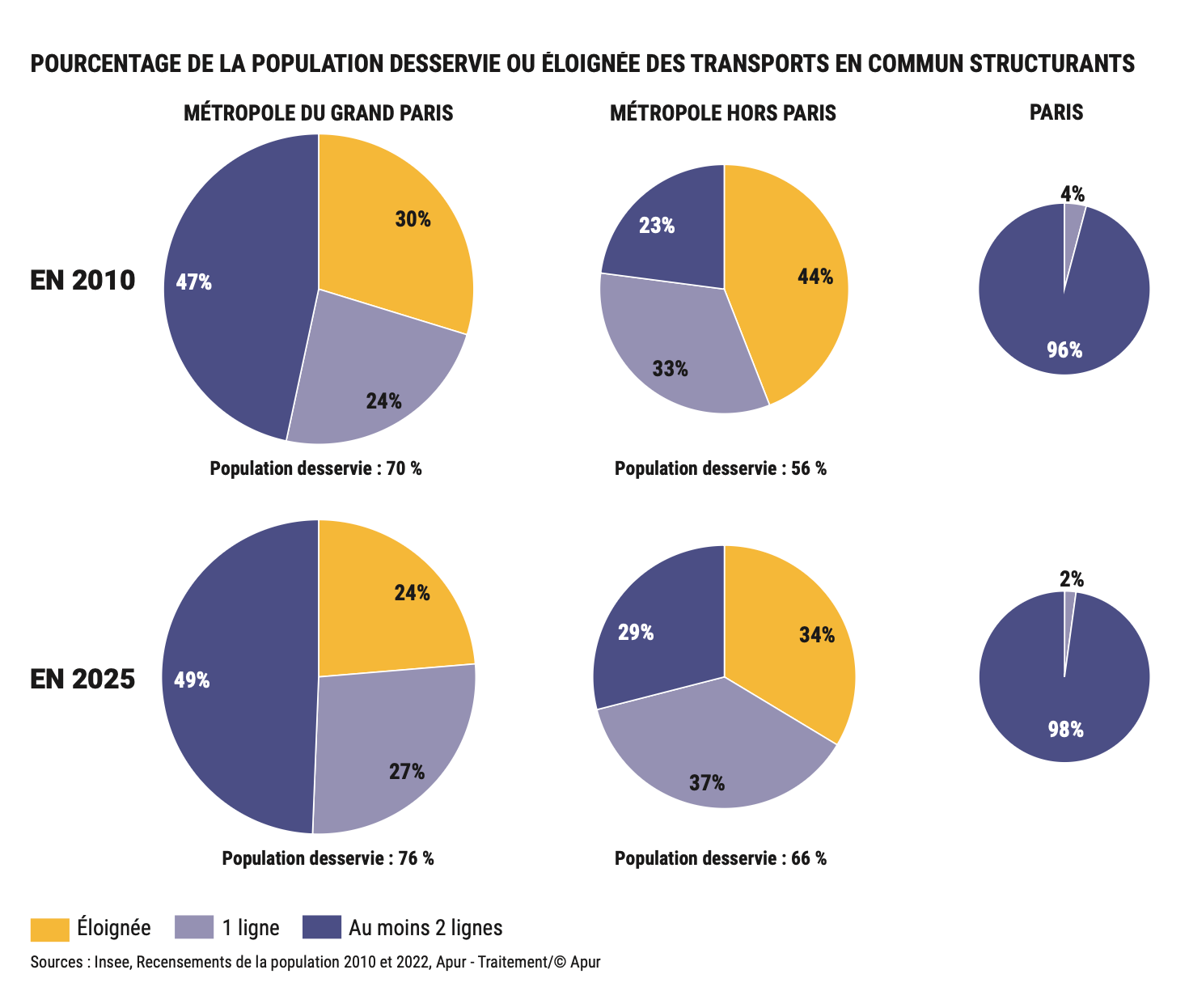
    When most people think of Paris, they only think of Paris proper, meaning the 20 neighbourhoods that exist within the confines of the Boulevard Périphérique. But as we talked about yesterday, that is quickly changing as a result of new investments in transit, a more porous border (le Périph), and progressive new developments. Greater Paris is transforming itself into a larger and more cohesive urban region, and it is creating what is, in effect, a new Paris.

    Because of this, the preconceived notions that many Parisians hold about the areas outside of the Périph are changing. Old money has long clustered in the western inner suburbs, eschewed the east, and preferred to drive. But today a new generation is colonizing the east and making different mobility choices while they’re at it.

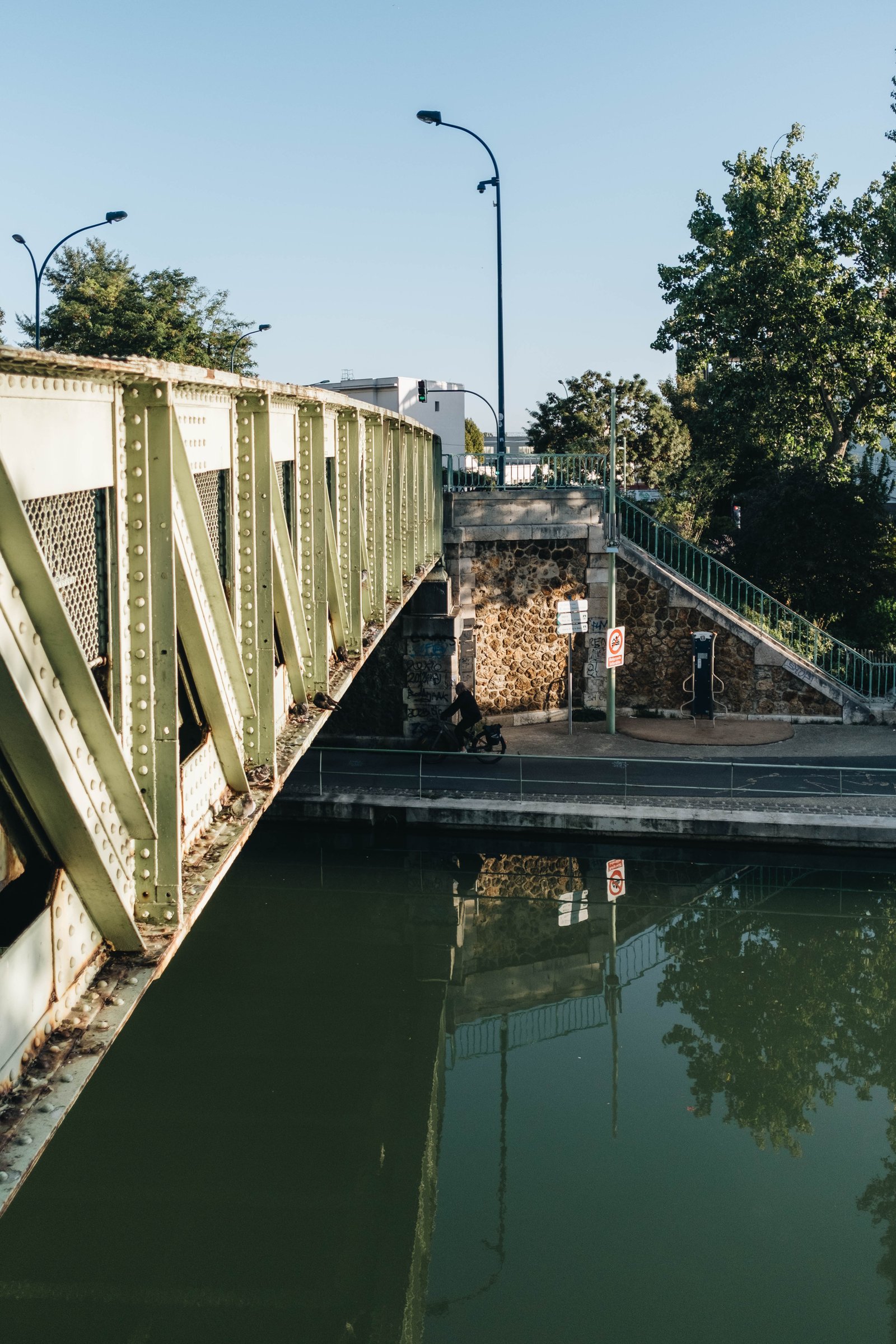
    Earlier this week, I got a taste of what that looks like. Olivier Raoux and Amaury De Benoist of Alios Développement were kind enough to invite me to tour two of their projects, one of which is on the other side of the Périph and called Les Grandes-Serres de Pantin. So I got up early, pretended I was going to work like everyone else, and jumped on the metro in the 10ème. Within 15 minutes I was at Église de Pantin station. And a few minutes after that, I was crossing the Ourcq Canal.

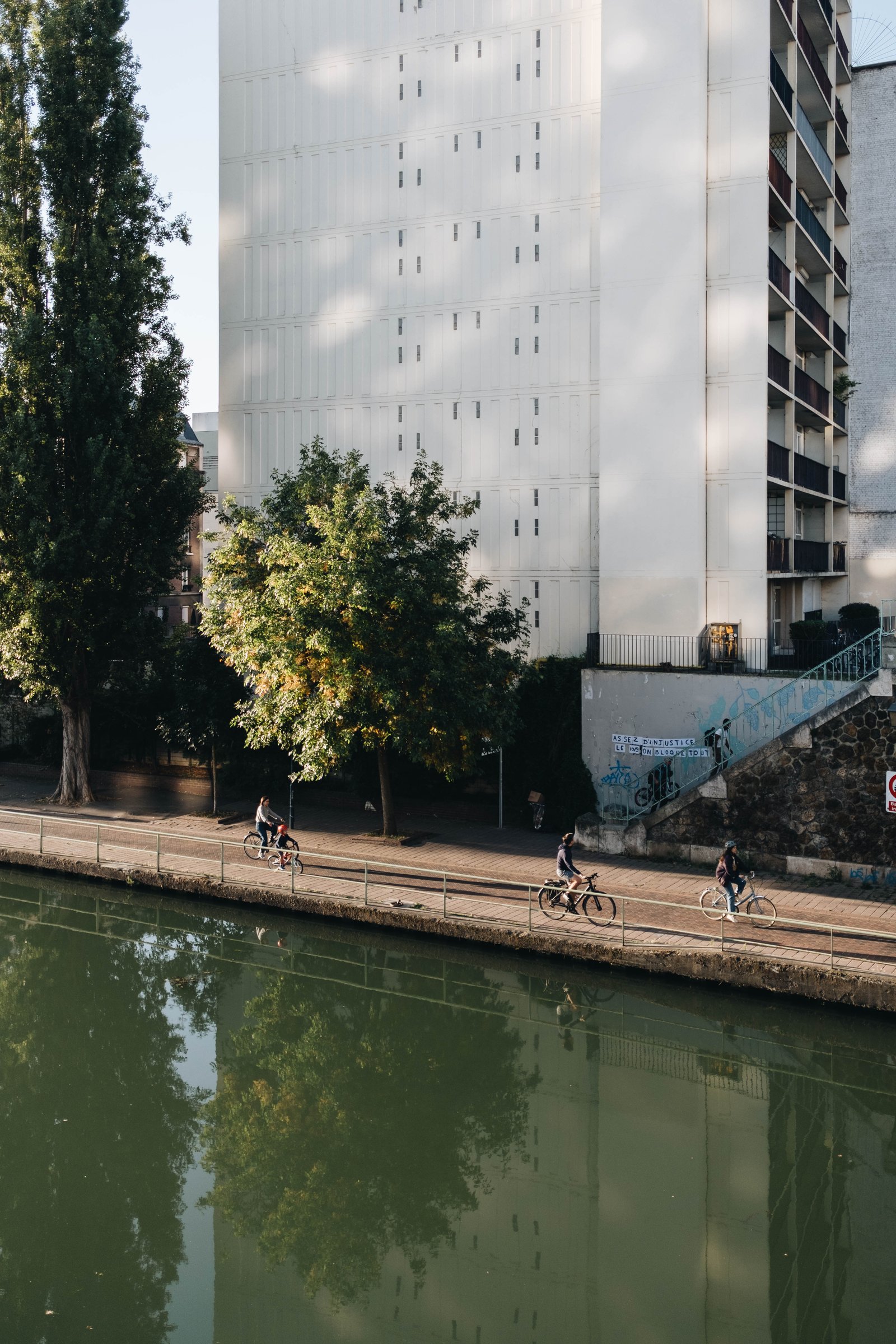
    The first thing I noticed was the people. It was just after 8am and it was busy. Everyone, including young children, seemed to be biking to work or school. I had been expecting to find a neighbourhood that was on its way to becoming something, but instead I found a neighbourhood that had seemingly already arrived, and I was late. It was also further evidence that Paris is now unapologetically a biking city.

    Once across, I learned that a new pedestrian bridge is also going to be built leading directly from the metro station to the site, making the short commute from transit even shorter. Here is the mockup:

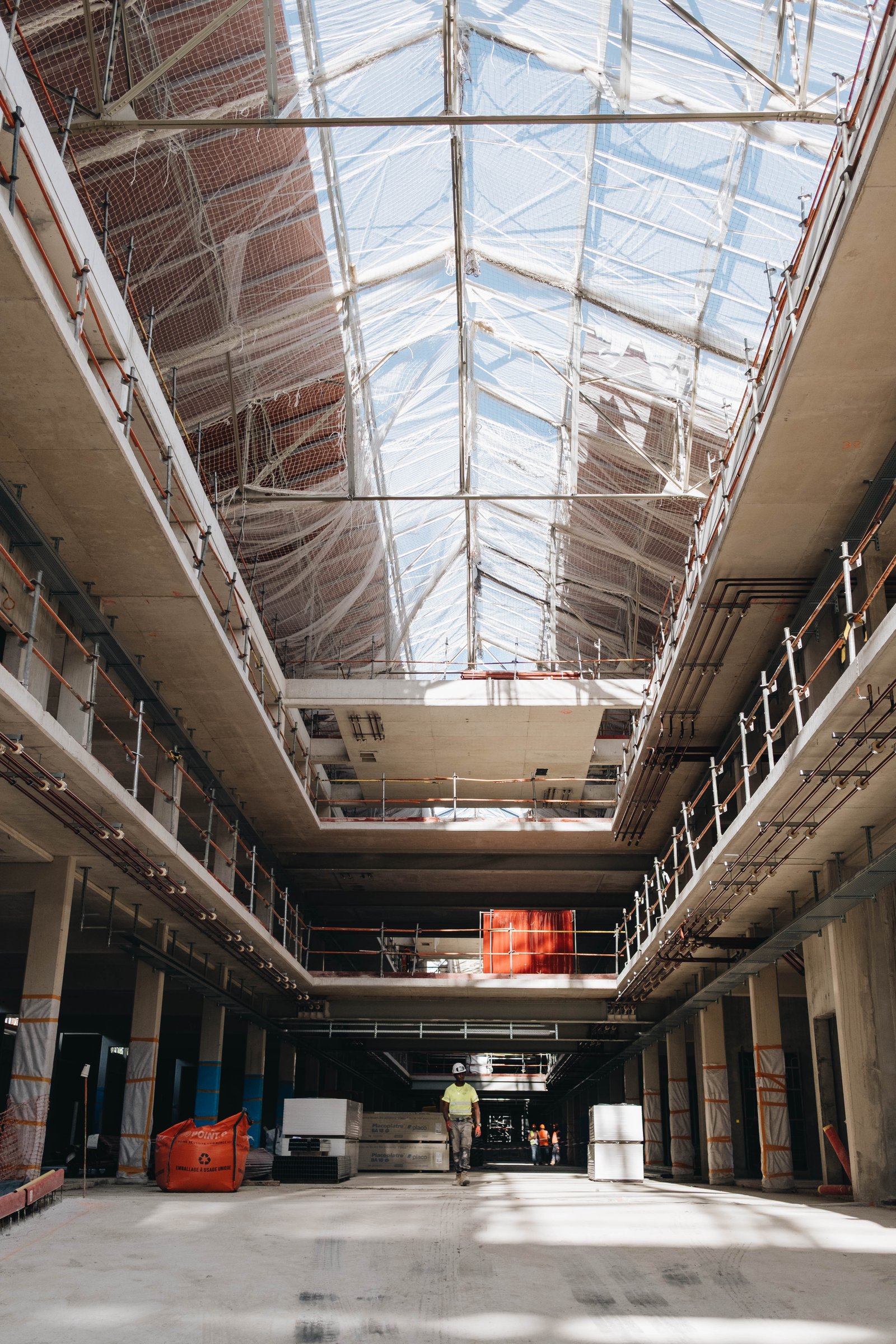
    This pedestrian bridge will connect to a new public plaza at the entrance to the project’s anchor building. A former spring factory from the late 19th century, it will soon serve as the focal point for a new mixed-use office park. Its program will include a food market, daily retail services, schools, a large auditorium, DJ events, and the project’s first office tenants, among other things. It’s a major forward investment, but one that will provide many of the amenities for the larger development — and clearly establish a place in Pantin.

    As a quick aside, during our site walk, the gentleman below asked me if I would take his photo. He then asked where the photo would be used (I told him it would be on this world-renowned blog), and he took note of the URL. But unfortunately, I didn’t get his name. So if you’re reading this monsieur, please get in touch with your details at [hello@globizen.com](mailto:hello@globizen.com) and I’ll update this post with a credit to you.

    In addition to the main hall, the project’s first ground-up office building is also under construction.

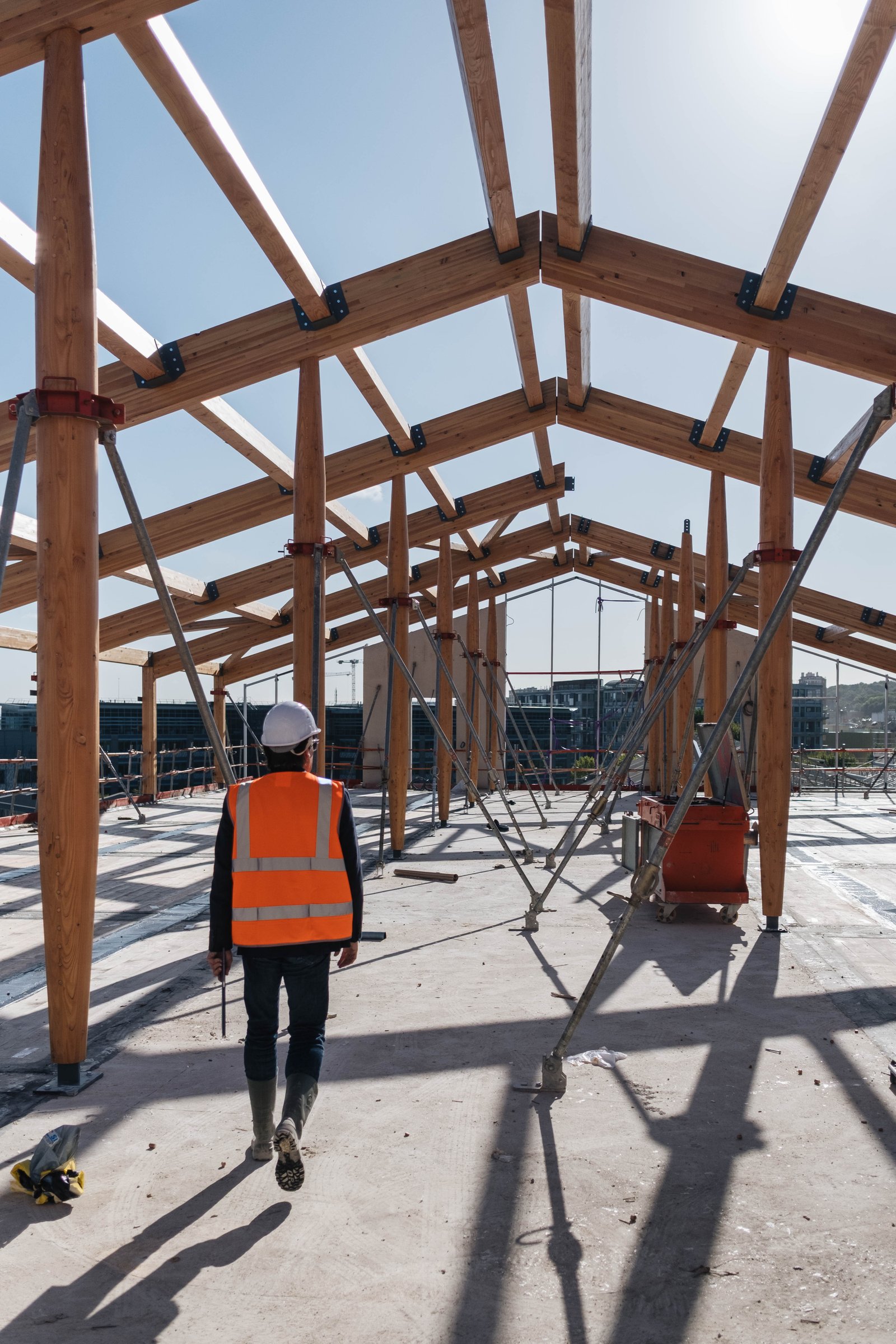
    The structure is a combination of cast-in-place concrete (which, by the way, was of truly impressive quality) and mass timber floor slabs. By code, the mass timber slabs must be encapsulated, which is also the case in Canada above certain heights. But that has not stopped the top floor of the building from looking like this:

    I spent a morning with Olivier and Amaury, and I can say Alios shares many of the same values that guide our work at Globizen. They invest in architecture and design, they focus on quality of place, and they work diligently to build their city in ways that other developers may be overlooking. It was impressive to see. Thank you both, once again, for being so generous with your time and for inviting me to tour your projects.

    I’ll also add that I left the meeting feeling genuinely excited about the future of Paris. Or should I say, new Paris. Step outside the Périphérique and you’ll find neighbourhoods humming with energy, creativity, and new ideas.

  • How the Grand Paris Express is stitching together Greater Paris

    September 10, 2025 · View original


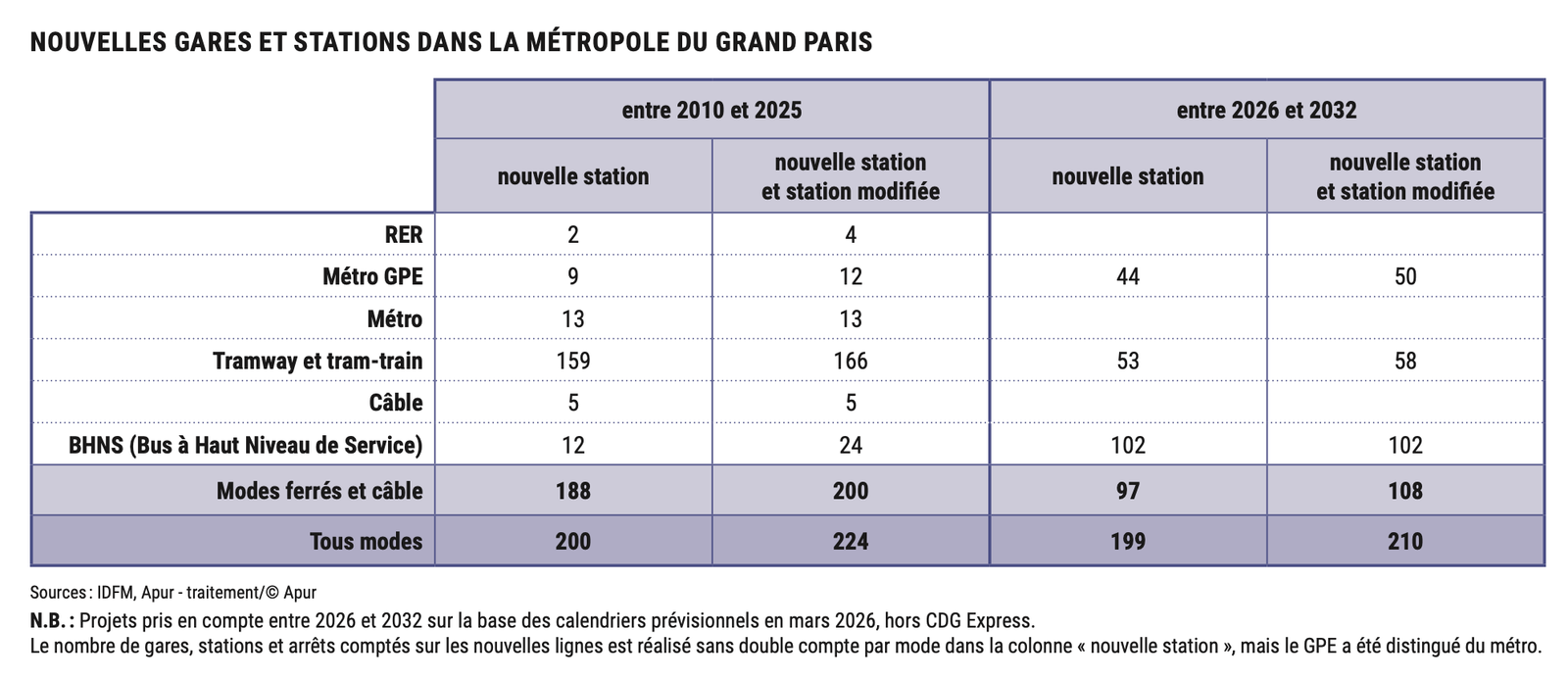
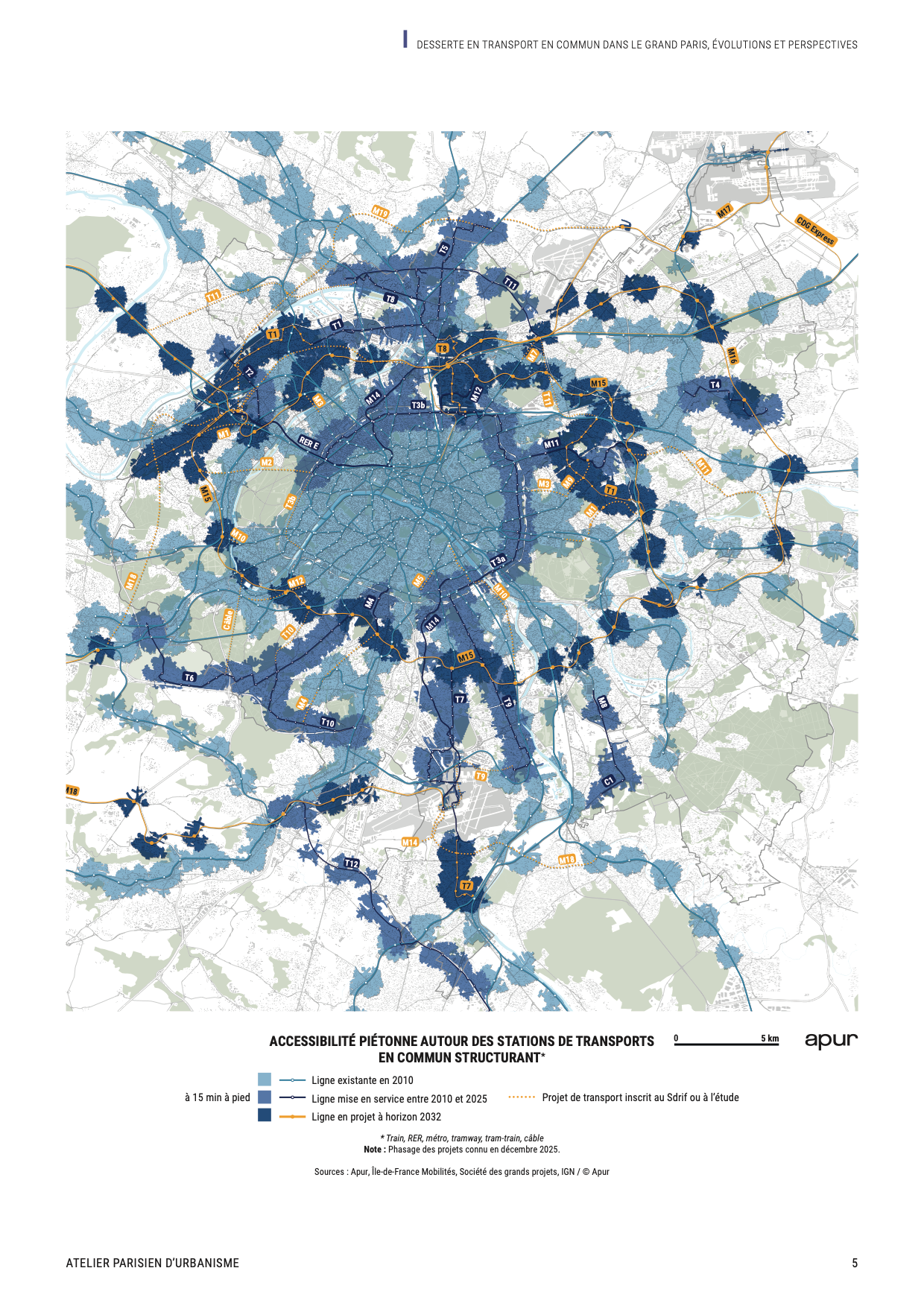
    Paris has a massive transit project that is currently under construction called the Grand Paris Express. It consists of 4 new metro lines, 1 line extension (at both ends), 68 new stations, and 200 km of new tracks. The first phase was the extension of Line 14. That opened last year. And the new lines are planned to open in stages up until 2031. I have no idea if they’re on schedule and/or on budget, but here’s a map of the GPE project:

    Here’s what it looks like if you overlay all existing metro lines (note how concentrated they are in Paris proper and how they’re clearly designed to bring people into the core):

    Here’s what it looks like if you overlay all existing tram lines:

    And finally, here’s what it looks like if you overlay all existing RER lines (suburban rail):

    At this point, the map is getting visually pretty cluttered. But if you look at how the GPE lines compare to what’s existing, I think you’ll start to see just how important this project is for the Métropole du Grand Paris (or Greater Paris). It creates a new set of concentric rings in the inner suburbs and, for the first time, it will allow Parisians to travel around the region (via rail) without first passing through the core of the city. So it’s in effect both an expansion and a stitching together of the city.

    But let’s put some numbers to this.

    According to a recent memo by Apur, which looked at the economic composition of the station areas, about 21% of all salaried employees in Grand Paris are located next to one of the new 68 stations. As a total number, this works out to about 934,000 employees (2022 figure). And included in this figure is La Défense, which is the office district where Paris decided to put most of its tall buildings. This has the highest concentration of jobs at approximately 163,599 salaried employees (again, 2022 figure).

    Another way to think about these station areas is that they represent what many are now calling New Paris. This is a part of Paris that is less encumbered with history and, therefore, more open to change and new ideas. This creates an exciting opportunity, and already we’re seeing that take hold. Later this week on the blog, I’ll talk about a specific project in Greater Paris that is currently under construction and that I was fortunate enough to tour on this trip.

  • How Paris creates such beautiful social housing

    August 16, 2025 · View original


    Back in the spring, I wrote about a small social housing project in Paris at 18 rue Pradier. And the reason I wrote about it is because it’s one of those beautiful European projects that makes every city builder in North America wonder: Why don’t we build projects like this?

    I mean, it’s nicer than most market-rate housing projects.

    As part of my post, I did some internet sleuthing to find out the site area, the gross construction area, and what appeared to be the land price. But it was a modest piece. Thankfully, developer Brendan Whitsitt (of Imprint Development) just published a far more comprehensive summary of the project.

    In it, he pieces together the building’s mechanical systems, the wall assemblies, the project costs, and even the capital stack. He also compares everything back to what’s typical and allowable by code here in Toronto. It’s well worth a read.

    However, I am going to spoil the punchline: Building in Europe is not cheaper. 18 rue Pradier is a beautiful — but very expensive — project. It only works because of subsidies. No private-sector developer would build it otherwise.

  • Attention Paris city builders

    July 7, 2025 · View original


    Neat B and I just booked some end-of-the-summer travel. We’re going to bounce around to a few different places, but the plan is to end up in Paris and then spend a week there working remotely — you know, from the Paris office.

    And by the Paris office, I mean a generous 323 sf aparthotel with a small kitchen, workspace, and shared laundry facility that we rented in the 10th. I started by searching diligently for an Airbnb; but I couldn’t find anything we liked, so I ended booking something through Edgar Suites.

    As part of this trip, I’m aiming to meet as many industry people as possible and hopefully tour some development projects. One of my goals is to better understand how Paris consistently pulls off beautiful infill housing projects like this.

    So if you’re a developer, architect, investor, or other kind of city builder based in Paris, please drop me a line at brandon.donnelly@globizen.com. I’d love to connect and learn more about your city and market, and about what you’re up to.

    Coffee and yummy pastries on me, of course.

  • France just banned smoking in all public spaces

    June 21, 2025 · View original


    One of my least favorite things about Europe is the experience of sitting on a cafe terrace and having someone smoking beside you while you’re trying to enjoy a gelatinous pig foot from Au Pied de Cochon. (I kid; gelatinous pig foot isn’t my favorite.)

    So here’s some news: France has just announced that, starting July 1, smoking will be banned from nearly all public spaces, including parks, beaches, public gardens, and bus stops. That said, the ban does not yet include cafe terraces. So I can still expect my gelatinous pig foot experiences to be horribly ruined.

    Still, this is a giant step in the right direction, especially for a country with one of the highest smoking rates among OECD countries. As of 2023, the national average for daily smokers was estimated at 23% for adults aged 18 to 75. The region with the highest percentage of smokers was the southeast (~29.5%) and the region with the lowest percentage of smokers was Greater Paris (~21.9%).

    In addition to varying by region, smoking is also strongly correlated with socioeconomic status. INSEE, France’s national statistics agency, estimated the following daily smoking rates as of 2022:

    – 42.3% of unemployed adults – 33.6% of people in the lowest income tier – 30.8% of people without a degree (baccalauréat level) – 16.8% of people with higher education (above baccalauréat level)

    But even among high-income groups, the rates are significantly higher than what you’d find throughout the rest of Western Europe, and in places like Canada and the US. We’re in the 10-11% range. All of this is why the French health ministry is now aiming to create a generation “free of tobacco” by 2032.

    The majority of French people also seem to support this new public space ban; which maybe isn’t surprising, given that the majority don’t smoke.

    Cover photo by Marie-Sophie Tékian on Unsplash

  • Paris votes to pedestrianize an additional 500 streets

    March 25, 2025 · View original


    This past Sunday, Paris voted in favor of greening and pedestrianizing an additional 500 streets in the capital (5-8 per neighborhood). This will add to the 300 or so streets that have already received this treatment since Mayor Hidalgo started her second term in 2020. And as a result of this expansion, it is estimated that about 10,000 on-street parking spaces will be removed, which represents about 10% of the city’s total inventory.

    Exciting. But who voted for this? Of the Parisians who voted, 66% voted in favor of the initiative. And it carried in 14 of 17 arrondissements (with the 1st, 2nd, 3rd, and 4th counted as one). But similar to prior referendums, voter turnout was extremely low: only 4.06% of eligible voters showed up (approximately 56,500 people). And this is after the voting age was lowered to 16 years old for the first time.

    For context, when Paris voted on whether electric scooters should be banned, 7.46% of voters showed up. So while low, this situation is not entirely unique. Though it does, once again, raise the question of whether the outcome of this referendum truly reflects public opinion. My outsider view is that it probably does. Because I take the apathy to mean some level of support, or at the very least, an absence of strong aversion.

    Think, for example, about who shows up at community meetings for new development projects. The vast majority of people in attendance have concerns they would like to air. It’s very rare for someone to show up and say, “I didn’t have much going on tonight so I decided to come by and see everyone. I have no real concerns. Project looks cool. Carry on as you were.”

    If you agree with this logic, well then it suggests that many/most Parisians do generally support more pedestrianized streets, even if it means the removal of parking. That’s an accomplishment in my books.

    Cover photo by Maximilian Bungart on Unsplash

  • Paris has a hell of a lot of vacation rentals and second homes

    March 20, 2025 · View original


    Last week, we spoke about affordable housing in Paris. Today, let’s talk about tourist rentals in the city. The city of Paris and Greater Paris (i.e. la Ville de Paris and la Métropole du Grand Paris) recently commissioned Apur (which is a non-profit that I regularly follow) to do two studies on this topic. The first was for Paris proper and the second was for Greater Paris. What they found is super interesting:

    – In August 2024, Greater Paris had 149,936 tourist rentals, of which 124,988 were available for immediate booking. This represents an 84% increase compared to August 2023, which is a massive number, but maybe not entirely surprising given that Paris hosted the Olympics last summer. – Paris proper had 97,975 listings in August 2024 and 90,299 in December 2024. Overall, the city sees fairly muted seasonality. It’s also worth noting that 31% of these listings belong to hosts that own multiple properties (that is, at least two).

    But let’s put these figures into context. Here’s a map showing the density of Airbnb listings:

    Here’s a map showing the number of Airbnb listings compared to the number of principal residences:

    And here’s a map showing the percentage of unoccupied homes in the city, which totalled 268,500 as of 2021:

    The report defines an “unoccupied home” to be any home that is not used as a household’s primary residence. So in addition to flat out empty homes, it includes homes that are used sporadically throughout the year for pleasure and/or for work. And as you can see, there are large sections of the center of the city where “unoccupied” and second homes make up over 28% of the total housing stock.

    These areas also closely mirror the areas where tourist rentals are most popular, and where Airbnb listings make up over 20% of the housing stock. (See the second chart above.) And as far as I can tell, these are mutually exclusive classifications, meaning there are sections of the city where a large percentage of the housing stock (perhaps up to half?) is either a short-term rental or a second home.

    This tells you a lot about the housing market in Paris, especially when you compare it to other global cities:

    NYC, for example, is shown here as having 8.8 million people, compared to 7.1 million people in Greater Paris. And yet Greater Paris has about 4x the total number of short-term rental listings. The number of available listings (where the property was available for at least one day of the year) also increased by 84% from August 2023 to August 2024 in Greater Paris; whereas it dropped by 16% in NYC, likely because the city basically banned short-term rentals.

    The two reports can be found here and here (note they’re in French). And they’re rich in data if you’d like to learn more about some of the dynamics impacting Paris’ housing market.

    Cover photo by Kris Atomic on Unsplash

  • How “viager” transactions work in France

    March 12, 2025 · View original


    In the 9th century, France enacted into law a way to buy and sell property through something known as une vente en viager. My understanding is that there are other European countries that also allow this, but that it’s most popular in France, even if it still forms a relatively small portion of the market.

    Here’s how it typically works. You’re an older person (or older couple) and you want to use your home to generate some cash, but you also want to stay living in your home until the very end. So you offer it up for sale en viager occupé. (This is the most popular option, but there’s also le viager libre, where the seller moves out immediately.)

    Whoever buys it will usually pay you, the seller, in two ways. They will pay you an upfront lump sum (called le bouquet) and a recurring payment (called la rente viagère) up until the day you die (or both of you die). Once this happens, the buyer then gets full enjoyment of the property. The transaction is complete.

    So why would either party want to sell and buy in this way?

    Well, if you’re the seller, the obvious benefits are that (1) you get to continue living in your home and (2) you get some money now and for the rest of your life. This can be useful if you, say, run out of cash during retirement. It’s a means to financial independence.

    For buyers, it’s the opportunity to maybe acquire a property below its current market price. Because if you don’t have access to the home until some undetermined date in the future, well then a discount will obviously need to be applied. The initial lump sum payment is often around 30% of the current value. The other attractive feature is that it’s a form of financing for buyers who may not have all the money they need today.

    In the end, this is a bet on life expectancy. Because if the seller ends up living for a really long time, then they get the benefit of more annuity payments. However, if they end up living fewer years than expected, then the buyer benefits from having to pay less in annuity payments. They got to buy below market.

    It’s a fascinating pricing and time-value-of-money exercise, but it’s also a potentially morbid way to buy real estate. On the one hand, you could be helping someone live a dignified retirement. On the other hand, you stand to benefit if they die sooner than expected.

    Cover photo by Zach Dyson on Unsplash